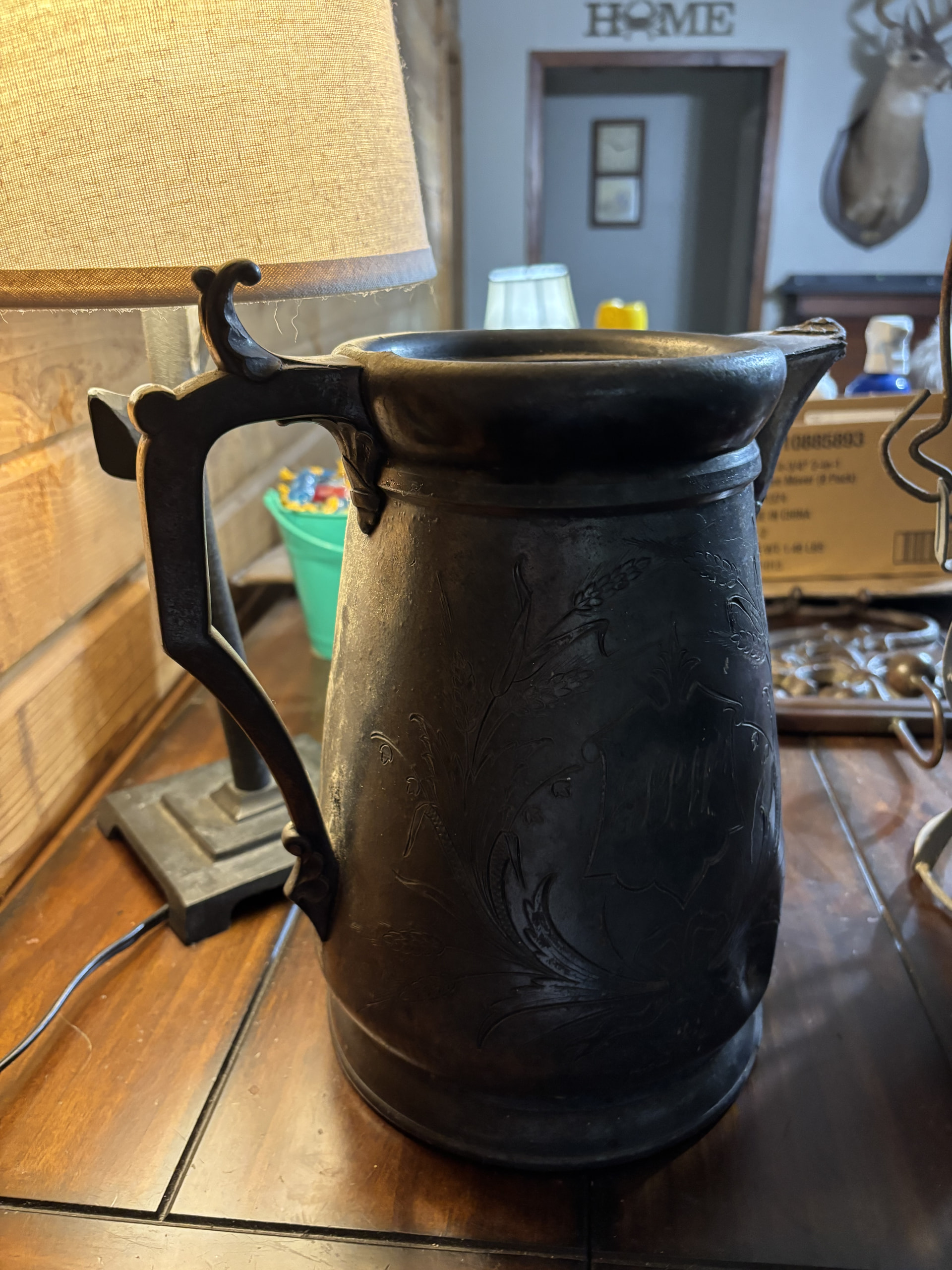
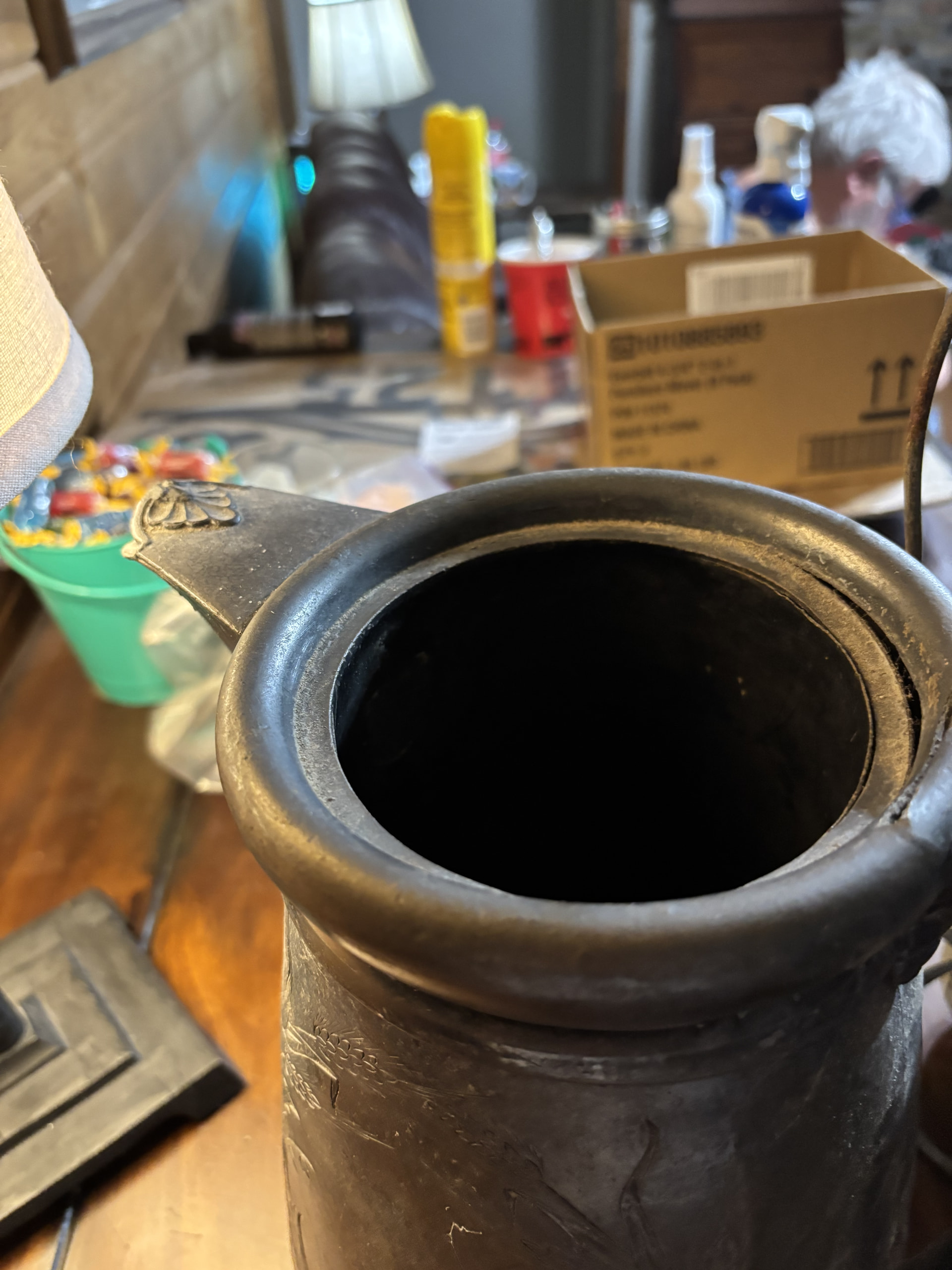
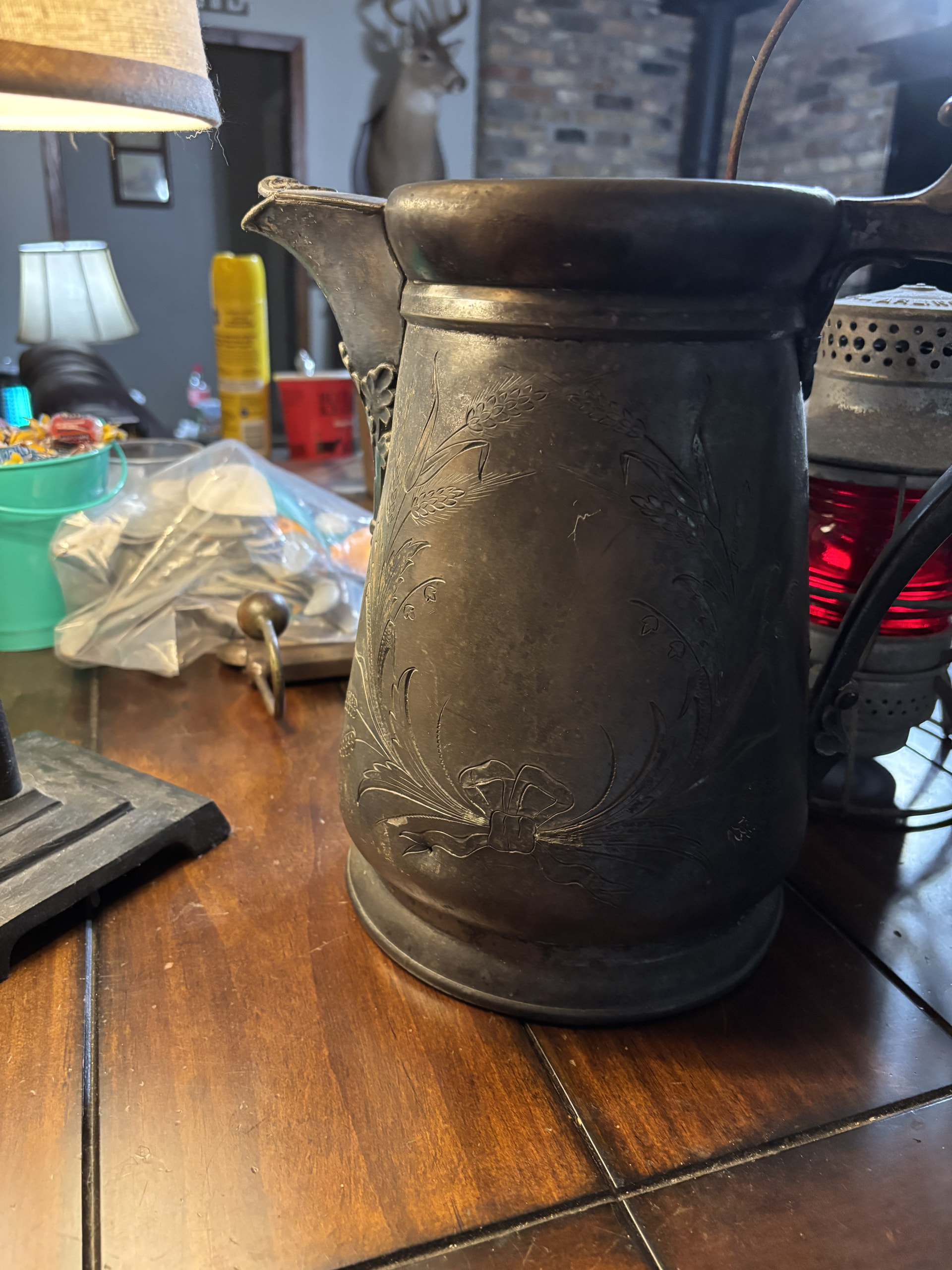
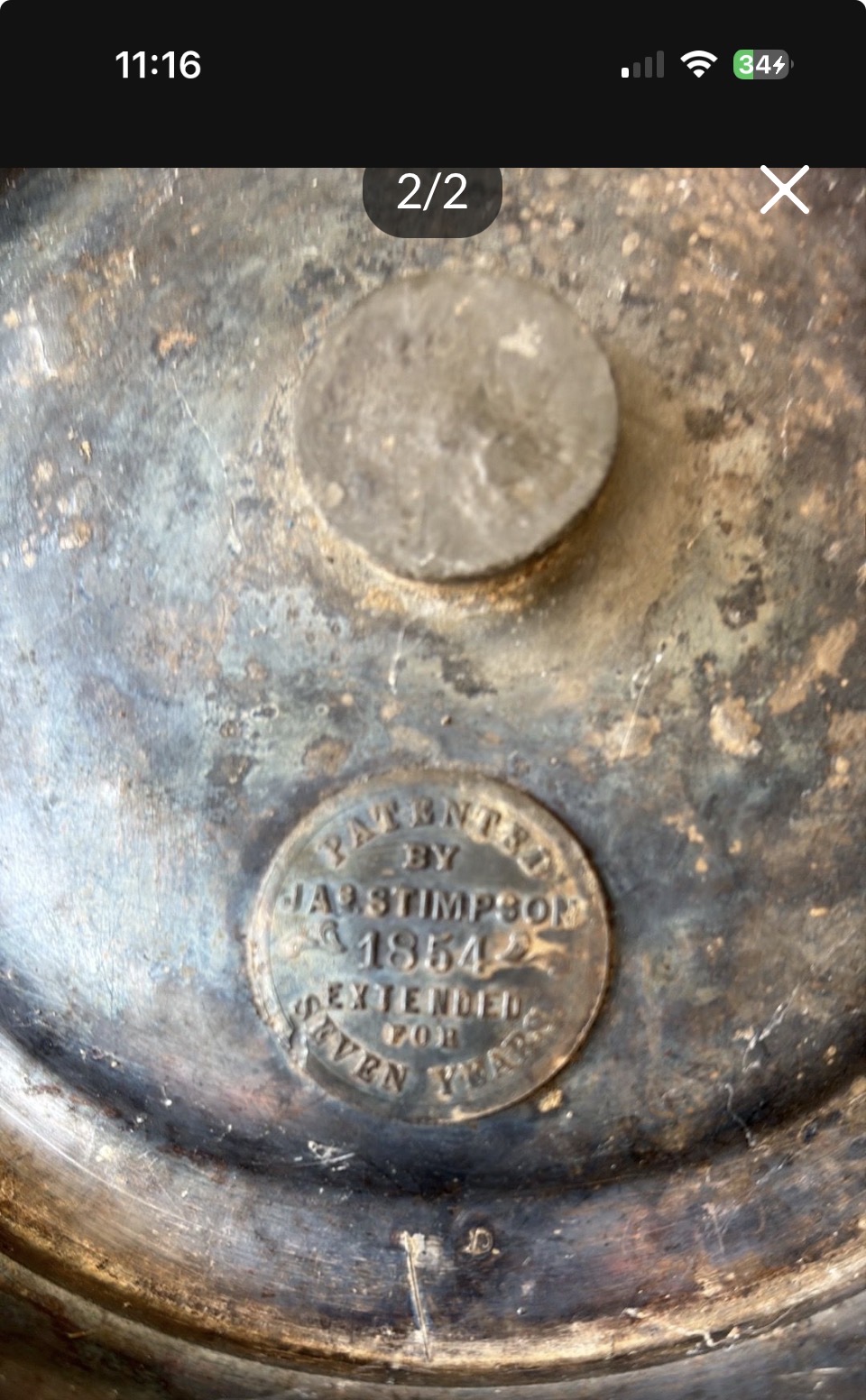
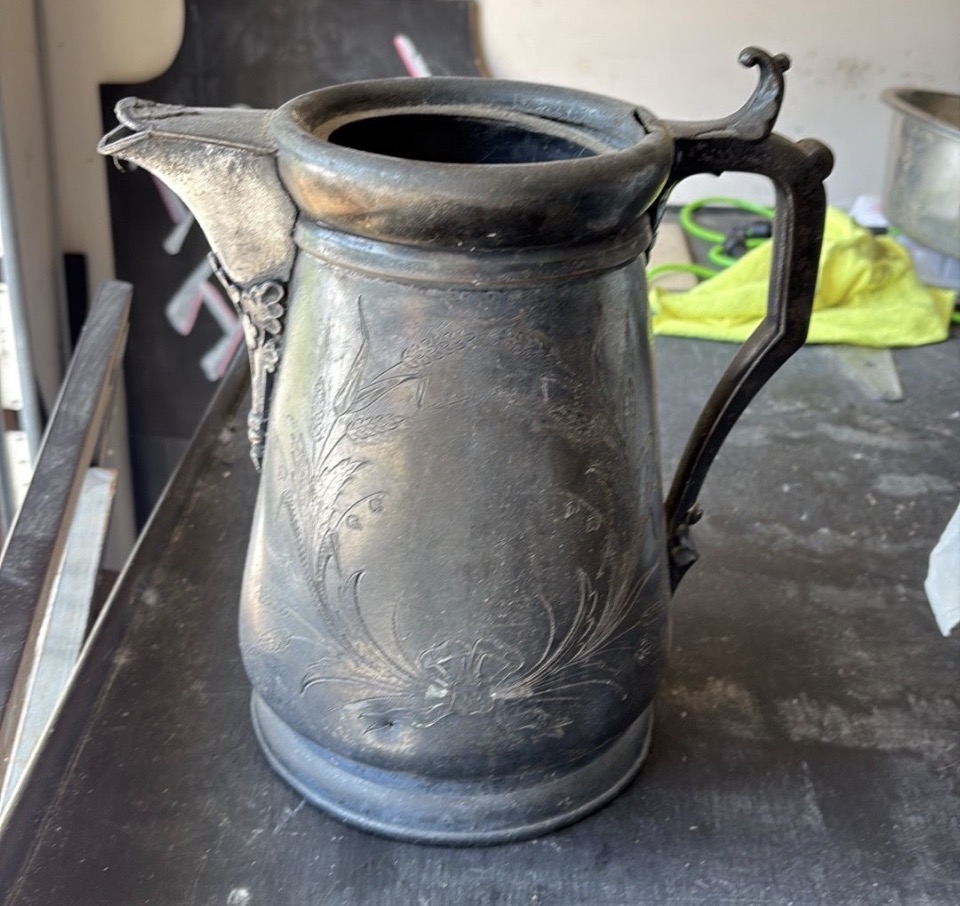
Hello, I am looking for some community help with identifying the value and manufacturer details of an antique double-walled ice water pitcher. On the bottom base, it features a circular patent stamp that reads: “PATENTED BY JA’S STIMPSON 1854 EXTENDED FOR SEVEN YEARS” The body of the pitcher features a hand-engraved/chased motif of wheat stalks tied with a ribbon bow. It has a geometric, angled handle with an ornamental thumb rest. Crucially, the original hinged top lid is completely missing (the open rim is exposed). The metal currently shows a very heavy dark oxidation/tarnish patina. I’ve attached five pictures showing the patent mark on the base, the profile views of the wheat engraving, the handle, and the open rim. Any insights into the likely manufacturer (e.g., Reed & Barton, Simpson Hall Miller, etc.) and what a fair market value range would be for an open-top piece like this would be greatly appreciated! Thank you!
https://www.ebay.ca/itm/203805737706
There’s several listed on ebay and elsewhere to give you an idea of price. Surely if James Stimpson is claiming patent entitlement then it was he who had something to do with its creation?
"This is a plated silver insulated ice pitcher invented by the father of James H Stimpson. Stimpson was a Baltimore silversmith dating 1851-1868.
“The patent for his father’s invention was granted in 1854 and granted valid for seven years. Thus this water pitcher could have been made several years after 1854.”
https://www.justanswer.com/antiques/c2xow-jas-stimpson-1854-pitcher-sell.html
As to which silversmith made the electroplate jug exterior cladding, which I realize was your original question, absent a decipherable trademark you are limited to AI similar image searches.
As you suggest it is very like a Reed & Barton design especially around the spout but the handle is different. My machine pulled up 42 different designs that are similar by 18 different vintage US metal bangers. No doubt your efforts produced the same sort of result.
“After Reed & Barton”? “School of Reed & Barton”? “Attributed to someone who wanted to make you think you were buying Reed & Barton when you in fact weren’t”? “Nothing whatsoever to do with Reed and Barton but cheaper”?
On price, it occurs to me the value of an insulated jug without its lid is rather limited. I suppose you could polish it up and stick flowers in it but, it is a decidedly utilitarian device and I think I would rather continue to display cut flowers in a vase of some sort, but, hey that’s just me!