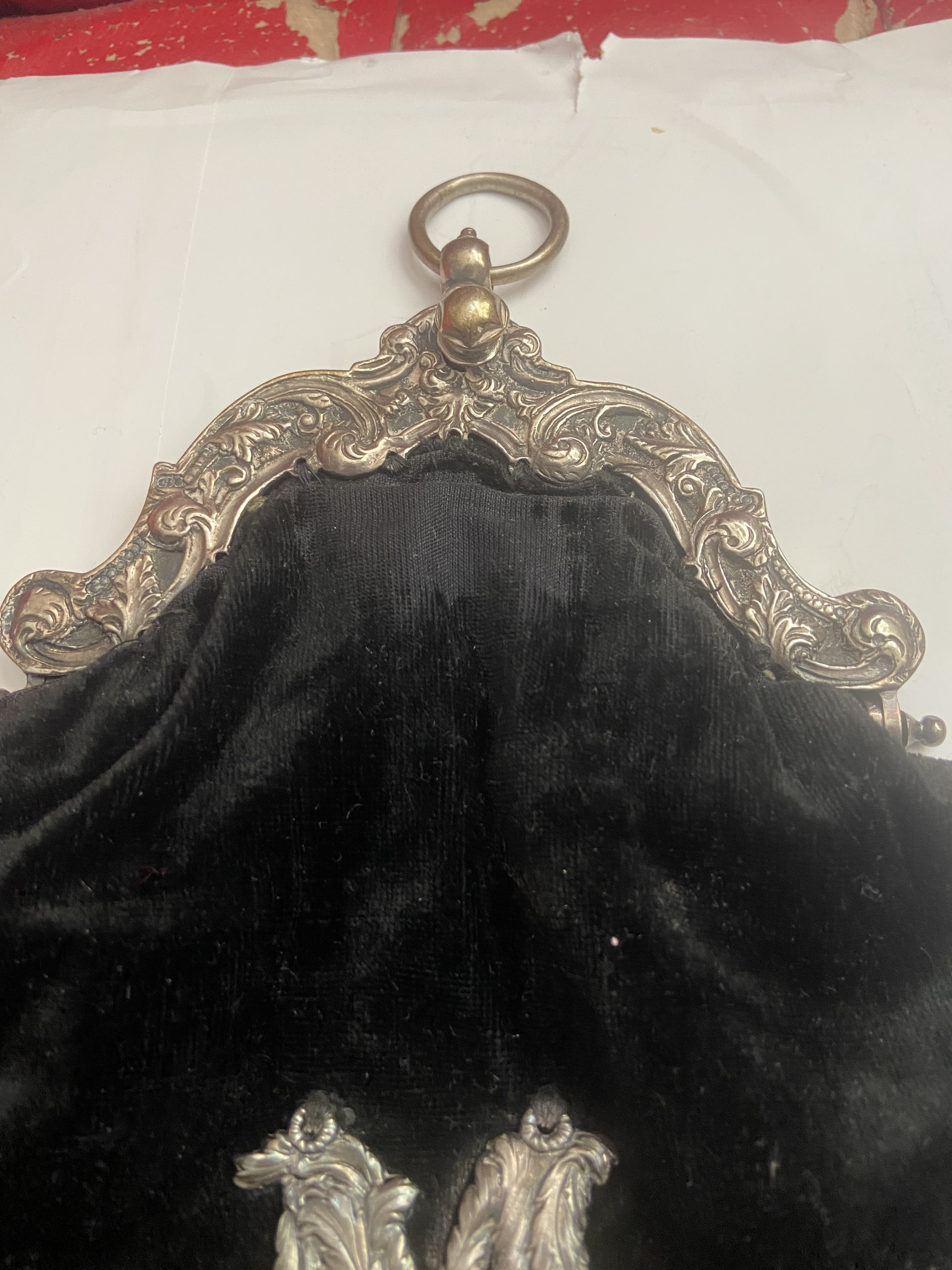
Hello, can anyone help with dating/placing these two things please? Both are part of an evening bag: the frame, and an attached initial.
Thank you!
The straightforward one first, your top photo.
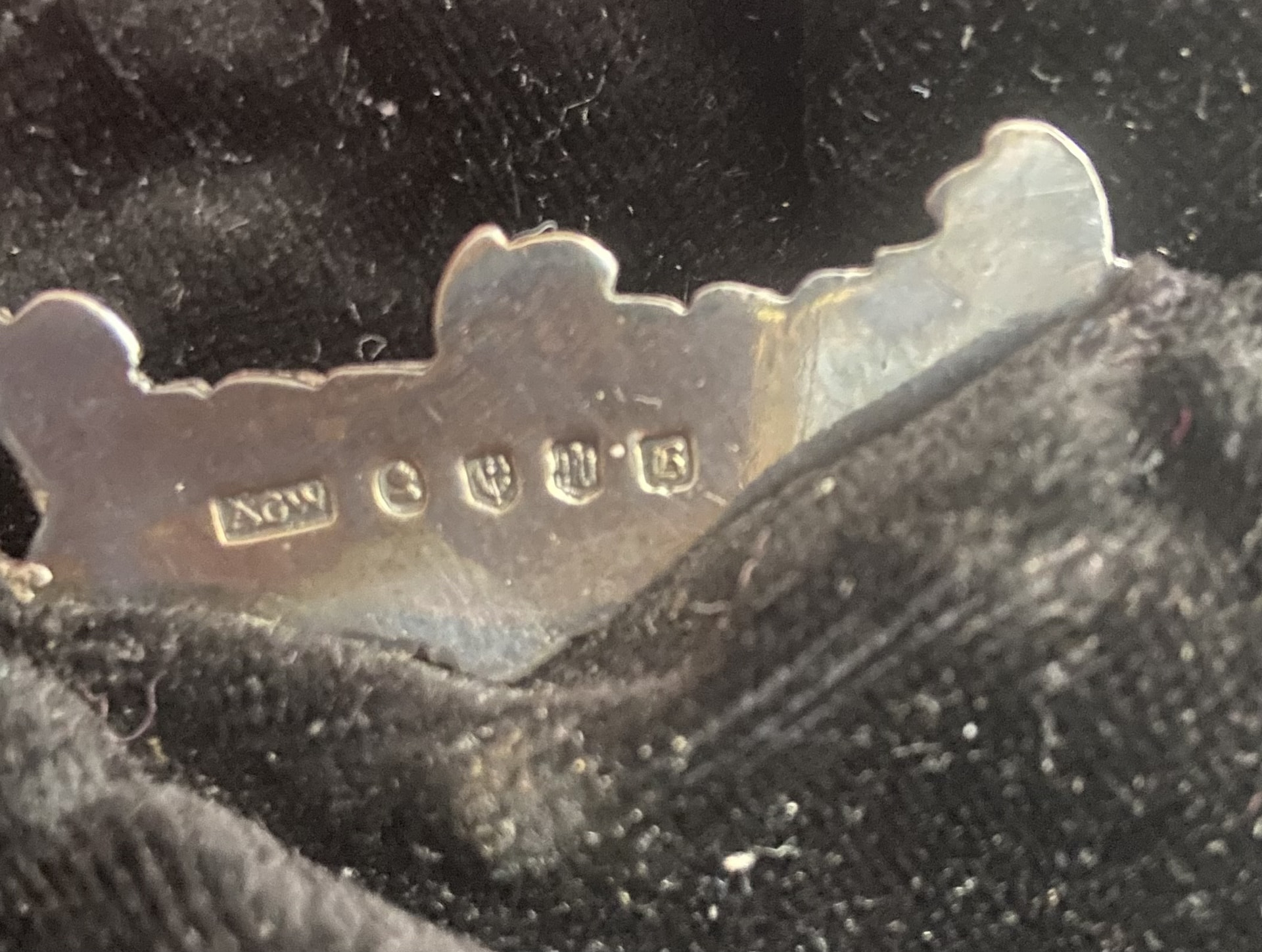
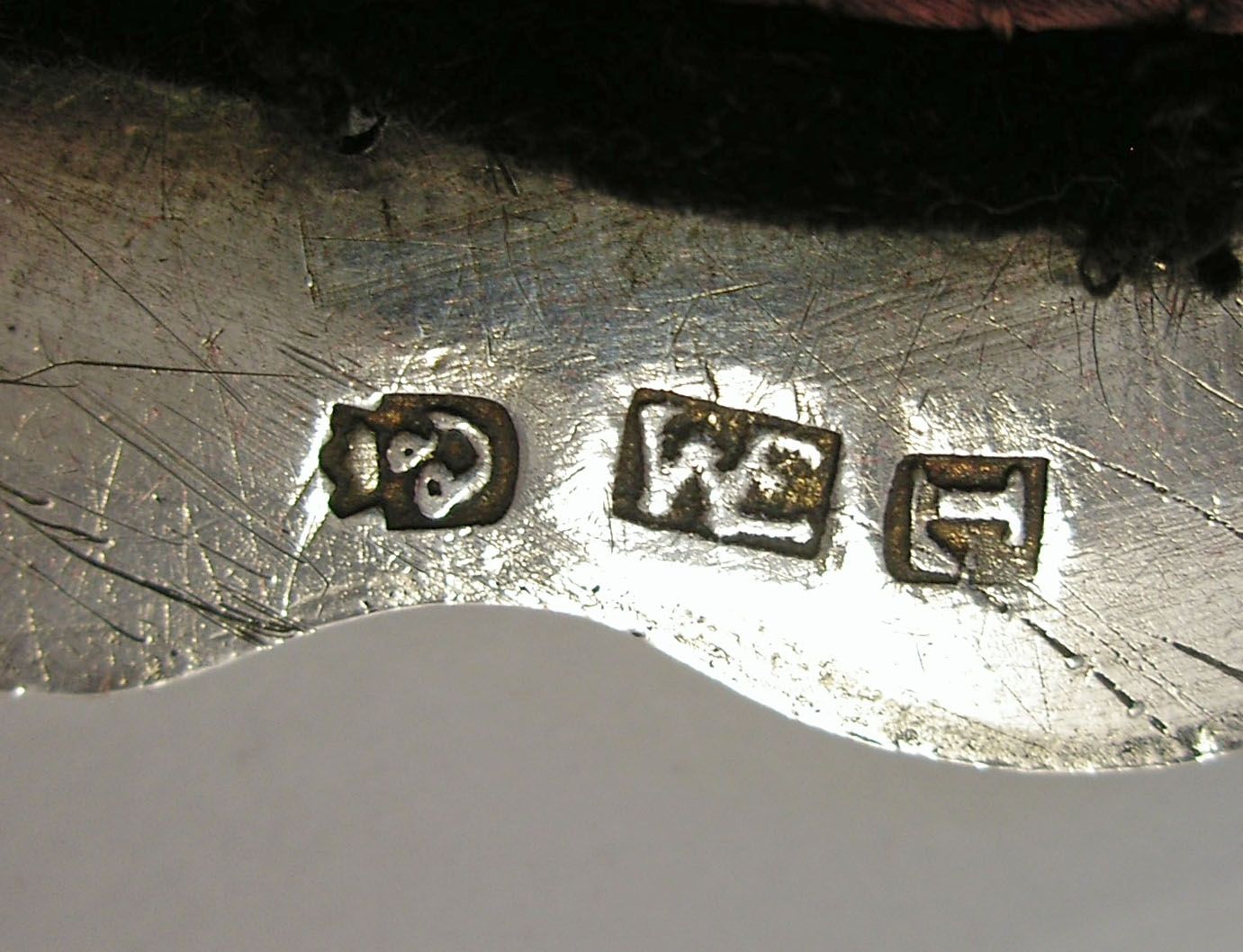
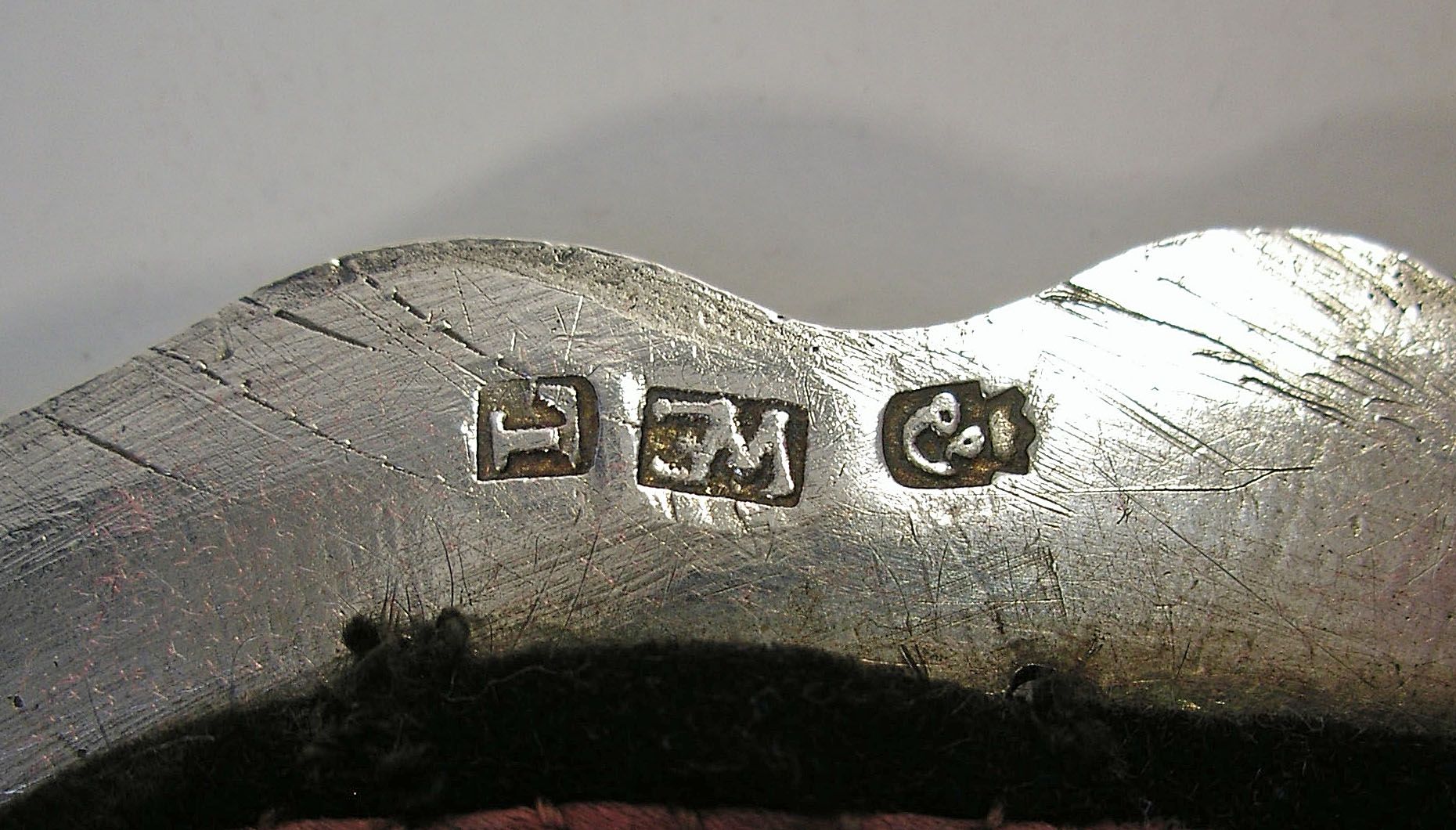
That appears to be sterling hallmarked in Edinburgh in 1838:
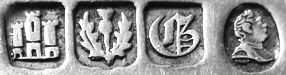
The maker would be Alexander Graham Wighton:
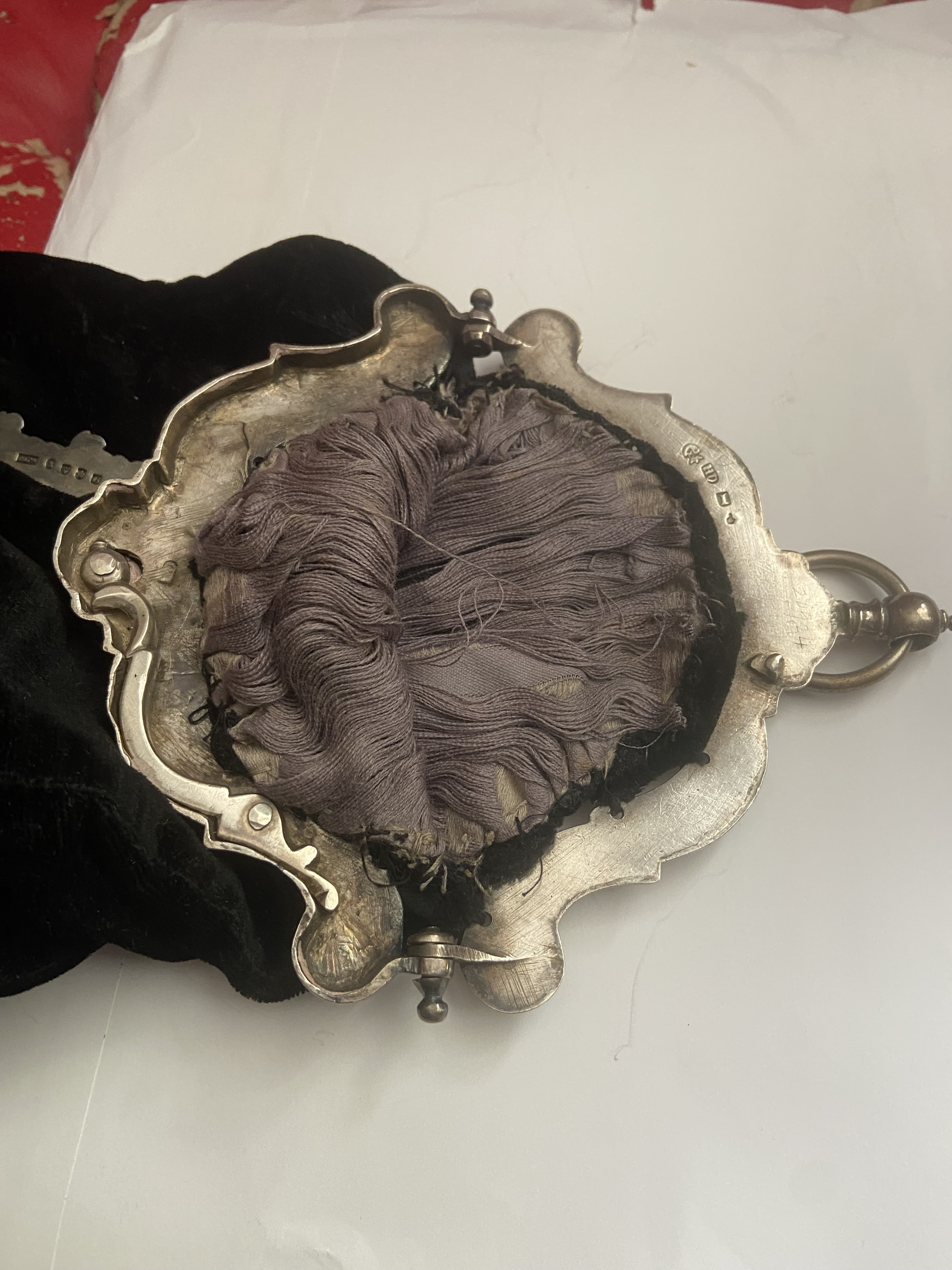
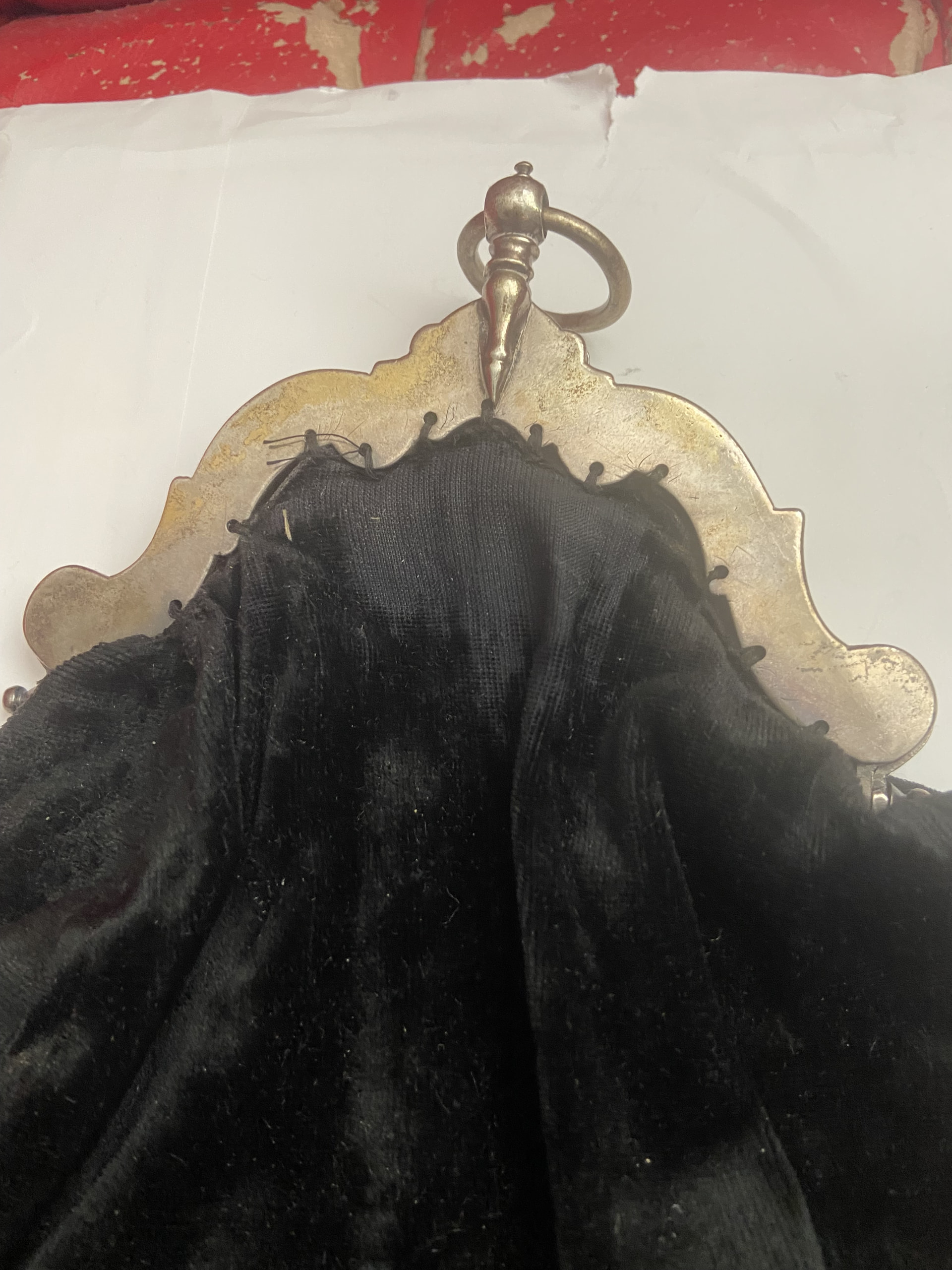
The frame is another story. It’s manifestly not sterling, so we’re looking at either silverplate or even some other metal. Digging up information on the specific maker will be difficult, since there’s no central registry for such things.
ETA: It’s especially challenging in this case. If the frame is from the same part of the world as the sterling bit, that would point to a provincial maker, rather than someone recognizable from London or Sheffield. And the two pieces might have come together elsewhere, and could also be separated by decades.
That’s really helpful, thank you - I was nearly there with the silver one and it’s great to have that confirmed. And also to know that if I’m failing to find the other one it’s because it’s difficult to find 
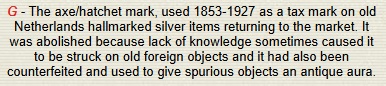
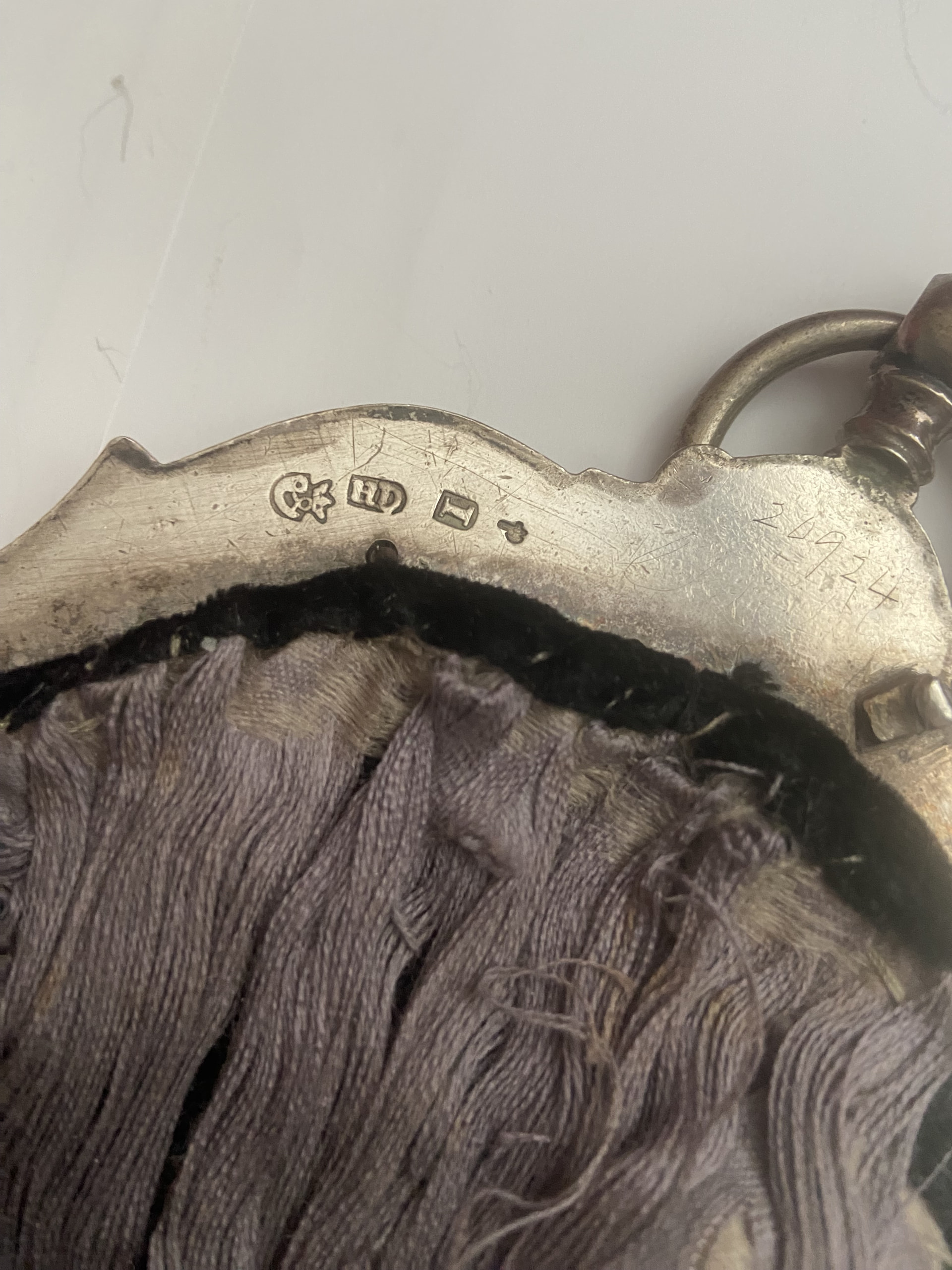
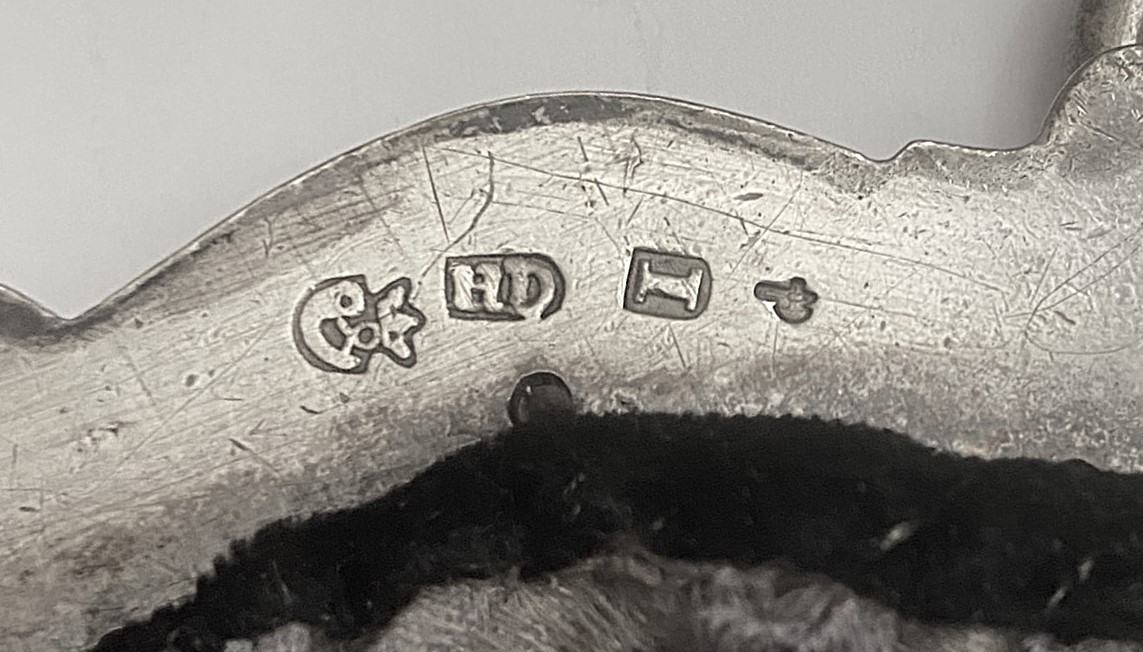
It’s from Netherlands.
HD - maker’s initials.
Town mark - Hoorn.
I - date mark.
The letter “I” in the shield – The date letter (year of production). In the Dutch hallmarking system, the style and shape of the shield precisely define a specific year (in this case, the turn of the 18th and 19th centuries).
The monogram “HD” in the cartouche – The imponet or master’s mark (the maker’s mark – a goldsmith/silversmith). This mark belonged to a craftsman operating in the Hoorn region (e.g., historically associated with local workshops and Dutch exports conducted by companies such as J. v Straten & Co from Hoorn).
A hunting horn under a crown (bottom mark) – The official municipal mark (coat of arms) of the city of Hoorn (the word “Hoorn” means horn in Dutch), which guaranteed the origin and quality of the silver alloy tested by the local assay office.
https://haffmansantiek.nl/westfriese-zilveren-tasbeugel-beeldjesbeugel-hoorn-ernens-1796.html
Thank you so much! That is so interesting.
You’re welcome. You’re welcome.You’re welcome.
An interesting “marriage.” I knew it couldn’t be UK sterling, not even of the Scottish provincial variety. It didn’t occur to me that it might be a cross-Channel pairing. And the pieces would appear to be separated by several decades, in addition to being geographically distant.
A nice discovery, in any event, that elevates the piece quite a bit.
ETA: The other possibility, of course, is that this is all just an AI hallucination. The intriguing question is, “How can we tell, without running into the same AI fantasy at every turn?” It’s becoming very metaphysical.
Ha. It’s definitely real and in the room with me right now  I’ve now got quite fascinated by it, though the story of how the parts got joined is always going to be lost. After a bit of poking about on auction sites I think the very elegant initial (it’s an M) may come from a Madeira wine carafe label