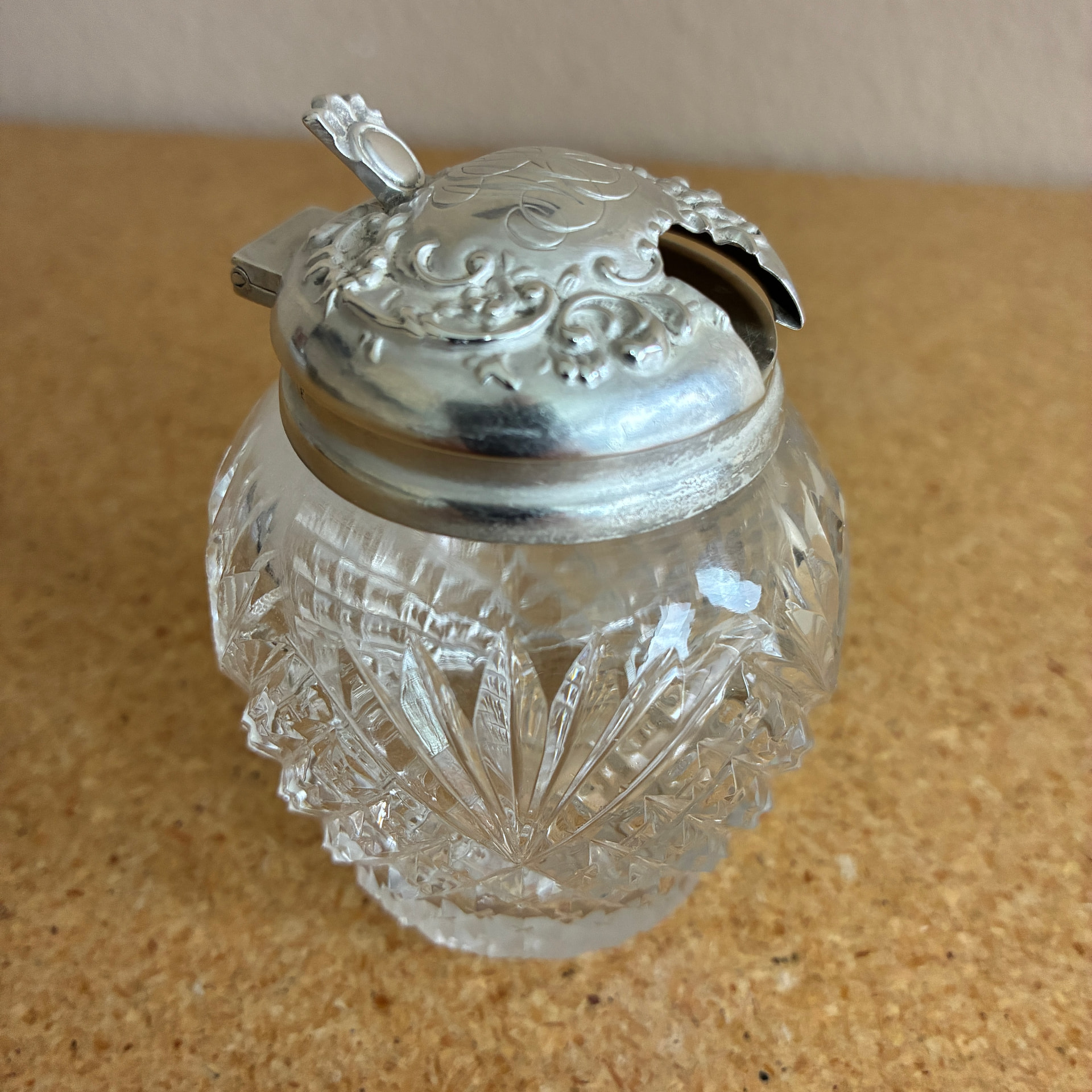
I’m pretty sure this is by Mauser Manufacturing by the Makers Mark however I don’t exactly know if this is something used on a vanity or in the kitchen. The lid is hinged and there’s a hole for something.
Photos attached.
I’m pretty sure this is by Mauser Manufacturing by the Makers Mark however I don’t exactly know if this is something used on a vanity or in the kitchen. The lid is hinged and there’s a hole for something.
Photos attached.
If it’s small, like under 3" tall, it’s a mustard pot. The gap is for the spoon. It it’s bigger, I’d say “jam.”
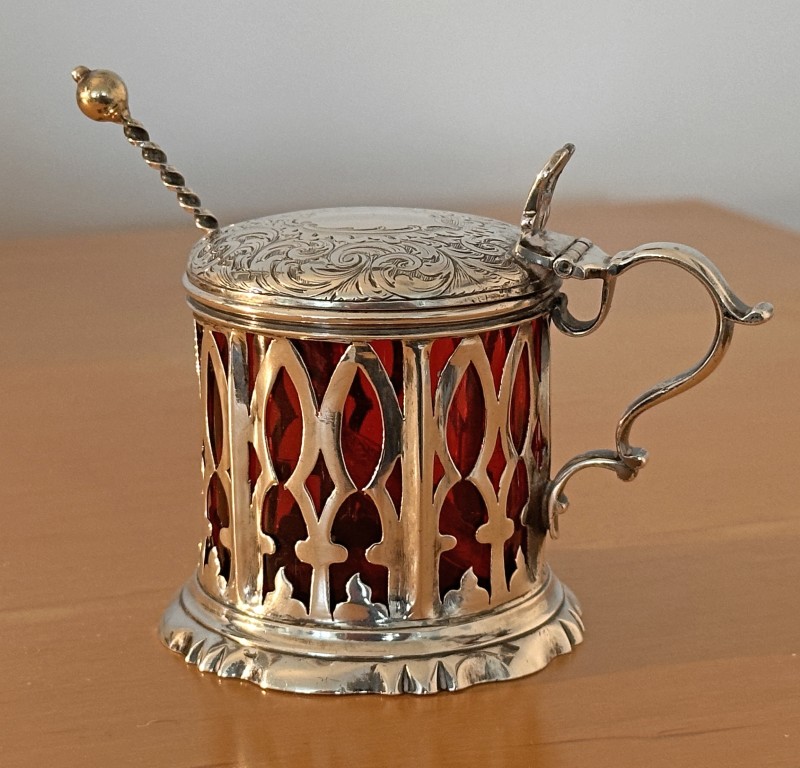
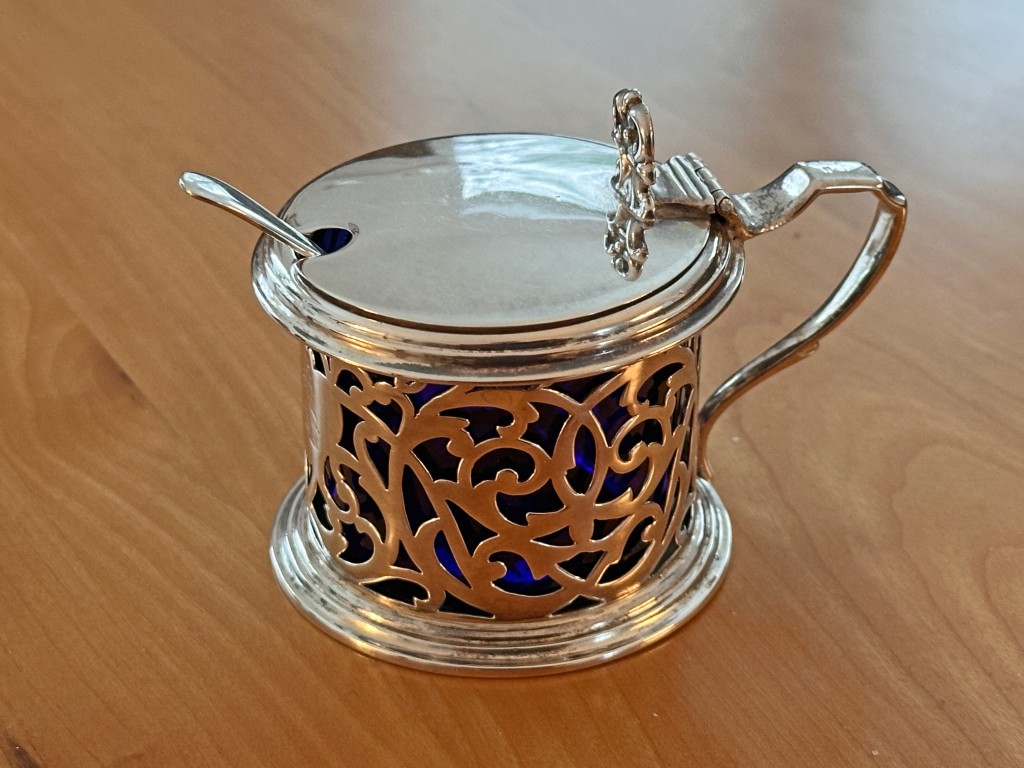
A mustard (one of mine, as it happens):
Thanks Jeff. It’s about 3” high so I’m assuming it would be a mustard jar. Any idea on the value or date made? I’m thinking 1890-1910 timeframe. Also, it has another stamp on the inside of the lid, a number 28. I’m assuming that is the model or mold… is that correct? Thanks again!
That time frame seems about right to me. These kinds of things sort of disappeared by the 1920’s. Similar pieces seem to sell on eBay for something in the $35-$50 range, in excellent condition. Since only the lid is silver, there’s not much “melt value” there.
And the “28” is probably a model number - there might have been matching pieces for other condiments, like salt, pepper, sugar, and so on, and they would all have the same number.
This is a query about the Mauser Manufacturing Company of some 20 years ago on this forum which I thought you might find interesting. If only to show we are consistent in our answers!
In that case the item proved not to be Mauser but the commentator provided useful data about the US company which you might still find interesting.
Historically we have all shied away from giving valuations on this forum because they are frankly too subjective to be of much lasting value.
But, and with the utmost of respect to my esteemed colleague. I think because of the very short time period this company operated, the high quality of American cut glass and the excellent embossing on the sterling lid you might expect a little more.
But to get it I have two suggestions. If I may?
First sell it as a jam jar not a mustard pot. These days both mustard and jam come in their own jars but there is little practical call for condiment jars period. Jam you might find someone who puts up their own getting interested in an admittedly small sample pot.
Secondly find a jam spoon for it. Mauser did make them but I couldn’t locate one quickly. But a contemporary spoon by another maker would be fine. It too should ideally be silver not plate.
BTW, Jeff’s Regency/Vicky mustards with the Cranberry and Bristol glass he shows us all for comparison are lovely too. One probably by the Angel family? Those mustards are coloured glass interiors so you don’t get to look as the brownish yellow paste mustard powder makes you gaze at through clear glass.
Before Bristol glass came along, nearly all mustards were solid silver with glass or gilt interiors to protect from the corrosive damage the paste otherwise inflicts on silver and wood spoons to avoid those rotting not so slowly away if left in the paste.
Jam, on the other hand, looks bright and sparkly through plain cut glass even if that glass did used to have a high lead content which will leach into the jam. But hey, back then if the worst you had to fear was from a beautiful cut glass jam pot, life was pretty good.
CRWW
I agree about the marketing strategy - I’ve seen similar objects listed as “jam/mustard” pots. Maximize your chances of snagging a searcher! It’s sometimes a game of keywords. This one is just large enough to get away with it. ![]()
Re: my two little pots (I’ve got more!), the cranberry is Robert Williams & Sons, Exeter 1851. The cobalt is James & Nathaniel Creswick, Sheffield 1853. Neither arrived with a spoon - I’ve improvised. The Exeter pot was the real challenge - the notch for the spoon is too narrow to accommodate most period spoon handles. That twist-handled spoon is actually American, Dominick & Haff, ca. 1880.
All this discussion about Jam is going to have me misquoting the White Queen’s rules on the subject to Alice in Lewis Carroll’s " …Through the Looking glass". Again.
But having brought you on board on the marketing, I must make one last effort on the “jam or nasty brown paste in the nice glass bottle debate”.
Dedicated watchers of TV’s “Downtown Abbey” will note none of the women ever appear for breakfast downstairs. You see housemaids scurrying about lighting fires, and valet’s bringing freshly steam-ironed and brushed suits for a day’s shoot or fox hunting, but of women per se there is no evidence before about noon.
That’s because they are all in their boudoirs being attended by some other women brushing hair or otherwise repairing the ravaged of the evening or even bringing forth trays with breakfast on them.
Trays containing coffee or tea, possibly a juice some sweet rolls and … drumroll --a miniature cut glass jam pot containing exactly one serving of home-made jam or orange marmalade.
“Nothing store bought” as Maggie Smith as the dowager duchess once intoned.
The tradition has been seized upon by the jam makers of today who serve you horrid little plastic packs of single-serving confection on airplanes and elsewhere if you are not alert to the problem and stay somewhere expensive enough you can qualify for at least a dollop.
Yes, that is the origin of the small cut glass jars, the place they reached their highest valediction, the place where bringing a jam pot already opened with sugar crystalizing around the mason jar top simply would not do.
“Jam tomorrow, jam yesterday but never jam today,” said the White Queen to Alice complaining about the unembellished bread she had for chequerboard crossing.
The White queen was the master of the quick sell. Eliminate the alternatives and you move the product. Choices merely confuse and delay decision making.
I know, it ain’t the" Art of the Deal", but then who would you rather than in your White House, the Orange Man or the White Queen?
CRWW