Hello,
I would appreciate some help identifying this unusual antique folding fruit knife and, especially, the maker’s mark.
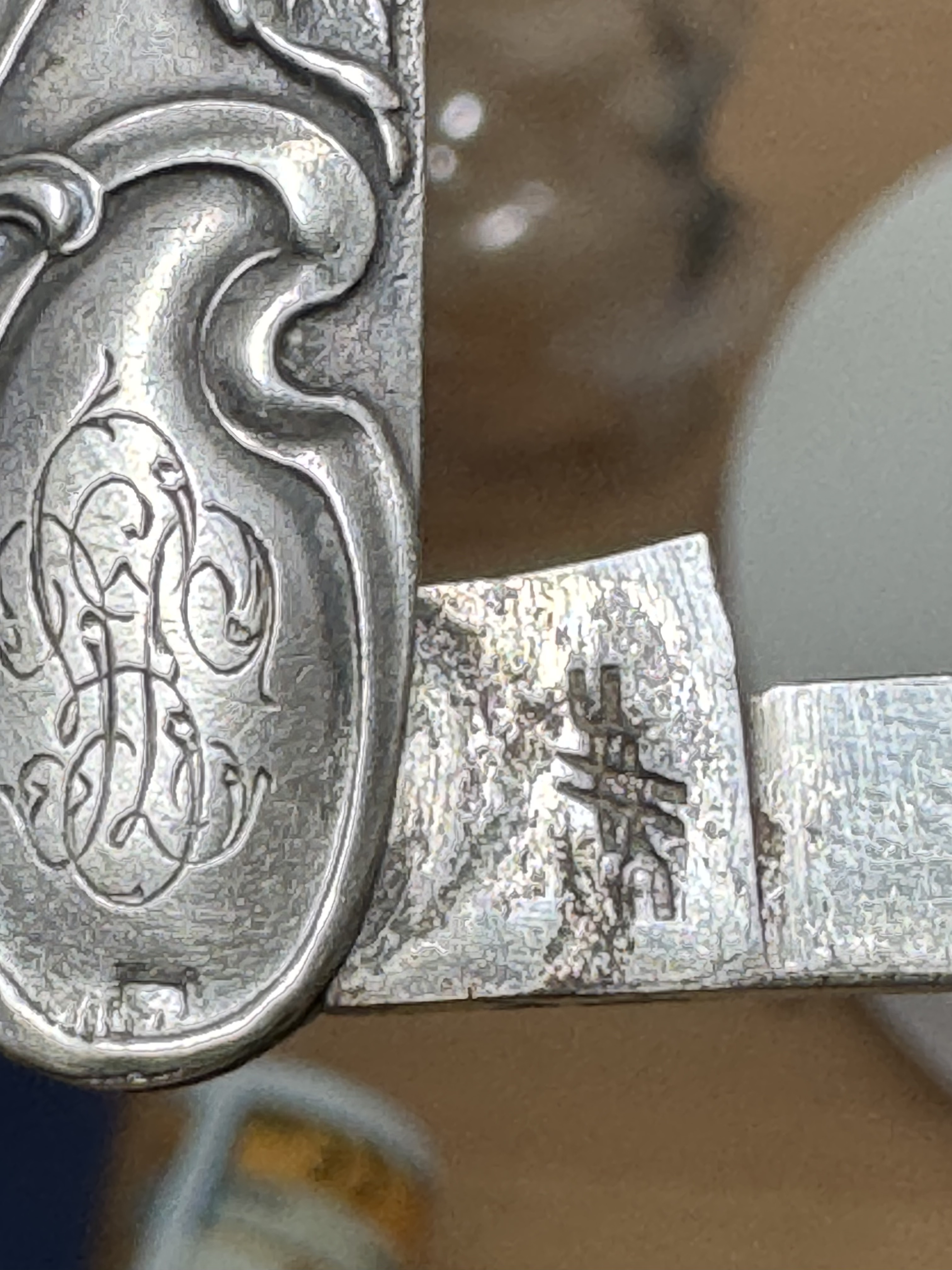
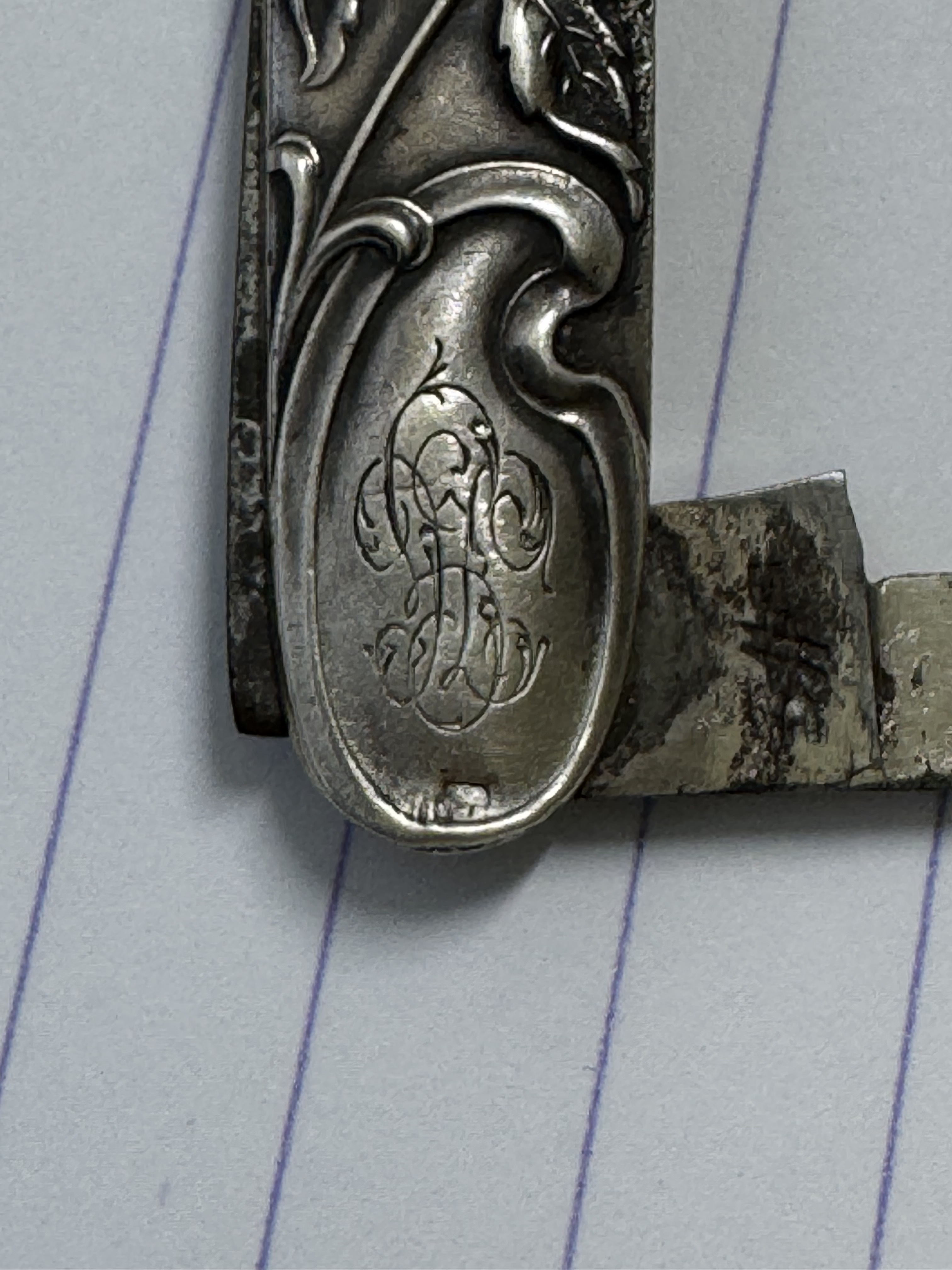
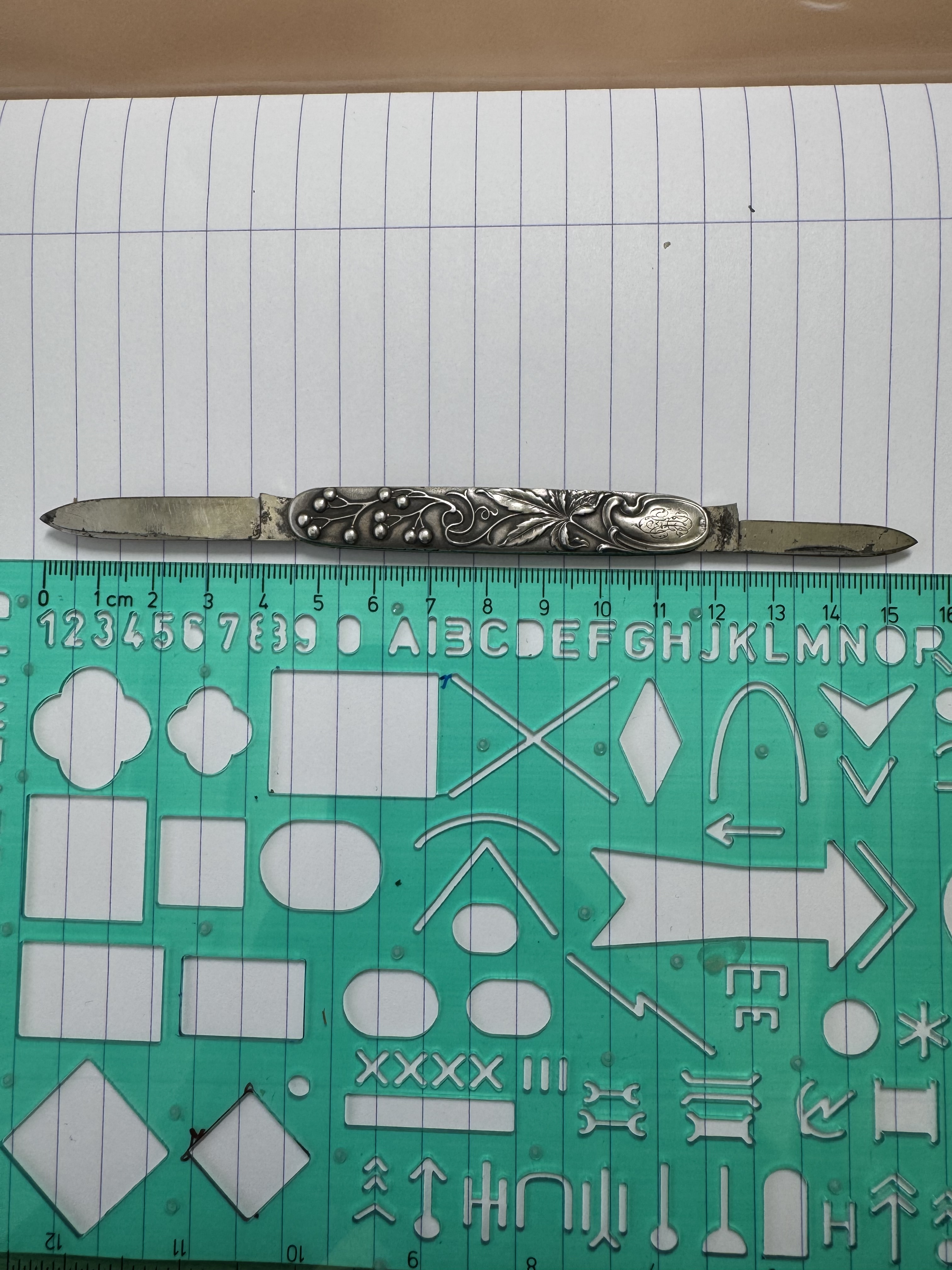
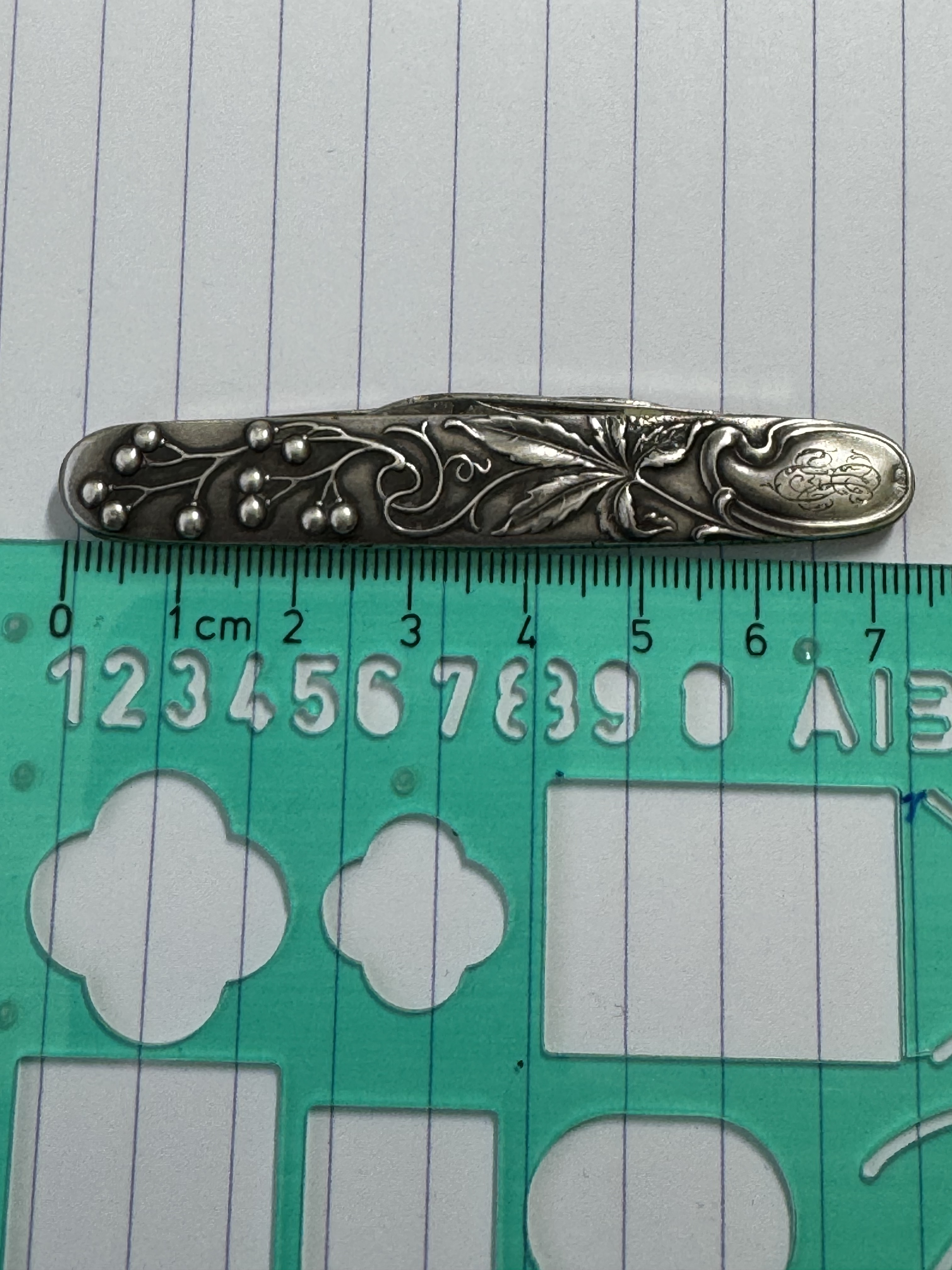
The knife is approximately 7.2 cm closed and about 15–16 cm open. It has two blades opening in opposite directions and a highly decorated silver-coloured handle with elaborate floral, leaf and berry decoration. There is also a decorative monogram engraved on one end of the handle.
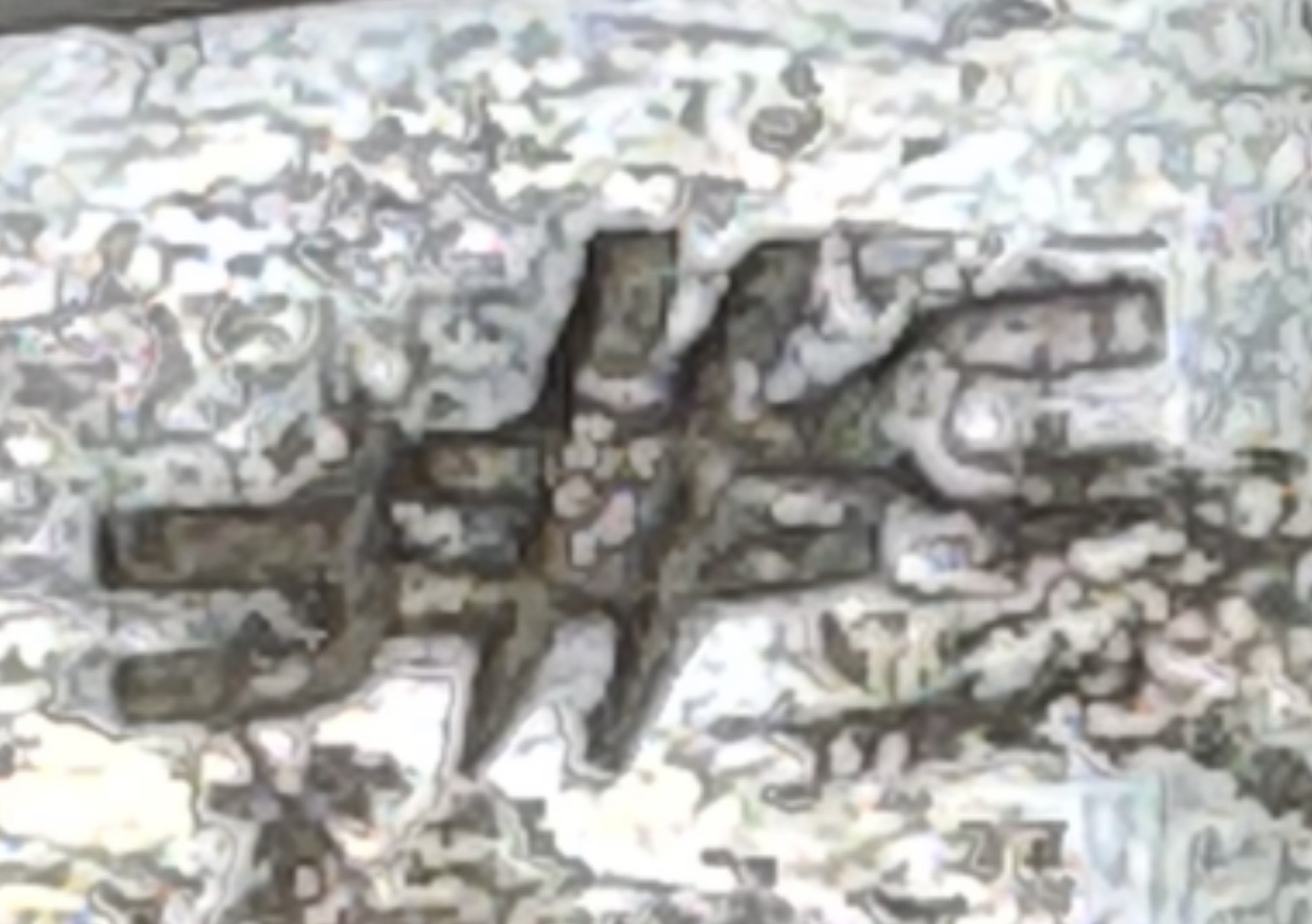
The most interesting feature is the mark stamped on the tang of one of the blades.
To my eye the mark consists of:
C — [#-like symbol] — C
The two outer symbols look like C-shaped elements facing outward. In the centre are two parallel vertical lines crossing two horizontal lines, forming something very much like a # / grille.
I have attached both the original photograph and my drawing of the mark because the actual stamp is extremely small and worn.
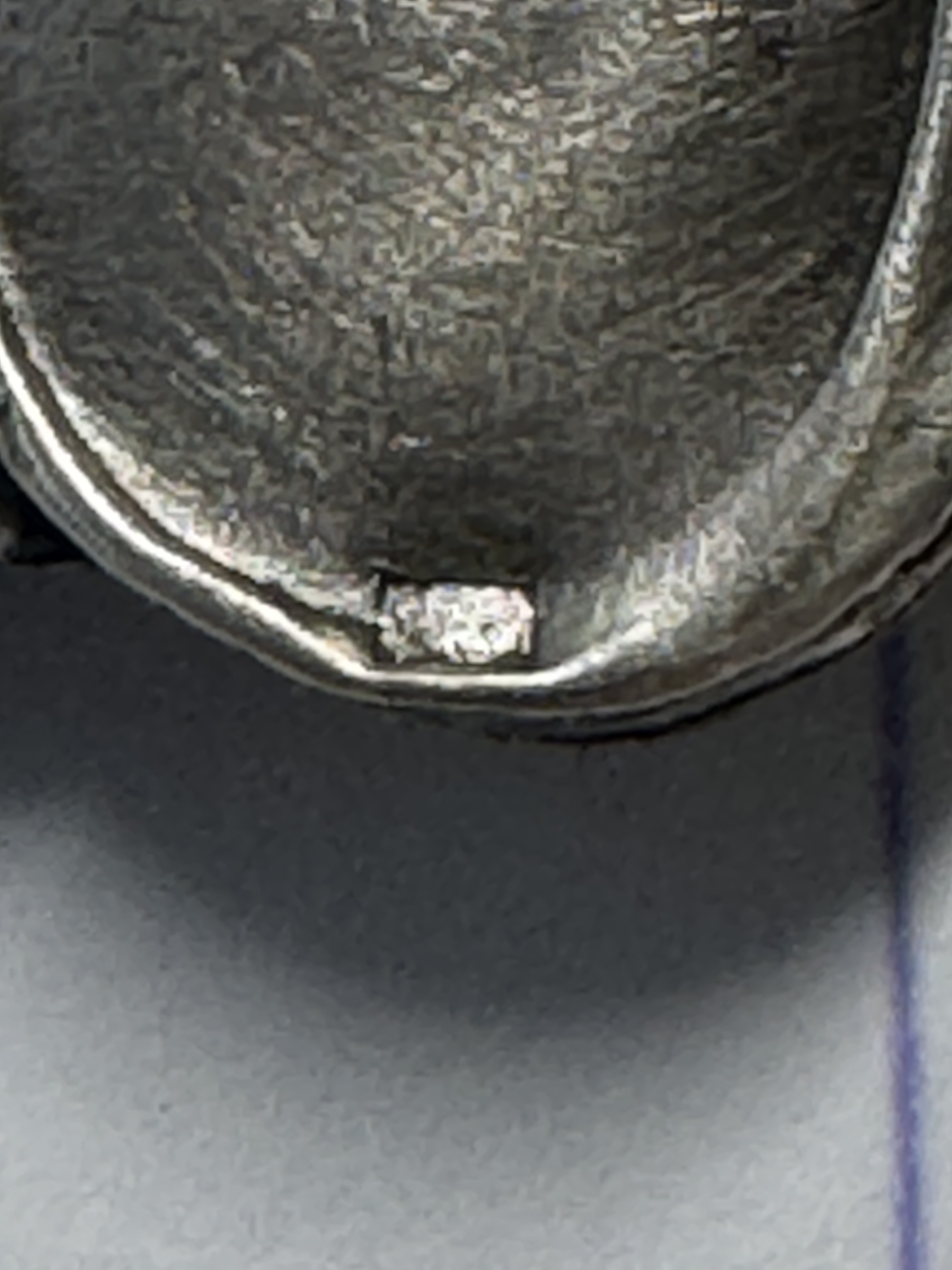
There are also several very small rectangular punches elsewhere on the knife. I have examined these under approximately 10× magnification, but they appear to be completely blank inside and I cannot identify any letters or numbers.
I initially wondered whether the central symbol might represent a simplified set of scales and whether the whole mark could be related to Christofle, but I am no longer confident about that interpretation.
Does anyone recognise this particular C–#–C maker’s/trade mark?
I would also be interested in any information about the knife itself — maker, country of manufacture, approximate date and whether this is a known type/model of double-ended fruit knife.
The knife was found in Europe, but I don’t know its original country of manufacture.
Many thanks!