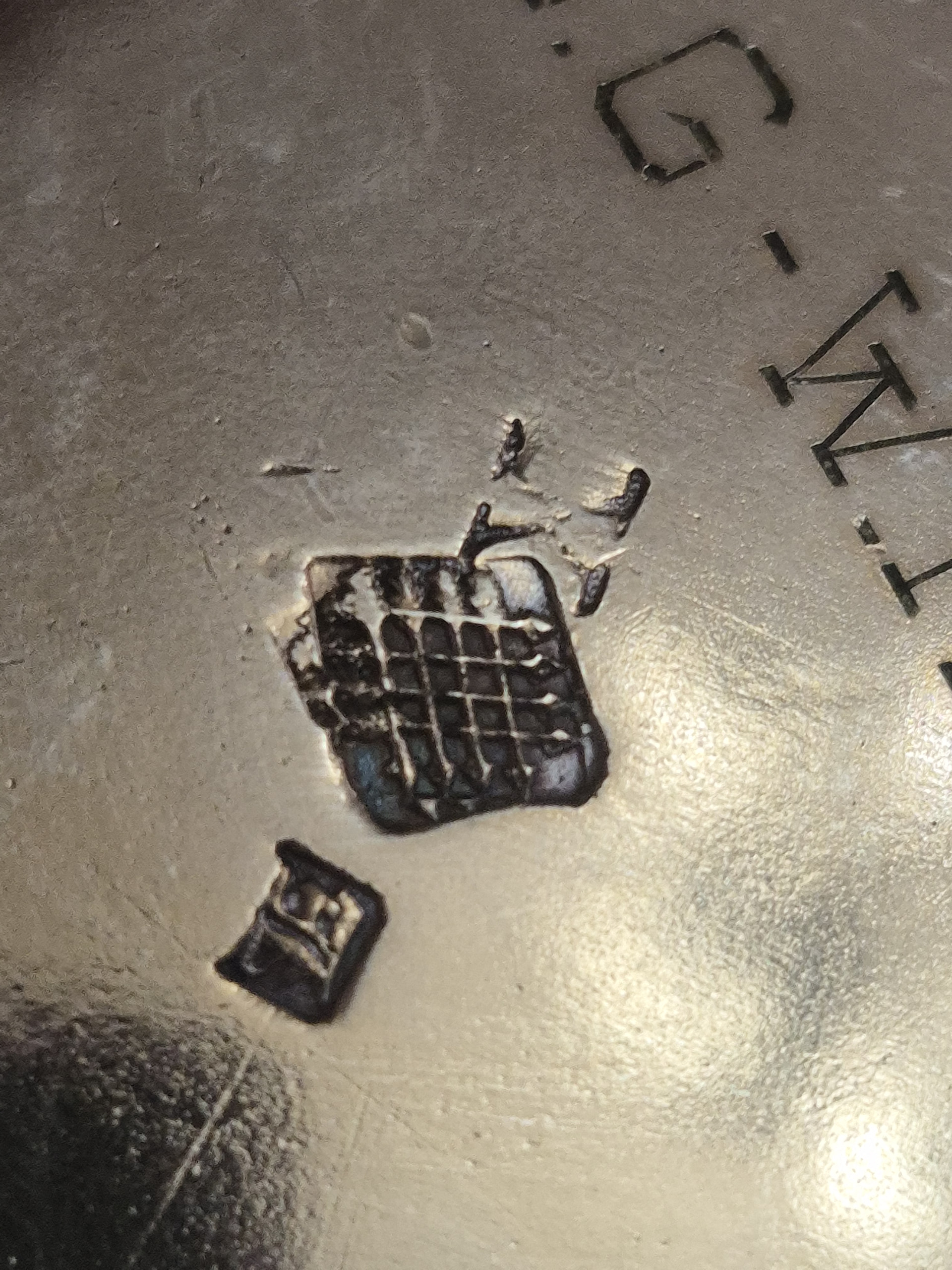
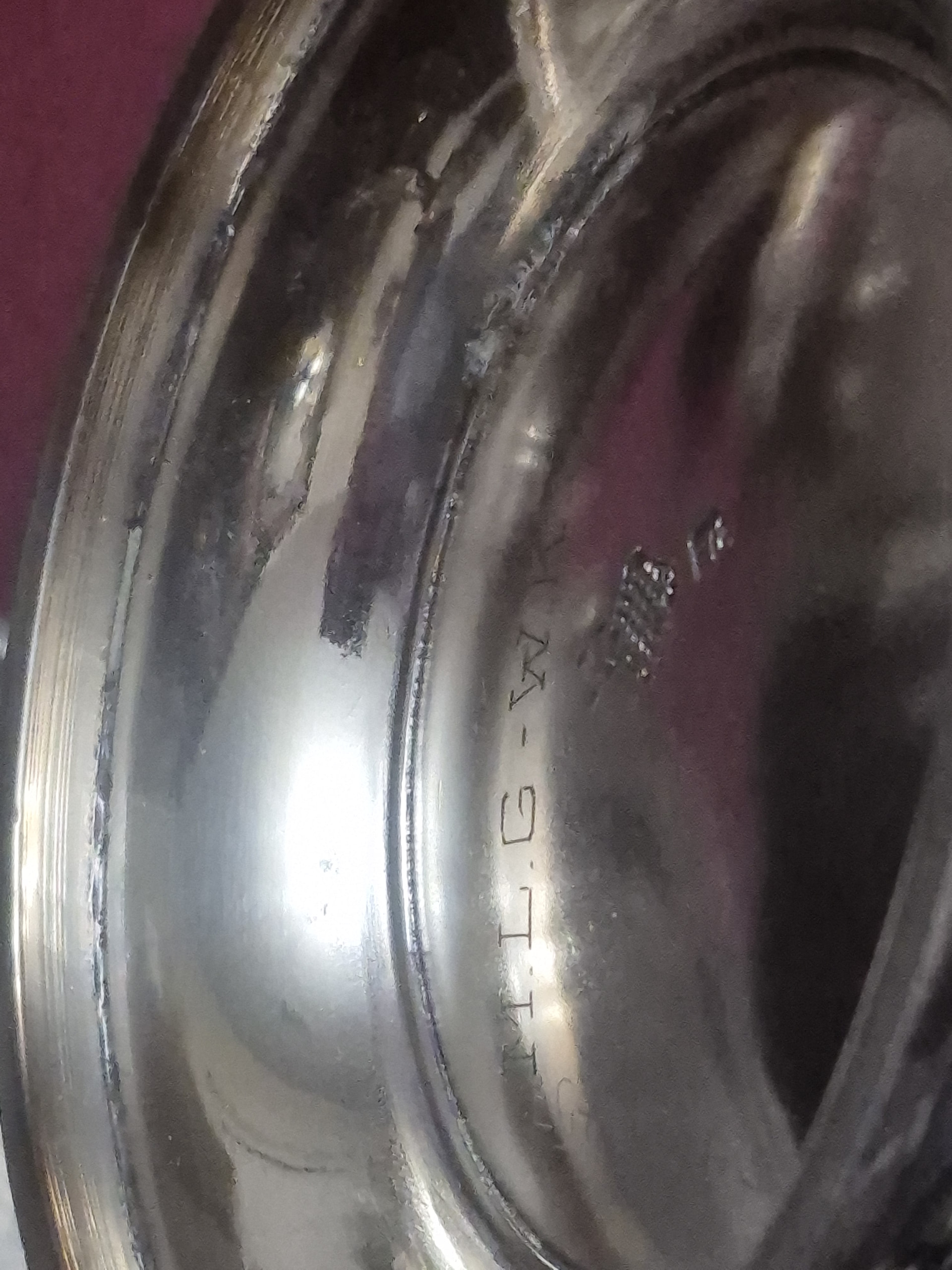
The second punch is probably a journeyman’s mark.
The X looks like it’s in the same style as the partially-depicted G-W something. I would assume that it’s something the owner of the piece added, to keep the servants from flogging the pot to the local fence.
Ahhh, good trustworthy help has always been hard to find.
Wish we could learn something about the journeyman.
From what I’ve gathered, journeyman marks on silver plate are quite uncommon, if this is actually early Sheffield plate by this firm, it is in remarkable condition and the fact it has journeyman marks just adds to the flair of this piece. I’m thrilled I picked it up and saved it from probably getting scrapped for 8$ in copper.
Upon reconsideration, the second punch might be one of the variants on the maker’s names - T, J, C in some combination. I gather they used several versions of this over the years.
Journeymen’s marks aren’t very common, and they’re usually much more subtle than this - a single small letter or symbol.
ETA: Just to confuse the issue further, the crossed arrows of Creswick appear to have been punched over something else - you can see it peeking out from the left side. There’s no way to know what the “something else” is, of course, and it might just be a sloppy double punch by Creswick.
You should also be aware that the crossed arrows trade mark was acquired by William Hutton & Sons in 1902 and appeared on their electroplate, although normally in combination with their initials.
You’re our resident Man of Letters (the rest of us are rubbish at it) - what do you make of the second punch? 
It could be L or E, but I’m more inclined towards a monogram TE
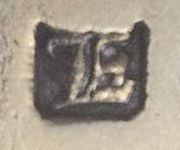
but I’m no closer to its significance.


THOMAS, JAMES & NATHANIEL CRESWICK
CRESWICK & COMPANY
Sheffield
Formerly TJ & N Creswick (Thomas, James & Nathaniel Creswick). The “arrows” trademark was first registered in 1811 for Old Sheffield Plate production. The cross arrows trademark was later acquired by William Hutton & Sons in 1902. Electroplating began in 1852. The firm became Creswick & Co in 1855. The letter/symbol next to the “arrows” identifies the journeyman who made the piece
The four arrows trademark is double punched . “Stutter punched” as my favorite author on the subject termed it.
The X is a journeyman’s tally mark, an early system of piecework where you marked your stuff to get paid and the TE will either be an internal design reference or retail mark, probably the former.
The mark is a Creswick mark not a post 1902 William Hutton mark as the latter company was rigorous in stamping its marks in addition to the cross arrow mark.
CRWW
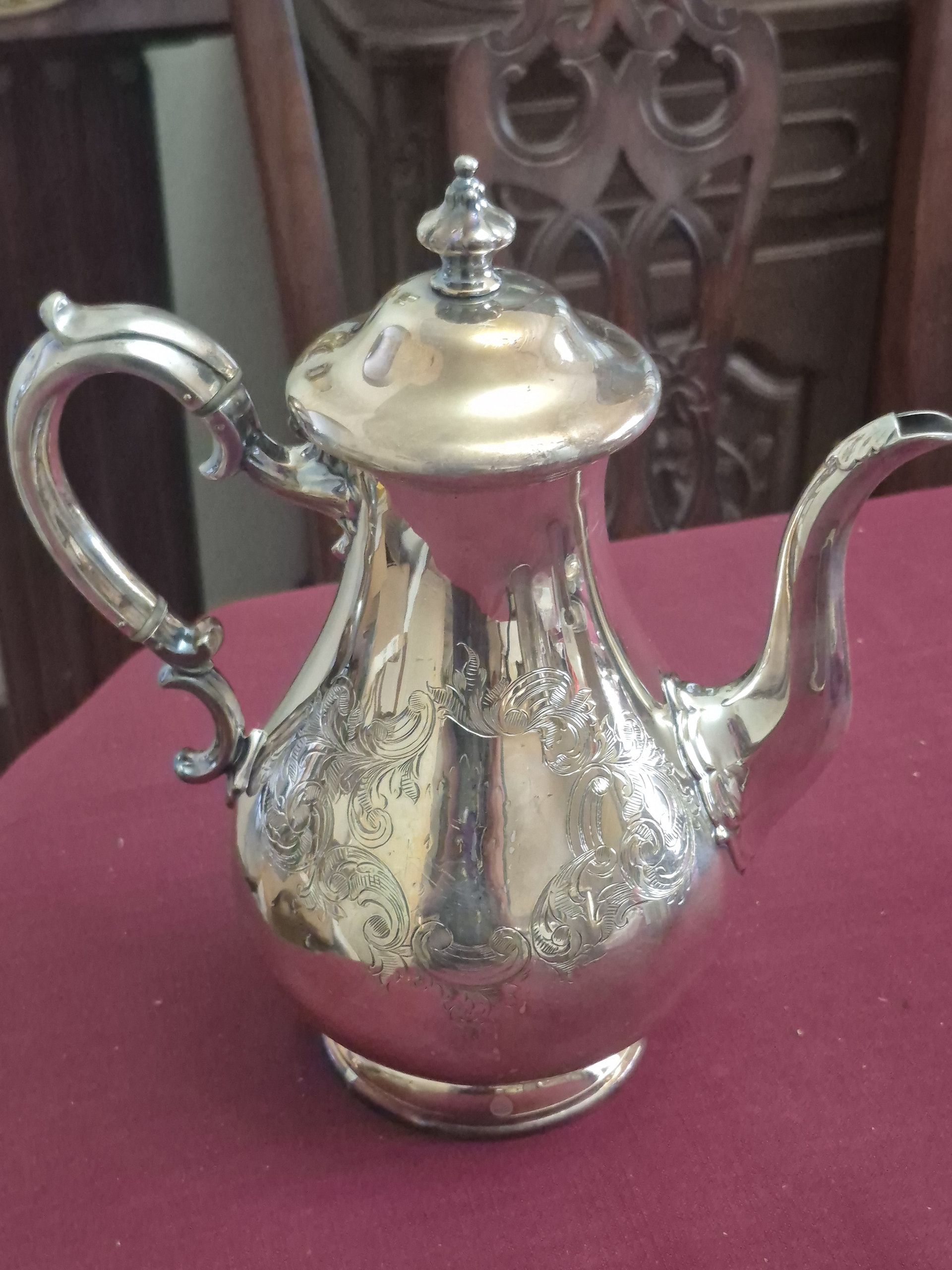
It is difficult to tell from the photographs if your coffee pot is electroplate or Sheffield close plate, but the odds of its being the latter are quite good as the primary commercial electroplating patent #8447, acquired by George Richards and Henry Elkington was granted on 25 September 1840 and under British patent law at the time, standard patents of invention were granted for a term of just 14 years, meaning the original patent expired in 1854 though the firm continuously acquired and filed improvement patents afterward.
Creswick were offered a licence to manufacture by Elkington Bros and turned them down because they were then in transition themselves.
“…Elkington’s electro-plate process was offered to Creswick’s, but they refused. This occurred as the Creswicks were passing out of the business. James Creswick, Moorgate, Crookesmoor, died on 14 August 1854, aged 64. Nathaniel died on 22 November 1855 at his residence East Hill House, Park”
CRWW
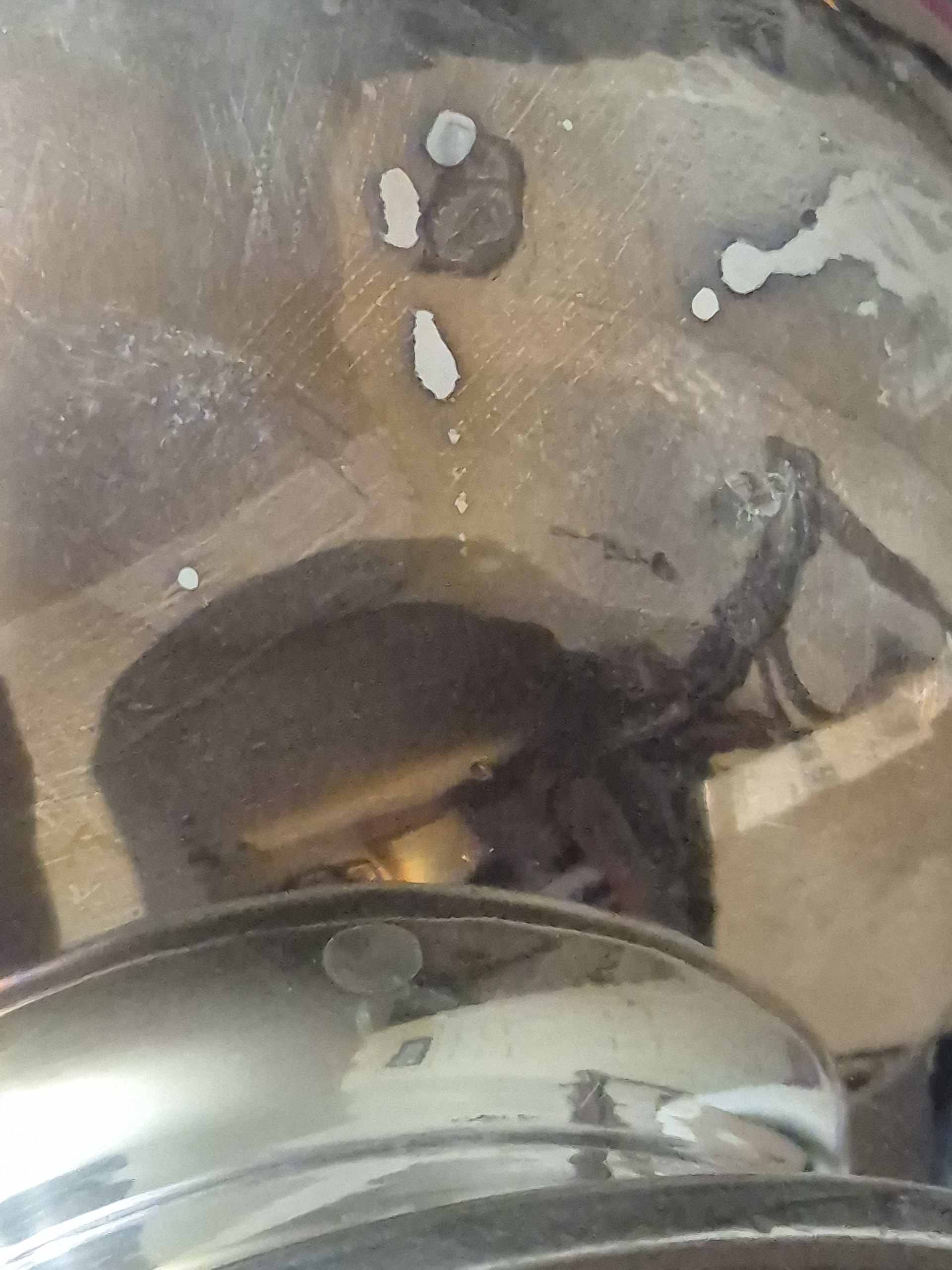
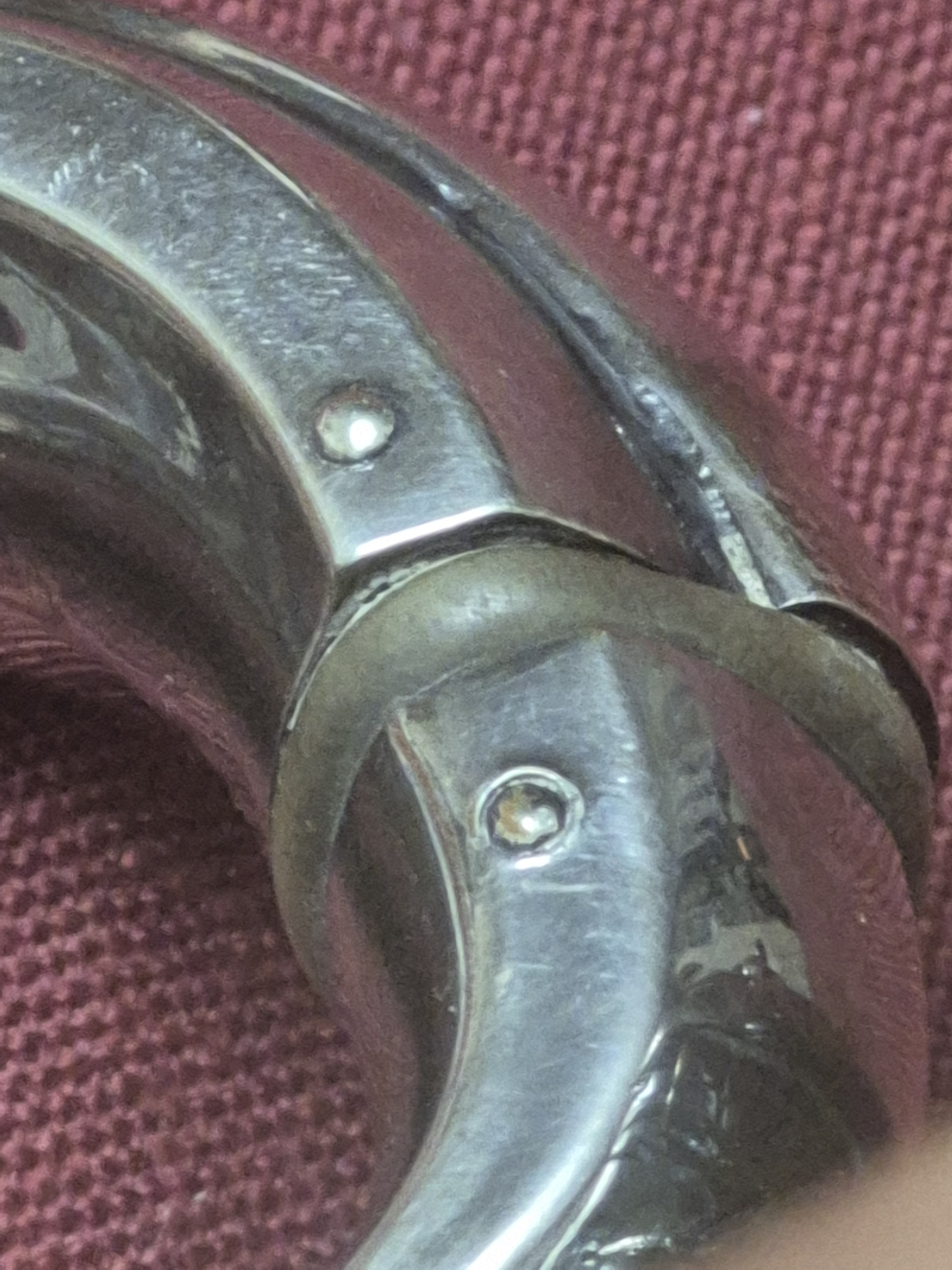
Couple additional photos to help decipher the construction… I think OSP is well within possibility, almost see copper peaking through the body, I think.
Thanks for the snapshots . Copper is, of course, common to both early EP and close plate. But the seams you now show are helpful.
CRWW