I have six spoons with the attached hallmarks. It does not say sterling, so what do these mean? Are these worth more than melt value?
Randy
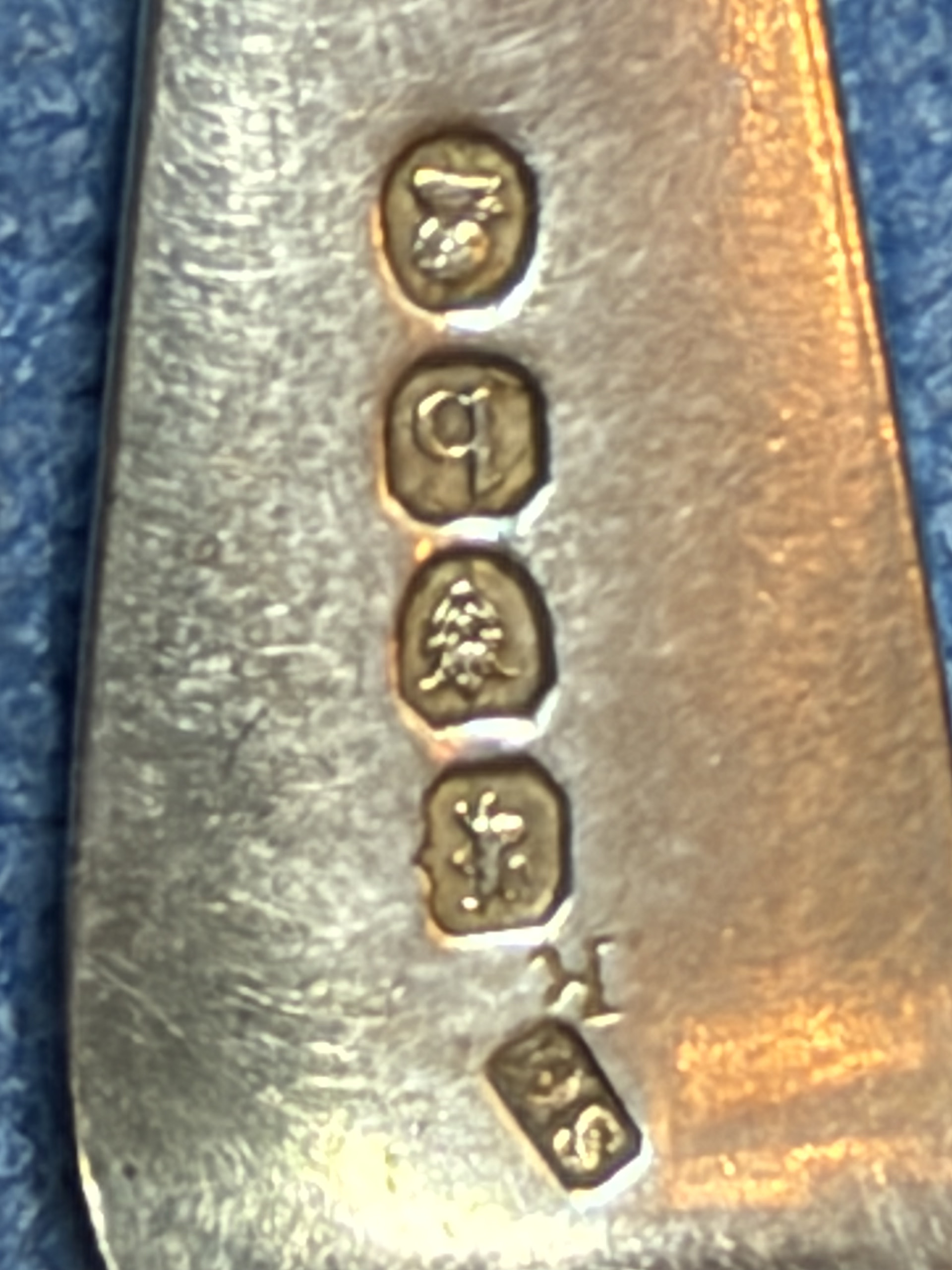
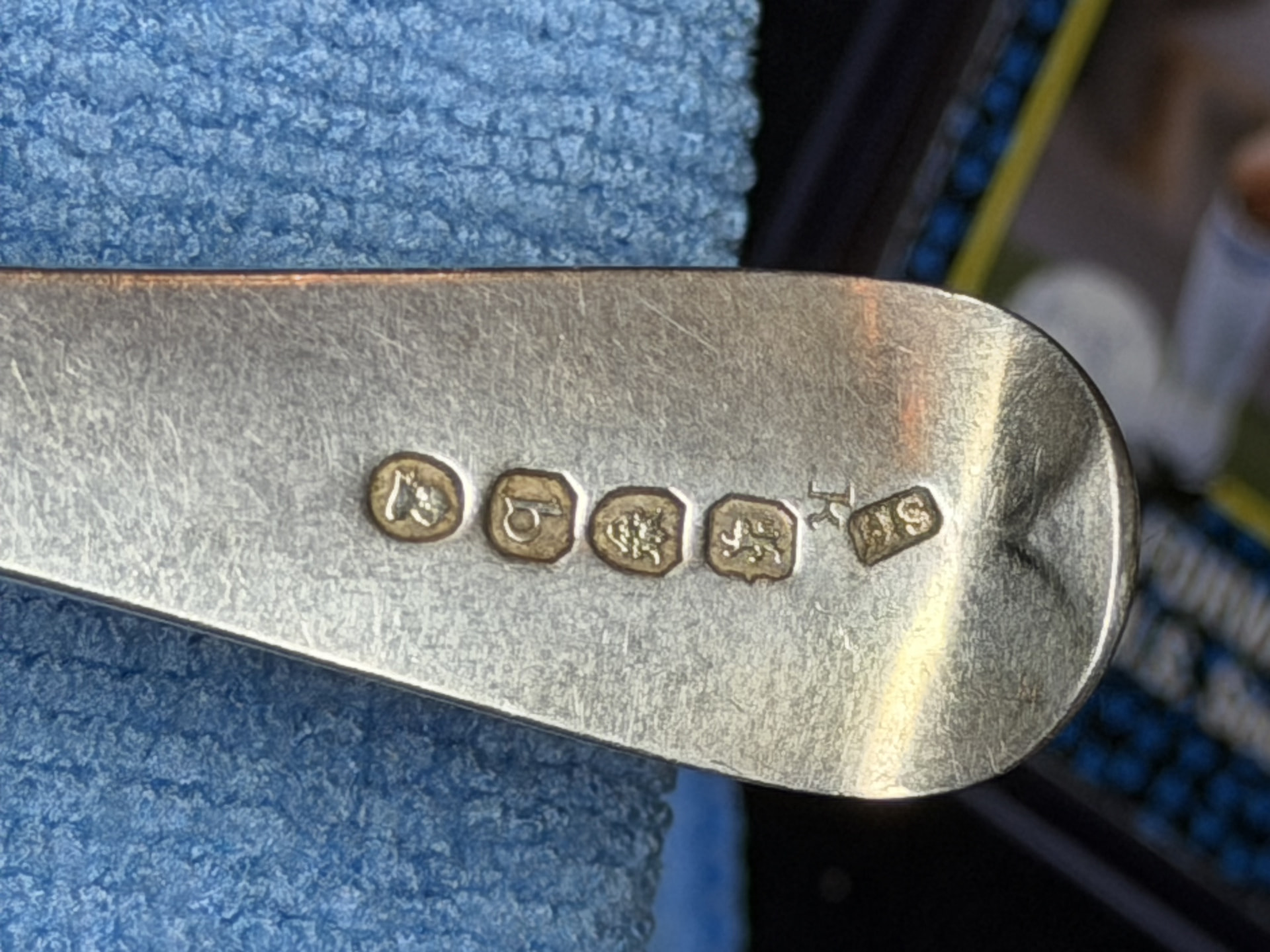
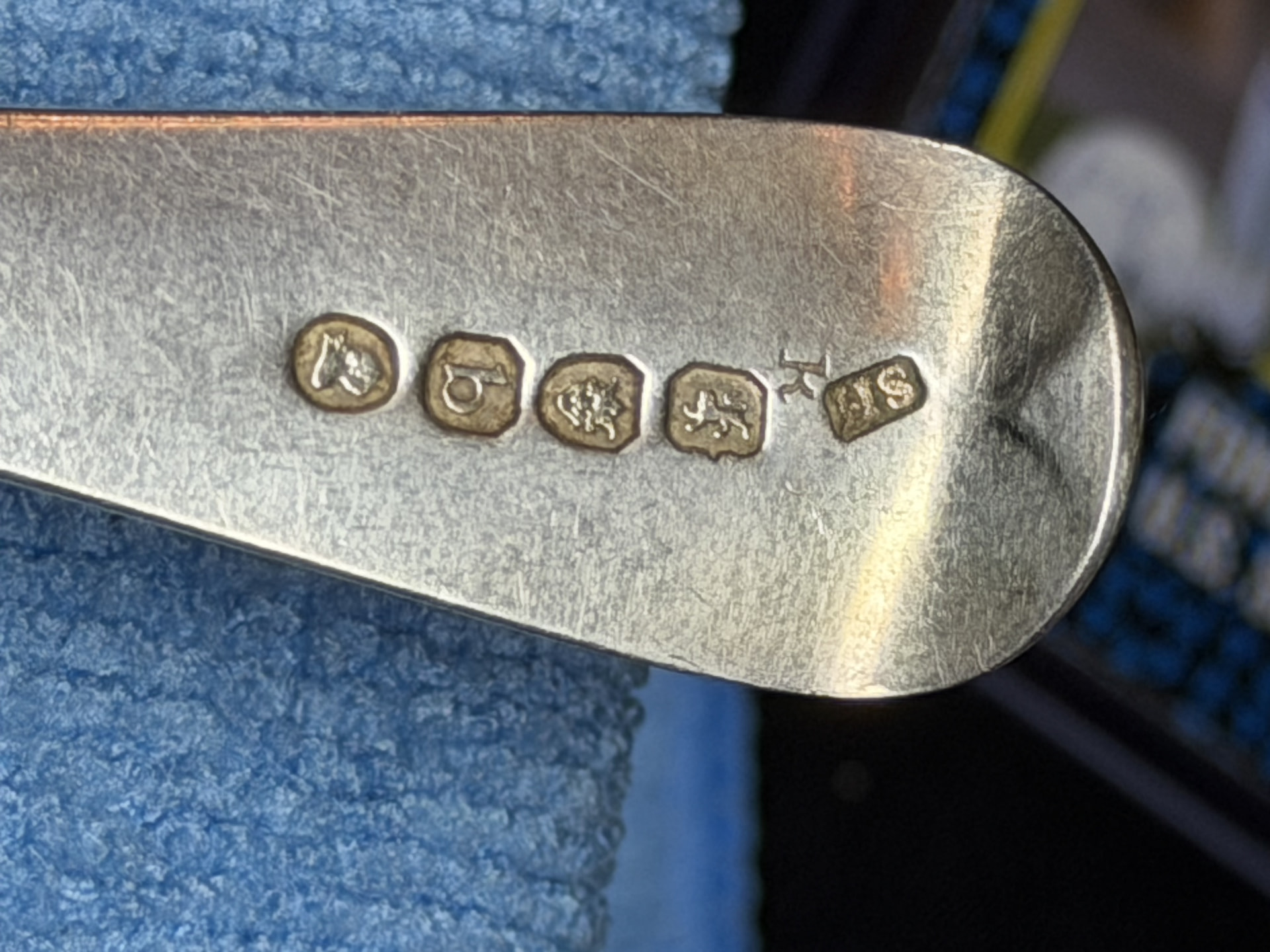
Maker’s /Sponsor’s mark as identified.
“b” date of assay: 1817
Lion Passant: sterling UK
Crowned Leopard’s head London assay office pre-1820
King’s head: duty of 6 pence in the pound paid and the sovereign is George III
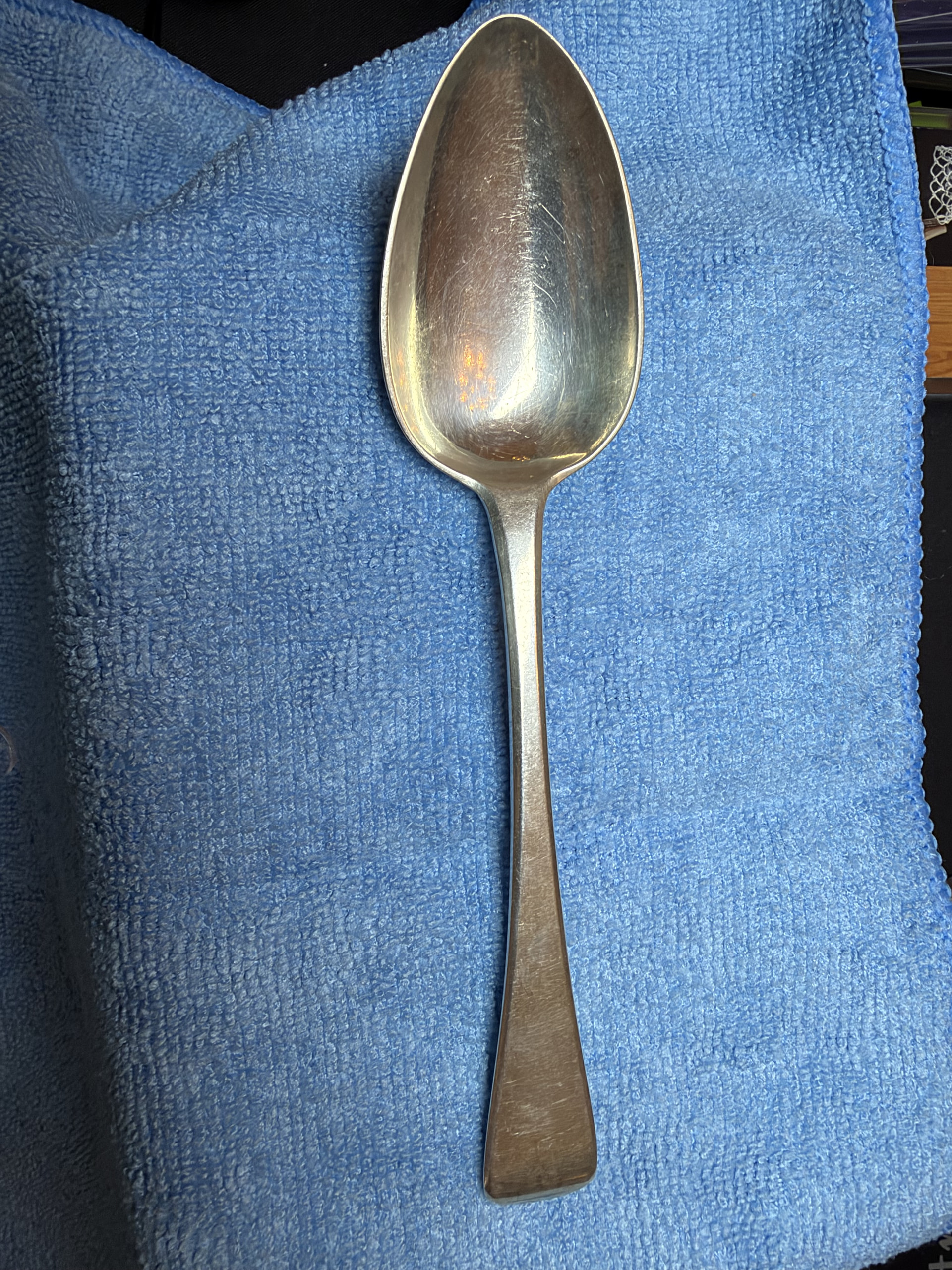
Set of little used “old English” style dessert (?) spoons in good order with little wear and clear marks. On Ebay £485.00
Scrap value at 195 grams estimate is £233.00
Auction value: probably the same or a little less as scrap net to you after buyer and seller commission.
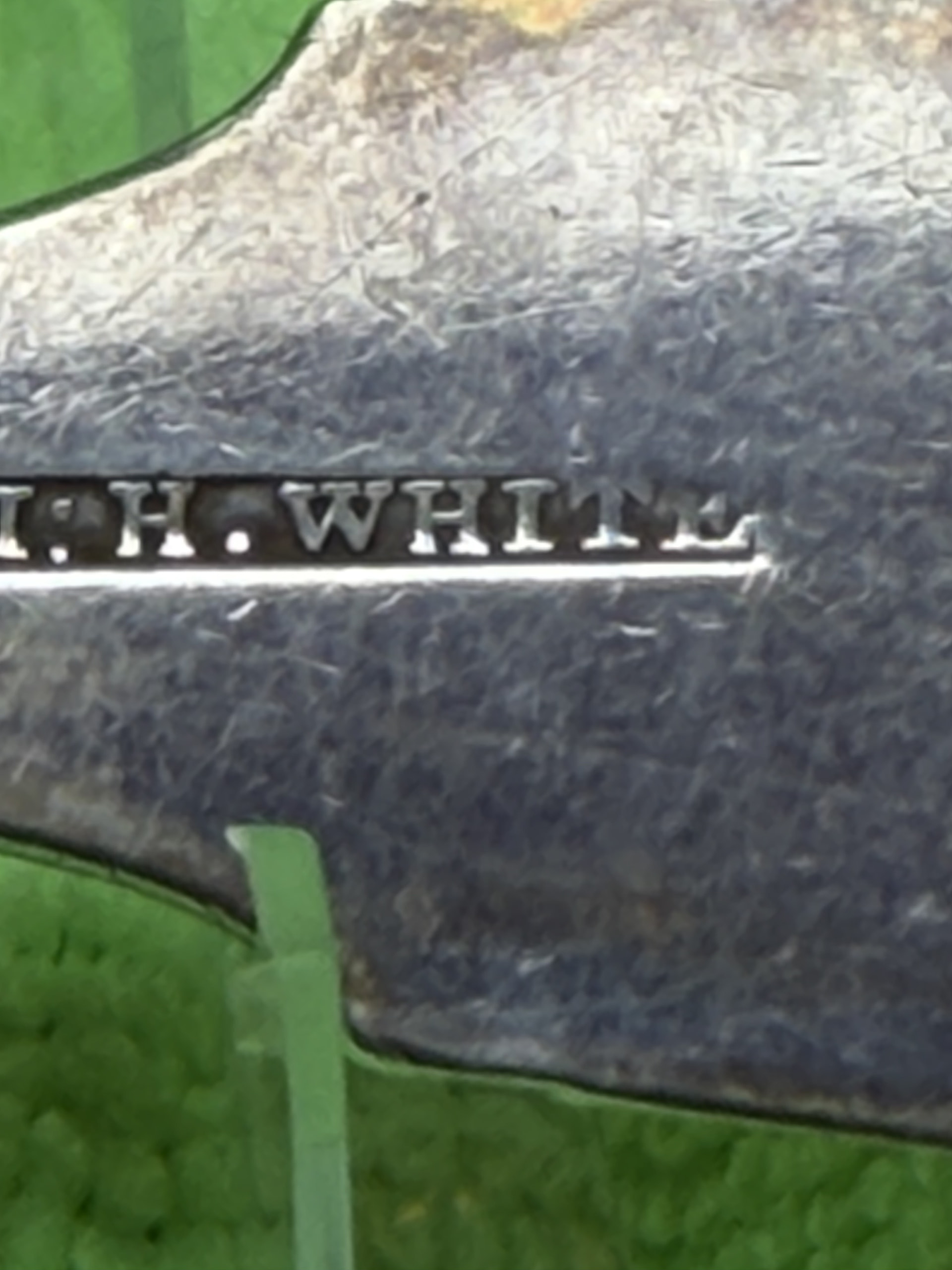
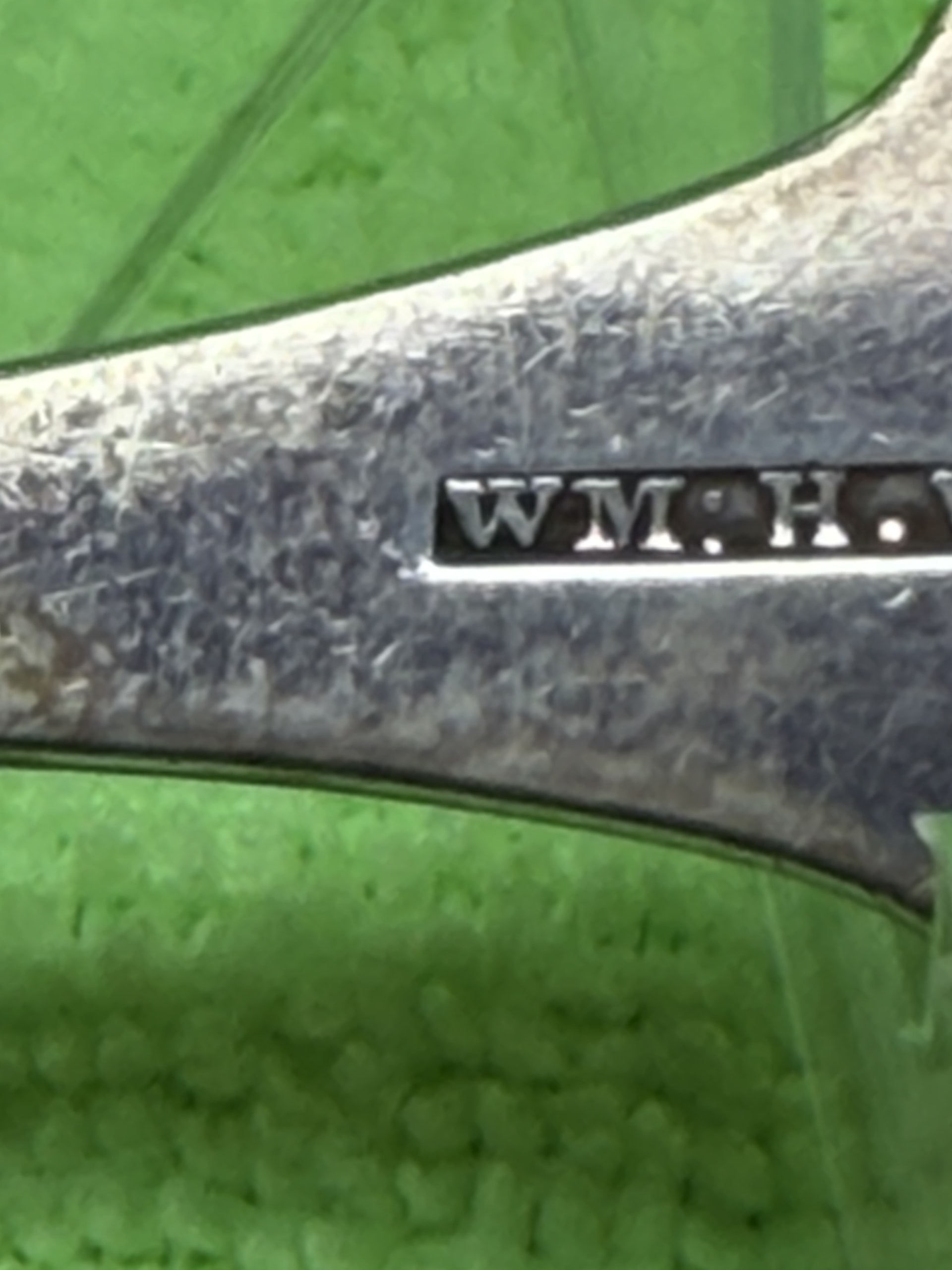
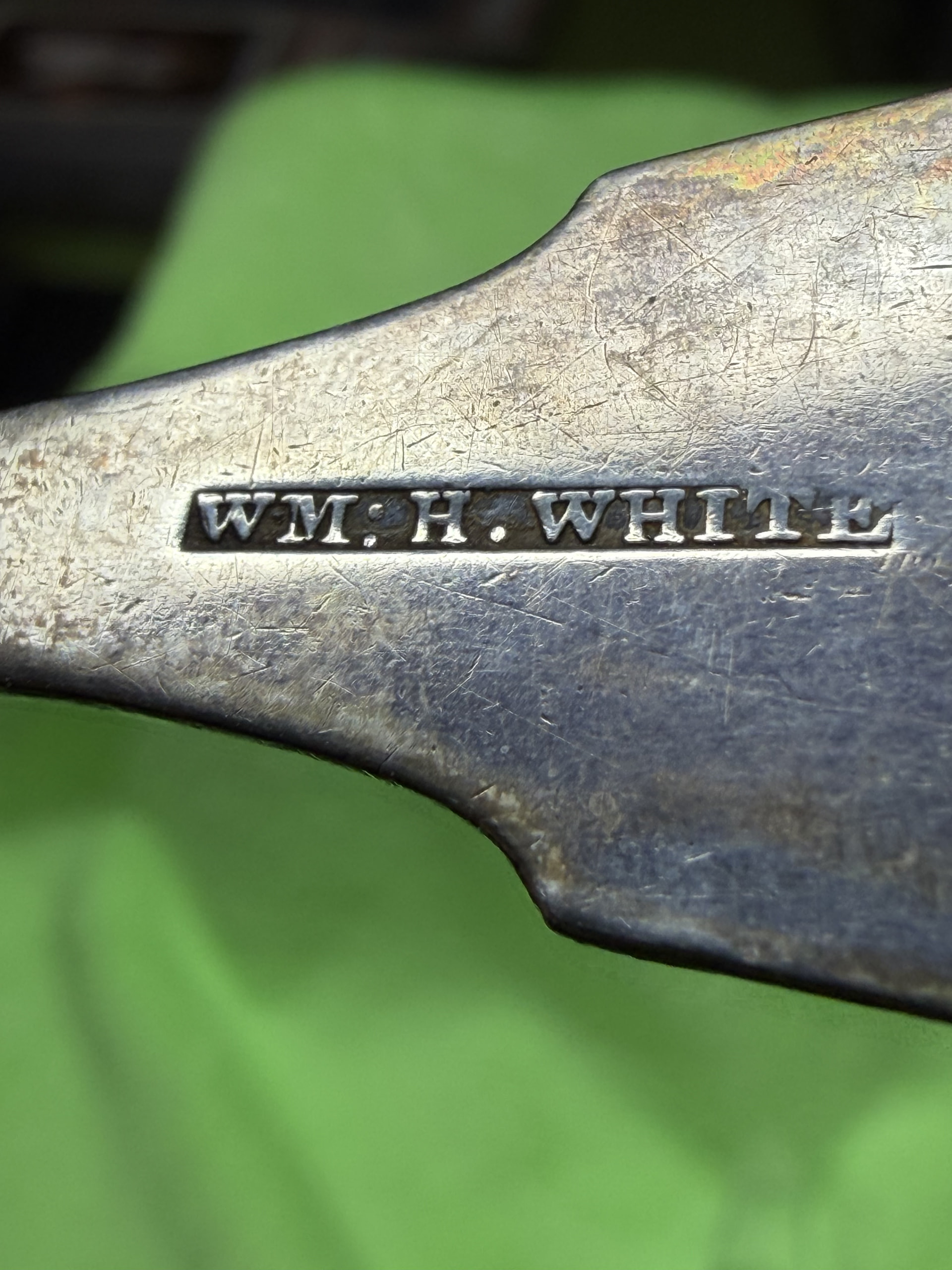
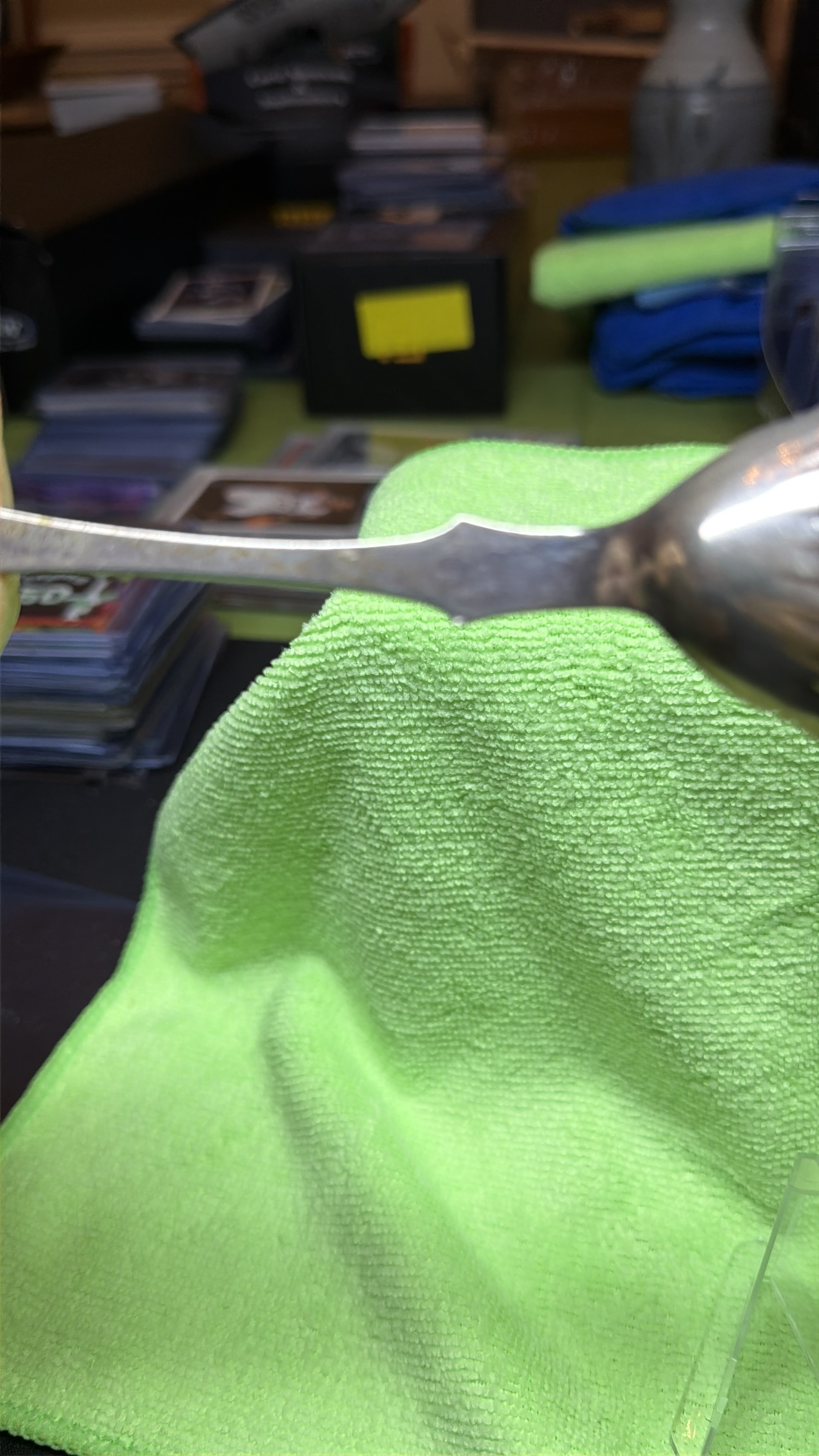
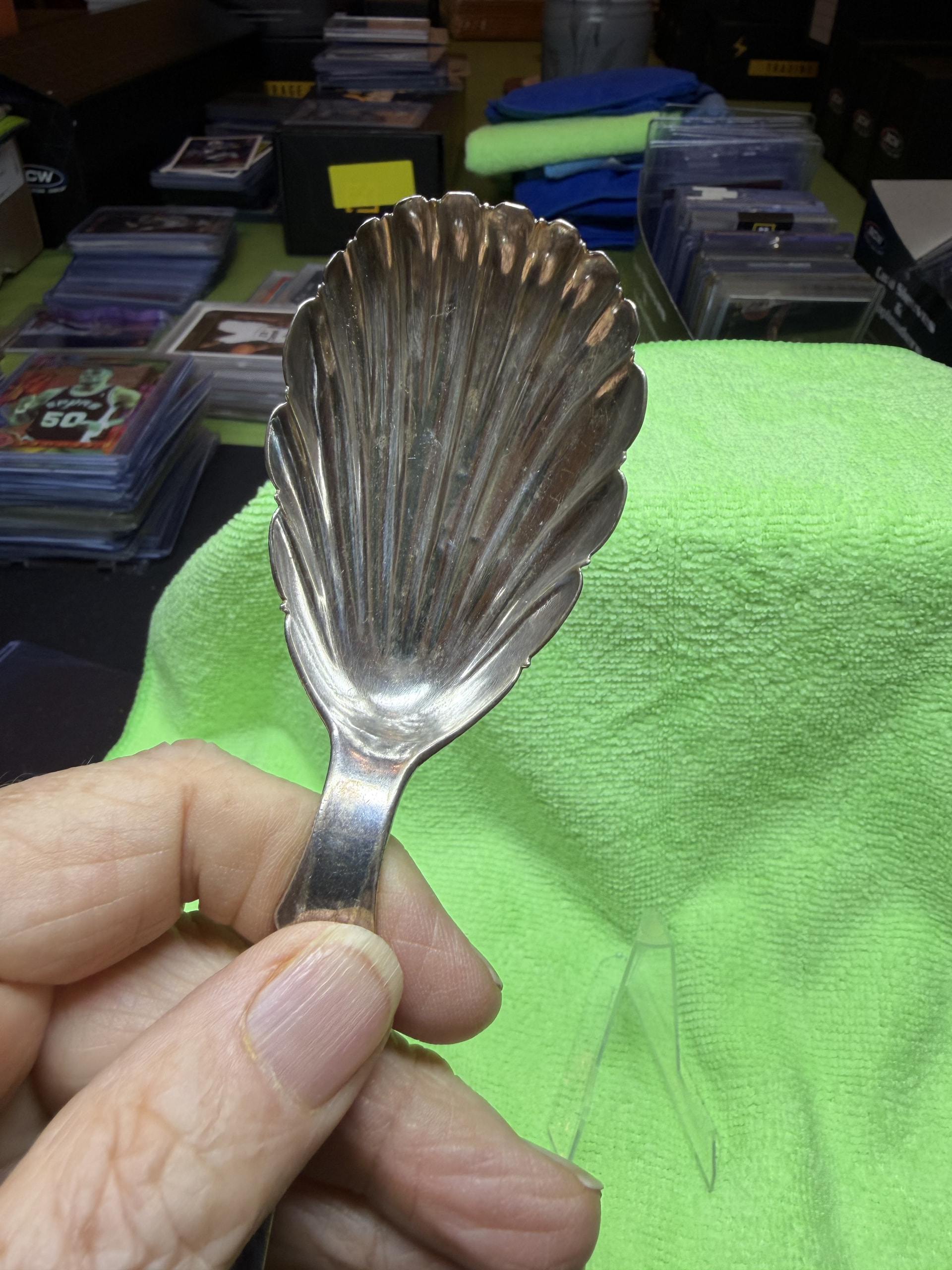
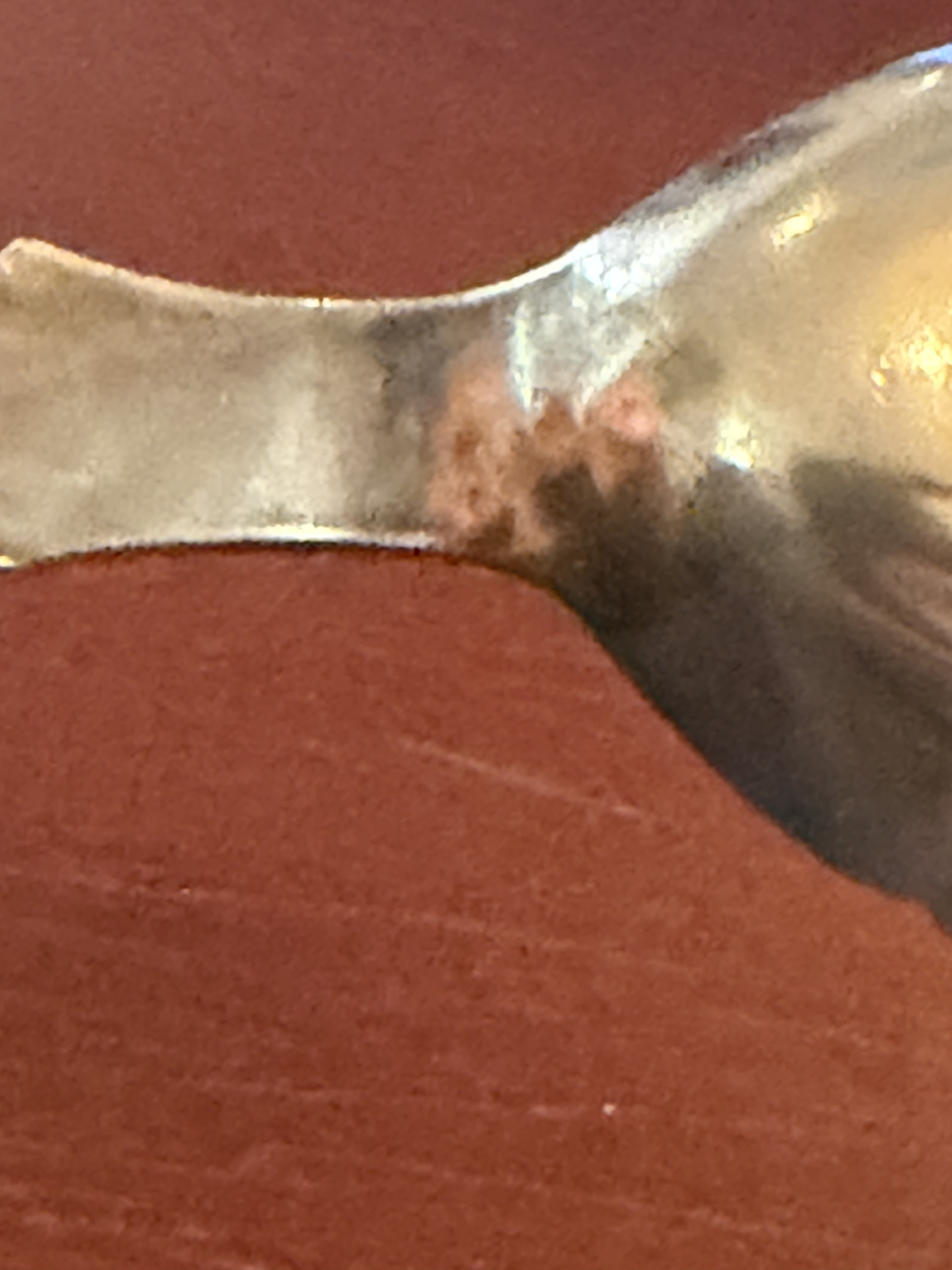
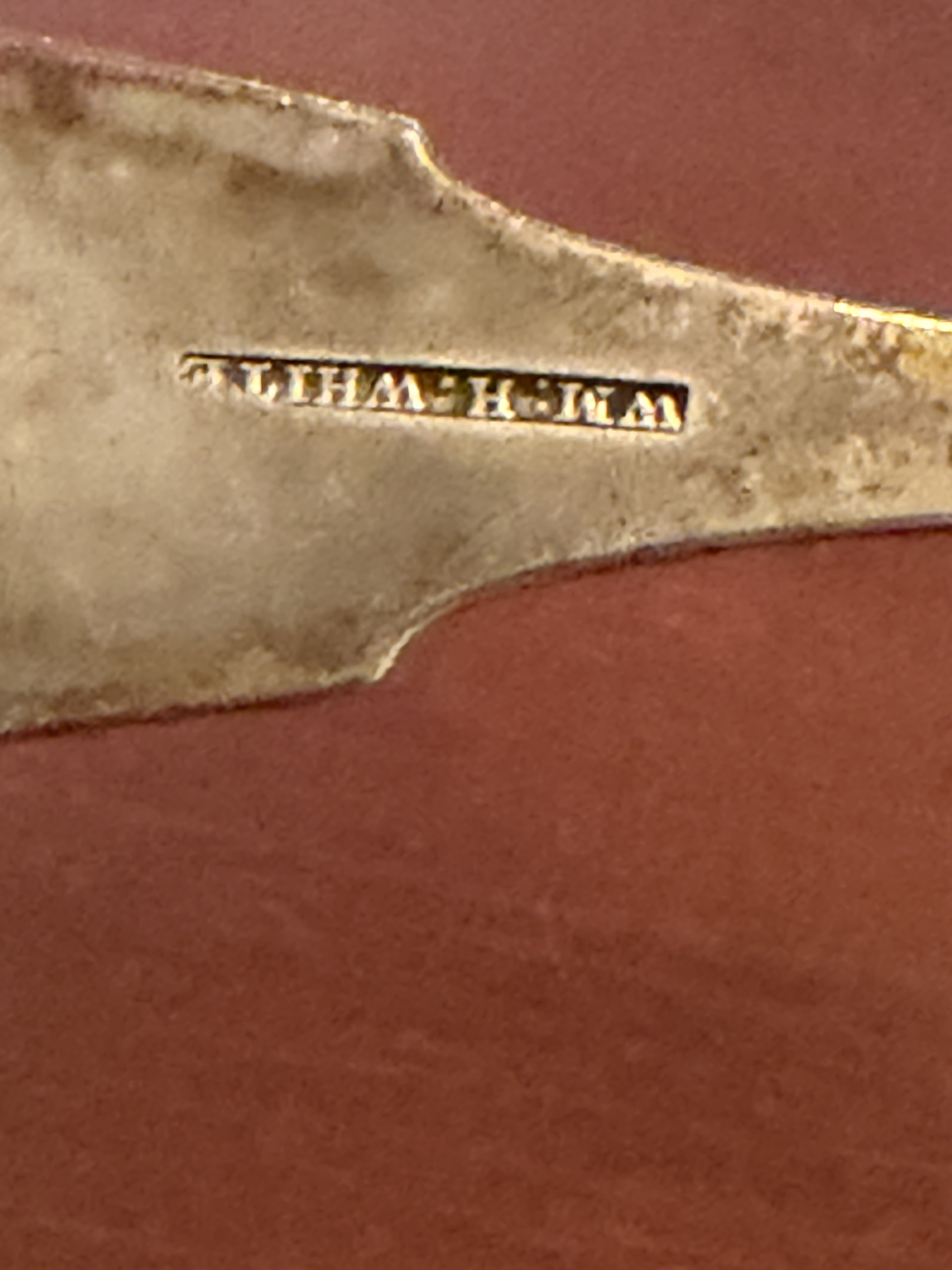
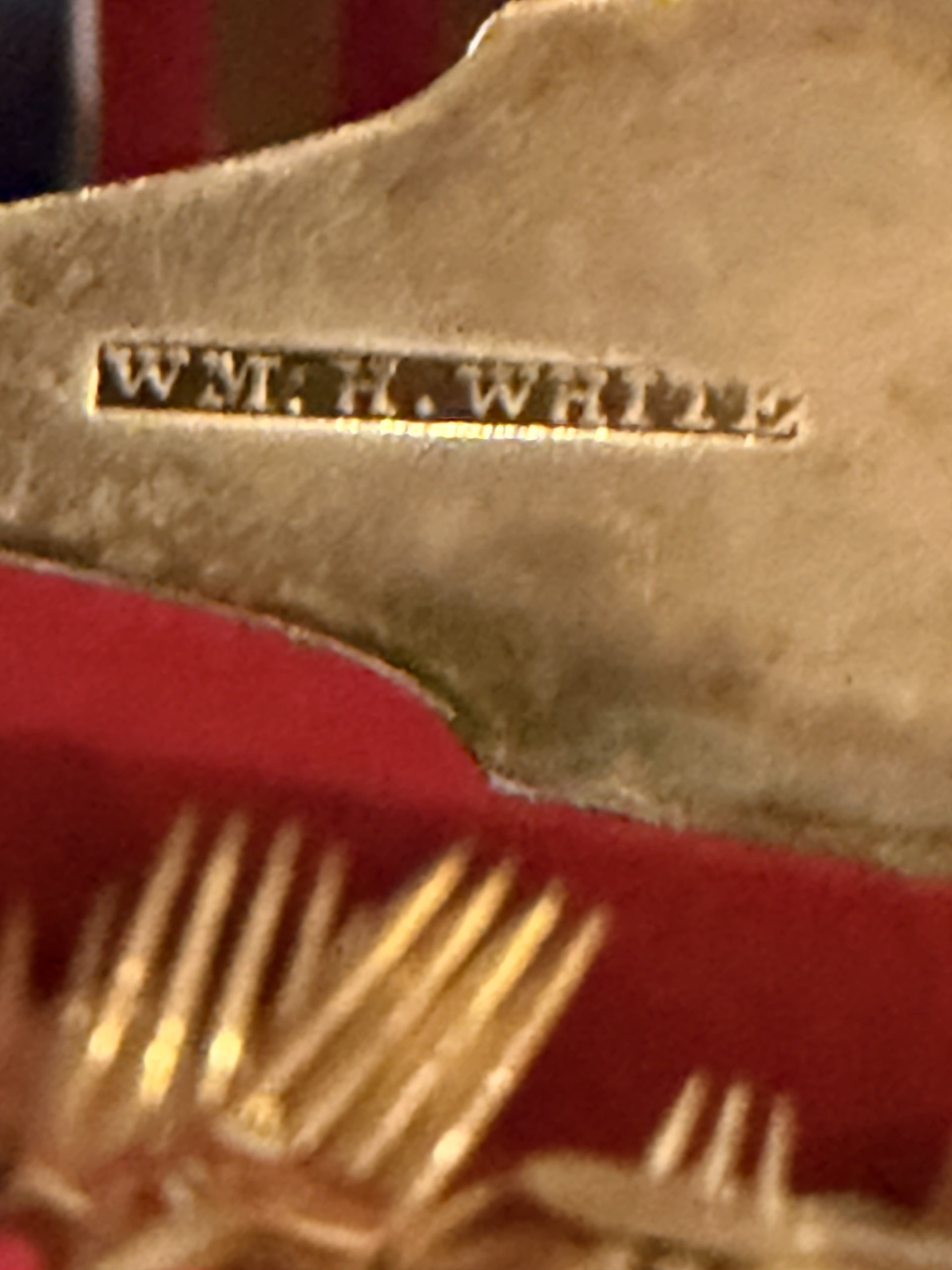
Electro-plate scalloped serving spoon by William H. White (1796-1859) of Fredericksburg, VA 1817-1858 and Philadelphia, PA 1834-1838. Unlike solid sterling silver, which is 92.5% pure silver throughout, silver-plated spoons consist of a cheap base metal—such as copper, brass, nickel, or steel—coated with only a microscopic layer of real silver So zero melt value and maybe $15 on ebay.
Notes on makers:
White was a partner in the firm of H. White & Son with his father Henry White 1817-1822. Was then a partner in the business of Wm. H. White & Co. in Fredericksburg, VA, with Benjamin H. Smith and William K. Smith 1834-1836. A second branch was opened in Philadelphia, PA, later in 1834 with John M. Harper as partner. The Fredericksburg partnership was dissolved in 1836; Benjamin H. Smith was taken on as senior partner, and the company name became B.H. Smith & Co. 1836-1838. The Philadelphia business was also restructured in 1836, becoming Dickson, White & Co. with John D. Dixon and John M. Harper as partners of White’s. White left in 1838, with the firm then reorganizing as Dickson & Harper.
Hougham was the surviving older brother of Charles. Solomon was born around 1746. His father was Solomon too, born 1704 Bromley, London. He was referred to as the Younger - an Excise Officer. Mother was Lydia Hunt, born 1706. Solomon Senior and Lydia were married 18 December 1739 at St Dionis Backchurch, Fenchurch Street. It is believed that the Hougham family came from Sandwich in Kent and were landowners at the end of the 17th century, including the “manor or lordship of Barton.” Solomon was in partnership with his younger brother from at least 1785 as Charles’ will - dated 4th March 1785 - states: “whereas I [Charles] am now engaged in Partnership with my Brother Solomon Hougham in Business on account of which a great amount of my property is now remaining in Trade.” His mark of 13 September 1817 was in partnership with two of his ex-apprentices, Solomon Royes, a nephew, and John East Dix. Died 17 August 1818 at the age of 72. On 19 September 1818, Solomon Royce and John East Dix entered a separate mark as partners. His mark is encountered on a full range of domestic holloware and flatware. The combination of the two at the time was reasonably unusual and his workshops at Aldersgate Street must have been fairly large.
Thanks for you concise reply. I have 6 of the Solomon Hougham spoons but definitely showing some wear. I plan to take the to Replacements Inc here in Greensboro for their opinion also.
Randy
I won’t comment on values and agree with all the the information already provided however am sure that the William H White spoon will be coin silver (90%) rather than plated.
You may well be right. I work on the general presumption, when dealing only with photos, unless it is marked STERLING or .925 or lesser grade, it probably isn’t
But I note that White does not mark his solid silver as such and, taking a closer look, it does appear you may well be correct.
If it is solid .900 silver then the value, of course, is significant and one of the factors is size and weight which was not disclosed. Two scalloped servers by other makers of the period listed on ebay for between $US300 and $500.
All these ebay prices quoted are “ask” prices not realized prices which sometimes are very much less.