1 Like
I think you’d do better to post this on a forum dedicated to coin collecting, rather than to silver. I don’t think any of the “regulars” on this site know anything about numismatics.
Hi Peter:
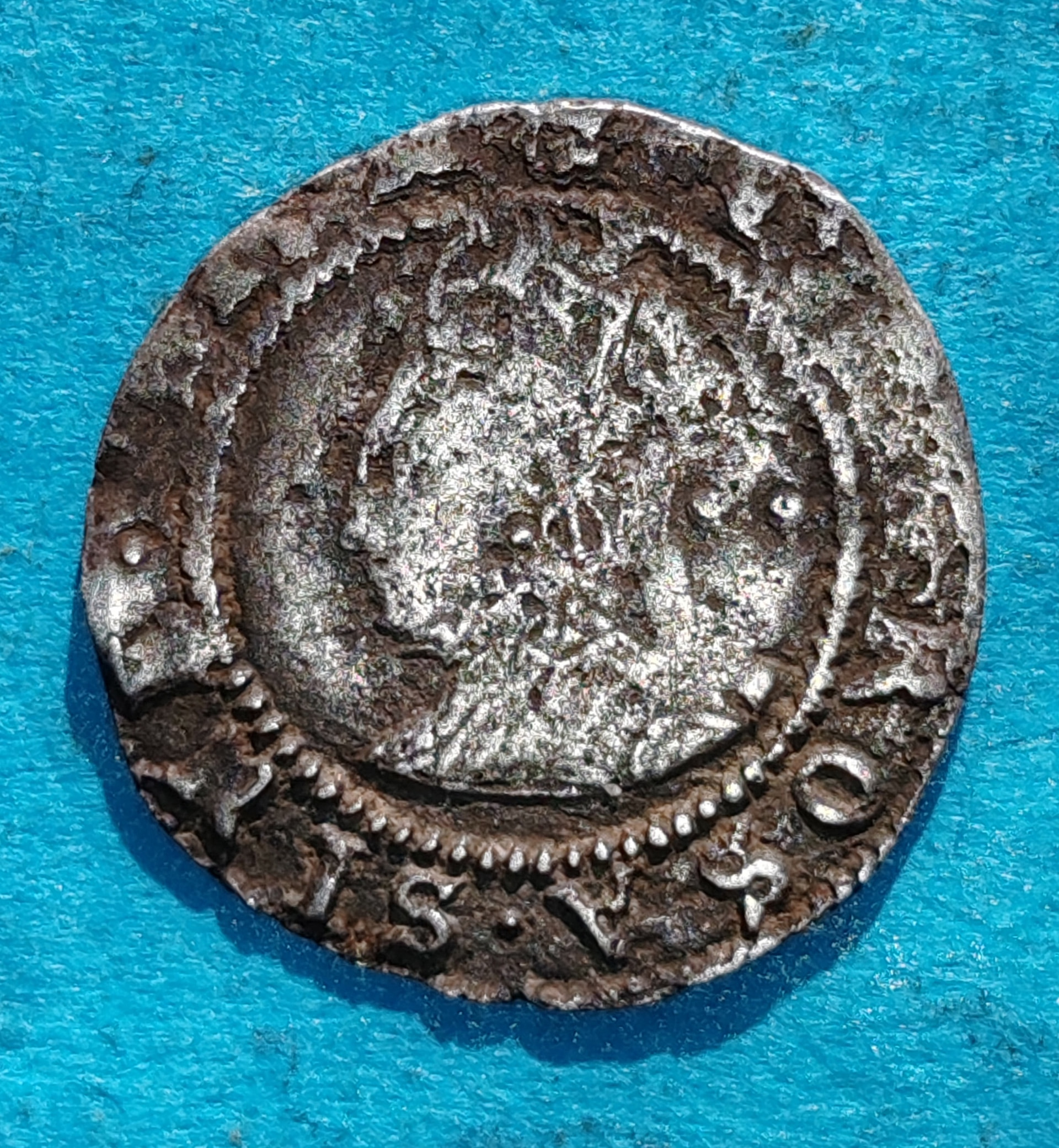
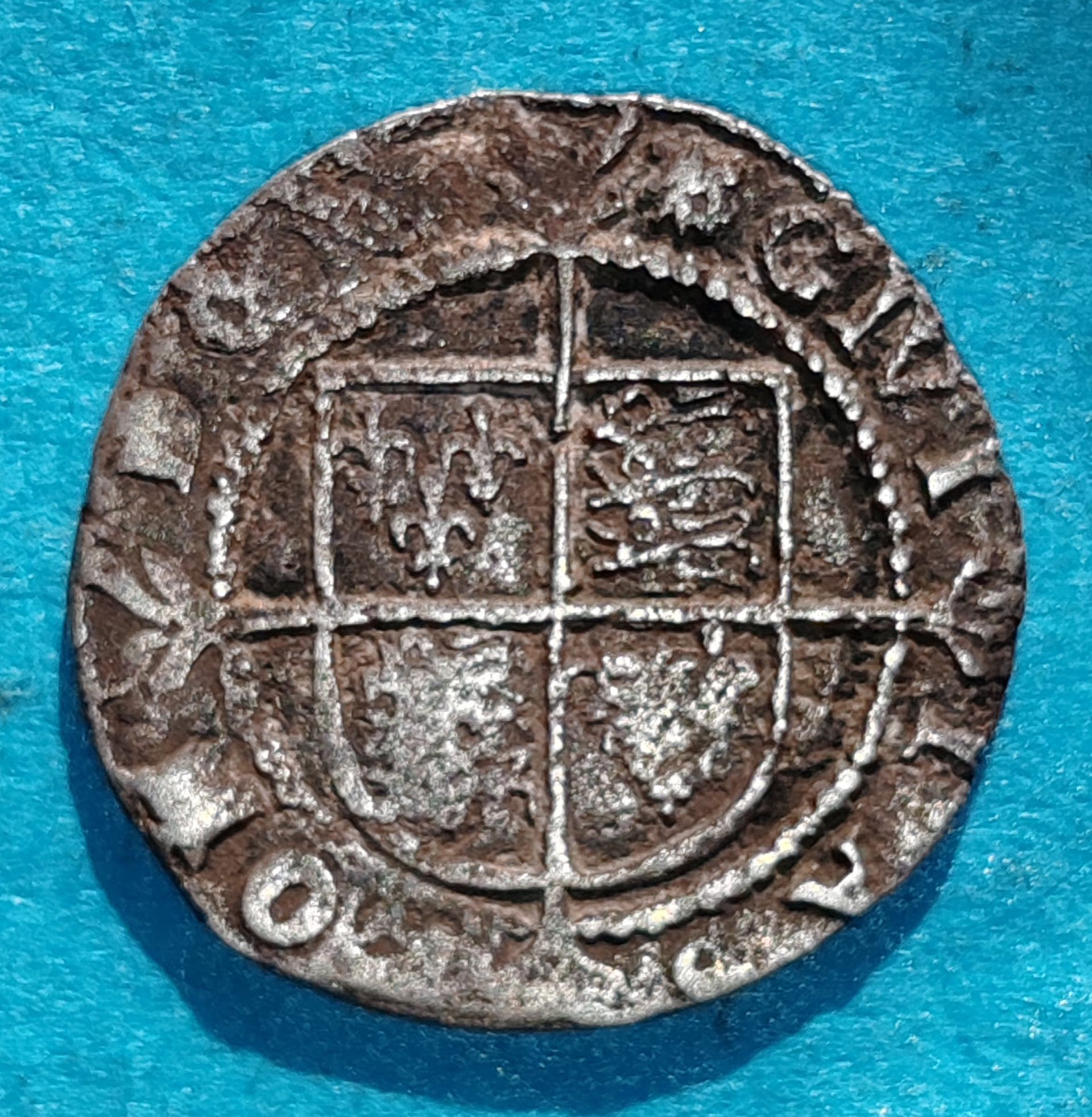
This much can be seen on the picture you have given us:
“E · D · G · ROSA · SINE · SPINA ·”. which translates into “Elizabeth by the Grace of God a rose without a thorn”
On the reverse side there is quartered shield of arms over long cross fourchée within beaded circle with a legend around it which reads. CIVITAS LONDON which means the coin was struck in the tower of London
There is an illegible mintmark on obverse and reverse at about 12 o’clock position presumably for London
Dating: This is either Bust D or E:
Bust D 1562-1564
A large, broad bust with an elaborate dress. The shoulders are plain or almost plain except
for vertical rows of beads. There are no pearls on the bonnet and a high ruff conceals the ear.
.
Bust E 1564-1566
Similar to D but with a low ruff which exposes the ear. The two versions have distinctive treatments of the clothing.
I am rather presuming this is a metal detector find hence the extended leaching which makes it difficult to read. However, in its favour, it has very limited or no clipping.
Spinks will give you a price and sell it for you, if that is your wish.
Jeff’s rather bold assertion regulars here know nothing about Tudor coins and their value is perhaps somewhat pessimistic.
What is true is, in my case, I would be reluctant to assign value or make an offer based on photo evidence alone. And, where there is considerable surface loss on coins making them difficult to read, one tends to under rather than over estimate.
But thank you for posting and good luck with your coin.
CRWW
Tudor coin, Elizabeth I halfpenny 1590-1592. Considering the coin’s condition, it is worth approximately 160 euros.
By the way… I’m playing the village idiot here (the regular one & only  ), but I’ve been interested in numismatics for nearly 50 years.
Perhaps I should rephrase. “Since this is not a site devoted to numismatics, I would hesitate to trust any advice on that subject doled out here.” 
What’s next, posts about Georgian armchairs? Art Deco ceramics? Elizabethan textiles? 
If it was indeed a later ha’penny it would feature a portcullis on the obverse and a long cross with pellets on the reverse. It would belong to the sixth issue of Queen Elizabeth I. This coin has a bust on one side and a quartered coat of arms on the other.
I don’t claim to know much about the coin and have simply reported what was observable.
CRWW
Why not, since we have the intellectual potential (except me, of course)? Just create a category called “Everything Other Than Silver” and that’s it. Let’s not be afraid of challenges. 
I agree with everything you say! Hence my reluctance to value.
I am actually fairly sound on Georgian armchairs and am sitting in one now!
CRWW
Stock tips. Advice to the lovelorn. How to housebreak a puppy. The sky’s the limit!
I had in mind an atmosphere close to antiques, old things, etc. etc. But if you insist, so be it. 