Slightly unusual as no official hallmark but the wests patent real silver mark instead. Don’t know whether that would lower the value. It seems relatively unusual and is from the Victorian period.
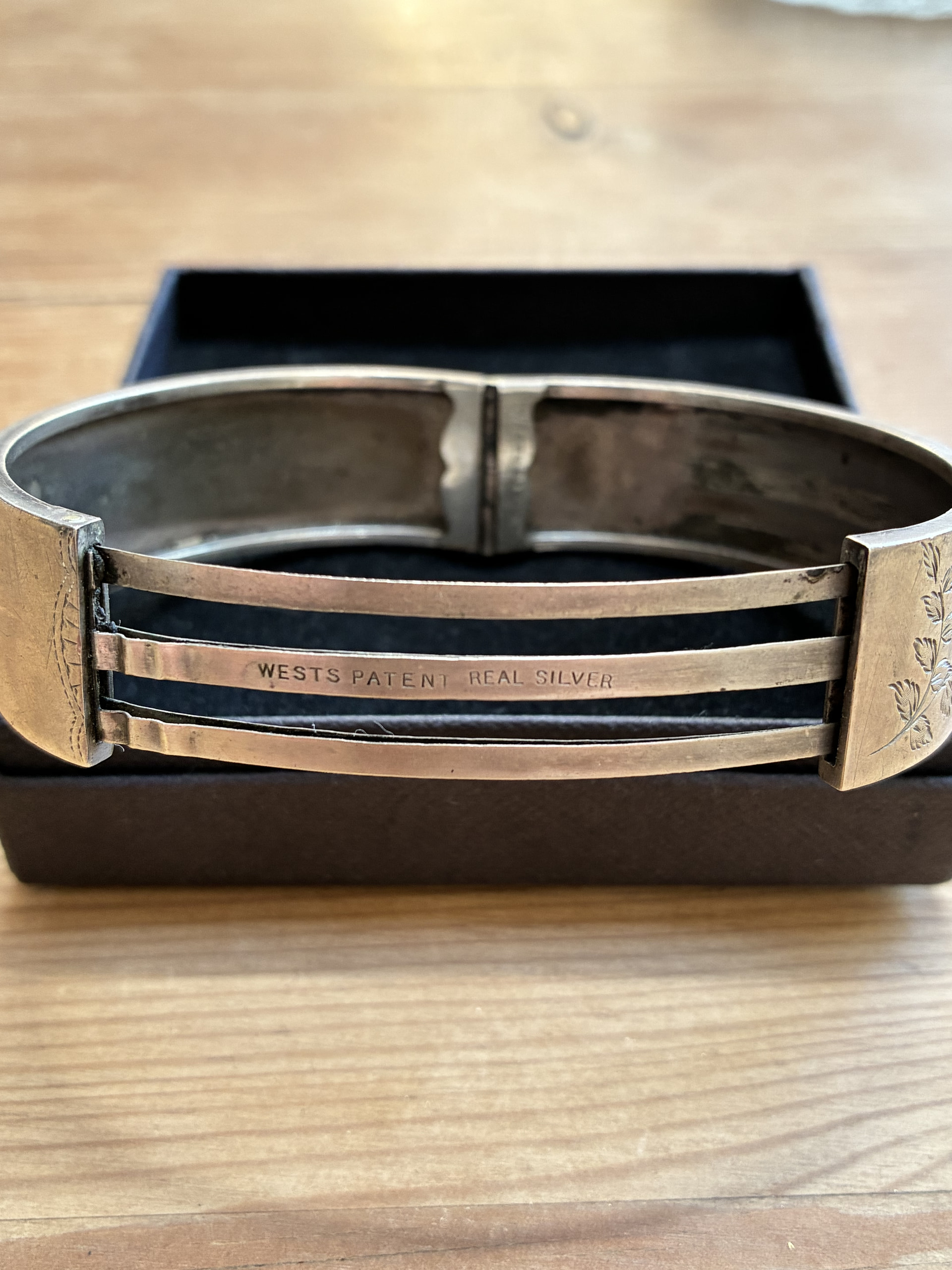
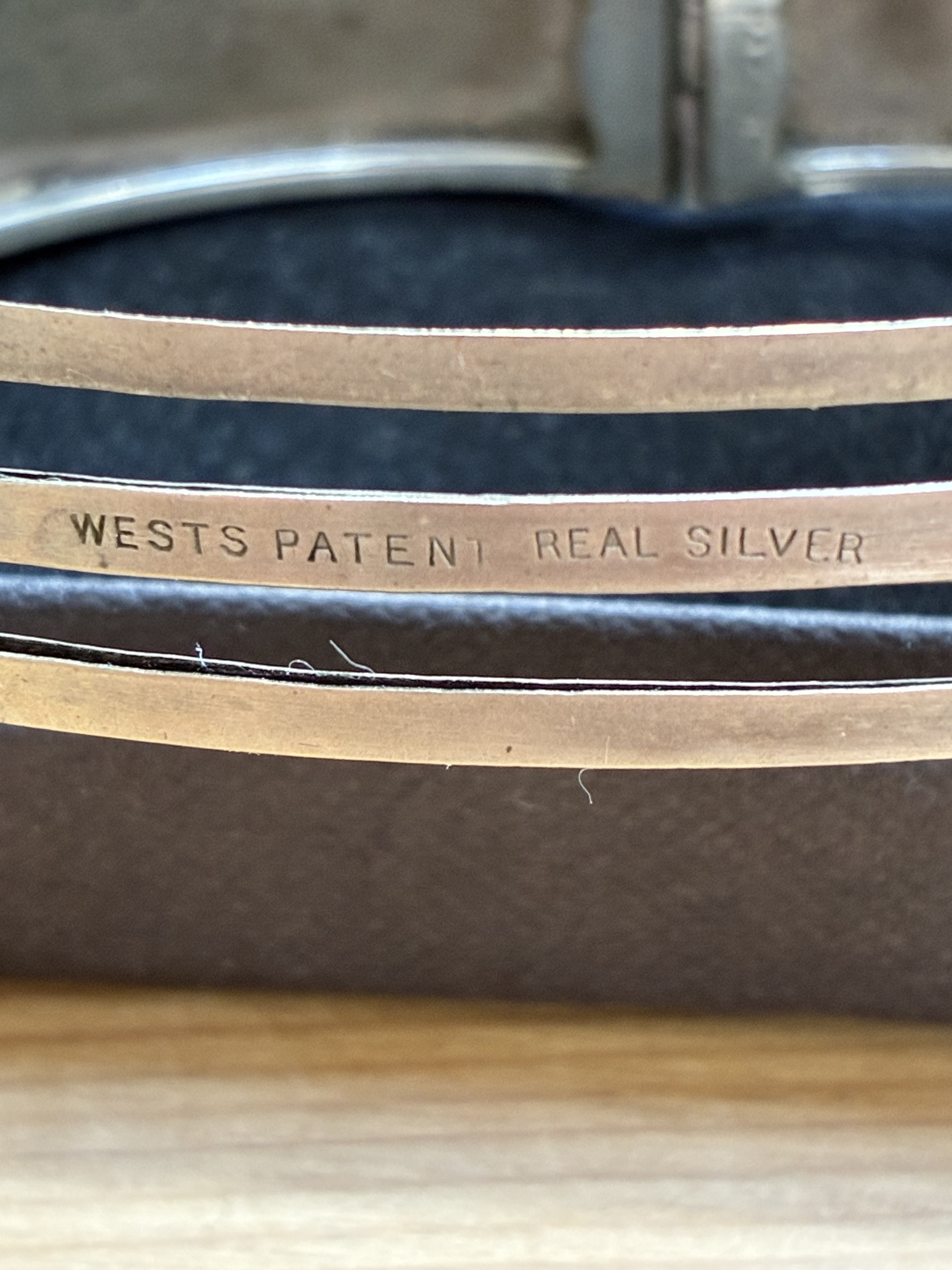
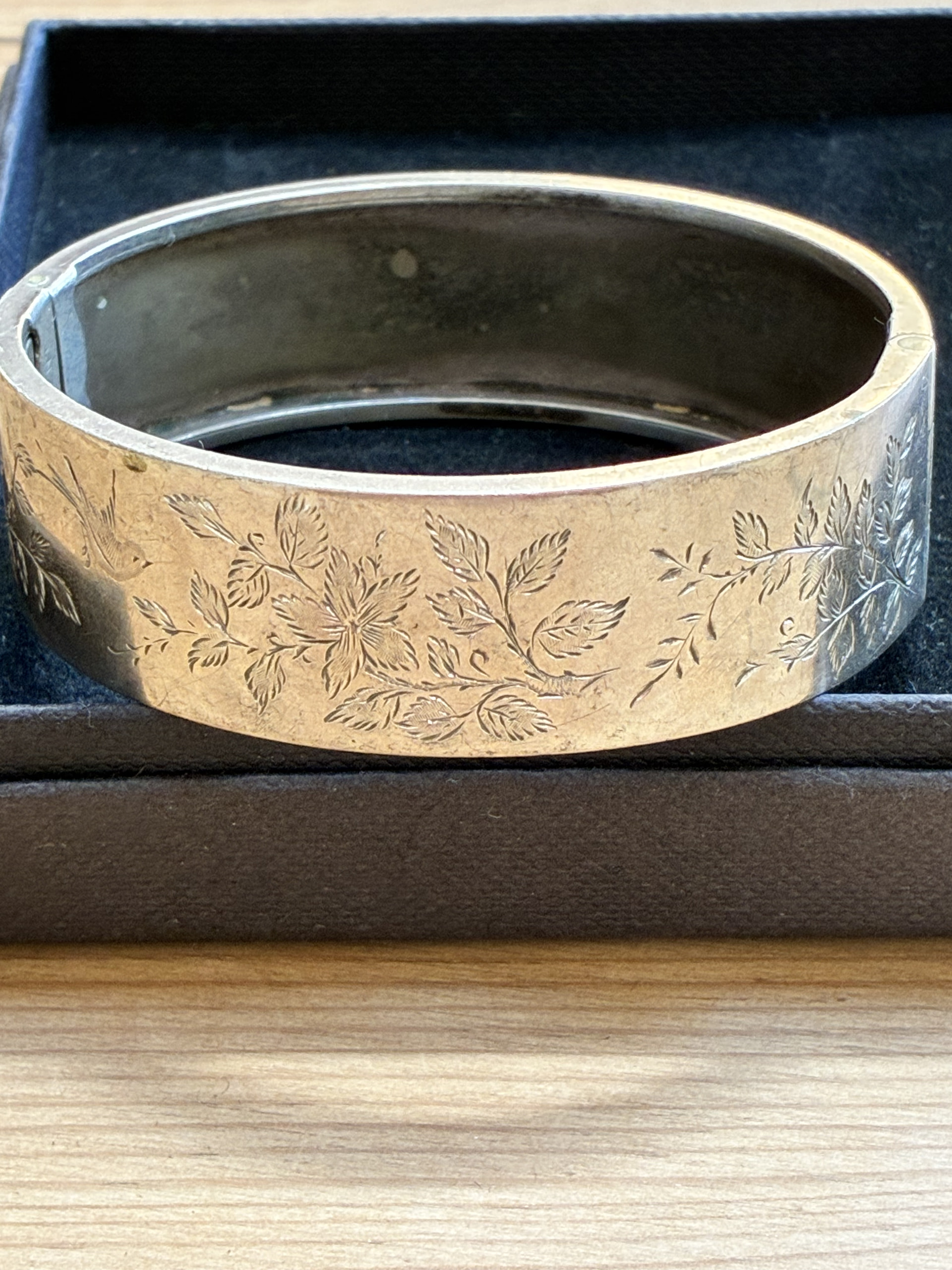
I would do some careful examination of the inside of the bracelet. It would be very unusual, indeed, to find a sterling object of this period (1870’s or 1880’s) without any hallmarking.
Another example:
Thanks for that. I think you’re right, the lack of an official halllmark is a problem. I can see one on the other example you shared. I will have another good look but couldn’t see one.
Just offhand, I’d say that your bracelet is unlikely to be a fake. It just somehow missed a trip to the assay office, accidentally or otherwise. 
I have no idea how collectable these are. When bangles like this are sold at auction, they seem to fetch something around £100.
Just a word of caution. The use of the term “real silver” sounds a bit like the manufacturer trying to avoid the hurdle of having it assayed. A bit like the somewhat meaningless term “fine silver” which appears on some watch cases. If you have an opportunity to get it tested with an XRF scanner I would recommend that you do.
Yes, the linked example, which is properly hallmarked, shows the same WESTS PATENT mark, but doesn’t say REAL SILVER.
If I could go back in time, I’d outlaw all use of the word “silver” on anything that wasn’t at least .800. No phony, confusing names like “Nickel Silver,” “Nevada Silver,” or “Alpaca Silver.”
ETA: So the bracelet may not be a “fake” in the strictest sense of the word, but not sterling, either, which would take its value down into the “costume jewelry” range.