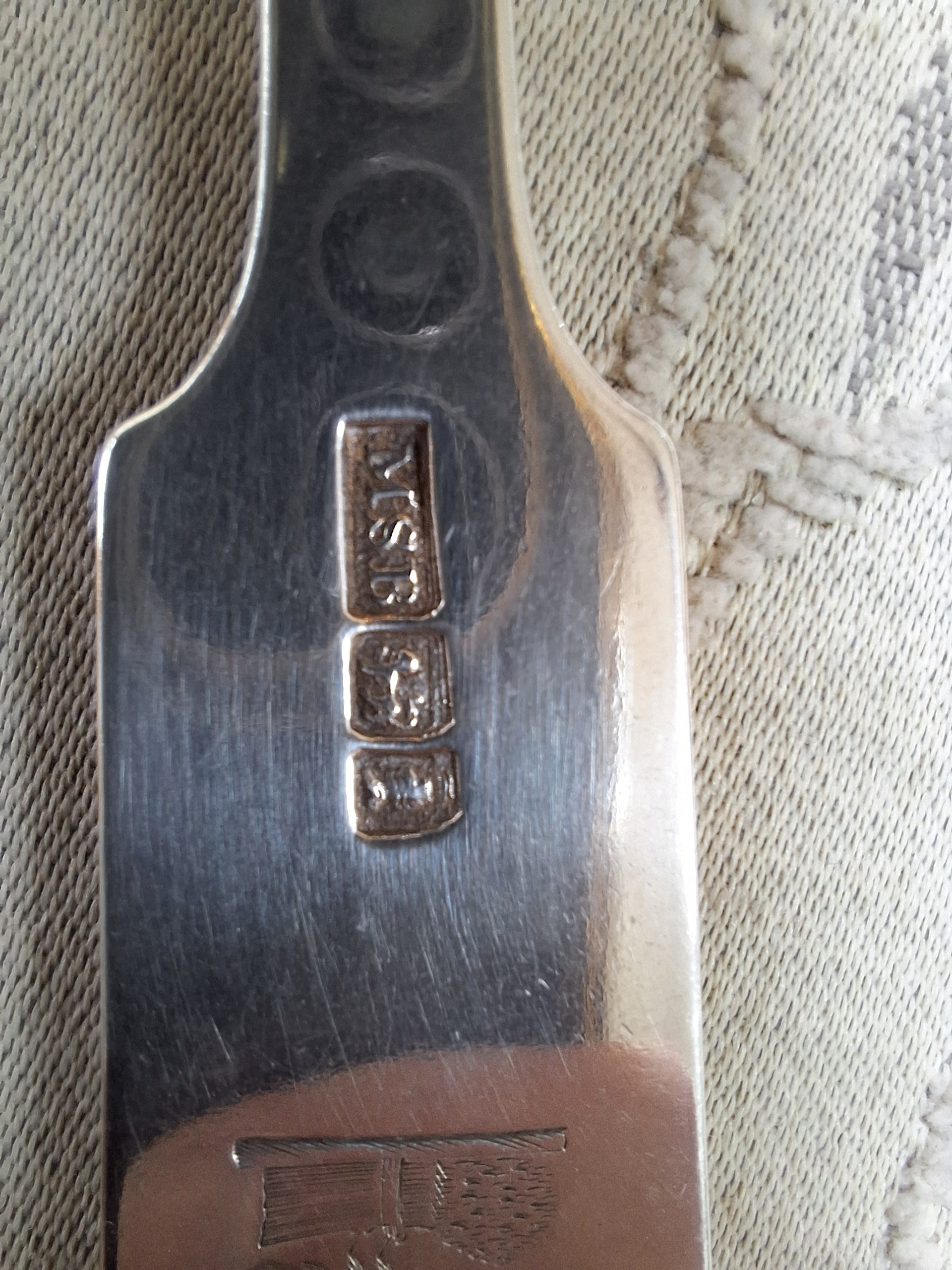
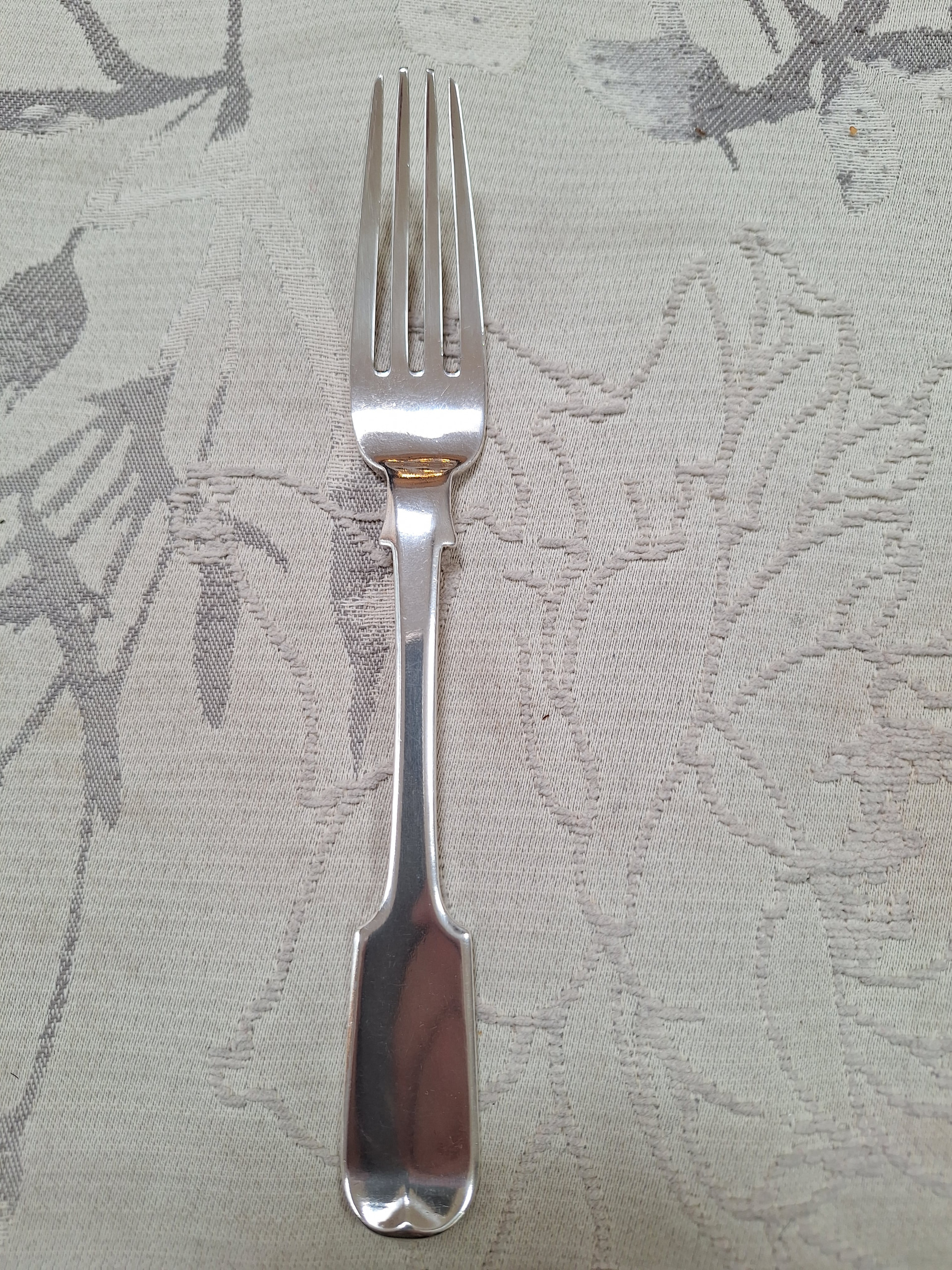
This is a roundabout way of asking if my fork was possibly made in England. It is marked by Michael septimus brown, a well known Canadian silver maker and retailer from Halifax, withhis initialsand his usual pseudo marks. He was making his own stuff in the 1840s but by the 1850s was making regular buying trips to London England and selling it in his Barrington street shop as well as selling his own work. My question is, did all silver sold in England get assayed there? Could Mr Brown have bought flatware direct from a London manufacturer without it being assayed and then put his own mark on it back in Halifax? This fork is a slightly odd size, 7 1/4 inches and 62 grams which leads me to think he made it, but I thought this was an interesting question. Many thanks
2 Likes
Anyone? Bueller? Anyone?
https://www.925-1000.com/forum/viewtopic.php?f=38&t=31885&p=81399&hilit=whiston#p81399
https://925-1000.com/forum/viewtopic.php?p=57535&hilit=Michael+septimus+brown&sid=60302139fd79e1cdf276b60ccf3e7f9b#p57535
2 Likes
Thanks Bart. It was this bit in your second citation that caused me to ask the question in the first place:
However, a silversmith’s name or initials on silver is not necessarily proof that he made it. Increasingly after mid century the old arrangement by which silversmiths were craftsmen who designed, made, and retailed their own work was disappearing. They were being replaced by a few “makers to the trade” and merchants who retailed their work. Marks on silver were increasingly those of the retailer rather than the maker, and the makers came to be hired industrial workers rather than craftsmen.
Mr Brown straddled the period between maker/retailer and broker/retailer so hard to know where my fork fits in. Did he make it, did he just put his mark on and sell it? And given his many buying trips to England, is it possible he could buy unassayed pieces for export? Thanks again for your efforts.
2 Likes