Hello knowledgeable folk, I’m looking for clarification on the use of the Sterling mark! My understanding is that the UK uses the well recognised Hallmark system, and only other countries, such as the US, Canada, Australia and provincial Ireland, identify silver items as ‘Sterling’?
The reason I’m now not sure is because I’ve found several items online that have UK makers marks, but are stamped Sterling, and without Hallmarks (primarily from Birmingham around 1900-1915)… did this really occur?
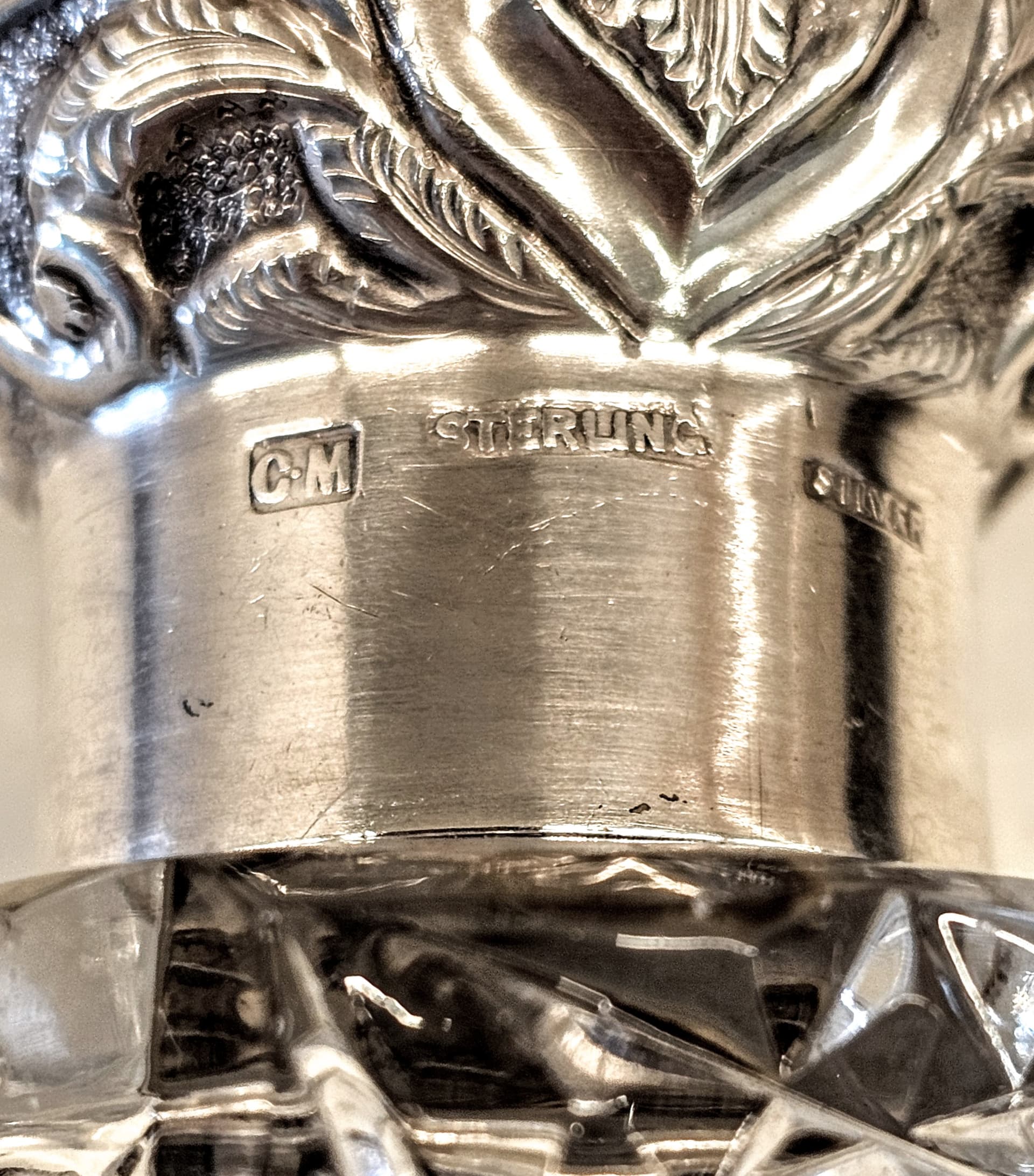
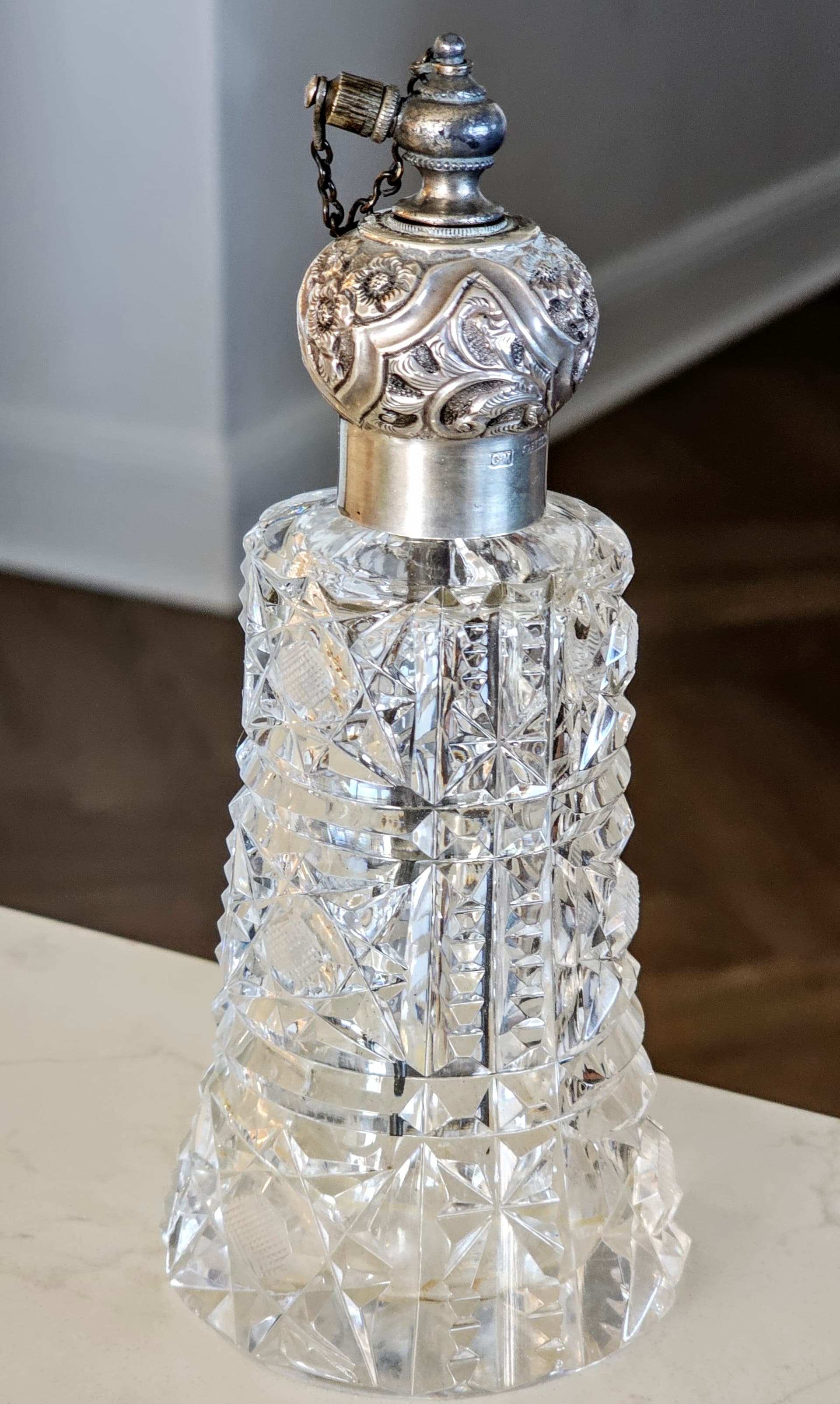
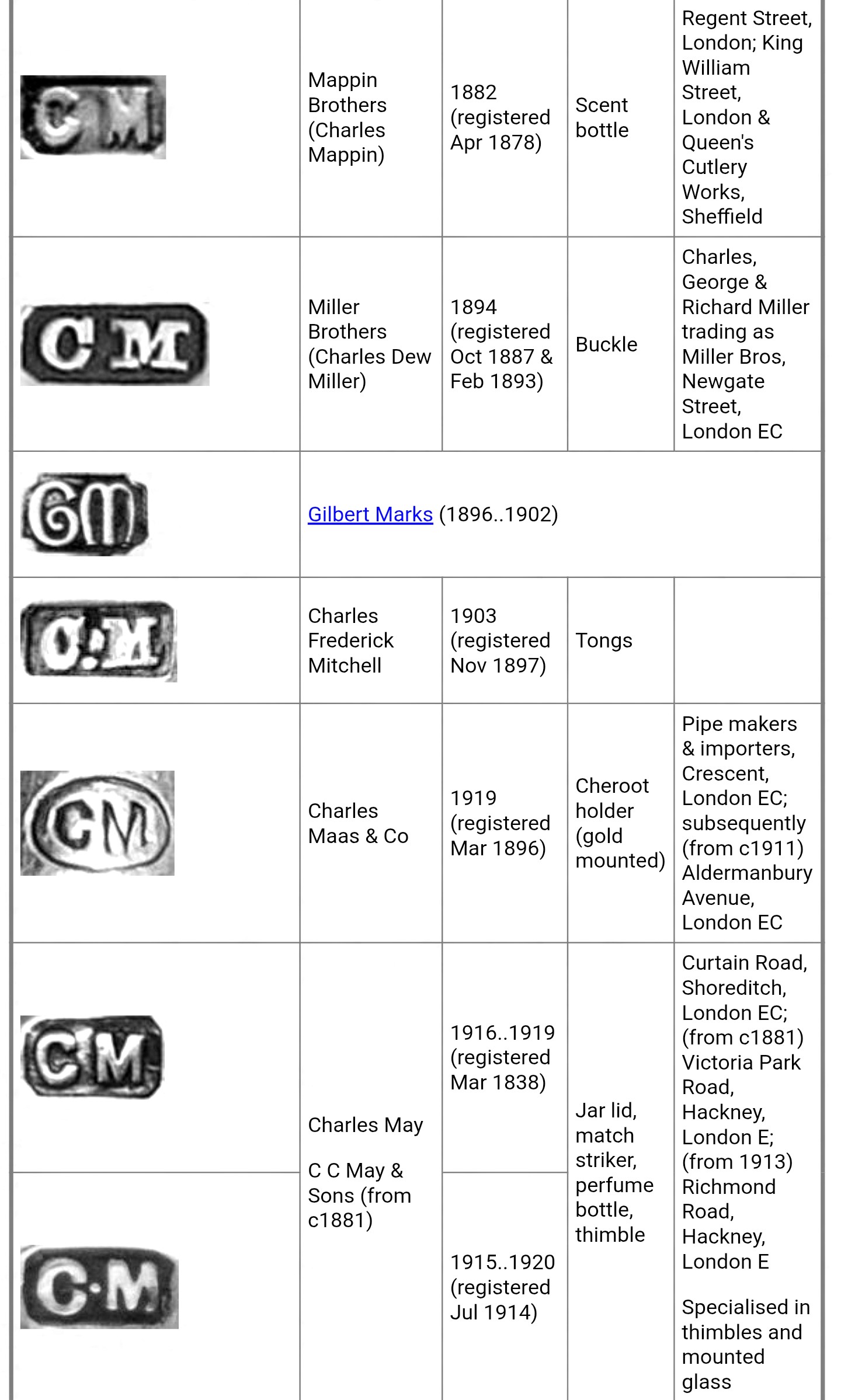
My pondering was due to this recent purchase, where despite extensive research I can’t find corresponding international makers marks for C.M… but 2 likely candidates from England! Charles May and Charles Mappin not only have very similar stamps, but also produced scent bottles around the correct time period.
So… could this bottle be by one of them or does anyone recognise it as being international? Any clarifications would be very much appreciated and is this most likely Edwardian??
Yes, it did. In your case the word "sterling"and the word “silver” have been added after the UK registered assay mark for C C May & Sons.
The term is used only for the export market, specifically the US which was used to the word “sterling” appearing on its wares and un-familiar with the hallmarking systems of the UK,
This item, lacking the hallmarks, could not have been legally sold in the UK despite the fact it was made there and used the same sponsor punch as it would have was it submitting the item to the Assay office in London (or elsewhere).
Other than Trades Practices legislation and civil fraud the US had then, and still has, no similar registry for silver as to percentage content or where or even who made it.
Edwardian? And no, not really. Edward VII died in 1910. This mark was used from 1916 to 1920 in the UK when George V had got the job. Does that make it Georgian? Technically yes, but most people will conclude you mean pre-regency if you use the term.
It’s probably WWI product and part of the desperate attempt by the country to create some sort of balance of trade with a country supplying them with much war material and indebting them in the process which completed by the end of WWII.
You also asked if anybody used the term “sterling” to sell in the UK. The Irish did. Specifically in Cork prior to 1807. Sometimes Scots did too.
The term probably originates from “Easterling”. referring to silver importers in the 10th and earlier centuries.
Thank you for confirming my suspicions, your insights really are most interesting, especially with putting it into context with WWI and US involvement! I really do love the history and stories behind these intriguing antiques…