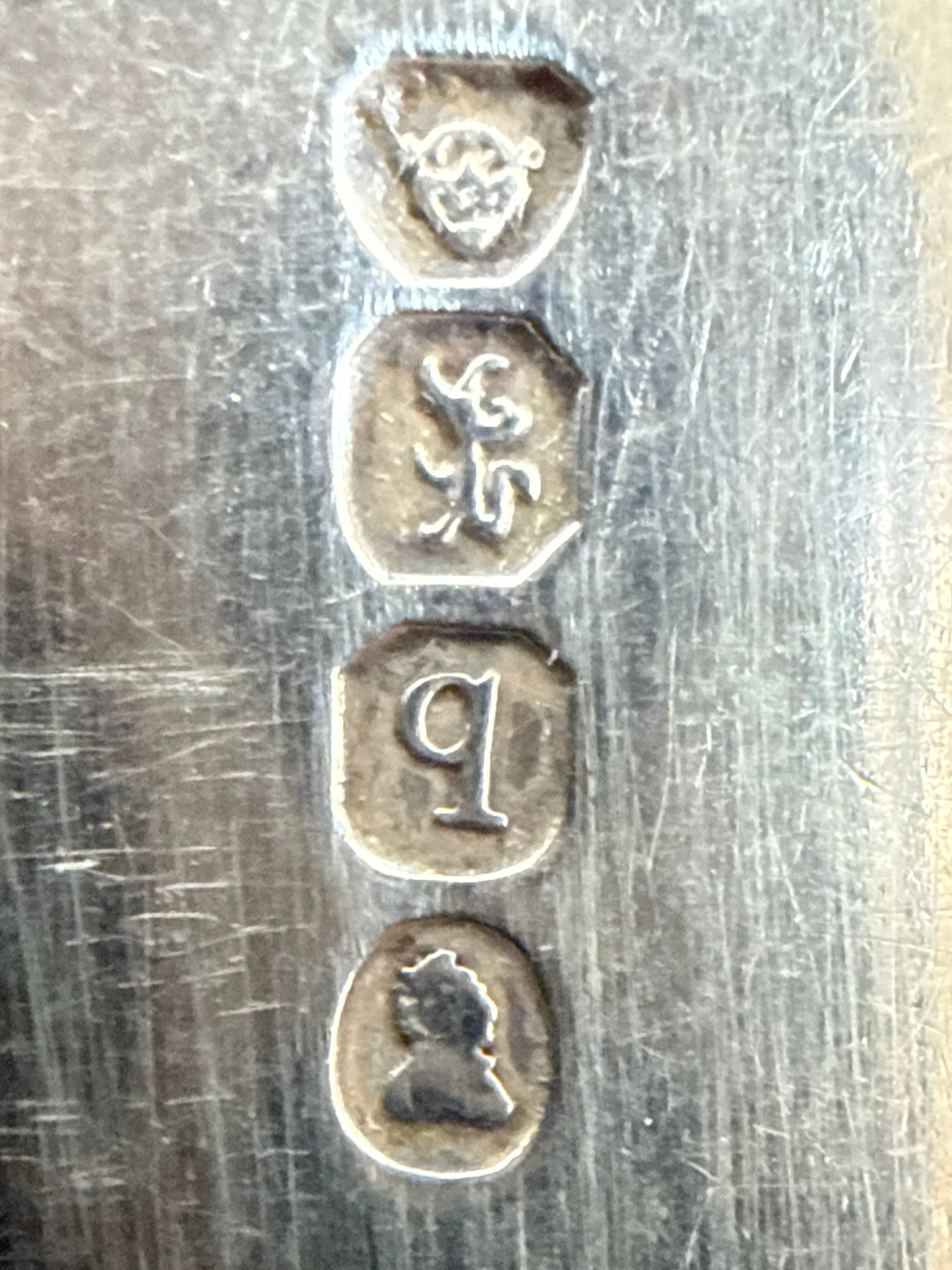
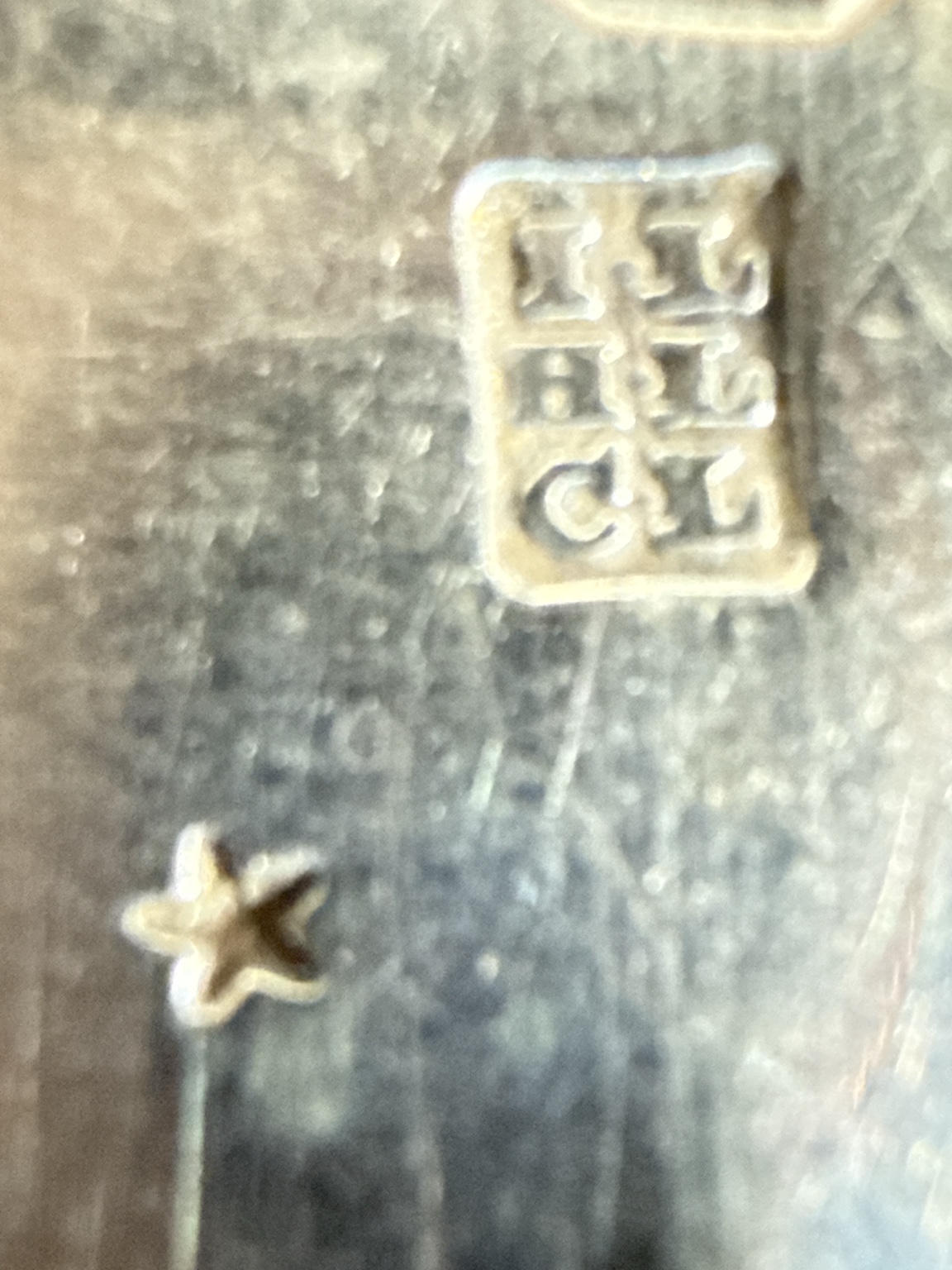
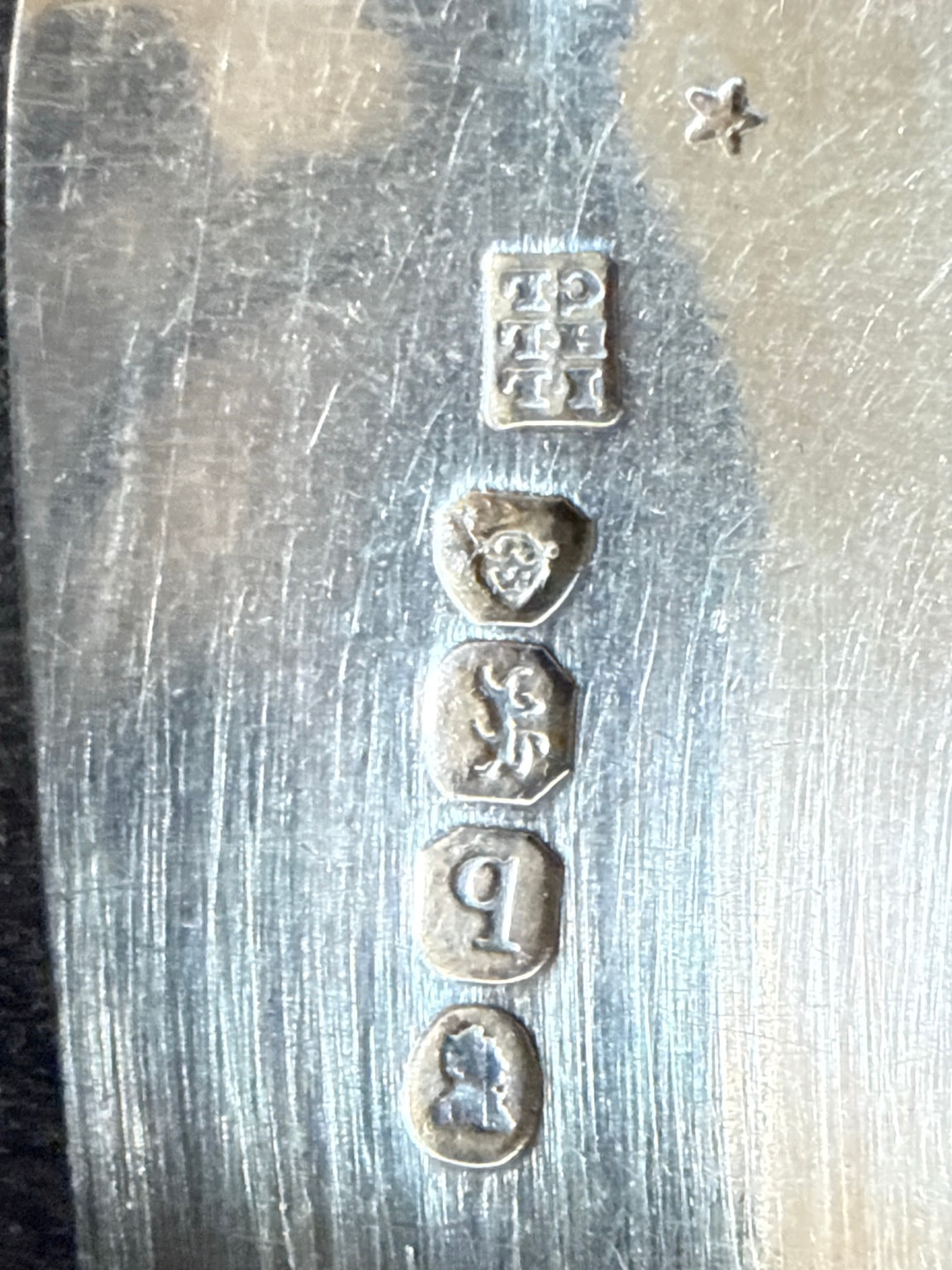

John & Henry & Charles Lias, a predecessor of Wakely & Wheeler.
London, 1831.
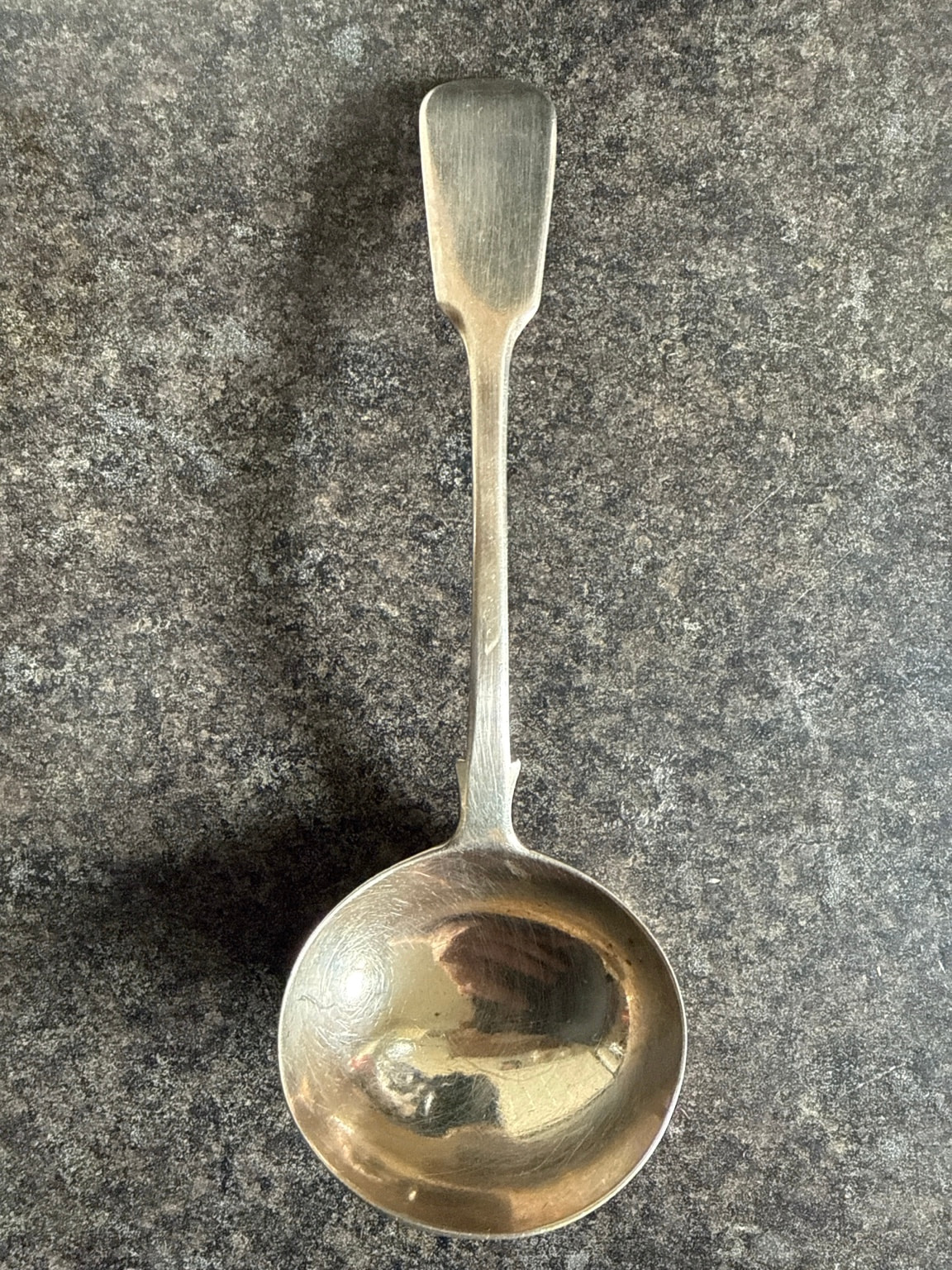
Silver Basting Spoon, Antique, Sterling, English, Cutlery, Engraved, Hallmarked London 1831, John, Henry & Charles Lias - Etsy.de
Caddy Spoon | Lias, Charles | Lias, Henry John | Lias, John | V&A Explore The Collections
Lias Family
In the late 18th century, there were two silversmiths by the name of John Lias: one specialised in bucklemaking, whilst another entered his mark in 1799 as plateworker. This second John Lias entered further marks as “plateworker”, until 1810 when his main specialism changed to “spoonmaker” and for the majority of the 19th century, he and his descendants became a force to be reckoned with in silver flatware production.
After his eldest son Henry John completed his apprenticeship and joined the family business, the company name was changed and a new mark entered in 1818 with Henry John then driving the company forward for the next sixty years. Henry’s younger brother Charles was a junior partner within the business between 1823 and 1837, before setting up on his own account.
Whether through retirement or death, by 1848 John Lias had left the business and the firm entered a new mark in 1850 to account for the addition of Henry’s namesake son to the management and there now being a Henry John Lias I and Henry John Lias II.
In 1878 the senior Henry left the business, followed quickly by the arrival of new blood in 1879 when James Wakely when in to partnership with Henry John Lias II. Fresh ideas meant that the output of the firm during this period expanded to include more elaborate and exciting flatware designs, for example both the Stag Hunt and Bacchanalian patterns were produced in quantity for leading London retailers such as the Goldsmiths Alliance.
By the mid-1880’s the firm’s ownership changed once again with the final Lias retiring from the business and his former apprentice Frank Clarke Wheeler taking up the mantle as partner to James Wakely. Wakely & Wheeler flourished in producing all types of silver and became one of the leading general silver manufacturers of the 20th century.
Spoon Makers » Antique Silver Spoons
Star mark - “journey mark” (more accurately termed a Journeyman’s mark) is a rare, additional stamp sometimes found on British silver flatware (spoons, forks) from the late 18th to early 19th centuries, appearing alongside standard hallmarks. It is often found on London-assayed spoons, though seen elsewhere, and serves as an identifying symbol for the specific artisan who physically crafted the item, rather than the “maker” (sponsor) who registered the spoon at the Goldsmiths Hall.
2 Likes
Thank you, Sir; your knowledge is exceptional.
2 Likes
Just call me Bart. And as for knowledge, it’s widely available today. We should thank the brilliant minds, the people dedicated to science… I’m just a conduit. 
1 Like