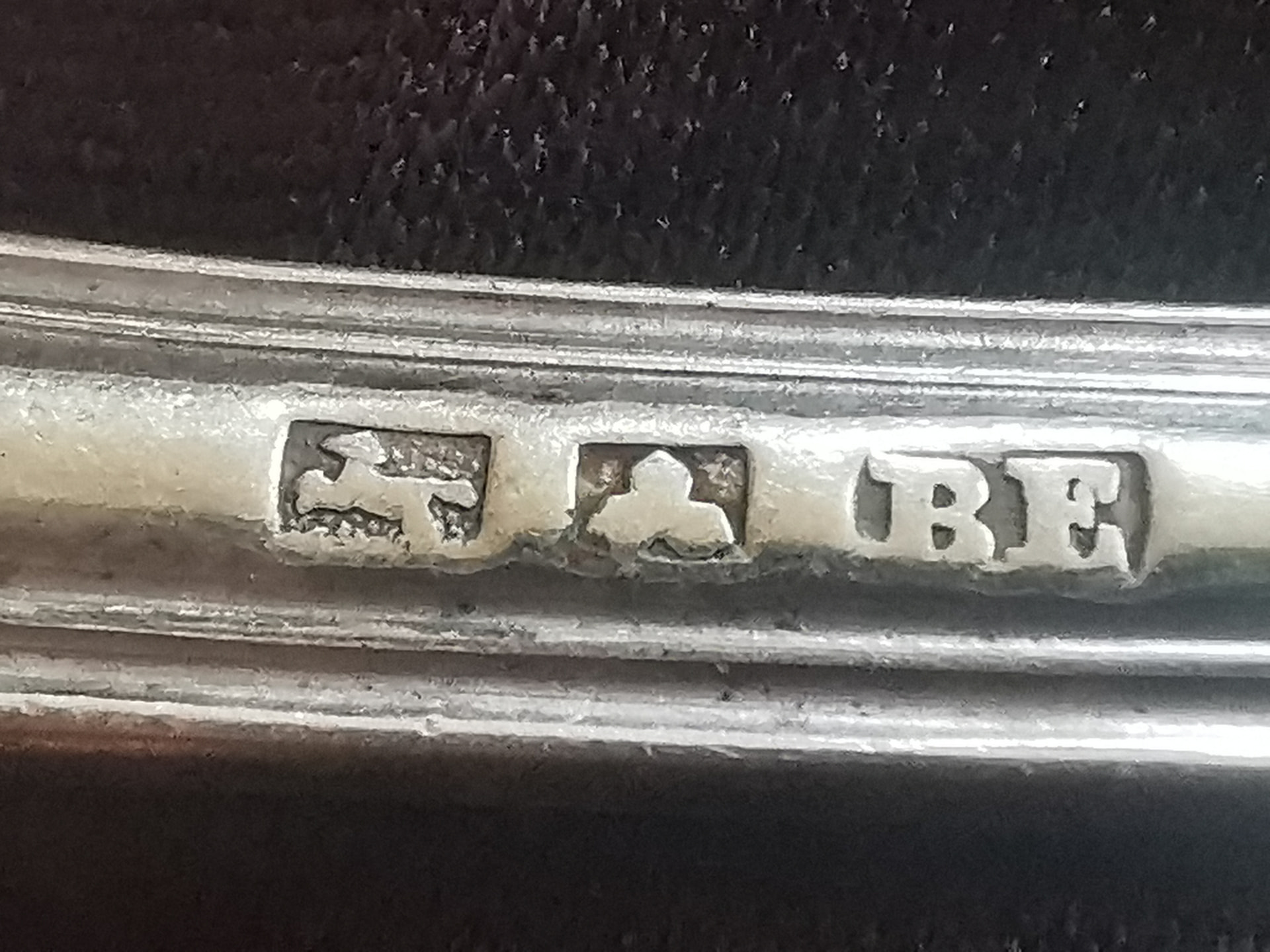
Where’s the photo of the spoon? Always send a photo of the item and the hallmark—it makes identification easier and satisfies our curiosity!
1 Like
You haven’t given Forum “divies” much to go on.
This appears to be a photograph of a small portion of the back of a stem of a late 19th century fiddle and thread nickel-silver, electro-plated spoon with three marks only: a faux lion passant, a shamrock-y sort of symbol and the initials “BE” in a rectangle with two rounded ends.
Its probable value wholesale a $US1.00 bill. I just did a house clean and loaded a banker’s box with similar plate and carted it off to the local Goodwill shop. They too are getting wise and asked if any of it was silver. It wasn’t so, at their suggestion, I added a sprinkling of silver spoons at which point they rather grudgingly agreed to take it to allow their customers to play the modern game of “hunt the silver thimble”.
Your item’s marks are not for any of the Sheffield platers – their names are all catalogued. Nor is it US-make. So the BE mark, if it means anything at all, is a retail mark, likely an iron monger or a ship’s chandler buying blanks in bulk and passing stuff off in the last century when such commercial misfeasance was not yet subject to any consumer protection laws.
Whose generic machines stamped it out, coated it with a micron or two of electro-plate is unlikely to make much difference to price since nobody has ever heard of his/her/them anyway.
This Silver Forum seems to mention in. about every third posting that a “hallmark” is something stamped by a guildhall assay office and a “trademark”, which is what these marks are, is something stamped by manufacturers on everything they manufacture from beer (red triangles on Bass beer from Burton was the first) to a packet of crisps (chips if you’re American).
Starting in the 19th century British manufacturers could register their trademarks along with patents and copyright. Whoever “BE” was didn’t, as a quick look at the early UK trademark index shows.
Forum inquirers are sometimes referred to Ebay for pricing information. If you do go there don’t get too excited by the “ask” prices. Look at the “sold” figures. That is where the rubber hits the road.
Silver, real silver not a three-dimensional images of silver, which is all this spoon is, has been buoyed by speculators calculating current supply doesn’t meet current industrial market demand. Speculators have also factored in their own contribution: inflated prices discouraging capital investment in new mines so tightening the bottle neck further. Classic example of bad behaviour in the marketplace rewarding itself.
None of this affects electro-plate which has little or no melt value.