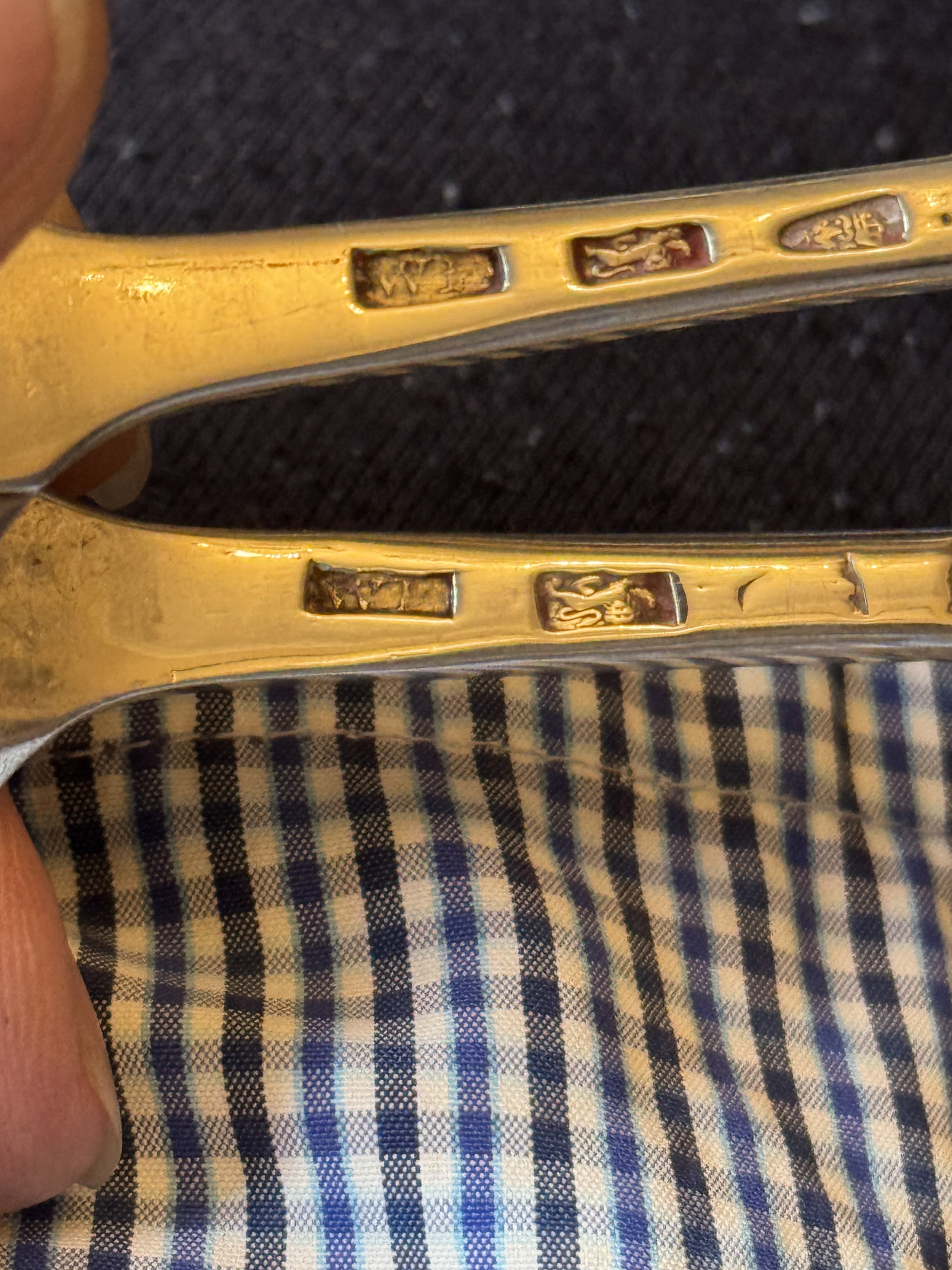
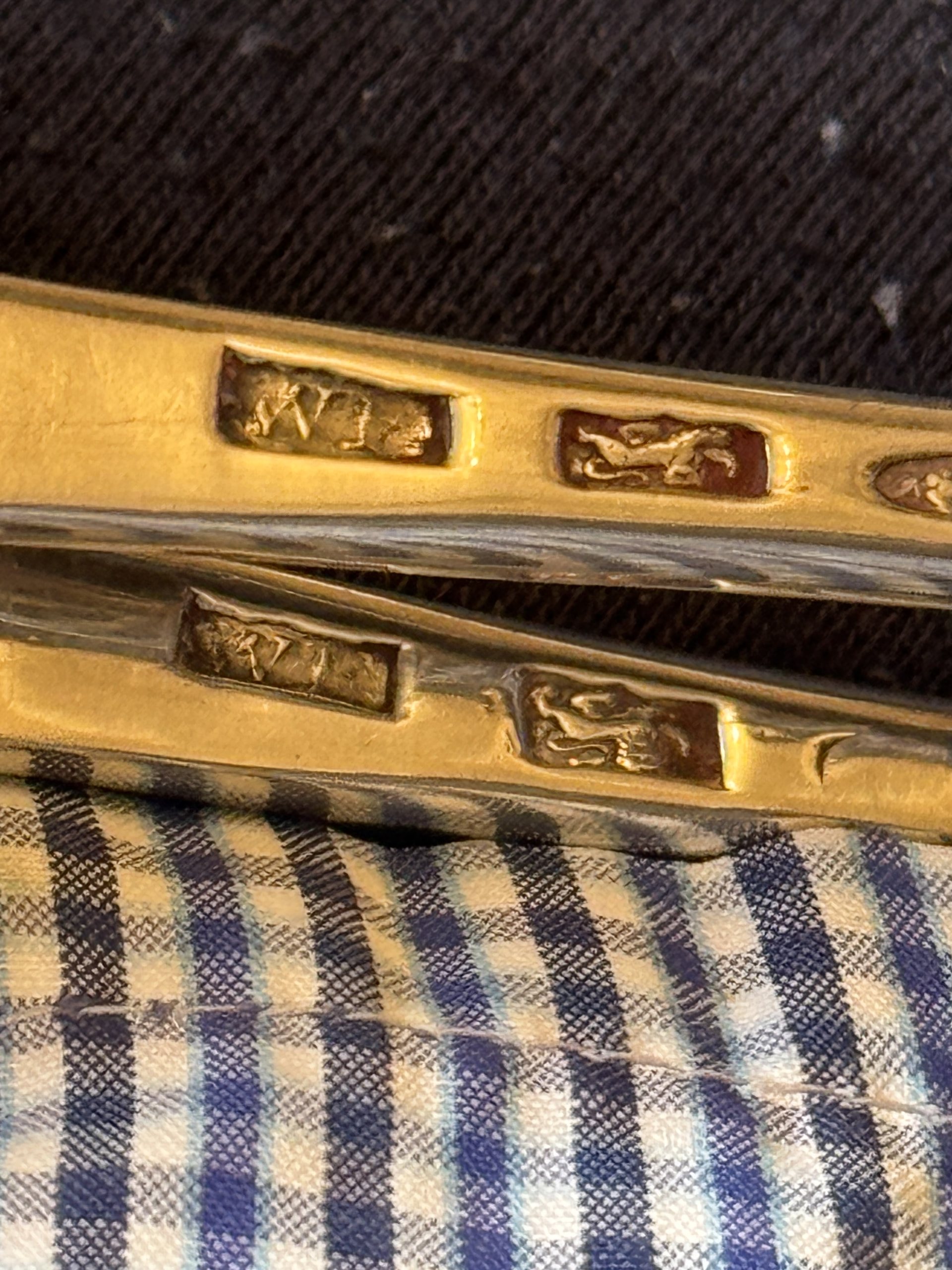
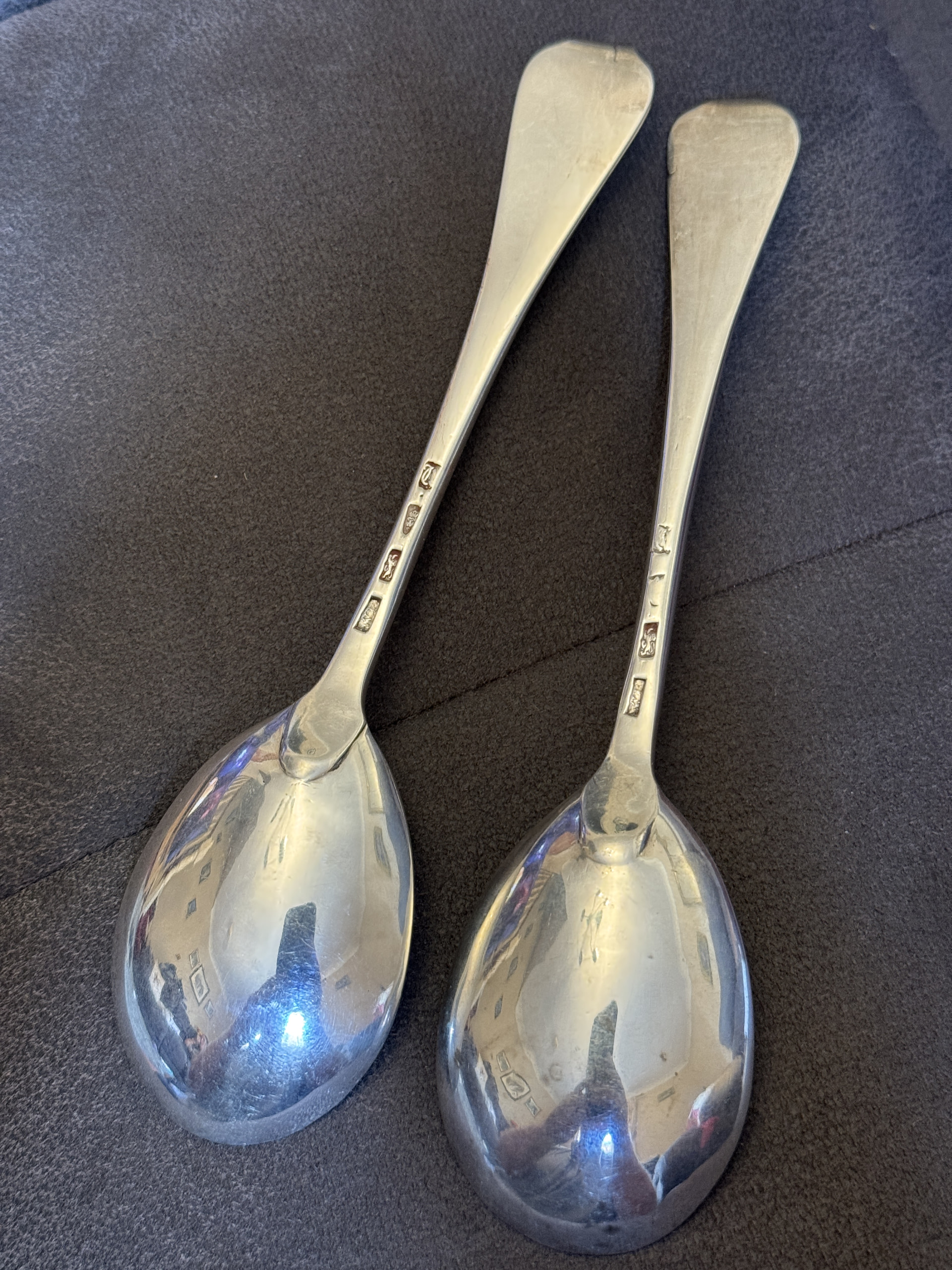
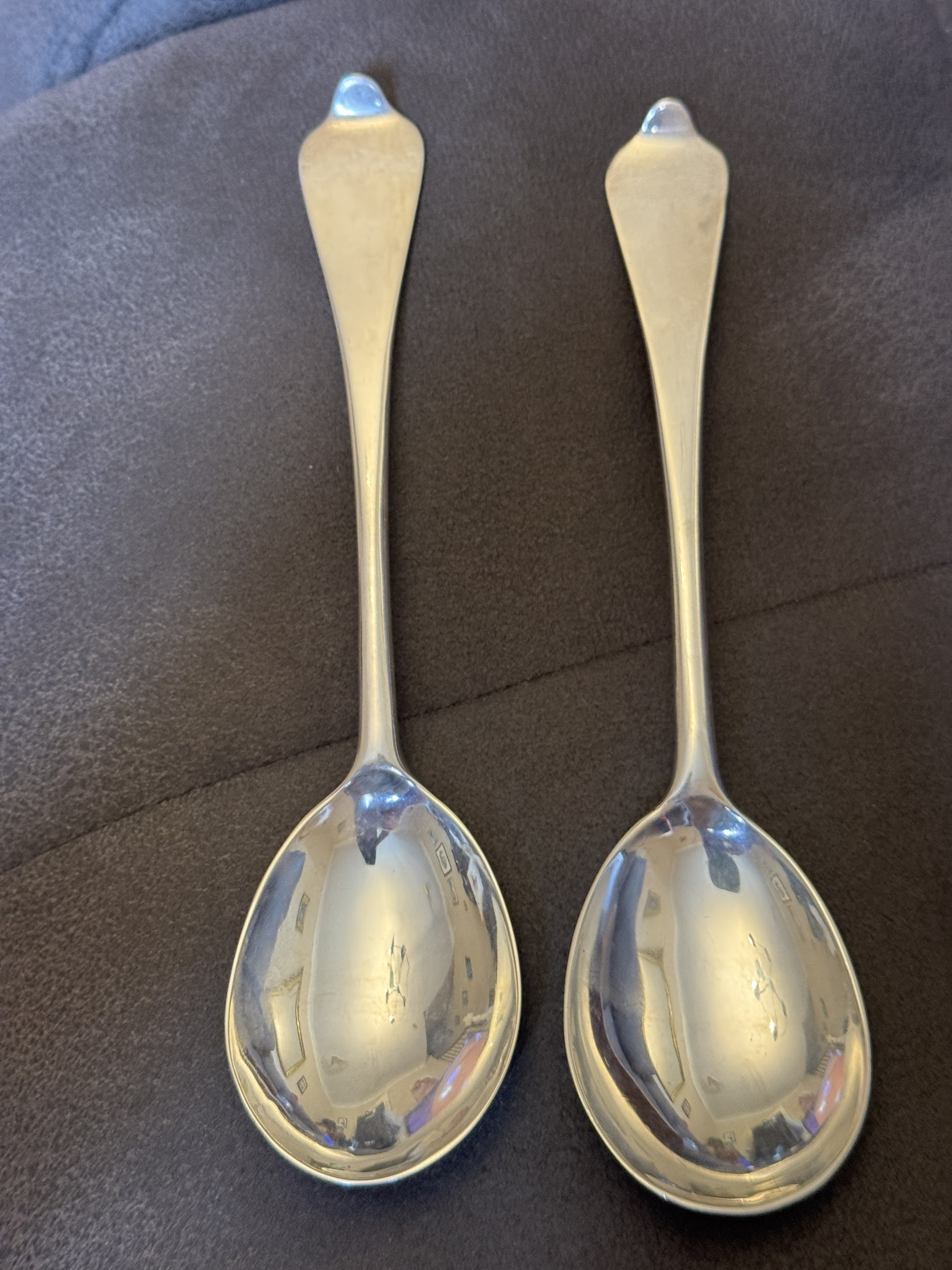
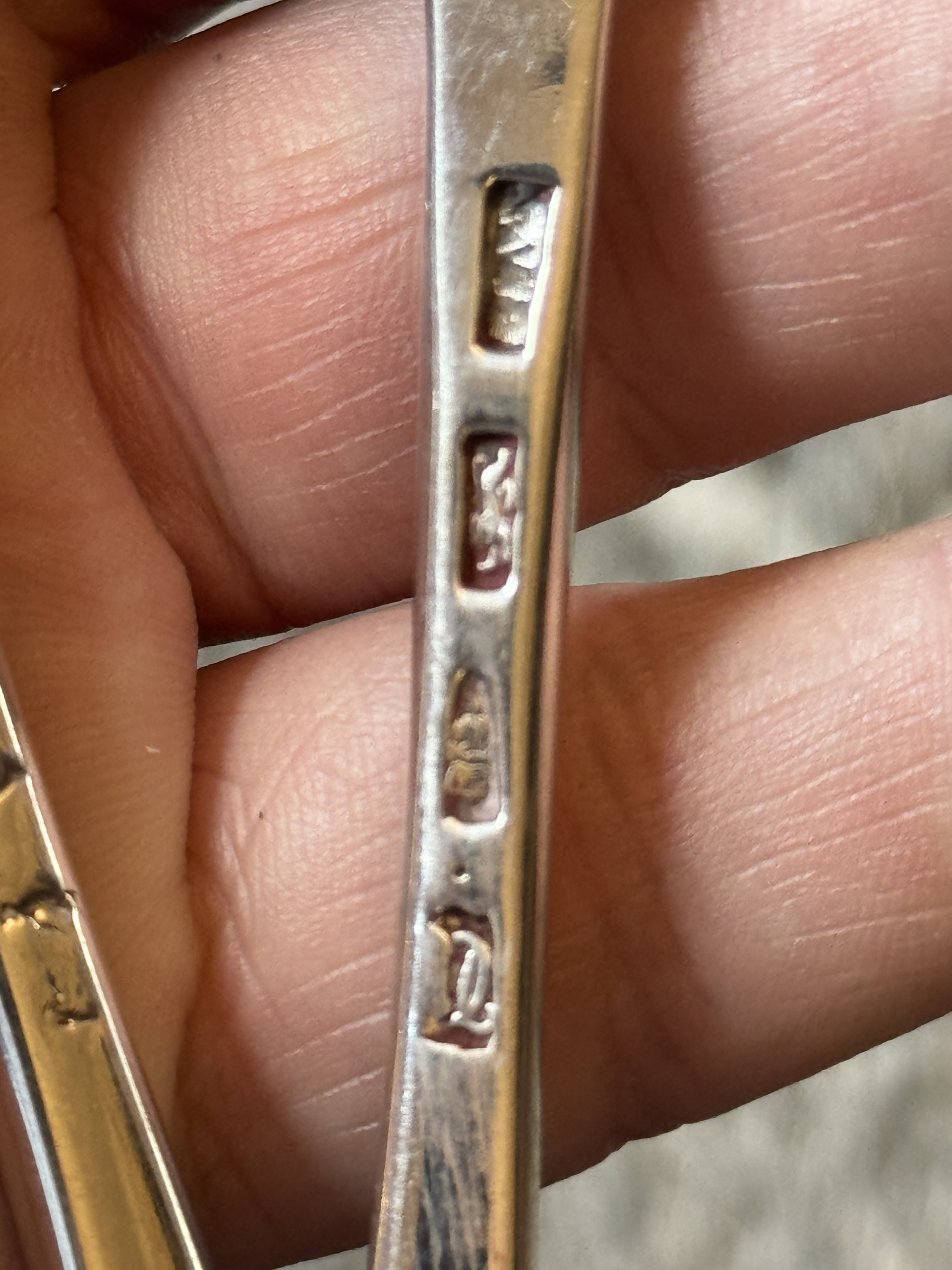
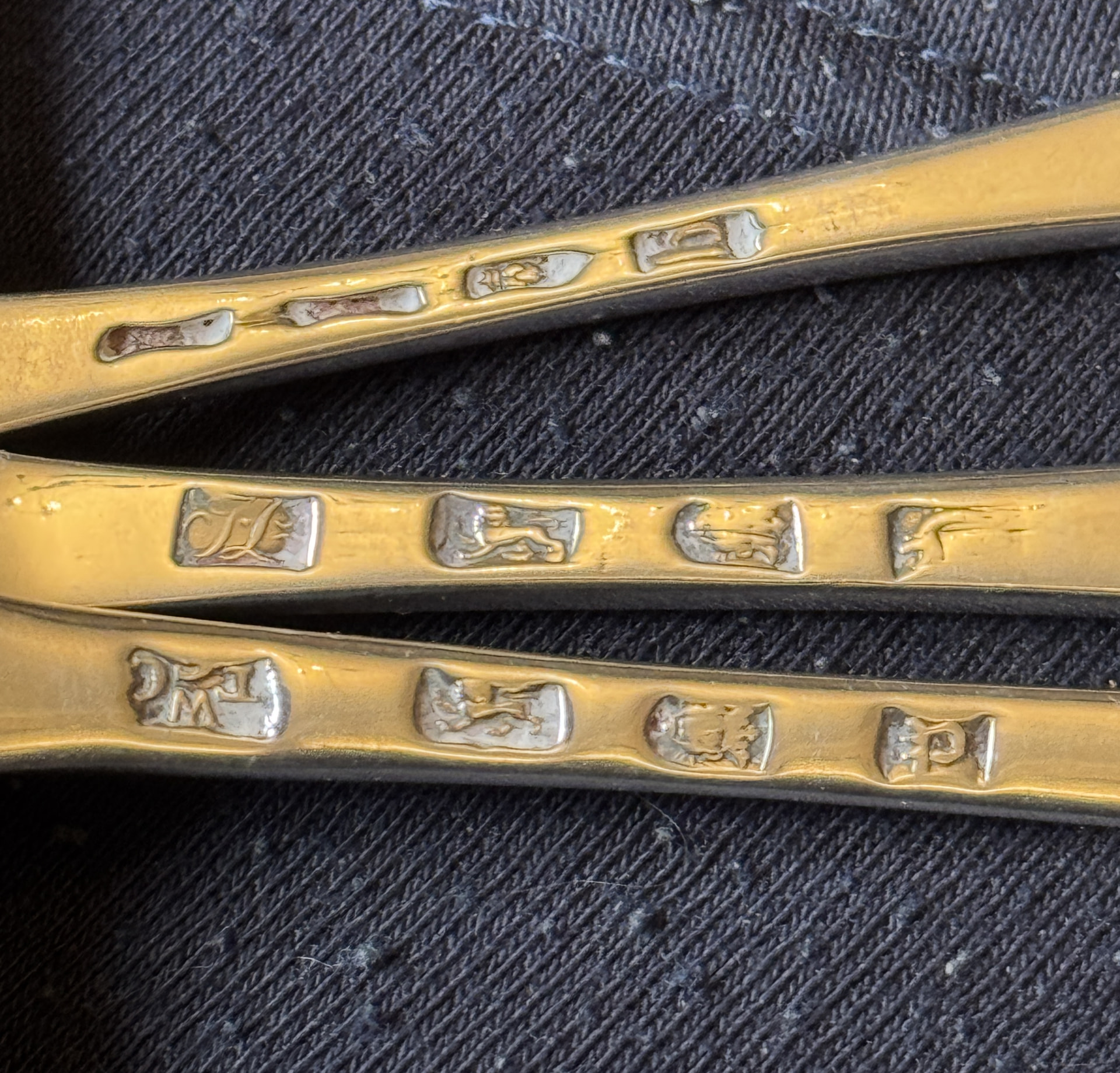
Here are two more from the 6 with readable maker marks
I hope you won’t mind my saying you are better at buying spoon than you are taking at pictures of them!
What I can decipher:
P. 1770. WTC. Thomas and William Chawner. (shown under TC by Phil )
Q 1771 IL. John Lampfert. 1767/4 to 1773
b. 1777. Unreadable
T. 1774. ( in your hand) W.T? ( very blurry.). Possibly Turton/ Tweedie
If I may suggest for future efforts, first take a bristle brush and clean out the old jewellers’ paste so the mark base is clear. Secondly shoot with high pixel camera on a fixed position and blow up the marks – esp. the squeezed together ones-- as much as you can.
However it is not necessary for me to read the marks to draw some tentative conclusions as promised.
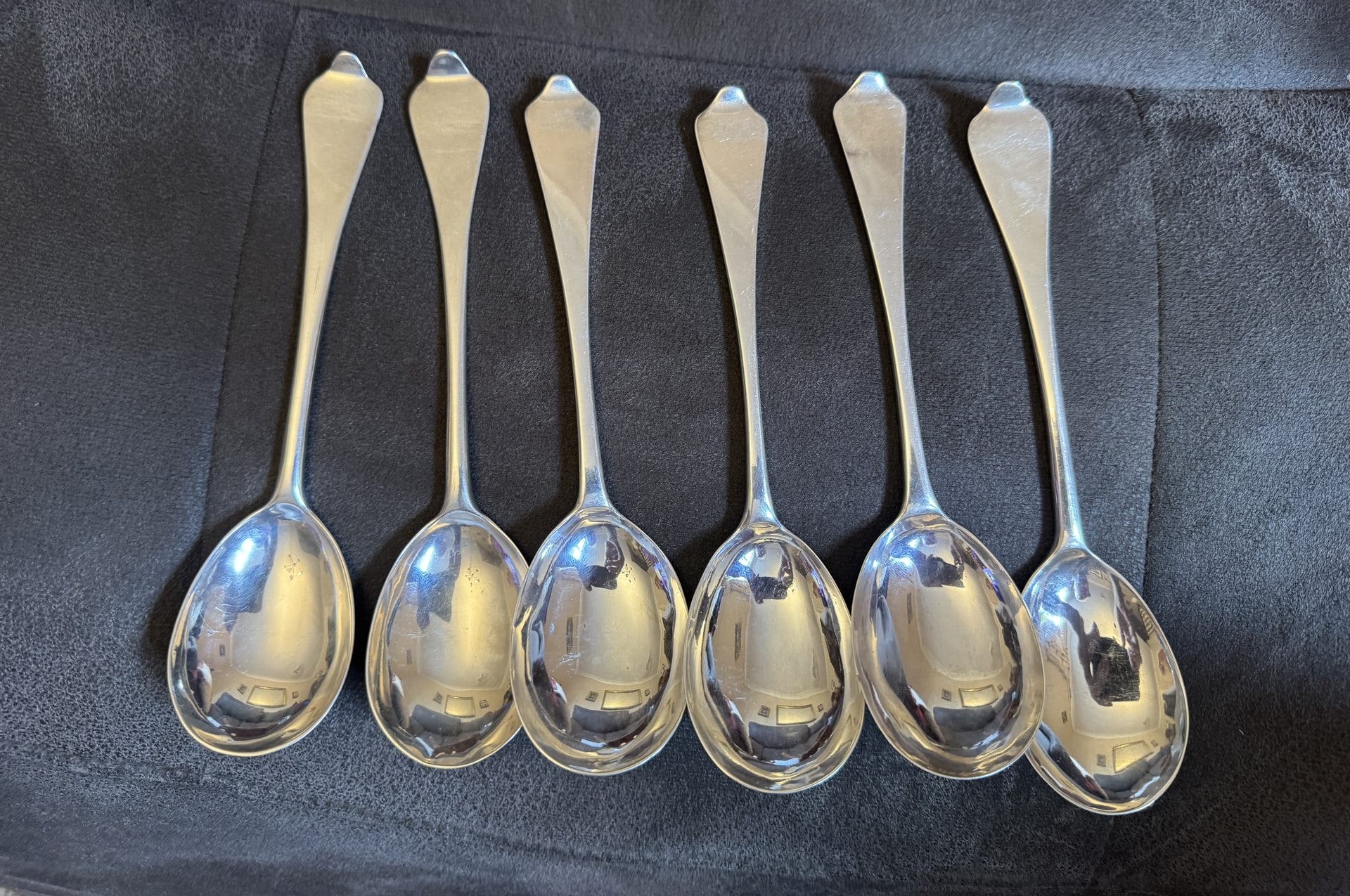
First, not only are your two mystery mark spoons in good condition – too good condition— but all of your spoons are in good condition. This could be because they have spent nearly 250 years in a bank vault, or because they have all been re-conditioned. I am afraid it is the latter.
Bowls have been evened out to disguise wear patterns which frankly should be there, initials or crests or badges have been removed. The market tolerates badge removal as so many families didn’t want the market knowing they had pawned the family silver but the bowl reconditioning does not help.
Now there is something else about these spoons and you already touched on it: they are all a design anachronism.
Dog-nose spoons went out of fashion around 1715 to 1720. They were a transitional style that peaked during that period and were quickly replaced by the smooth, upturned terminal of the Hanoverian pattern.
So most likely either whoever commissioned them did so to supplement part of a set which stylistically was out of favour or else it was catchup for a pattern he had a shortage of spoons for.
Except for one problem.
I no longer think the mystery spoons marked WT were catchup for the rest of the pattern. I think the entire suite is looking like catchup. But if that was so why so many different makers and dates?
This points to a dealer assembly. A dealer assembly of say Hanovarian spoons in the 1760-1777 range one can see but to collect so many anachronistic spoons some by different makers in the same date range; that, I suspect would be a more difficult feat. Not impossible but difficult.
They are, as you say all sterling. Had they been dated contemporary to their dognose style they would have been Britannia by statute.
Clean them up a bit and see if anything else reveals itself to you. I’m afraid it probably won’t.
Final answer: dealer assembly, bowl cleanup and badge/initial removal. Probably all done perhaps more than 100 years ago.
Again my thanks for posting and I am sorry not to have better news for you. But even as a dealer assembly job lot it is worth one and a half scrap any day of the week.
CRWW
Thanks I think you are correct on all points inc my photographic ability!
They were only 98p a gram so I did ok