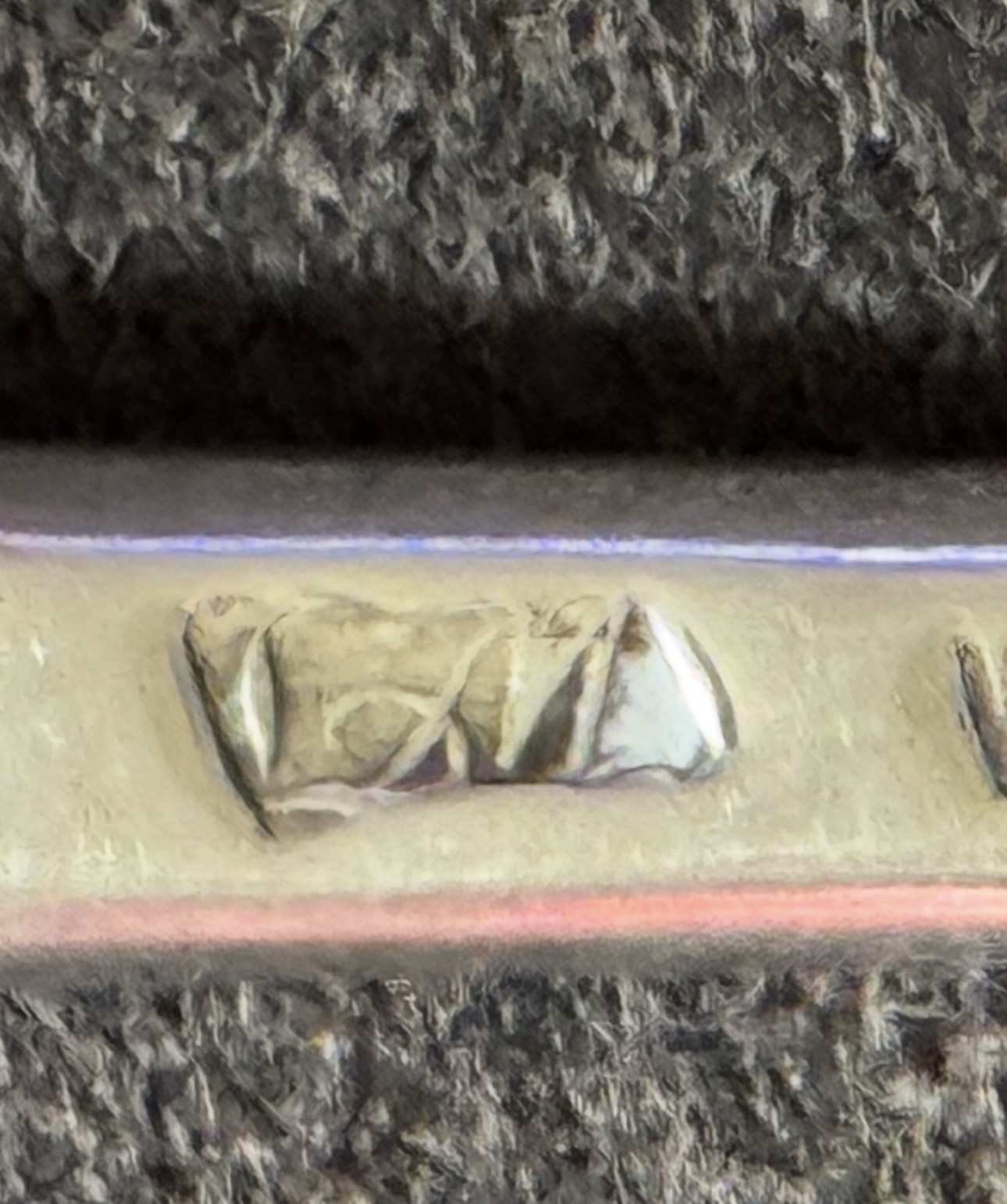
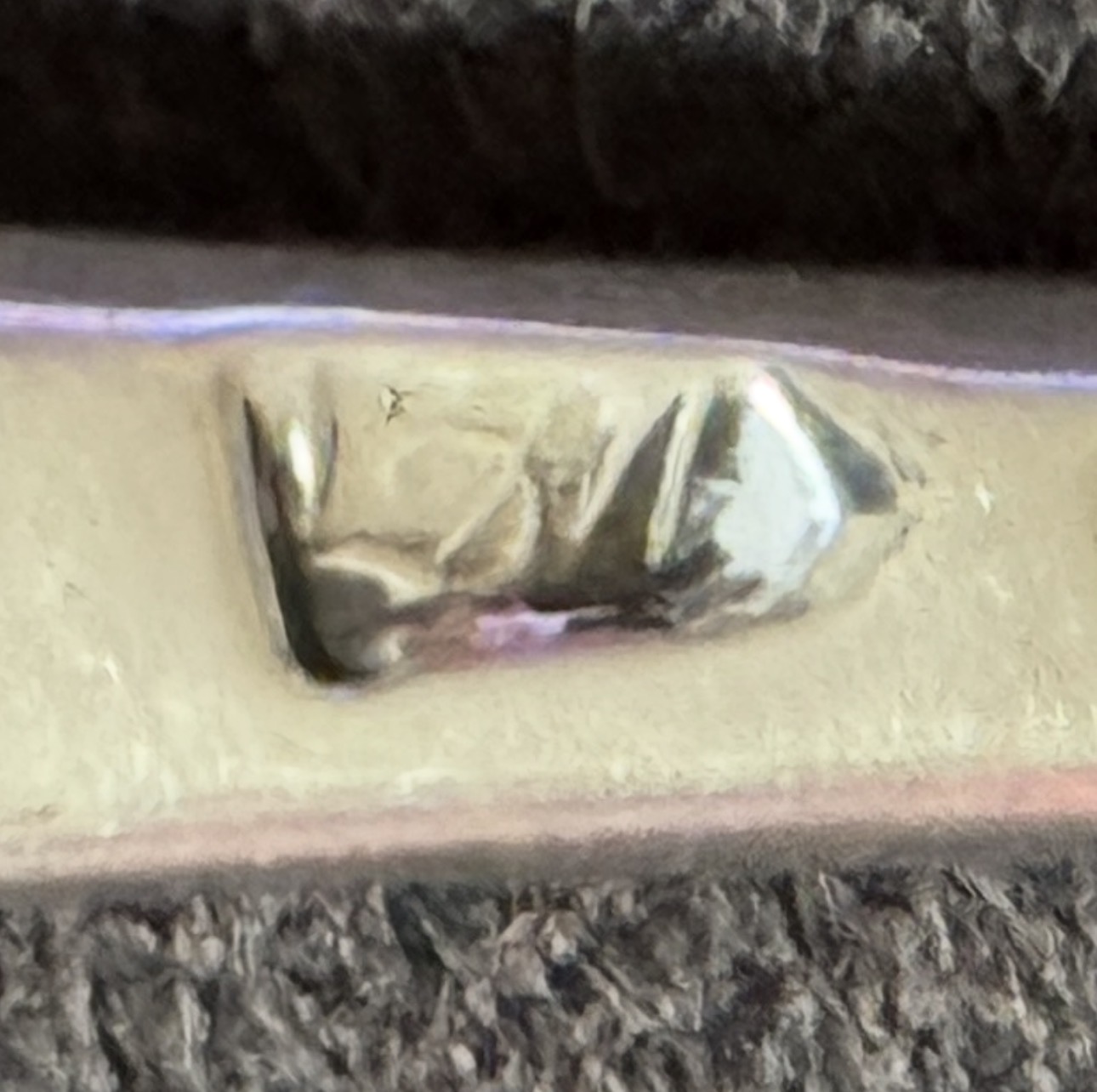
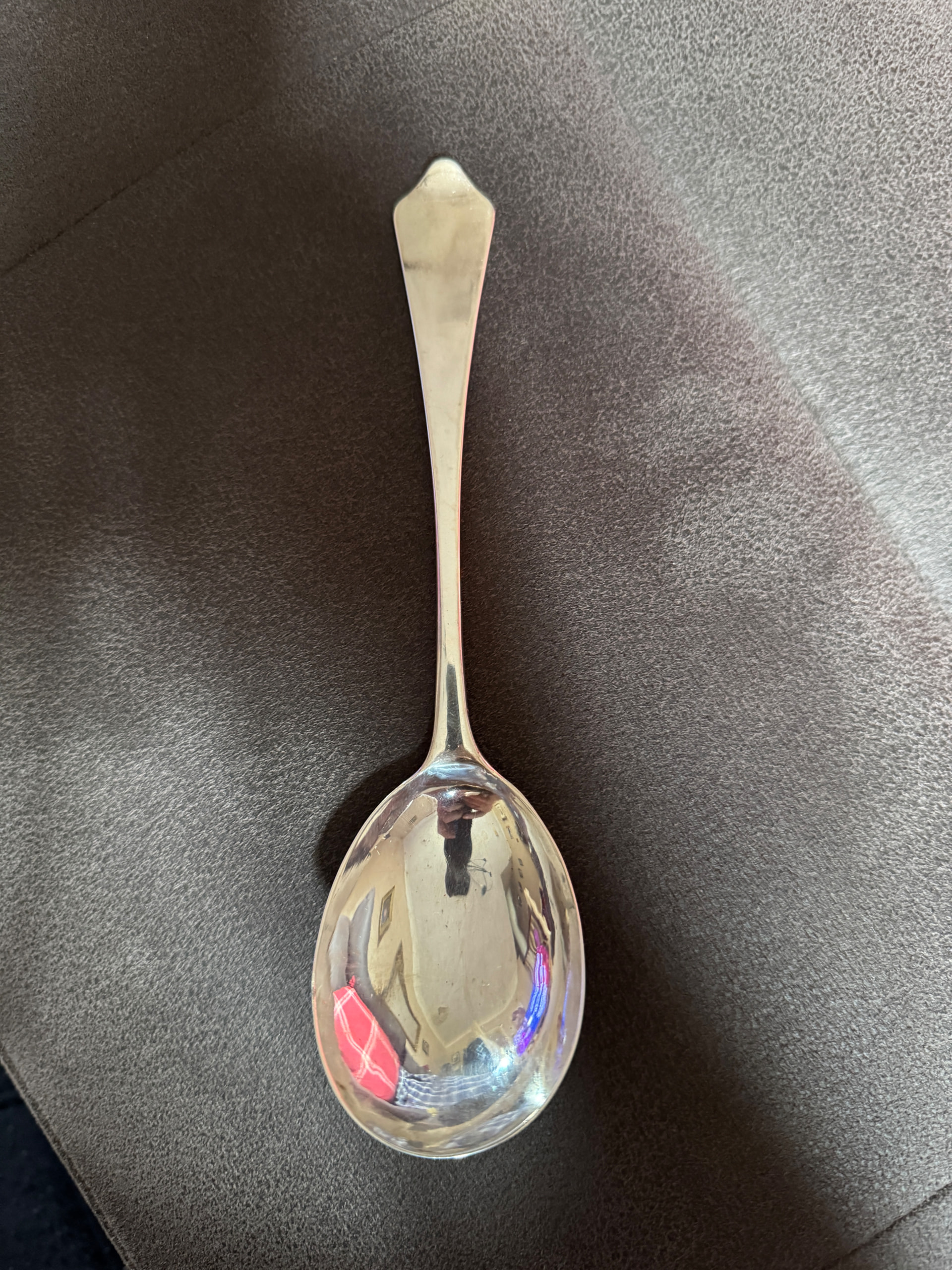
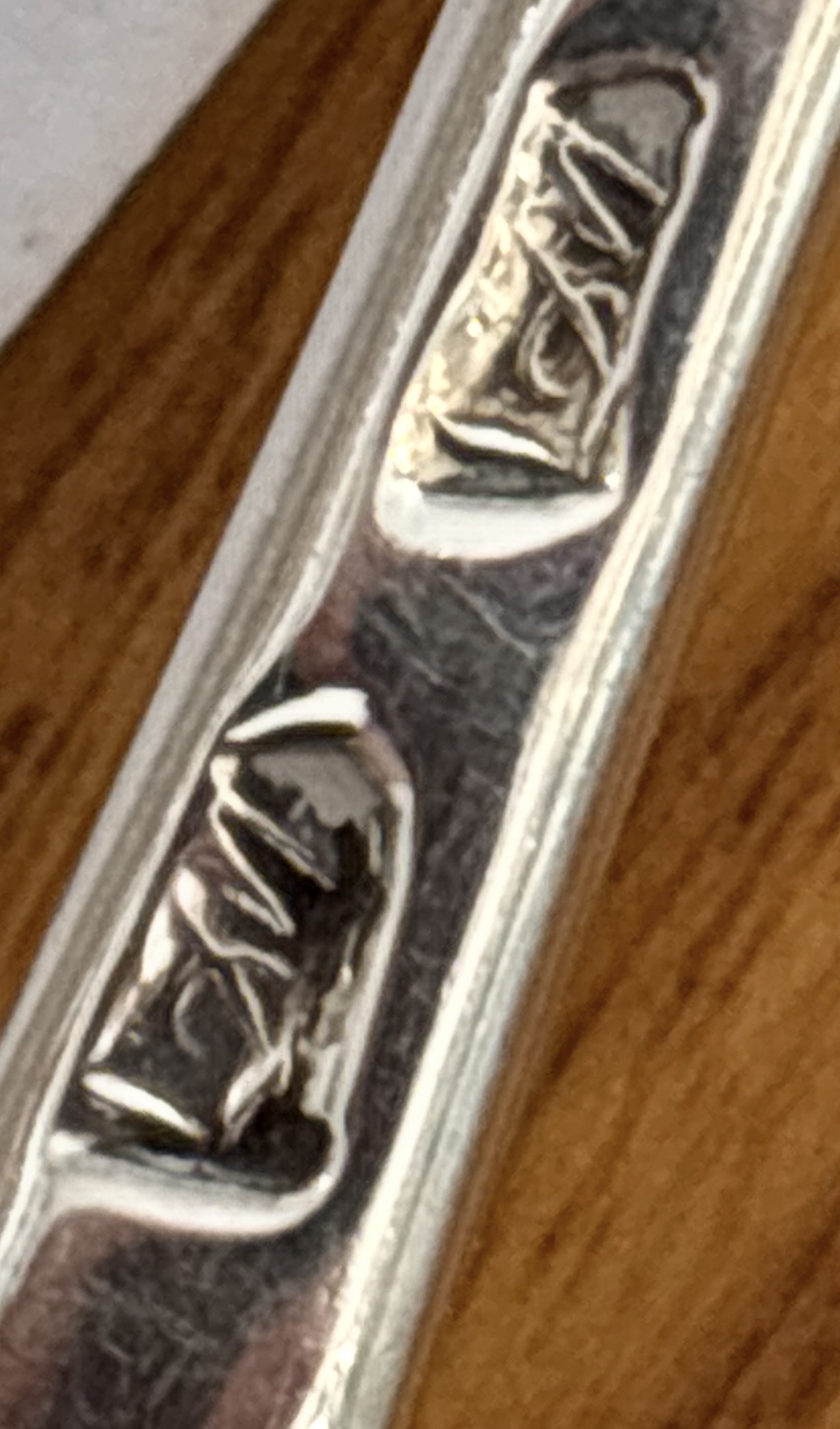
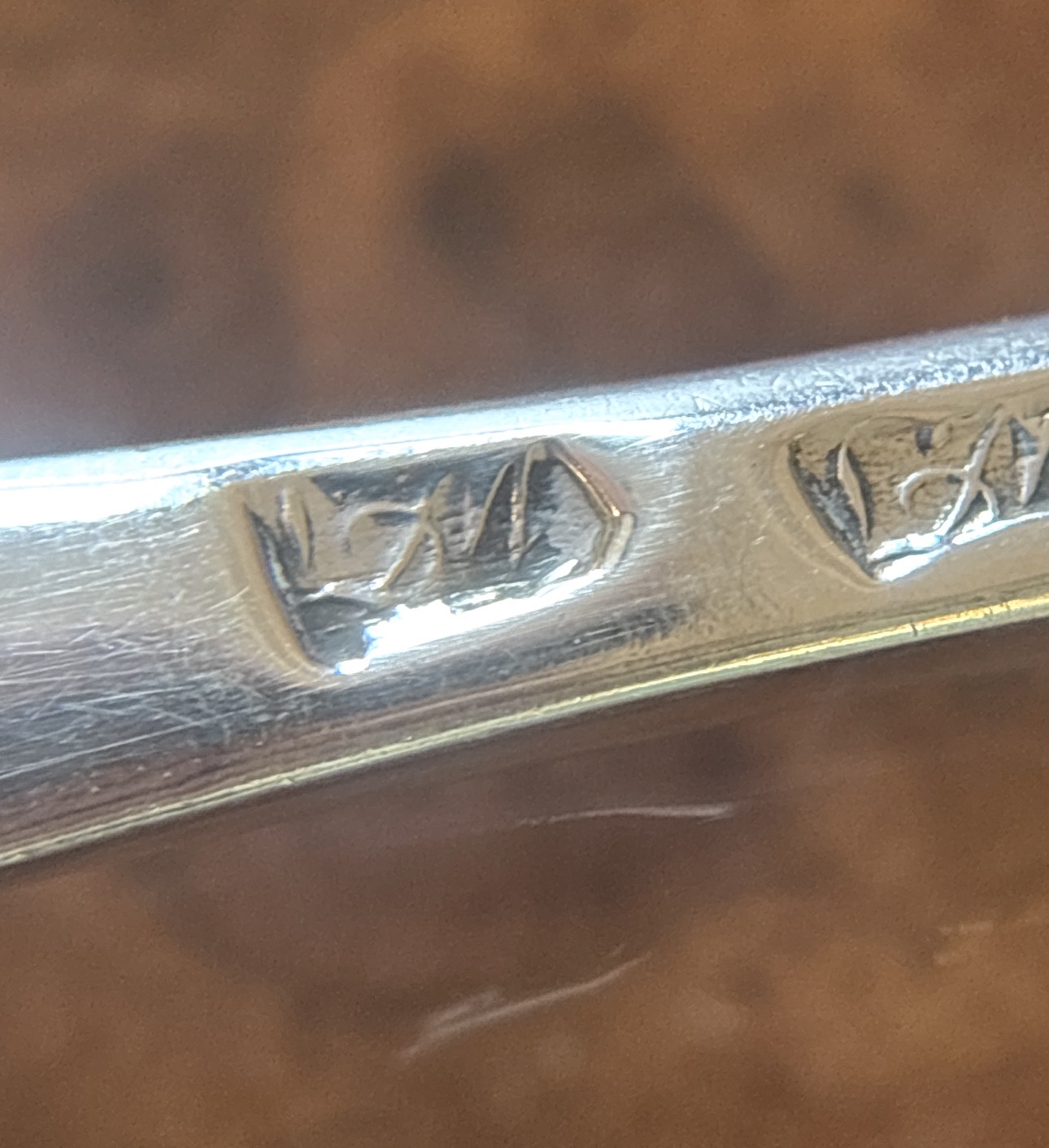
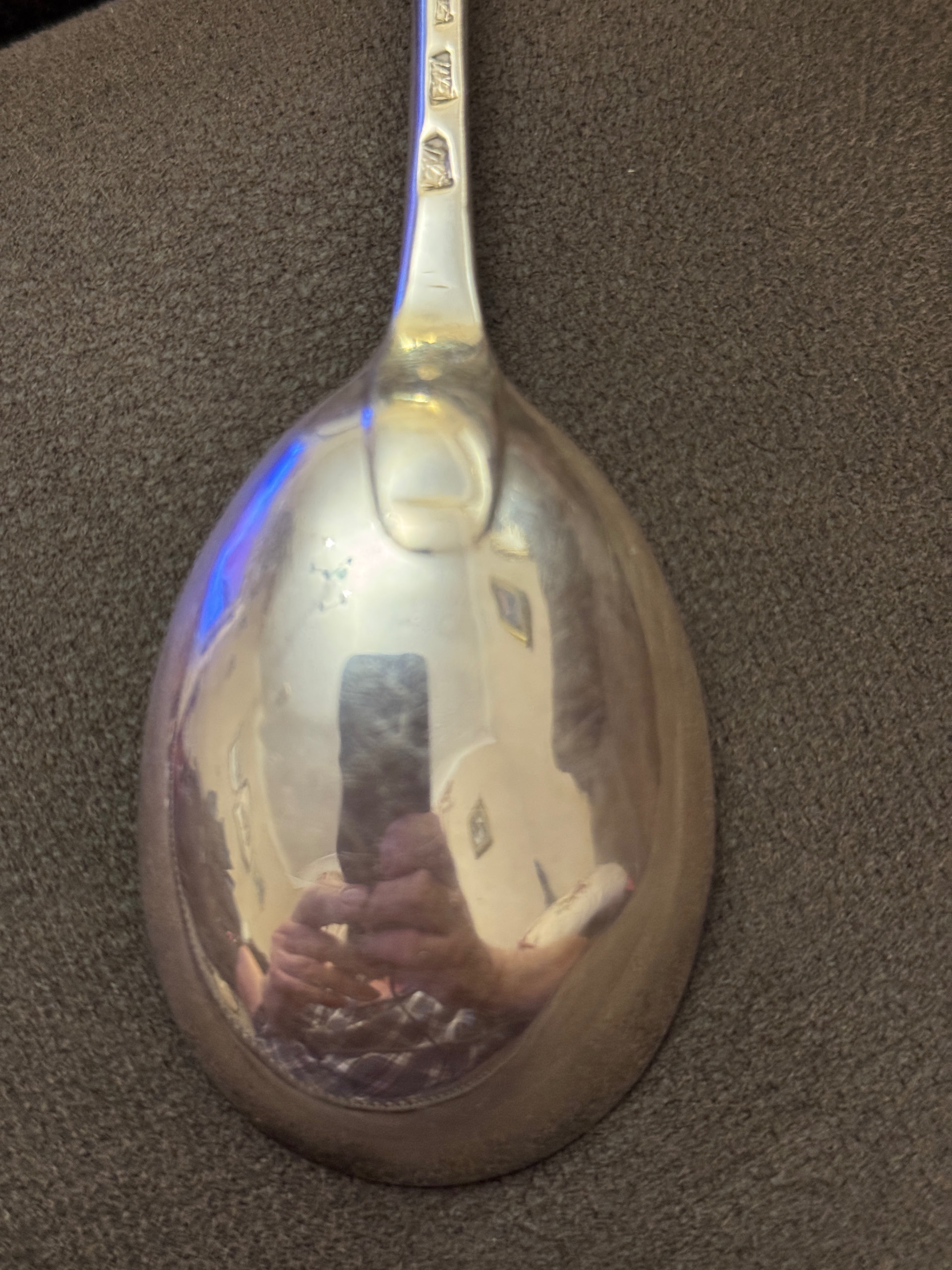
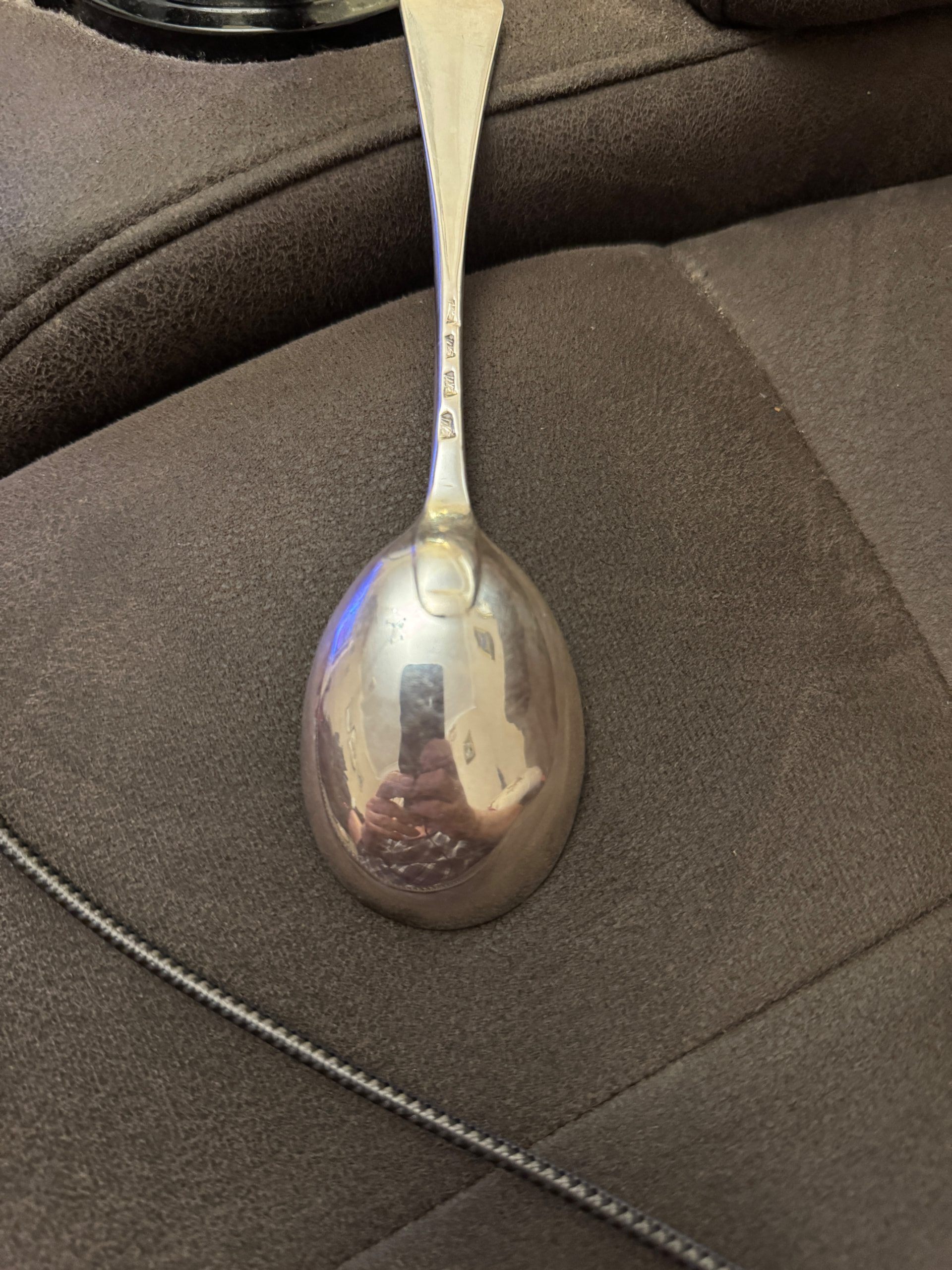
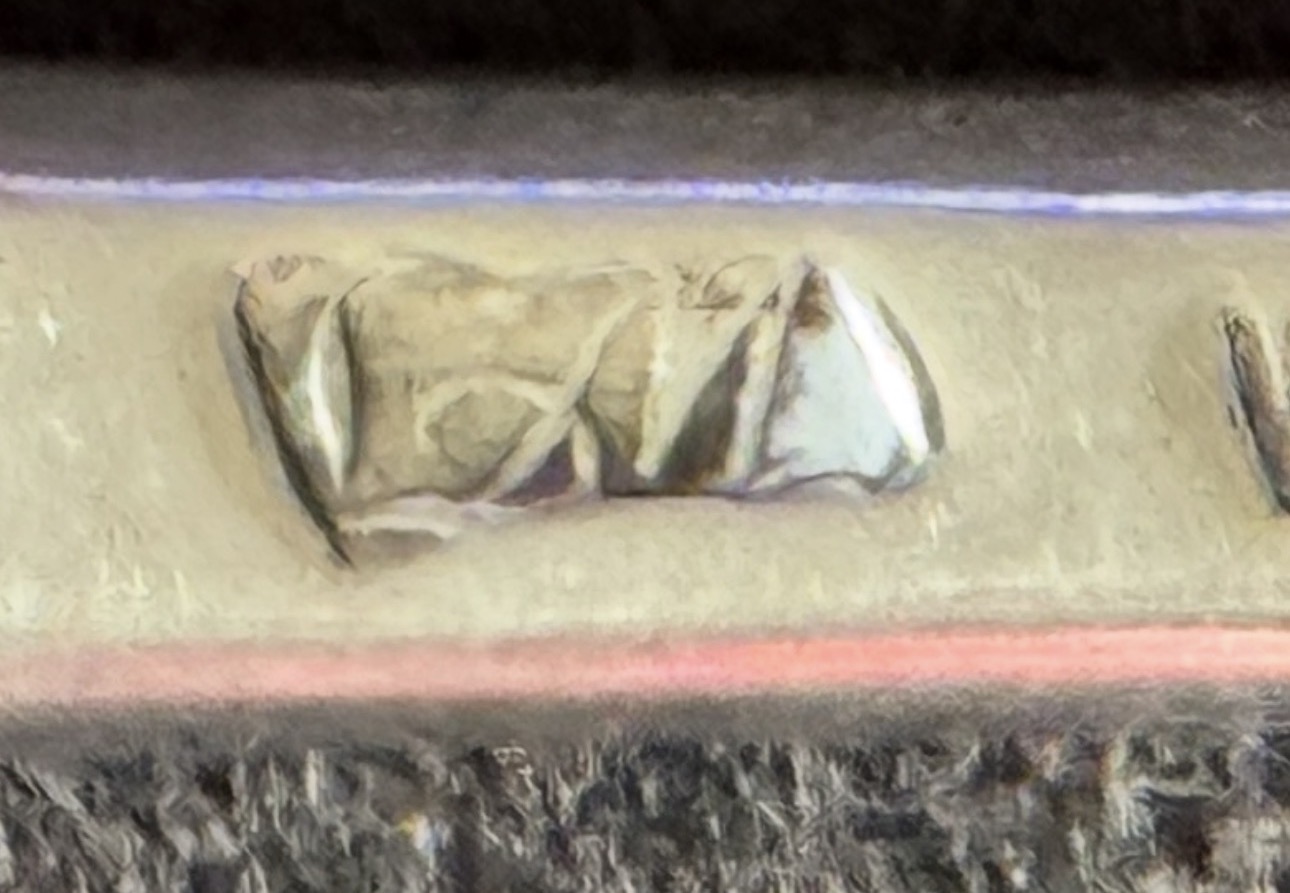
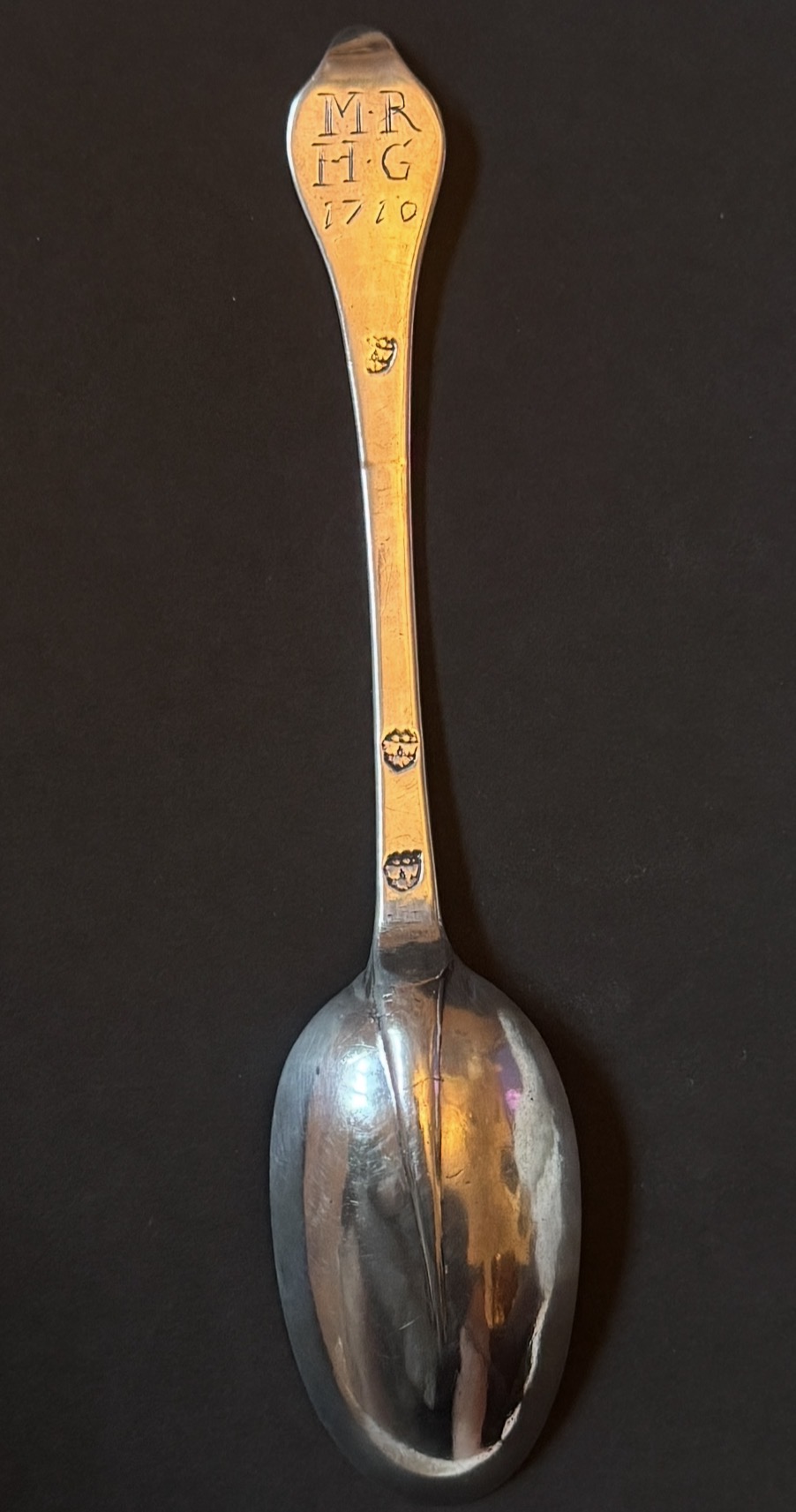
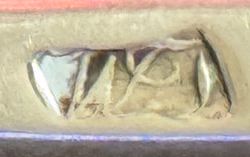
I picked up this dog nosed spoon recently and it has hallmarks that appear to be 4 sets of the same initials can anyone help identify the maker
Thanks
I picked up this dog nosed spoon recently and it has hallmarks that appear to be 4 sets of the same initials can anyone help identify the maker
Thanks
Are those the only markings on the spoon? Anything resembling a hallmark?
No Only the 4 sets of initials
They appear to be LA
With no true UK or European hallmarks, and with none of the North American standard indications of purity, it’s unlikely that the spoon is sterling. I would say, “guilty until proven innocent.” In other words, assume it’s silverplate unless it tests as sterling (with XRF, for example).
That makes identifying the maker exceptionally difficult - we don’t even know what part of the world to consider. Alas, there’s no well-documented UK maker of silverplate with those initials, nor have I found anything in the lists of U.S. makers. I’m not sure I see an “LA” there, but I can’t offer a better guess - the marks are too mangled.
Maybe another set of eyes will have better luck…
That leaves us with quite a puzzle. If you’re sure it’s sterling, it’s difficult to imagine where it was produced. In the U.K., having no hallmark would have been a jailing offense.
Lots of British provincial silversmiths avoided proper hallmarking
I was just about to suggest that we might be looking at something from a “duty dodger.” Repeating the mark four times conveys the impression, to the casual observer, that the spoon has proper hallmarks.
ETA: And it does have a Queen Anne “vibe” to it. Just a hunch. That gets us no closer to a maker, however. The mark of someone like John Ladyman doesn’t even remotely resemble this mark.
It could be LM?
For what it’s worth Bowl is .925/8 dogs nose .950
Could the initials be FR? A longshot - no photos, alas:
I do like “LM” better. Slim pickin’s for makers with those initials, however.
ETA: And if we’re dealing with a duty dodger, he might not have used his registered mark, or even one that matched his initials. If I were trying to evade the law, I wouldn’t stamp my pieces with “JT.” I’d go for something obscure and untraceable. 
ETA: Further, in the era to which this spoon appears to belong, sterling maker’s marks were required to consist of the first two letters of the maker’s surname. I would have been “TU,” not “JT.” The appearance of “LM” would indicate a brazen and determined scofflaw.
I presume you have determined age based on the representations of the seller, the style of spoon and the maker’s marks stamped multiple times possibly over another mark in one case?
Numerous older spoons have multiple makers marks in lieu of standard town assay and sterling marks. The Scots and the Irish, where it is possible to imagine a lack of enthusiasm for the London marking and tax system, are frequent offenders.
Thank you for testing the silver but the bulge created by the first stamp would have convinced me it was at least sterling and possibly Britannia standard without the need for test.
There was, as you will likely know, a great revival of Britannia silver as part of the arts and crafts revival in the last quarter of the 19th century and on into the 20th century. However most of this material comes out of the major London makers and always, in my experience, bears contemporary late 19th or early 20th century marks which by then were useful sales tools in and of themselves.
Decades ago I was taught to judge silver as to where it comes from and how it is made and what is its likely age based on the appearance of the material used, wear especially wear around the tip of the bowl. For me the marks merely confirm what the look and feel have already told me. Judith Bannister for one, advocates this methodology.
I would like to know what you know about its provenance, which I concede may well be limited to the seller’s reps. But if you don’t mind reiterating them I will try and carry it forward a little.
CRWW
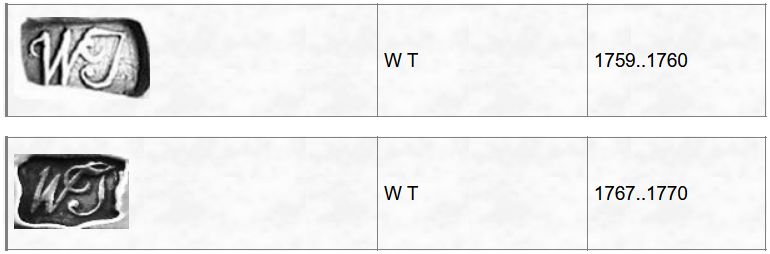
To me the initials look like WT and the mark is very similar to two WT marks which I have seen with London hallmarks but which don’t appear in Grimwade’s “London Goldsmiths, 1697-1837: Their Marks and Lives” probably because they would have been recorded in one of the notorious lost registers.
Phil
It came in a set of 6 I bought for less then scrap the other 5 have ordinary marks dating between 1696-1711
The bottom WT looks right but the date is to late??
The spoon looks in remarkably good condition - I wonder if it might have been remodelled more recently?
That was my thought perhaps to replace a missing one then I saw the strange marks perhaps as a replacement made later it didn’t need full hallmarks???
Would it be possible to see the mark(s) on the remaining set and if possible a picture of at least one of the rest of the set with standard marks?
I agree with Phil the marks are WT and with yourself the second of his suggested unascribed marks looks like a near duplicate but the metal is too well-refined and the hammering precise and new.
Anyway show us what you can of what else you bought and you may get at least a difficult-to-impeach working theory.
Incidentally the rules of the UK Hallmarking statute then as until recently required each separately cast or hammered part to be marked and assayed even if the parts, like a lid, were later to be joined together by, say a hinge. This is why you see separate marks on parts of assembled work even though the joins are permanent. So replacement cutlery for a set made later should have been fully assayed contemporary with manufacture.
Having said that if it was a private order and the items were for a specific customer and they were never to be offered to the public it is perfectly possible the later cutlery was not assayed by private arrangement
For instance Wiliam Tuite, a large worker, working out of his third shop on what was then Great Queen St, in Lincoln’s Fields was in serious financial trouble by 1769 and officially bankrupt the following year. It is perfectly possible a little off the books work for some ready coin would have been tempting. But to be clear I have nothing linking him to a WT italics mark except letter and time similarity and an absence of authorship for the known italics marks.
But if the exhibited item is second half of the 18th century it is either reworked or rarely used and even if it was that, it’s still not quite period from photos only.
Anyway again thanks for posting such a good head scratcher and I am sure we all look forward to seeing what ever else you feel you can share.
CRWW