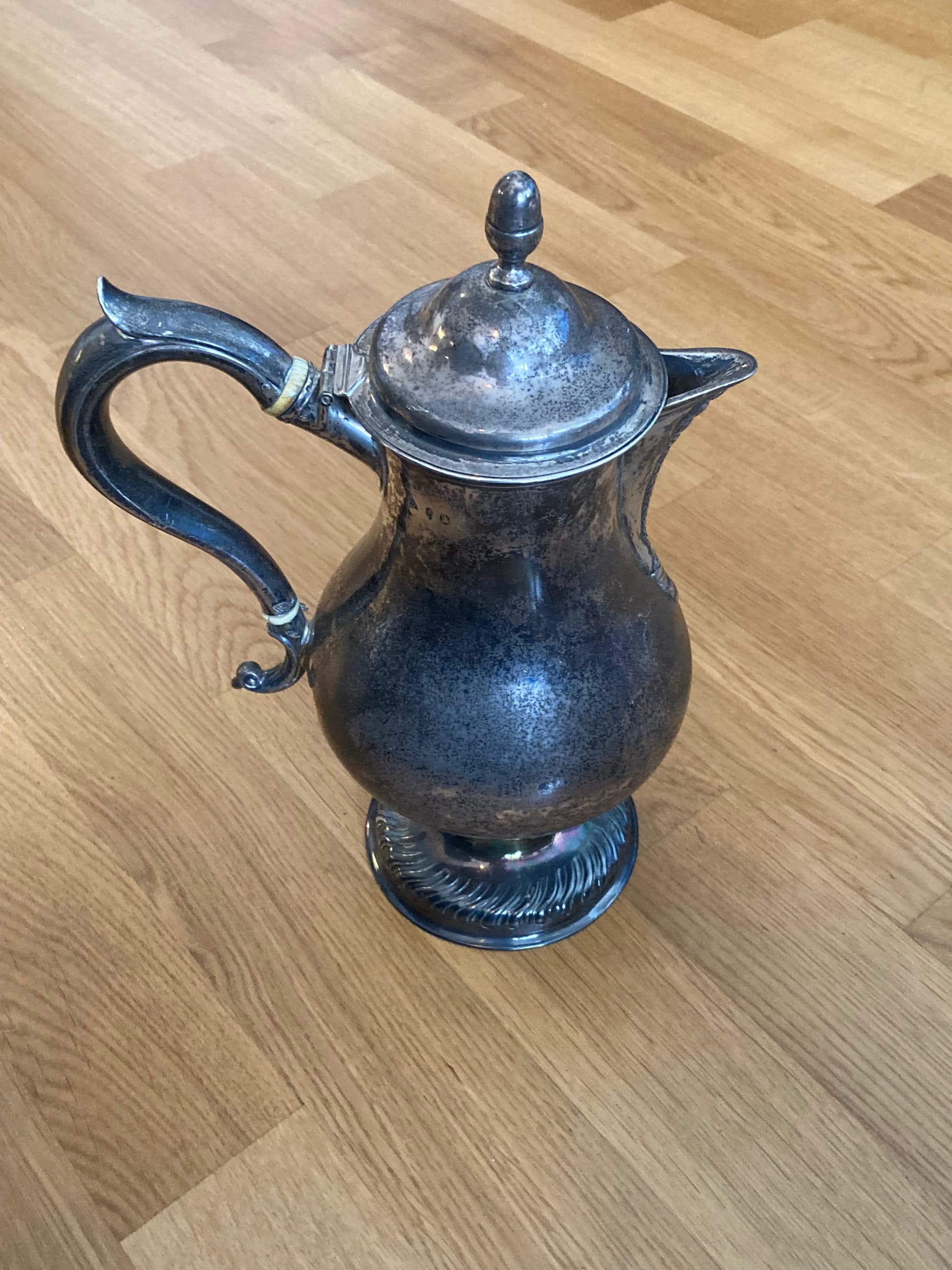
Hi all
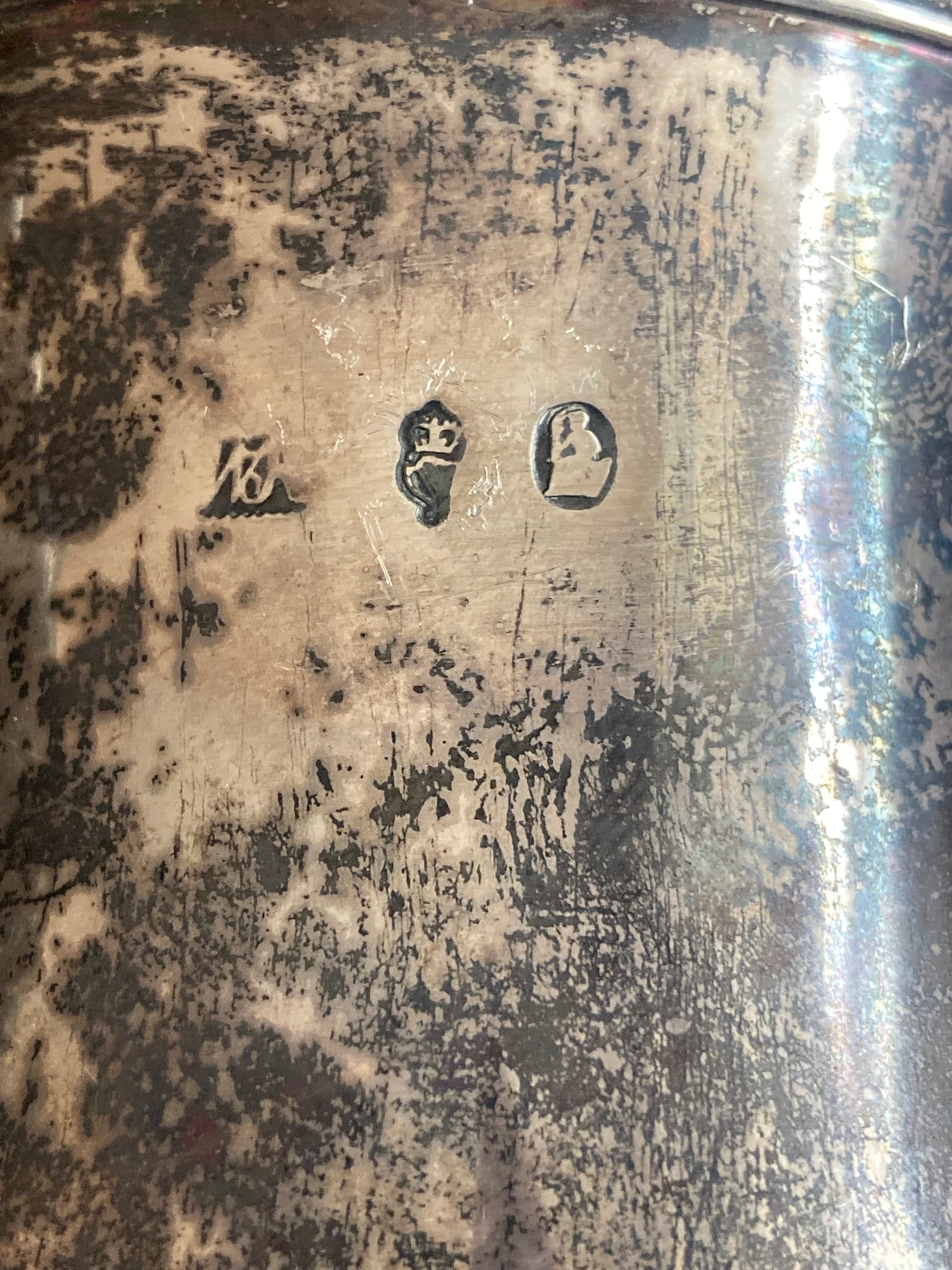
I’m sure it will be quick for you but I cannot get it 
For me it’s Dublin late 18e or early 19e but I’m unsure as I can’t find a letter date. Thanks for the input!
Cheers
Hi all
I’m sure it will be quick for you but I cannot get it
For me it’s Dublin late 18e or early 19e but I’m unsure as I can’t find a letter date. Thanks for the input!
Cheers
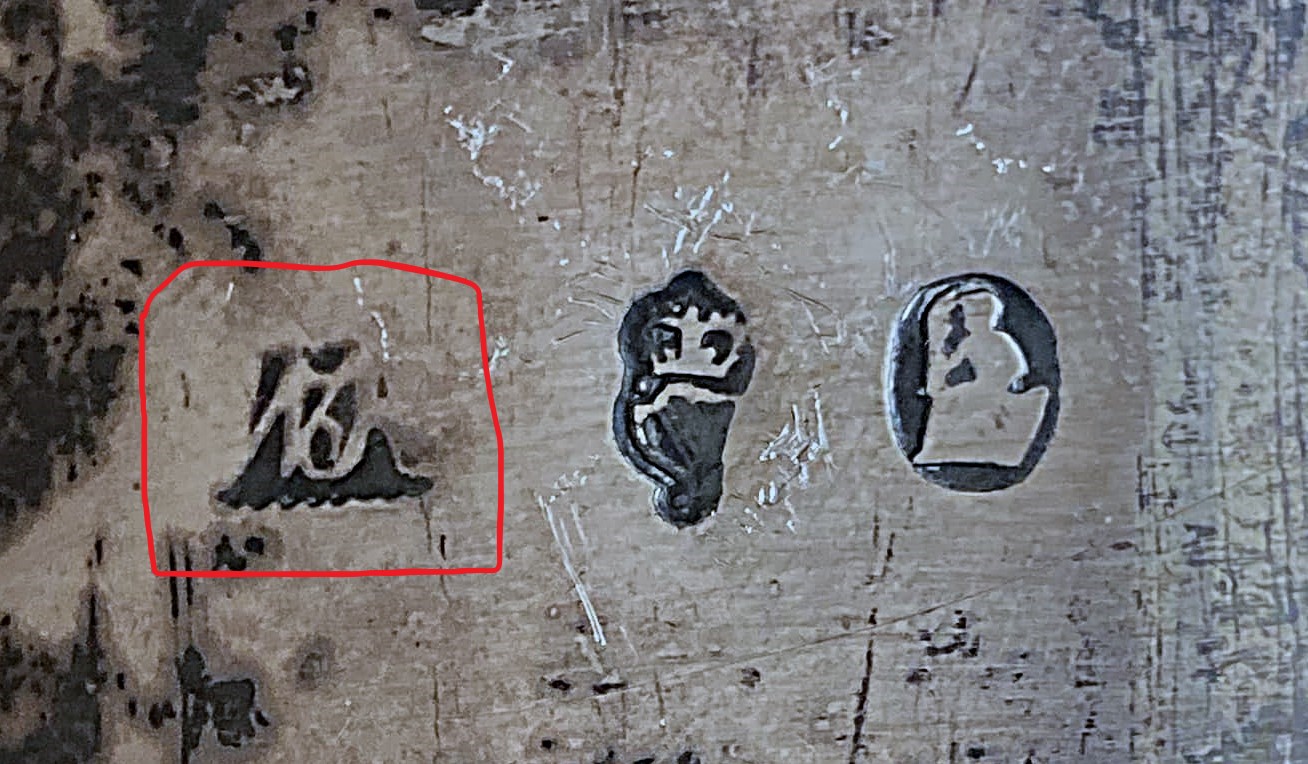
I think these are the craftsman’s initials, and the date symbol is either in a different place or illegible. I suggest gently cleaning the jug and then looking for the year mark.
18th century Dublin-marked silver is often seen without a date mark - very annoying! The shapes of the crowned harp and Hibernia marks imply to me some time between 1741 and 1772. I cannot decipher the maker’s mark.
Phil
Thanks Phil.
I carefully and desperately looked for other marks such as a letter date and there is none except a coat of arms on the other side 
Coat of arms picture, please. 
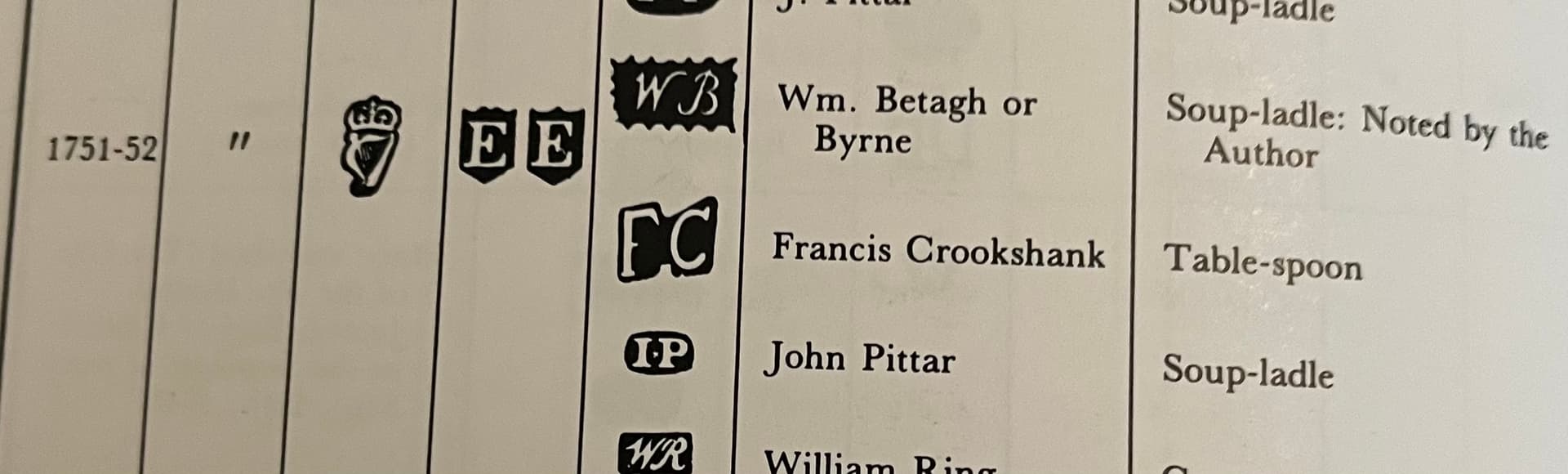
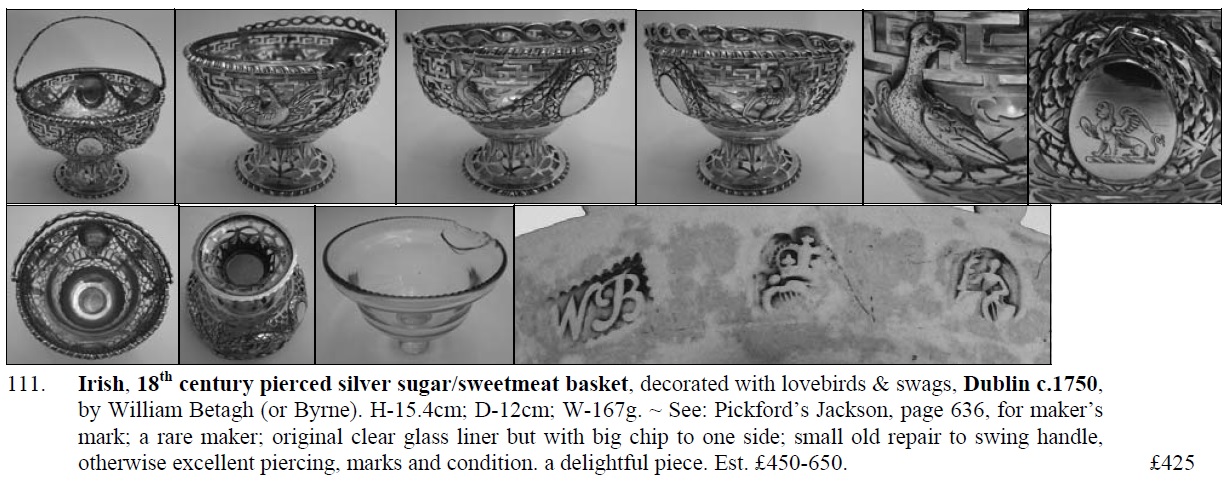
This may well be a very rare Irish 18th century mark last seen on a pierced silver sugar/sweetmeat basket, decorated with lovebirds & swags made in Dublin in about 1750, by William Betagh, or Byrne.
Pickford’s Jackson’s Silver & Gold Marks, mentions him on p. 636 on a soup ladle,”identified by the author”.
David Bexfield in his Antiques Spoon Collectors Magazine calls it a rare maker’s mark.
When Jackson saw the mark in was a solid rectangle with the ribbing or serrating marks, which still survive on this item but only at the bottom, all round it which is the way he recorded it in his compendium.
Of William Bryne the silversmith there is little independent evidence of his work shop or whom he employed or really anything without resort to the Guild records One is almost tempting to presume this was the same person as the rather famous Engraver William Bryne who did for a while work out ot Dublin but I honestly cannot think why a steel engraver whose work was highly sought after before photos were available would both making even the very small amount of silver we know of.
However, start at the other end of the geneological rabbit hole and there are some Bryne’s showing up. Well two of them: his grandson, James and that person’s descendent which the 1901 Irish Census records as “James William Bryne, a 23-year-old unmarried silversmith born in Dublin City living with his 55-year-old widowed father, James, who is described as an unemployed Pawnbroker’s Manager, born in Co. Kildare recorded at 34-3 Synge Street, Dublin.”
That useful record takes up back to James C Byrne whose forebear was apprenticed to Dublin Silversmith John Smyth and is recorded as his indentured apprentice by the Guild in Dublin.
We owe this work to “dognose” in another forum
https://www.925-1000.com/forum/viewtopic.php?p=82228
So why does our William, forebear of these James’s have two names, one a very Gallic name shared by a number of other rather well-known Betagh men ranging from MP’s to poets and hailing from Kildare and the other then usually associated with another art form?
There’s no cognomenative relationship between the name Byrne and the name Betagh other than William apparently registered as a member of the guild using both.
Did he think those “within the pale” of Dublin castle would be more likely to part with George III shillings for his work if he used a name many of them had themselves and was incidentally being used by a rather famous engraver?
Or was Betagh just a nom de plume he subsumed? It certainly has never been used again by the Bryne Family as these straggled into the 20th century.
We need a Dublin reader of this fine forum to do some local searches which aren’t yet showing up digitally.
CRWW
Woow!
I’m really impressed by all the enthusiasts on this forum, it’s really great!
Thank you all for this fantastic information.
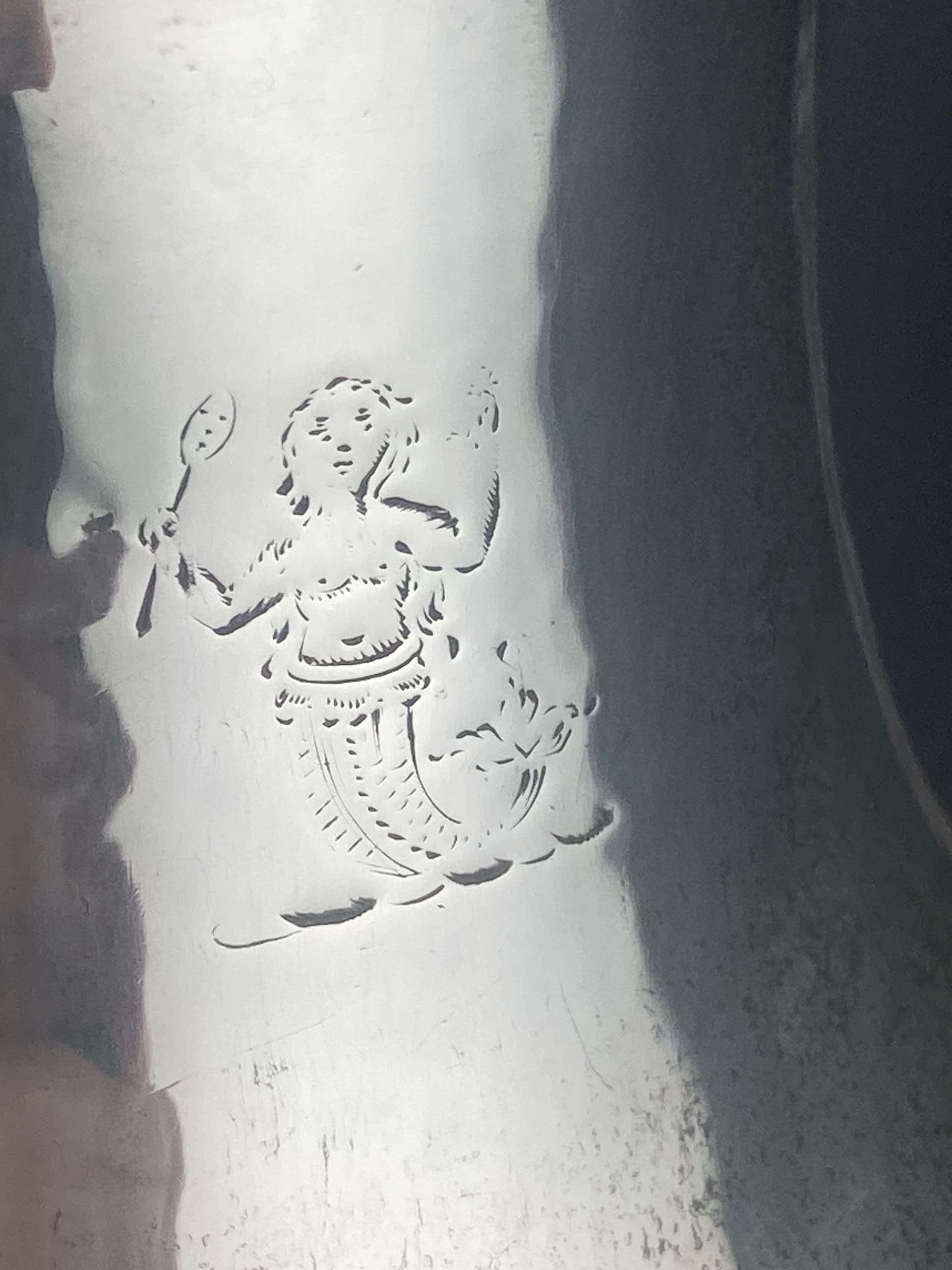
Here’s a photo of the coat of arms, but is it really a coat of arms?
In Switzerland, it’s difficult to estimate the value of such objects… Could someone give me their opinion?
Thanks again!
Rémy
I may have found something
I am suggesting Byrne is the maker not the owner. Typically owners put crests and initials on their metal to commemorate themselves not the makers.
However in this case you are dead on according to Fairbairn on Heraldry:
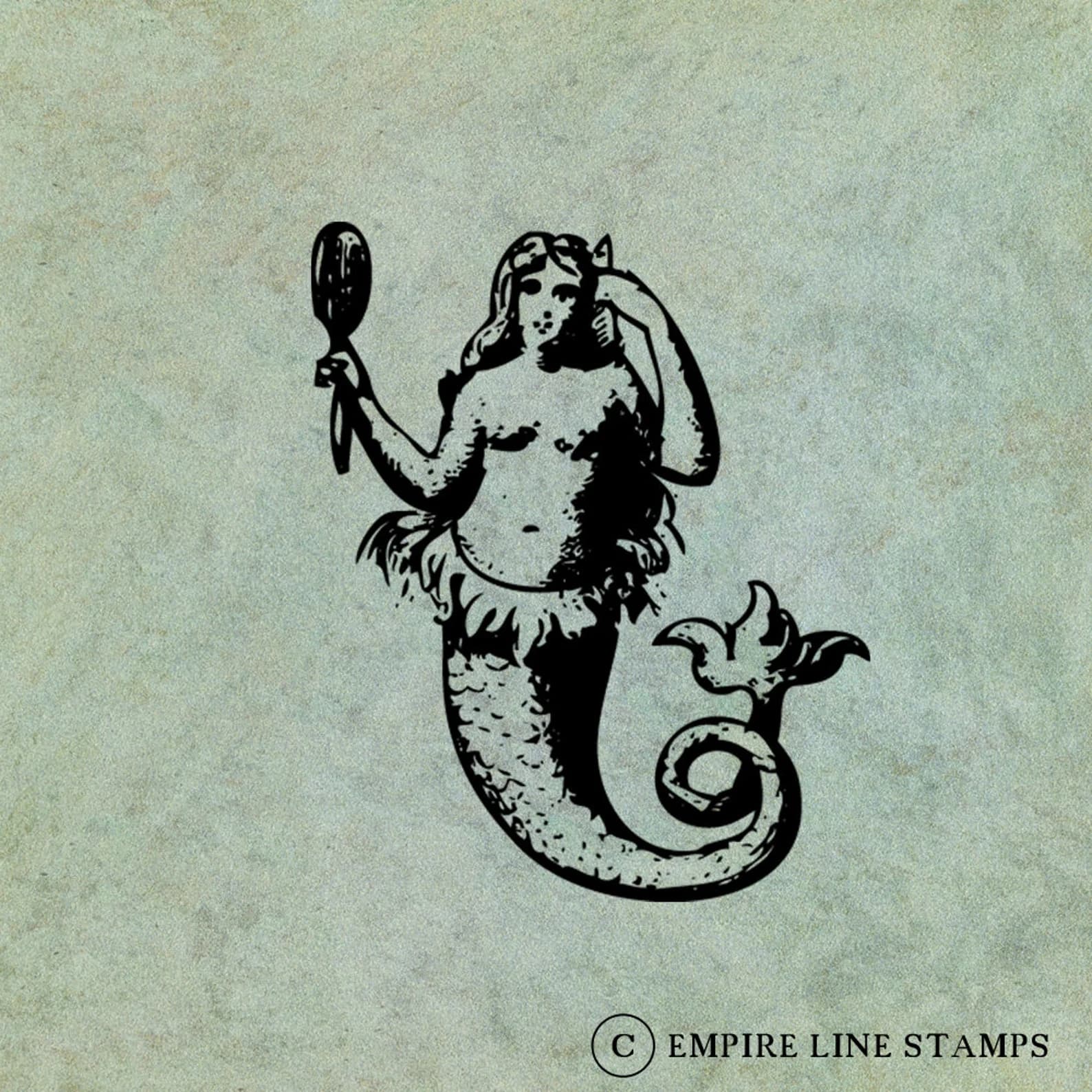
"O’Bryne and O’Byrne, Ireland, a mermaid holding in her dexter hand a mirror and with her sinister combing her hair. (p.184. 8)
"O’Byrne, Ireland, a mermaid charged on the breast with five escallops in
saltire or, holding in the dexter hand a mirror and in her sinister a dart, Motto. “Certavi et vici.”
"O’Byrne of Glenmalure co. Wicklow, Ireland, a mermaid with a comb and mirror p,184.
Here’s some background on the family:
As to what its worth: here’s another pear-shaped mid eighteenth century coffee pot which sold well back in 2012:
Now silver scrap then was worth less back then it is now. On the other hand UK coffee pots of this vintage and shape are struggling at the £1,000 mark.
But clean it up, weigh it and tell us it doesn’t leak and you have good title and you’ll get a better answer. Or just find an O’Byrne with a fondness for mermaids and in need of some ancestor-support and flog it to him.
CRWW
For those without a liveauctioneers account, the hammer price was €4800 (plus 23% commission).
Thanks Jeff. I had thought the price showed up on the link. I don’t know why that particular pot went so well. Fonsie Meanly’s sold it in Kilkenny. It might be rather heavier than the current pot and it is certainly well-decorated. Typically Irish silver goes at 20% over English unless it is provincial, especially Limerick or even Cork in which case it might double. But this one sold at nearly three times the going rate back then. No maker shown so who knows it may have been a local piece, the town has a rich history of silversmithing going back to the mid sixteenth century.
CRWW
You can’t see the realized price on liveauctioneers unless you log in, alas. But an account is freebies, so there’s no reason not to sign up. They don’t spam you, happily.
I do understand the outliers, when it comes to realized prices. All it takes is for someone to fall in love with something. At that point, he doesn’t care what “the market” says about it. He’s not buying it as an investment, but as something to put on his sideboard, and bring him some joy. If he’s sufficiently well-heeled, that’s enough. He’ll pay whatever it takes to secure the treasure. Run into two such people at an auction, and it’s “let’s get ready to rumble!!”