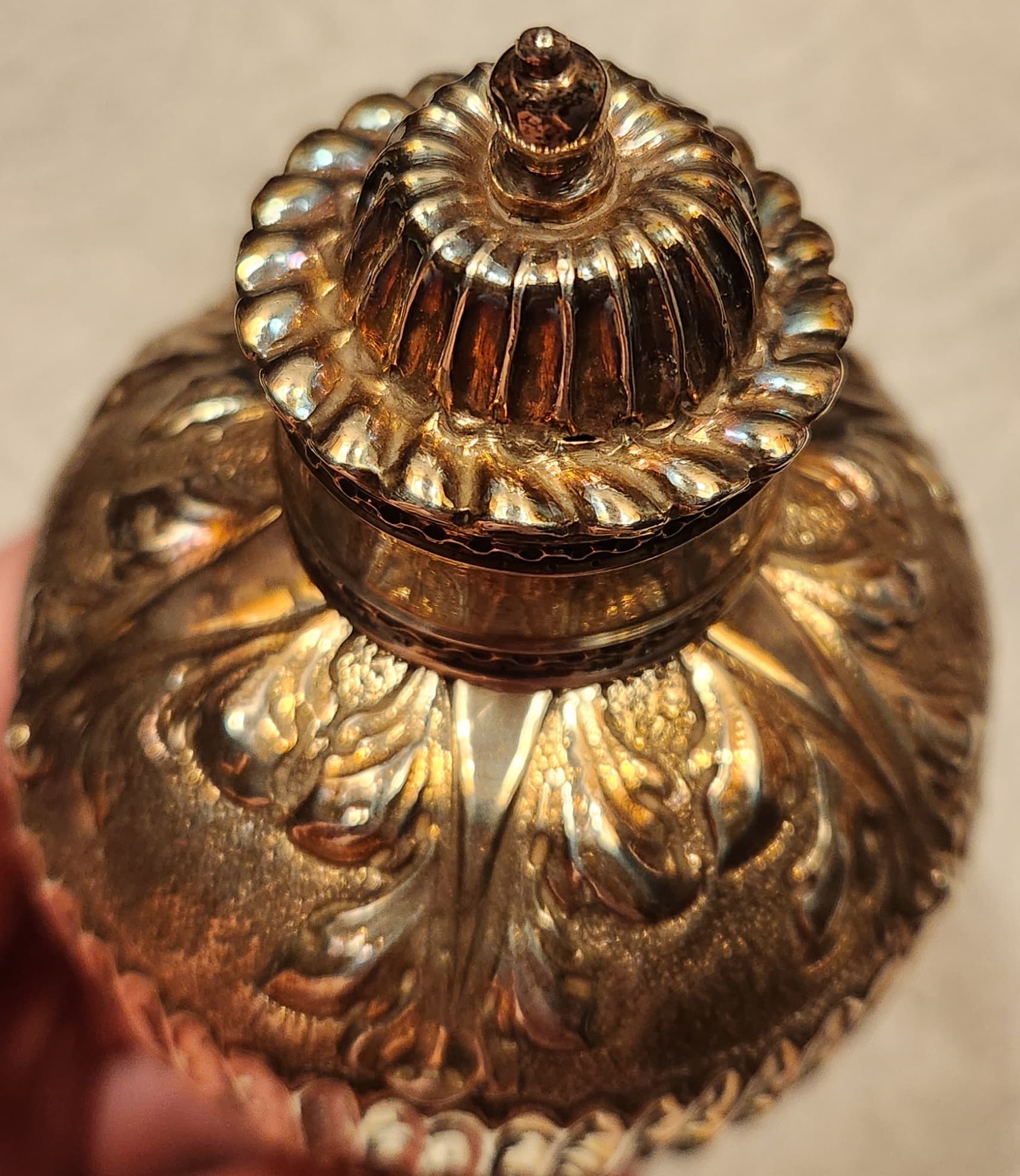
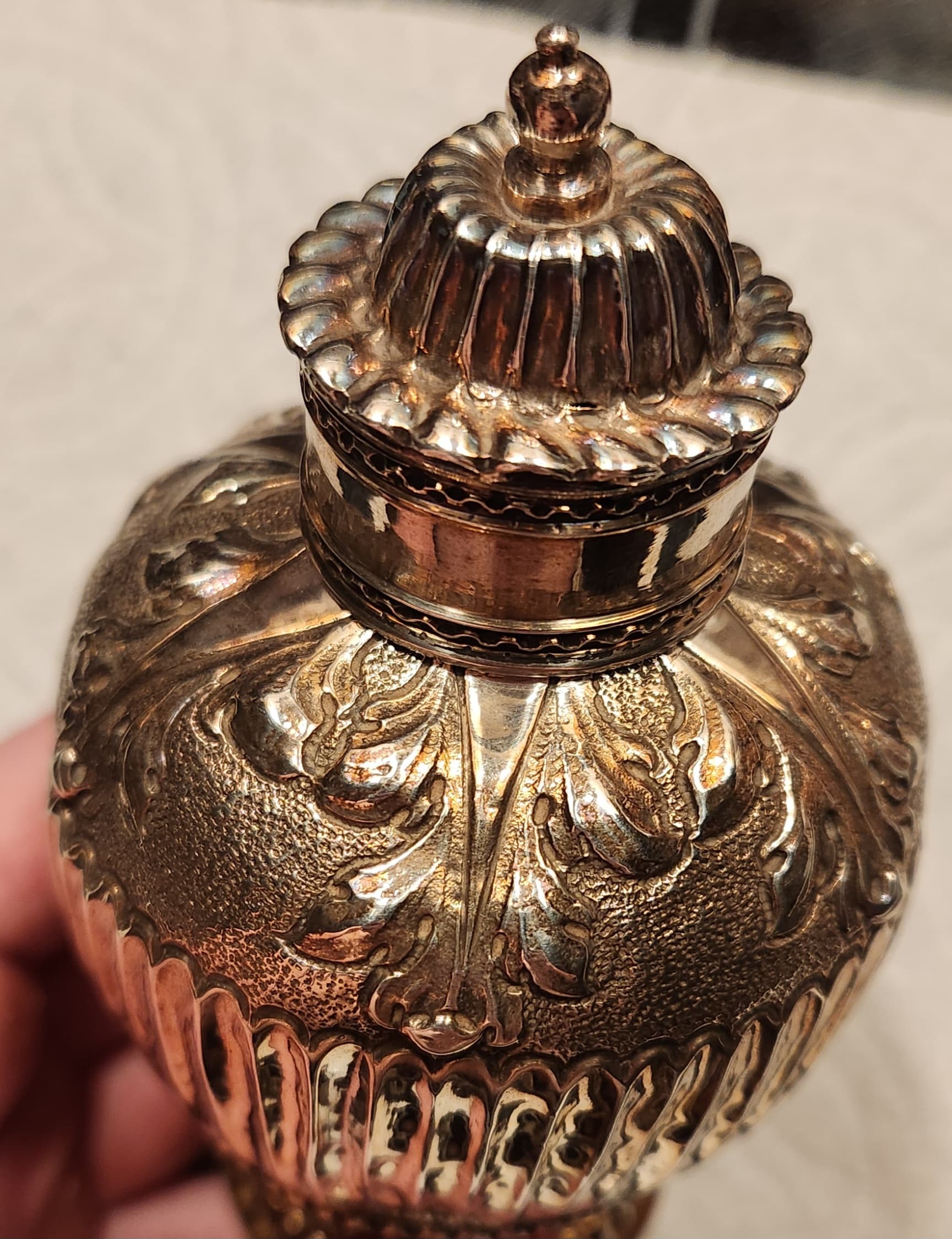
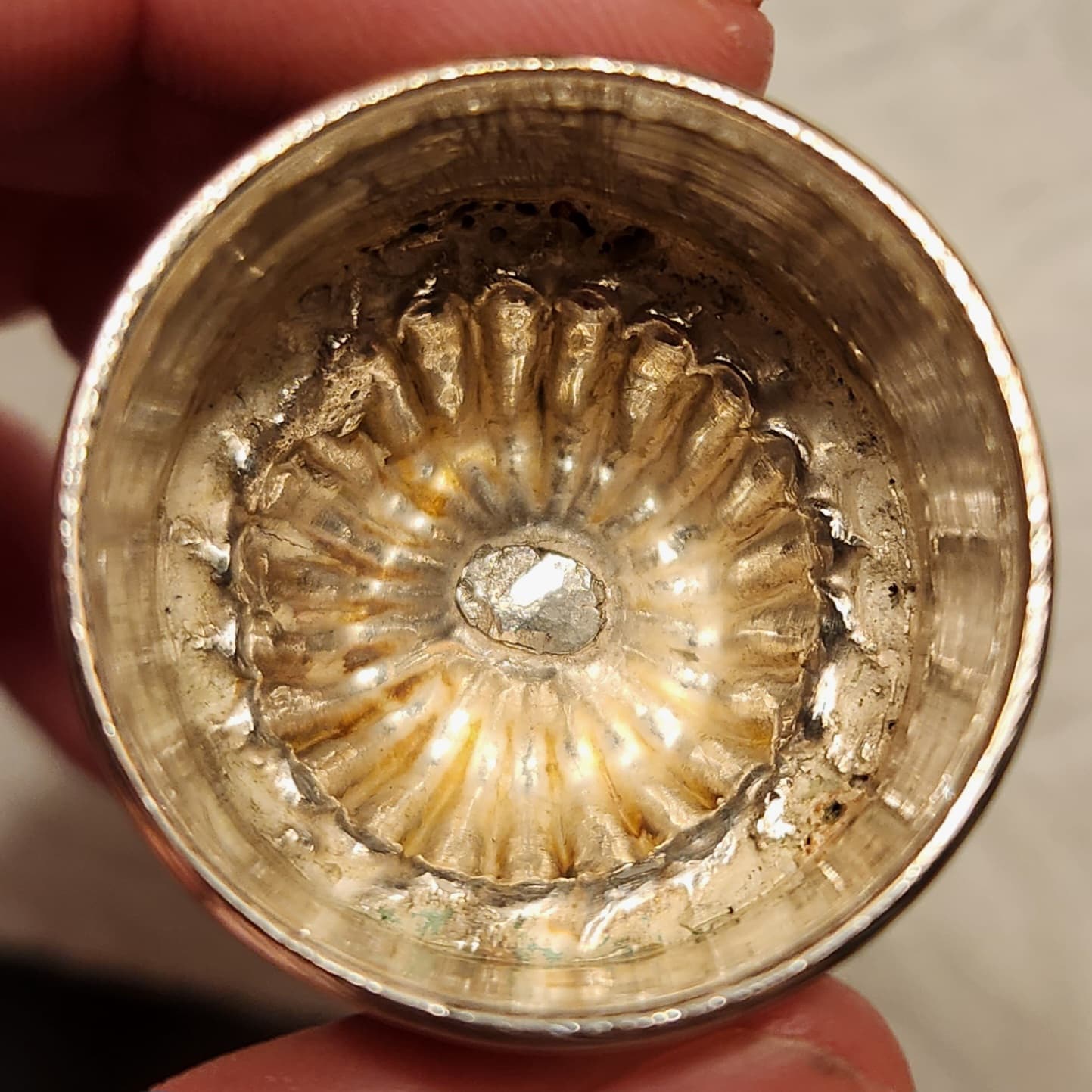
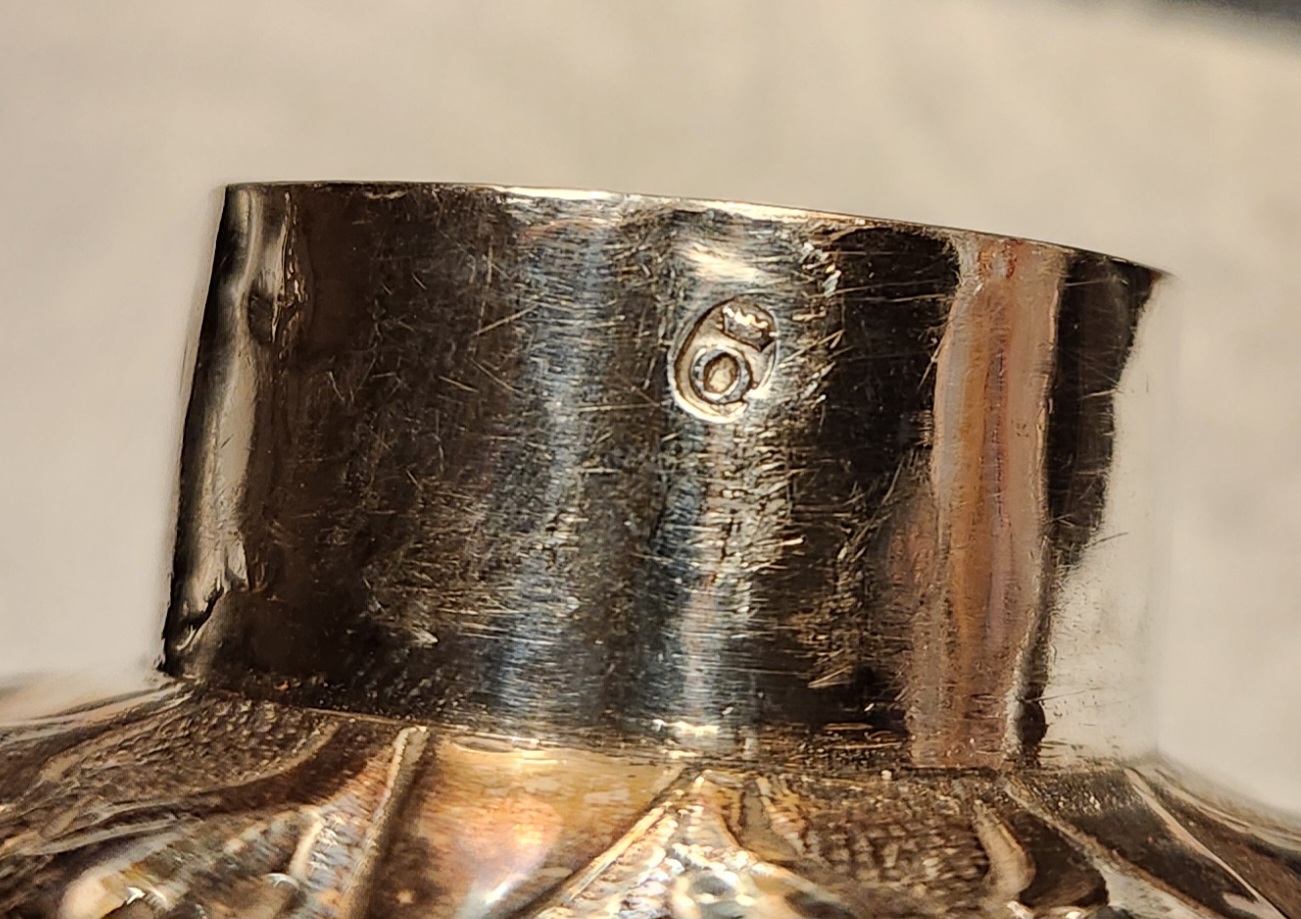
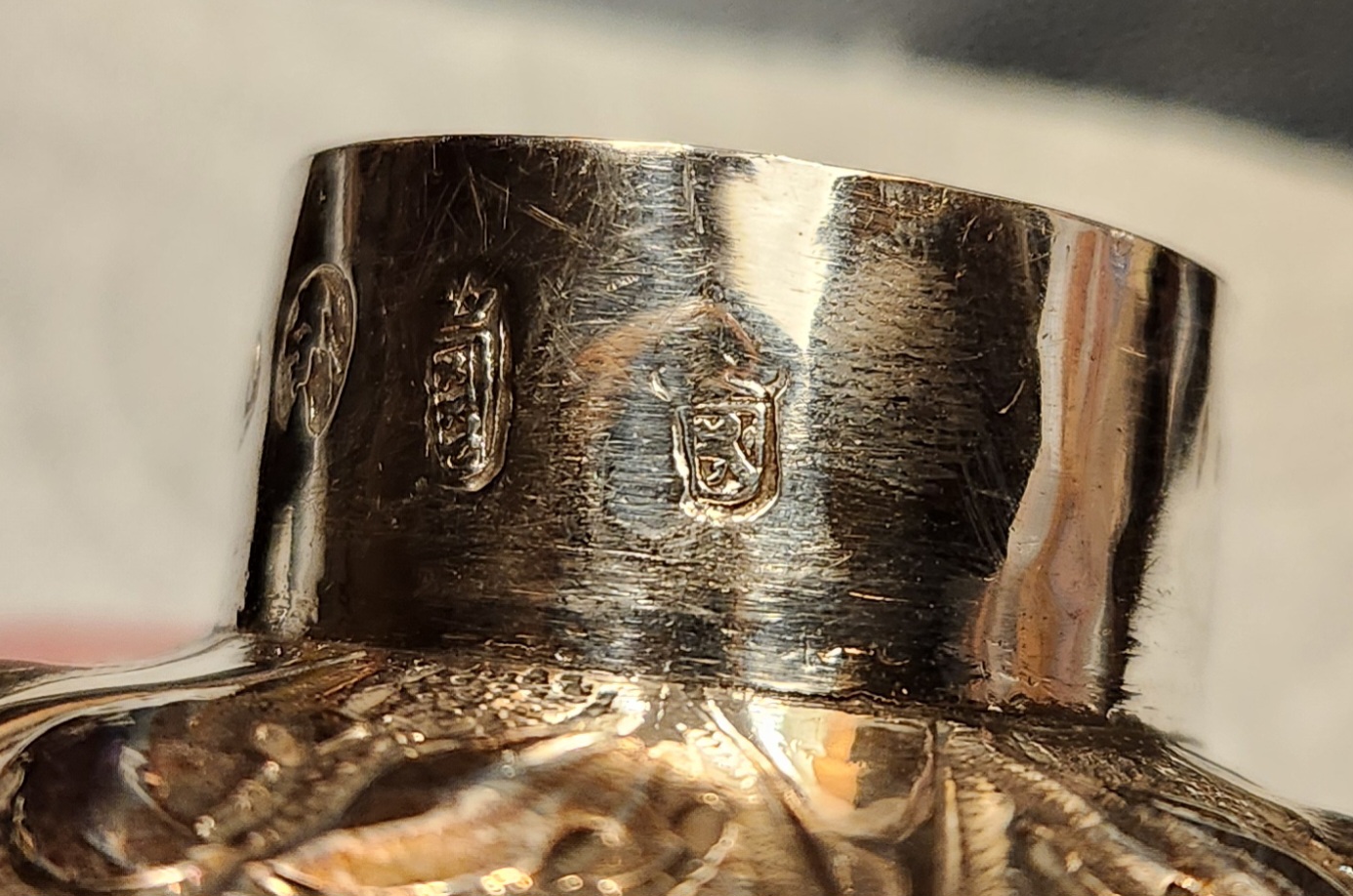
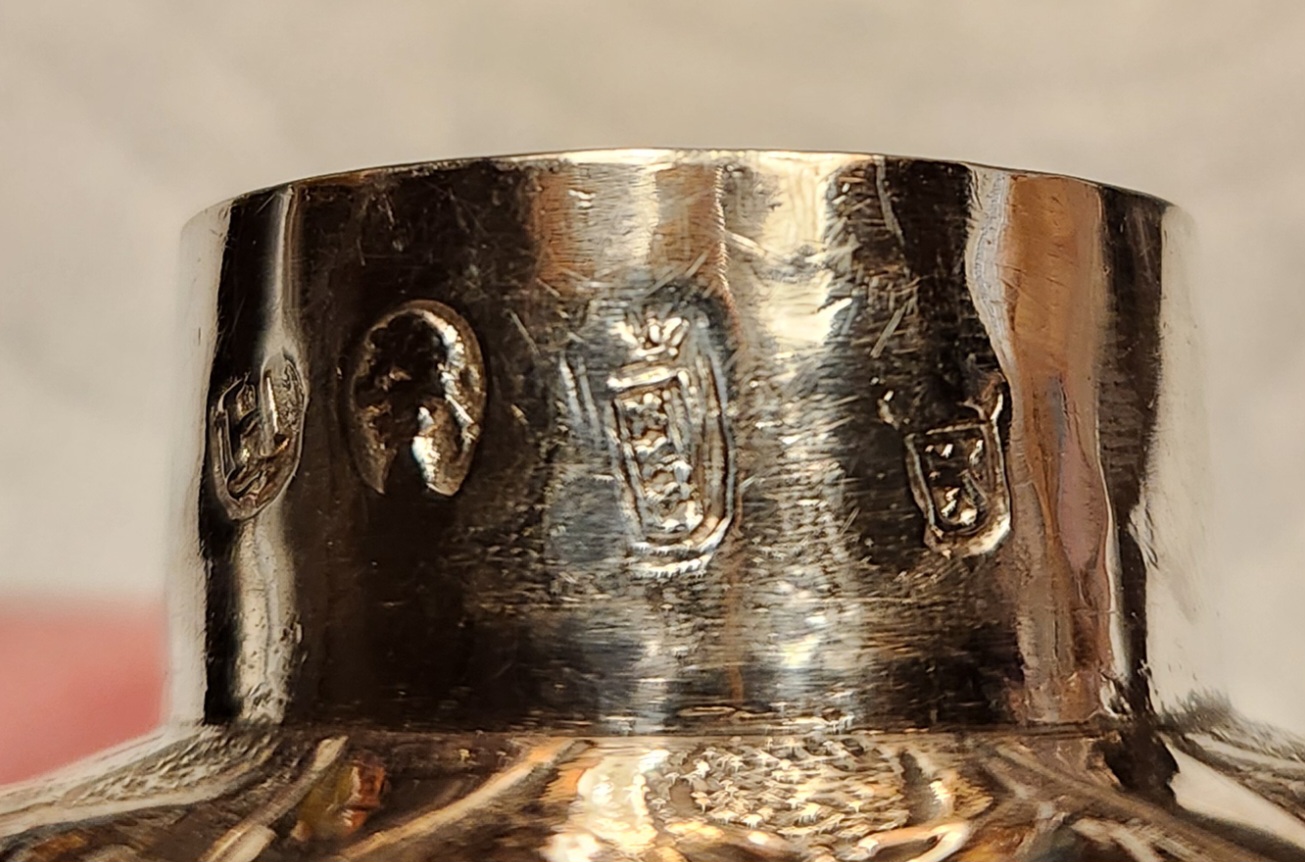
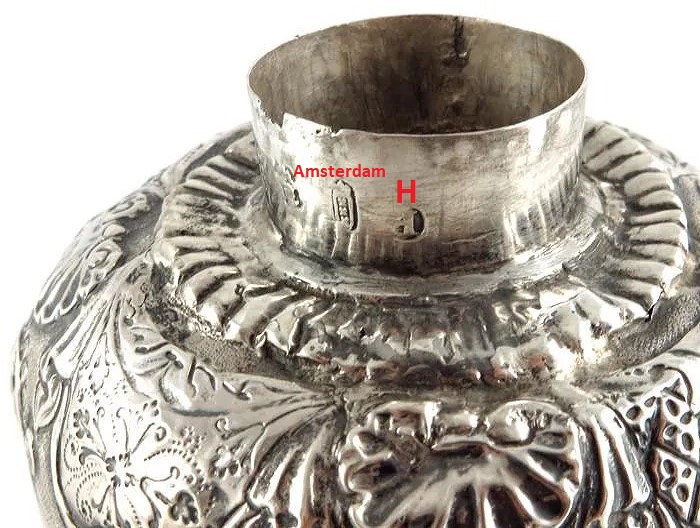
Got this silver tea caddy earlier. I know it is Dutch from Amsterdam. I can’t ID the marks however! I would appreciate any help at all thank you!!

2 Likes

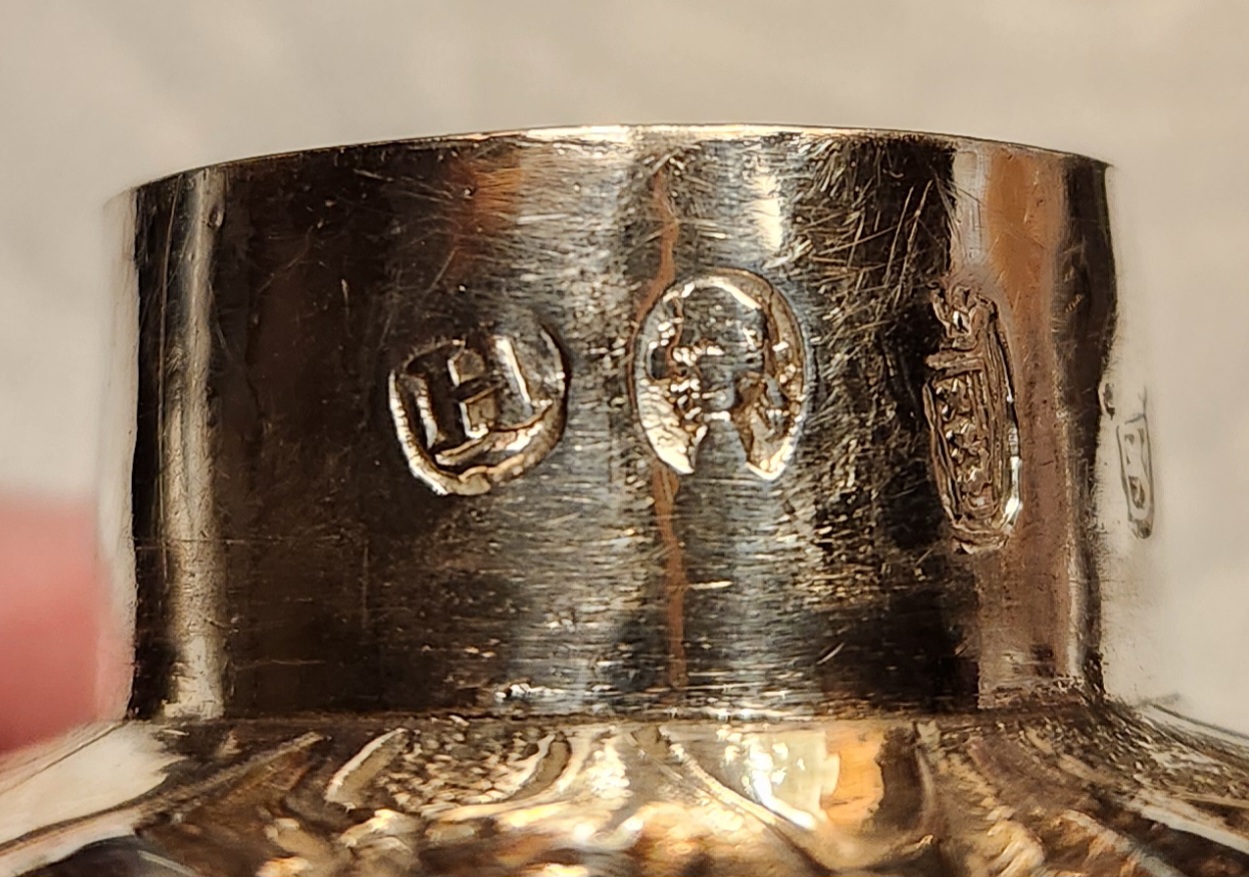
Crowned O and B for articles with old hallmarks of the Guilds.
Crowned V for imported articles.
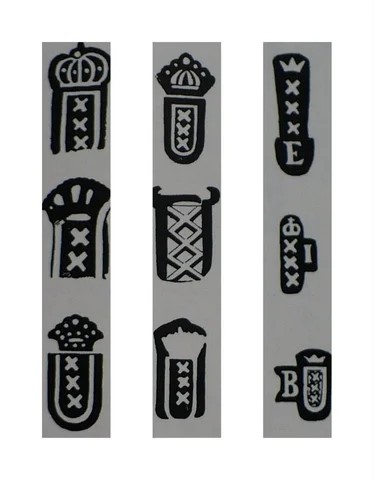
From left to right:
First vertical row around 16th-17th centuries
Second vertical row around 17th century
Third vertical row: with combined date letter 18th century for silver of 2nd standard.
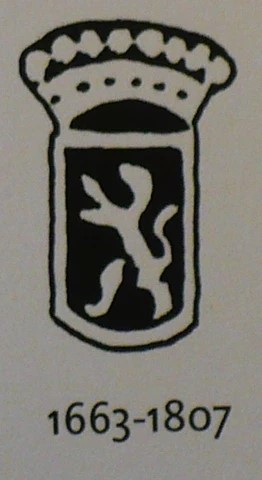
Amsterdam.
Circled H - Amsterdam date letter 1842.
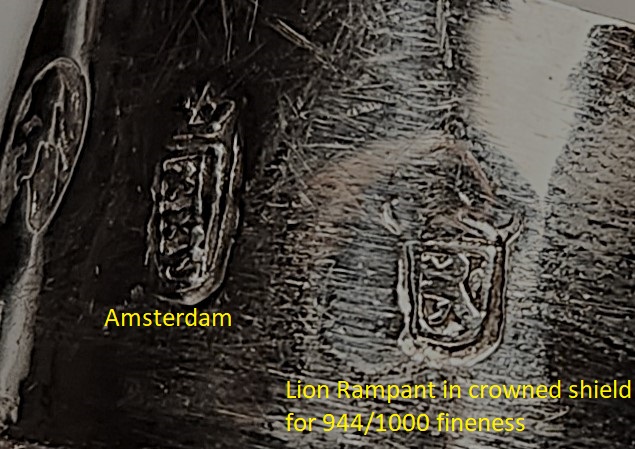
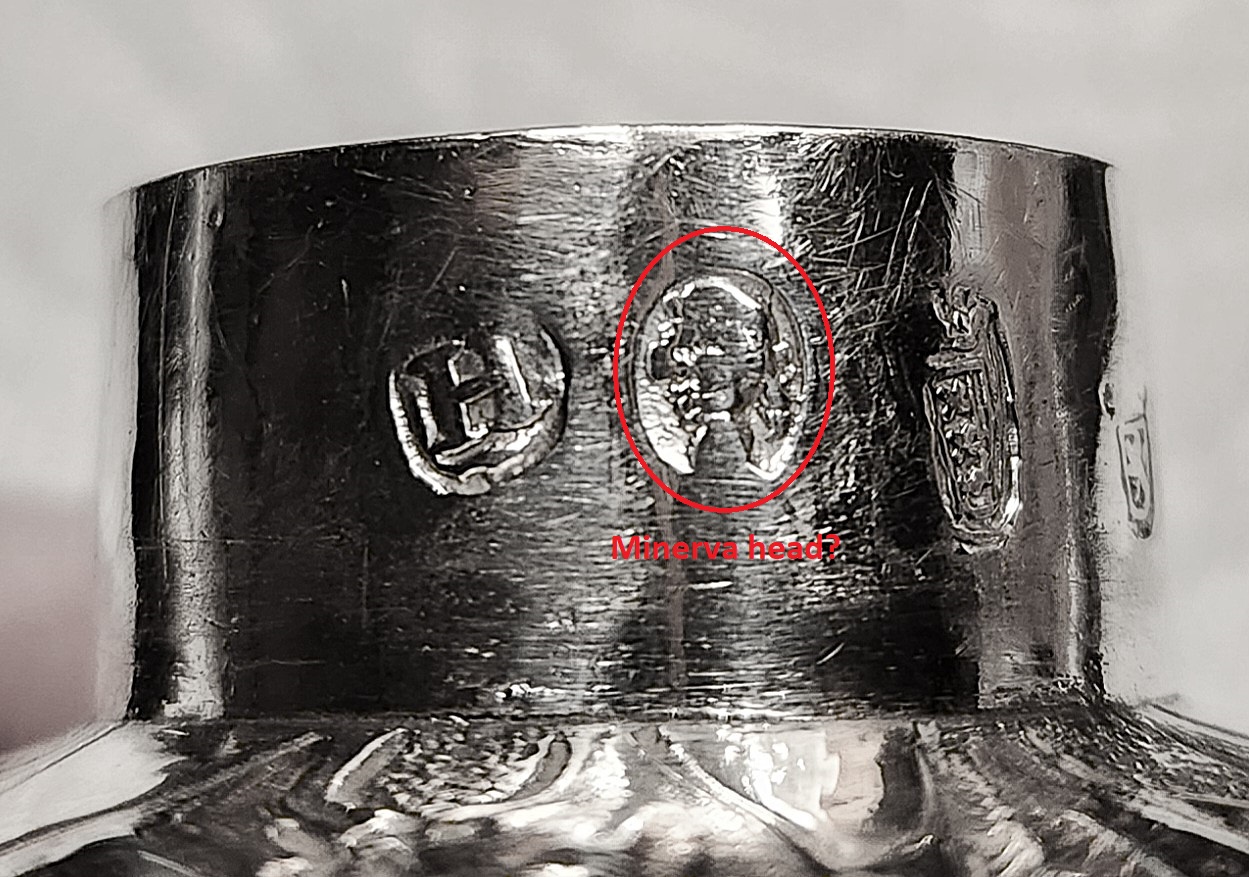
If I’m wrong - correct me, please.
1 Like
No, I think you are correct. Although if that is Minerva she is badly in need of a nose job.
Right up until the H. Which may be a date letter for Amsterdam but is likely not as late as 1842.
The style and the rest of your correctly-identified marks may put this fine caddy about 110 years earlier.
Here’s a forum contributor grappling with the same problem you looked at who thinks the H might be a pseudo 16th century (I think he means 17th century) date mark.
https://www.925-1000.com/forum/viewtopic.php?t=40067
Just to make it more difficult, while the online date lettering for Amsterdam says it started in the 19th century, what it really should have said is the illustrated series of date letters it refers to started in the 19th century and the folks in Amsterdam had been date lettering since 1542 and much of the rest of had Holland followed.
Here’s a 1742 Caddy from Haarlem:
Here’s another once again pear-shaped:
And here’s another:
By the time we get to the mid 19th century the caddy’s were boxy and frankly made less expensively to reflect the fact that the British East India Company had flooded the market and tea which in the 17th and18th century had been a luxury item under virtual monopoly of the Dutch spice trade and had become under British intervention a drug for the masses in Europe which they achieved by selling he Chinese opium to get their tea without parting with silver and then planting it themselves in India where it still grows.
Now there were 19th century caddies made in the 17th and 18th century style, one of them shows up at auction marked with a similar H but I don’t think this item came to exist in the same way.
Look carefully at the bottom of the H and there is more to it than a straight dte mark in a circle.
So the meaning of the mark “H” depends entirely on the other accompanying hallmarks (standard mark, city mark, maker’s mark) and the style of the letter itself.
It may be a date letter but before the standardized national hallmarking system established in 1814 you refer to. Letters of the alphabet were used to denote the year the item was assayed.
We don’t otherwise have a maker’s mark. The letter “H” (often with other initials or symbols) can be the unique mark of the silversmith who made the item. For example, H Hartman or H. Hooijkaas were registered silversmiths who used an ‘H’ variant in their marks.It isn’t either of these but if a makers’ mark then earlier
And, since we are certain it is made and assayed in Amsterdam it isn’t an assay office mark after 1953 when different letters indicated the regional assay office where the silver was tested. In this system, “H” designated the Arnhem assay office closed in 1970
I don’t think it is a pseudo mark either. On some pieces, particularly those made in Schoonhoven for export, the “H” mark is an imitation mark, designed to look like an old Dutch date letter but without an official meaning.
So looking at the early 18th century Dutch caddies and the balance of the marks you have correctly identified I think it is around 1730 or earlier.
It is absolutely typical of the under-stated wealth displayed by Dutch merchants in that first flush of fortune reflected by their monopoly of the spice trade, the establishment of the first joint stock company — the first in the world – and the peace enjoyed with Britain after the "Glorious Revolution when William of Orange and his wife Mary invaded England and kicked the Catholic James II out of the country with the connivance of the British Whig party.
By 1730 the Prince of Orange had died, as had his successor Anne, the Battle of Blenheim had been won by Churchill and the German Hanoverians were constitutional heads of that troublesome island. Still are.
Dutch middle class, which loved quiet ostentation like this fine item, were rich and stayed that way while their neighbours, the French and the Spaniards and the Germans fought each other with the Rothchild bank’s assistance.
CRWW
2 Likes
You are welcome, but all I have told you is what it isn’t.
Your nose for obscure European data might get the complete Amsterdam date-letter cycle downloaded unless the Dutch did what the British did and got their records burned in a city-wide fire or stolen by dishonest politicians.
The incentive to do so, is you get to prove me wrong and it really is a 19th century copy of an early 18th century caddy.
Of course. then all the 18th century hall markings you have id’ed would have to be wrong too.
CRWW
1 Like
Hello Sparta123,
You have here a nice Amsterdam silver tea caddy from 1742. Maker is Jan de Vries (head)
kind regards
Siep
2 Likes
Respect, Siep! So I was going in the right direction, that it’s a symbol of the head…

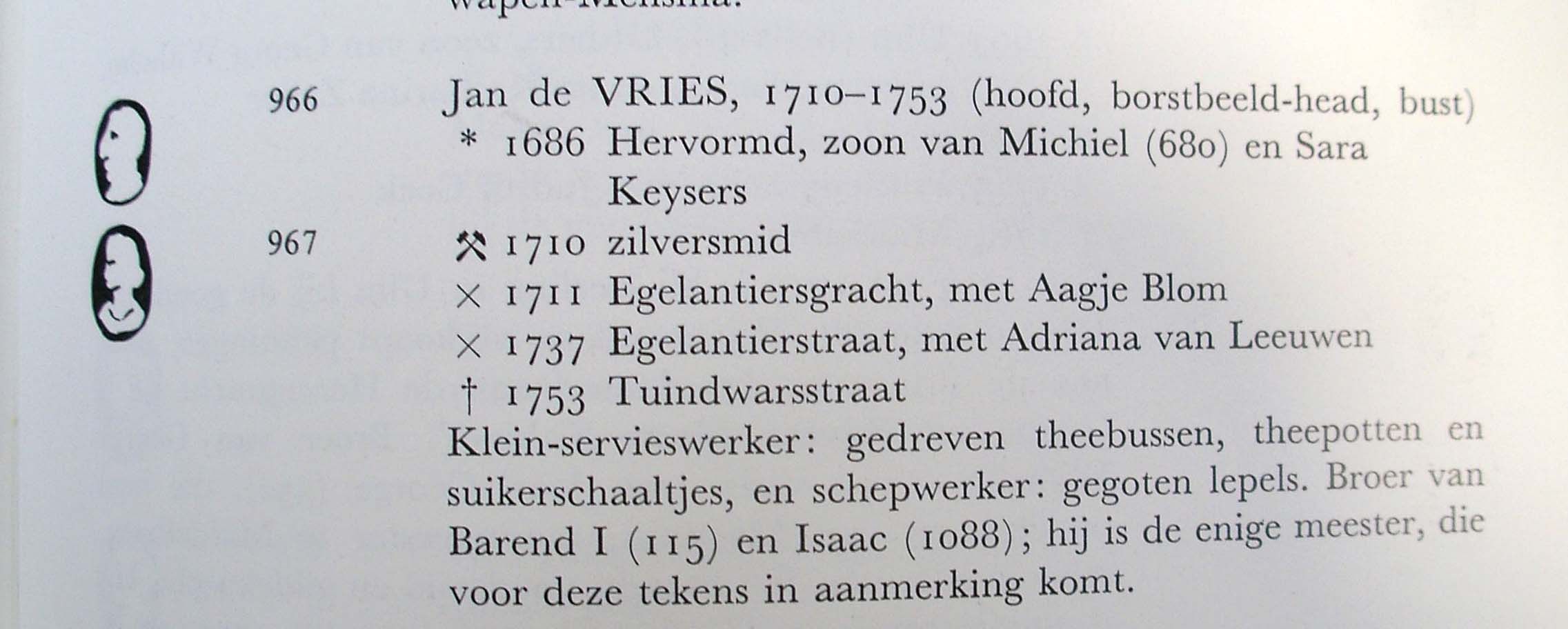
https://haffmansantiek.nl/zilveren-theepot-amsterdam-1742-silver-teapot-de-vries.html
https://haffmansantiek.nl/zilveren-theepot-amsterdam-1742-silver-teapot-jan-de-vries.html
https://www.925-1000.com/forum/viewtopic.php?p=233467#p233467
1 Like
Hello Bart,
Yes you have got it, that is the one. It is a well known silversmith from Amsterdam who made tea pots, tea caddies, sugar dishes etc. Kind regards Siep
2 Likes
Thank U, Siep, for a helping hand! Visit us more often and share your knowledge. Best regards - Bart.
1 Like