EPNS / Plate Query

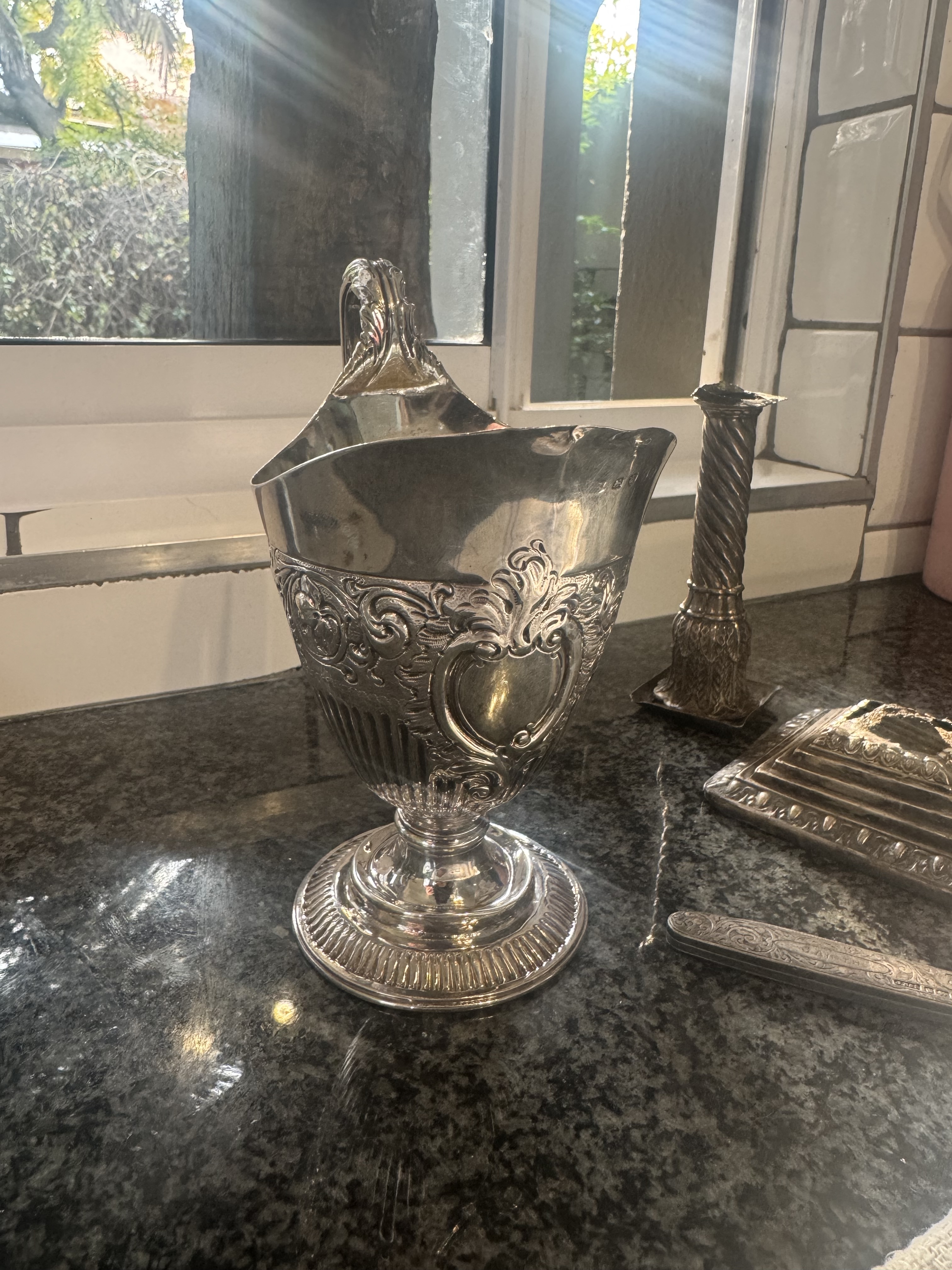
If the only damage is as per the illustration then its 20 minutes with a planishing hammer so do fix it.

Bateman silver is extremely sought after, even if it isn’t the great lady, Hester, herself.

Hopefully you can get better prices from your silversmith than your glazier.

The trouble with it is the Batemans made their money by making thinner, lighter pieces buying rolled sheets rather than hammer-able ingots.

But the market doesn’t seem to mind this. Don’t let the guy with the hammer near that mark!

I don’t suppose your silver jug has the teapot or sugar bowl this creamer will have started out life with do you?

CRWW

Haha no I wish! (The ancestral melt pile you mean?) :+1:. No further lurking batemans. I do quite like the creamer and may now get it repaired. The only analogue I can find is on a Wikipedia for Hester so my wild optimistic postulation is that it may be a replica of a Hester done by William OR the makers mark is so worn it may in fact be a collaboration with other batemans as I’ve seen with other (more similar) creamers. What is so odd is I swear the W is only visible in photographs (clearly) - I cannot see it with the naked eye at all. The melt pile is basically broken desk bell, spoons, linerless mustard pots etc. I’m in the middle of a mad sacrilegious project to repurpose and repackage for future generations whilst obviously retaining a lean / curated collection. Will explain that more deeply should the appropriate opportunity arise. It’s actually quite bash w some folding, looking at it in the light.

2 Likes

That is superb. William was registered alone from 1815 -1840. He was not only a talented manufacturer but a canny businessman. For instance, duty was imposed on silver from 1784 onwards. But it was clawed back in large part if shipped abroad. So William arranged for silver he made to be shipped to the Channel Islands and then back to the UK where no duty was payable upon reentry.

Clawback marks were stamped at the ports of departure.

I have, together with other writers covered this elsewhere in this blog. I even came across a William Bateman small ladle in New York where the sovereign’s head had been x-ed out rather than struck with the claw back. In NewYork where back in 1815 et seq. x-ing out the British monarch was a popular thing to do.

William Bateman stands alone as an important Regency silvermaker, restrained compared to Storr and the product of Rundell & Bridge but turning out household items immaculately crafted.

CRWW

2 Likes

So do I.
I go to local auctions and watch the silver buyers bid up to spot less commission and then cease. And win.
Beauty, workmanship, history are entirely discounted.
Then there’s the “it’s only plate” damnation.
I have an Unite silver-plated coffee pot of extraordinary beauty and elegance, but “it’s only plate”, and therefore bound for silver hell. It cost next to nothing, although I much prefer it to many cloned lumpy sterling objects I have seen, sellling by the pound like a side of beef.
Our values have been twisted, methinks.
Blessings to all the extraordinary craftsmen who made these lovely things, sterling or plate. Or brass, come to that.

1 Like

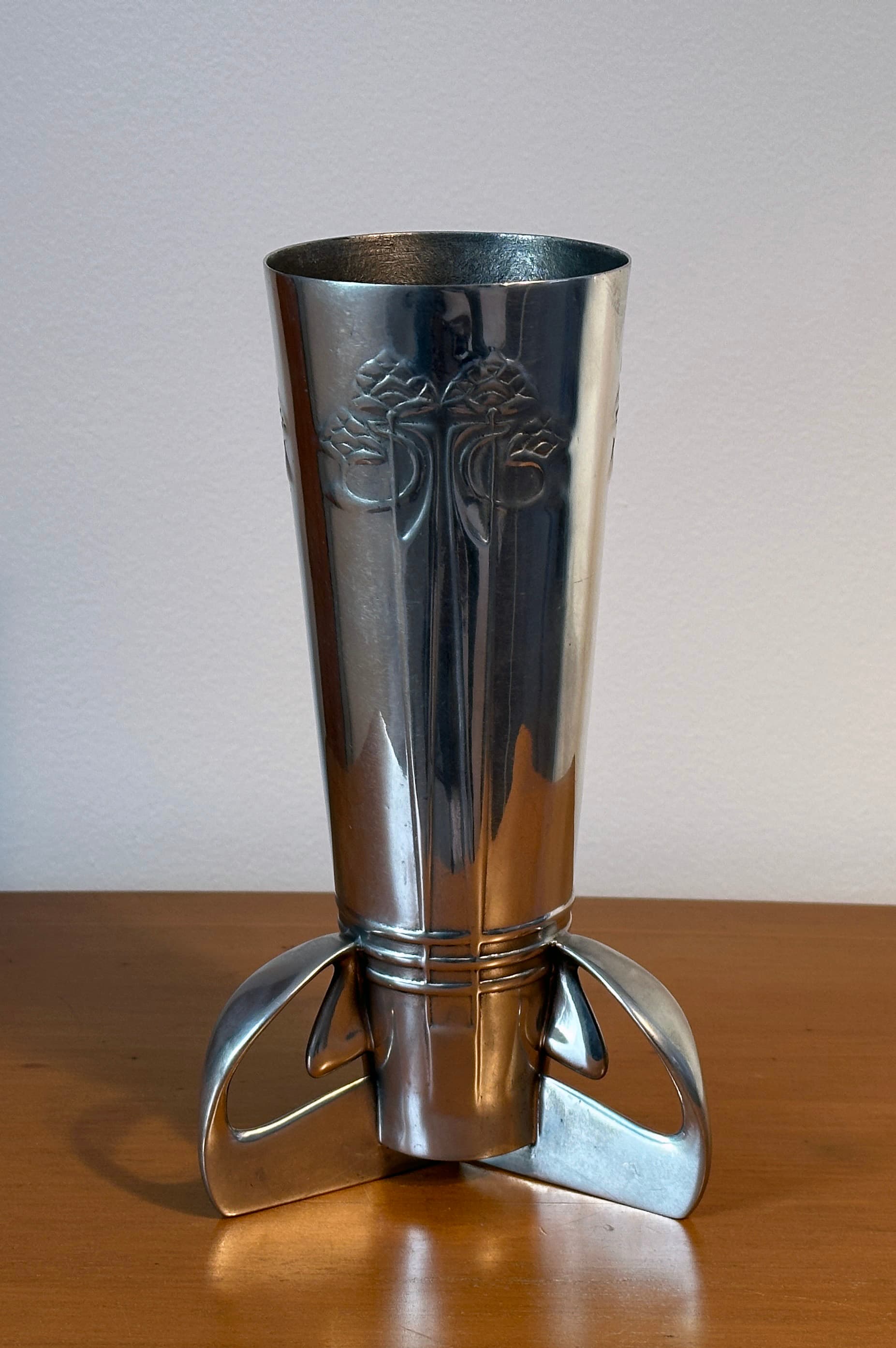
For some items, the composition has far less importance. Lurking on my mantel, mixed in with sterling tankards and cups, is this piece by Archibald Knox:

Sterling? Nope. Plate? Nope. Pewter. Melt value, about zero, but… :wink:

Good comment. Silver has always been three things: bling, booty and beauty.

Before Enzo came up with his overpriced car for drug dealers, you were limited to silver candlesticks and massive dining room table epergnes to show how much money you ferreted away.

The bankers also took an interest, issuing bonds against private wealth and government hard assets to fight wars and fund leader’s ex-wives. An obscure German-Jewish family brought this practice to a fine art, funding both sides in the Napoleonic wars.

And finally beauty. When you think of how it starts, a greyish blackish grain or seam in rock, and how it ends up, sparkling brilliance diffusing candle light into myriad forms and seductive glimpses, the entire process is little short of a miracle.

But the good folks on this fine forum who share interest in the esoteric beauty of silver (or at least curiosity about commercial marking on it) are in the minority.

Less than two percent of silver is used for that purpose. On the other hand every war ever has been funded by paying soldiers in silver. So global history is traced not by “follow the money” but “follow the silver”.

Darius II grabbed the Byzantine silver mines in what is now Turkey and Persia became the first recorded “civilization”. Darius has never read Virgil on the subject of how un trustworthy Greeks were(it hadn’t been written yet) and watched while Alexandra looting all that and built a bank in Athens which today everybody mistakes for a temple also a city in Egypt and an empire which lasted until Crassus came along and, like the Koch brothers, funded rival politicians with Spanish silver and created the first Imperial empire.

Meanwhile on the other side of the globe China was doing the same thing. We are currently once again experimenting with fiat currency, paper money. It was the downfall of two consecutive Chinese dynasties, the guy who said “L’etat et moi” before Trump made it his motto and is in the process of deep-sixing the US having thoroughly messed up the British empire.

The problem with losing empires, or living in the “interesting times” that process creates, is silver getting melted down to pay for repelling the inevitable barbarian invasion. Which lessens the amount of silver art stashed away for just that rainy day and, I suppose, makes it more desirable and valuable. At least that’s the story I tell my grandchildren who simply don’t understand why I like having cupboards of it around.

CRWW

2 Likes

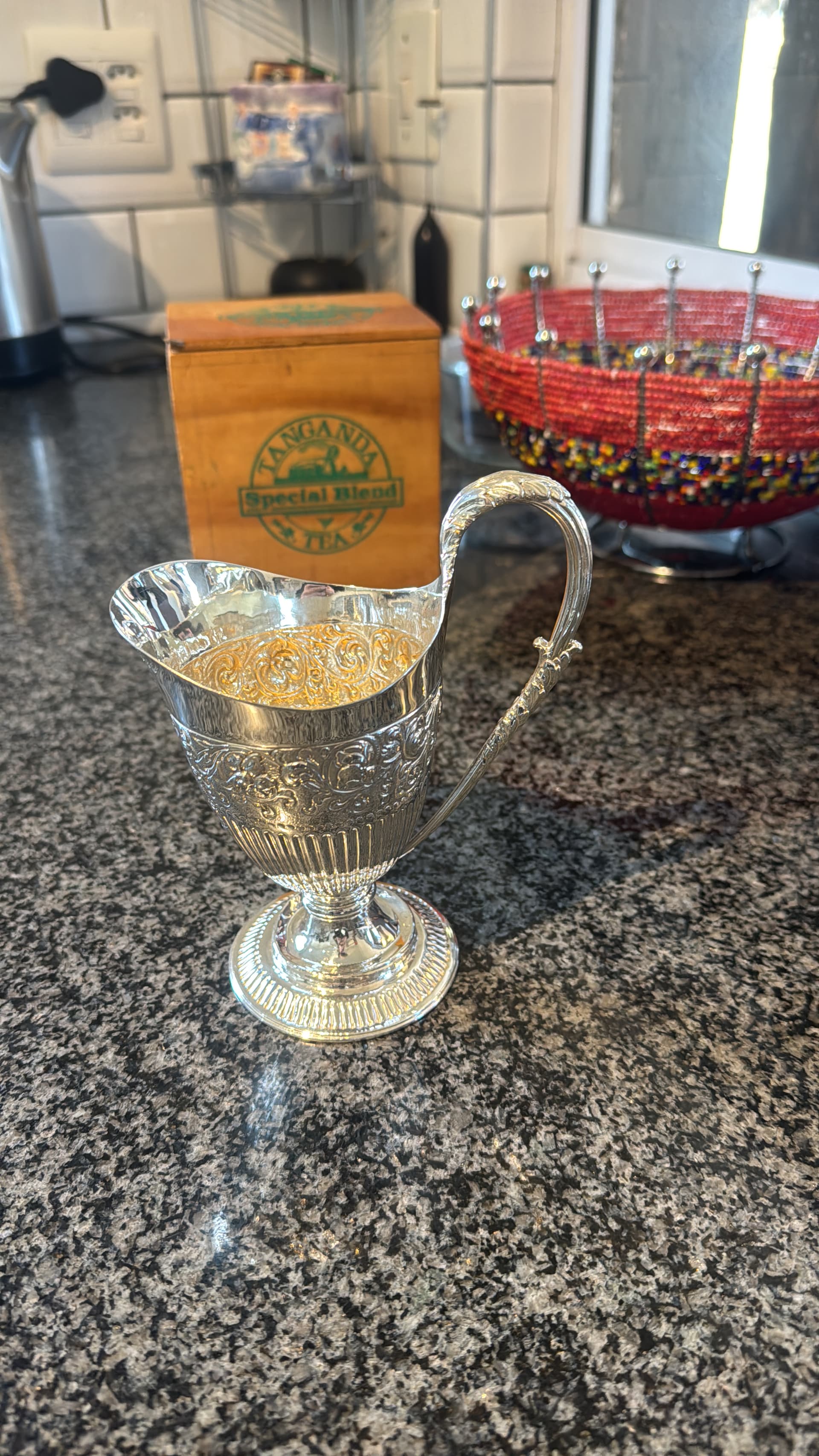
Hello again and apologies this ended up being a very disjointed thread. I agree that the beauty of an item does not inherently lie in its silver content / purity and thus feel I’m going not only to hang on to the acorn cruets, but to centralize them where relevant. I’m not going to bother getting the cobalt but am sure something will come up one day, or won’t. In terms of the confused subjects, the Bateman cream jug… thanks to Chris and Jeff I’ve had it repaired and it escaped the dreaded ancestral melt pile. For numerous reasons Johannesburg is no longer full of great options for silversmiths. I am going to need to further repair it but the initial work I am more than happy with. Some folds still need a bit of rolling and I neglected to see to it’s footing! Skwonk? My fault for not including in the brief… A work in progress? to confirm - never for the melt! Zimbabwean tea product placement entirely accidental. Endless thanks all.

1 Like

That is splendid news. It looks wonderful. Honoured to have had some positive effect on your market! And I am sure Jeff will echo that thought.

It remains, however, very much a cream jug in need of a teapot and sugar bowl. I don’t mean in terms of actual value, but it started life as part of a four or even five-piece tea set and it’s a unique enough regency pattern, it will be difficult to find.

CRWW

2 Likes

Yes I feel I’m about to embark on a mission to (slowly!) add to this. Glad you approve.

Yes. Thank you. This is a work of art, and art is about transformation.

Oil paint is squishy stuff made of linseed oil and powdered pigments. In the right hands, it turns into a Rembrandt.

The most beautiful silvery thing I have is epns, the oldest and most interesting thing I have is pewter.

I attend auctions, mostly just to gawp, and I find a good deal of the silver appallingly ugly. Many people seem not to ‘see’ it; they just weigh it, as it were, ‘ka-ching’.

1 Like

I agree, most of the silver I see is mundane, though commonly collected due to it’s affordability. When you start delving into the more spectacular pieces, you start leaving the realm of affordable and enter the realm of wealthy collectors or museums.

That rather depends on how hard you work at it and how lucky you are. Which goes back to earlier comments about licenced unreliability of auctioneers.

I have bought some complete rubbish but also bought some items which upon inspection turned out to support the buy decision. Early Georgian candles with later wooden bases sold as stuffed Vicky. Tea urns so black they might be Russian somovars of copper which were fine Georgian silver. Bottle buckets from Ireland which were crested for rather a well-known ducal family which was happy to buy them back for a modest profit.

Now you can’t depend on luck like that, so specialize is the simple. alternative many in the trade follow.

But I would say there is more good silver made between 1750 and 1820 on the market now at cheaper prices than there has ever been you just have to put in the time.

CRWW

2 Likes