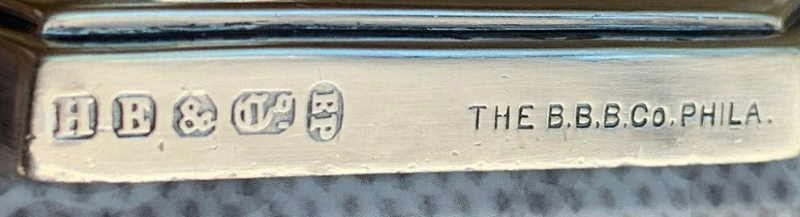
Fork Handles , although there are six 😉

Sorry, just couldn’t resist the title :confounded_face:.

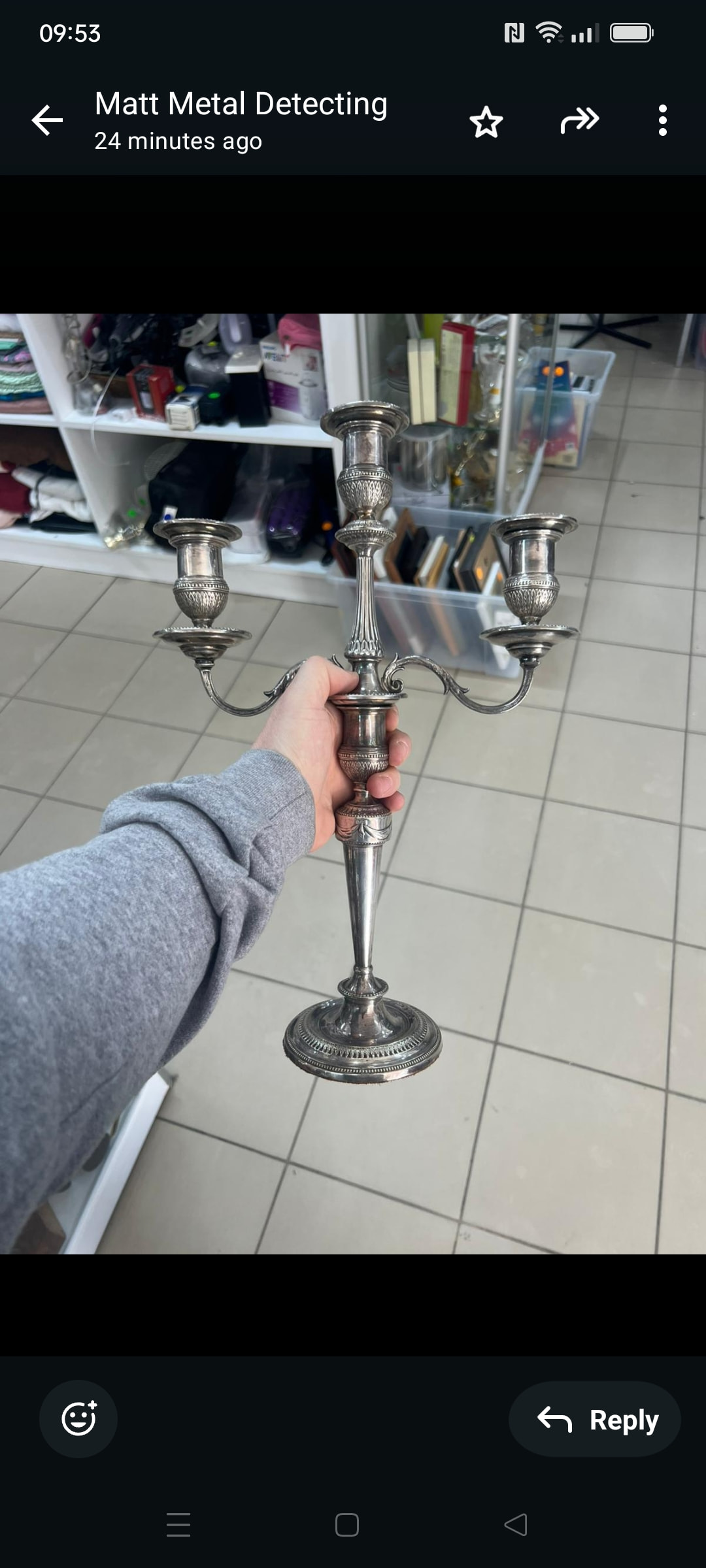
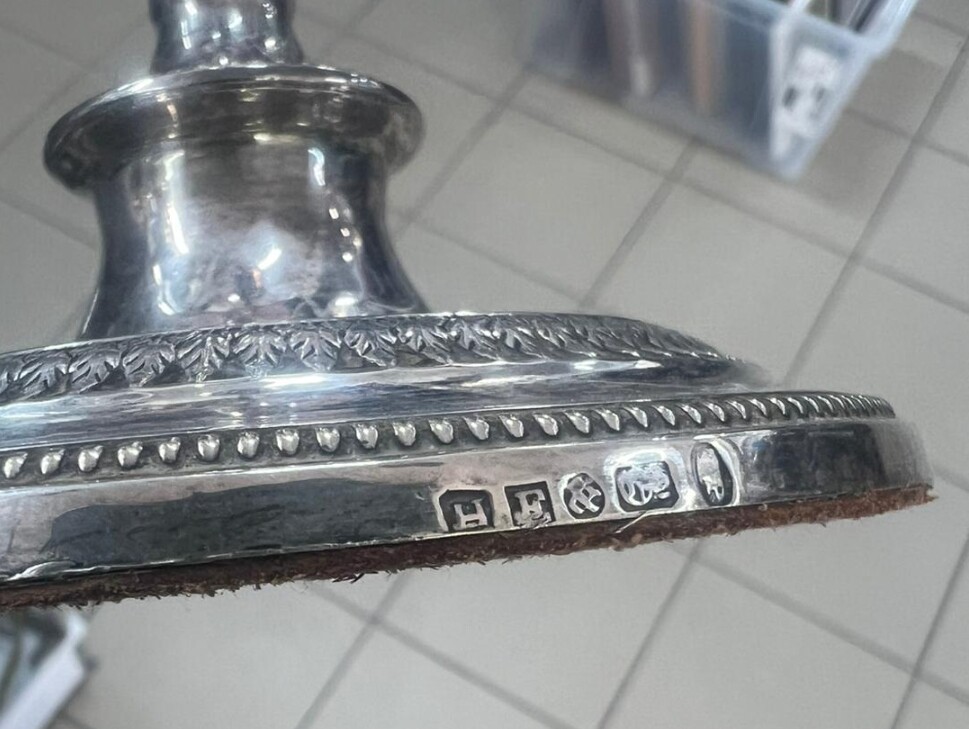
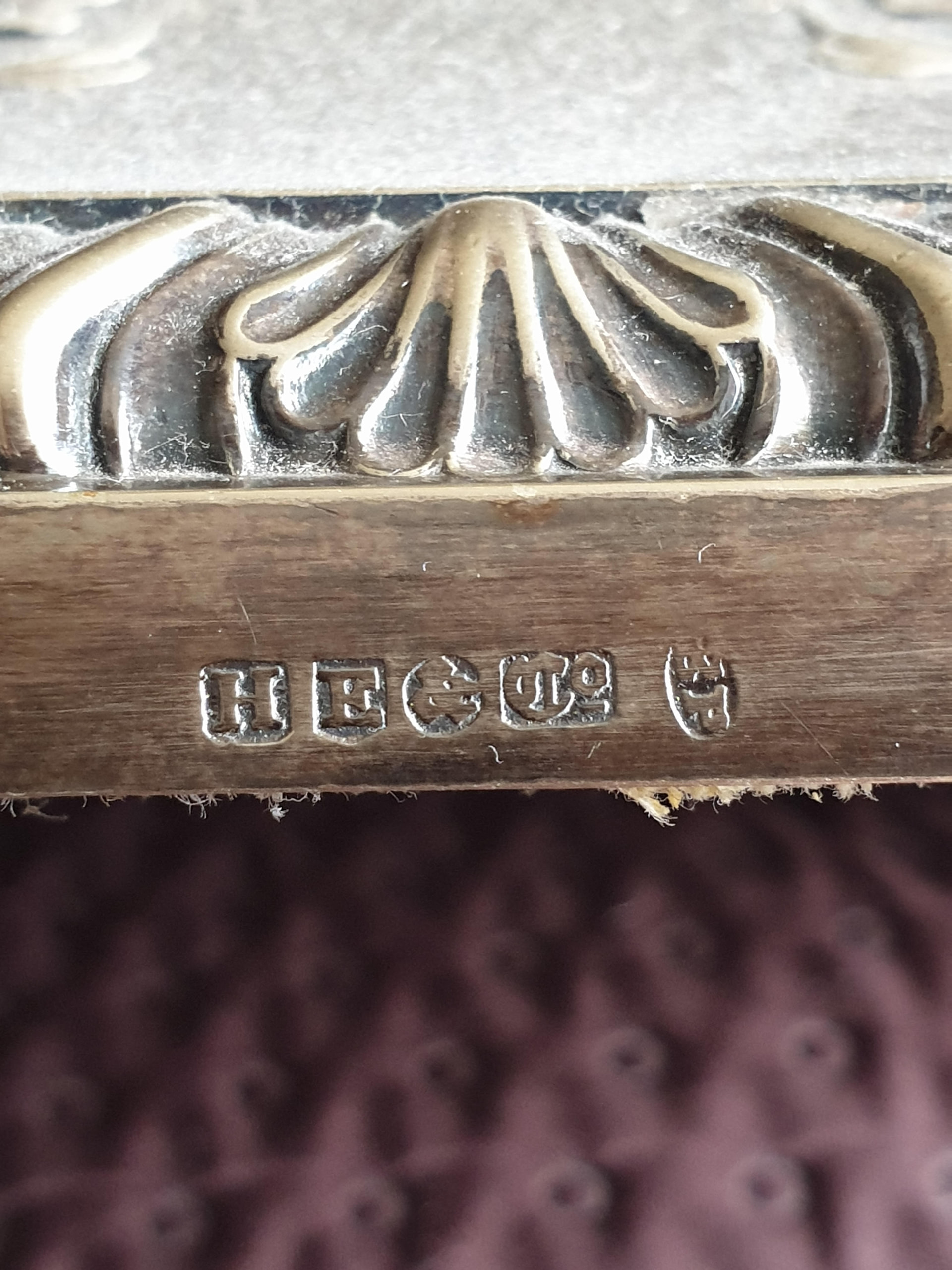
My friend in Poland sent me these two pics of this candelabra ( one of a pair ), and judging from the marks I determined they are plated !!!, but, could someone determine the year or approx of manufacture ?. Thank you :wink:. There are no other marks except those below !!!.

1 Like

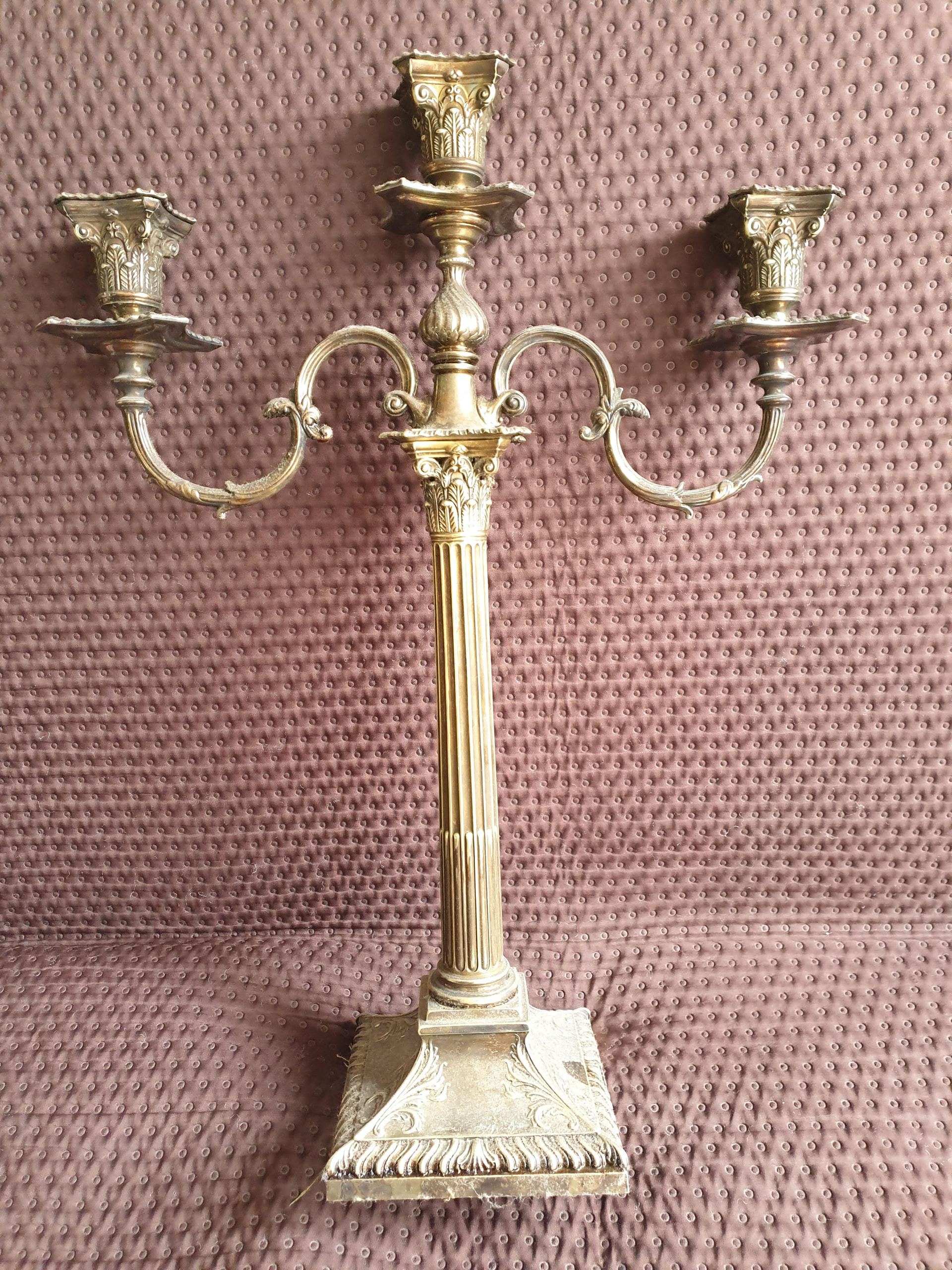
Circa 1880. Below is a photo of my Hawksworth, Eyre & Company candlestick (slightly dusty).


1 Like

Thank you Bart, much appreciated :wink:

1 Like

U welcome, Alan! :+1:

1 Like

This is the timeline for the company:

1833 Charles Hawksworth and John Eyre founded Hawksworth, Eyre & Co at White Rails, Sheffield

1851 Participants at the Great Exhibition showing a wide range of their silver and electroplate production.

1869 The Hawksworth and Eyre partnership was dissolved; the business was continued under the same style by James Kebberling Bembridge, Thomas Hall and George Woodhouse.

1873 Hall and Woodhouse retired leaving Bembridge in charge.

1873 Incorporated as a limited company.

1892 Established London showrooms, silversmiths, platers, electrogilders and platers, silver and plate lamp manufacturers.

1914 Manufacturing silversmiths, electro-platers and plated cutlers. Specialities: silver goods suitable for presentation, especially candlesticks, candelabra and lamps, bowls, cups, trays, salvers etc. Employees 120.

1932/3 Hawksworth, Eyre & Co went into liquidation; the dies and goodwill were purchased by Ellis and Co Ltd

Earlier Mark but with a design registry number
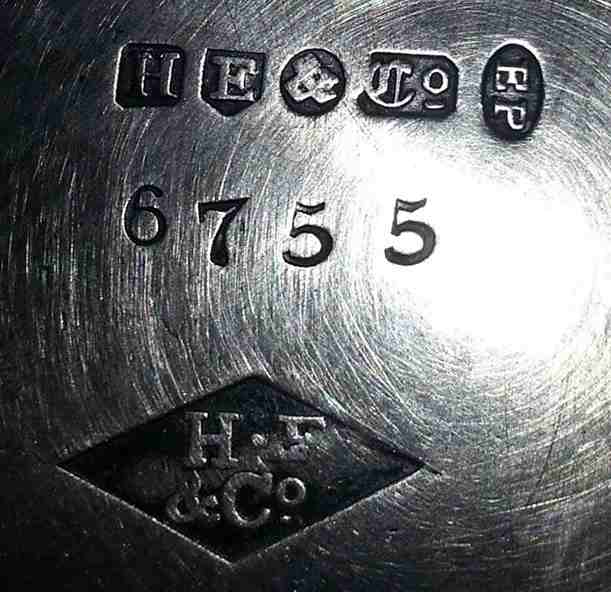
Mark used into the 20th century:
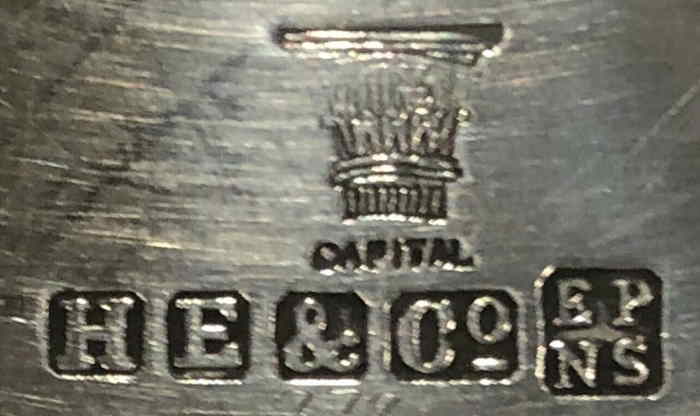
Your 'sticks may well be an earlier mark possibly before the dissolution of the initial partnership.

The classic baroque style certainly was in use from the very beginning, but, unfortunately from the point of view of marking, remained popular well into the 20th century.

The firm, unlike Elkingtons, didn’t have a date letter cataloguing system so we are left with drawing date conclusions based on what isn’t included in the markings rather than what is.

No inventory number, no design registry numbers, no reference to a Ltd company and the use of the term EP or electro-plate without the reference to NS or nickel silver all point to an early probably pre-dissolution date which would be 1833 to 1869.

ArtNet has a good selection of H&E sterling silver sticks – which I realise these are not, but the style’s the same --which allow us to eliminate by style alone most of the post dissolution dates:

https://www.artnet.com/artists/hawksworth-eyre-co-ltd/2

CRWW

2 Likes

Thank you for that info Chris, I’ll pass it on to my Polish friend, he loves to read the history of the items he’s purchased :wink:

1 Like

You are very welcome.

Here’s another item with your same mark on it which the seller suggests is “Victorian 1821”. Which, since Victoria wasn’t Queen in 1821, is clearly wrong!

https://www.etsy.com/ca/listing/1437169009/antique-victorian-1821-hawksworth-eyre

But it does point to the earlier date.

And leaves Bart’s item, also marked, as yours and this one is, but later dated to 1880 as the outlier which, other than suggesting a rather pessimistic dating to late Victorian rather than Regency or early Vicky, I cannot assist with.

Certainly Bart’s Corinthian-style 'sticks are consistent with the pre-dissolution pattern assembly used by the firm, indeed it is a copied from the form of the early stuffed candles of the 1750’s by John Cafe et al but then Corinthian 'sticks were still being manufactured well into the 1970’s so style alone doesn’t help us much with date in this instance.

CRWW

2 Likes
1 Like

This mark here associated with the US firm re-established as Bailey Banks & Biddle 1852–1862 supports the view this is a pre-dissolution mark:

I also now looked as the material submitted by H&E for the Great Exhibition at the Crystal Palace in 1851 and the style is consistent with those exhibits.

CRWW

2 Likes

Thanks Bart:

If we could view a mark on this 20th century item and if that mark was the same as is being exhibited it might well modify the theory this is a pre-dissoluton mark. As it is all Thompson Auctioneer’s piece does is show, as earlier suggested, Corinthian-style sticks continued to be made well into the 1970’s. I have a rather nice pair bought last year made in 1974 and so marked.

CRWW

1 Like