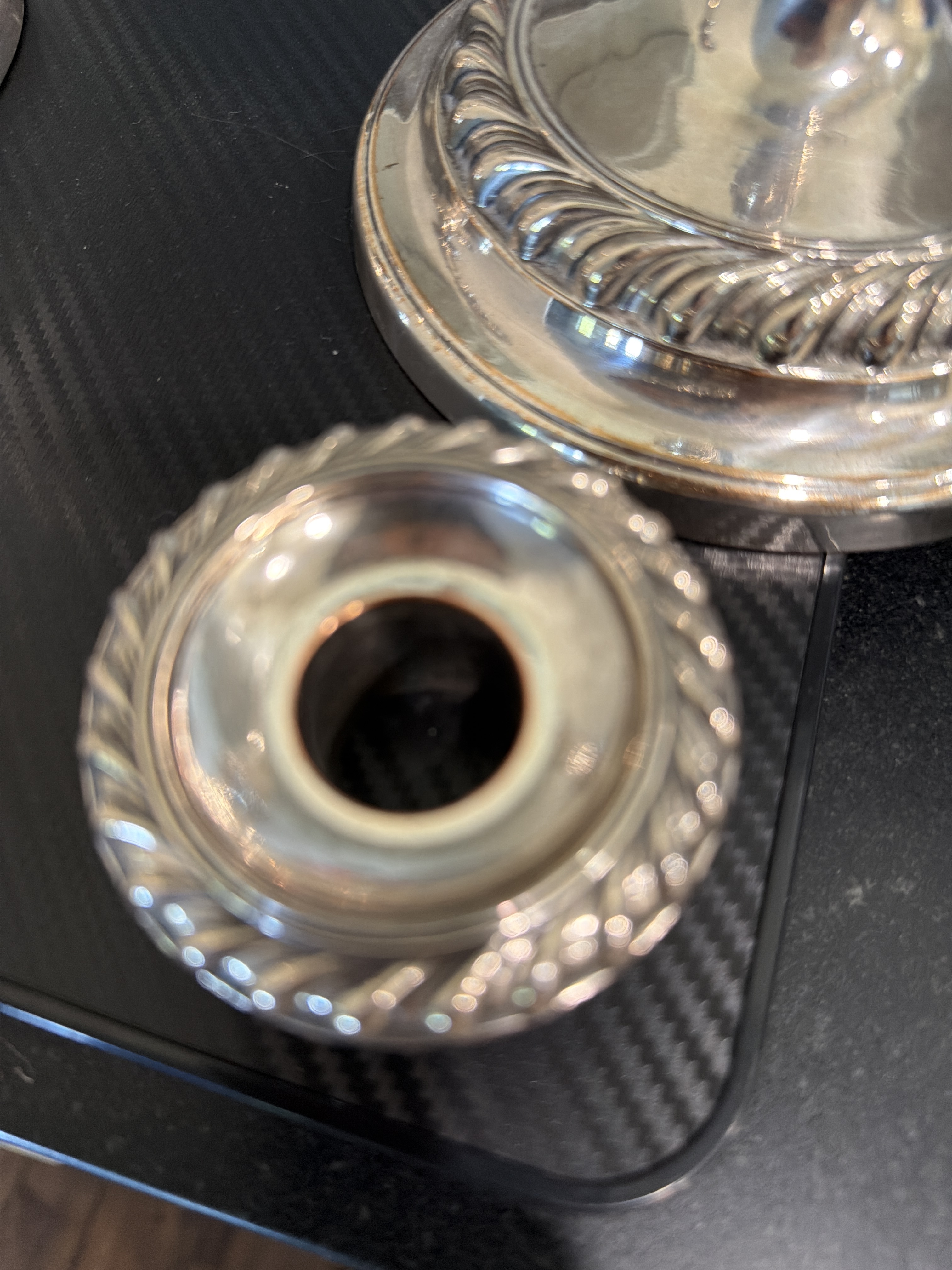
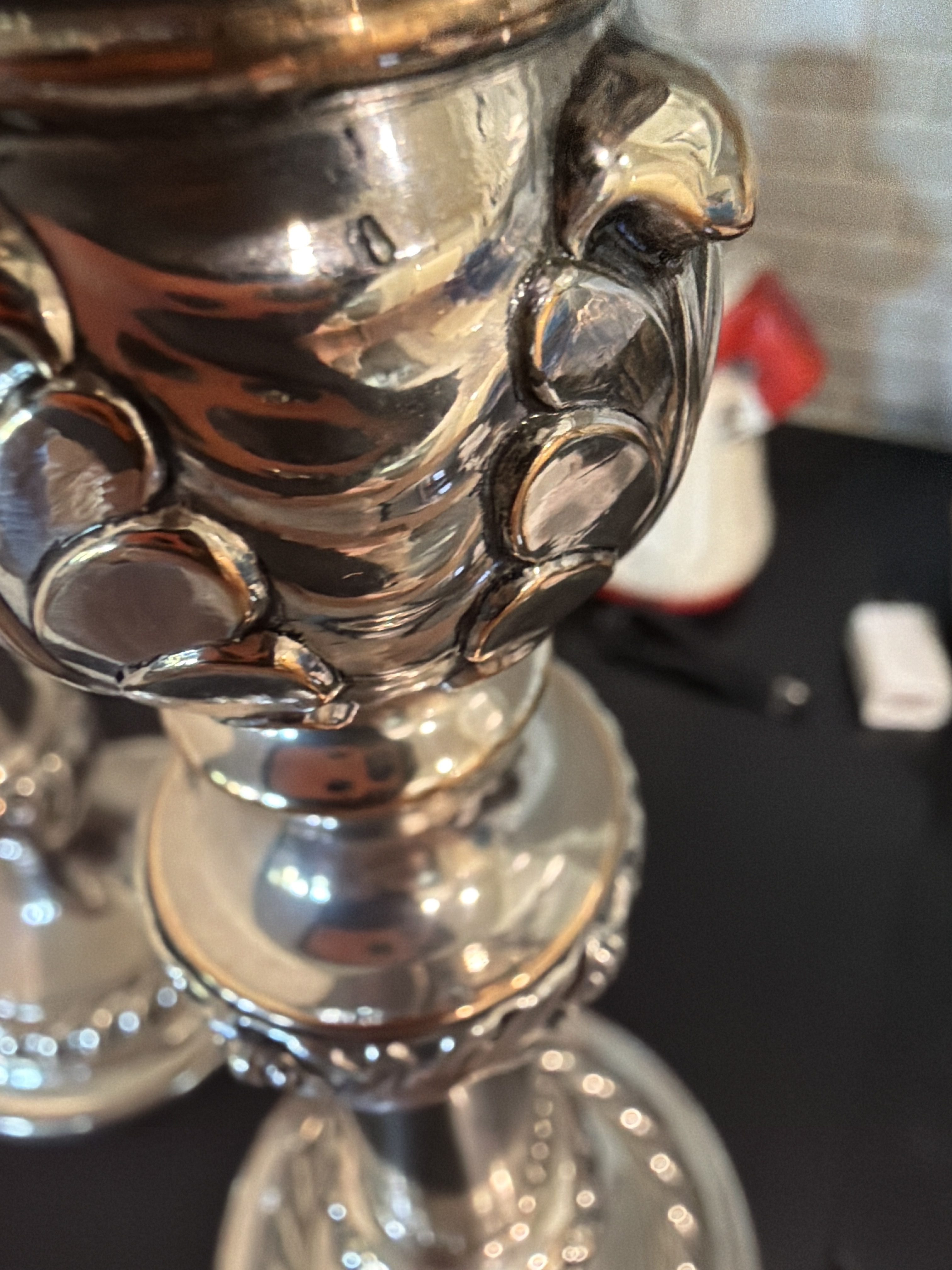
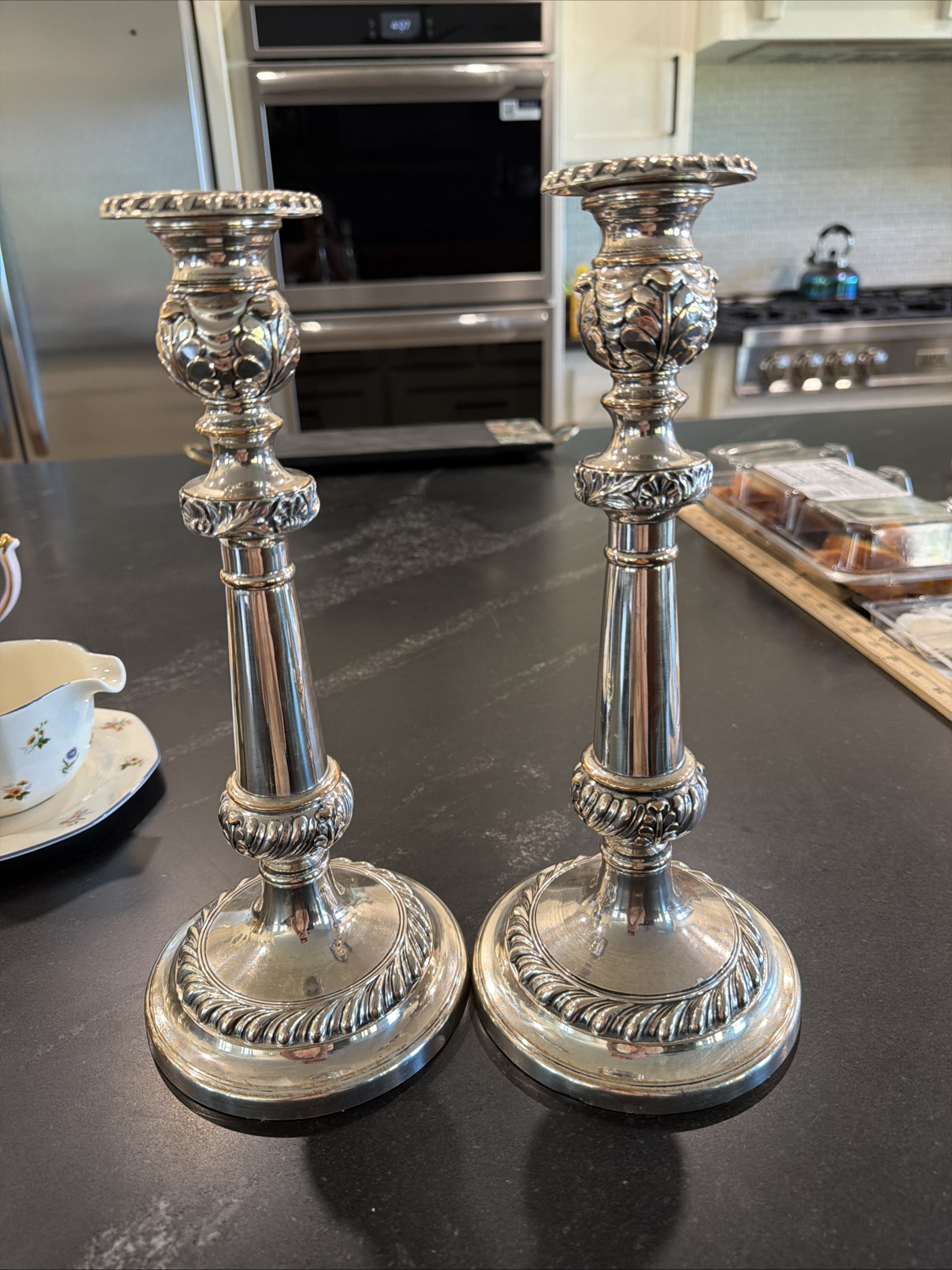
Could these be genuine fused Old Sheffield Plate candlesticks rather than later silver electroplate? They are unmarked, 12¼ inches tall, weigh 5.10 pounds together, and have removable sconces and exposed copper at the joints. Can anyone identify the maker or approximate date?
1 Like
They could well be Sheffield Plate. It’s really difficult to say for certain from just photos.
Look for folded seams, look for exposed copper on rub points, look or a blueish silver rather than the brilliant white of the electroplate and google image search for a similar design. I found four all labeled Sheffield.
The absence of a maker, often a feature of Sheffield plate and almost never a feature of electro-plate, because the licence agreement with Elkington Bros demanded it during the period of their patent entitlement, is perhaps the most conclusive preliminary positive evidence.
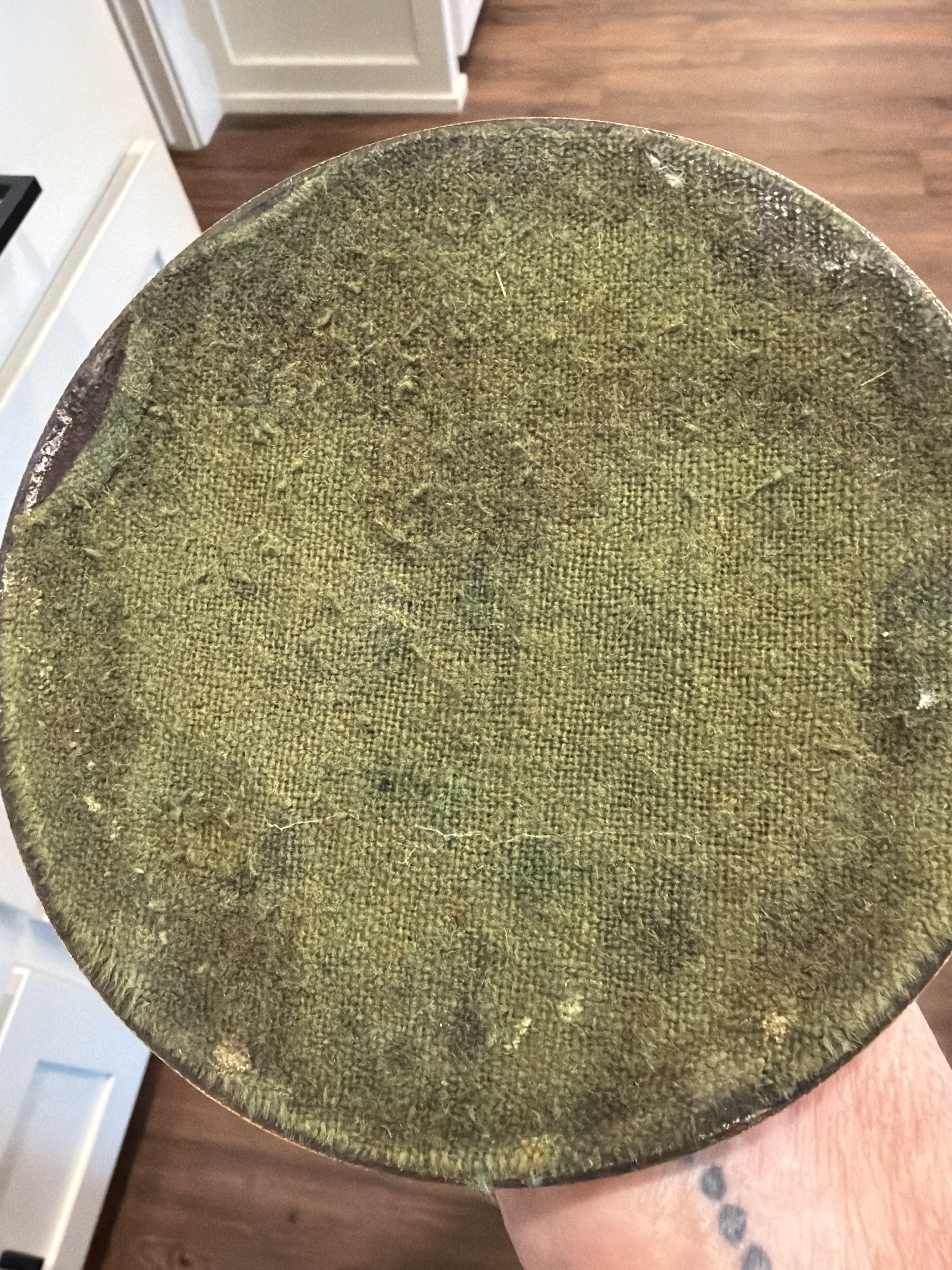
What’s under the bottom? A wooden, baize-covered plug stand or just a hollow?
If you have a removable wood stand you may well find marks which, if they are not makers, may be design registry marks — internal factory inventory material. However if it is secure don’t try prying it off yourself you’ll risk damage to the base.
1 Like
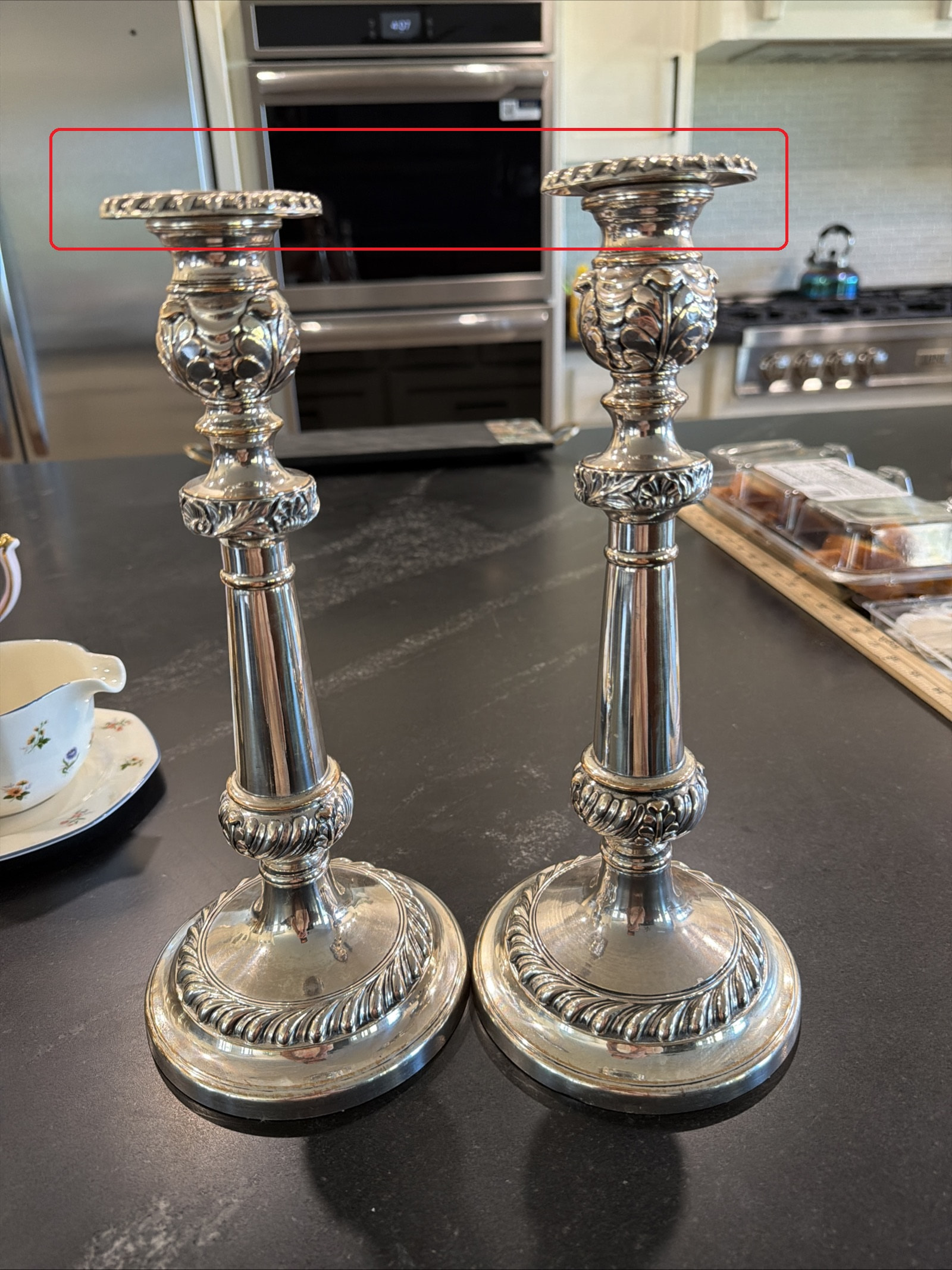
Remove the two parts indicated in the photo. Examine them closely. Then, post a photo if you find any markings.
You can find inscriptions or symbols around or on the bottom of the candle holder cups.
I can’t stand empty gibberish…
…covering a pitch base judging by the lifted peek underneath? and that looks like a rolled or seamed edge. The design is very similar to a John Roberts and Co design.
So I’m going to go out of a limb and say you are indeed displaying pictures of a pair of old Sheffield Plate sticks, likely made in the reign of Geo III but someone needs to actually see them physically to be sure.
So if there are design numbers they will be at the bottom of the candle holder and/or on the sides of the bobeche (wax catchers) It’s an area which collects wax and soot. To clean it out use very hot water just on the ends to melt the wax away and scrub out with old tooth brush and some silver dip. With luck you will come up with numbers either Arabic or Roman.
That would be added data to support it being Old Sheffield plate. If there ever were numbers on the inside of the base, the pitch, poured in to give them stability, had obscured them forever.
I have no access to a Roberts OSP pattern book so even if you do find a number it’s probably not going to give you a specific maker --but frankly unless the maker is Boulton and Watt, which it isn’t, its absence has little impact on value.
And why, you might ask, does that partnership’s imprimatur on OSP make a difference? If anything, because of their machine capability at the Soho Manufactory in Birmingham, they made thinner plate than anybody else. It’s simply that they marked their product. Many fusion plate makers, like yours, used no marks. They were not allowed to mark it with hallmarks and they were, after all said and done, passing it off as solid silver, or their buyers might have wanted to.
1 Like