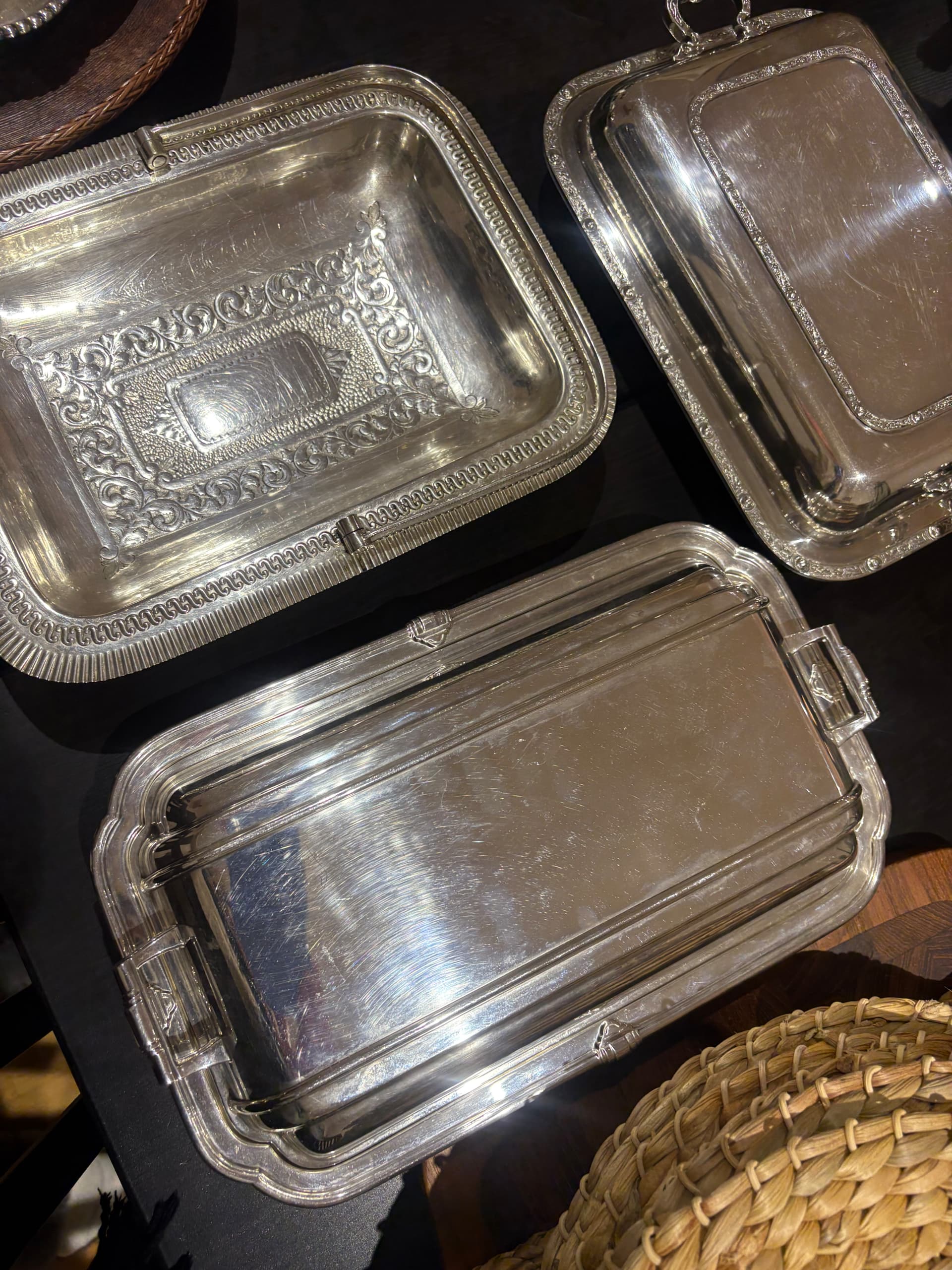
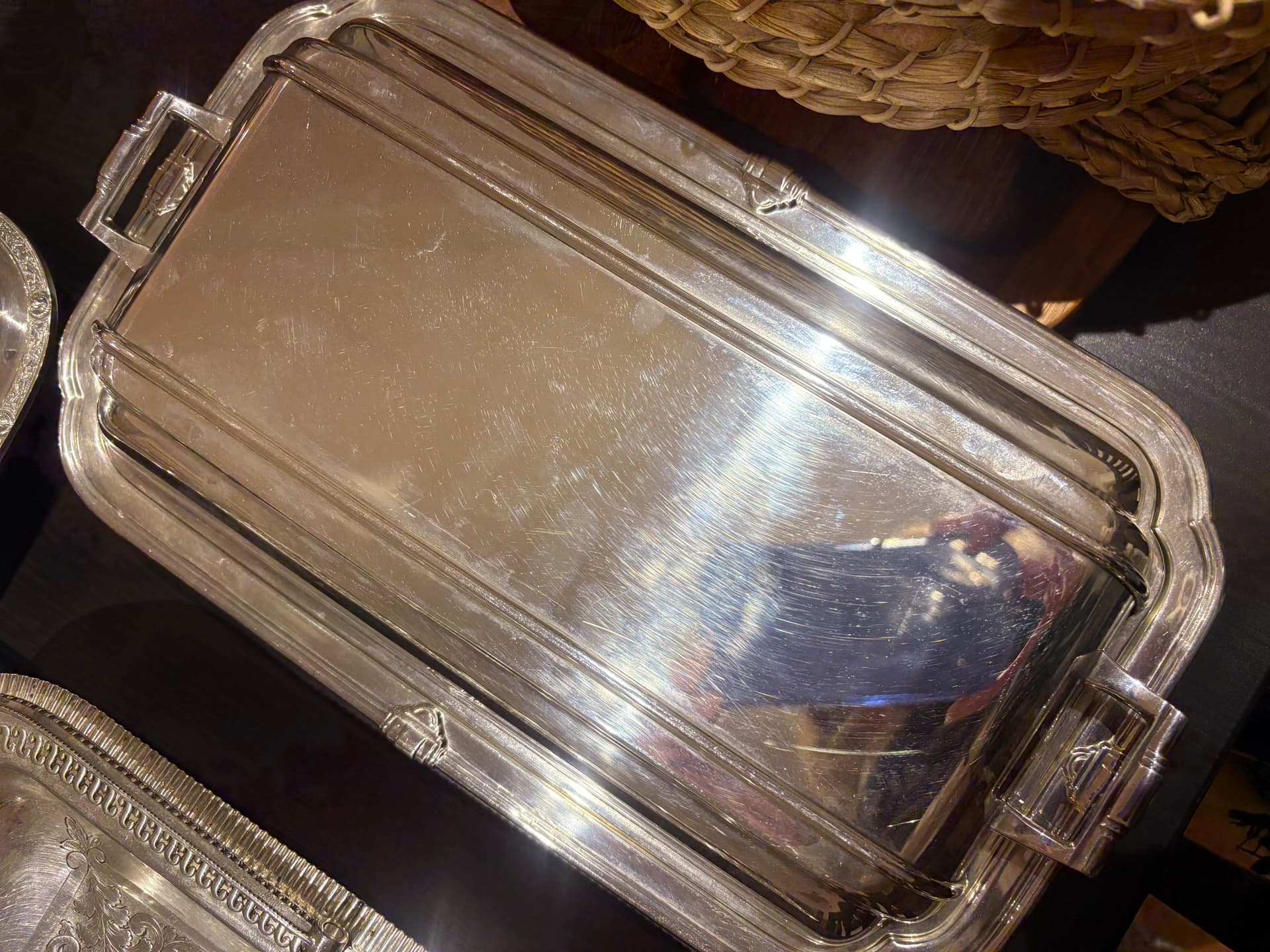
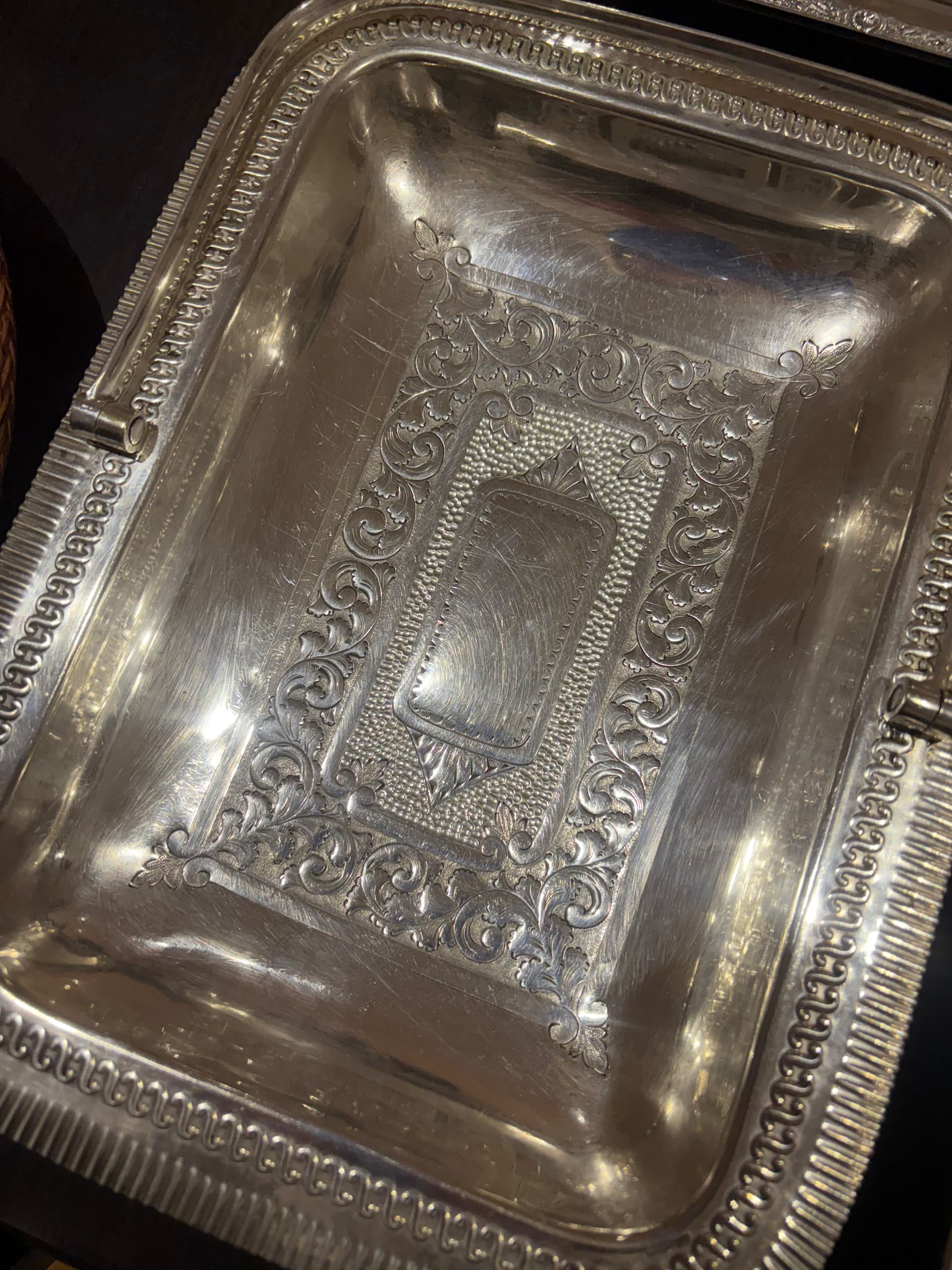
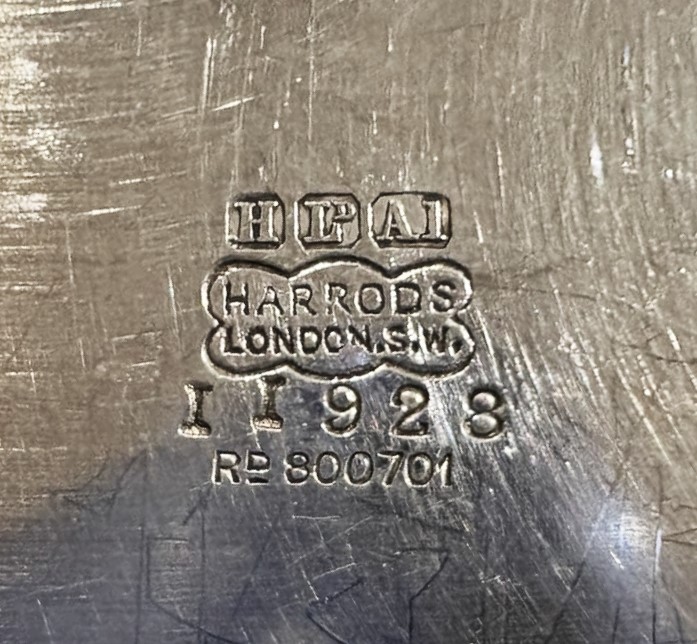
Hi, I’m clearing out my parent’s house and found the silverware my gran used to get out at Christmas.
Any idea if any of it is worth anything and any info about its history etc ?
Hi, I’m clearing out my parent’s house and found the silverware my gran used to get out at Christmas.
Any idea if any of it is worth anything and any info about its history etc ?
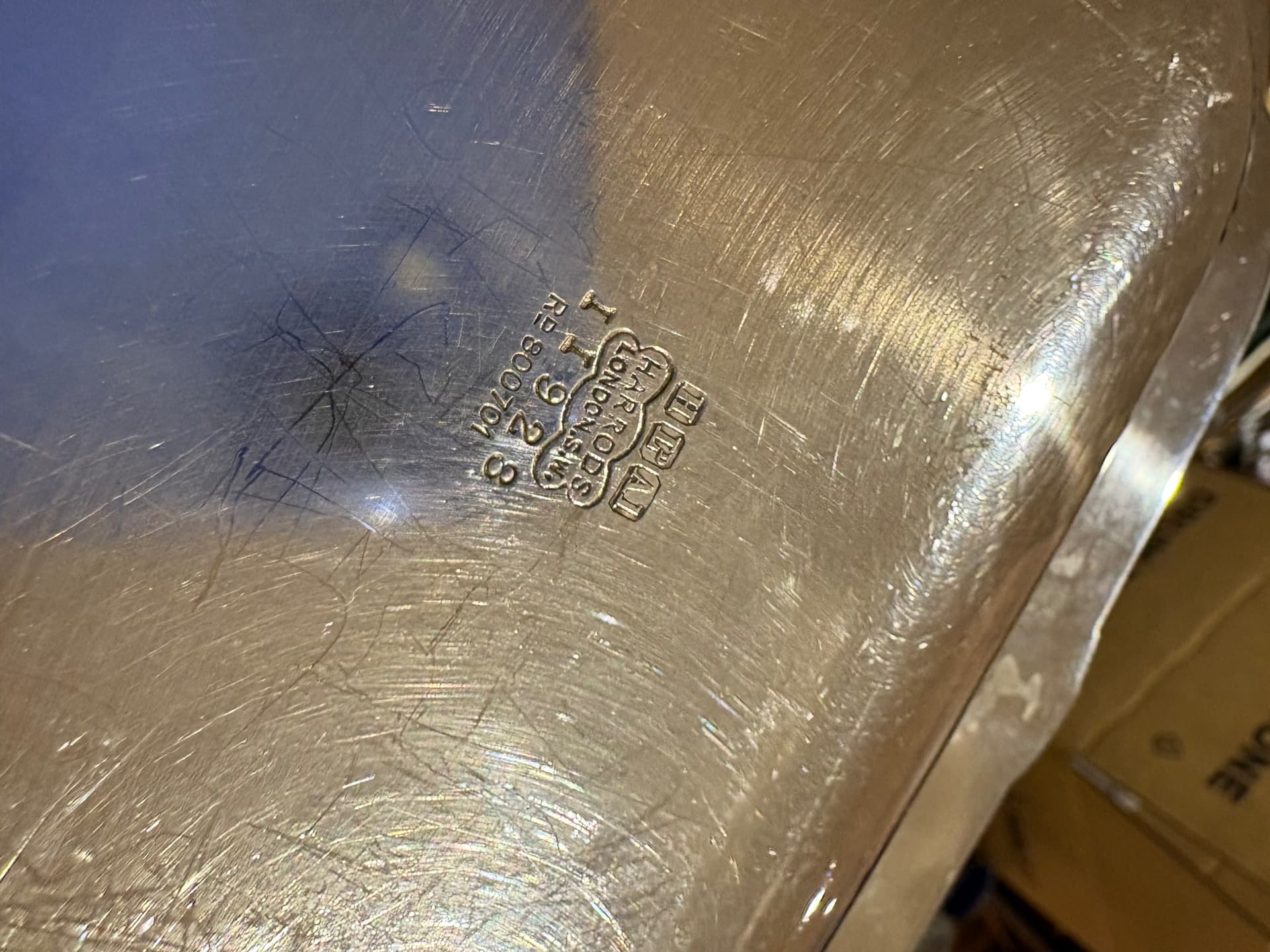
Rd - registry design number - 800701 - 1935/1936.
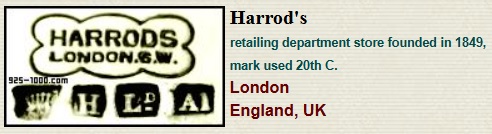
https://www.925-1000.com/silverplate_H.html
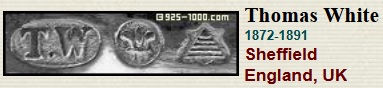 4634 - pattern number.
https://www.925-1000.com/forum/viewtopic.php?p=226921#p226921
Nineteenth and 20th-century silver-plated entree dishes from Harrods are classic English antiques, often marked with “Harrods Ltd,” “Harrods London,” or “EPNS” (ElectroPlated Nickel Silver) and quality marks like “A1,” featuring designs from simple art deco to ornate floral/grape motifs, popular for keeping food warm and widely available on antique marketplaces like eBay.
These dishes were produced by various English manufacturers including White and are valued for their craftsmanship and historical charm, with many still in good condition.
A quick look on Ebay show pairs for £32.00. Go onto live auctioneers and they are for sale at about half that. Put a burner stand underneath it and call it a chaffing dish and the American market wakes up a bit.
You grandmother found a good use for them, Brussels spouts, sweet potatoes, and maybe even the turkey if she had grandpa or your dad slice it first. But entree dishes seem to have gone out of fashion after the first war. People dish up the meat and veg’ in the kitchen and help themselves to cranberry sauce, gravy etc at the table.
Truth is these were the vessels adapted by the Georgians to serve meals when you had a footman at each place and you helped yourself when he arrive at your right side. Only at hotels did the person carrying the entree dish actually serve you. Female staff never served at table.
Household service disappeared after the war when staff discovered they could make better money in the factories and they never really reemerged.
Because private homes kept the silverware even though they lost their staff, many made use of the dishes putting them both at the head of the table and having the host serve. They were also useful at breakfast where they concealed everything from blood sausage to poached eggs to rashers of home-cured bacon and even partridge legs At breakfast unlike any other meal you were expected to get up from the table and help yourself from the sideboard.
You asked about its history. Entree dishes evolved from French dining traditions where it meant the entrance or opening dishes of a multi-course meal, appearing in texts by the 16th century like Livre fort excellent de cuisine. The British later adopted them for the main course as meals simplified. The concept of starting meals with small dishes goes back to Ancient Athens, but the specific French entrée developed as a middle course before the main roast.
CRWW
Thank you!!! have only just seen your reply!
I should have got them out for our Christmas dinner this year!