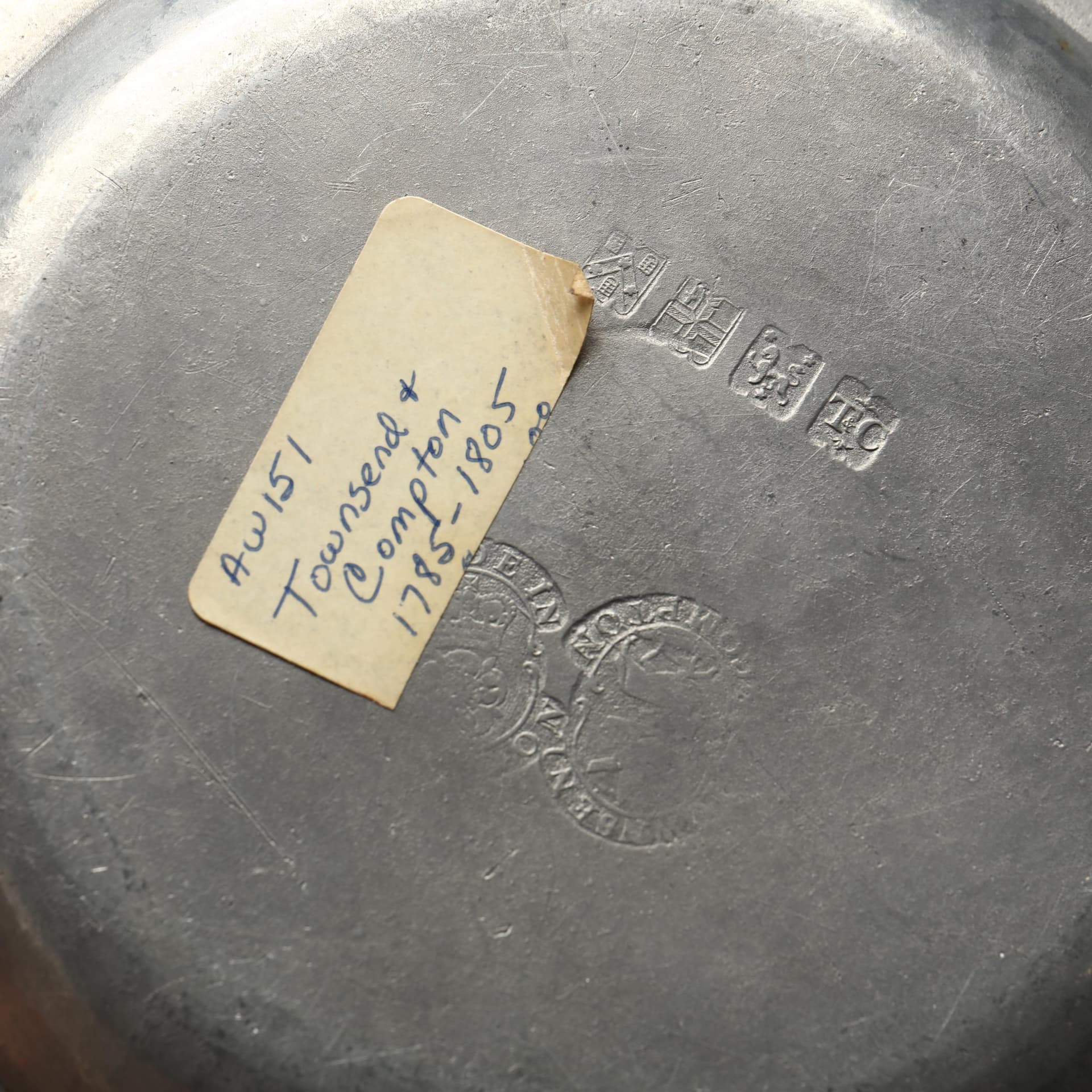
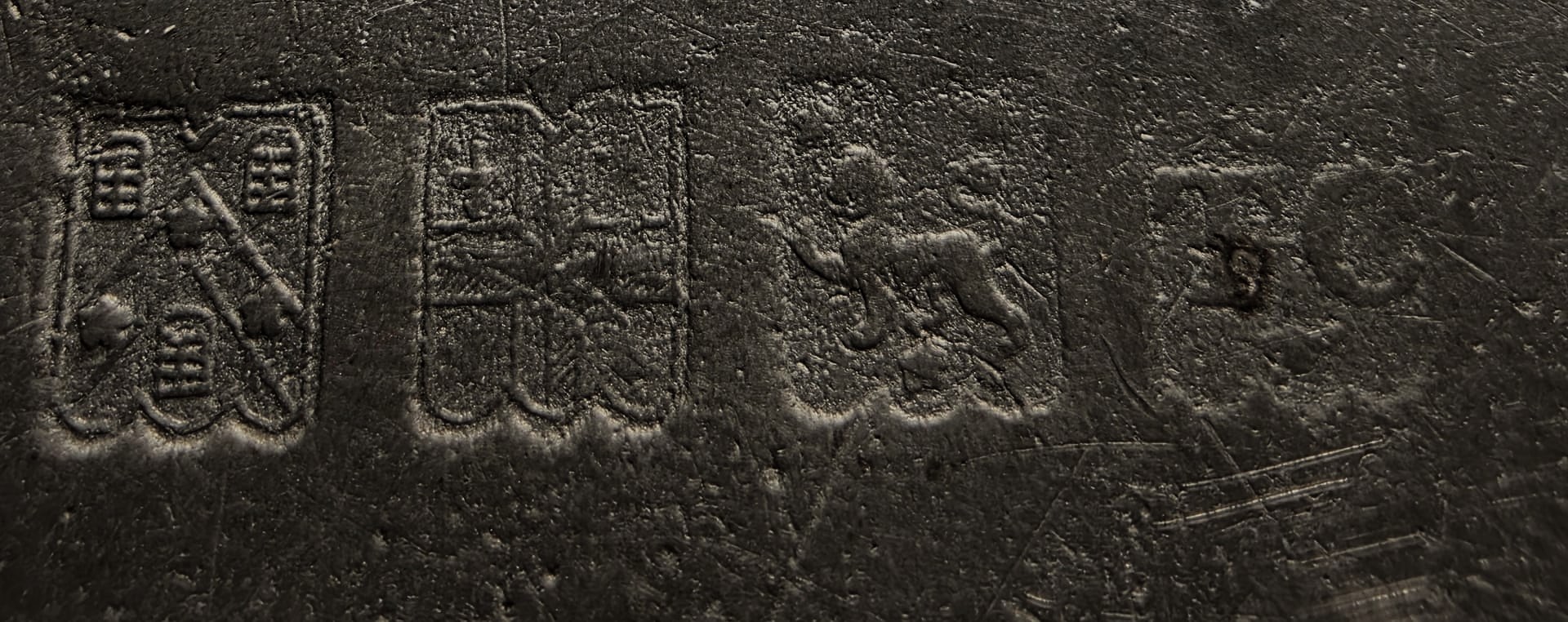
I searched everywhere on the internet. And I can not find what these silver hallmarks mean.

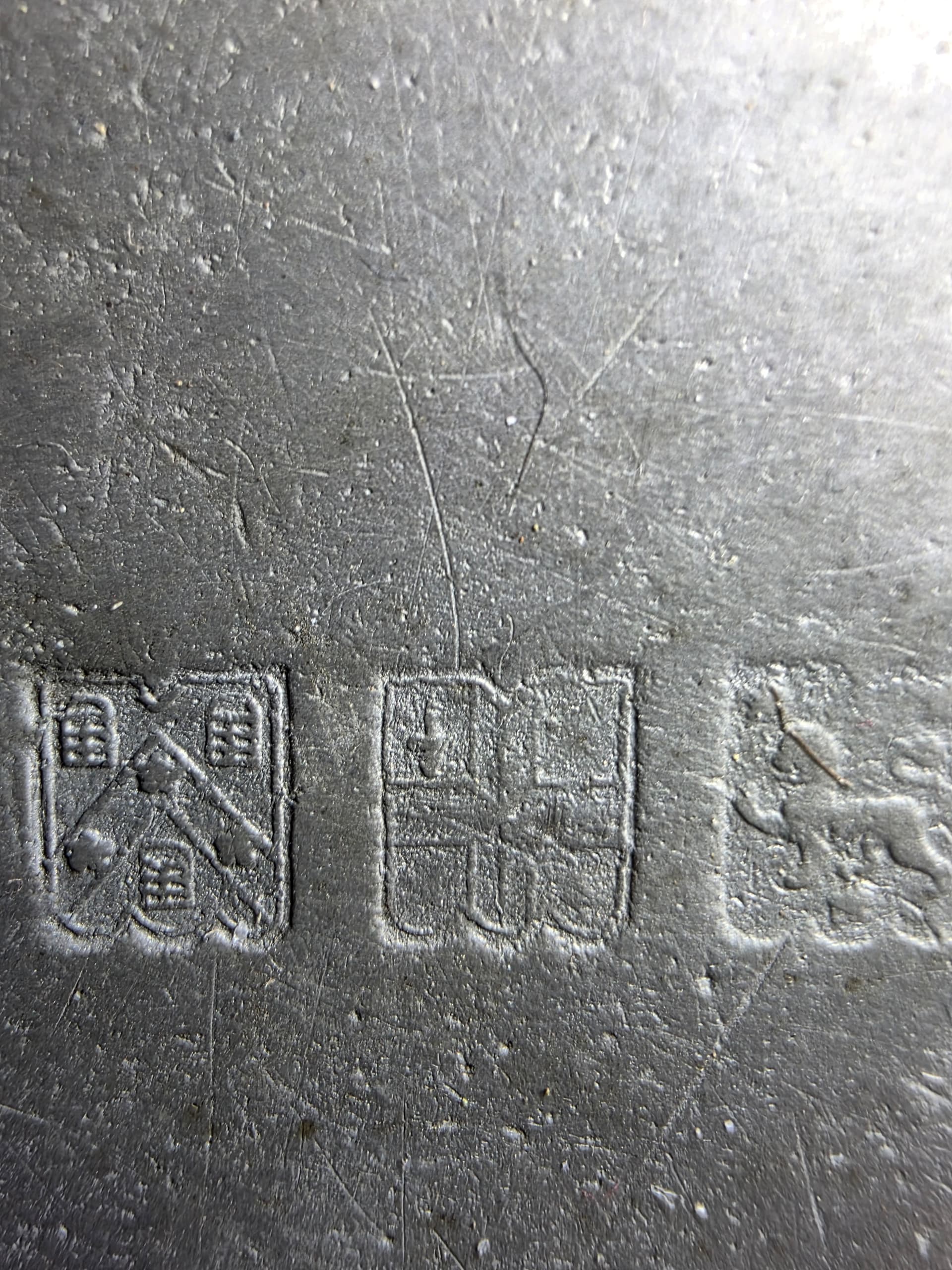
Can someone please help me.
I searched everywhere on the internet. And I can not find what these silver hallmarks mean.
Can someone please help me.
They look like pewter marks to me - almost certainly not English as I think the lion passant would not be allowed in a pewter trademark.
Whole item photo, please.
That looks like a really useful publication, Bart. Thanks for finding it. Having had a quick look at the contents it seems that my thought about a lion passant not being allowed on an English pewter mark was completely wrong as there are numerous examples in the pamphlet.
There is a near match at mark number 75 which looks the same but has “T&C” rather than TC; I wonder if that is a mistake as the author attributes the mark to Thomas & Townsend Compton (father & son), so I would have expected either “T&TC” or just “TC”. It appears that the following site agrees with TC rather than T&C although they have got the partnership name wrong:
Thomas & Townsend Compton, working in Fenchurch, London, England were members of the Townsend dynasty of pewterers. Patriach John Townsend began working in 1748 and continued until his death in 1801. These two men were his son-in-law and grandson. They were in business from 1802-1814.
The family business produced plates, bowls and cutlery and buttons. Very little of their cutlery survives. They also exported a great deal of their wares including shipments to Canada where I first became familiar with their work when I purchased three spoons of theirs which I think started out on vessel plying routes which included Halifax NS.
John Townsend’s detrited hallmarks are seen in full lamb/lion face/Britannia/initials as I T. A
'Made in London" mark also often appears on material produced by all three generations of the family and were also used by the Townsend and Reynolds partnership 1767-1770.
The Pewter Society’s pages are extremely helpful.
Here’s a John Townsend plate on sale with the London mark:
And here is an export plate by John’s son and grandson, who made your material also with very clear London marks.
I started collecting pewter before I could afford to collect silver and gold and if the owners of this site want to extend its range to include pewter they will get a lot of help from the Pewter Society.
Pewter after all does sometimes contain silver although it is mostly tin, antimony copper and bismuth.
The problem with it historically was its former use of lead. I once nearly lost my gig as the writer of a company news paper fror CM&S (Now Cominco-Teck) documenting how it wasn’t the Barbarians. (Saxons and Jutes) that finished off the Roman empire or even the Goths and the Visigoths (The French) but the lead they used in their cisterns, pipes and drinking vessels.
The Romans, I suggested were too clever by half. If they had relied on wells like everybody else we’d probably be reading this in Latin (Italian)today.
Didn’t go over well with my bosses who were producing most of the heavy water needed for the atomic power development in Canada and had provided it for the Manhattan project.
CRWW