2 Likes
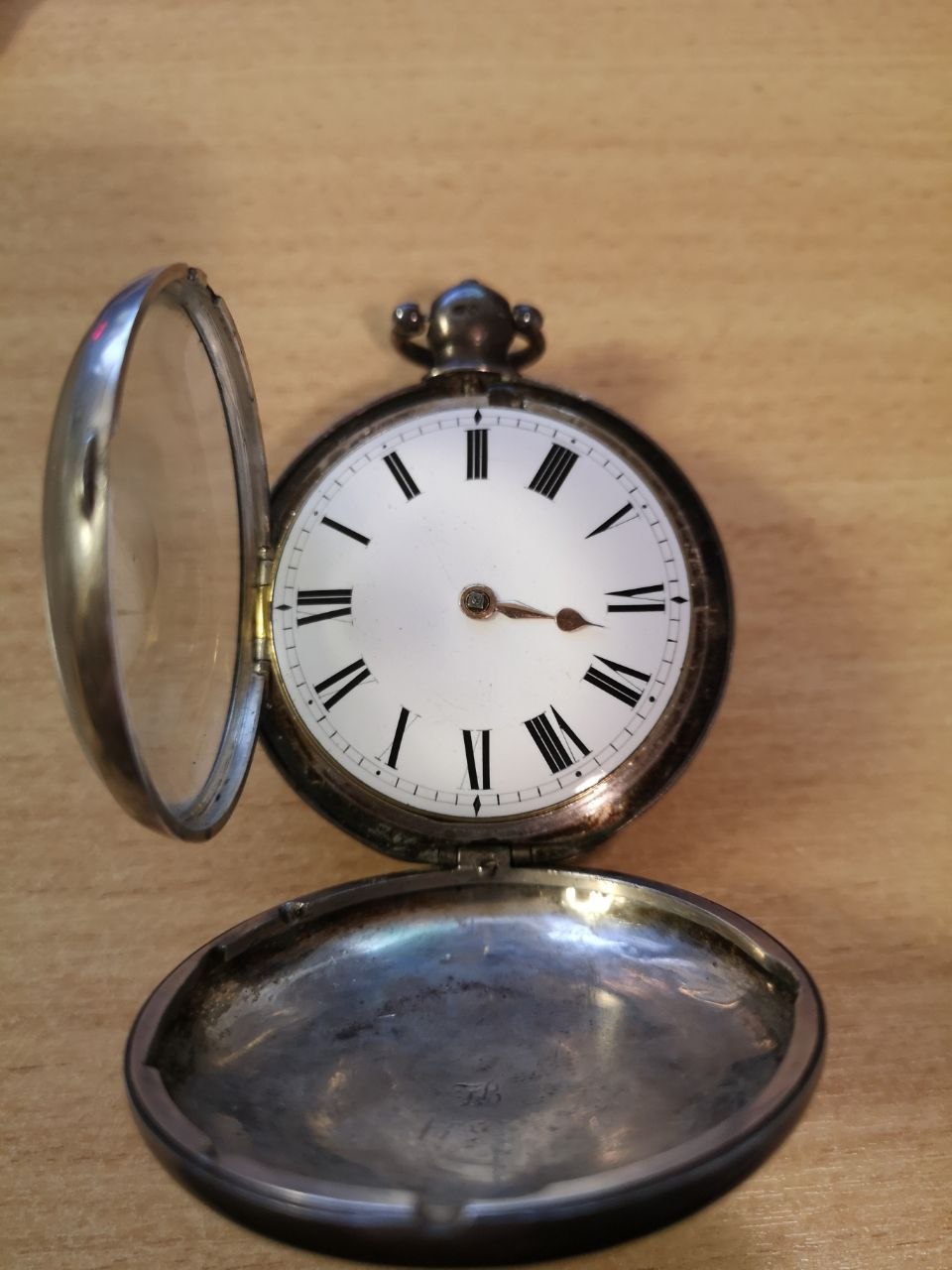
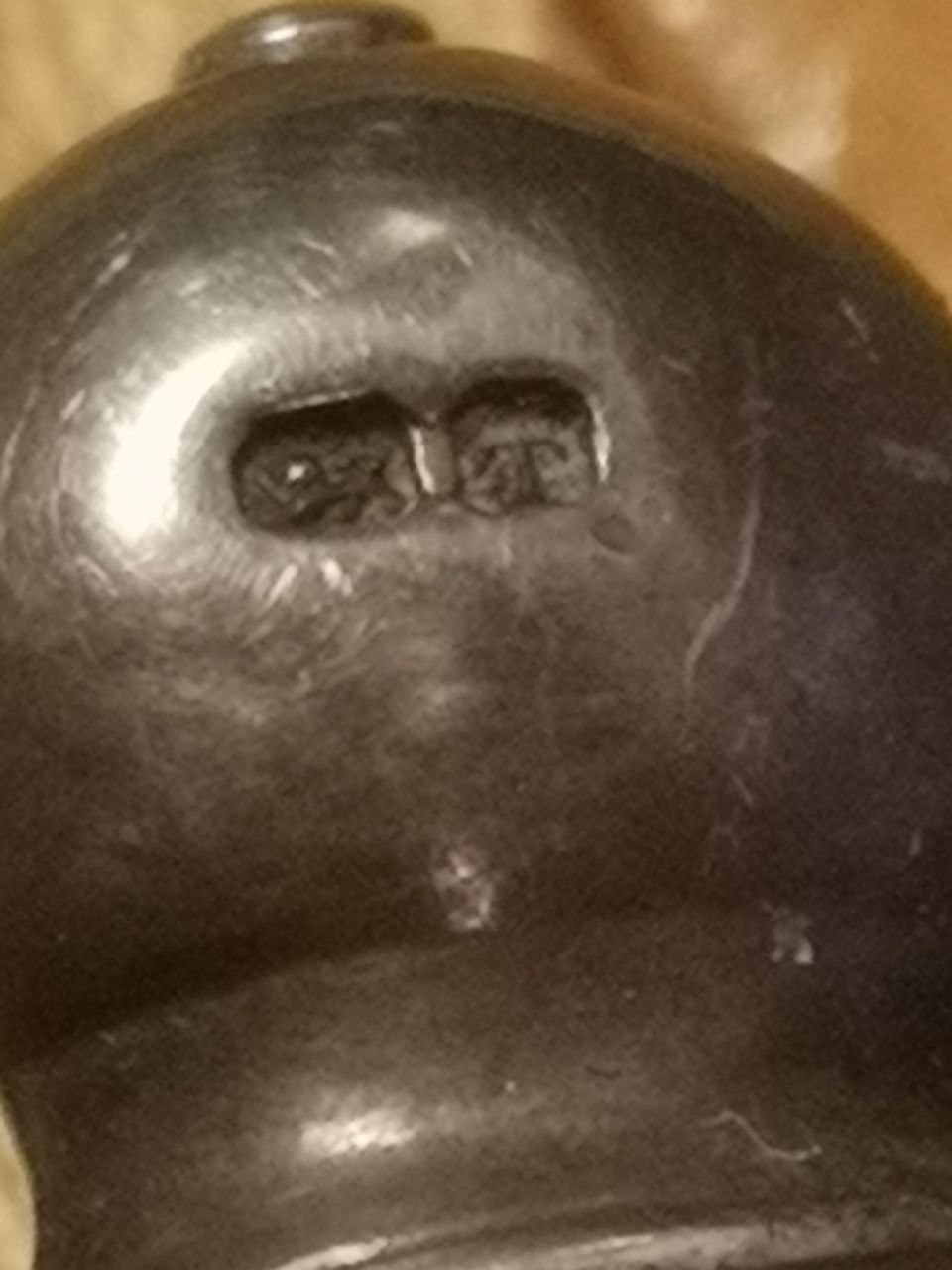
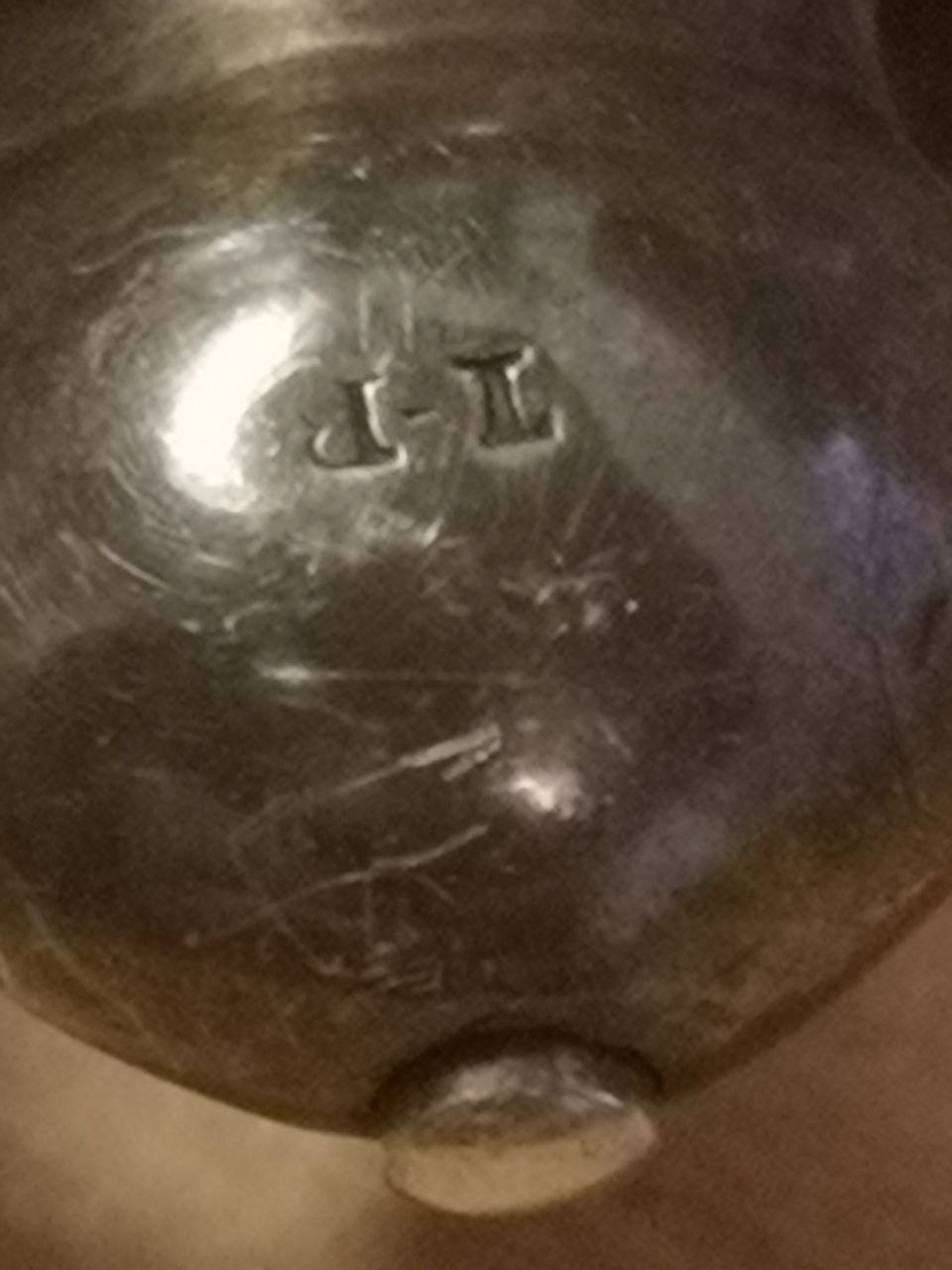
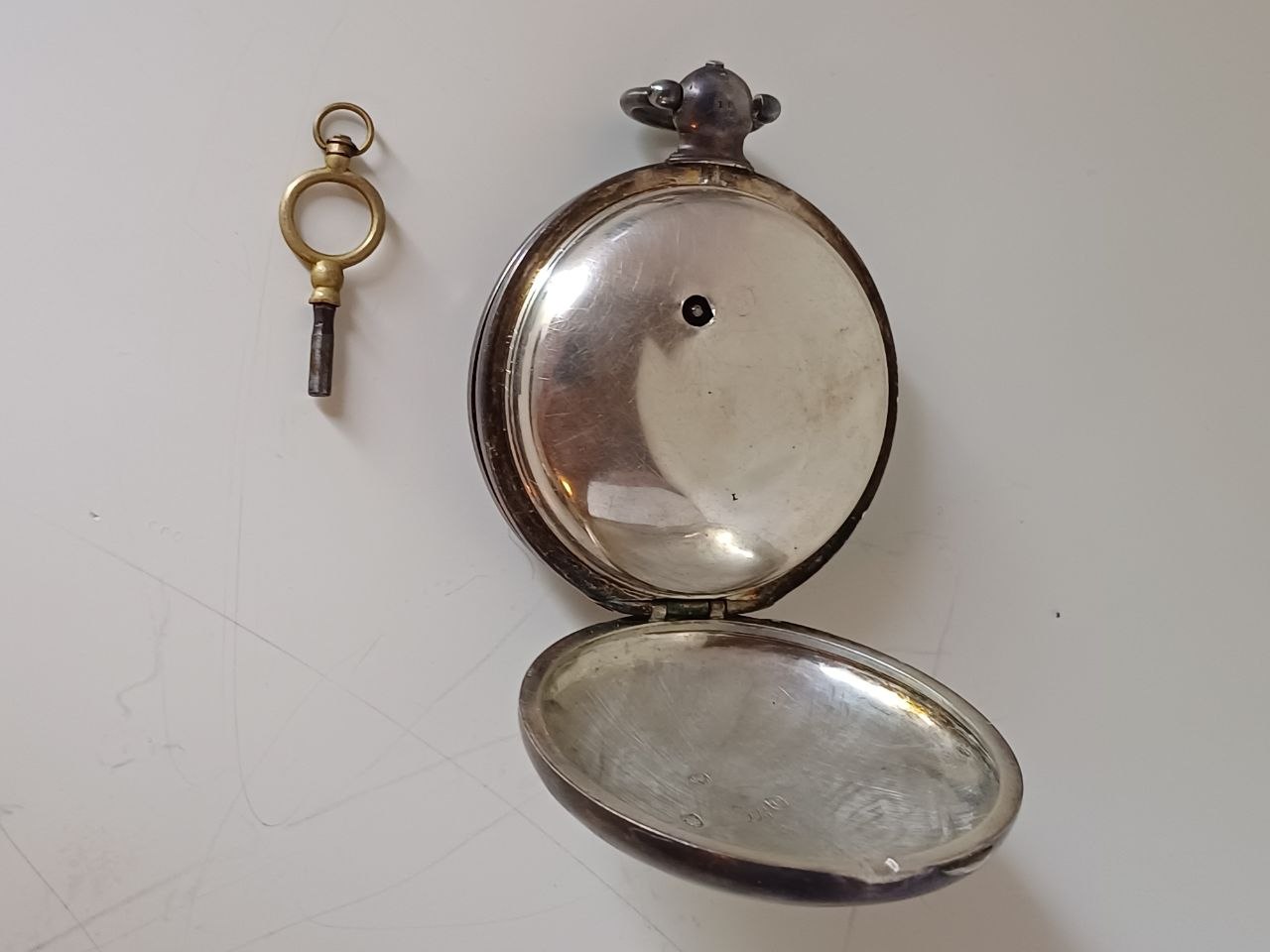
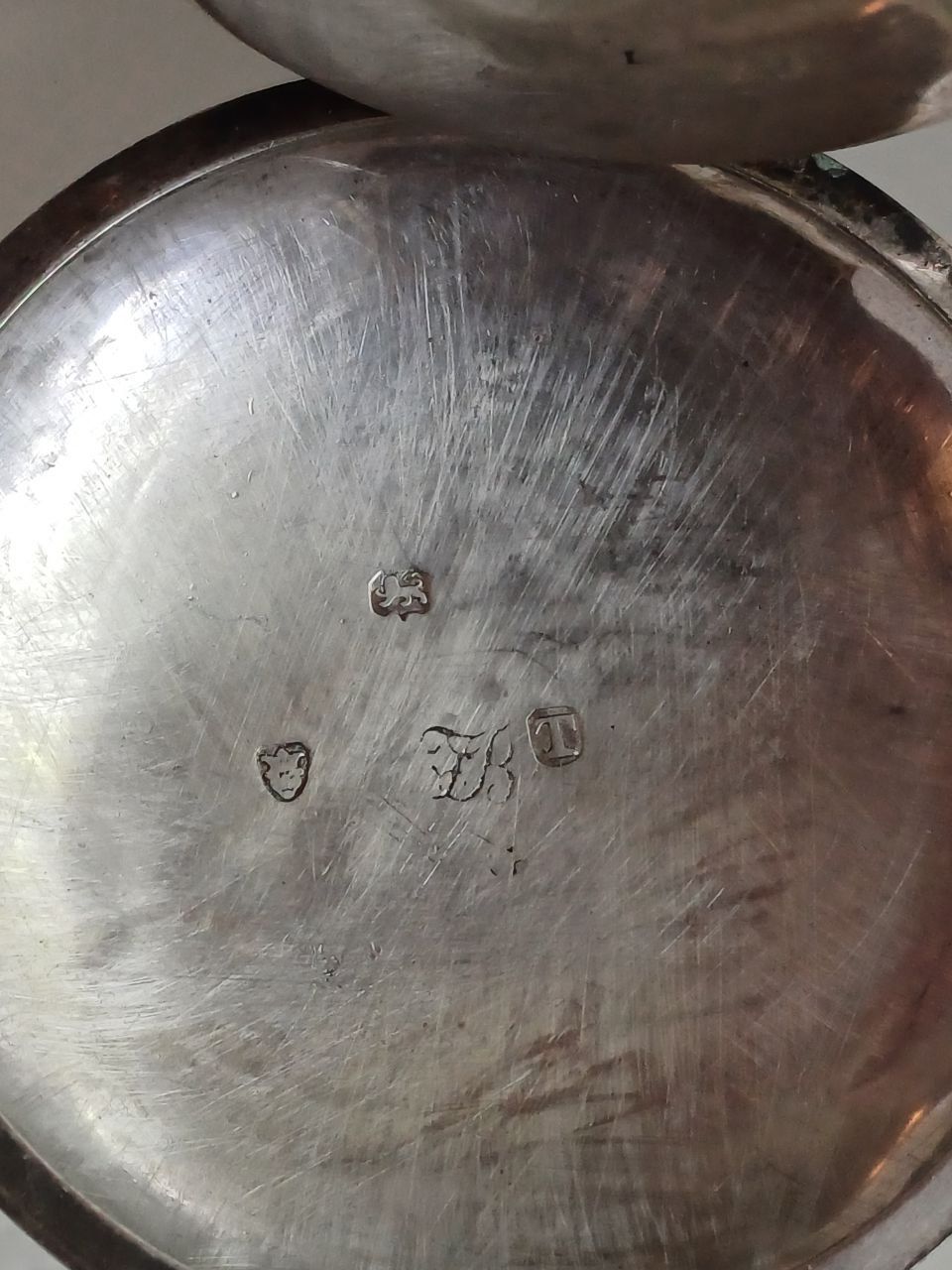
The sterling hallmark looks like London 1814, though it’s lacking the duty mark. Can’t help beyond that - “silver” and “watches” have some overlap, but are different specialties. 
1 Like
Key wind had been replaced by stem wind by 1850. British cases with Swiss mechanisms became commonplace. You are hallmarked for 1814 as Jeff has correctly told you.
While London was the global centre for high-end watchmaking and precision chronometers, British makers had already begun to rely heavily on movements imported from the Swiss Jura region.such as Neuchâtel and Geneva.
Swiss watchmakers of this era frequently copied the names of prestigious English and French makers on their dials, as the English market was considered the benchmark of quality. In your case it is blank.
The UK watch industry remained heavily artisanal and decentralized in the early to mid 19th century. Meanwhile, Switzerland began heavily industrializing, standardizing parts and mass-producing high-quality, mid-tier watches. This eventually led to the Swiss dominating the global market by the late 19th century.
On the watch “bob” just below the bow to which the chain attached are the initials TP which might stand for Clerkenwell case maker Thomas Peyton except that he was dead by 1897 and his widow Jane had taken over.
See page 124 right hand col.
The other forum suggests Jane, his widow, whose mark was entered in 1797 died two years later and was buried not at St Lukes, Clerkenwell with her husband, but half way across town in Marylebone.
https://www.925-1000.com/forum/viewtopic.php?t=29190
With respect, this may refer to another rather older Jane Peyton The contemporary census suggest three alternatives.
But while this forum’s contributor isn’t prepared to kill her off in 1799, nor is your scribe necessarily prepared to grant her life until 1813-4, the date of the hallmark let alone she was able to use a deceased husband’s mark for 16 years.
Although the circumstances under which she might have presume the following things are true:
The guild supported the watchmakers of Britain who had asked for tariffs against foreign watches and instead got a levy of sixpence in the pound registered against them or their silver to pay for a bungled war in the America. (See comments in the above cited paper).
Case makers, while aware the British horological industry was plagued by US cheap clocks being mass produced and killing of all but the top end of that industry and cheap watches doing the same from Switzerland and to a lesser extent France, weren’t adverse to shipping cases made and stamped in the UK out to Europe where they were loaded with foreign mechanism and returned duty-free bearing UK hallmarks.
Or to put it very simply the strict rules which applied to domestic silver and the levies on that by government enforced with the active cooperation of the guilds seemed to unravel a bit when it came to casemakers and their watches.
In 1814 as you, can see by the number of watches then produced, they were still something a gent carried. You didn’t need them to catch a train as there were no trains and the village clock told you when the stage coach was leaving and the sun and the milk cows did the rest.
Anyway, open up the back and see what you can see stamped on the nether side of the inner case. There should be a number corresponding to the mechanism number – this was dictated by statute although again not always enforced---- and we might have a clearer case maker mark --case maker mind you not watchmaker. For that, even if it’s a canton not a maker, the works itself is your source.
CRWW
1 Like

If I keep staring at the two marks for makers sooner or later I get a TB. There is enough of a second lower bump on what I thought was a P to be a B.
So that makes it by Thomas Bligh a Great Sutton St, London, Case maker registered in 1797 and still active and registering his last mark in 1821. according to www.silvermakersmark.co.uk
Here’s another case by him this one with the works open and the works on display and with a makers signature for Luch Neuman of London. It is dated 1804
Here’s a much clearer Bligh mark with the top right of the T trailing away and lost as indeed it appears to be on this watch.
And yet another Bligh Case for a Jon Carley of Thetford maker
And finally this one dated the year prior to yours London 1812, the fusee movement signed I.P. Milsome, Newbury, no. 3104, with pierced engraved balance cock, diamond endstone, flat steel three arm balance, silvered regulating disc and cylindrical pillars, the dial with Arabic numerals and minute markers, within plain matching cases, case maker ‘TB’ (Thomas Bligh), 56mm
CRWW
1 Like
Thank you very much for such a comprehensive answer. How can I open the cover above the mechanism? There’s a continuous seam there with no hooks.
1 Like
Opening the cover above the mechanism depends on who or actually what you are. Ideally you need a sinister mature male who drinks lots of milk and has strong thumb nails.
Females tend to fashion their nails for other needs than Georgian watch opening.
If you’re such a person, or can borrow one for the purpose, open up the outer lid, grasp the case rim firmly in one hand and hold it for a minute or so, not touching the inner lid.
Exactly the same method works to remove tight pickle jar lids. The metal expands et voila, you are a culinary hero.
In this instance you want the outer case to expand slightly so the lid is clamped less tight then insert a thumbnail in the seam and work it round. (lefthanded males are especially prized for this work as we start from a point others haven’t where there is more leverage and less pressure and wear.) If you don’t have a sinister male on hand you can, in a pinch, use an orange stick. Stay away from nail files, please.
I know I sound sexist but there really isn’t anything much more sexist than a Georgian pocket watch tucked in the midriff of a male’s impedimenta.
If all that fails, get that can of 10/40 gun oil from under the sink and squirt a tiny amount on you finger and rub it round the seam then immediately wipe it off with a tissue. It worked for jammed M1’s in Vietnam and it works for Georgian pocket watches.
Still no luck take it to the local watchmaker, where it going to need to go any way to be cleaned and lubricated on the six key points before it keeps time again.
Now you have it opened you can tell us the maker and if the work’s serial number is recorded on the case in compliance with the UK statute
It is becoming apparent Bligh (was related to the unfortunate Capt. Bligh of the Bounty?) catered to the English watch trade rather than shipping cases abroad and having them returned with works in situ.
Although the extent to which those watchmakers he cased relied on Swiss or French mass produced parts is another matter. Swiss prior to 1815 and the Battle of Waterloo, I suppose.
Appropos nothing that battle and the great victory (or “near run thing” in the victor’s words) for that rather strange Anglo-Irish Officer, Wellesley probably sold more watches than any other historical event ever achieved.
The Rothschild family in France messaged the victory to the Rothschilds in London and bought on the 'change when everybody was gloomily selling in anticipation of Boneparte roundly defeating Wellington and Blucher.
“Timing, dear fellow, timing.”
Which gave this previously rather insignificant German banking family enough money to take over from people like Hope in Amsterdam as global bankers and finance WWI.
Thanks, I guess.
CRWW
1 Like