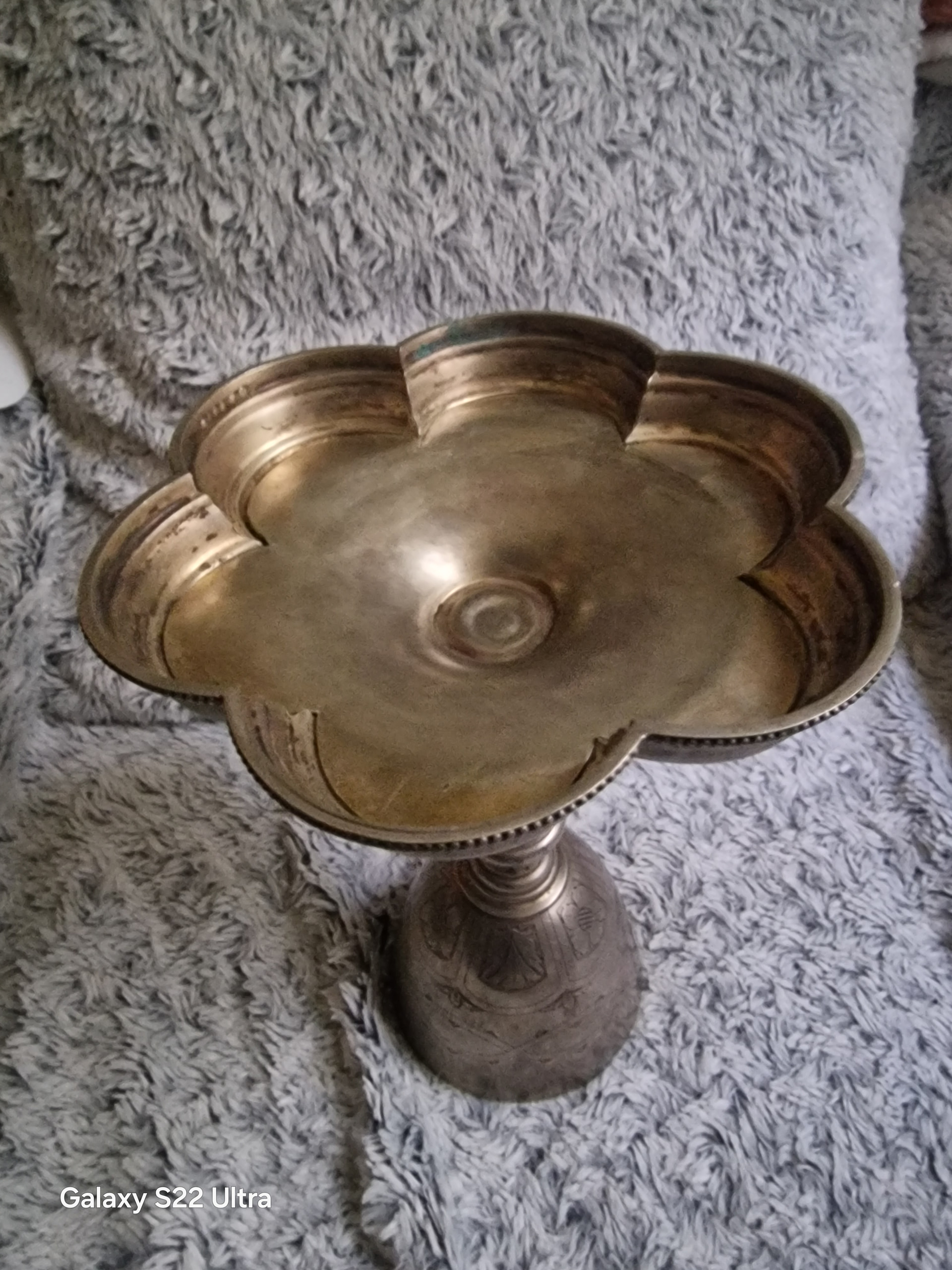
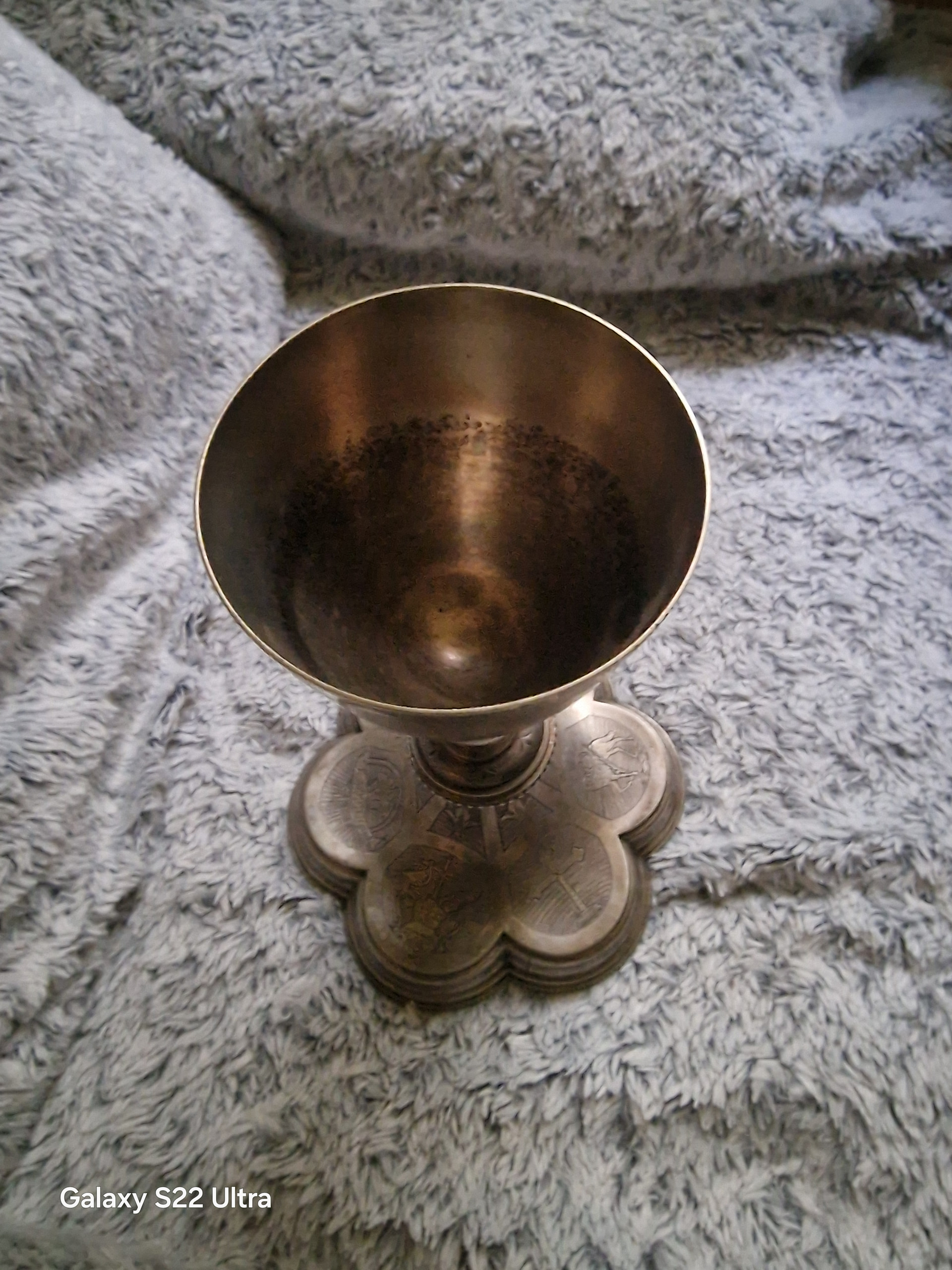
Please help identify it. I tried it in 2 places, it is silver.
2 Likes
Chalice - German - The Metropolitan Museum of Art


This is probably a liturgical chalice dating from the eighteenth century. This is just a guess.
2 Likes
Thanks ! Thanks very much. And y think the seame
1 Like
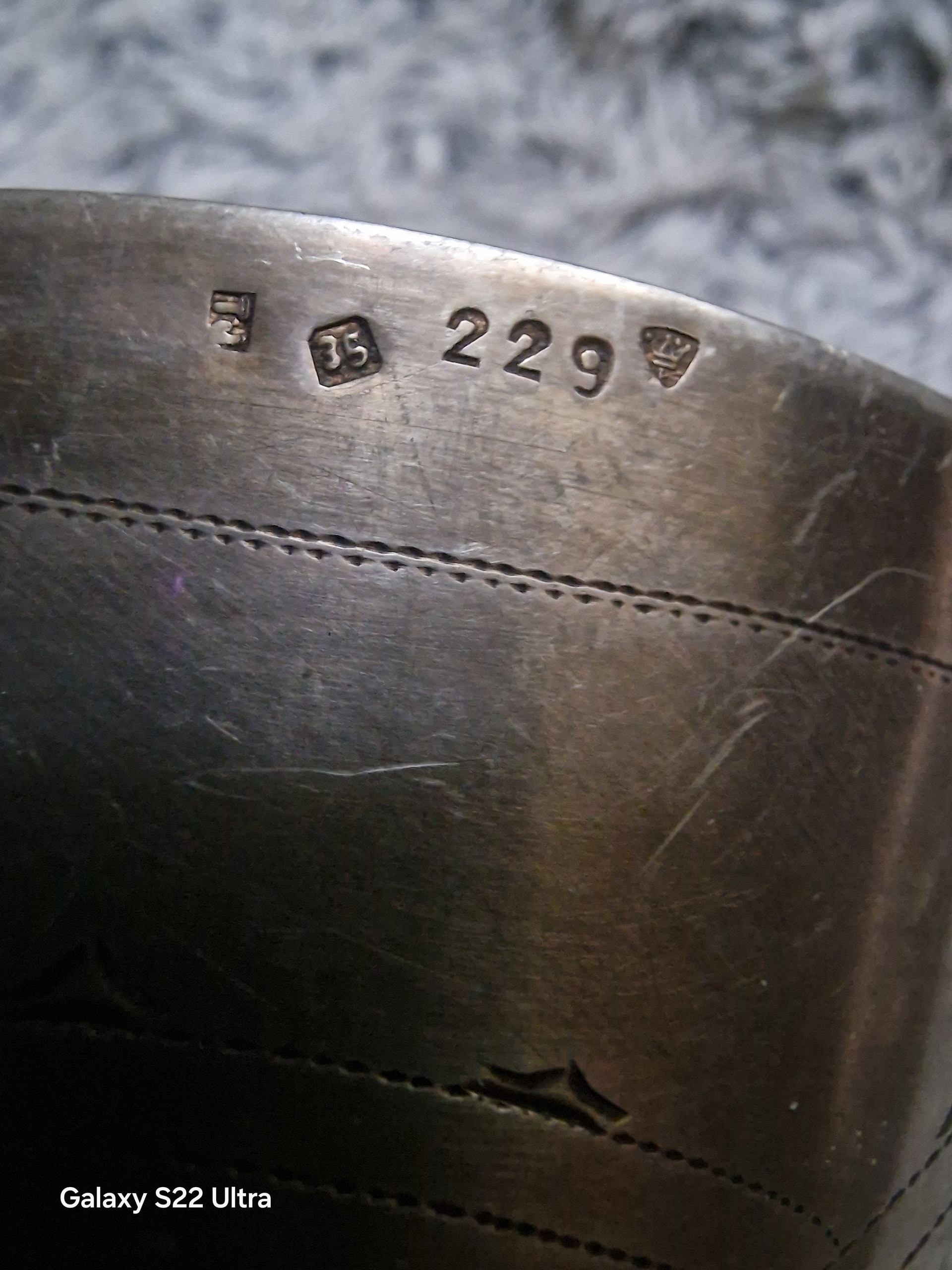
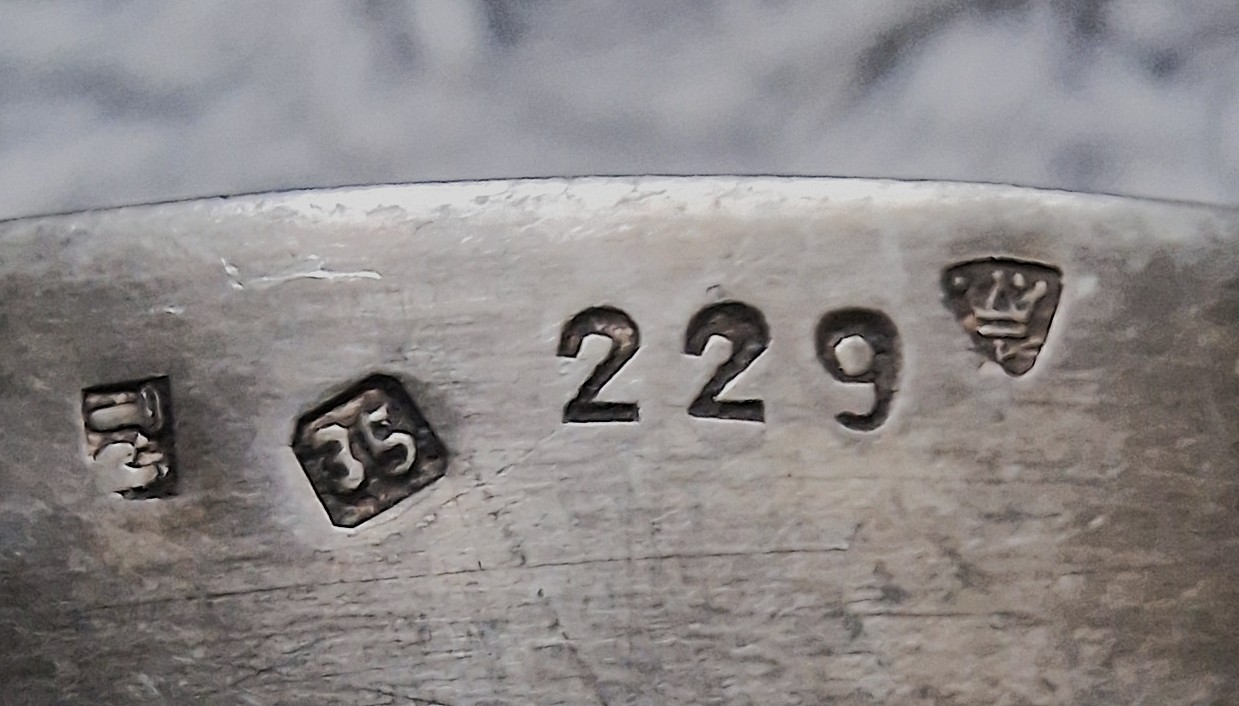
The German hallmarking system was unified in 1888 by decree January 7th, 1886 adopting the national mark “Halbmond und Reichskrone” for silver. The crescent and crown is clearly visible on this cup so it’s post 1886 and probably 20th century as this system of marking continues into today.
Silver fineness is expressed in thousands with a minimum silver content of 800/1000 in this case .835. Shown abbreviated to 35 This too is set out on the cup.
The alphabetic or figural maker’s symbol complete the hallmark under the crown on the right. There isn’t enough of the initials to read easily, but there are four likely ecclesiastical silver makers listed.
The 229 will be a stock or design number so this chalice was made by a larger producer.
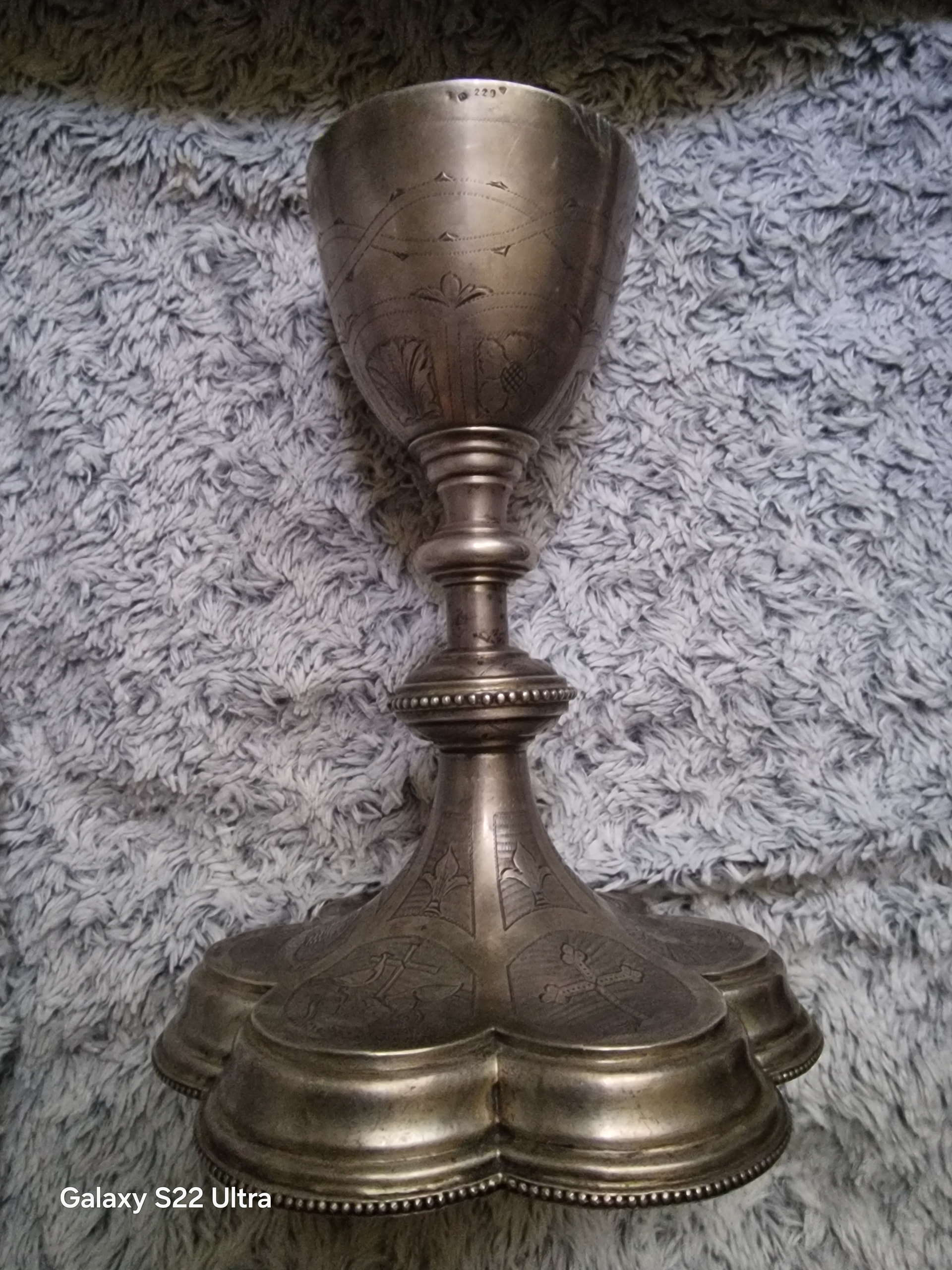
The cup is indeed a modern copy of a fifteenth century chalice, the sort of item often presented to German priests upon their ordination.
You are missing the paten and pyxes and flasks. One of them may have further information on it allowing you to date with greater precision. On the other hand a lot of church silver was lost in the WWII bombing raids and this may have turned up in second hand shop somewhere having been scavenged.
CRWW
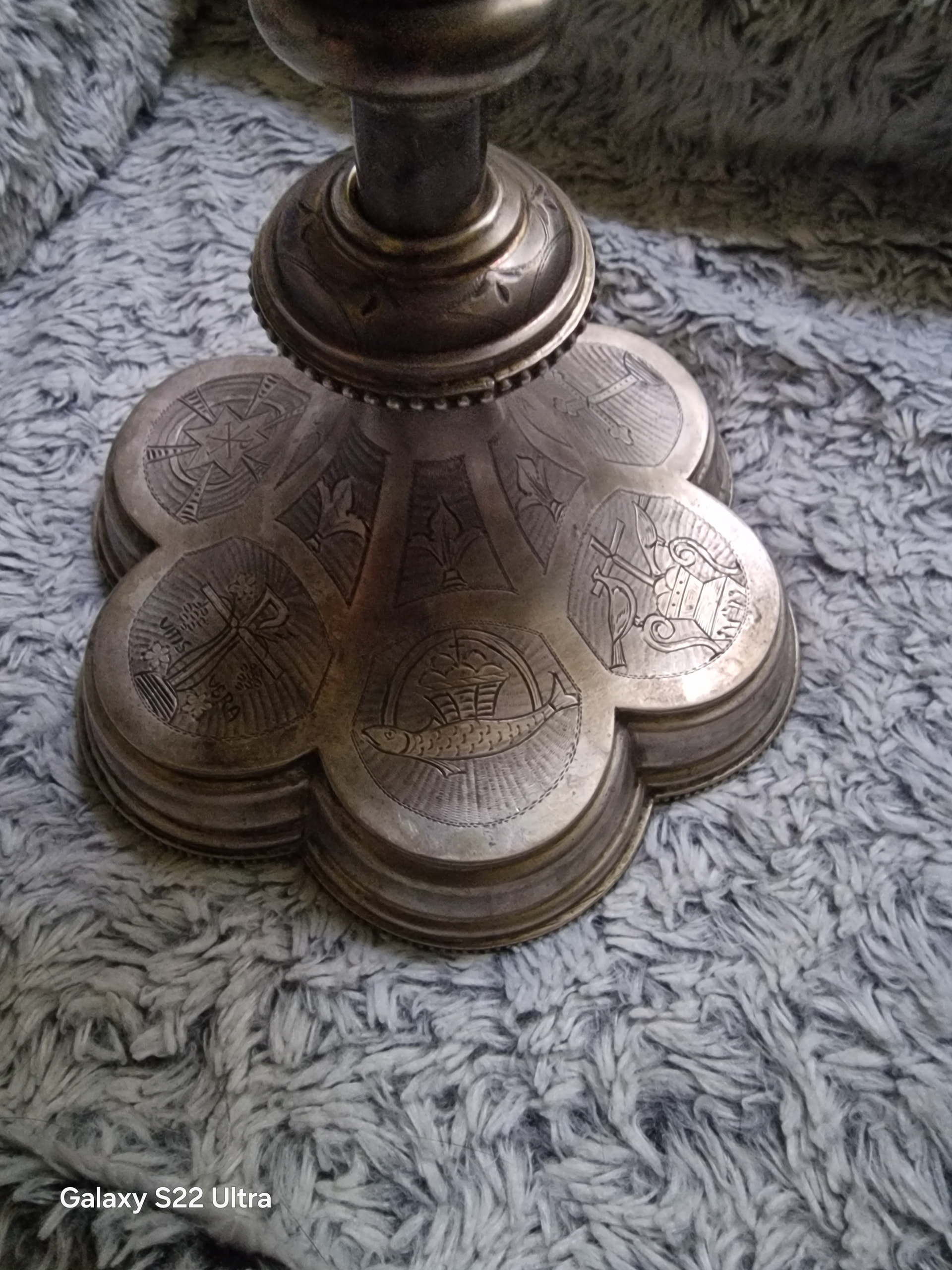
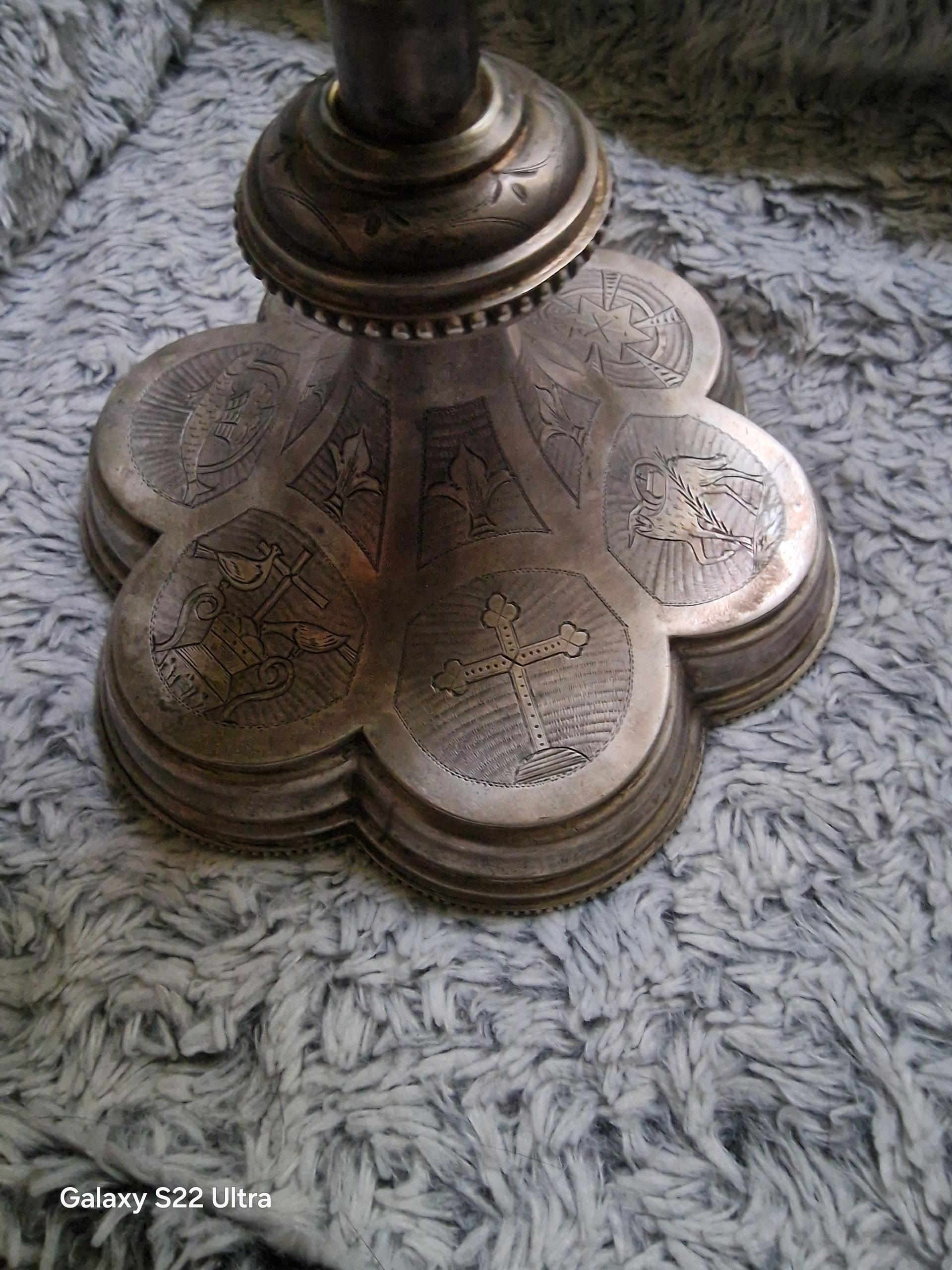
PS The Geese around the grave on one of the visible medallions shows where the original chalice was likely made or engraved.
1 Like
The crescent? Where?
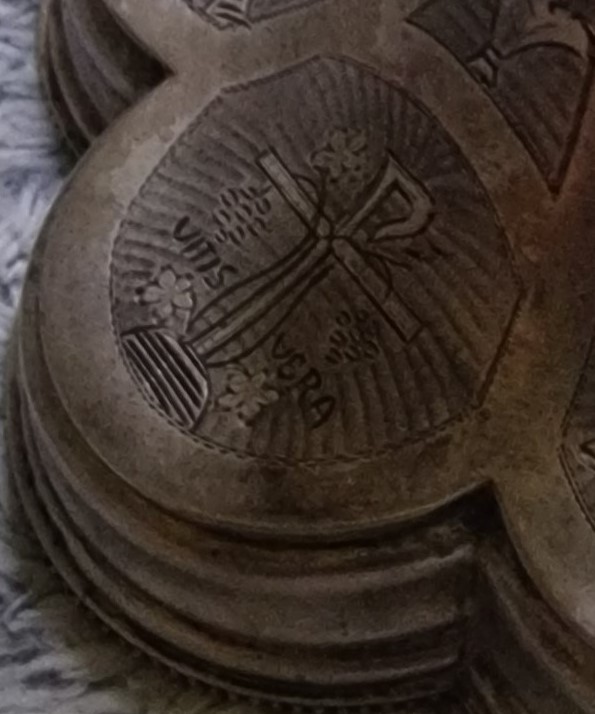
The words “vitis vera” (Latin for “true vine”) are not a typical hallmark, but a quote from Holy Scripture (John 15:1) often engraved on sacred vessels. They refer directly to the sacrament of the Eucharist and Jesus’ words: “I am the true vine, and my Father is the vinedresser.”
1 Like
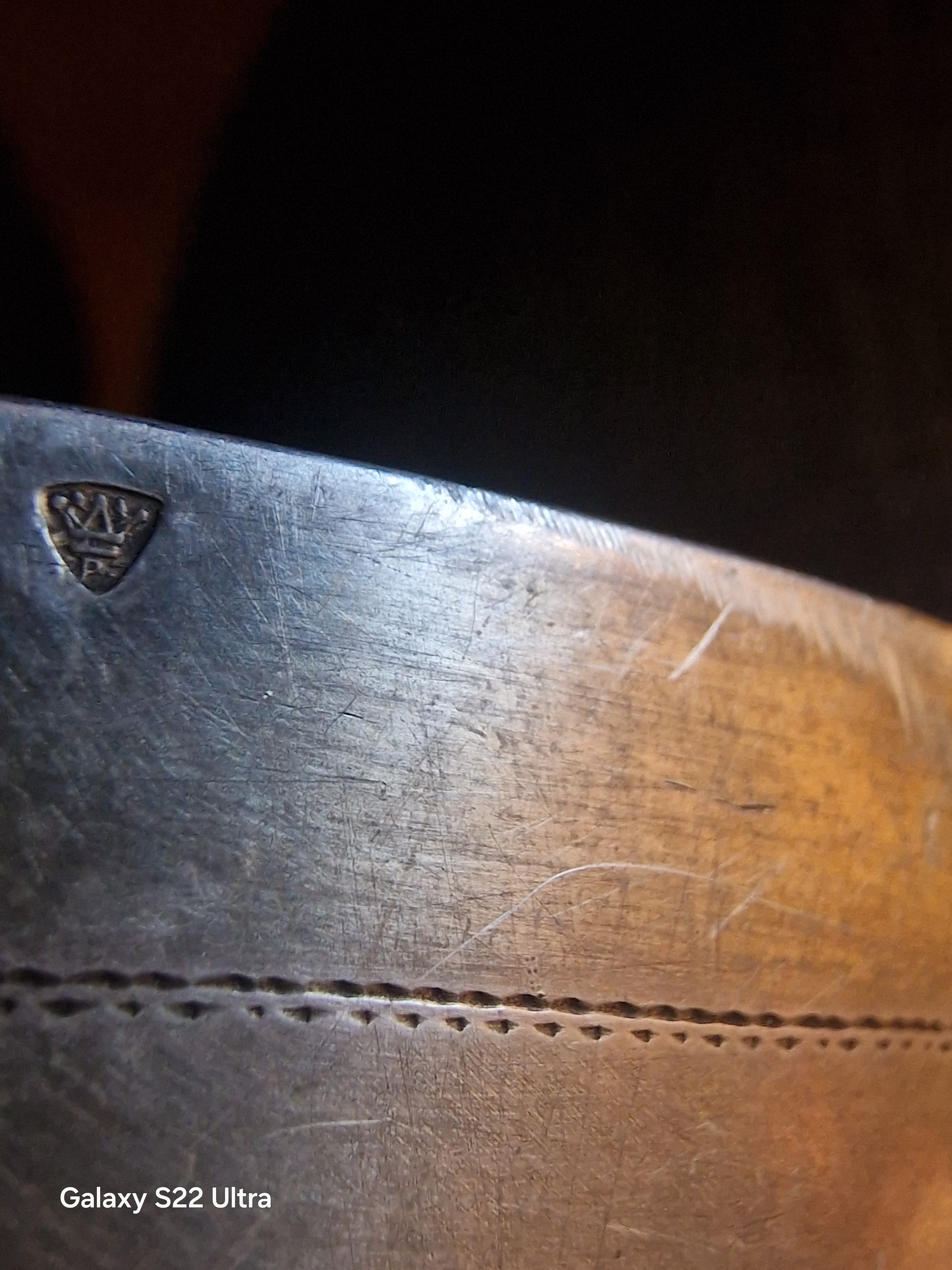
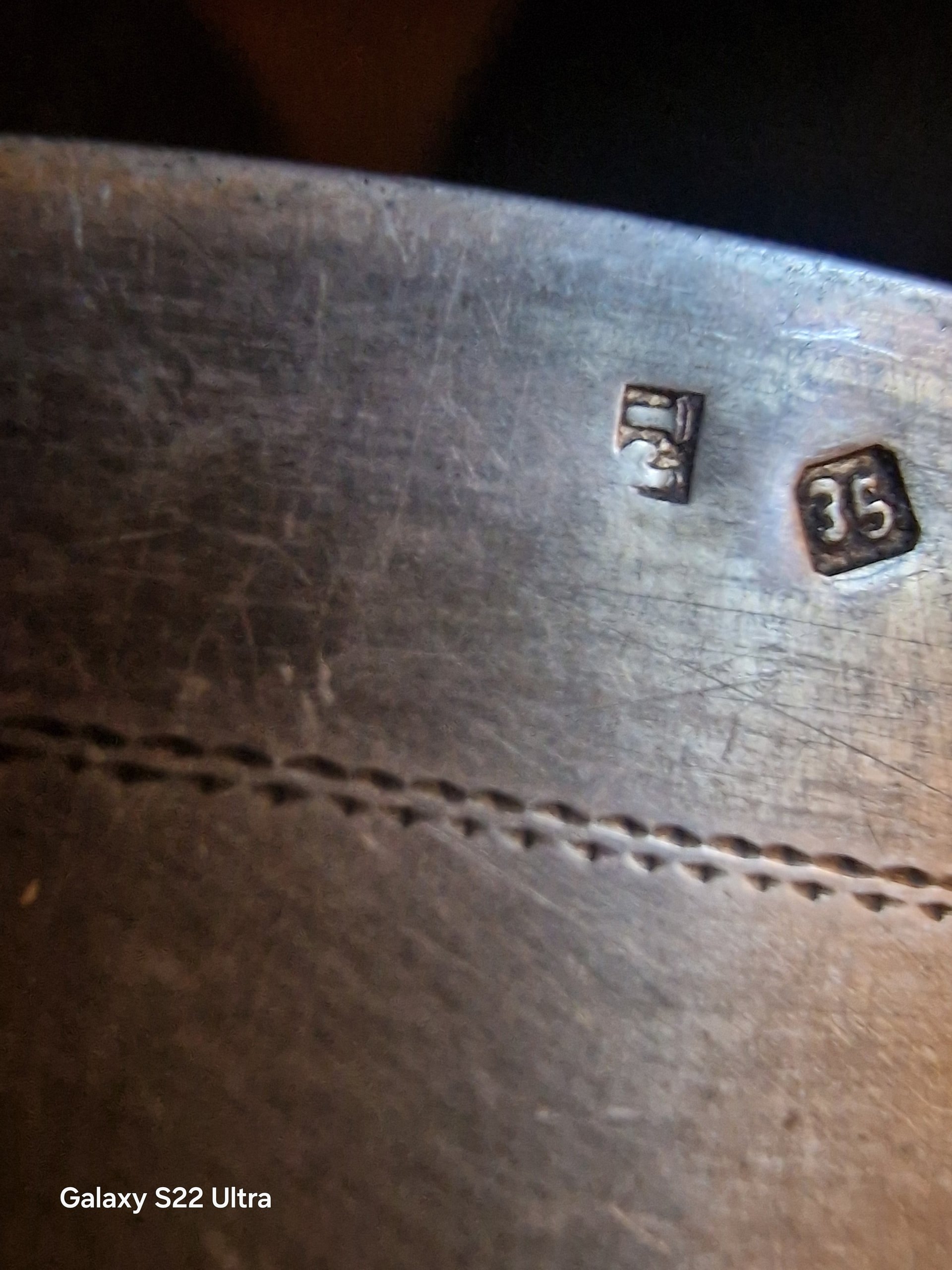
Below the crown top left by the hallmarks.
Not sure I understand you comments on the words on the medallions on the base which I have not really paid much attention to and certainly never suggested they were “makers” marks.
But well done focusing on the engraving rather than just looking at hallmarks which are quite separate. Very often the engraving will give us date clues especially if the engraving is contemporary and relates to an initial owner.
Unfortunately in this case the engraving is only contemporary in the sense it was applied when the late 19th or 20th century cup or chalice was made and is otherwise a direct copy of 15th century engraving.
But well spotted and good of you to enquire on behalf of the poster to whom my comments were addressed.
CRWW
2 Likes
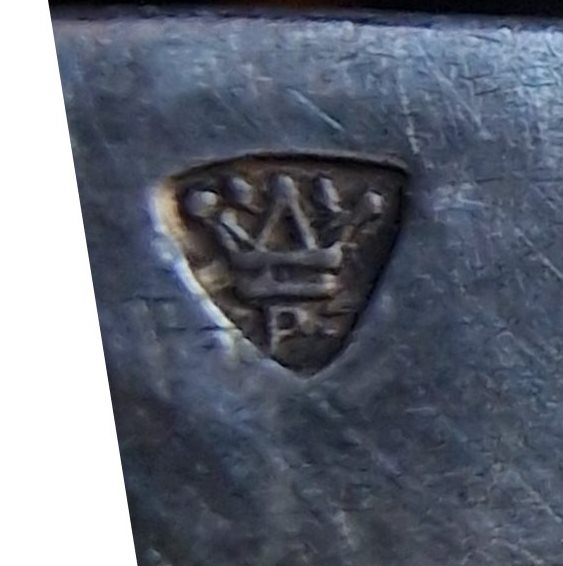
“Crowned P”.
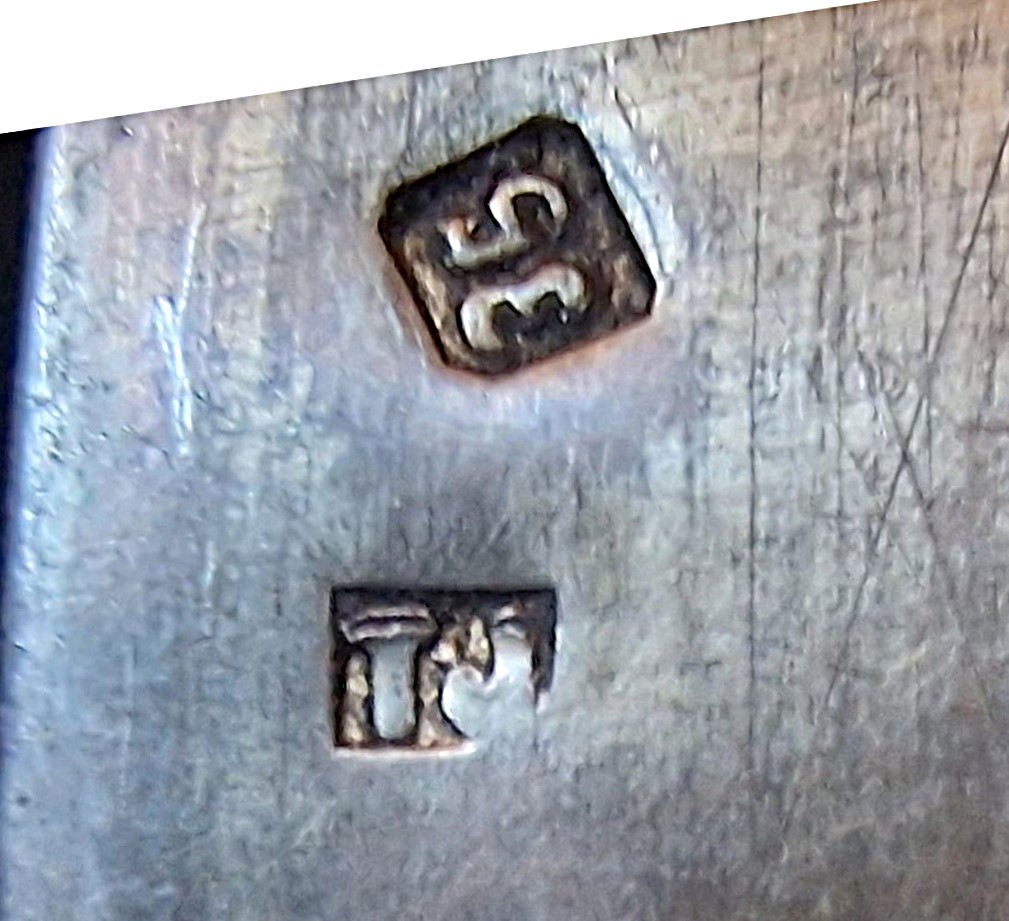
Initials “TJ”.
https://925-1000.com/forum/viewtopic.php?t=63317
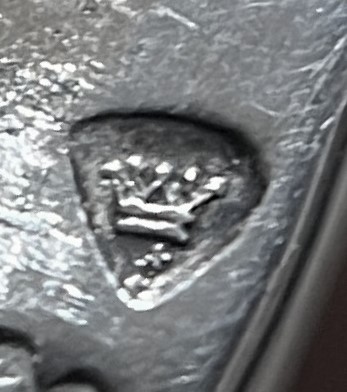
https://925-1000.com/forum/viewtopic.php?p=231791&hilit=chalice+crown#p231791
1 Like
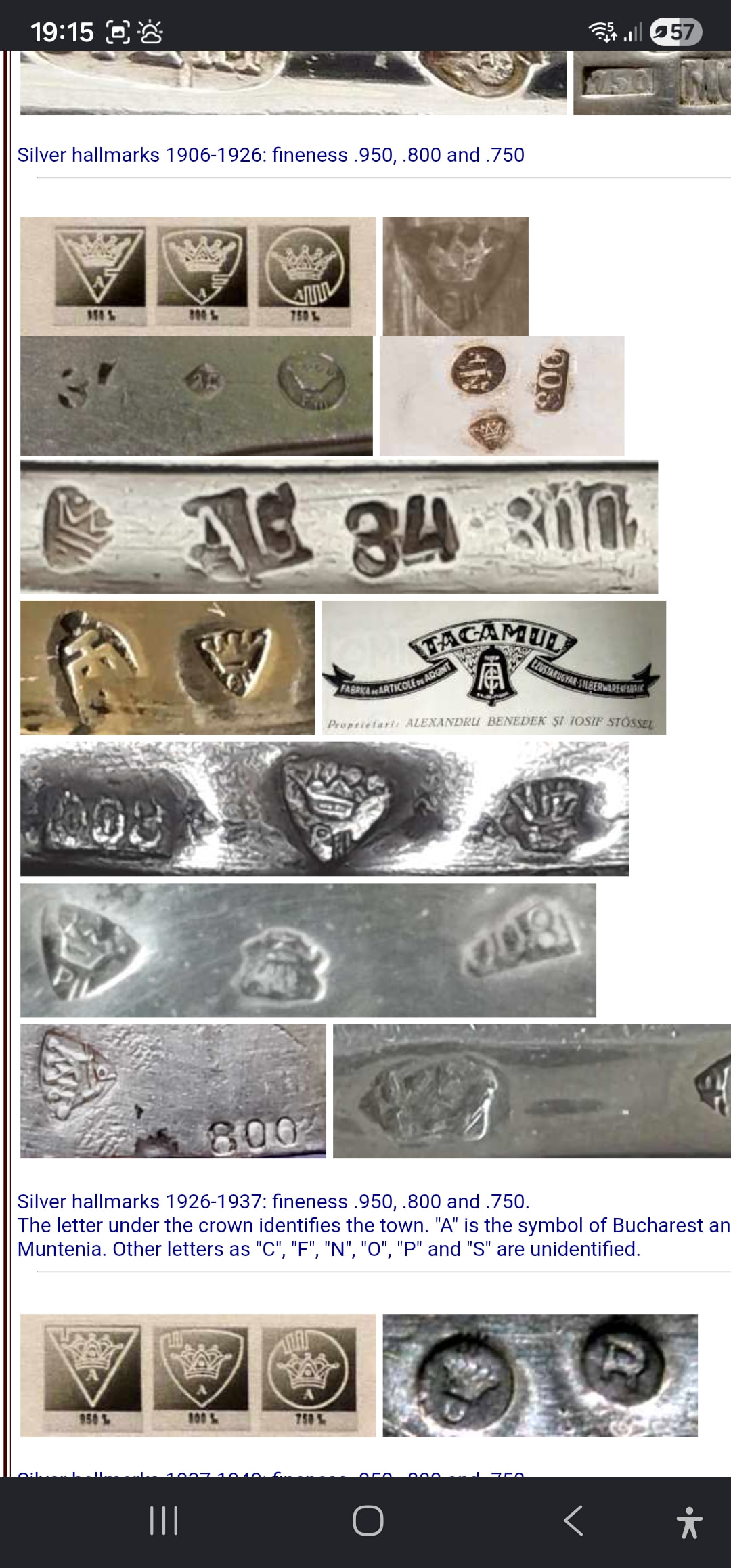
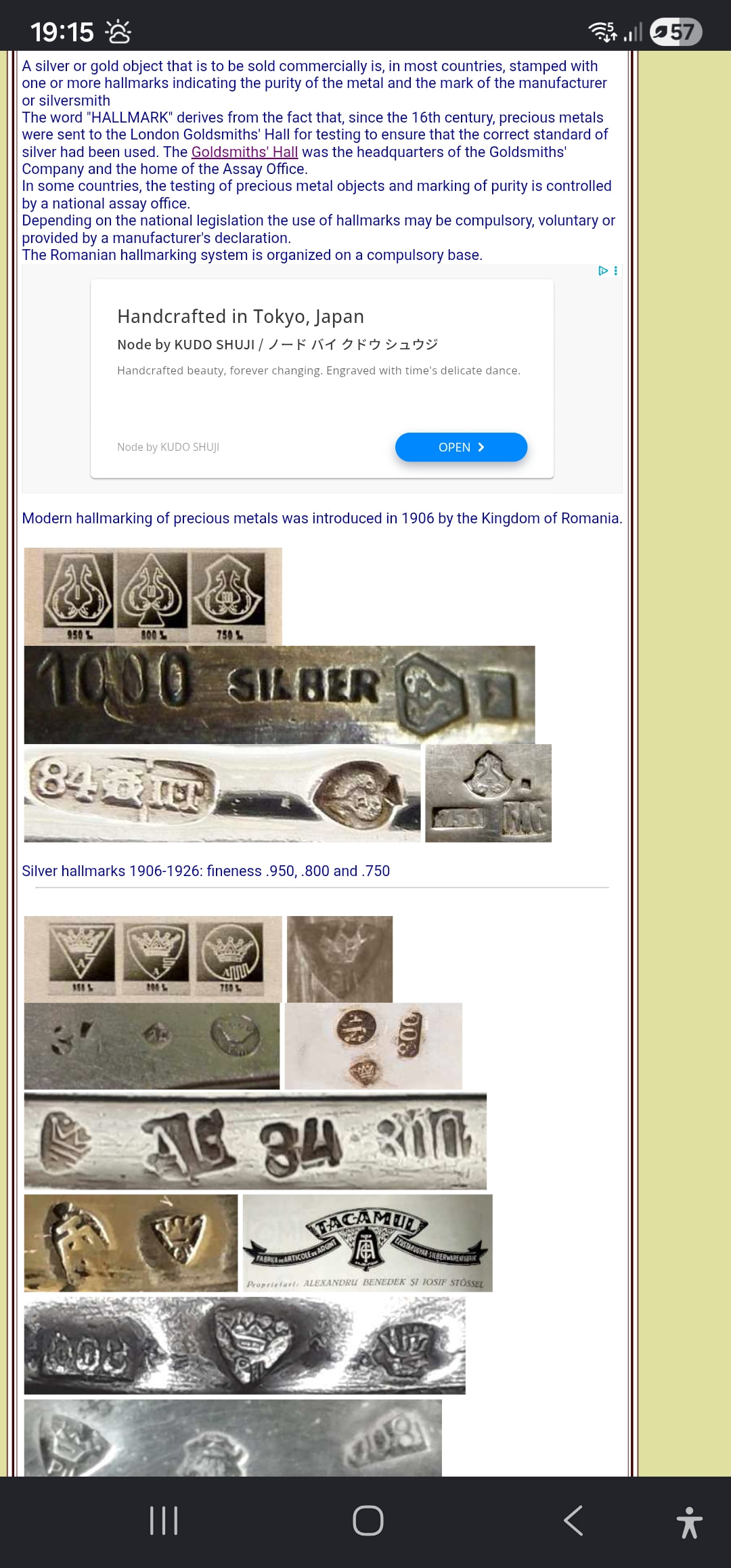
U found it, Stanila!
“The letter under the crown identifies the town. “A” is the symbol of Bucharest and “L” of Muntenia. Other letters as “C”, “F”, “N”, “O”, “P” and “S” are unidentified.” We’re looking for “P”… And “TJ” maker or manufacture.
https://www.925-1000.com/forum/viewtopic.php?t=34902
1 Like
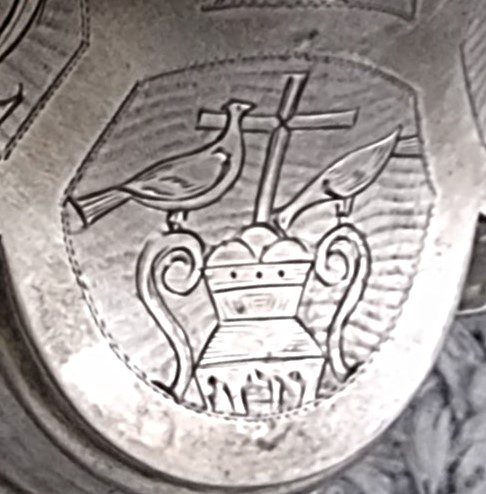
Religious motif: In the center of the shield is a vessel with two handles, from which a cross grows. Animal symbolism: On either side of the cross are birds, often interpreted as doves symbolizing peace or the Holy Spirit.

VS


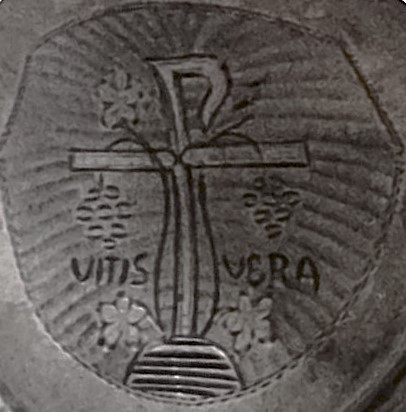
Inscription: On both sides of the cross is the Latin inscription “VITIS VERA,” meaning “True Vine.” Symbolism: The graphic depicts a cross connected to a vine and grapes, which is a direct reference to the biblical metaphor of Jesus as the true vine. Graphic element: At the top is a stylized crosier or letter resembling a chrismation, which may suggest a connection with a bishop or ecclesiastical authority.
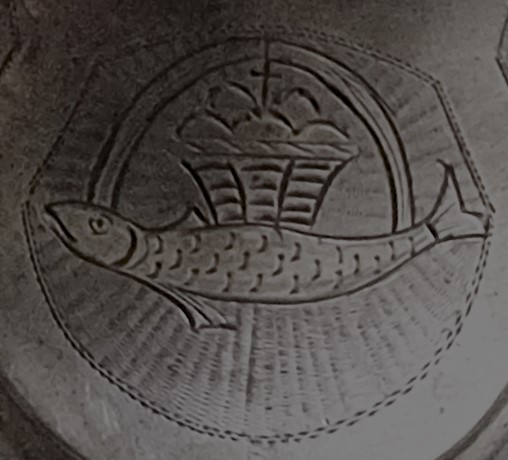
Fish (ICHTHYS): One of the oldest symbols of Christianity, representing Jesus Christ. Basket of Bread: Symbolizes the miracle of the multiplication of the loaves and fishes and the institution of the Eucharist.
1 Like