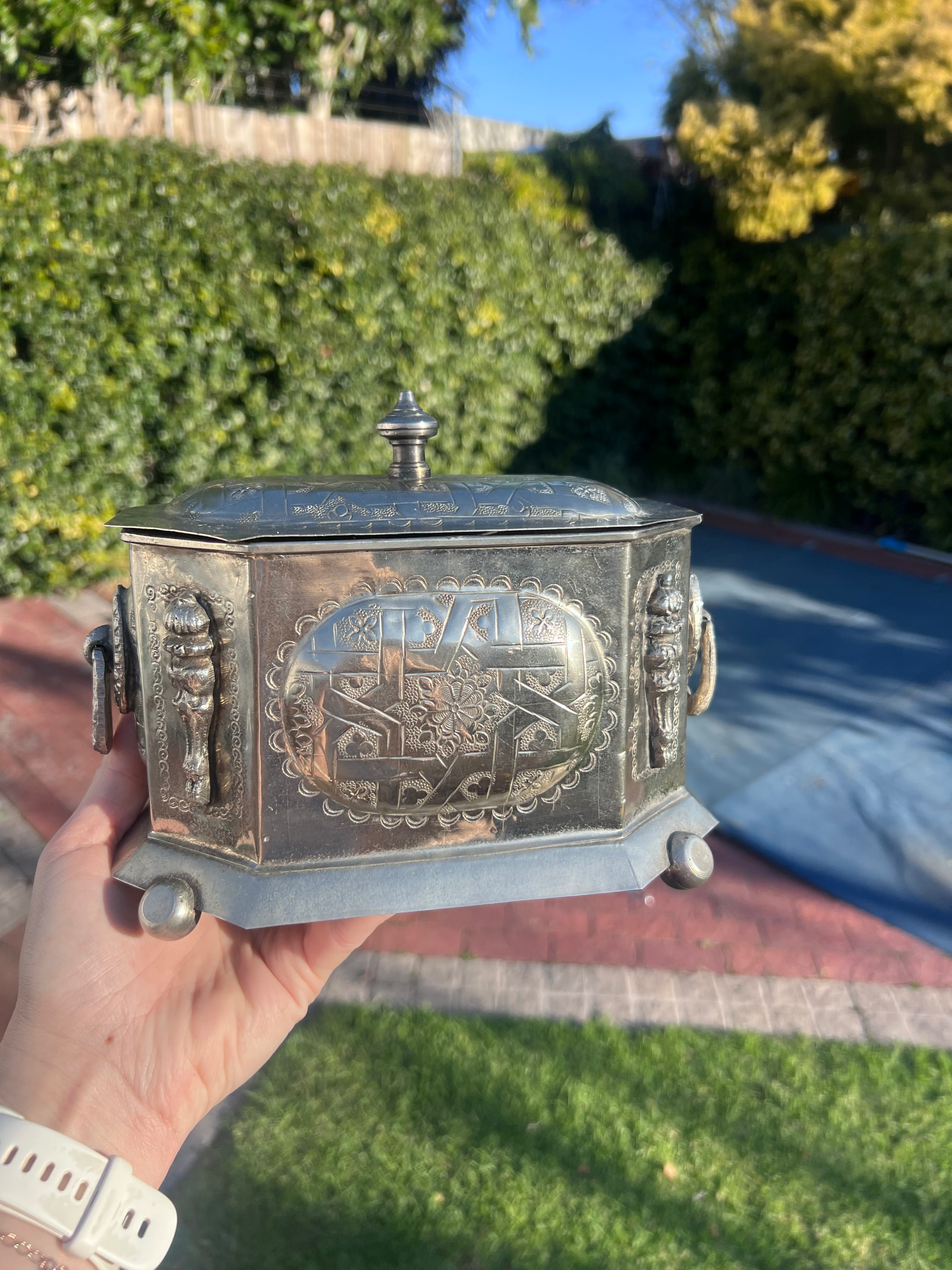
Can anyone please shed some light on this mark? I cannot seem to find anything online. Any insights would be very much appreciated.
With great thanks,
Linds
Can anyone please shed some light on this mark? I cannot seem to find anything online. Any insights would be very much appreciated.
With great thanks,
Linds
Good day. Thanks for the insights, I had come to the same conclusion about the object. My question was specifically regarding the mark. I would love to know what the Arabic translates to, or what the stamp may symbolise.
A Moroccan hallmark used to mark silver products, in this case coming from the historic craft centre of Fez.
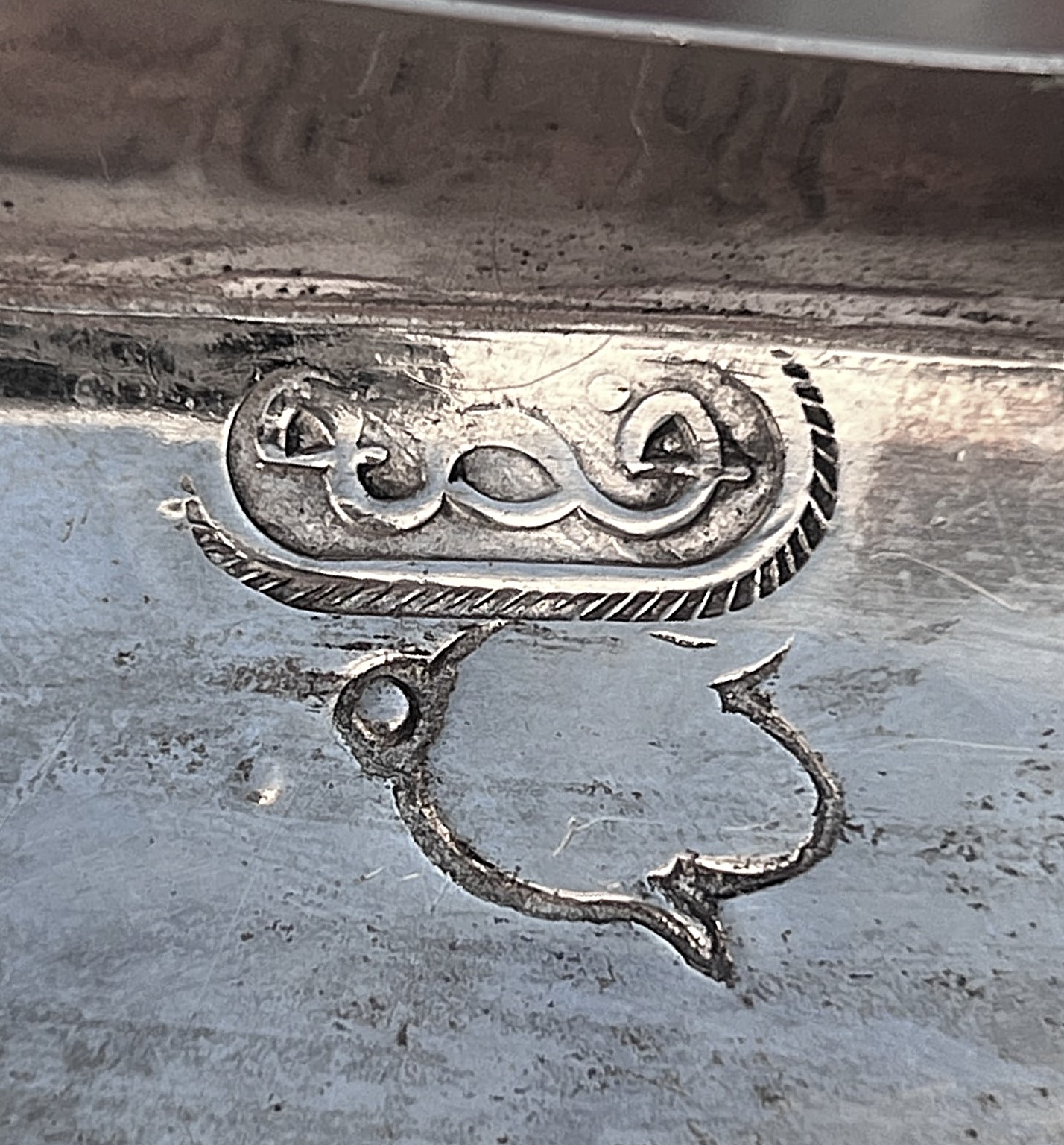
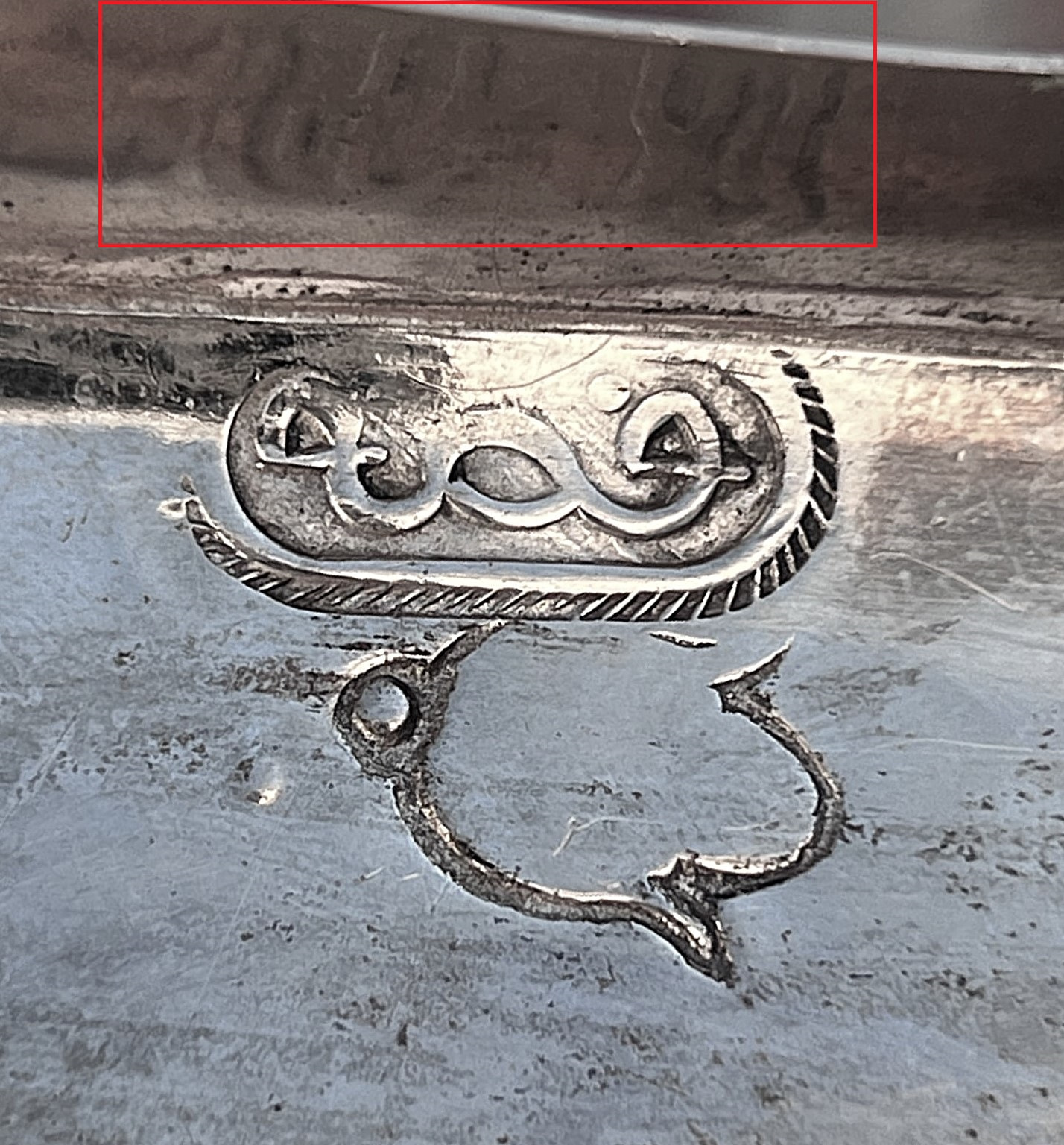
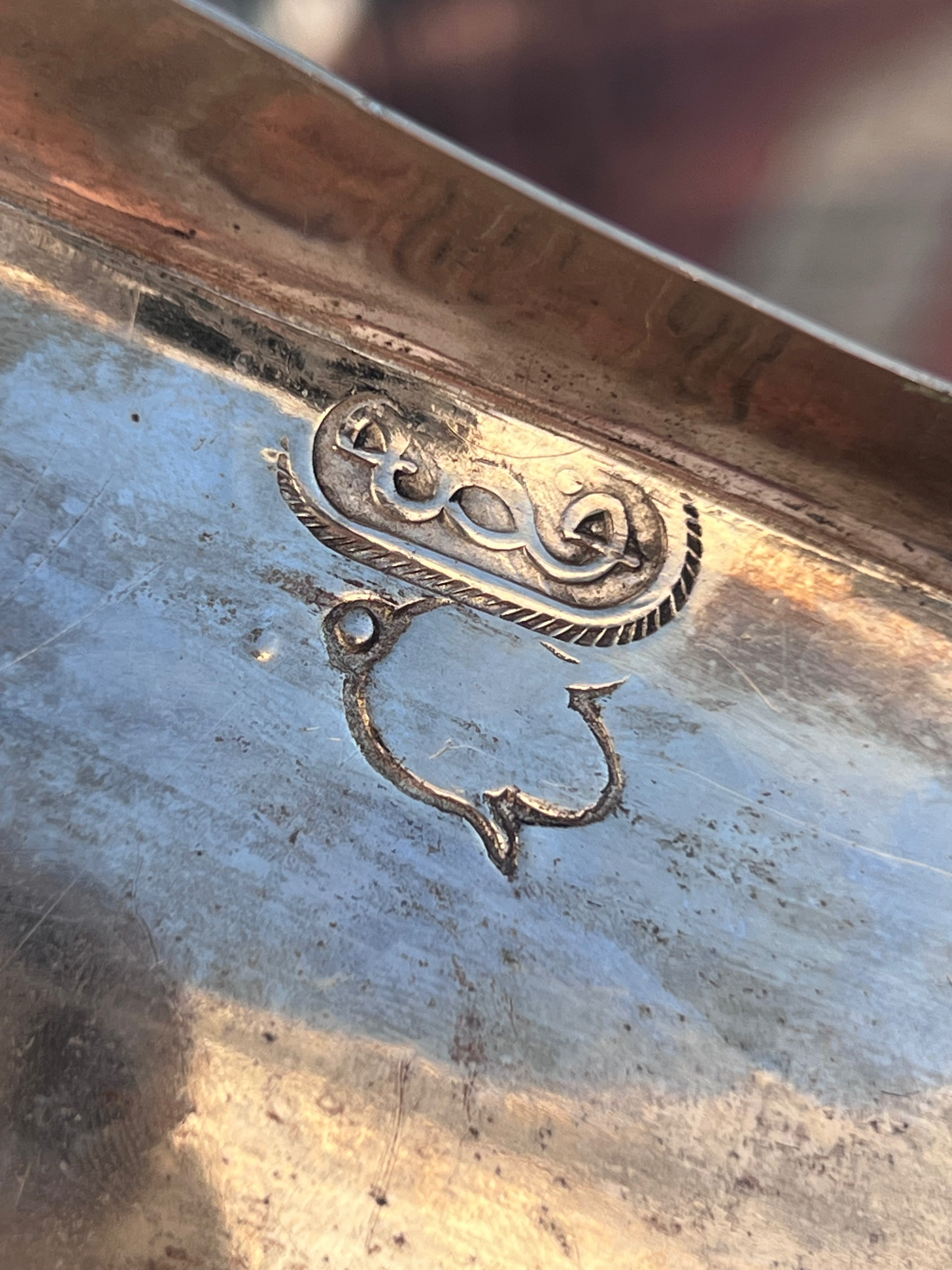
Top Stamp: Depicts a decorative cartouche surrounded by a distinctive, crosshatched border (“string”). Inside, there’s an inscription in Arabic. The bottom word is فضة (fidda), meaning simply “silver.” The entire inscription is a traditional craftsman’s inscription (often meaning “pure silver” or including the name of the workshop/city of Fes).
Thanks - fascinating!
Two questions
Is it normal practice to stamp it ‘silver’ if it’s silver plated?
What indicates the city of Fes in the stamp?
Cheers
Traditional Moroccan silver (fidda) from Fez often bears Arabic marks (e.g. the inscription فاس for Fez or phrases such as “fine silver”) or remains unmarked, as hallmarking in the local artisan souks is often a choice of the maker, not a requirement.
My bad - it’s pure silver. Sorry.
I really appreciate your insights. Thank you very much!
Just the reflection unfortunately. Got excited for a second there to do some more digging!
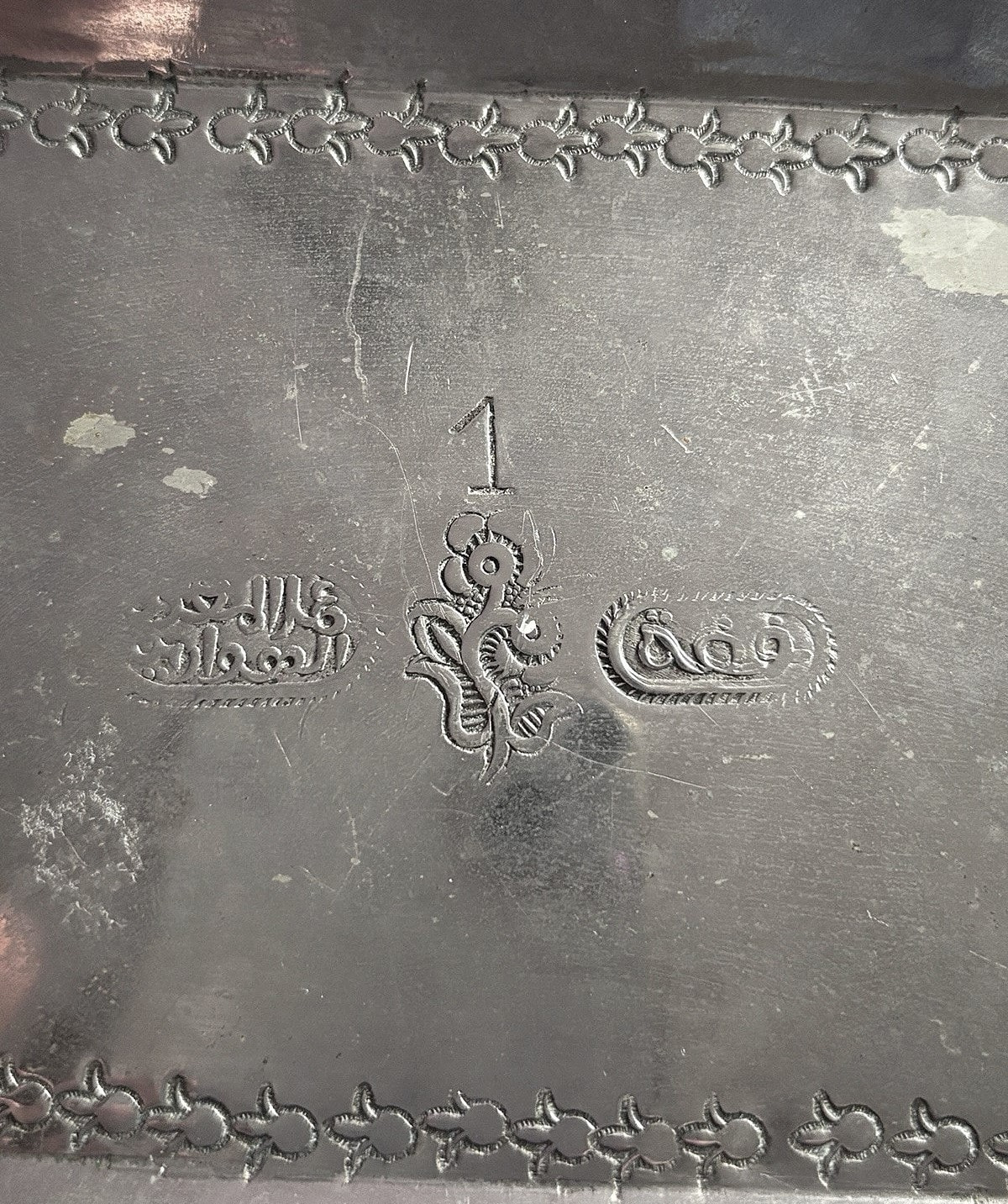
Fab - I note the mark on the right. What is this? So curious!

"… word is فضة (fidda), meaning simply “silver.”
Any further knowledge on the object, perhaps what it is or what the other stamps mean?
The stamp on the right is identical. It may help with dating mine or finding out who made it.
Flower/Bell Motif): this is the official Moroccan guarantee mark (often interpreted as a stylized flower or a traditional pendant/amulet) used by assay offices in Morocco to confirm the authenticity and quality of the bullion.
Hi again. Can you tell me more about this piece or send me a link to it to learn more? Thanks!
Originally you had asked Bart “…My question was specifically regarding the mark. I would love to know what the Arabic translates to, or what the stamp may symbolize?”
Now, given what seemed I thought rather useful answers to those specifics, your desire for further and better particulars is tickled.
Excellent!
I note there are numerous similar boxes on offer on various sites including Ebay and none of the sellers seem to delve too deeply into the history of Moroccan silversmithing generally or these jewel boxes in particular. Is that what you’d like to do?
Much of my mis-spent youth was occupied wandering around markets inside the casbahs.
Silver was, is still, a sacred symbol of a Berber bride’s personal wealth, a portable financial safety net, and a powerful spiritual shield against the evil eye. Heavy silver pieces—such as fibulae, headdresses, and cuffs—form a vital part of the traditional dowry and mark a woman’s transition into adulthood and marriage. These boxes were miniatures of the larger chests built to contain and transport such wealth.
I note there are numerous websites where you can get an idea of Berber life and history, but if you are prepared to, a trip to North Africa will be far more helpful. Today the place has air conditioned hotels and refrigeration.
In my day it was greenish meat and a hot tent packed on to the roof of an Austin Seven that thought oil was a fuel as well as a lubricant.. My grandson is currently deluging me with very welcome pictures and questions while he is there.
Anyway this forum is happy to help but its “ink-stained wretches” would appreciate some specifics, please
CRWW
Dear CRWW,
I thoroughly enjoyed reading your comment. Absolutely fascinating. Thank you!
What a wonderfuI treasure trove of Moroccan memories you must have. I do not believe that to be misspent at all but a privilege many would wish to have (myself included). I am sure you find yourself in a daydream quite often. I hope when that happens you smell it, taste it and feel it like it was yesterday - though I am sure your son’s updates are bringing back many vivid memories, too!
Morocco has been number two on my travel bucket list for many years now … minus the green meat, yikes!
I am indeed completely ignorant about the history of North African silver. My rudimentary research on my piece did point me towards it being a Moroccan casket often gifted to brides, but I battled to find much more online and definitely need to educate myself more on the subject.
What a beautiful tradition and thank you for sharing. How I long to time travel and see who this piece was originally commissioned for.
I hadn’t been able to find other pieces online with similar stamps, so kudos to Bartholomew for his digging. I hoped knowing more about that specific piece may have unlocked more clues to my piece’s maker, or area or date of origin.
I am truly so curious now not only about the history of silversmiths in Morocco but about Berber life, too.
“Ink-stained wretches” tickled me!
Thanks again for your input. So appreciated!
Right now the place is hosting FIFA President Gianni Infantino who has gathered senior soccer executives and management board members in Rabat, Morocco, for an emergency meeting. The high-stakes gathering follows intense backlash and the sudden withdrawal of a controversial $4.2 billion commercial rights proposal to sell a 20% interest in FIFA.
It’s the part of the world that, because of the white slave trade, saw the US navy formed to combat it.
The phrase “to the shores of Tripoli” comes from the opening line of The Marines’ Hymn which serves as the official anthem of the United States Marine Corps.
“Shores of Tripoli” is the 1805 Battle of Derna during the First Barbary War, where Marines successfully captured the Berber fort in North Africa and raised the American flag on foreign soil for the first time.
The Berbers were also the people who sold the Africans of what is now Ghana and Nigeria to King James II of England and Scotland’s West Africa Trading company to supply humans to the Caribbean sugar plantations.
The Americans who also used slave labor tolerated this but when the British taxed them 4% on product they needed or sold including sugar and tea, they had a revolution which the British lost and sought to finance the cost of by taxing silver sixpence in the pound, which is why the sovereign’s head appears from the Regency through Victorian era to show it was paid.
CRWW
“Ink-stained wretches” is a phrase polymath Sam Johnson, the inventor of the dictionary came up with to describe the fourth estate.
Newsmen have rather gleefullly embraced the idiom.
Indeed there is an organization using the tagline to advocate for good journalism in a world where wives of NYT writers are accosted in their own homes by Trump’s DOJ department with subpoenas to explain why that newspaper is writing about the 400 million dollar plane gift from the Saudis which is apparently unsafe for purpose.
CRWW
Bonjour
Pour savoir cette boite portant la marque " Le Cheval " ainsi qu’un d’autre marquage est elle en argent ou en argent massif ?
Car je viens d’hériter d’une collection de théière orientale et il y a plusieurs théière portant ce même dessin d’un cheval avec parfois l’inscription 1 à côté.
Je pensais que le 1 pouvait signifier la garantie d’un métal argent de premier titre . Mais malgrés mes recherches je ne trouve aucune certitude à ce sujet .
Donc , j’ai besoin de connaître votre retour d’expérience pour savoir .
Merci d’avance !