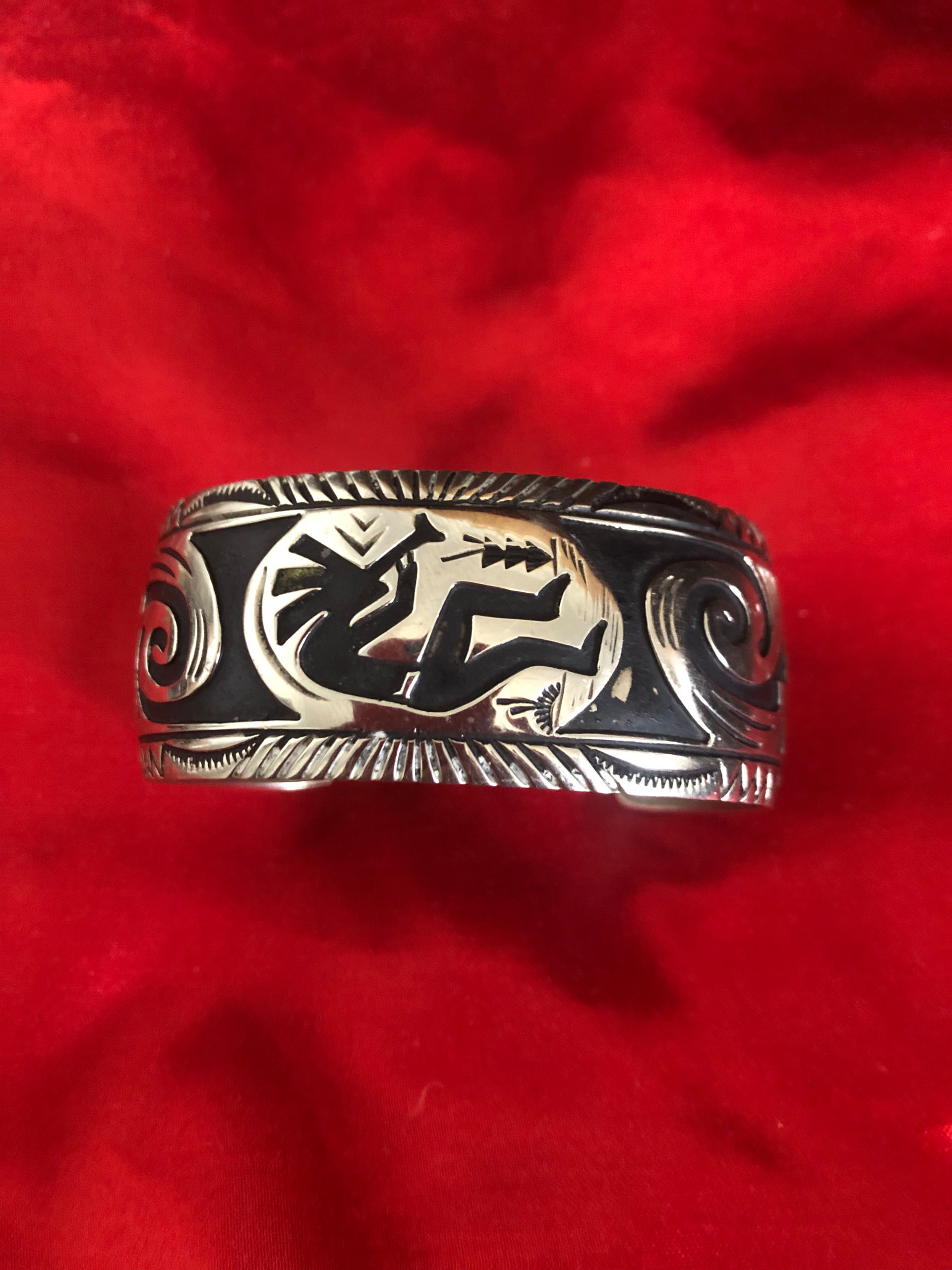
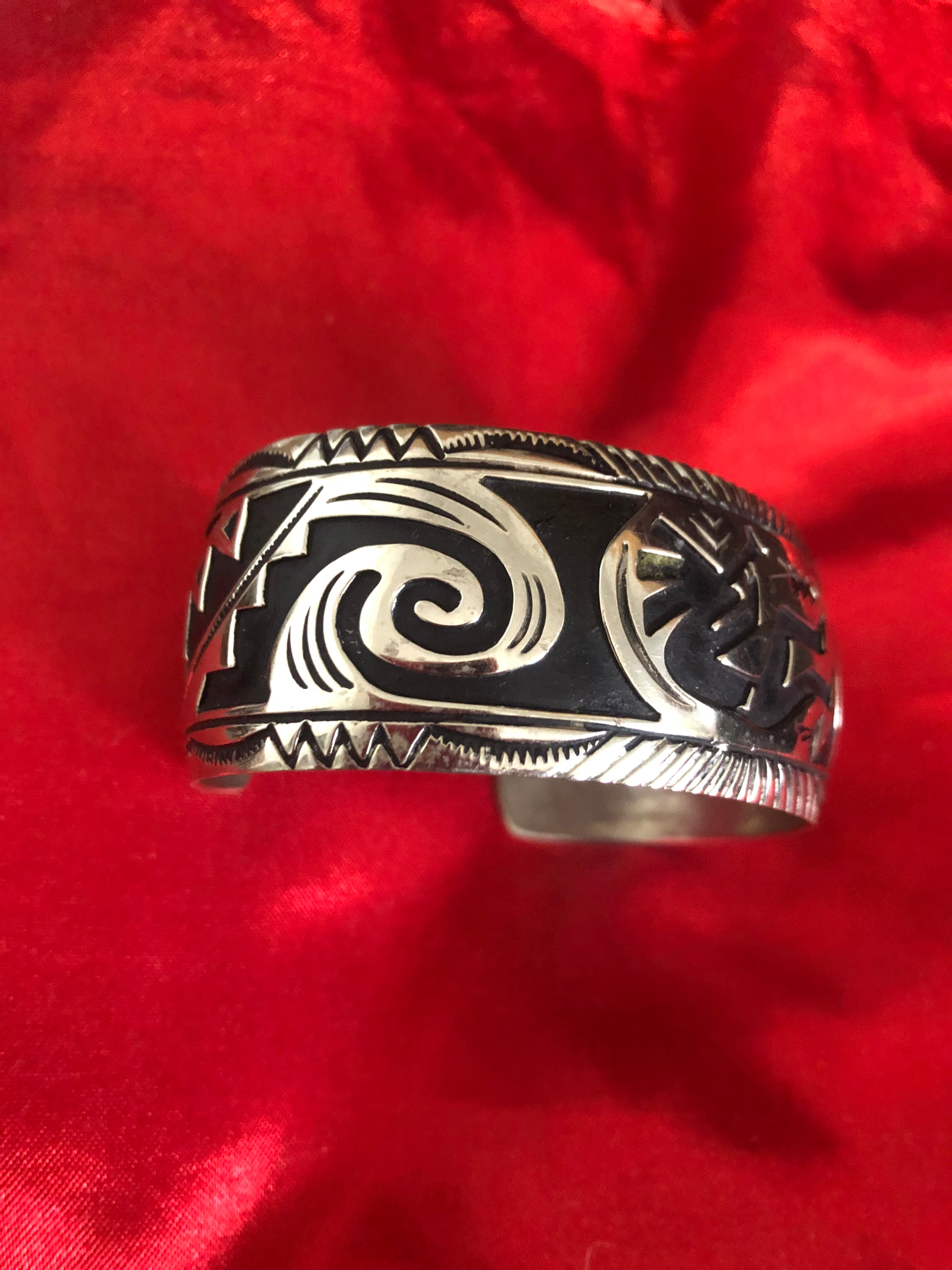
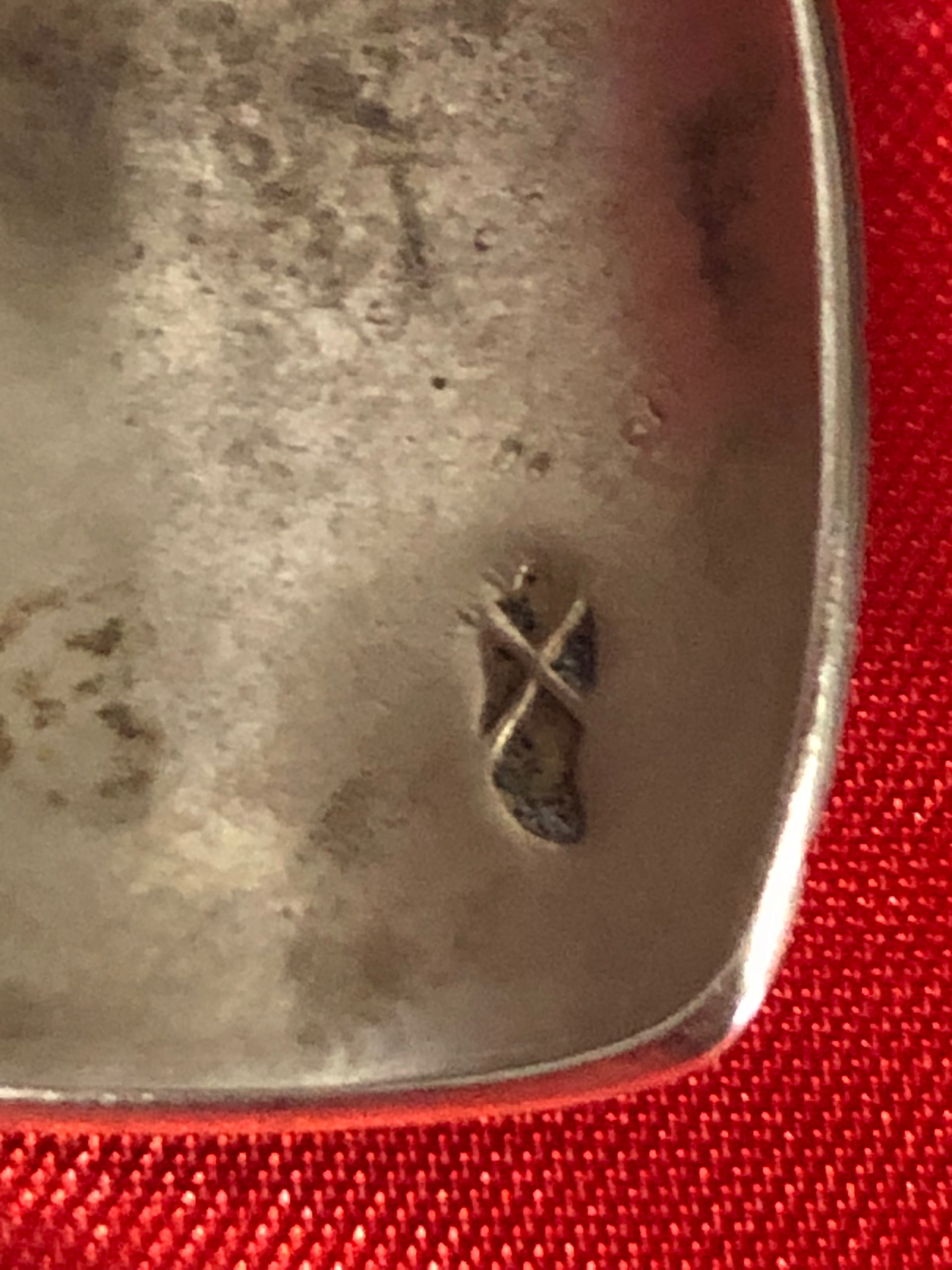
This is a nicely done bracelet, I have tried to source who the Maker is, if anyone might have a lead I would appreciate it. The Kachina seems probable Southwest American. Thank You! Susan
2 Likes
Thank You Bartholomew!
3 Likes
U welcome, Susan!
However, finding the creator (artist, craftsman, jeweler) will be difficult, if not impossible. This doesn’t change the fact that you are the happy owner of a small work of art made by human hands.
2 Likes
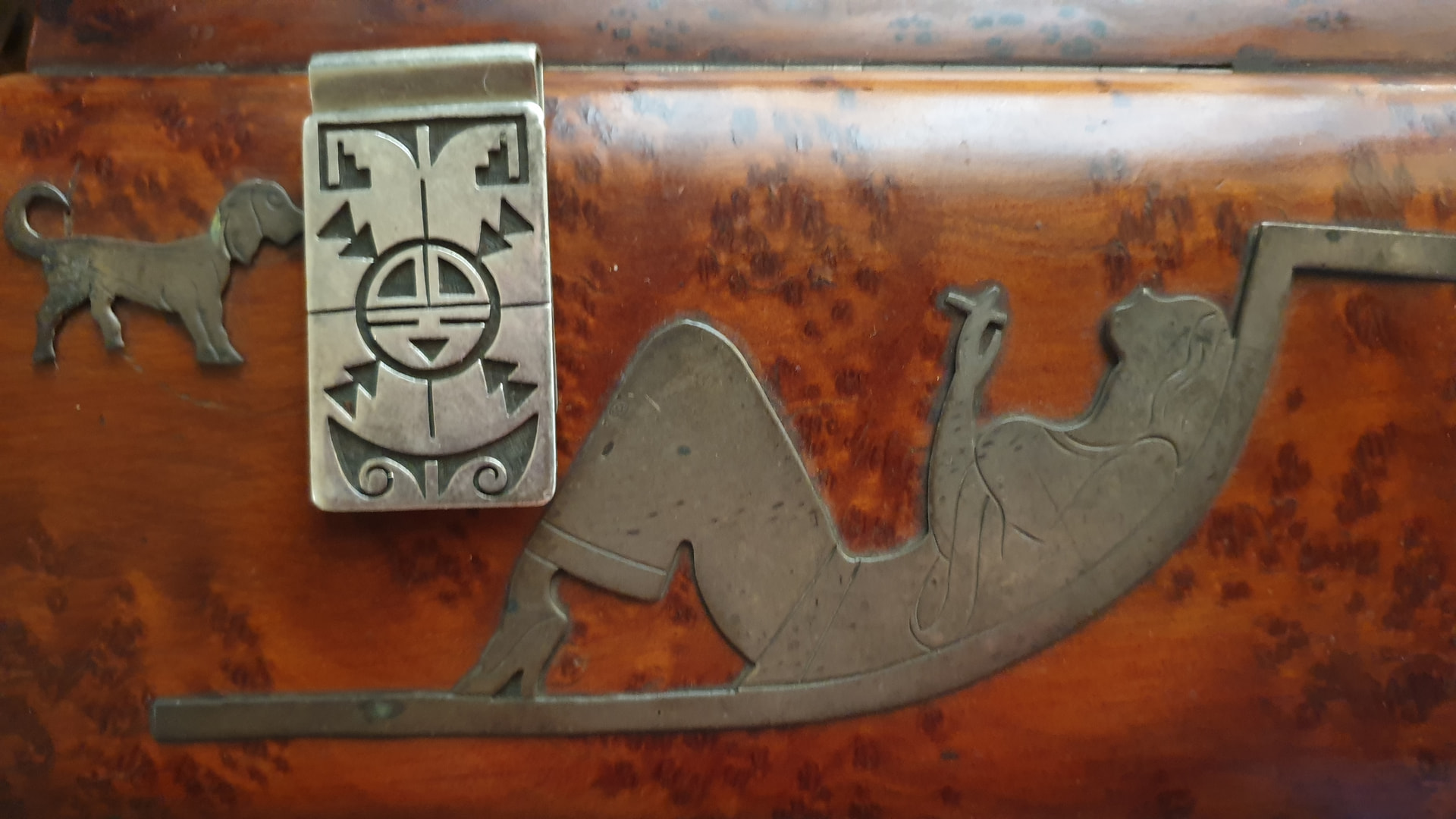
The very useful research done by Bart leaves open the question of who retailed it, who made it and what is it made of.
The Univesity of Arizona reminds us “….around 1960, brothers Wayne and Emory Sekaquaptewa of Hotvela (Hotevilla), on Third Mesa, both World War II veterans, established Hopi Enterprises in Scottsdale, Arizona. They had learned silver work from Hopi jeweler Harry Sakyesva, who was also living in the Phoenix area. Hopi Enterprises hired Hopi smiths to make jewelry, which they sold through commissions from local businesses and other organizations. In 1962, the brothers moved the operation to the Hopi village of Kiqötsmovi (Kykotsmovi; “New Oraibi”), on Third Mesa, and renamed the business Hopicrafts. They opened a sales room and workshop on Second Mesa in 1963. The business closed in 1983.”
The artwork itself is apparently the subject of some controversy concerning the hump backed flute player depicted here:
Richard Rogers, Anasazi State Park in Boulder, Utah, “presented a year-long exhibit, created with help from members of the Hopi Flute clan, focused on correcting the misidentification of flute players as Kokopelli.3” Most of the contemporary representations of the Kokopelli “are based on the stick-figure image of flute players from Hohokam ceramics,” which is only “marginally related to Kokopelli katsinas or the prehistoric flute players seen in rock art.”4 In simpler terms, even though most people seem to believe that the ubiquitous ‘Southwestern’ flute player is called the Kokopelli due to its connection to the Hopi Katsina Kokopölö, this is not the case.” Shannon Burke Thesis referencing:
| Richard A Rogers, Petroglyphs, Pictographs, and Projections: Native American Rock Art in the Contemporary Cultural Landscape, (Salt Lake City: University of Utah Press, 2018), 180. |
You don’t say if your fine bracelet is sterling silver or nickel silver. In terms of the artist, it probably makes little difference as the retailer commissioned both from a stable of local artisans.
What the discussion about origin does tell us is this is a 20th century creation probably retailed in the mid sixties.
Other than the referenced material and some facebook discussion I cannot find a list of catalogue of 20th century silversmiths or decorators of silver working for this particular retailer.
What I can contribute is an incidental knowledge of similar indigenous art created in the northwest, Washington State and British Columbia, much of it Haida which is extremely well catalogued indeed an entire pavilion is dedicated to the work at Point Grey in Vancouver.
This doesn’t help with the question of the southern artists, but it does highlight the need for similar work to be done stateside.
I have no idea if anybody reading the Silver Forum has the good fortune to reside in Arizona but if they do and if they pickup this post, and should they have interest in indigenous art, then local inquiry would probably fairly quickly produce not only an answer to Susan’s question but the complete list.
I used to spend a fair amount of time in Scottsdale, but, suffering as I do from Trump Derangement Syndrome, I am giving the place a miss until the current pack of lunatics vacate what is left of the White House, despite the fact it deprives me of the chance to visit London Bridge at Lake Havasu. ( They only got it because I was able to inform Flying Phil Gaglardi, then BC Highways Minister, it wasn’t Tower Bridge but a rather pedestrian stone edifice of the late Georgian period (But that’s another story).
CRWW
3 Likes
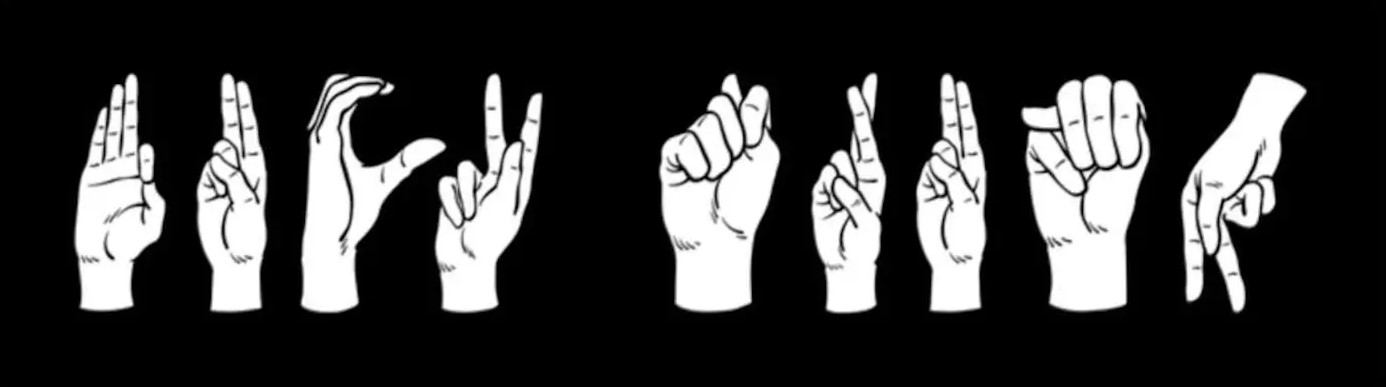

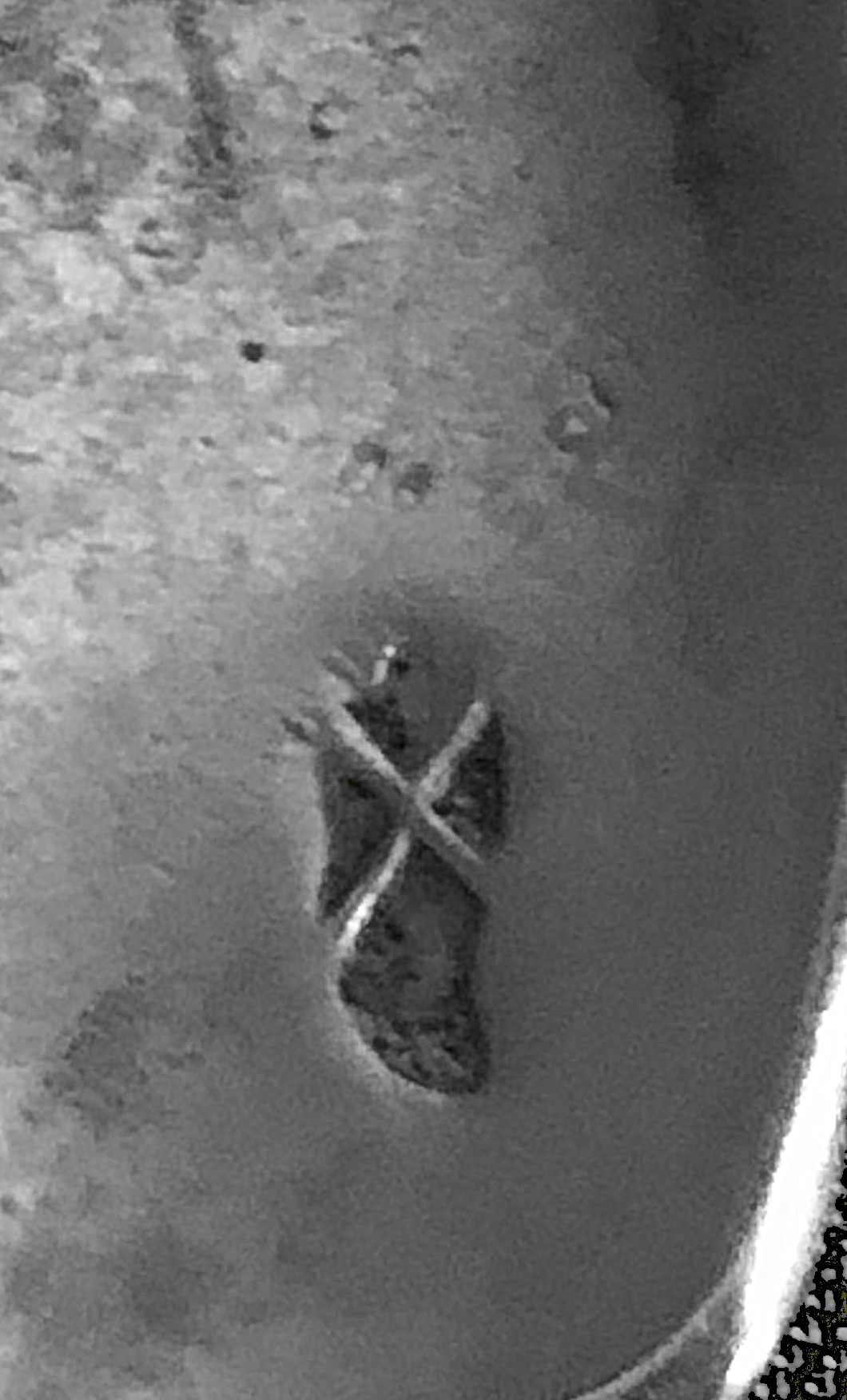
Bart has now posted a similar X’s pictograph on a website which cautions the marks listed including yours “may not be American made”. In other words copies mass-produced in other parts of the world.
Other than identifying the obvious signs any piece is synthetic — too uniform, too shiny, mass produced, wrong materials, unidentifiable mark– I would not want to comment on authenticity.
But this person probably can and if you contact them will: Masha USA 505-256-0190 [email protected] Masha Inc., 3012 Central Avenue Southeast, Albuquerque, NM 87106 United States
CRWW
2 Likes
Thank you all for sharing. The bracelet is nickel silver. I have worn it out and was complimented on it.
A vintage piece from the 60’s is a good enough of an ID for me. It is in very good condition for its age.
I value your responses. Thank you!
3 Likes