Let us know how you get on \ and what you find. My grandfather, who was born in 1869, had a small collection of stickpins usually in leather cases. Most seem to be pearl or diamond in the shapes of horseshoes or – and this is where it gets tricky-- swastikas.
The swastika is an ancient symbol meaning “good fortune” in Sanskrit, used for millennia in Eastern religions (Hinduism, Buddhism, Jainism) as a sacred emblem of well-being and divinity, and by many other ancient cultures across Eurasia.
However, as we all know, in the 20th century, the Germans appropriated it, twisting it into a symbol of hate, racism, and antisemitism, forever changing its perception in the Western world.
Today, it remains a positive religious symbol in Asia but is widely recognized as a hateful extremist symbol in the West.
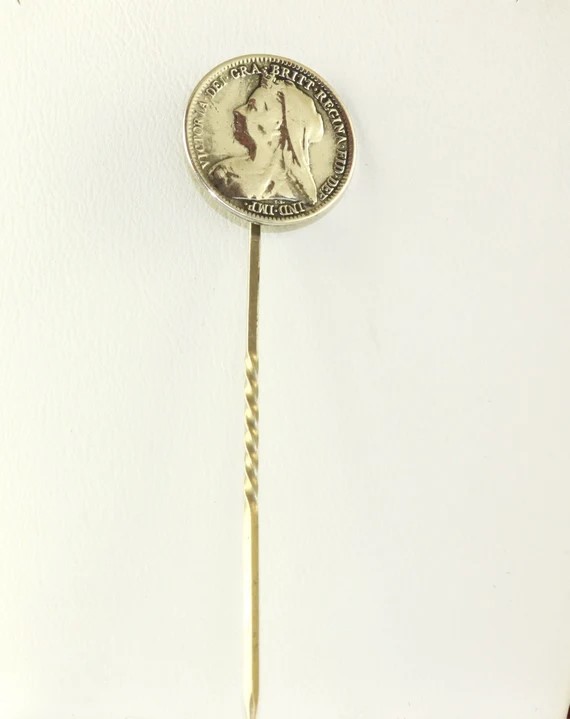
Here for instance are two stickpins with US coins on them and a swastika which sold for a small fraction of melt or collector value because of the emblem which predated Nazi involvement by decades.
There was a brief revival of stick pins in the 1970’s for wedding togs. But the bow tie quickly regained its place of eminence.
Here’s another one you could never wear today unless you were Princess Michael of Kent heading to Queen Elizabeth’s annual pre-Christmas 2017 luncheon, and meeting Meghan Markle for the first time. Her"blackamoor" brooch, a piece of jewelry widely criticized as racially insensitive due to its depictions of exoticized figures, including servants and slaves, sparked significant controversy.
Royal Apologizes for Wearing ''Racist'' Brooch to Meet Meghan Markle.
My grandfather’ collection was mostly in the late 19th century, pre-dating Hitler by decades.
CRWW