Hi
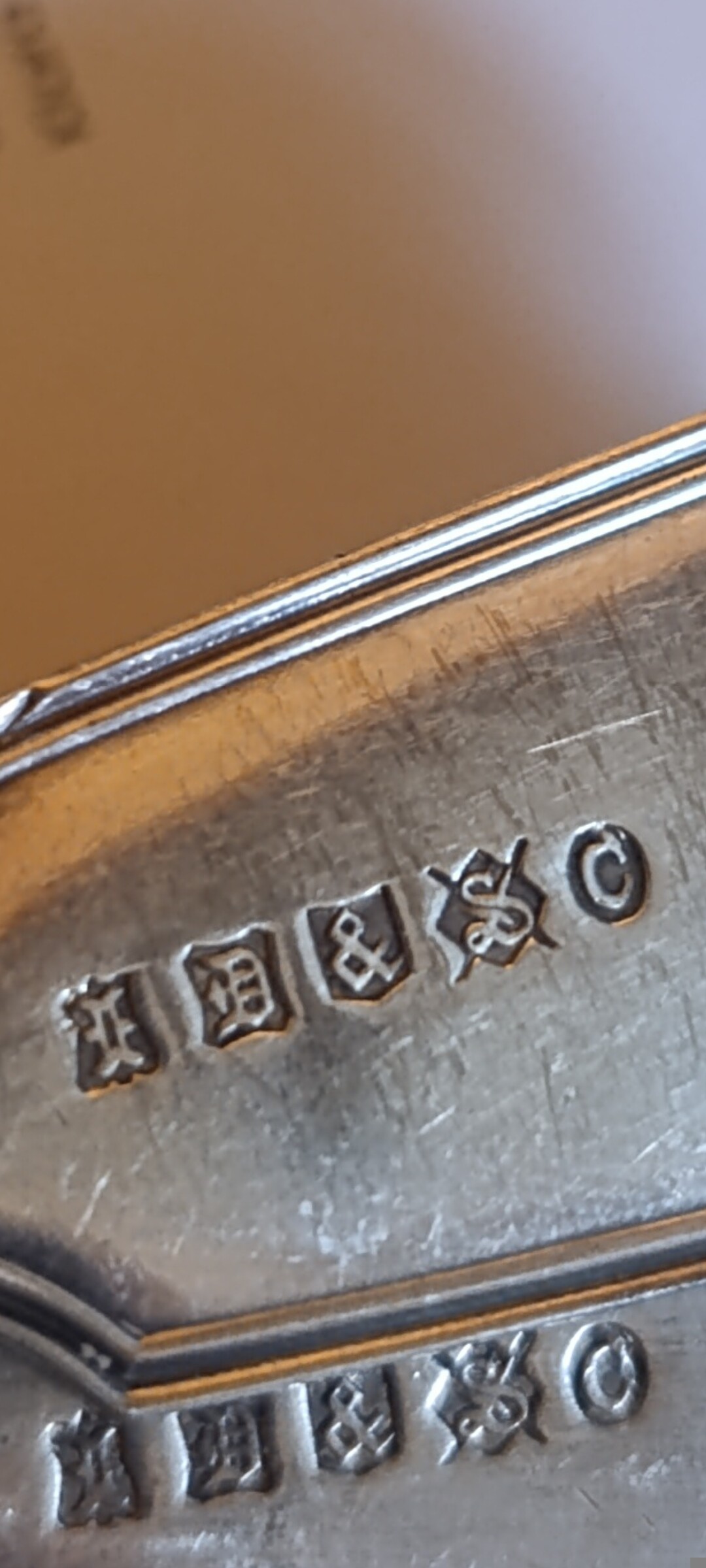
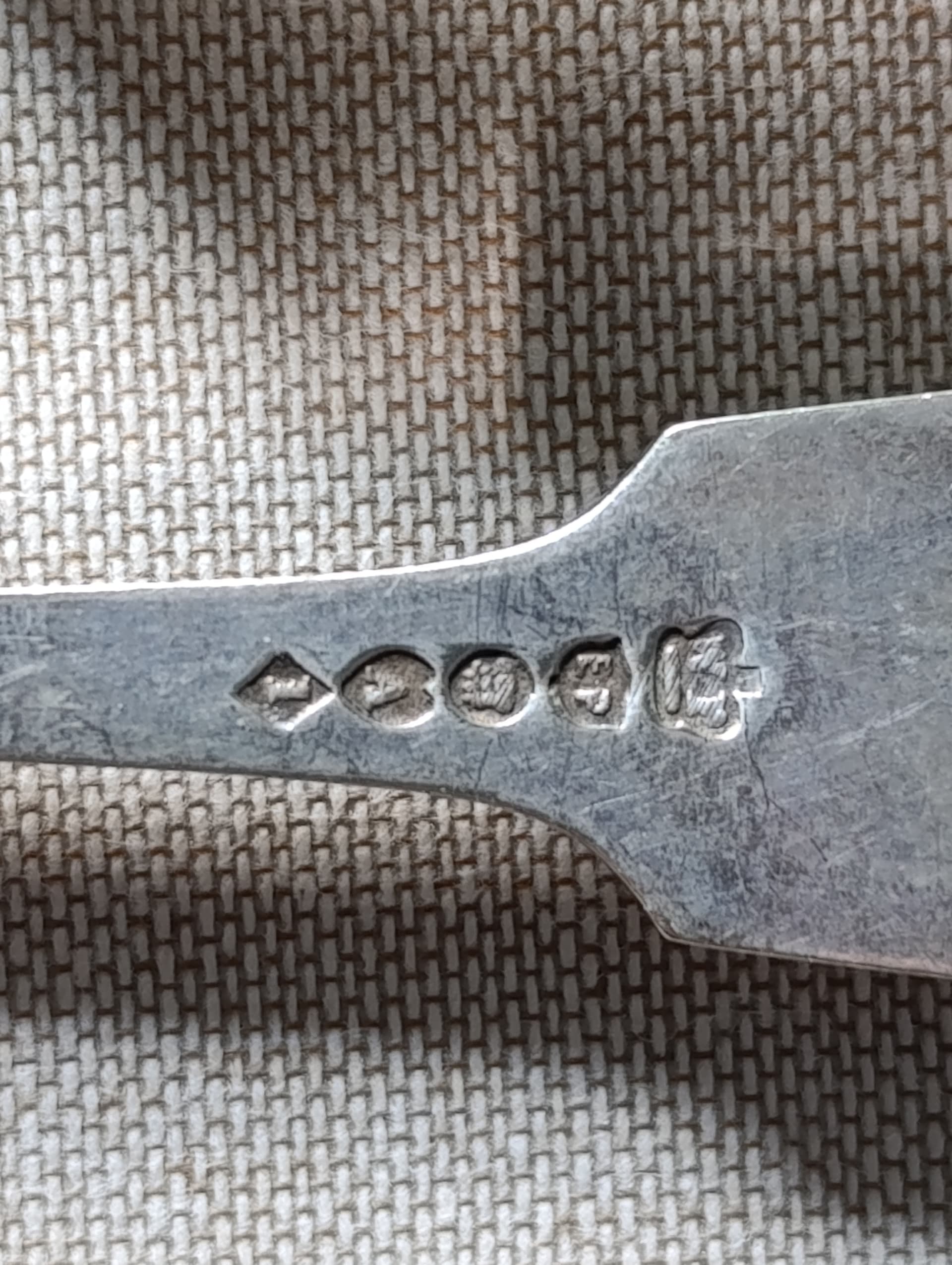
I’m struggling to find details on these marks if anyone can help please. Many thanks.

James Dixon & Sons 1835-1920
I have no explanation for the crossed out diamond mark ciontaining the "S "for Son rather than the rectangle. shown here. other than to note there is anther hand drawn cross on the example betweeenthe J and th D and that diamonds were traditionally reserved for widows marks.
The “C” may indicate the calibre of plate.
CRWW

There it is, the diamond crossed out but with “PNS” presumably standing for Plated Nickel Silver. So logically the “C” on yours might stand for Copper as in plated on Copper.
Old Sheffield plate used to be a fusion of sheet copper and sheet silver. Its flaw was malleability.
So they switched from copper to bronze and plated the bronze with a thin layer of copper and then on that the silver plate. This made the item stronger and the surface to plate smoother.
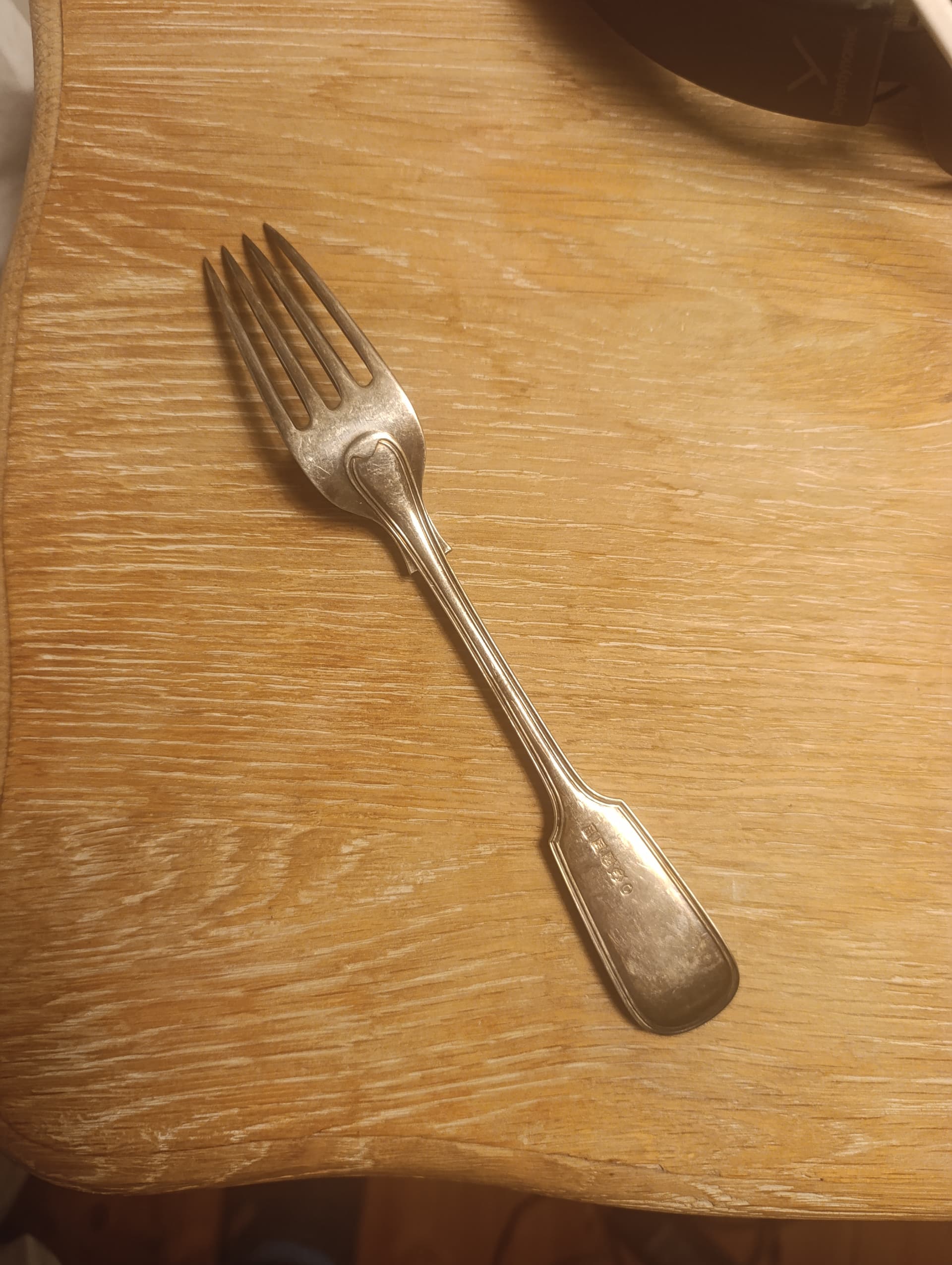
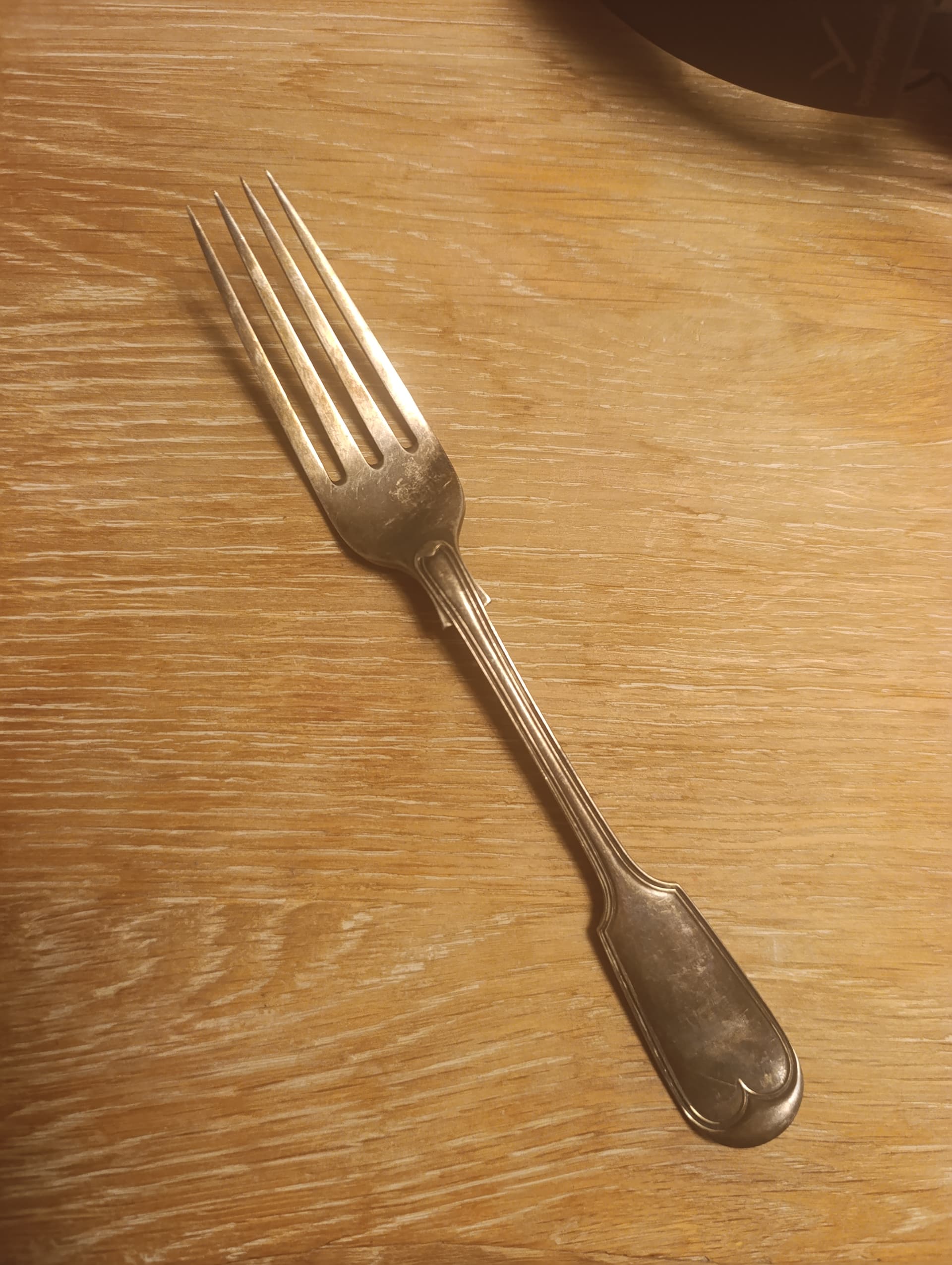
This looks like fiddle and thread silverware. Don’t break it, but gently test it for how bendable it is compared to other plate flatware you might have around. The absence of the Trumpet trademark and the “C” may indicate you have a fairly early item.
CRWW

And finally there’s your mark.
CRWW
Thanks so much Guildhall. Here are some full photos of one of the forks. Pretty heavy - I have 8 of them and they weigh 620g altogether. They seem pretty solid and inflexible. How old do you think they probably are with their pattern?
Antique ca1879 silver plated 2 dinner forks James Dixon Sheffield Fiddle pattern | eBay.
These dinner forks are presumably later than yours as they include the trumpet trademark likely on bronze/copper and seem very well priced. There’s two sizes of fork on offer, dinner and desert. The desert are priced lower than the dinner.
Also on ebay is a plain fiddle pair of forks by Dixon on bronze with the mark “2S” . Presumably meaning double dipped. Didn’t help much given its condition. The seller is asking much the same price as the six unworn dinner forks (above) so perhaps all that rubbing was also optimism – “Okay it’s not a lamp it’s a fork but if I keep rubbing something good will happen.”
CRWW
Between 1835 and 1879 because the “& Son’ is post '35 and anything after '79 has a trumpet on it.”
But I think it is earlier You’ve got no wear on the tines so not a lot of use. I am far from completely happy with my theory “c” stands for copper, it might stand for a grade of plate, or even the factory it was made in which began with a C or it might be a sort of tally mark showing where and by what process it was made.
The company is still around. They can probably give you a fairly exact date and tell you what the C stands for.
CRWW
“Our team are available to answer any questions, queries about orders or any other kind of enquiry. +44 114 279 9400”
I guess this comes under the general heading of “other kind of inquiry”. You need the archivist . Since you only have eight, you might want them to make four more for you,
The pattern is fiddle and thread – or military pattern because so many Victorian army mess sets used the same design.
You will be horrified at the quoted price and, to make yourself feel better, ask them to quote you a full set in .925.
With each sterling dinner fork weighing about two oz, that’s a hundred plus US for the raw material another $200 for the craft and you’ll have a clear idea of what excellent value your set of eight plated forks represents and how auctions selling fiddle thread sterling at scrap are places magpies like myself hang around.
CRWW
Thanks Guildhall when you put it like that you realise how much things can cost!
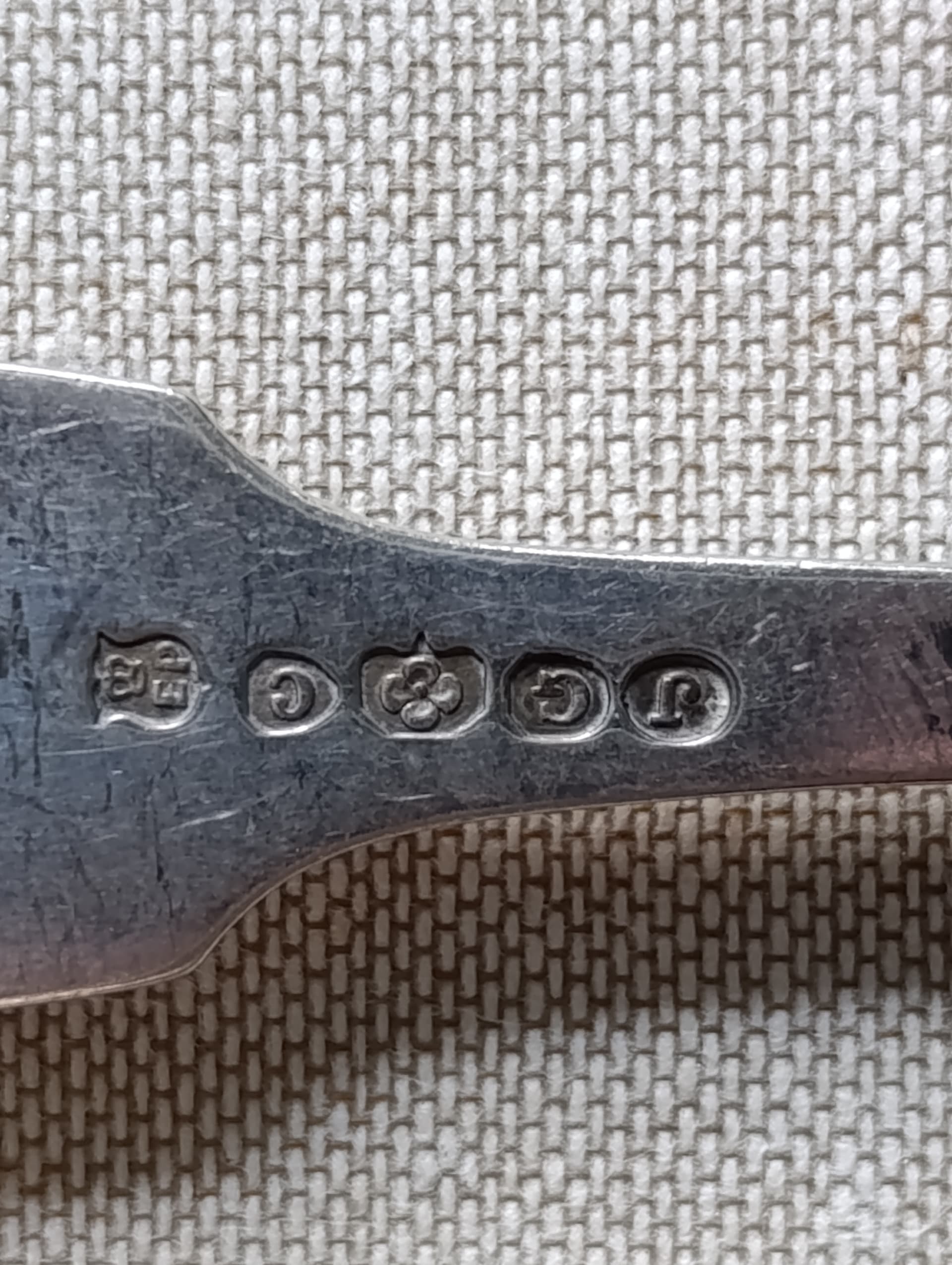
Also noticed 2 have a different hallmark of anyone can tell me more that would be good to know. Thanks.
Wow! Thank you Bartholomew that’s great.
Don’t mean to sound persnickety but we shouldn’t really be calling silver electroplaters’ marks “hallmarks”. They are simply advertising or trade marks.
Hallmarks refer only to the government/guild approved “Guild Hall marks” whose purpose is to certify metal purity; gold, silver or platinum for consumer protection against fraud.
Hall marks Information Indicates metal fineness, manufacturer, date and place of assay.
In the U.S. it’s traditional rather than legally required for silver items.
Closed plate or electroplated marks, together with nickel silver marks are all designed to look like hall marks and, given the amount of discussion this forum dedicates to them, are highly successful at that deception even 200 years or more after it started.
The legal framework governing the marking of precious metal items in the UK today is primarily the Hallmarking Act 1973 which makes it a criminal offence to offer an un-hallmarked article above a certain weight being made wholly or partly of gold, silver, platinum, or palladium in the course of trade or business.
This consumer protection, provides an independent guarantee of the precious metal content through a verified hallmark applied by an official UK Assay Office.
All articles described as being made of gold, silver, platinum, or palladium must be hallmarked if they exceed specific minimum weights.
A standard UK hallmark consists of three compulsory marks applied by one of the four remaining UK assay offices in London, Birmingham, Sheffield or Edinburgh:
Today any UK governed person or business dealing in precious metals must display a statutory notice approved by the British Hallmarking Council in a conspicuous place on their premises including online and at craft fairs. Sadly, on line, this seems to be mostly honoured in the breach.
The Act is enforced by local weights and measures authorities called Trading Standards and the British Hallmarking Council/Assay Offices. Offences, such as selling un-hallmarked items above the weight limit or counterfeiting marks, can lead to prosecution and substantial fines, up to £5,000 per non-compliant article.
Prior to 1973 different rules applied at different times and detailed discussion of this fascinating history are available elsewhere including on the guildhall sites themselves.
Hope this helps little.
CRWW