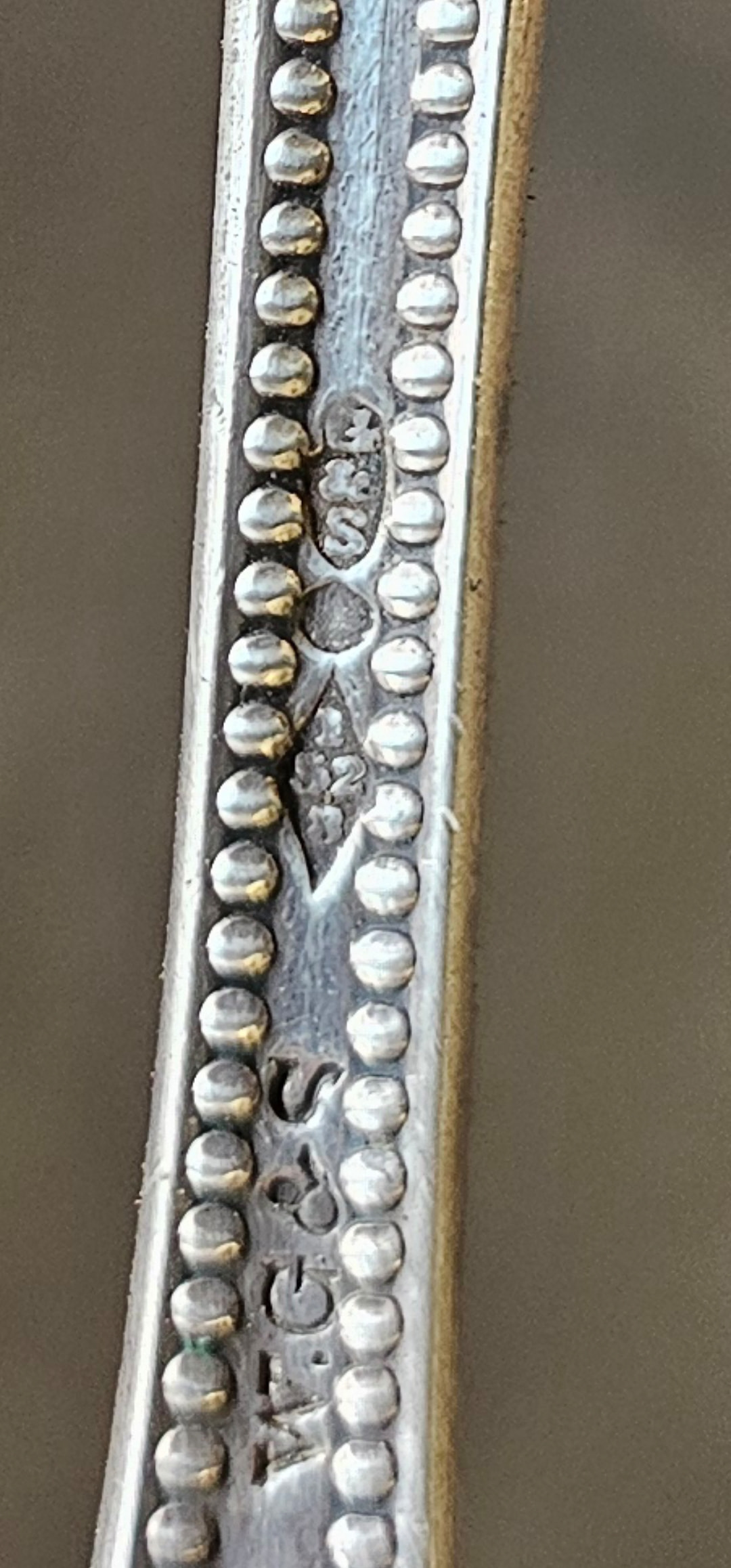
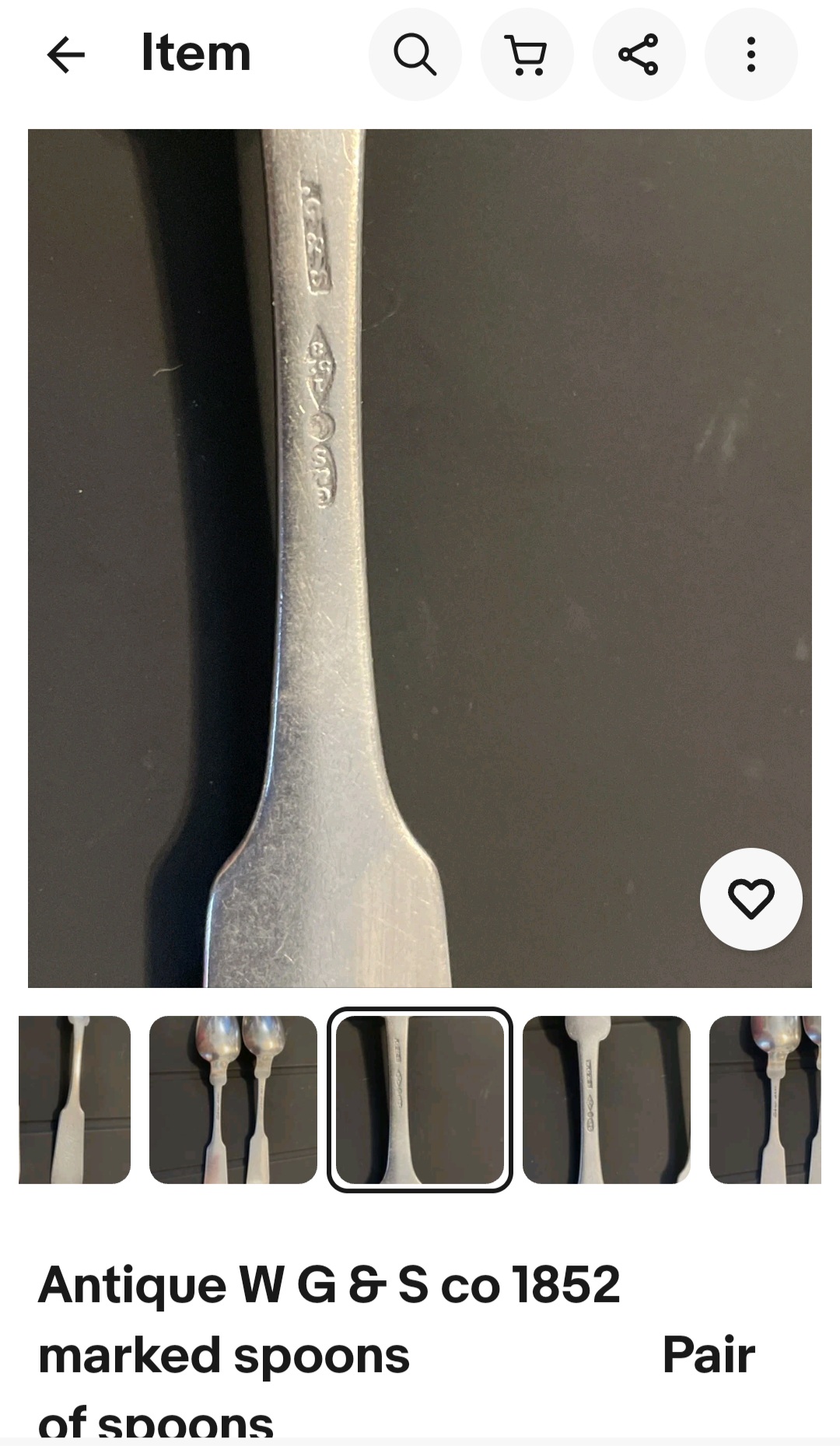
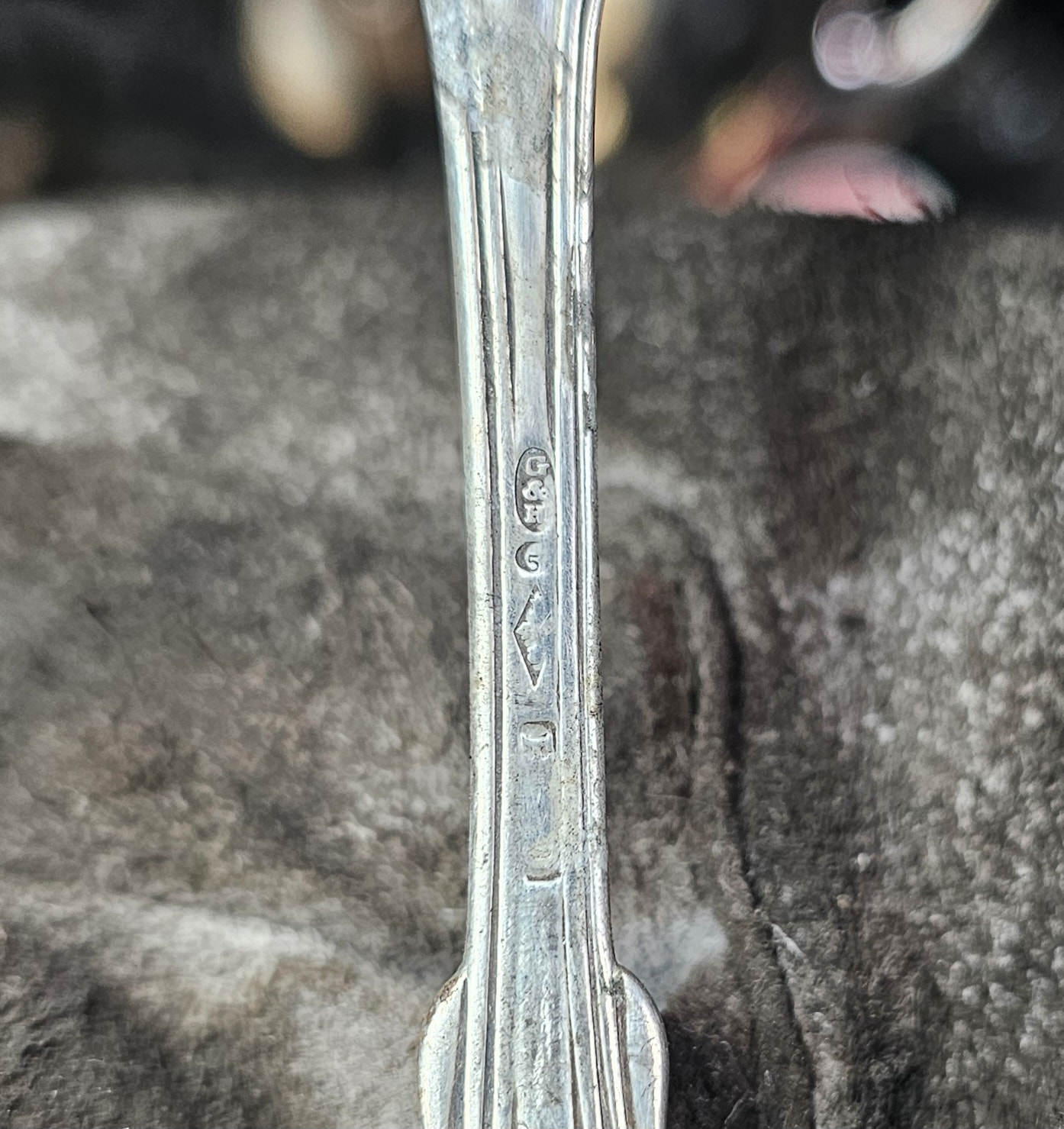
Perhaps the most interesting thing about your silver is the origin of the continuous beaded pattern on one of your exhibits.
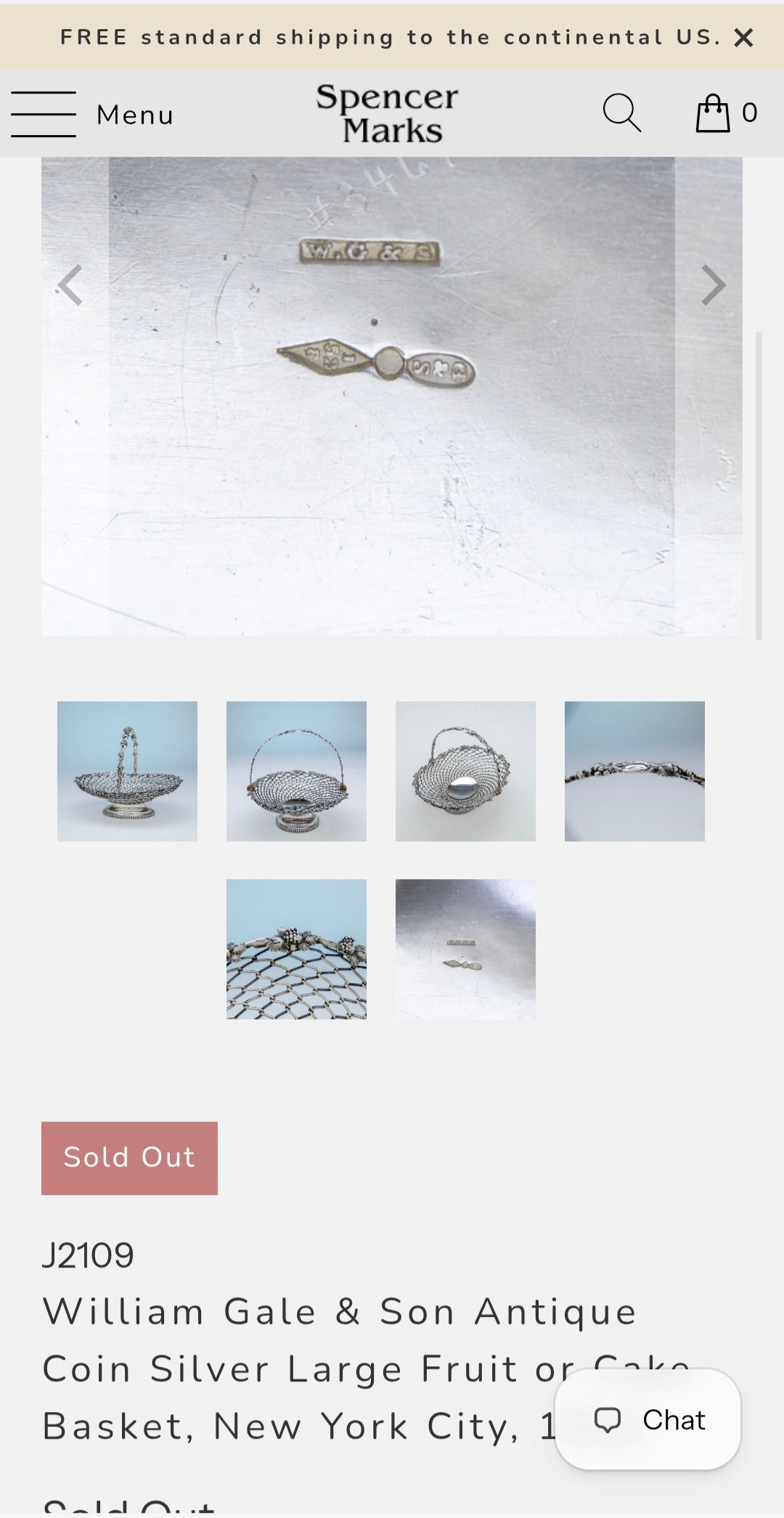
“Gale was one of the most innovative silversmiths in the 19th century, using both coin silver and sterling. He is reputed to patent a steam-powered process for manufacturing flatware in 1826 by which a thick sheet of silver was rolled through a machine, die-pressed like a coin, and emerged as a piece of flatware with a pattern to each side.”
https://fineart.ha.com/artist-index/william-gale.s?id=500204808
But there is a problem. On December 15, 1836, a catastrophic fire completely destroyed the U.S. Patent Office, incinerating about 10,000 original patent documents, drawings, and models dating back to 1790 including Gale’s 1826 patent. When Congress rebuilt the patent registry, it started a new sequential numbering system.
The salvaged or reconstructed pre-1836 patents were later given an “X” suffix or prefix to differentiate them but the salvaged data relied entirely on records held or claimed by the patent claimant no independent proof survived the fire.
The first recorded piece Gale made by this stamping process was during his partnership with Nathaniel Hayden in 1847. Gale and Hayden’s “Gothic” design incorporated quatrefoil, trefoil, molded tracery, and pointed arch elements. Gale was also prolific with flatware patterns such as Olive, Tuscan, and Kings. Along with silversmith James Watts, he produced one of Gorham’s earliest mass-produced patterns, “Josephine.”
Upon Gale’s death in 1867, ownership of the company transferred to his son, who merged with Dominick and Haff in 1870 who subsumed the records.
In summary, Gale was a silversmith who made use of machinery to replace expensive hand-chasing. His registered design patents dating back to the 1840’s prove that, but the claim an 1826 rolling mill pattern is without independent validation.
An attempt to trace the claim for a pre fire patent leads back to a list of modern William Gale patents none of which goes back to the original claim date.
https://www.zoominfo.com/people/William/Gale
There is a list of the X patents which does include the Gale patent
But all it says is “GALE, WILLIAM; MANUFACTURE OF SILVER SPOONS AND FORKS; NEW YORK NY 7 DEC 1826”
Nothing about the patterns being recorded on the roller mills used to stamp out the spoons.
All this is important as there are six other pattern claimants to the same or a similar process in the time frame in the US and the there is the much more well known Matthew Boulton of the Birmingham UK Soho manufactory who did file surviving roller mill patents based directly on his own experience at the UK Mint where mass production of coinage was vital to fund the Victorian wealth created by the industrial revolution.
CRWW