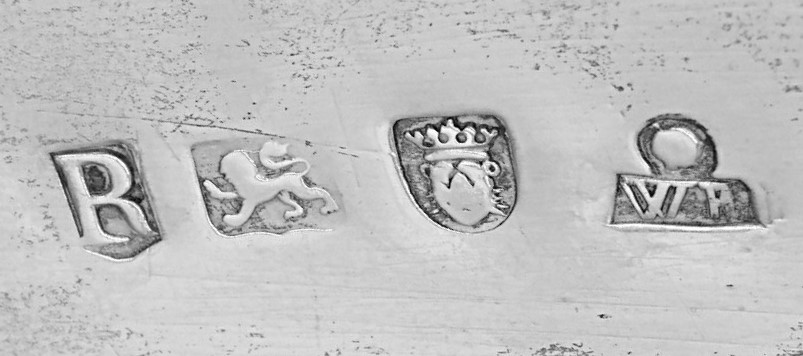
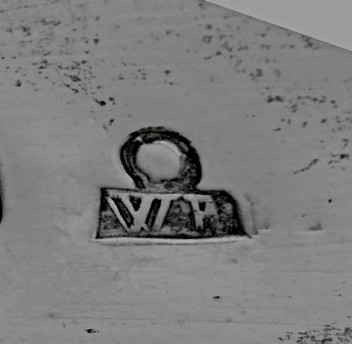
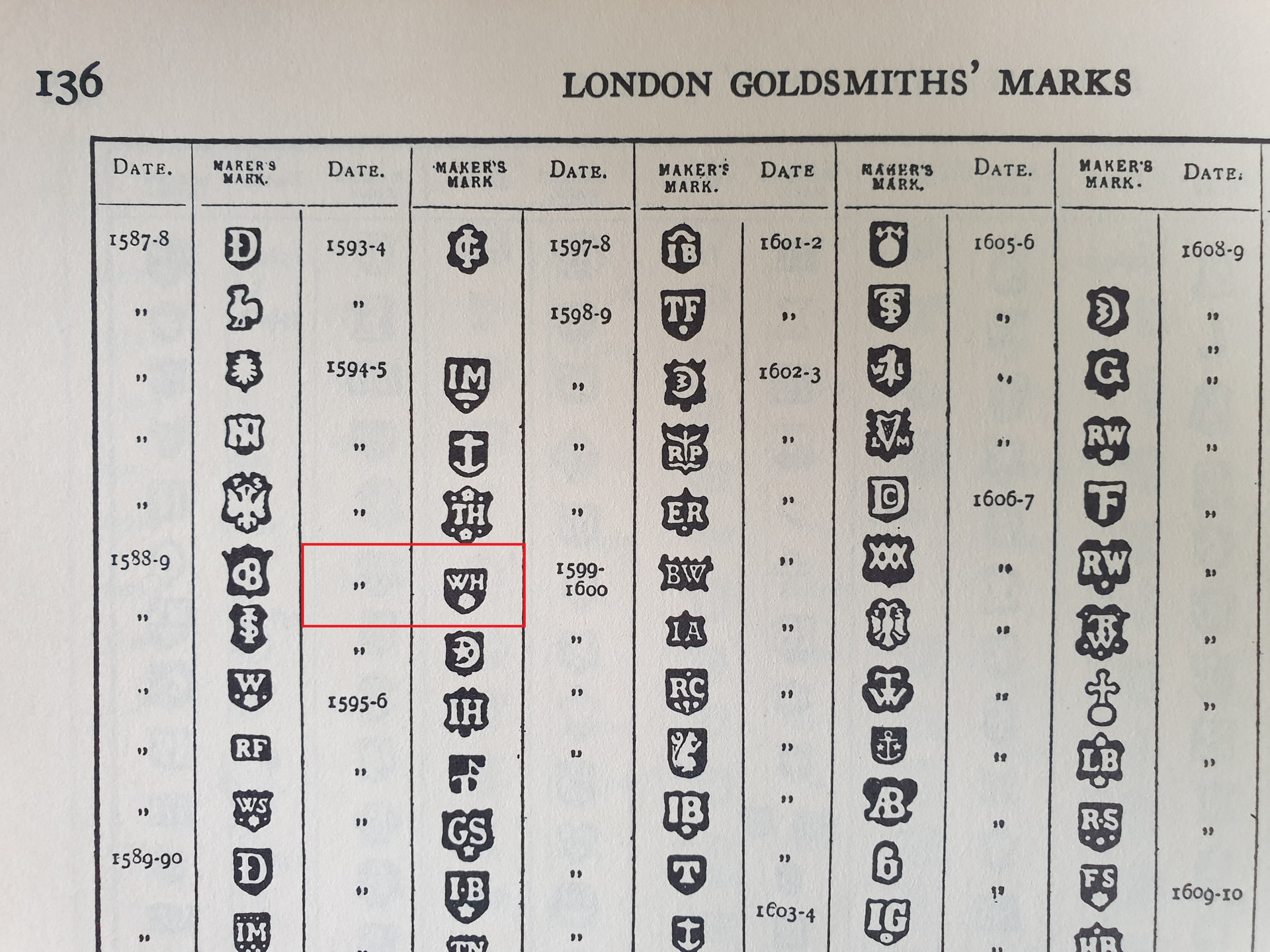
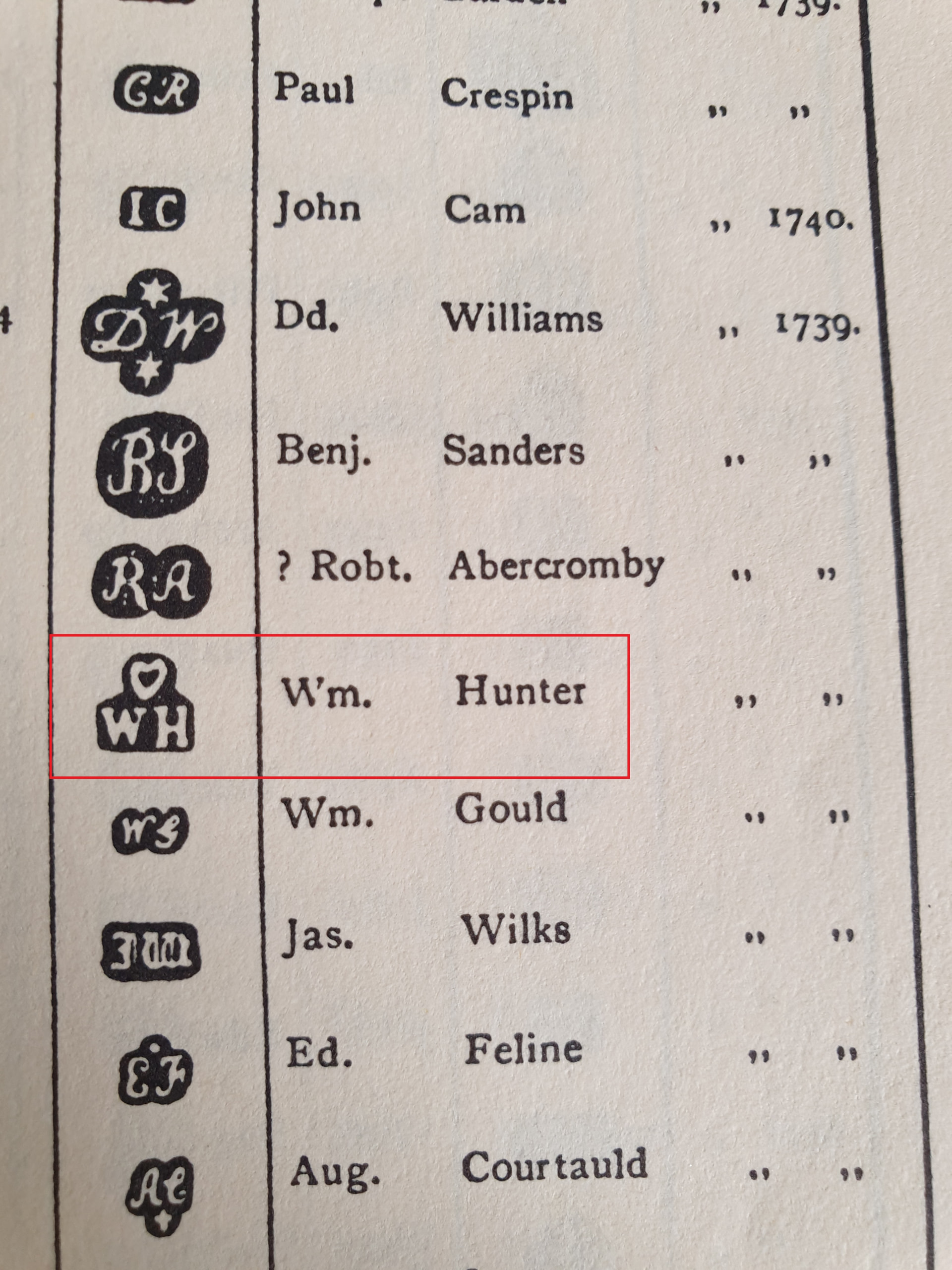
Given how confident you are the hallmarks and the item they are imposed upon are genuine and given the very reasonable asking price, would you consider buying it and resubmitting it to the Guild for assay and possible re-stamping?
I would love for you to be right and this to be a genuine George II snuffer dish or tray showing pre-Chippendale styling influence with a previously undiscovered mark of a silversmith whose actual marks neither Grimwade or Jackson has ever seen and remained until this very moment recorded very tentatively,
For my part I have set out the points that make me sceptical and, while I admire your forensic attempt to reduce these genuine concerns to mere grammar or “parsing” as you put it, it is not the grammar but the physicality that worries me.
I can get my head around one anomaly, maybe a couple, but when the seller will not tell me how he comes by the new Hunter I mark or provide any provenance for it, and the other marks show variations on the catalogued and recorded marks and the item’s style is inconsistent with other contemporary dishes/trays, your choice of verbiage, I do start to get a little sceptical.
You have invited me and your other loyal readers to engage with you in a game of “probs and stats” based on the debatable assumption of logic being the primary motivation of the reproducer. Logic would say many Hanau repros of UK silver would never be made. But they are. Logic would say other faux items this forum has catalogued would have been scrapped and discarded but they weren’t. Logic would say the southern Chinese town where fake antiques, including silver are reproduced, would not exist but it does and the rather skilled artisans there are very busy. They made me a fine duplicate late Georgian teapot and stand in four days from scratch last time I was there a few years back now.
No, as soon as something is demonstrated as less certain than represented by a seller, the buyer is entitled to presume there are no limits on guile. I have been dealing with Ebay sellers for 26 years, and during that time have come across 116 provable listing errors on items I was interesting in, five of which were attributed to altered or faux marks two of which I shared with Phil. None of which I bought. I shall continue to regard the chances of seller error where the sellers are other than established silver dealers as a reasonable possibility.
www.liveauctioneers.com, where the prices are cheaper, the stats are even more depressing. Auctioneers’ reliance upon the reps of the assignor remain the norm for minor houses. Oddly only very rarely is the error in the buyers’ favour from which I draw certain assumptions about the auctioneers, a subject I have never been restrained about in these august cols.
The bottom line is the onus is on the seller to demonstrate bona fides not, as you are urging, for the buyer to be subject to pure caveat emptor economics and to “shrug” if he gets it wrong.
All the consumer protection rules in the world won’t cure the lack of trust created by rogue sellers and for some reason the world wide web seems to be their natural hunting ground.
A traditional function of this forum is to assist buyers make sensible choices and for sellers uncertain as to what they have to ask you or your colleagues for clarity.
Urging sellers gulled by buyers to shrug and carry on may fit better south of the Canadian border in a land where your president collect $48 million in deposits on gold Trump cell phones he cannot and never intended to deliver, but the rest of the world hopes for better and trust remains the root of all successful mercantile systems.
CRWW