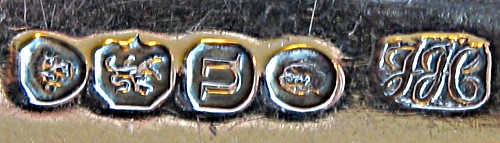
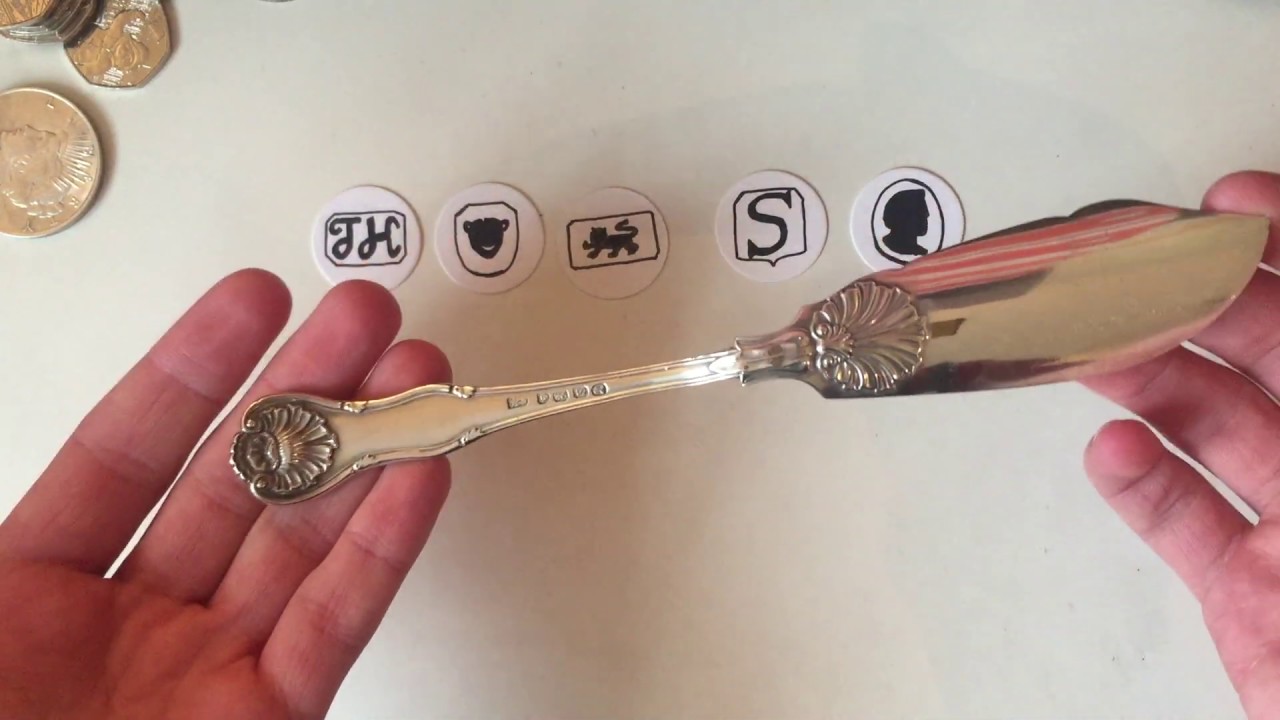
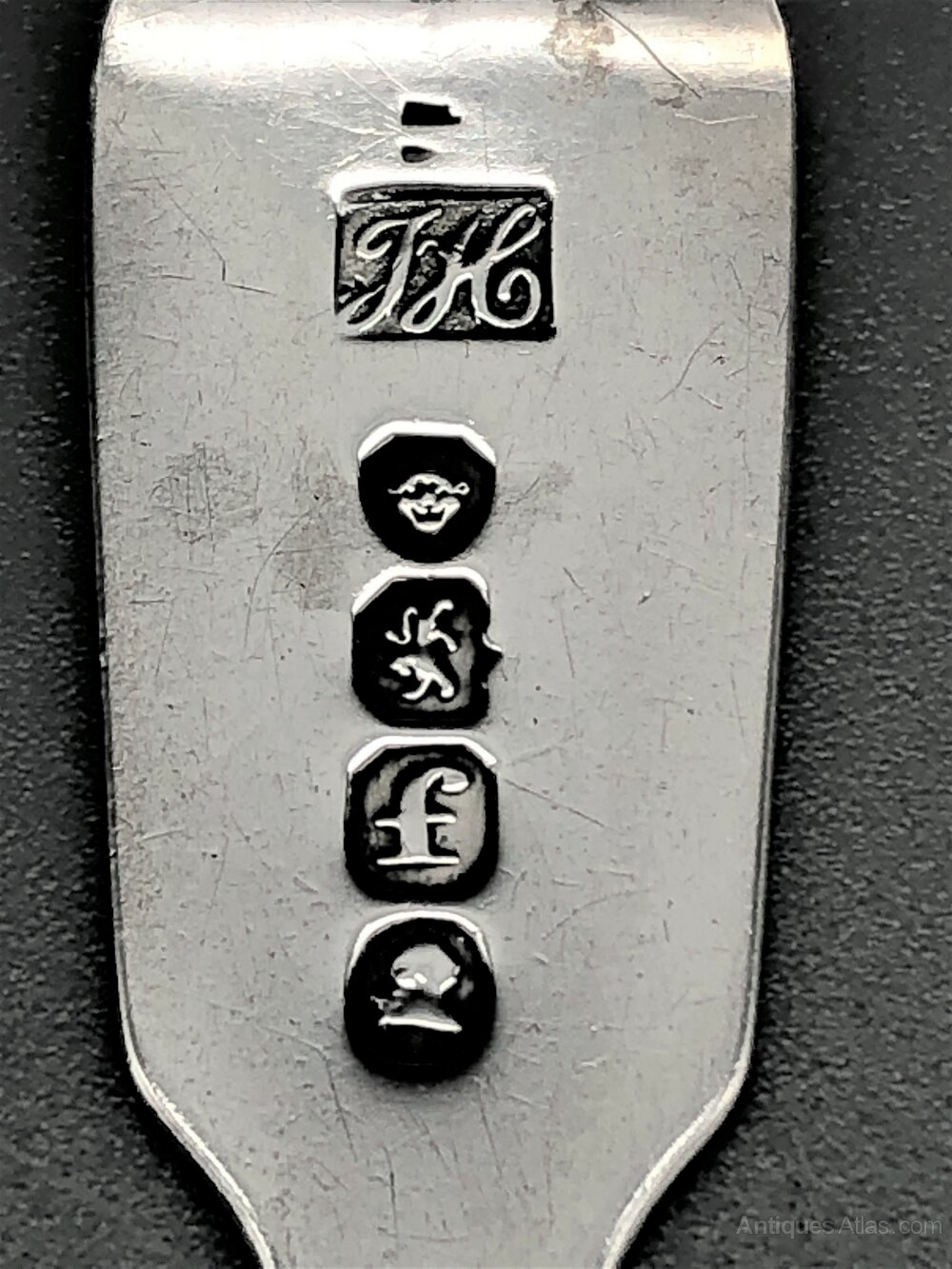
I have acquired a spoon with the hallmarks in the picture attached and am unsure whether they are the marks of Hester Bateman. I understand that Hester Bateman and Henry Bailey marks can sometimes look very similar. I had thought that the date letter ‘u’ was that for 1795 (London), but now I almost certainly think it looks like 1835 (especially judging by the monarch’s head). If this is the case, is it too late for Bateman (was she dead by then?!).
Please help!
Thanks, Peter
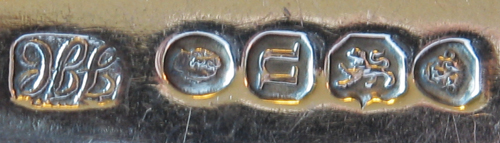
Hi, My interpretation is that the duty mark is Willam IV which would date your piece to 1835. Hester Bateman died in 1794.
Hope this helps.
Tony
1 Like
No this is not Hester Bateman - but it is a frequently made mistake. If you turn it the other way up you will see that it says JH - Jonathan Hayne.
1 Like
Thanks solved a mystery for me, I was also looking at my mark upside down
Jonathan Hayne (c. 1780–1848) was a prominent English silversmith active in the early 19th century.
Born in Clerkenwell, London, he was the son of a surgeon. He apprenticed as a silversmith and began his career in 1810, registering his first mark in partnership with Thomas Wallis at 16 Red Lion Street, Clerkenwell. The partnership lasted until 1816, after which Hayne established himself independently, entering his own mark in 1821.
Hayne gained recognition for his skill in crafting high-quality silverware, particularly flatware and tableware. In 1833, he patented an innovative method for manufacturing silver spoons and cutlery in a single blow using a heavy hammer. This advancement in silversmithing was documented in Andrew Ure’s 1839 publication A Dictionary of Arts, Manufactures, and Mines, highlighting its significance in the industry.
In 1836, his son, Samuel Hayne, partnered with Dudley Frank Cater, forming Hayne & Cater. Following Jonathan Hayne’s death in 1848, Samuel took full control of the firm, which continued to operate until 1865, when financial difficulties led to its closure.
Hayne’s work remains highly regarded, with many of his pieces—particularly silver flatware—still sought after by collectors today.
1 Like