2 Likes
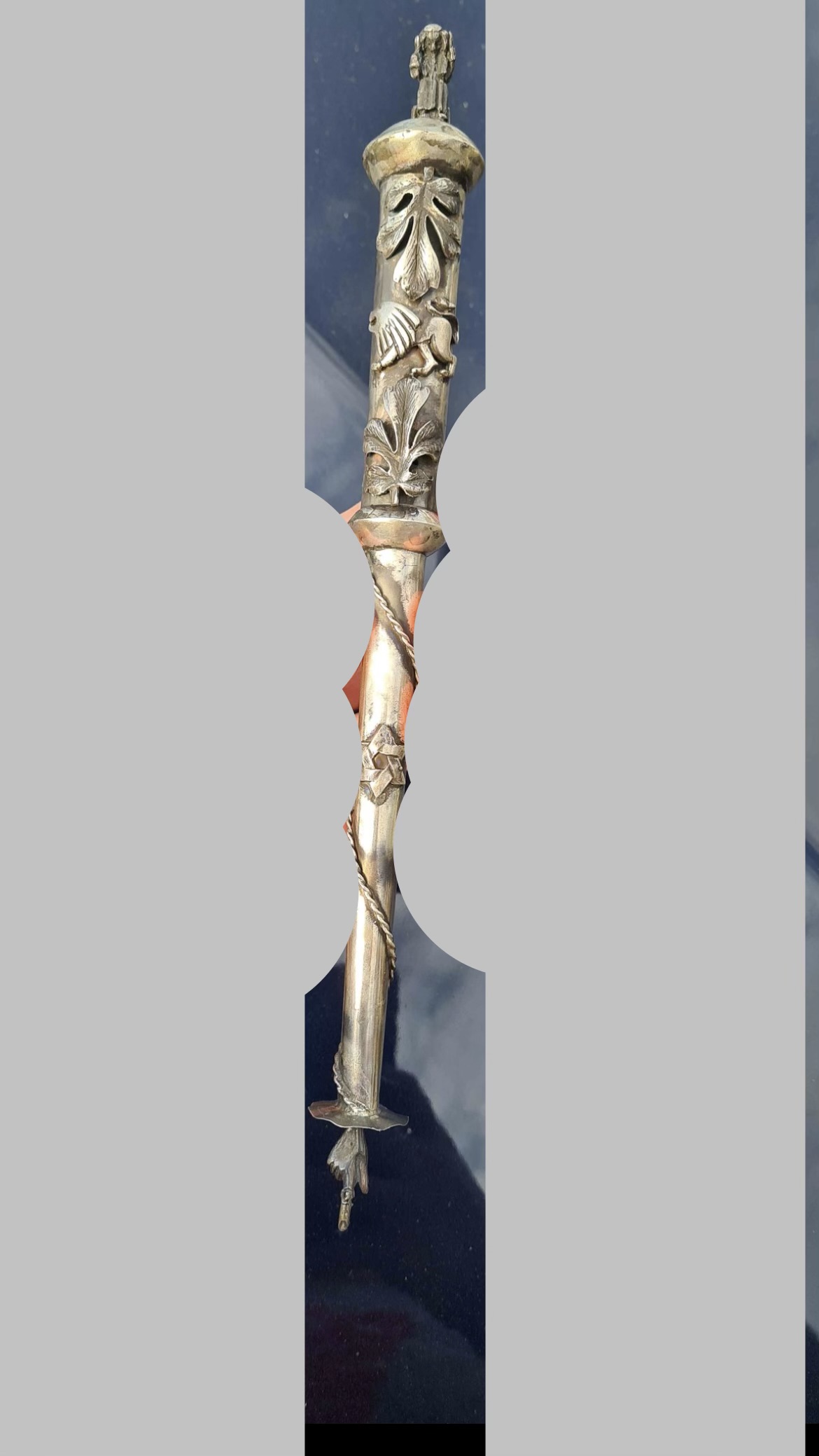
A Russian 84 standard silver Torah pointer, Adam Yuden | Clars Auction Gallery

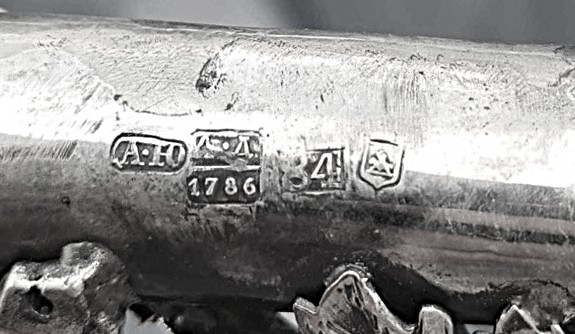
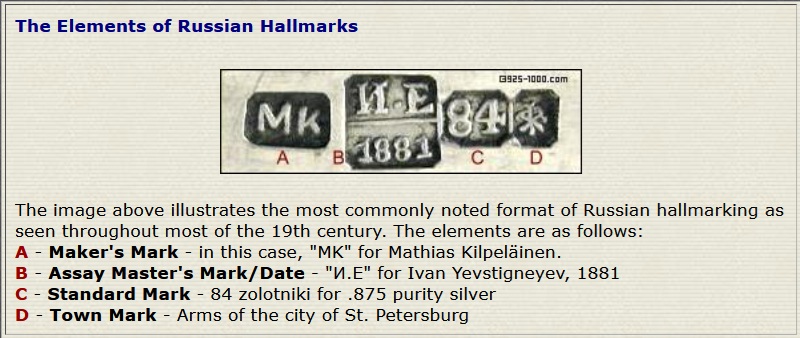
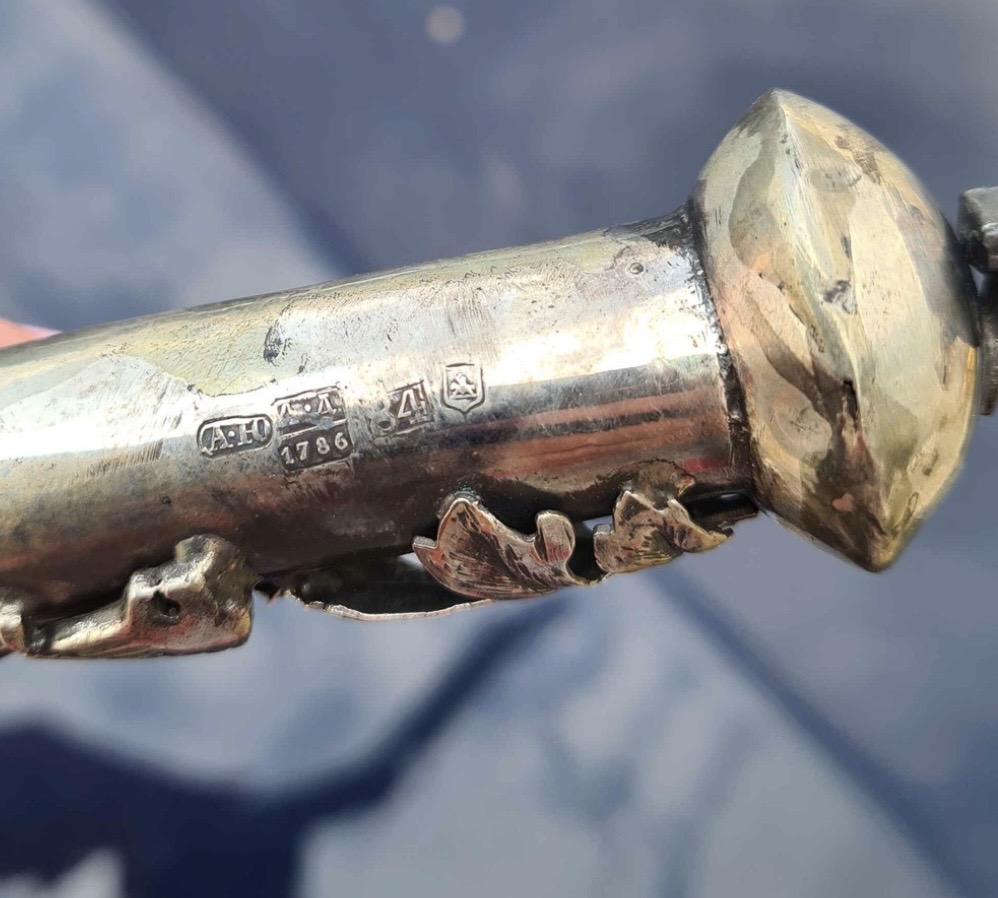
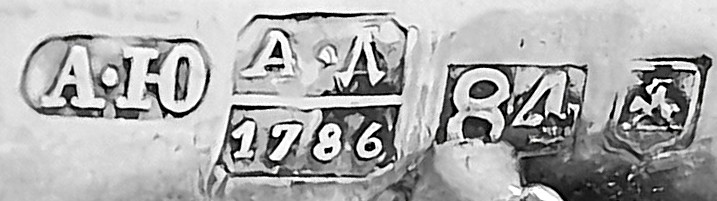
Adam Yuden (Yudein ) Адам Юдеин - maker’s mark
Moscow - town mark
Assay master’s mark/date is illegible. A • Д/1786
Judaica A 19th century Russian silver 84 Yad Torah pointer. Adam Yuden (Yudein) | eBay UK
ADAM YUDEN (YUDEIN) RUSSIAN SILVER YAD. Silver & Metals - Silver - Auctionet
1 Like


Thanks, ehat do you think is the value of it, i can buy it for circa 350$. Is it worth it? Because it is 90%fake because the year doesnt match eith other hallmarks.
1 Like
Worth the price, provided it’s not a fake. The item should be assessed by an expert, which I am not.
1 Like
This appears to be the original listing for the item?
So Acreman St Auctioneers & Valuers should be asked your question. Because the answer might wel be either there was an earlier Adam Yudein who was a silversmith in Moscow with an identical mark or else the generally acknowledged period (1845-78) in which Yudein was working is incorrect or else someone in the Assay office had been watching a movie “Back to the Future” which wasn’t made for another 100 years.
Luckily ,they are holding themselves out as “valuers” as well as auctioneers so the exculpatory clauses governing auctioneers liability for misrepresentation doesn’t cover them as valuers.*
Pointer and page turners, yads, are something you get if you have sometime earlier undergone the corrective surgery and are Jewish at your Bar/Bat Mitzvah. On a personal note I was very grateful to Mr Hitler who arranged to bomb the Plymouth, UK hospital where I was busy getting born etc and blowing up the part of it where this surgery was to be undertaken before it happened.
Pointers and page turners have been causing problems in the goyim world too as this story
by Ben Marks explains:
My very simple rule about non silver items or silver items which bear questionable or no marks is pay no more than you can get for the melted ore if you take a blow torch to it. I just bought a set of 18th and 19th century silver flatware, all of which was marked properly, using that yardstick.
Yardsticks, I find, are much more reliable than religious pointers.
CRWW
- I am trying to think how one would defend them in an action for recovery of funds based on fraud or a passing off. " Your Honour, my client did his best. He acknowledges he is a valuer and as such has a duty of care beyond that of a mere auctioneer but he did not say he was any good as a valuer."
CRWW
1 Like
Ok, I don’t want to get too esoteric on you but it seems the reason this item is incorrectly stamped has a lot to do with the Scotsman who funded the Louisiana Purchase and lent money to the Czars to fund their usually remarkably unprofitable foreign wars.
His name was Henry Hope. As in I hope I can lend you the dosh and I hope you pay it back and good luck with the war.
Henry was an Amsterdam banker who apart from funding the Americans’ desire to own their continent, funded a lot of wars for a lot of countries including Russia. Basically the same racket the Rothchild’s were in except he never funded both sides as the Jewish bankers did with Napoleon and later WWI.
Henry had three problems with the Czars, apart from their fairly consistent failure to win. The first was Russia didn’t have a lot of silver to dig up to repay the loans. There was a bit in the Urals and some out east, but in 83 years of digging the Russian only got 70 tonnes of silver mined compared to Darius II of Persia who 2,400 years earlier dug up 250 tons of the stuff in Turkey. The second was, because the army was basically all territorial, the proceeds of the loan were handed out to the local bosses who tended to stash it in their basements rather than paying soldiers and the final problem was the Czars tended to tax it all back, which was why the locals hid it, the peasants who only actual role was to die in battle never got paid and inflation was rampant.
To compensate for all this Henry charged them high interest. Sometimes as high as 20% and he did it monthly not in advance rather like the modern mortgage lenders.
Which is why the czars taxed so high which caused the aforementioned inflation – the sort of thing we are going to experience again today if Trump’s war against the Persians continues. Eighty percent of the tax then was on income but the remaining 20% a massive amount was on silver and gold.
Twenty per cent. Even the Brits, when they messed up the Americans and went to war against their own countrymen in the 13 colonies then managed to lose that war, only charged 6%. Hence the sovereign’s head on all 19th century silver showing tax gouged — I mean paid.
Anyway this resulted in massive duty dodging which, in Russia, was remarkably easy to do since the assay master and the boss of the silver production factories was often the same person or if he wasn’t was married to the daughter of one or the other. Or soon would be.
So the offender, the man who stamped his initials on the thing with a date under it nearly 100 years before he was actually was assay master was probably – drum roll-- the assay master or his soon to be son-in-law or the factory boss who did it for him. Just being helpful.
So there it is. We knew it was a Scottish banker who taught the Sun King how to print money and caused the French to become adverse to cake. We didn’t know, or I didn’t until your post, about another Scotsman, this one in the lend-a-war racket, who caused your finger pointer to become so fraught.
Conclusion, its probably exactly what it is supposed to be from a silver content point of view just mis-stamped intentionally so the Czar didn’t get his paws on 20% of the action.
CRWW
2 Likes