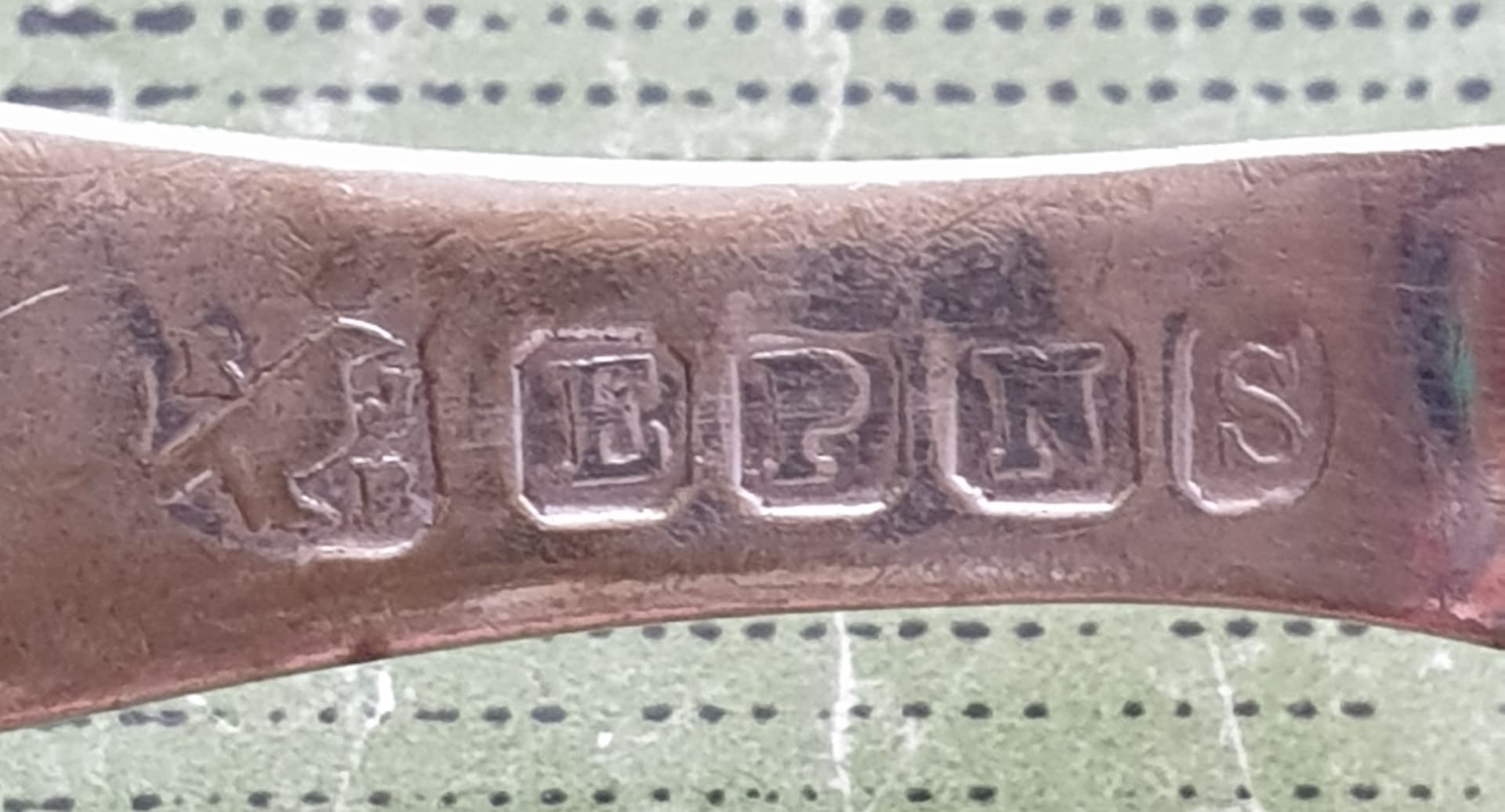
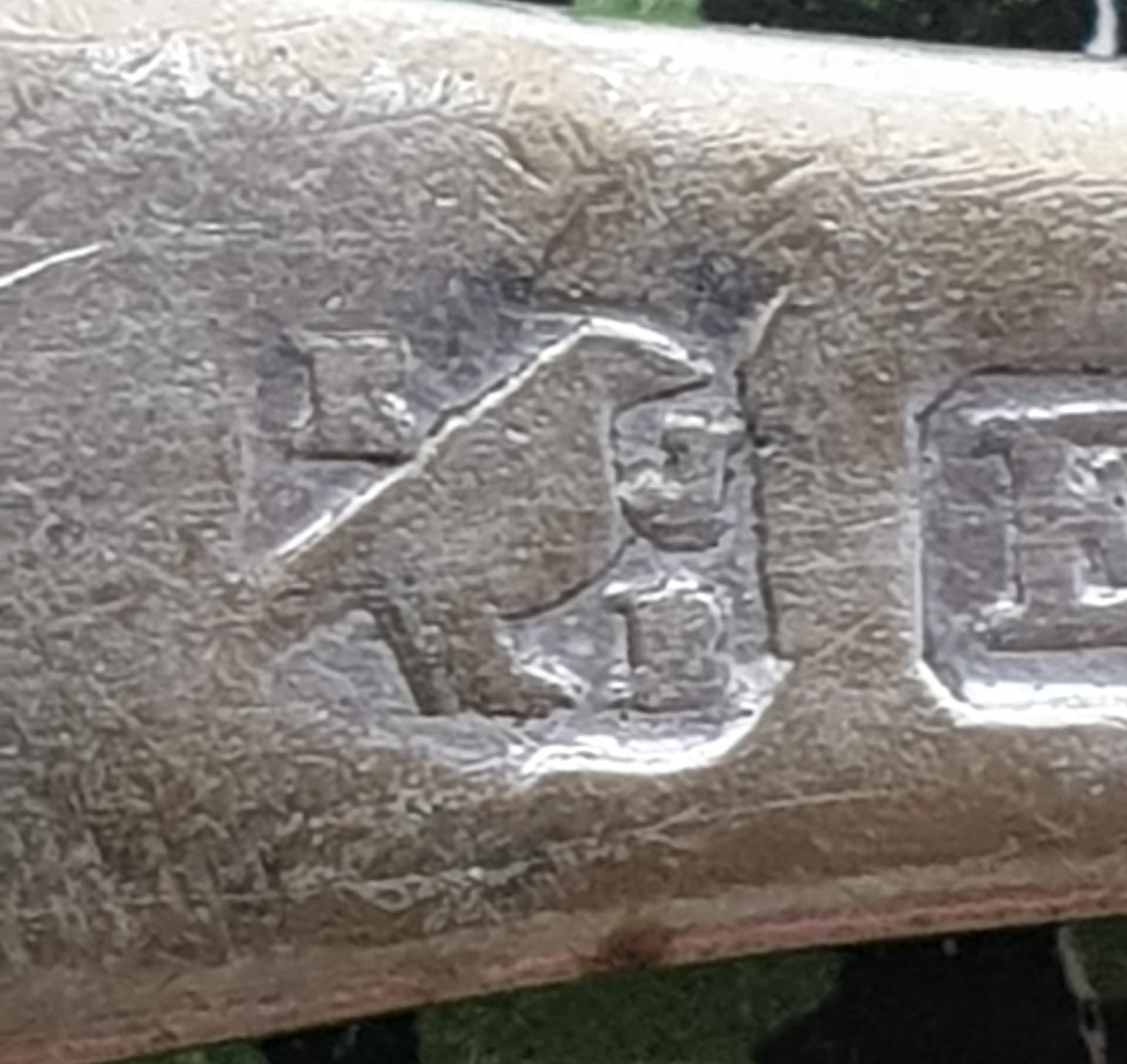
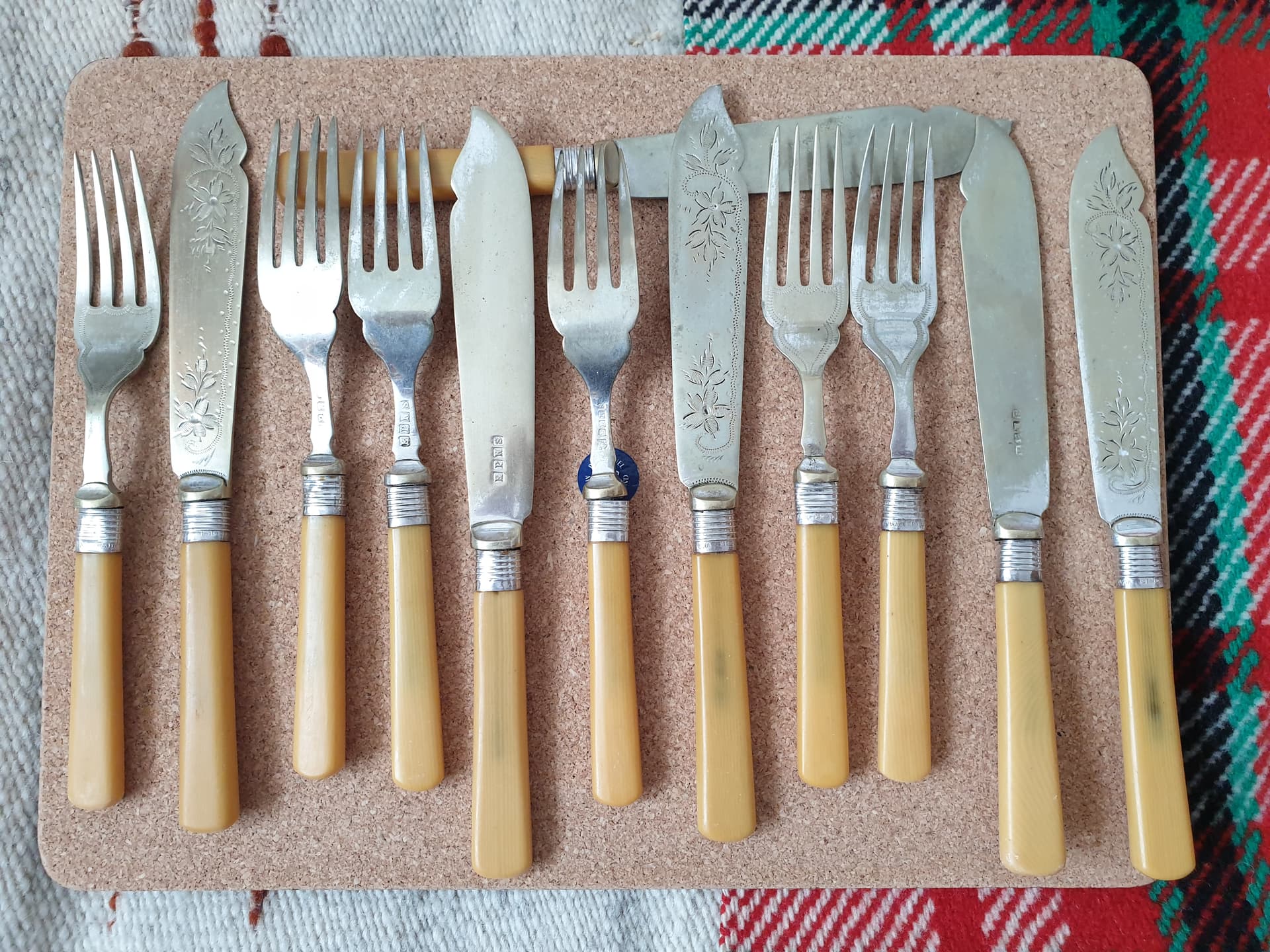
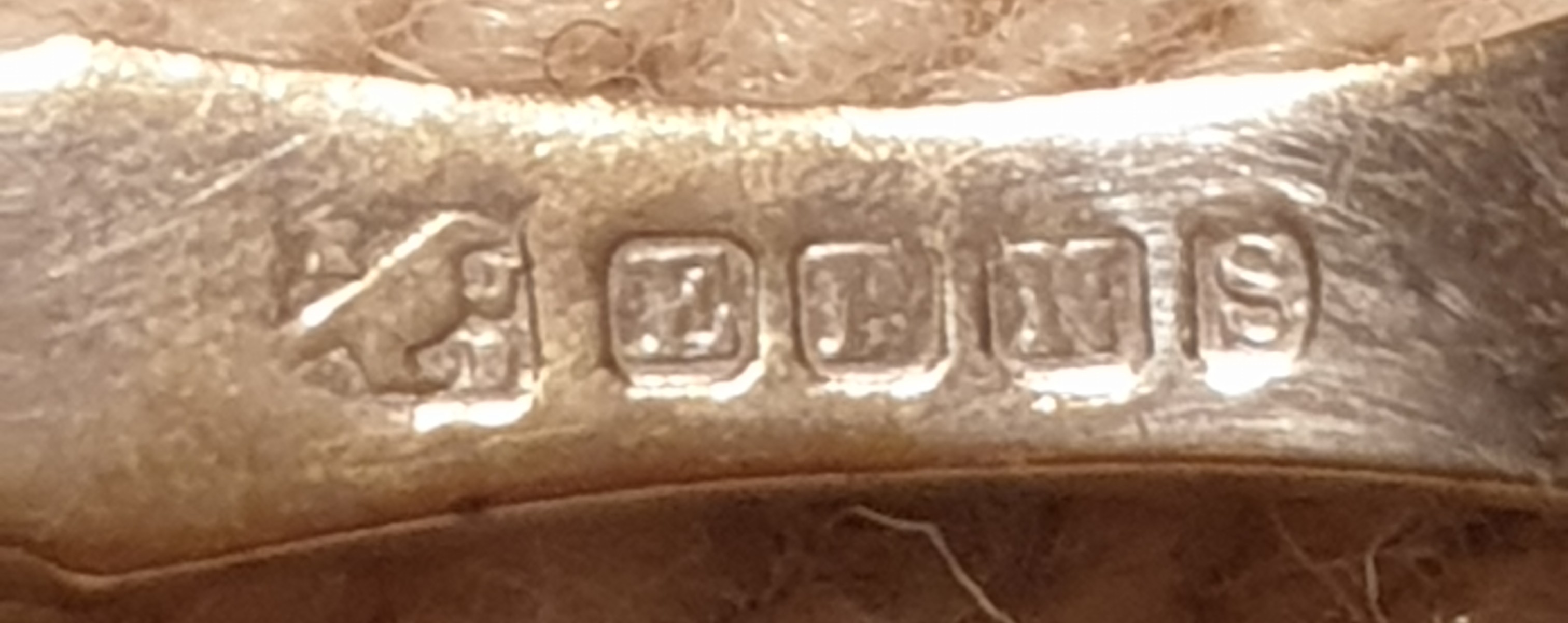
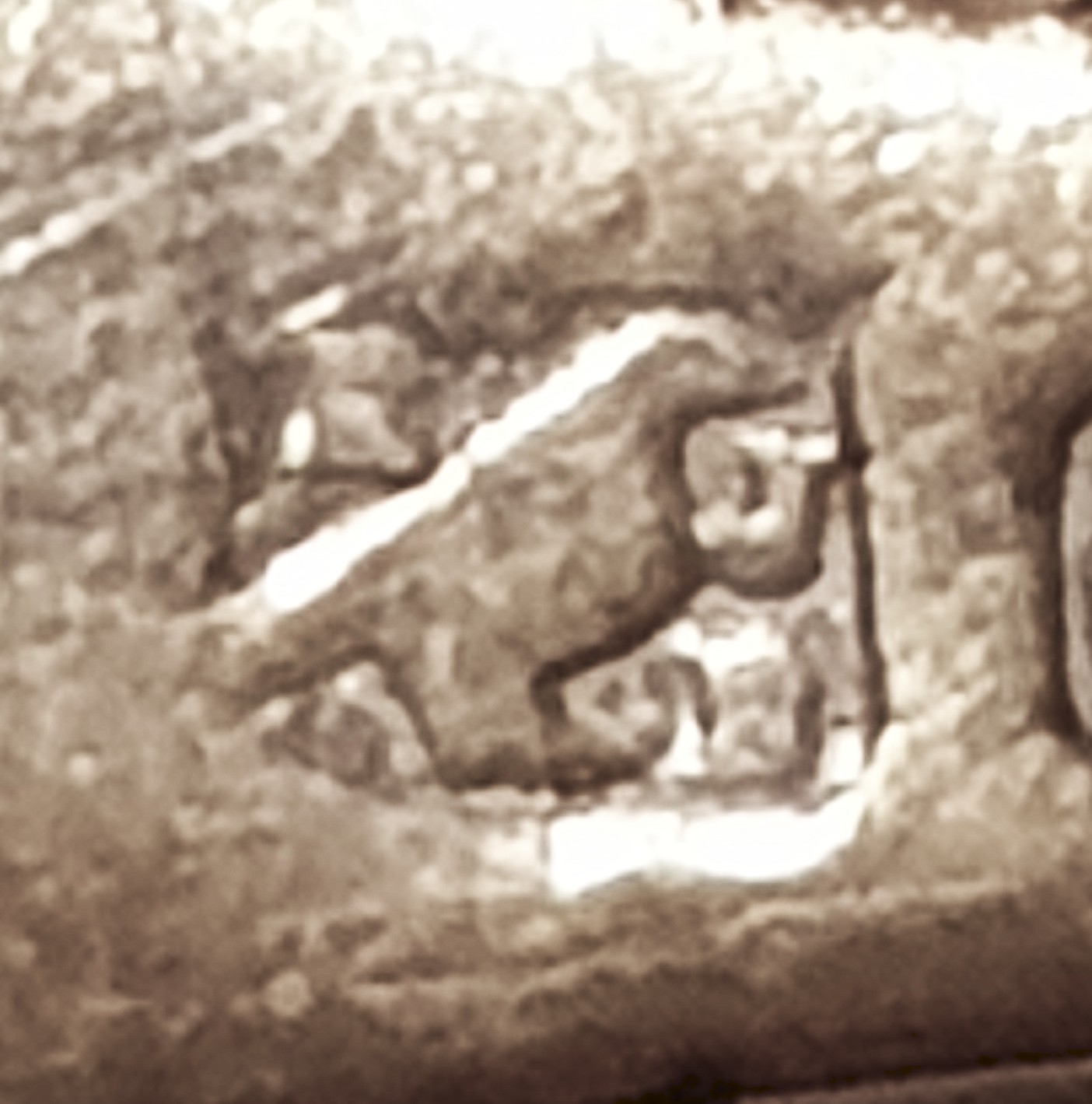
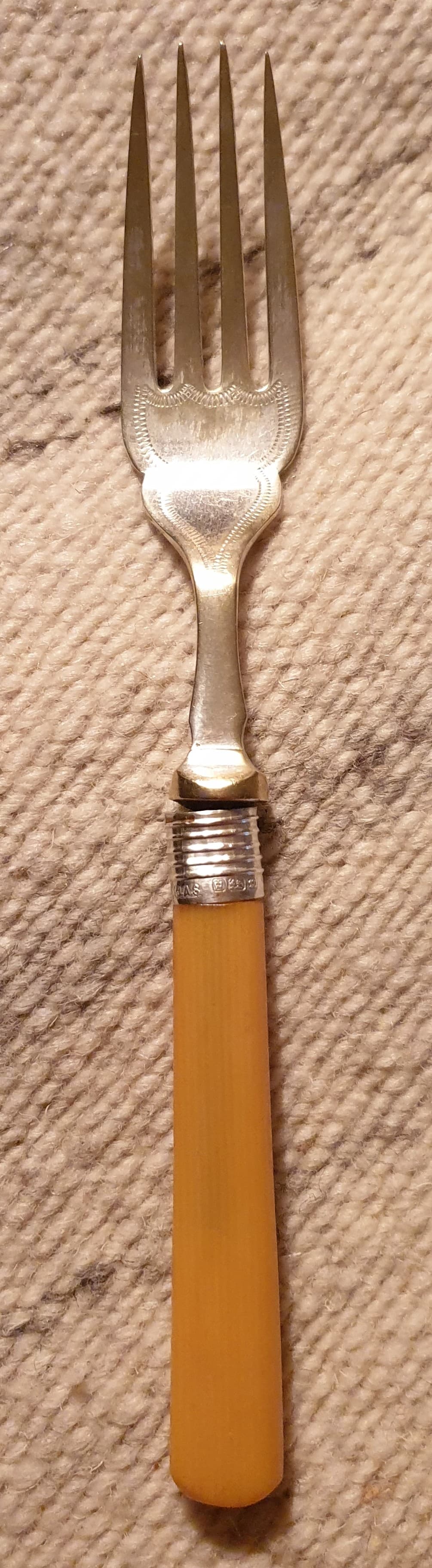
Hello, dear friends! While browsing through my mother’s antique collection today, I came across an interesting set of fish cutlery – James Albert Scholes, Sheffield, dated 1905. The signature next to EPNS is intriguing, depicting a raven (I presume) and the letters “EJB.” This time, I’m asking for your help, thanking you in advance.
1 Like
This is an 1912 fish fork presumably part of a set of 6/12 together with 6/12 knives coming in a box.
The handle is celluloid or “french ivory”, the ferrule is sterling silver and the blade is electroplated.
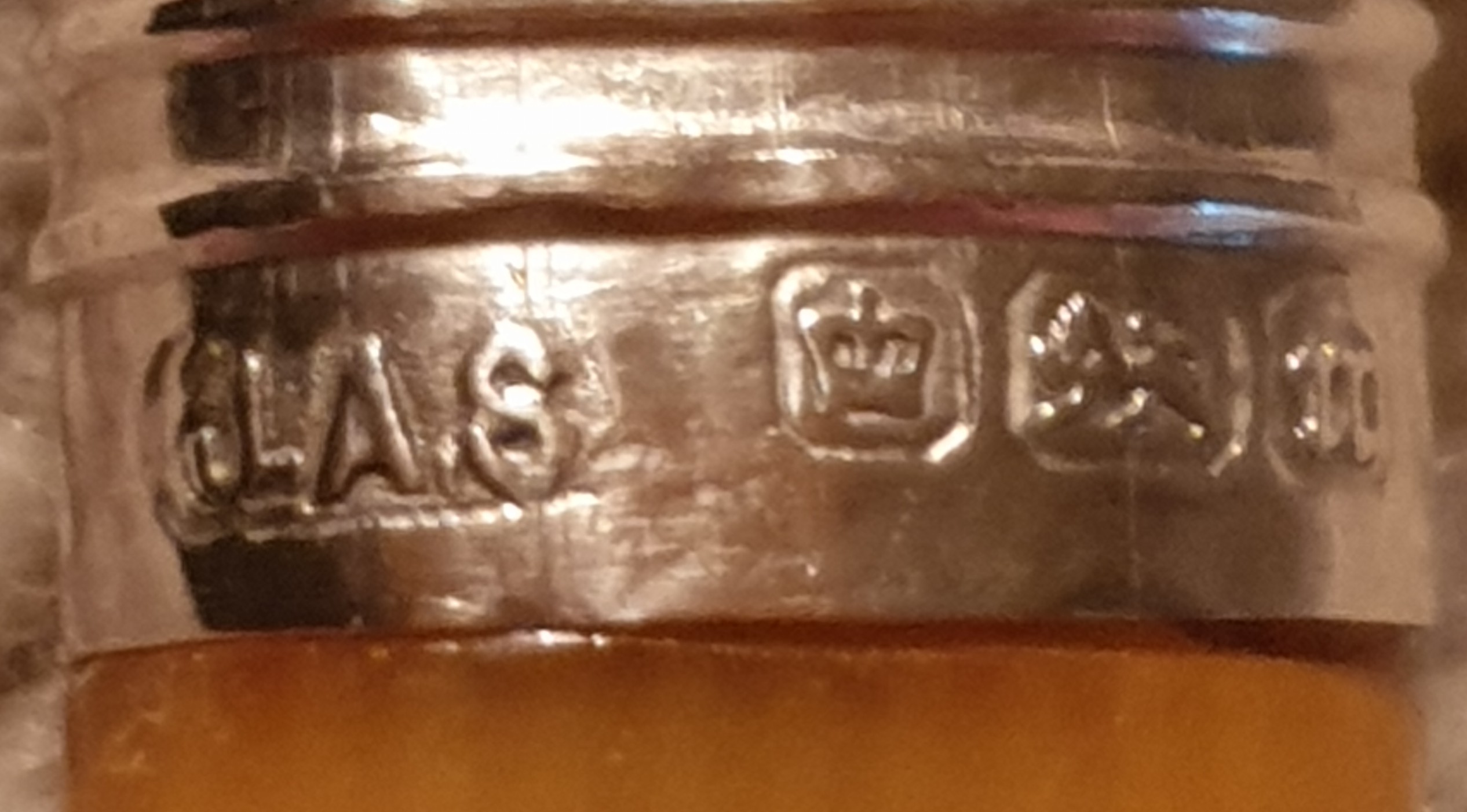
You have correctly identified the firm making the silver ferrules and the plating. The handles were made by one of four firms none of which marked their handles.
Just as the sterling marks on the ferrules were designed to induce people buying to think the entire item except the handle was silver, the unmarked by manufacturer handles were designed to look like ivory.
Hopefully you have 11 more forks, a box and 12 knives. You might even have. fish serving pair of larger sliver and fork.
Your relative used the fork enough to render the celluloid somewhat darker than it would have been when it was new.
Celluloid, composed of cellulose nitrate and camphor, darkens with use and age primarily due to irreversible chemical degradation caused by exposure to air, light and moisture.
Fish forks and knives used to be widely used. Every hotel serving dover sole or even British Rail provided its patron diner with a pair. Today I still see them in the westend hotels. North Americans don’t seem to bother with them.
You entitle your post strange marks but they seem fairly straight forward. The sterling mark is well documented.
James was born in Sheffield, the son of William Scholes and his wife, Elizabeth. The family lived in Bolsover Street in the 1860s and 1870s. In 1881, they were living in Brightmore Street: William was as master gilder and his son was a ferrule maker. James became a specialist in silver caps and ferrules, registering a silver mark (‘J.A.S’) from 25½ Monmouth Street in 1898. Before the First World War, he relocated to Cambridge Street and remained there until the Second World War. He had retired by the end of the War. He died in 1948, aged 88, and was buried at City Road Cemetery on 26 April.
Here’s a pair of servers also plate with a slightly different plate mark – no bird —
https://www.etsy.com/listing/1782292345/vintage-cased-silver-plate-fish-servers
CRWW
2 Likes
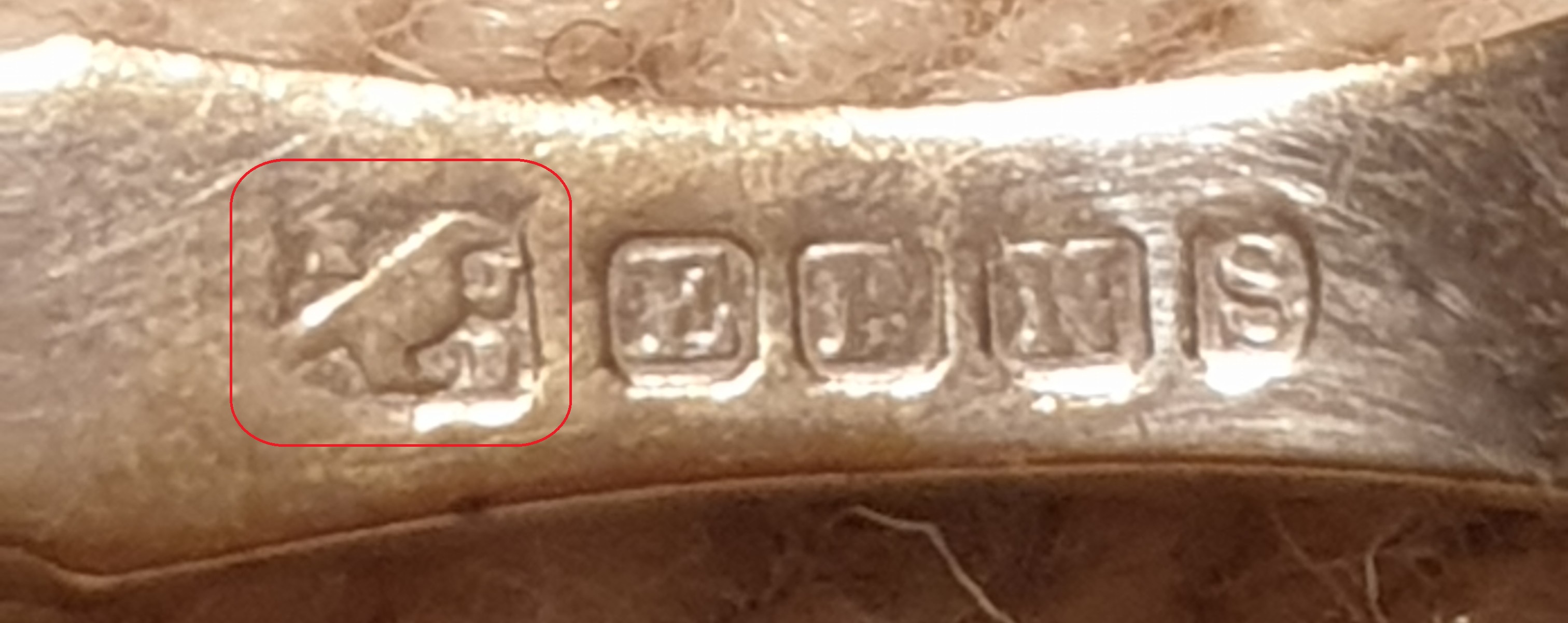
I couldn’t find it listed in any of the usual sites for electroplaters’ marks and no doubt you have looked in the same places, Bart. It does look fairly obese for a bird!
1 Like