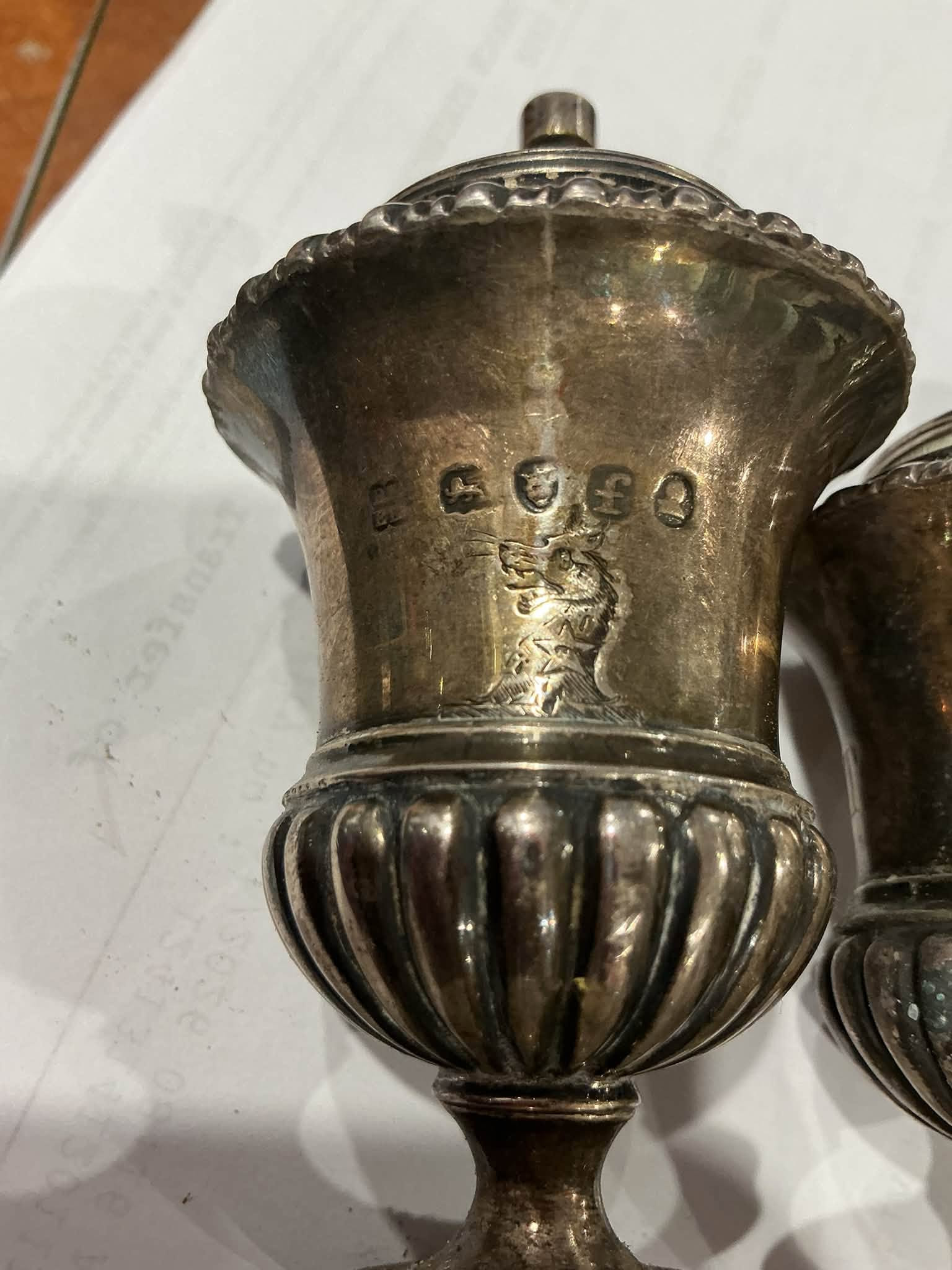
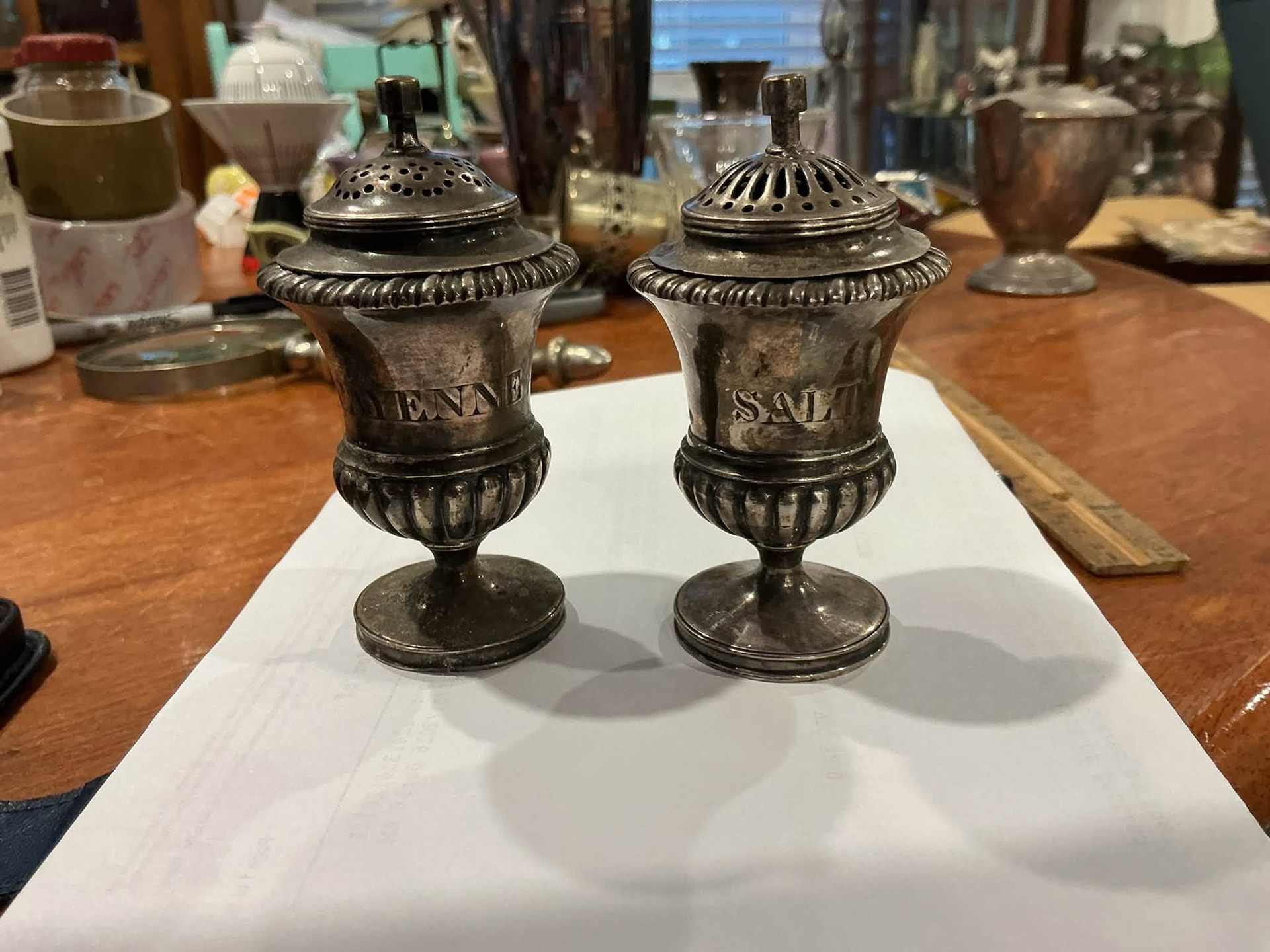
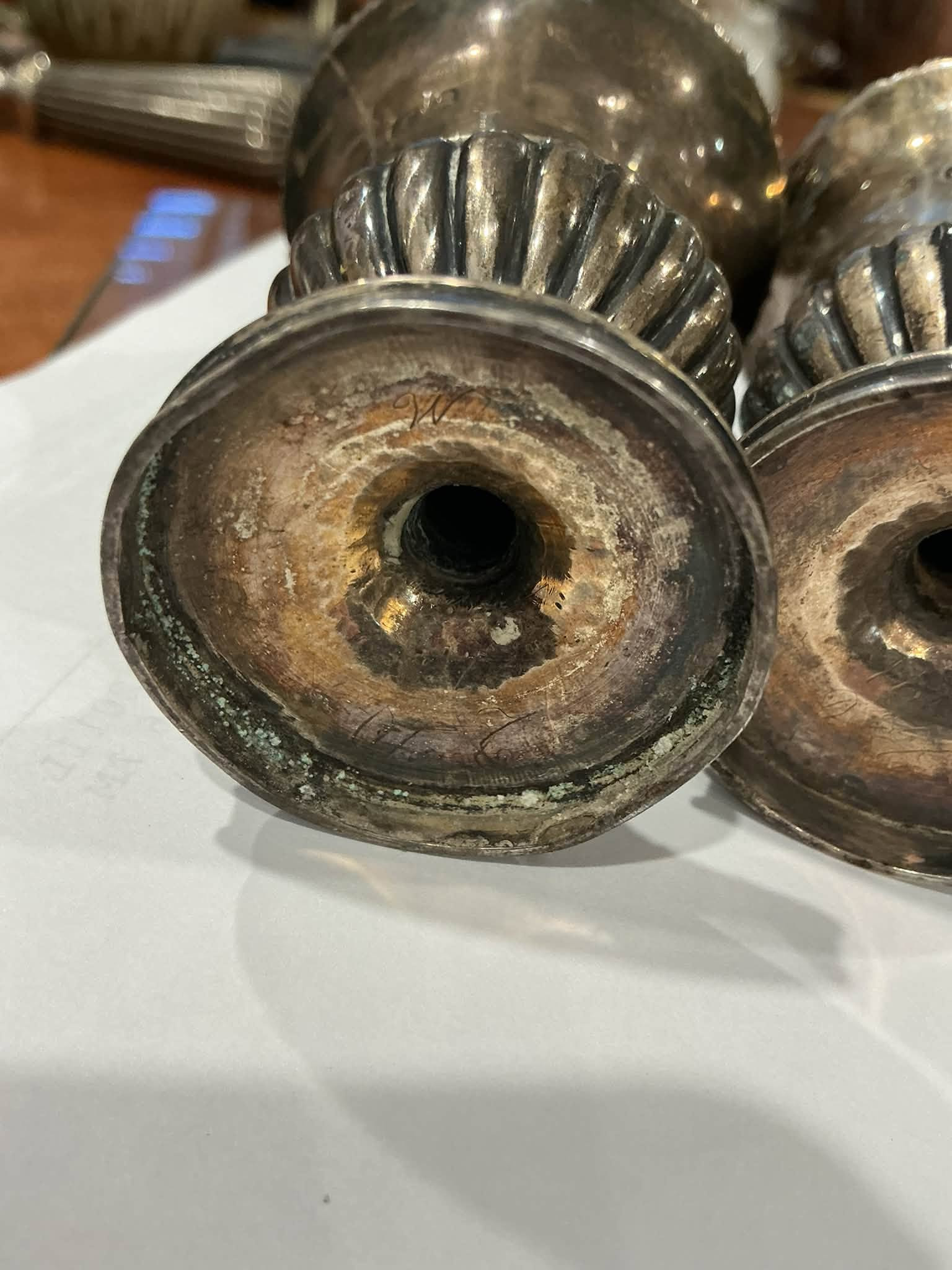
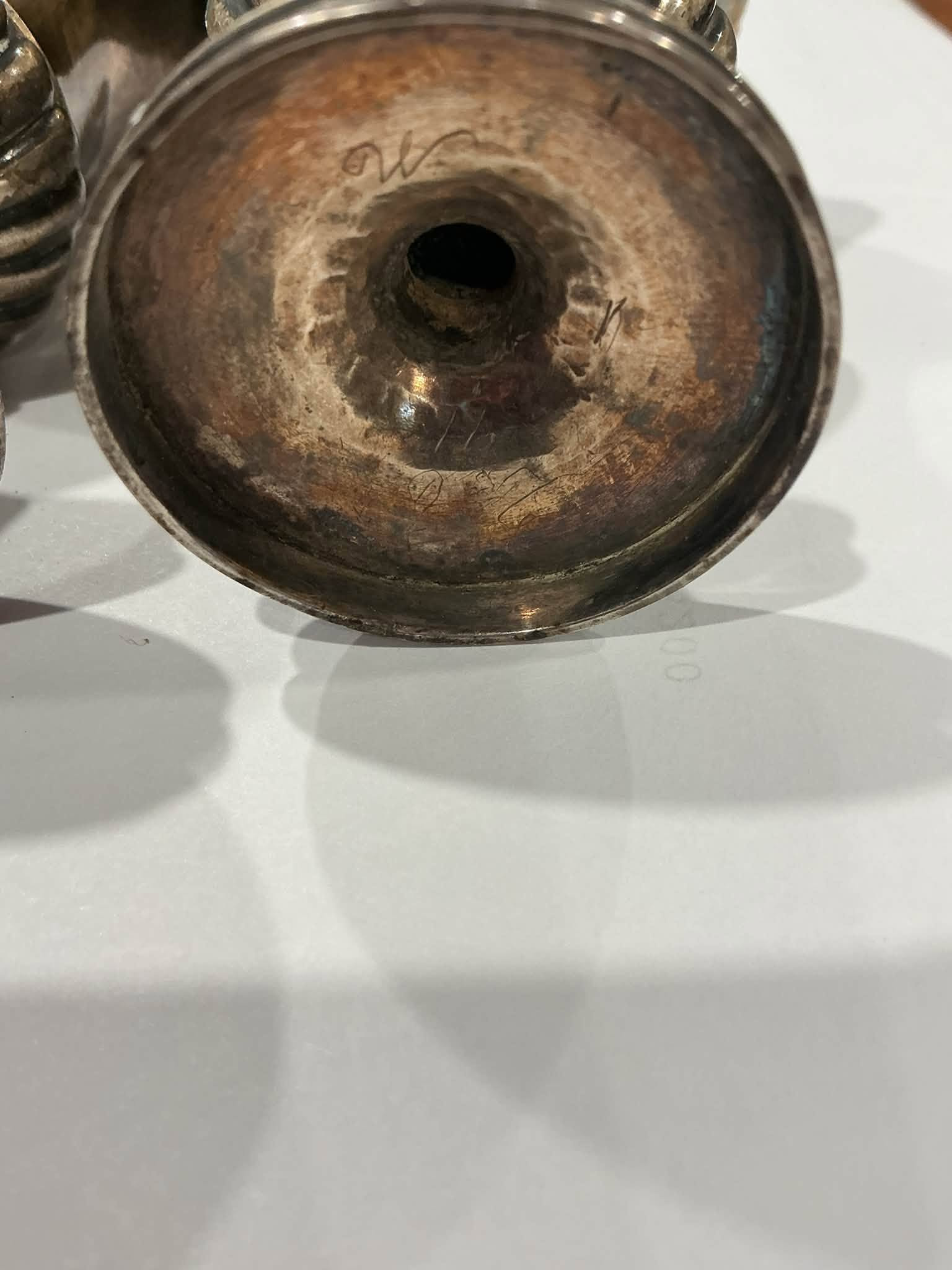
HI. Trying to identify who made an incised initial W or M on the bases if two small pots. One is unusually marked CAYENNE and the other SALT. London assay mark for 1821 by Rebecca Emes and Edward Barnard. Would this be a journeyman’s/apprentice/smith’s mark on piece-work assembly? Thanks.

2 Likes
I think it is more likely to be the owner’s identifying initial.
1 Like
I’m very happy to have joined the group and am quite a novice at studying silver marks, so I hope you don’t mind me sharing something I noticed while looking closely at these two pieces. 
On both the SALT and CAYENNE, I think I see a W at about 12 o’clock and what looks like 77 at about 6 o’clock.
At 3 o’clock they seem to differ — the SALT appears to have a V, while the CAYENNE has a little symbol that almost looks like a smiley face.
There may also be a small ○1-like mark near the rim at 6 o’clock on both, although those could simply be stray marks.
The bases appear smooth in these areas, with the repoussé/chased work beginning farther up toward the stem, which made me wonder if some of these might be intentional workshop or assembly marks.
I’m just learning, but I found the similarities between the two fascinating and would love to hear what the experienced members here see.
Thank you,
Rebecca
1 Like
I rely on red6’s experience. 
1 Like
Thanks. Did journeymen in the workshops ever initial their work though?
“which made me wonder if some of these might be intentional workshop or assembly marks.”. Those were my thoughts as well hence my triple workman possible origin. It was common in an assembly line to mark th base and say the inside of the lid with a corresponding mark so that not only were two hand made pieces assembled together but also a way of marking pieces for identification which the shop floor manager would note for later payment.
They did however this is normally a punched rather than an engraved mark.
2 Likes
Thank you for your insights