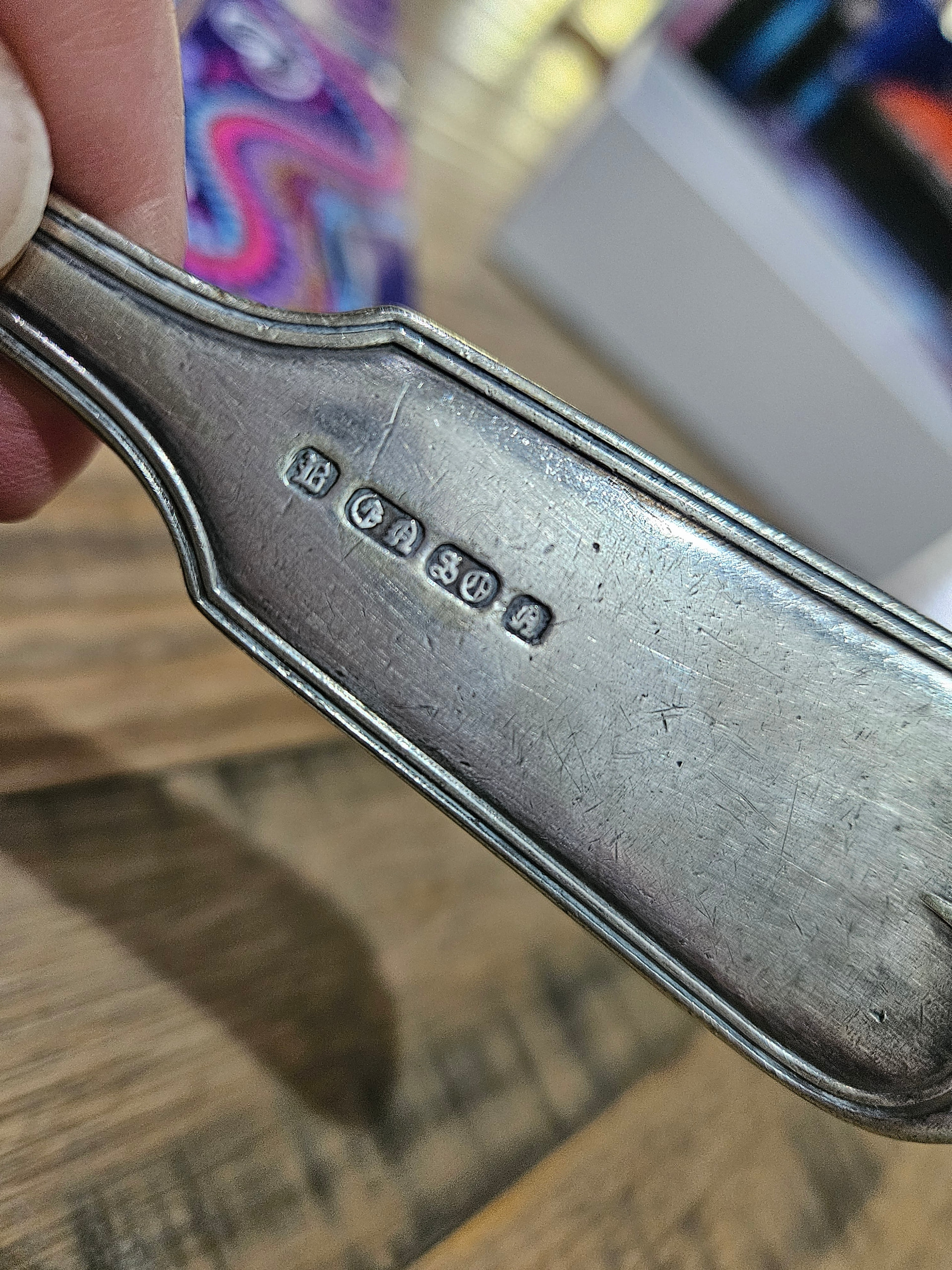
Can someone please explain the maker’s mark?
1 Like
Dear Mr or Mrs Gnomes:
It’s a 19th century fake silver hallmark which the government of the day allowed electroplate manufacturers to put on their wares to gull unsuspecting buyers into thinking they were getting real silver.
it written in Gothic lettering to confuse you into thinking, since you cannot read it without difficulty, it must be something connoting value. It isn’t.
Given the number of times this forum gets asked about electroplate marks rather than silver marks – Assay office marks certifying the silver or bullion content of the knives and forks of the day–it not only worked then as a con’ but it continues to do so.
The best way to think of electroplate is if you were to use a small electric furnace to melt down your ladle the energy cost of the melt would be hugely in excess of the value of the few microns of silver coating the base metal ladle would yield.
So why, you might ask, if that is the case, do electroplate items continue to be offered for sale not only as new cutlery but as secondhand “antiques” which are collectible?
And the answer to that question is I really don’t know. If my housekeeper takes the week off, dust too is collectible but that hardly makes it valuable.
There is even a website and several books dedicated to the subject matter and anxious to tell you, and anybody else whose curiousity is piqued, what the company initials stand for and where and when the sorry con’ was first perpetrated.
The only intelligent rationale I have ever heard anybody offer for owning electroplate was a wealthy friend of mine whose guests, in his eyes, were as dodgy as he was. He used the fake electro-plate cutlery rather than his massive and expensive sets of sterling silverware so if dinner guests ran off with an item, accidentally of course, the loss would be a few dollars instead of a few hundred pounds to replace the same item in real rather than pretend silver.
If you are curious about the relative worth of your fiddle thread electroplate ladle against the value of a sterling silver or better ladle check out the sold items on Ebay. Not the lisitings, that’s fishhooks for future gullible, the actual sales and what was actually realized. It ranges from hundreds of pounds from people whose money grows on trees to a few dollars of whatever fiat currency is popular in the local ‘burg
Hopefully that explained the mark which is all you asked. I was grateful you didn’t ask the supplemental question which was what name of what company did it indicate because then I might have felt compelled to look it up depriving you of that dive down that rabbit hole
Now of course I don’t know how you acquired it. Probably not at one of my wealthy but dodgy friend’s dinner parties, so likely you bought it by mistake as part of a job lot of silver or you inherited off some long dead relative whose budget didn’t run to buying real silver but wanted to look wealthy.
What to do with it? Shine it up and ladle out the gravy for the seasonal goose or stick it on Ebay and hope for a buyer who doesn’t read the Silver Collector’s Forum or else thinks we are all nuts and just likes it because it’s shiny.
Cheers
CRWW
1 Like
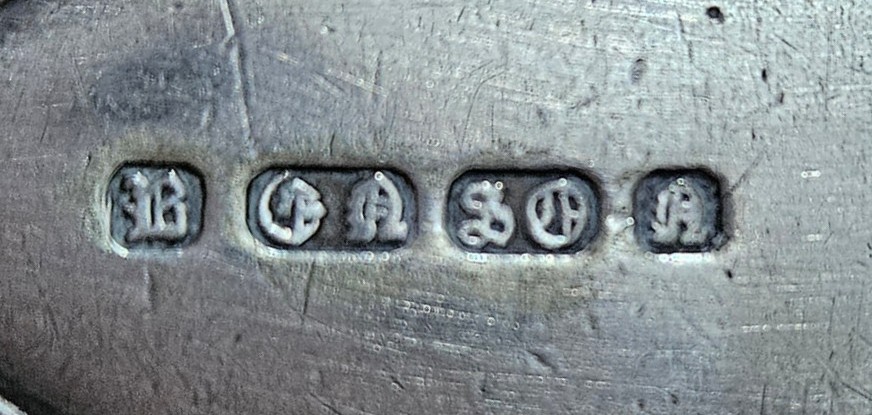
The mark is [B] [EN] [SO] [N] and is probably the mark of J W Benson Ltd of London. I apologise for depriving you of the pleasure of working it out for yourself as suggested in the previous post.
2 Likes
https://www.925-1000.com/forum/viewtopic.php?t=51158
J. W. Benson
J.W. Benson - A vintage 20th century mahogany inlaid six-piece placing cutlery canteen, featuring A1

1 Like
I thought I would give you an easy one to get started. But never mind, Fools rush in where angels fear to tread, I guess to quote Pope.
J W Benson Ltd was famous for time pieces they provided to the Admiralty from their Ludgate Hill premises which was obliterated during the blitz.
Wikipedia has a useful page on the company, its origins and eventual sale to Garrards, then Crown jeweller,
A Benson time-piece was so well crafted it defied the general rule that the UK horological market was obliterated by less considered European endeavour.
I hope you won’t be discouraged from further searches into the mysteries of silver and the workings of Goldsmiths by the abrupt termination of this modest exercise.
Your trans Atlantic spelling of ladle by reversing the last two letters should probably revert to the more usual modern format for purposes of aiding European Google searches but it does still work for early Kentucky and Carolinas inquiries
Good luck and here’s the Wikipedia link:
CRWW
1 Like