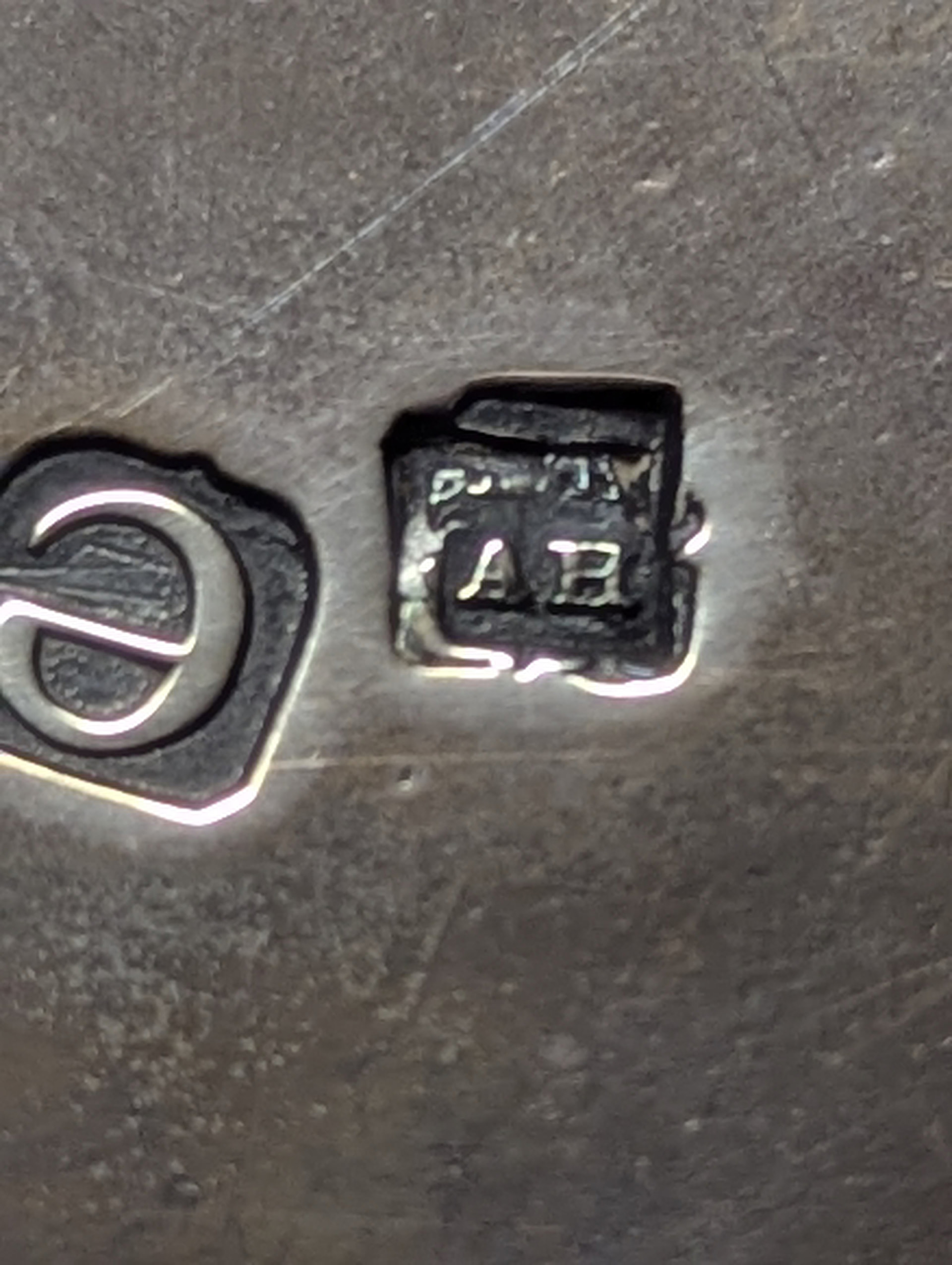
I am hoping someone more knowledgeable than I am can identify this maker’s mark. I am not certain if there is something in the mark besides the “A B” initials. I looked at images online to see if I could match it but did not find a match. Thanks!
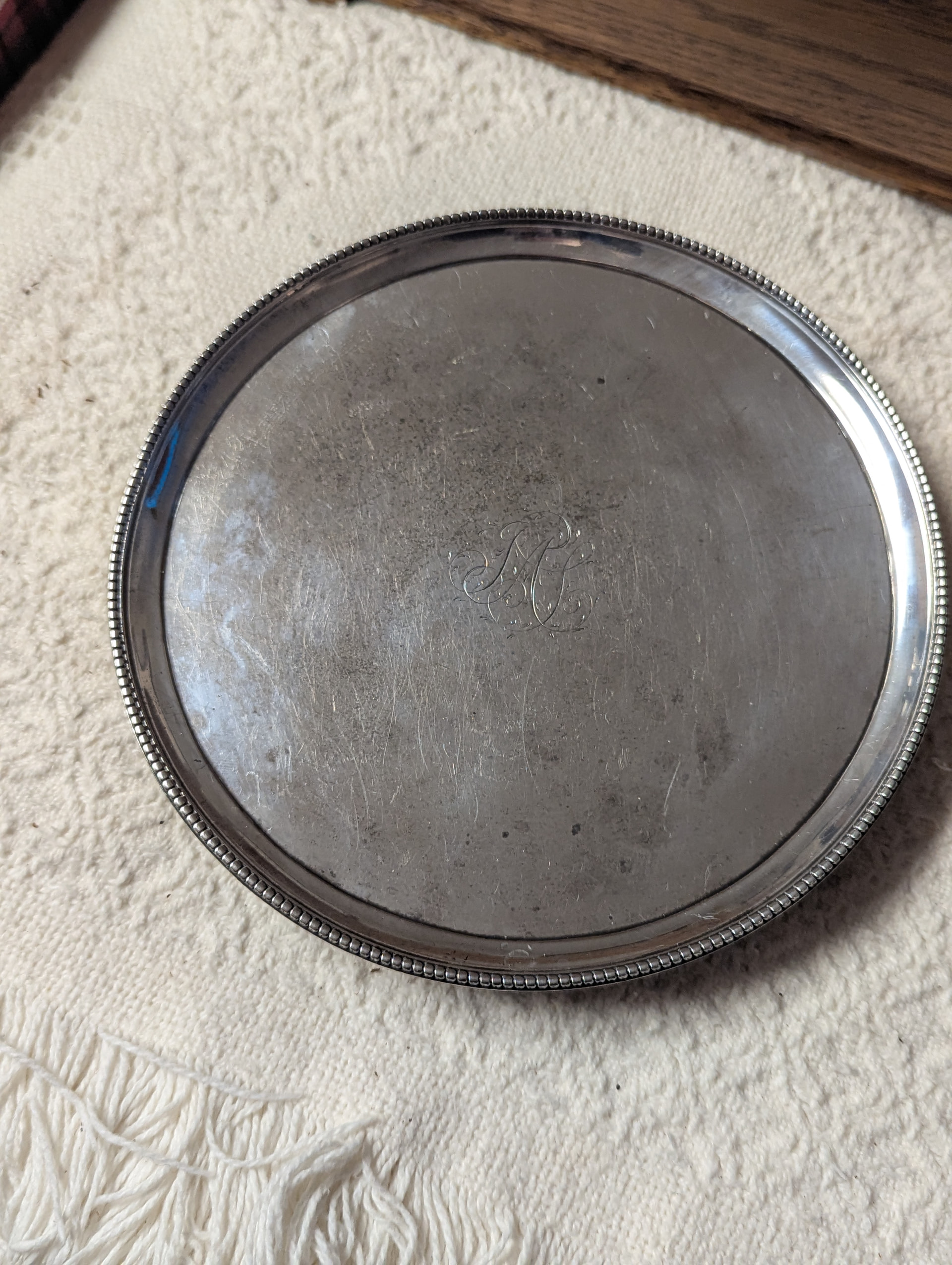
I admire the beading on the edges very much. Still try to find a family member that this belonged to.
Also, is it unusual to have the maker’s mark upside from the other hallmarks? Or possibly just the first piece of the morning after a serious bender…?
Sorry, Bart, the year is 1820 - no duty mark. But I can’t work out the maker’s mark either.
Upside down makers’ marks are not unusual as they were applied by the maker before hallmarking. The hallmarker had no reason to ensure that his mark and the maker’s were the same way round.
And I was about to write that the creators are John Crouch & Thomas Hannam… Dear Phil, You don’t have to apologize - I’m still learning from excellent teachers.
As a neophyte with regards to hallmarks, I am not knowledgeable about duty marks. I see that both 1780 and 1820 have the cropped shield and lower case “e”, but I only see the crowned leopard and lion guard ant as the other non-maleon-makerr marks. Where would the duty marks be?
My reply was in too much haste. SilverEagle is, of course, right that there would not have been a duty mark in 1780. Note to self: Multi-tasking is a bad idea. Will revisit later …
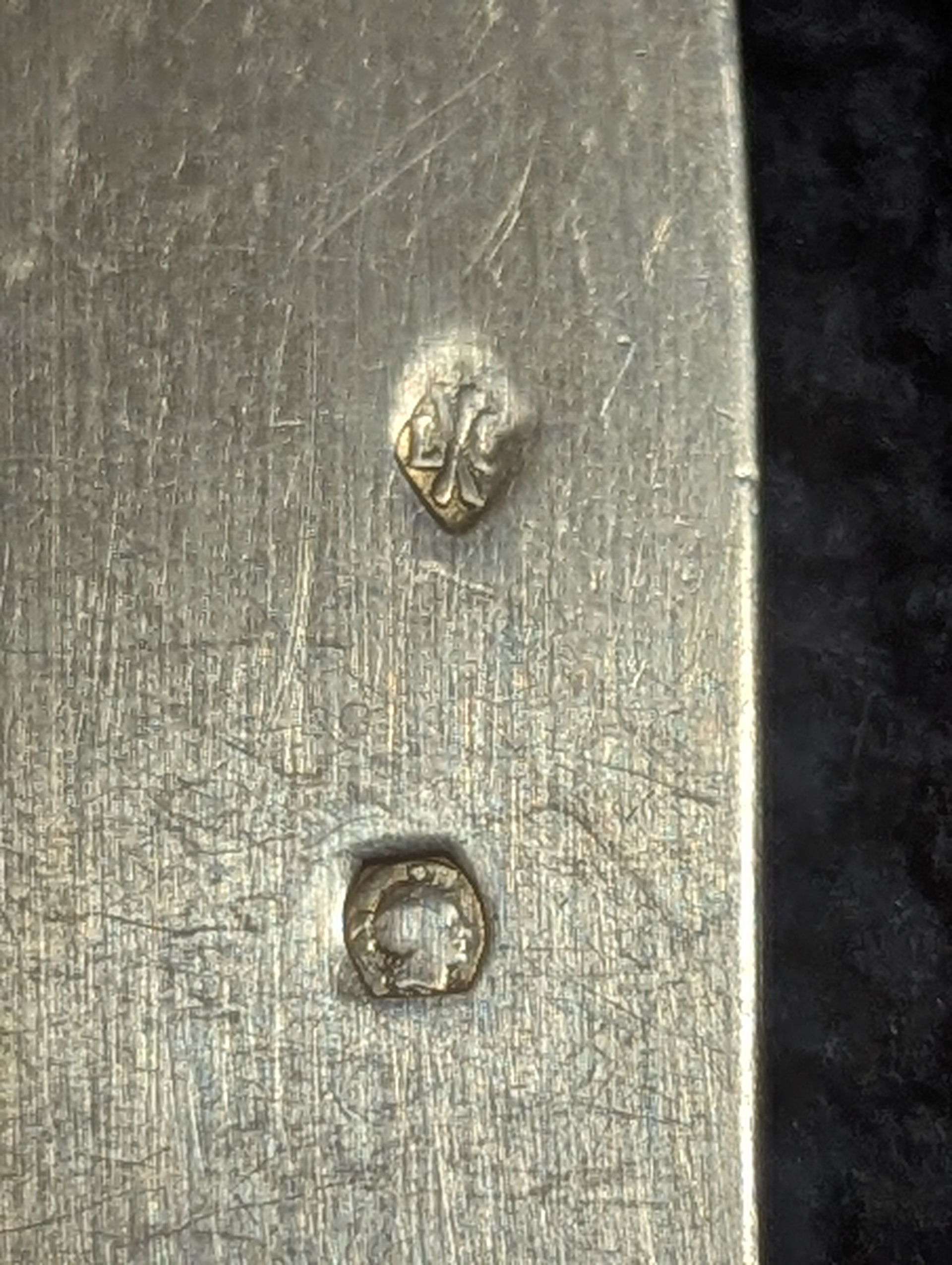
Maker’s mark with AH is almost certainly TP over AH for Thomas Pratt & Arthur Humphries. Note that this has been overstamped onto another indecipherable mark.
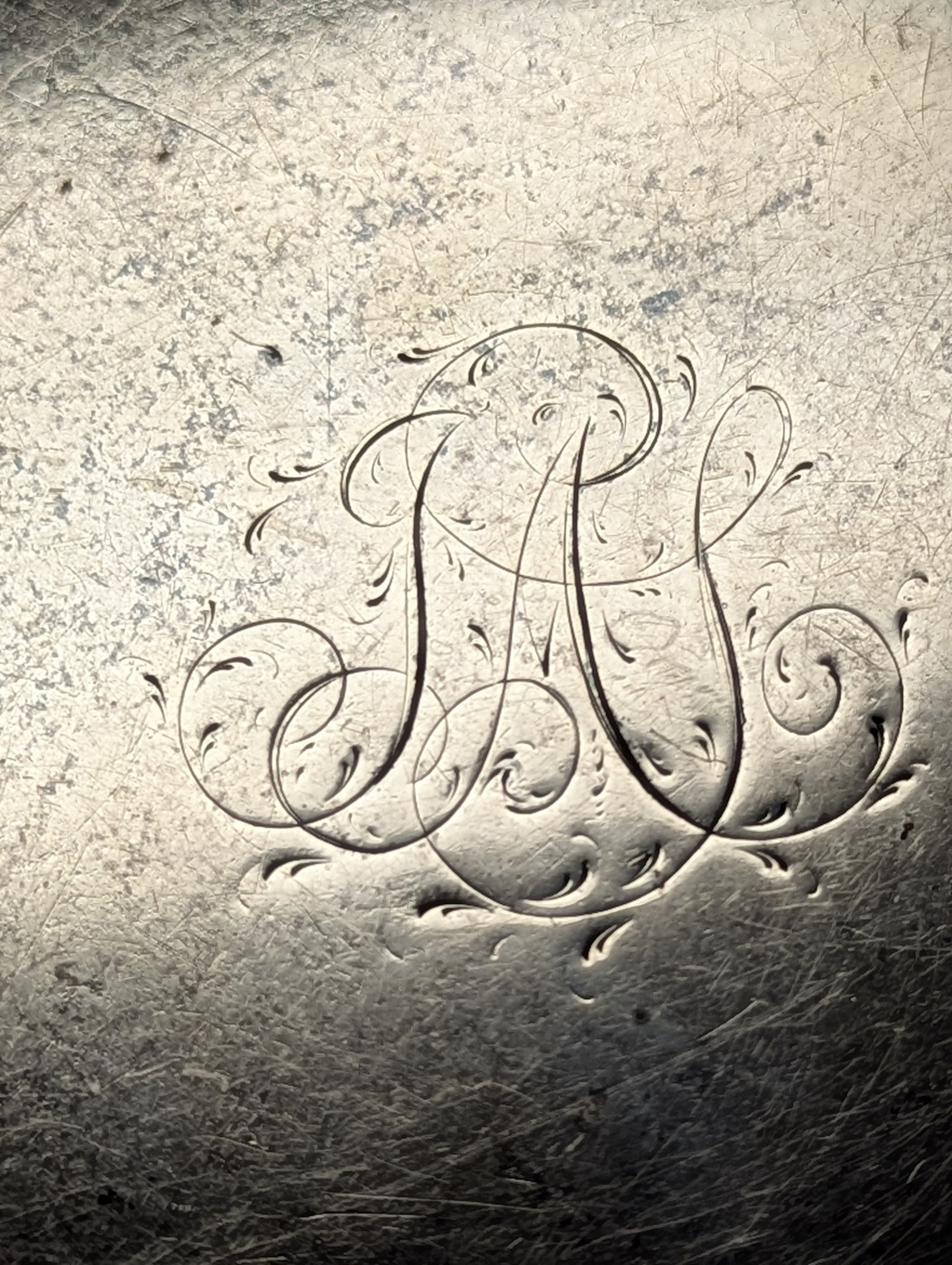
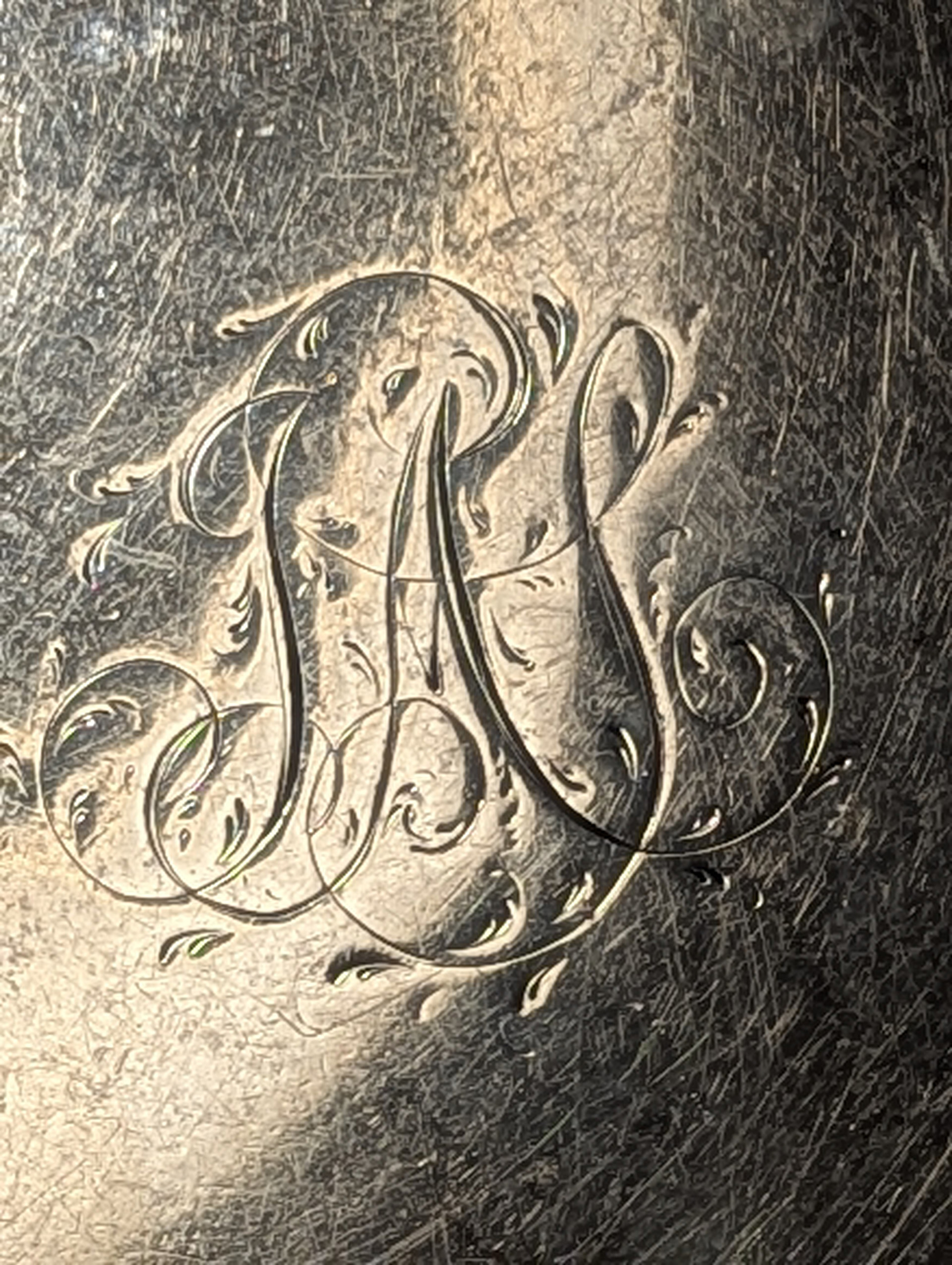
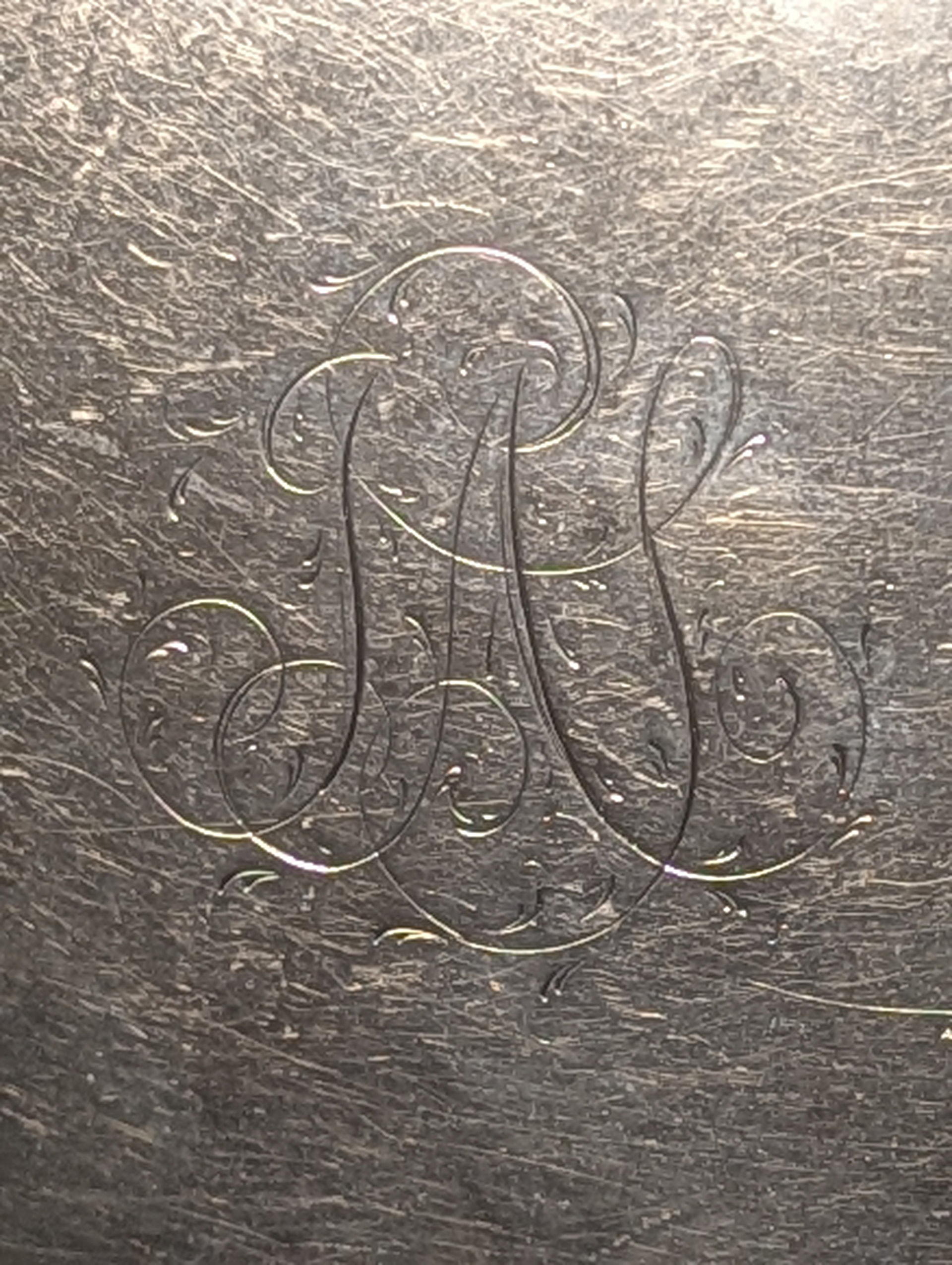
The center of the topside has three initials, either JSR or ISR. I believe it to have come from a Rutledge ancestor, but have not found a match in the family tree. Still shaking the branches…
Is it not JAS? I will try and find my old calligraphy book and source the initials tomorrow. It is an elaborate monogram … matches the beauty of the piece too!
I thought it might have an A as the center initial, but there is no horizontal leg between the two uprights. There are a LOT of curves and embellishments. I will see if I can get some better photos to post.
Also, my understanding is that most monogrammed pieces feature a last name letter in the middle, sometimes slightly larger or more pronounced than the others. However, we have several late 19th C. or very early 20th C. pieces marked T.R.W. for Thomas Richard Waring. I believe the periods after each letter mean that they are meant to be read in sequence from left to right and correspond to a name.
This one with an I or part of an H perhaps showing.
And some remarks by Silver Tongs prop. on the partnership’s preference for third party purchase rather than manufacture.
Despite years of assistance from yourself I don’t think I would have been able to pull this partnership out of that mark remnant.
1780.Right at the beginning of the rolling mill era.Those that didn’t have access couldn’t make product as fast or as cheaply as those who did. Pratt and Humphries apparently didn’t.
I love the details of those tongs. I have a pair (set?) of tongs from my Waring ancestors that I will be working on in a week or so. I’m in the process of trying to catalog the silver my 92-year-old father has inherited over the years from various family members.
And appreciation is given to everyone who has commented been such a tremendous help - all of. It is well deserved!
That is my understanding too. So JSR might be in the cards?
I live in a part of the world blessed with a cacophony of Routledges. At one point I worked rather closely with one. so took some minor interest in origin. As I recall border country folk, probably got rich reivering cattle from the Brits.
The most famous, John Routledge was leading political figure in the Carolinas. So of course I googled him and the timing fits. While there were plenty of silversmiths in the Carolinas, the business of making trays and salvers requires special skill, material and expertise so it is perfectly possible this was shipped over. But this is the purest of speculation, I don’t even know if his middle name started with S or even that he had one or for that matter that that is what this set of initials is, much less that it was his.
Unfortunately my erstwhile Routledge Ontario partner has gone on to where he is probably causing as much mayhem as ever in the next place otherwise I could ask him.
I understand you might share your own findings and I shall read them with interest. Do you have any more silver similarly initialed? I ask because the Brits introduced a sixpence in the pound sterling tax to pay for the war in the Americas which they managed to lose. The tax didn’t apply to items shipped abroad and the duty mark was either crossed out or a further mark added to show refund.
The duty drawback mark, was an intaglio figure of a standing Britannia. This rare mark was used briefly from 1784 until July 1785 to signify that the tax paid on silverware was refunded for items intended for export, distinguishing it from the standard sovereign head mark, which indicated that tax had been paid.
Elsewhere on this site I refer to Bateman silver with the duty mark hatched out. I found that item in a New York, NY some years ago.
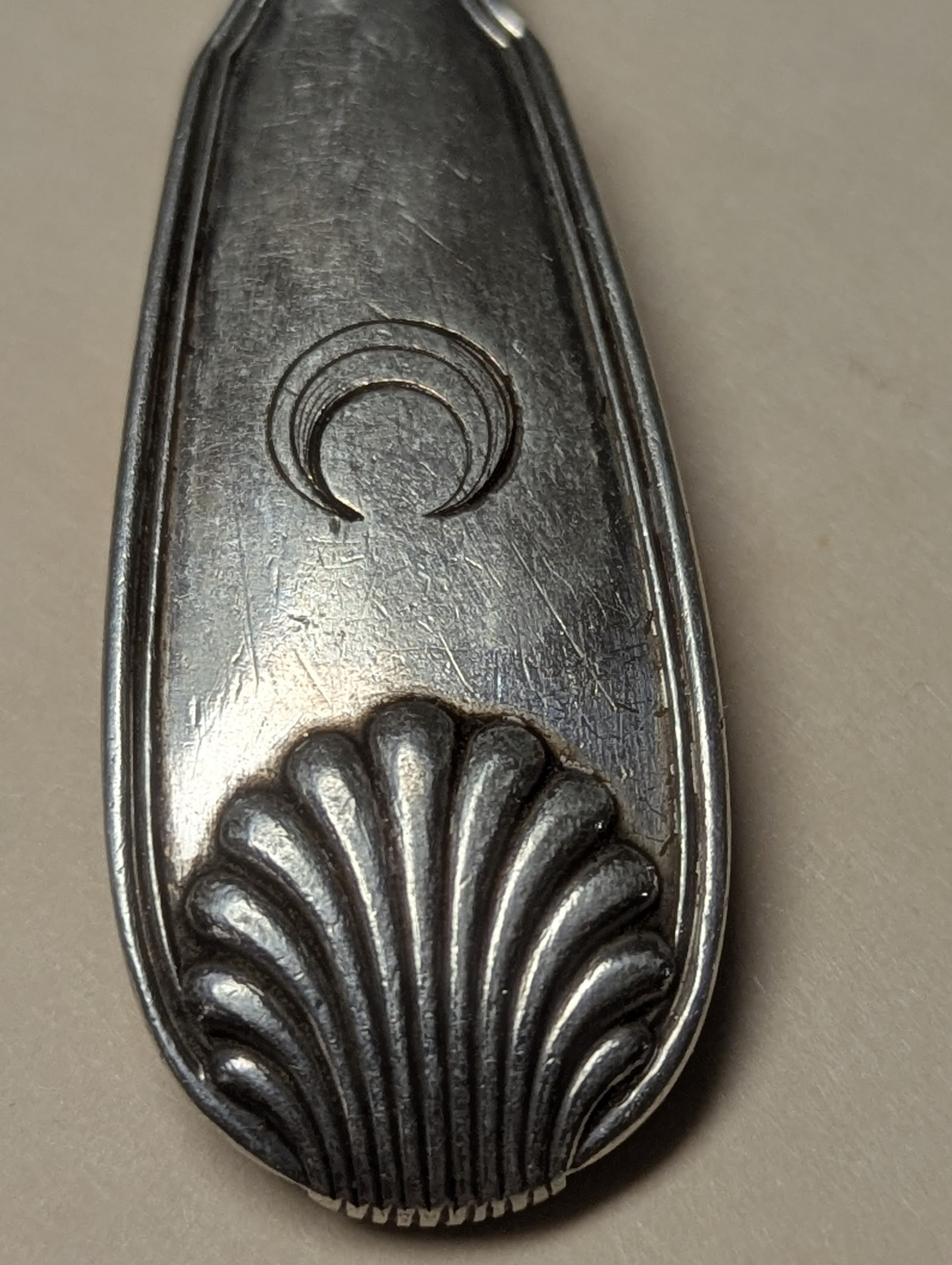
My understanding is that the spelling Routlrdge was likely used in South Carolina when the first of his family arrived, and later changed to Rutledge. John, also known as “Doctor John” was born about 1713 in County Tyrone, Ireland. His son John (1739-1800) was a notable figure in his day by any standard - second supreme justice of the U.S., Governor of South Carolina, successful lawyer, plantation owner, etc. We are descendants of his younger brother Edward, 10 years his junior, and the youngest signer of The Declaration of Independence. We are fortunate to have a silver service for 12, made by Louis Coignet of Paris, sometime after 1890, believed to be a wedding gift to Alice Rutledge Reese from her mother, Emma Fredrika Rutledge. The self-described John Rutledge coat-of-arms has a crescent featured prominent on the shield, and can be seen on the handle of one of the forks
The crescent was à historic symbol in South Carolina - I refer you to the Battle of Sullivan’s Island in 1776. Alas, I have yet to find a male Rutledge with a middle name in our family line. I am guessing it was not the custom for them as it was for so many families of that social strata. And a check, so far, on the female members gives us numerous middle and maiden names, but, sadly, no matches.
Fascinating stuff. You will know a Routledge very nearly became an occupant of the White House. She was Abe Lincoln’s sweetheart. Sadly for the young would-be couple she died very young.
You also mentioned you have connections with a prominent Shropshire family, the Warings of Mytton. The only reason the name pops in my mind is 122 years ago my grandfather bought a section of heathland off the Patshull Estate and when examining title I noted the Warings had donated it to the nuns at Brewood who had lost it in the time of the Tudors and it had gone back to what became the Legge-Bourke family who became the Lords Dartmouth. and bought the estate off the Pigots one of whom became governor of Madras and once owned the largest and most cursed diamond in the world.
As neighbours we brought in the heath to complete an eight-peg (gun) pheasant drive.
The Warings worked in or ran the Shrewsbury mint, one of six Royal Mints which became important in the civil war and the reason Charles II fled north after his loss at Worcester.
Sadly for him the Shrewsbury Mint was devoid of coin and Parliament was hot on his tail. You may recall the hiding in the Oak Tree story? It’s all true and to this day our land has an exemption to conveyance on it for Royal Gold which supposedly he hid in retreat.
Mytton, from whence your family came, lent its name to " Mad Jack" Mytton who hunted with the Albrighton-Woodland and the North Shropshire in the 19th century.
I am grateful for your reminder of the origin of the crescent on your fork. The crescent on the South Carolina flag, often mistaken for a moon, historically a silver, crescent-shaped piece of armour called a “gorget” worn on Revolutionary War soldiers’ hats. Designed by Col. William Moultrie in 1775, it represents the defence of Sullivan’s Island against the British general Henry Clinton.
Perhaps the most famous gorget is the Irish Gleninsheen gold gorget which appears as a silver hall mark on Irish Silver in 1973 when it joined the European common market.
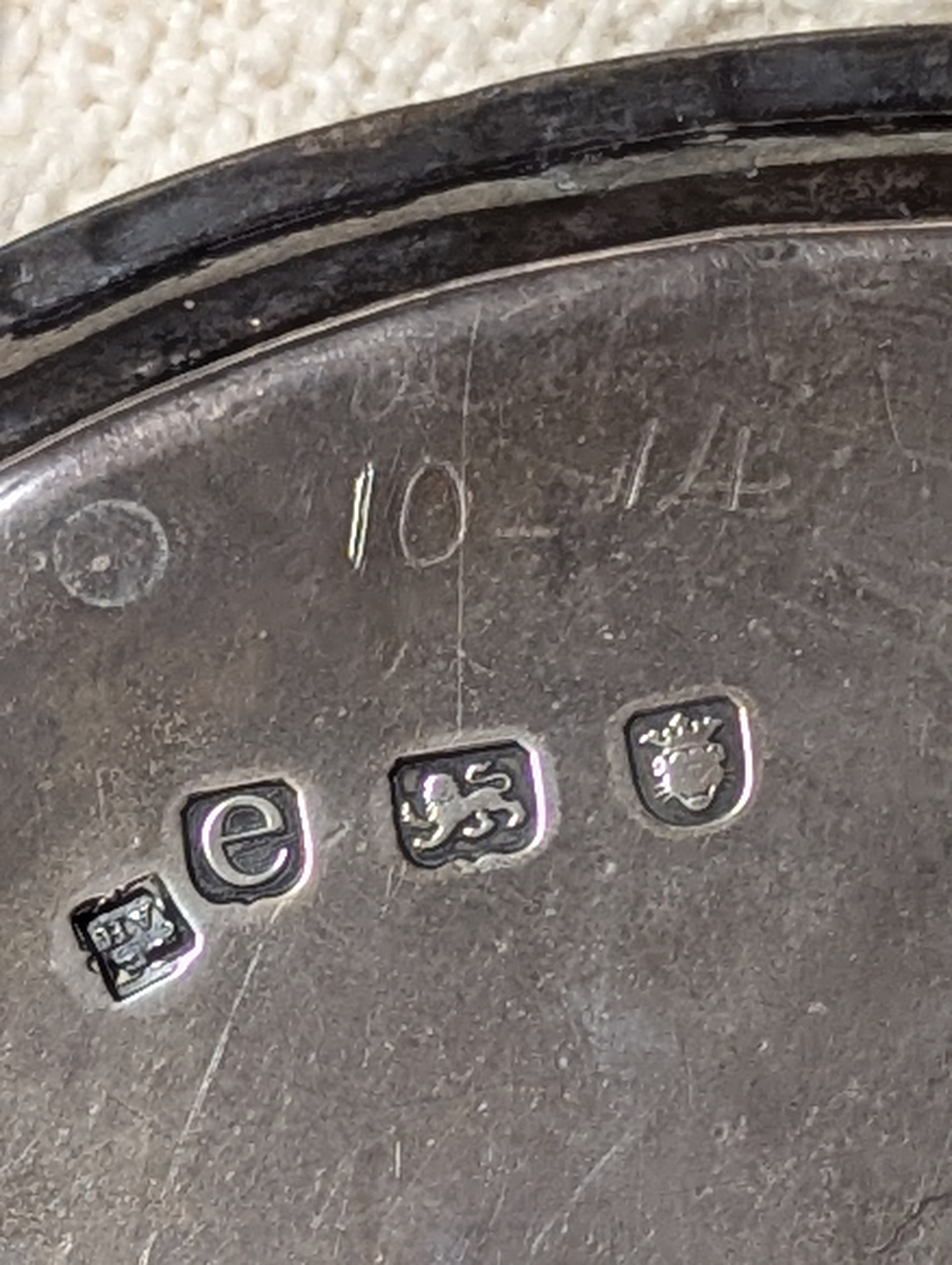
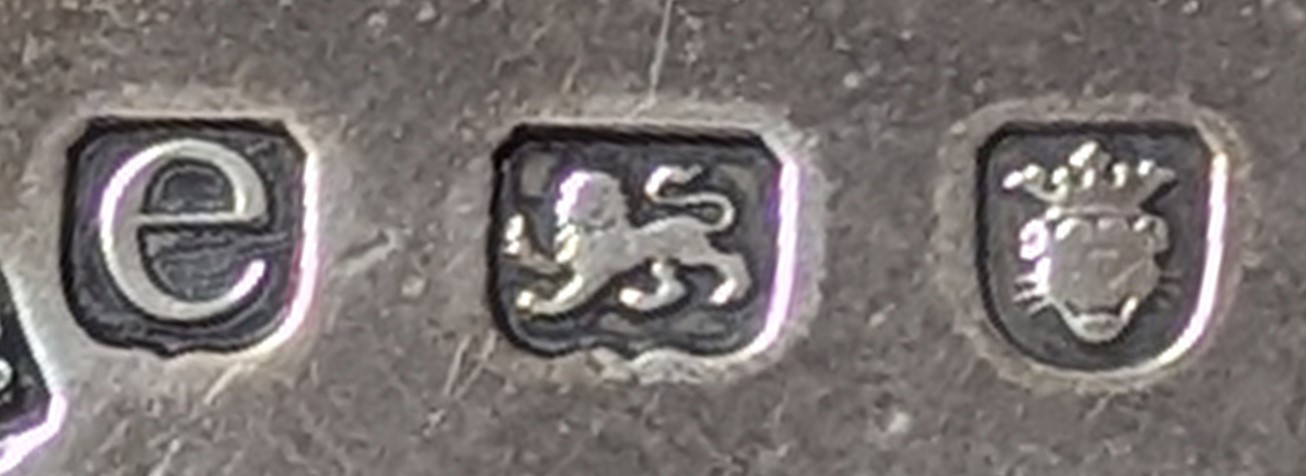
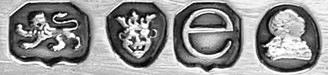 1820. I’m confused…