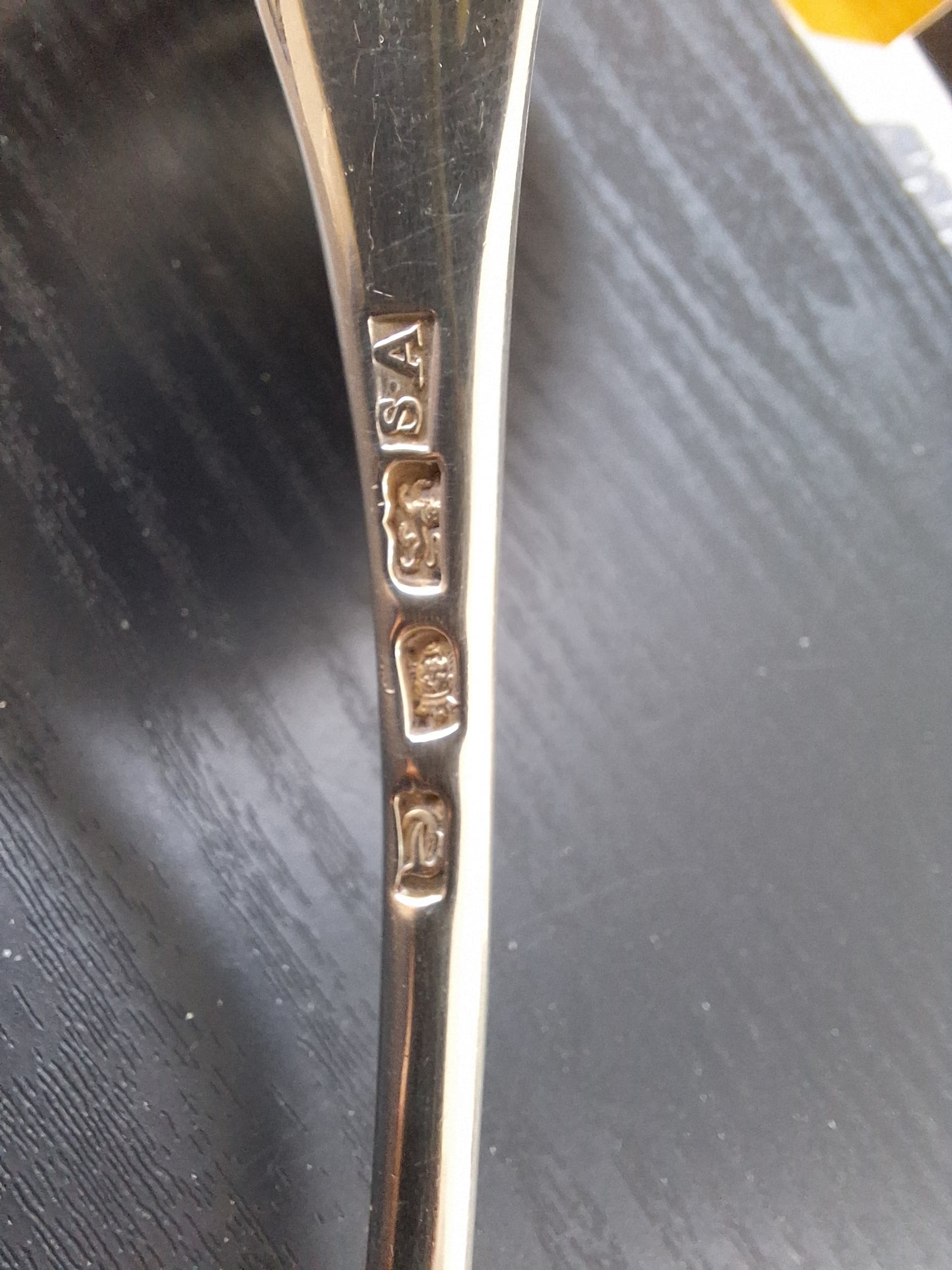
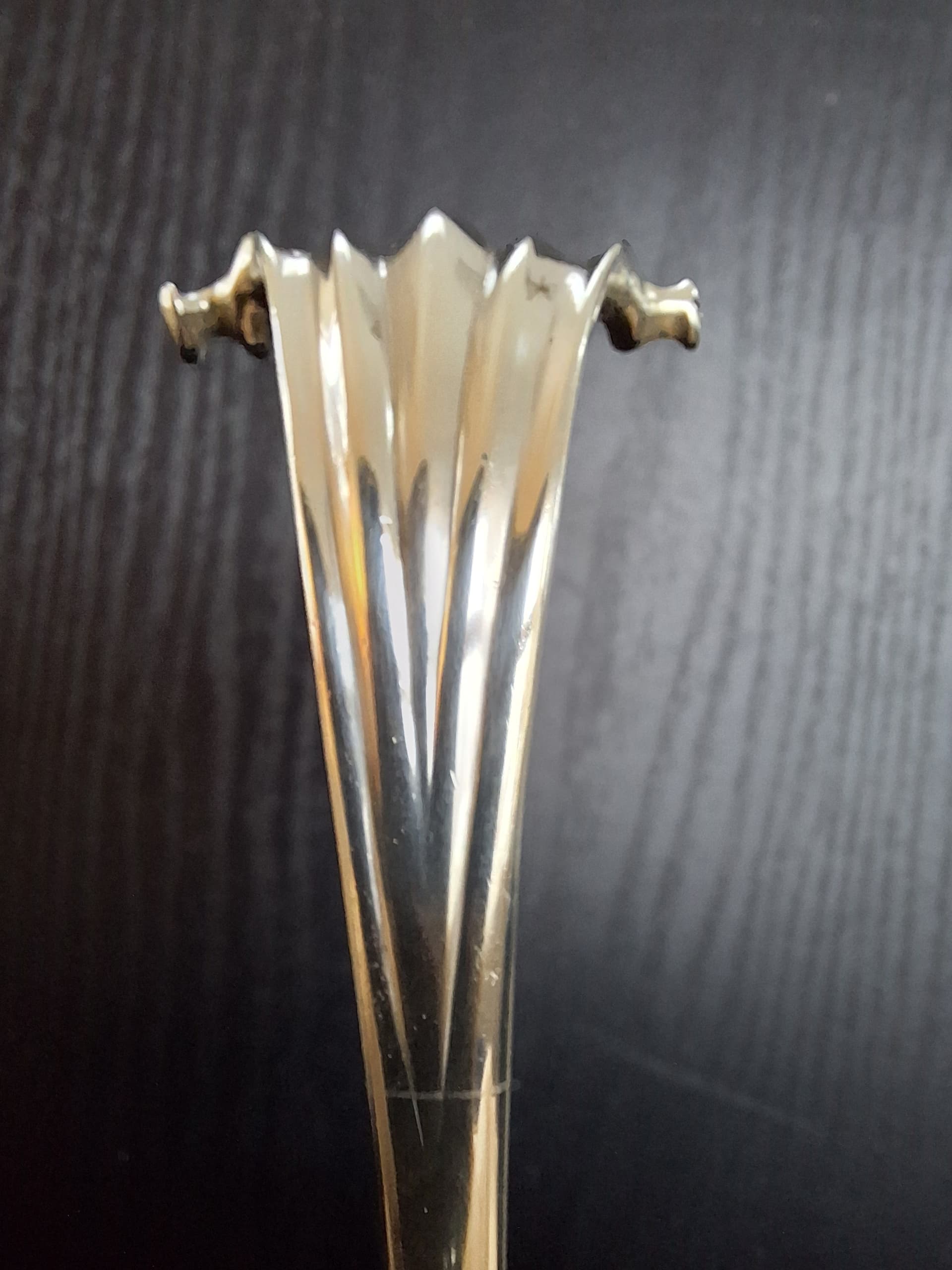
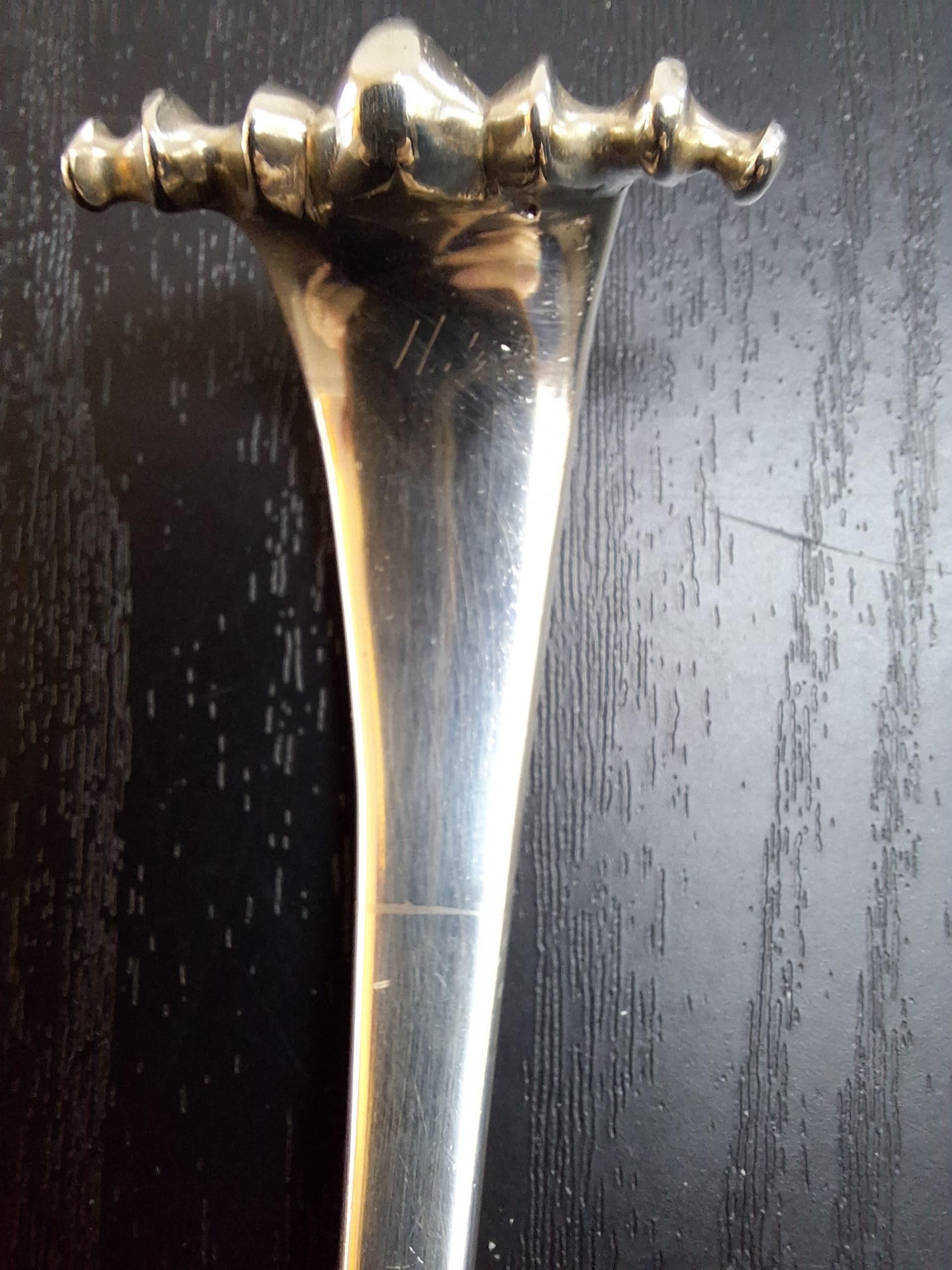
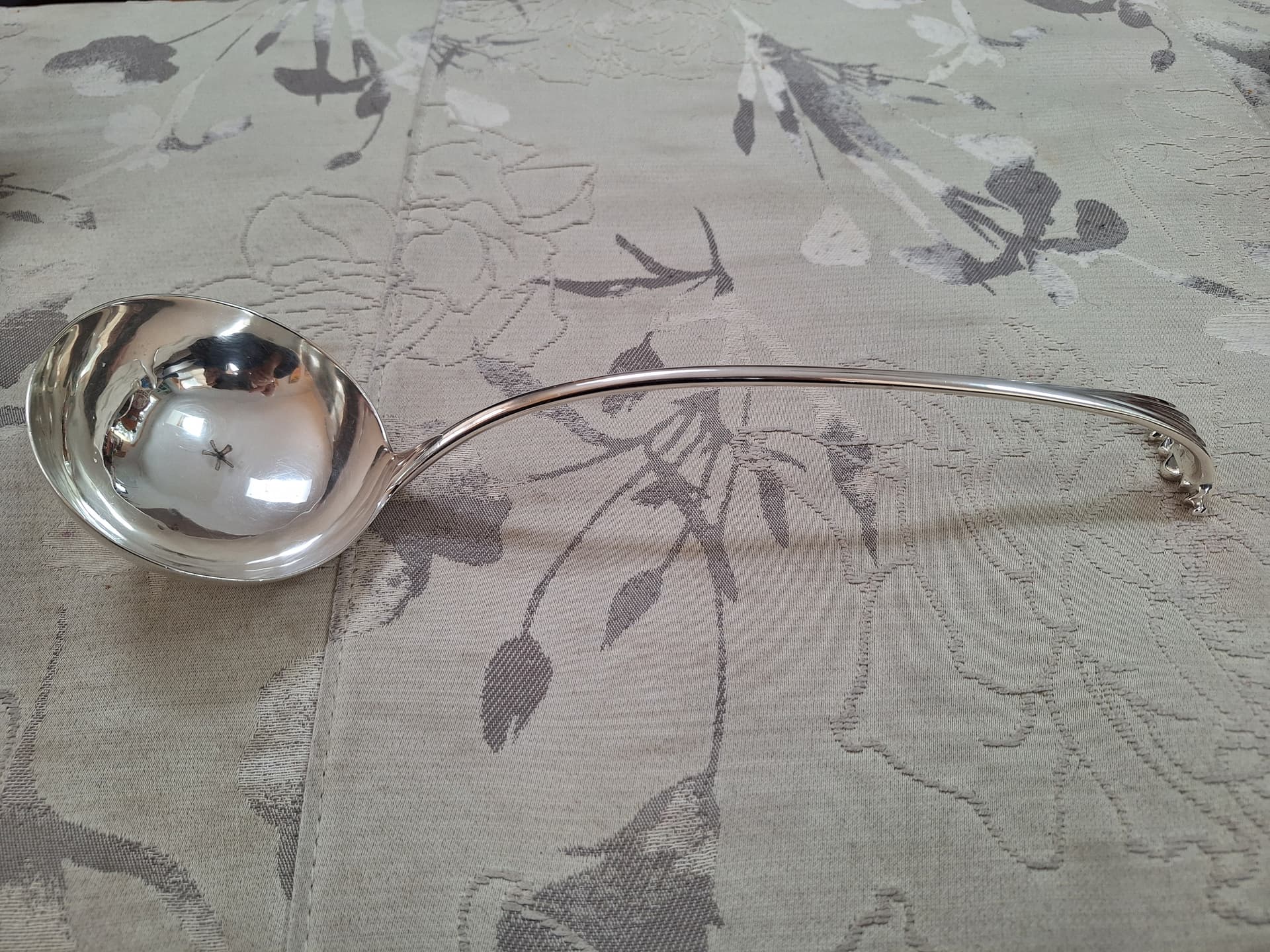
Hi, was wondering about these marks on this 1774 Onslow pattern ladle. I’m assuming the finial was cast and then connected to the stem which I suppose is what these lines are evidence of. But why didn’t Mr Adam’s, the maker, not buff them out? And why attach it above where the design ends. Is this a later repair? The lines are approx 1/4 “ apart the obverse being the lower. Any thoughts? Many thanks
1 Like
The Onslow pattern features an over-scrolled, grooved handle terminal that resembles a turned “paper scroll” decoration found on some early Georgian chairs. This terminal is a distinct feature compared to the plainer Hanoverian and Old English patterns popular at the time.
The unusual nature of the design meant the decorative terminal back in the period had to be cast separately from the main stem of the utensil, which was typically forged. The two parts were then joined using an angled scarf joint and solder.
This joint often leaves a solder line or seam visible on both the front and back of the item, especially when the silver is tarnished or examined closely but not opposite each other.
The presence and type of joint are critical for authenticating antique Onslow silver:
Genuine 18th-century pieces feature the scarf joint.
Due to the pattern’s rarity and desirability, many OE items were converted to the Onslow style in the 19th century or later. These conversions or modern copies typically use a square-cut butt joint or no joint at all, as they were often manufactured as a single piece or had the original end cut off and a new terminal soldered on.
Because the terminal makes the flatware awkward to handle, original examples are mostly limited to larger serving pieces like basting spoons and stuffing spoons.
Yours is a genuine scarf joint by a reputable period maker. If the joint were the same place on both sides it would likely be a straight cut and therefore very likely a fake.
By the Victorian era when Onslow came back into fashion the silversmiths had the ability to cast the entire spoon on a single stamp and the join disappears completely.
So a rare example of a visible joint being an assurance of a period piece and not a later reproduction.
CRWW
1 Like
And you cannot buff out solder that goes all the way through. Well you can but then you have buffed the entire ladle in half.
Hence the famous expression “steady the buffs”. No, not really. That is a military expression
and buff was the uniform colour of the soldiers supposed to stand in a square formation or block to make them easier to hit with otherwise wildly inaccurate musket balls.
Soldiering then having a rather high turnover rate and no pension plan.
CRWW
1 Like
Many thanks Mr. Wilson, glad to have that confirmed. And on closer examination, I can also just make out a diagonal vertical line connecting the horizontal lines on the side of the stem. Just wondering why the cast finial didn’t go all the way to the lowest part of the V as the line of the scarf joint (thanks for the proper nomenclature) slices through the bottom of it. Also very cool to see a bit of bubbling on the cast finial.
I wasn’t aware of the expression “steady the buffs”, though I know the Buffs from the poem “The Private of the Buffs” which often pops into my head as I’m handling some of my high Victorian pieces. Rather shockingly xenophobic to modern ears, but they don’t write muscular verse like that anymore.
thanks again. Love my ladle
1 Like