Evening all, got a small mystery that one of the boffins might be able to answer -
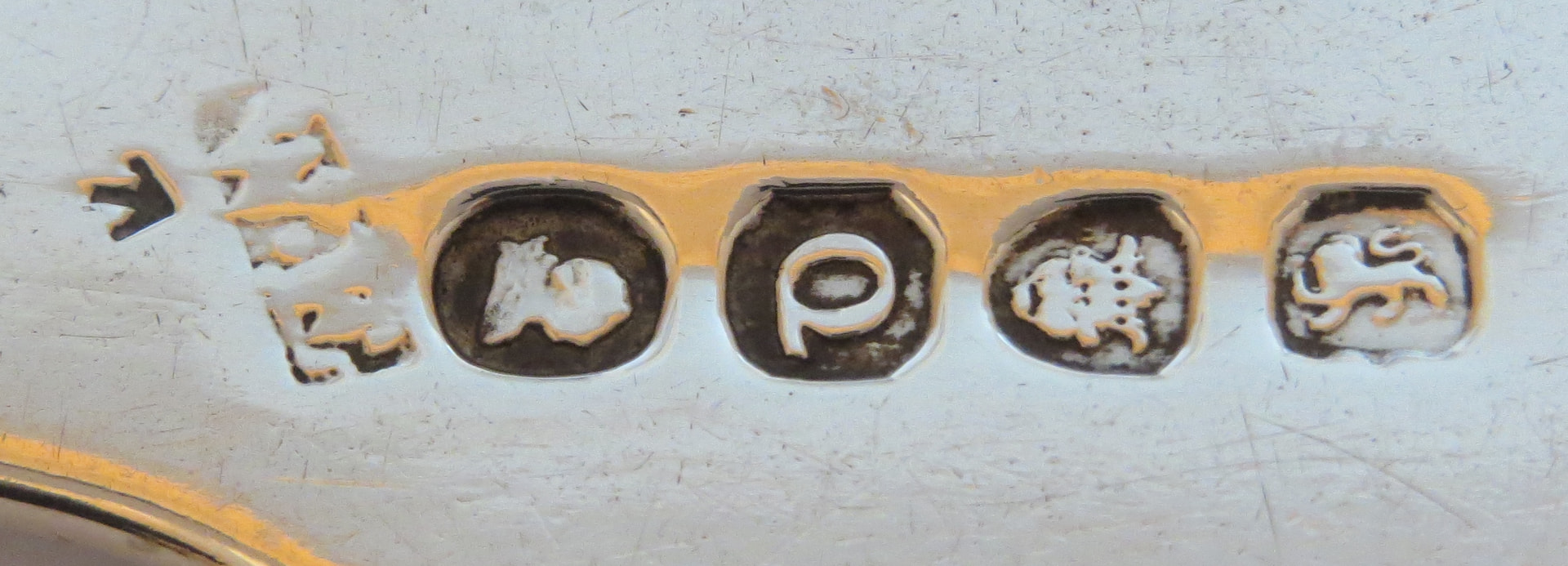
All signs lead to William Eaton and the year being 1811 (unless that is not a ‘q’). WE only registered in 1813 which leads to a question of his history and when he actually started making silver. Anyone have any further info or willing to correct my findings which could well be incorrect.
Many thanks.
Additionally, anyone have more info on the arrow and the meaning behind it?
2 Likes
U have 2 wait 4 our experts.
1 Like
I found the mystery of the arrow, otherwise known as a ‘Broad Arrow’, officially British GVT stock, then turned to private with crest. High ranking officials would sometimes take silver once they completed their tenure from where they were doing their respective duties
2 Likes
It certainly looks like the William Eaton mark which he registered as a plateworker in May 1813. There doesn’t seem to be any evidence of the mark being overstamped on another earlier maker’s mark so I don’t have an explanation for the discrepancy. The broad arrow here is a journeyman’s mark with nothing to do with government stock. If we could find further examples of the arrow mark associated with Eaton’s (or somebody else’s) mark we might be able to say something more about this enigma.
2 Likes
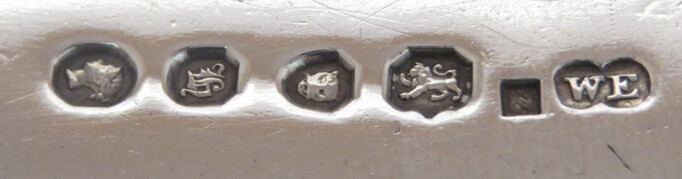
I’ve only found these markings in the 1811 and 1833 goods so far, all the later items are devoid of them. The initial attached was from a main fork, the below is from a fish server (WE 1843), also with an additional small block which I’ve yet to see on any item -
2 Likes
Even though Phil’s enigma lacks the Churchillian “Bodyguard of lies”, I would like to take a run at it.
This seems to be one of those occasions when tally marks actually might attempt to allow us indicate who was the sponsor’s mark owner.
“Trevor” on another forum is “convinced” William Ellerby employed the tallyman with the broad arrow mark, it was not a government mark and references the matter to a fiddle thread fork by him with the broad arrow and the W.E.
https://925-1000.com/forum/viewtopic.php?p=214666&sid=4681e2f244207969c7010aac54b427b7#p214666
Phil Osborn’s encyclopedic reference show Ellerby with an oblong primary mark and a rectangle with camfered corners registered in 1804 as a subsidiary mark.
I do not see the camerfed corners on the exhibited mark hence Phil’s elimination of the Ellerby mark ab initio.
So which is more likely: that Eaton used an unregistered mark some considerable time before registering it and thus risk incurring the confusion if not displeasure of the Guild or that the Ellerby rectangle mark, which appeared camphered in the cited alternate registration, was used with a plain rectangle possibly because someone picked up the wrong punch and the Assay office simply either failed to catch it or didn’t bother it being a Friday afternoon and the examiner had promised his wife dinner out?
I am extrapolating circumstances a little. 18th-century dining in London included chophouses like Rules and Simpsons and Vauxhall Gardens. The first two still not only exist but thrive.
CRWW
2 Likes
Very interesting, enjoy a good unravelling. My reason for the possibility of the ‘Broad Arrow’ avenue is the following:
The flatware is crested with the Tucker bear/lion claw holding the axe. The Tucker who slightly redesigned the crest was Henry St. George Tucker (1771 - 1851) who was a financier in the HEIC, then director, then Chairman in 2 separate sessions. It’s rumored that he was largely responsible for turning India from a UK cash drain into green status which means no financial assistance from the Queen.
From what I picked up, pending your position and influence, certain figures were ‘allowed’ to take silverware back home with them after their tenure but that is to be confirmed. It roughly fitted in with the figure hence my travel down that path.
All the crested flatware runs from 1811 through to 1897, the family obviously carrying on the traditional cresting after his death.
Thank you for your input
2 Likes
After a visit from any member of my family, counting the silverware is a wise precaution.
3 Likes
I do the same with the house bricks 

1 Like
Beware of the man who brings his own hod to a social gathering.
2 Likes
Classic, where are you based?
2 Likes
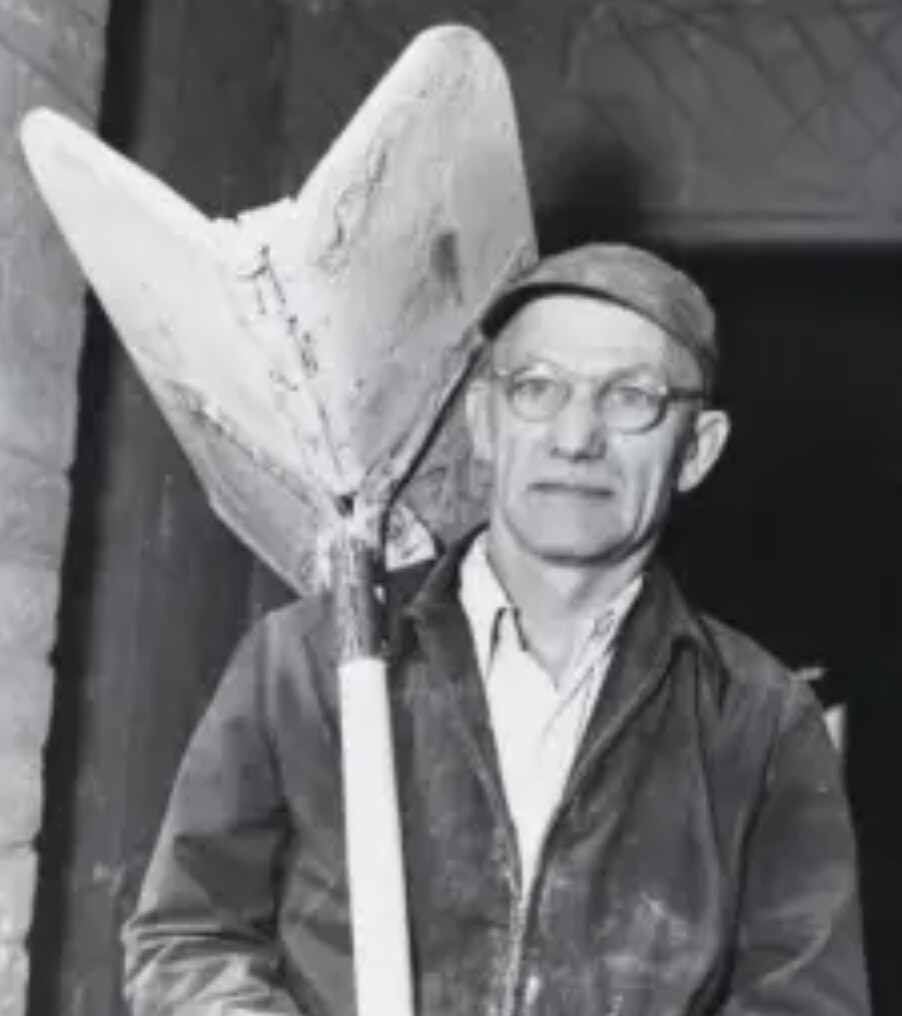
I can be found lurking in the far northern suburbs of NYC, though I have an increasing tendency to flee to the Delaware shore when the weather’s good. Like this coming week!
I live in the land in which there’s no such thing as a carboot, and where the local antique shops suffer from an appalling lack of hallmarked sterling. Georgian pieces are in perilously short supply.
3 Likes
There’s a fairly complete article about your revered forebear and his exploits in India:
However the Bear with the Battle ax belongs to the even more famous Captain John Owen Tucker Edwardes, 1808–1891, an eccentric Welsh sportsman who created the Sealyham Terrier breed at his estate in Pembrokeshire, South Wales, in the mid-19th century He sought to breed the ultimate small, wire-haired white terrier for hunting otter, badger, and fox.
His entry in “Fairbairn on Heraldry” reads: Edwardes-Tucker of Sealy Ham, Pembroke, a bear’s paw holding a battle- axe arg. Vigilate — Gardez la foy. cf- 38. 3
There are 12 separate entries for Tucker or Tucker cadet branch families but Edwardes-Tucker carries the Bear and the Battle Ax crest.
Michael Edwardes to whom the huntsman may be related was a very important historian on the Raj. He wrote three books on the seizure of Lucknow one of which I have a first edition which I had rebound by a Oxford Book dealer some years ago.
On the question you raise about ambassadorial silver, it was indeed the custom of the ambassador to buy extremely expensive silver at the government’s expense which silver he took upon his retirement.
But he certainly would not have marked it with any evidence of government ownership.
This is a tally mark and the mark indicates a plausible alternative maker to William Eaton in the view of “Trevor” of the other silver forum.
I am agnostic on the matter.
CRWW
2 Likes
My forebears weren’t nearly as distinguished. My father, then 12, and his family emigrated to the U.S. from Bridge of Weir in 1923. One of the sons, not fond of the States, went back, and over the years plunged into the genealogy of the Tucker and MacFarlane lines. His conclusion? “We are descended from a long line of domestics and pastry cooks.” If there were a family crest, it would consist of a crossed dusting cloth and spatula, perhaps with a scullery maid rampant.
The less said about the MacFarlane clan crest, the better.
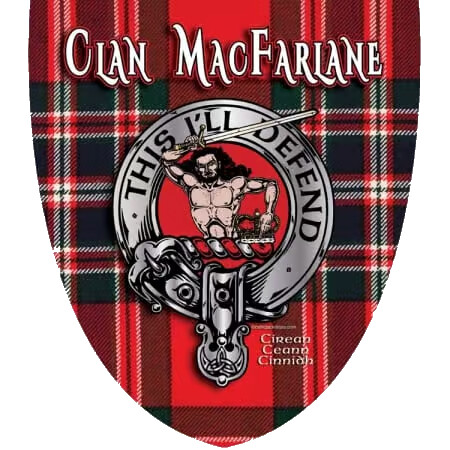
Some of the other renditions are even sketchier.
3 Likes
WOW, -----------------------


1 Like