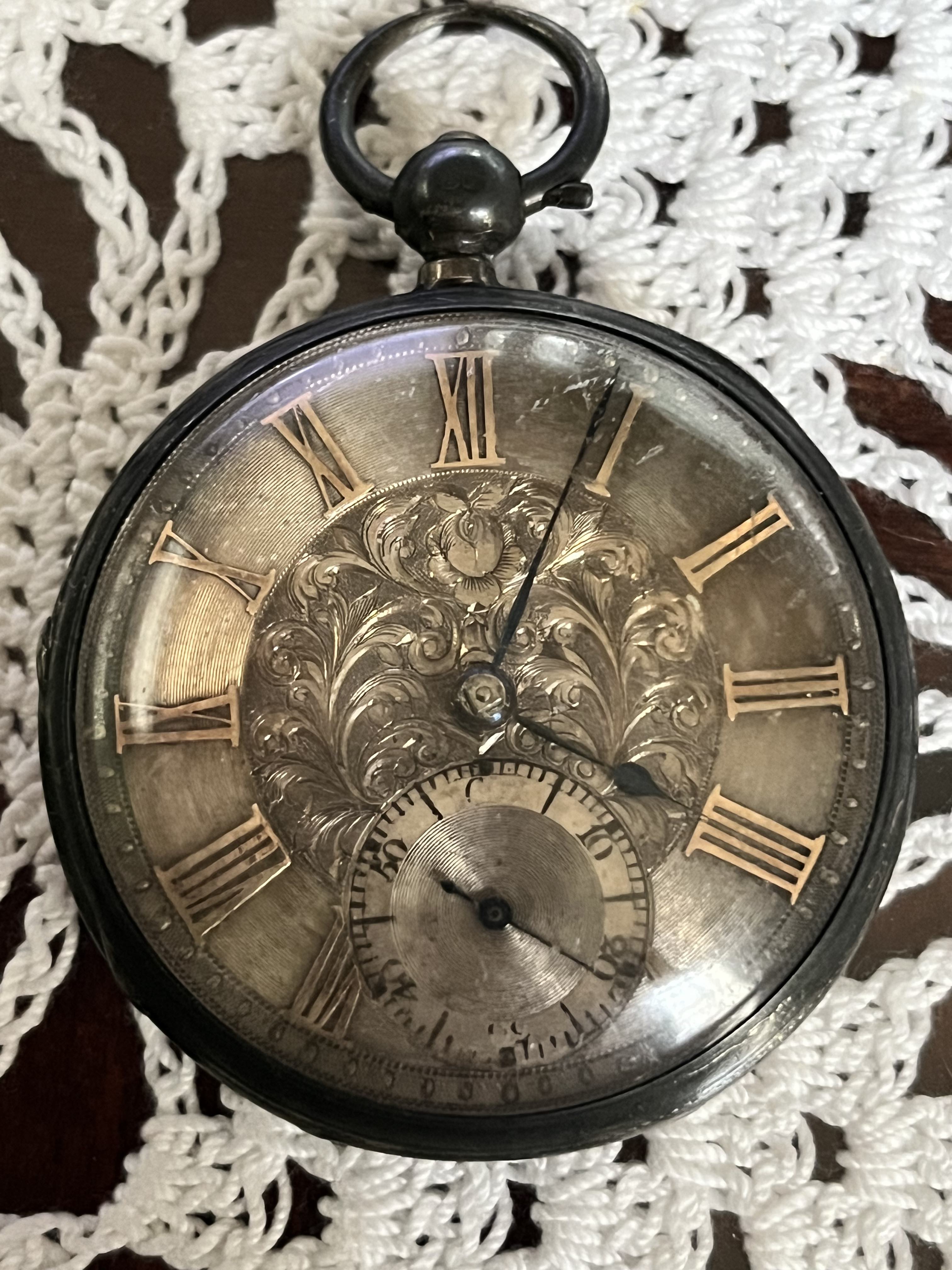
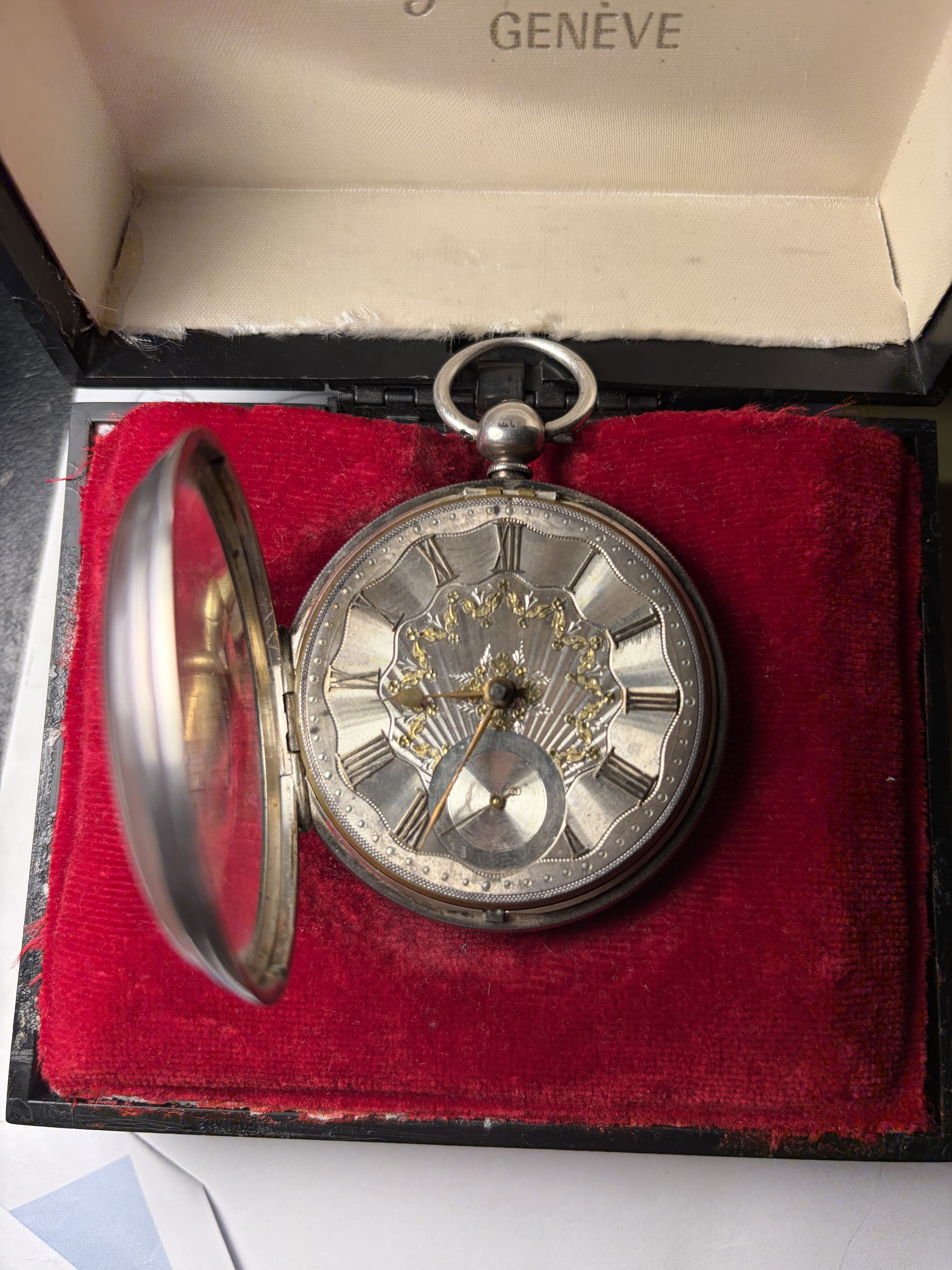
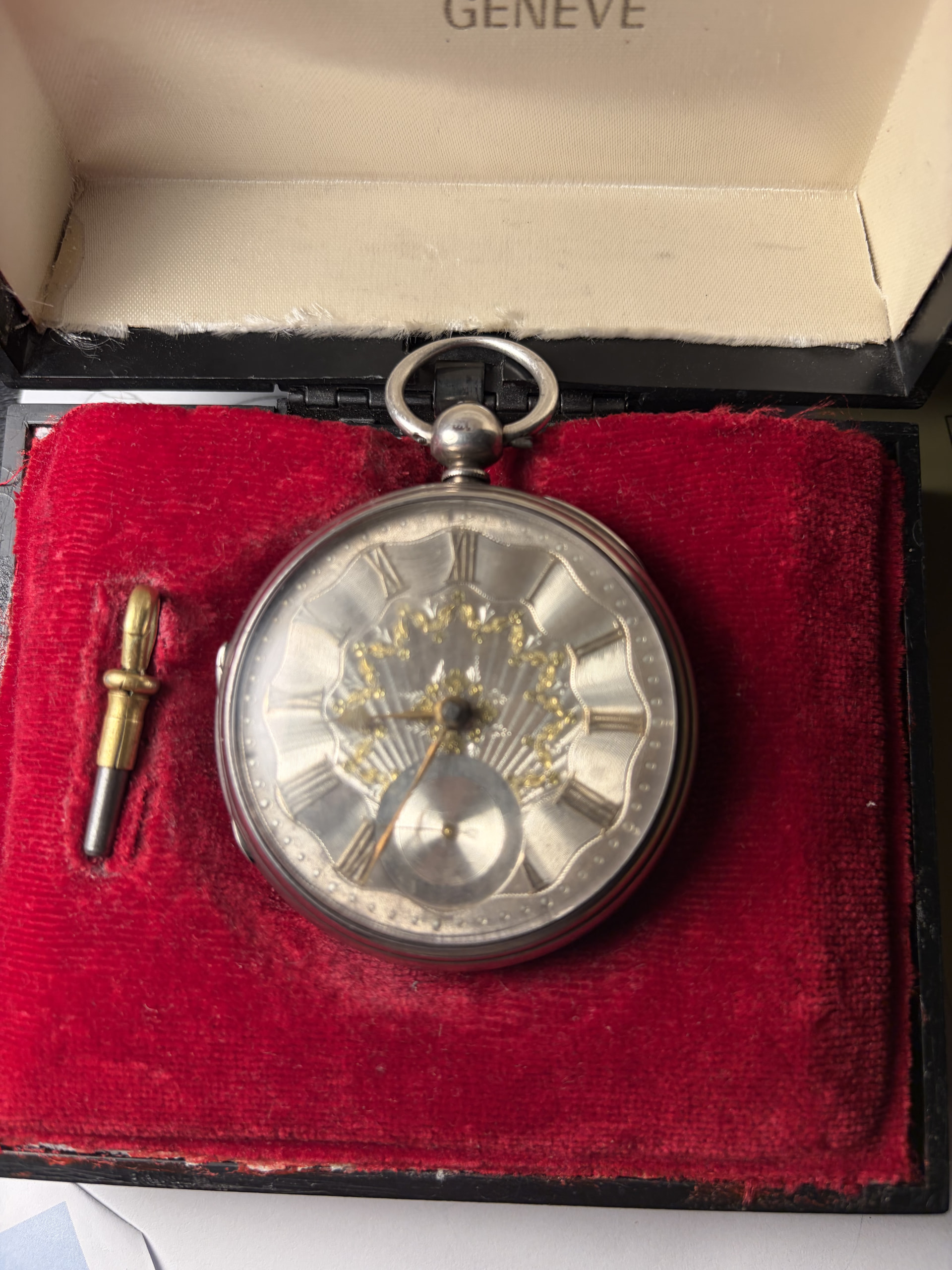
Need Help identifying an antique Key-Wind Fusee pocket watch

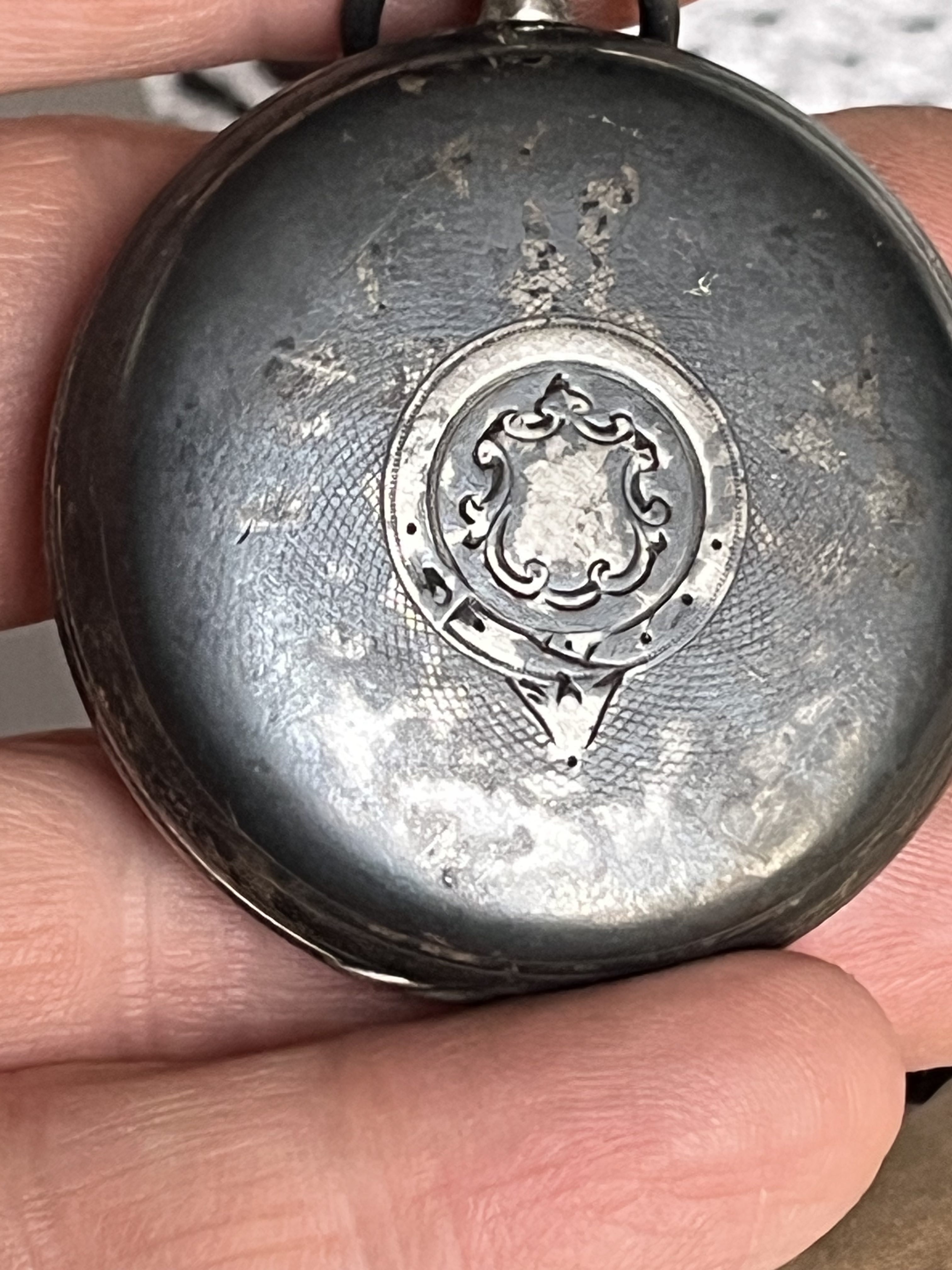
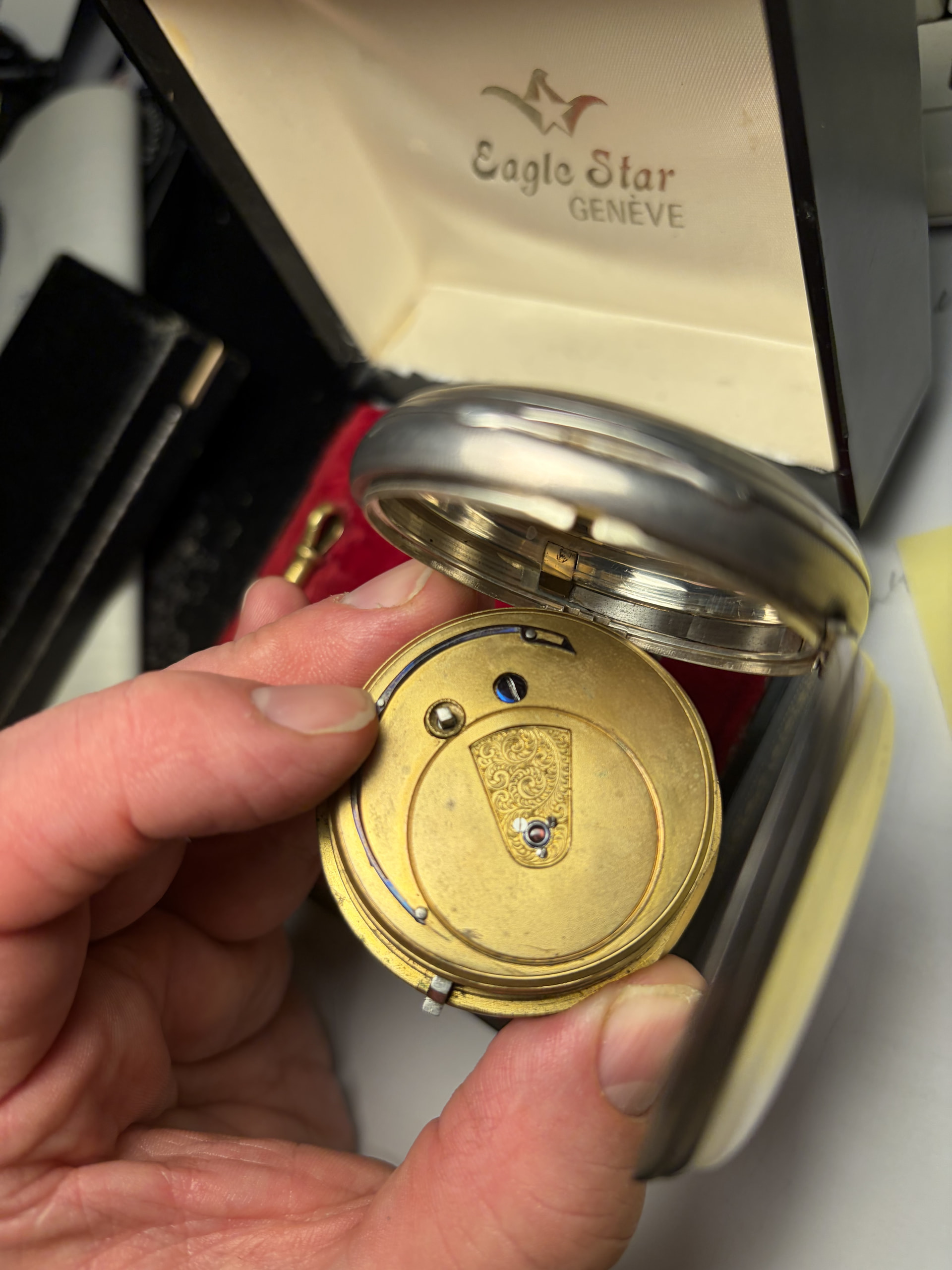
The Main identifying features are on the back cover with the crest circled by a ring with a point at the bottom.

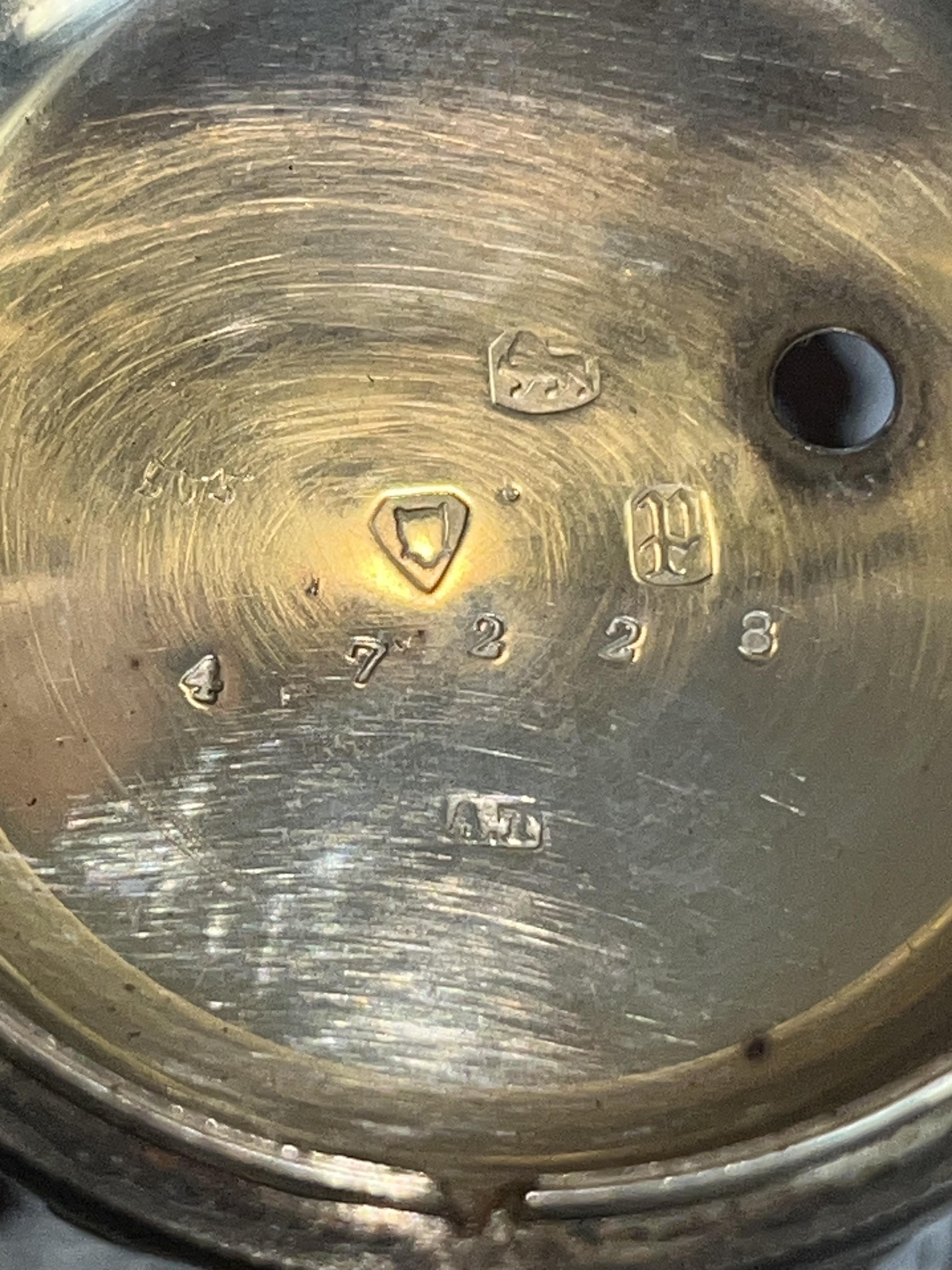
Other identifying features are the “Lion” and the “P” hallmark. I don’t know what the bottom left one is supposed to be but possibly a coat of arms?

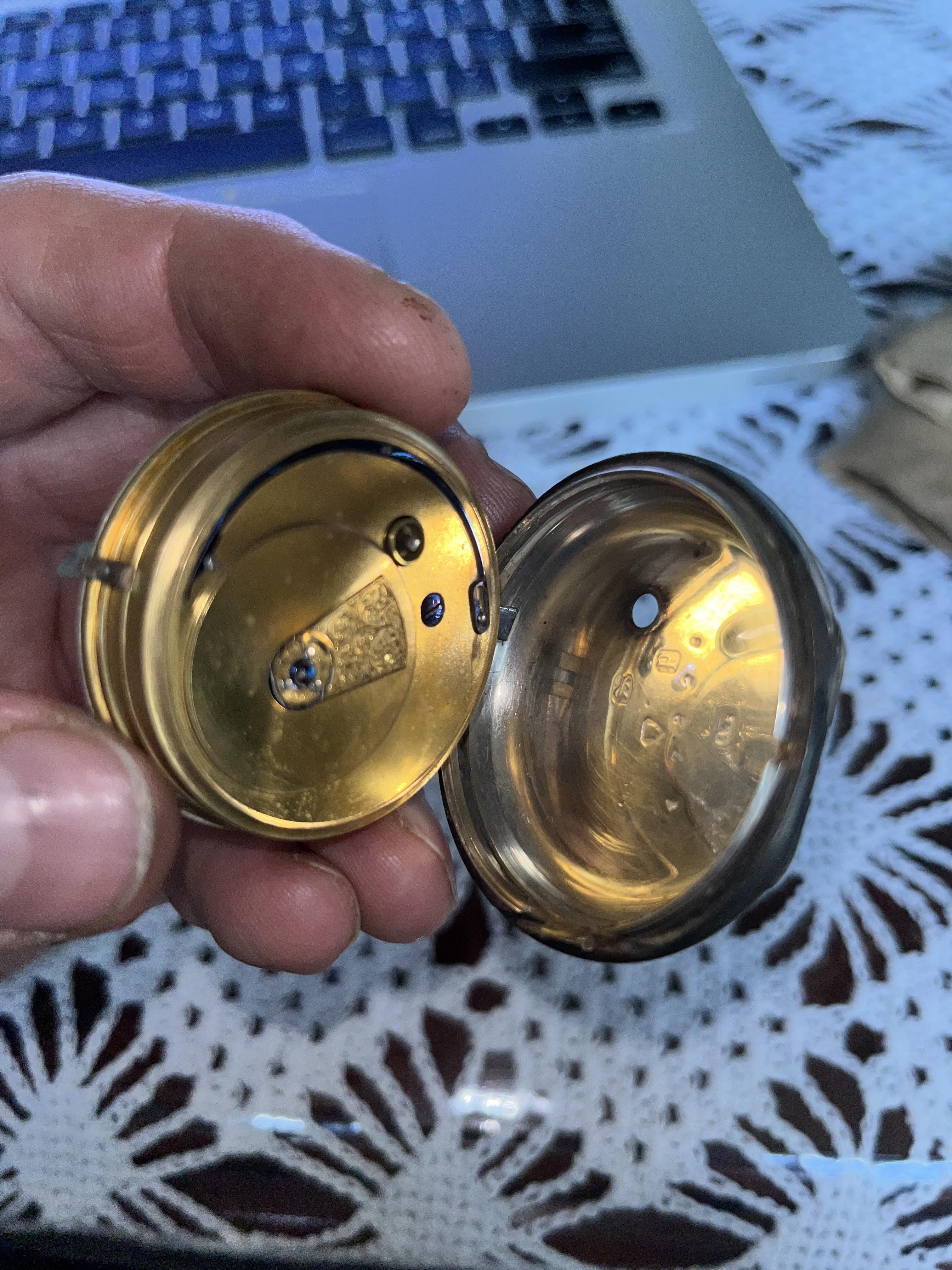
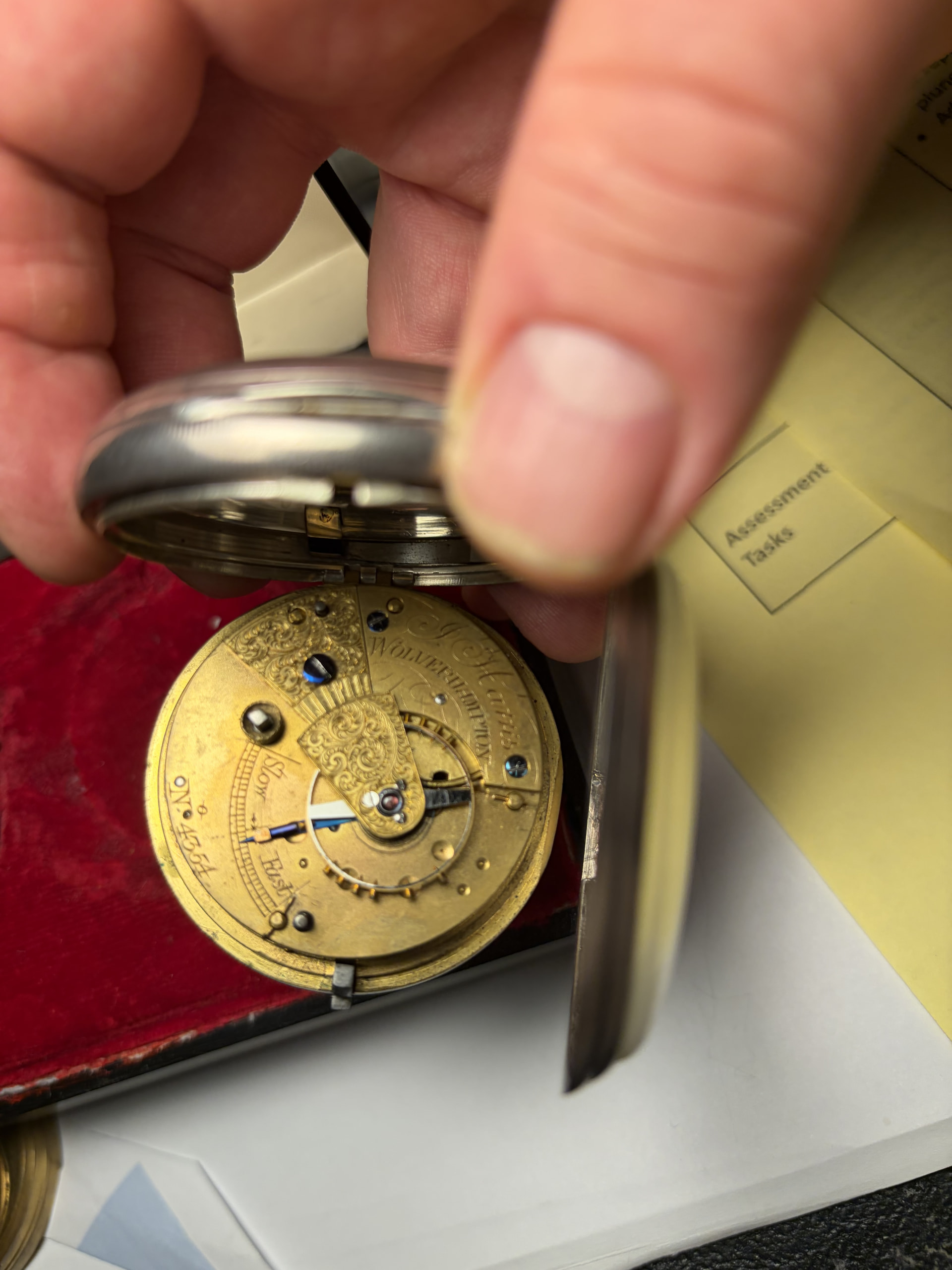
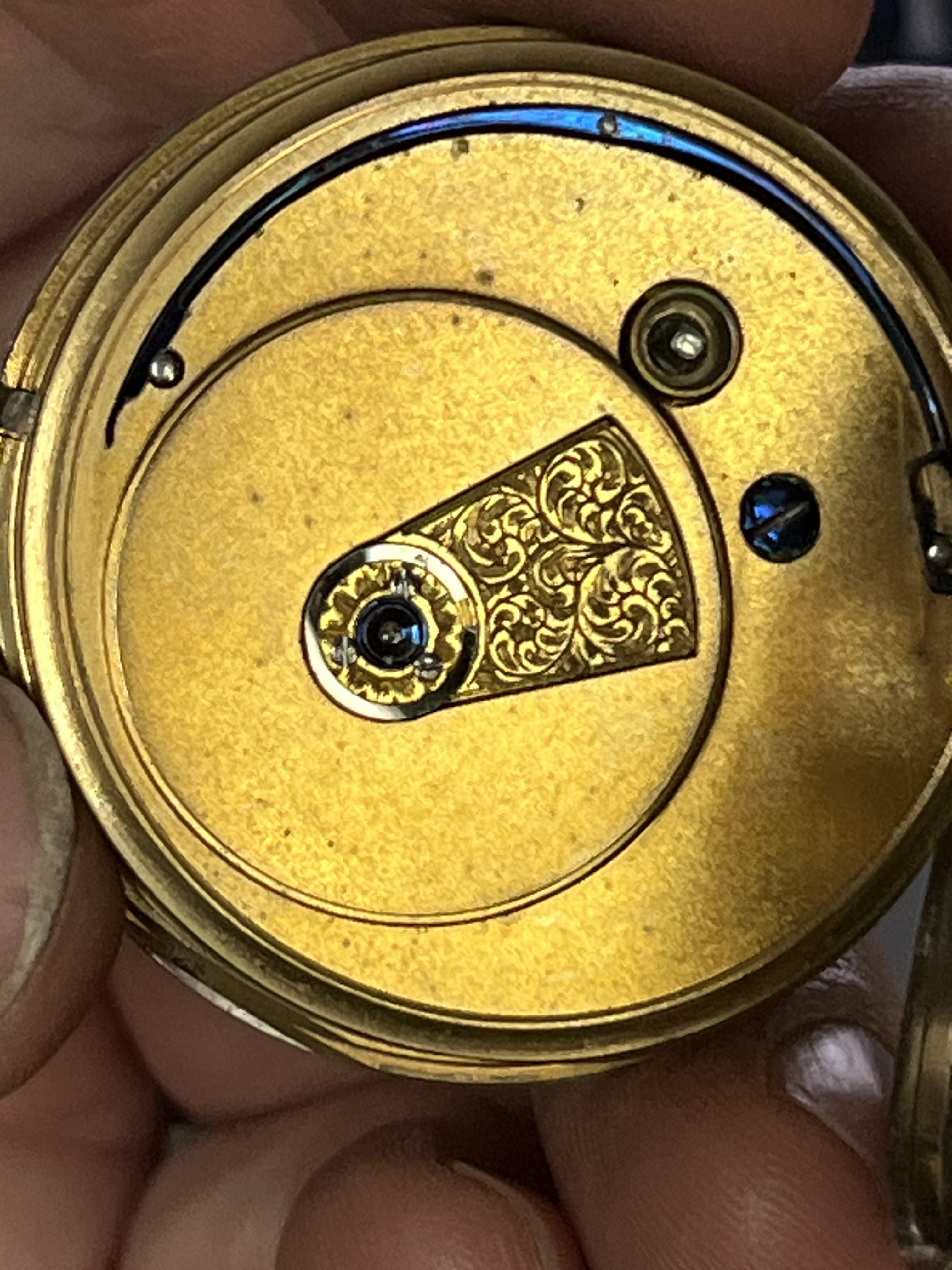
One of the inside markings is an etched “505” It is barely visible on the 5th picture.

There appears to be a serial number “47228” and a stamp with letters “A. T.”.

I am wondering if anyone can help me identify who made this watch, where it was made, when it was made… or anything interesting about this piece. Thanks.

1 Like

The people who hang out here aren’t really “watch” aficionados, but we do know sterling hallmarks. The hallmark appears to be for London, 1870:

London letter “P”

The maker of the case is almost certainly Alford Thickbroom (great name, BTW):

Alford Thickbroom

1 Like

I do collect pocket watches and I seen a number with cases by the Thickbroom family whose details appear in the work by Loomes, B. (2006). “Watchmakers and Clockmakers of the World”, N.A.G. Press, London.

By the mid to third quarter of the 19th century, when this case was made as my colleague, Jeff, correctly states, the UK watch-making industry had defaulted to Switzerland and its clockmaking business to the United States.

This case maker operating from 1832-1875 out of premises at 10 Galway Street, London
6 Spencer Street, Clerkenwell, London latterly with his brother James.

Alford and James Thickbroom was from a family of watch case makers. The company was founded by George Thickbroom (1774-1837), who first entered a sponsor’s mark at the London Assay Office on 29 March 1819.

"In February 1832, James Thickbroom entered a mark “JT” incuse with no surround at the London Assay Office as a pendant maker, 10 Galway Street, Clerkenwell.

On 16 August 1837, George Thickbroom, Alford Thickbroom, and James Thickbroom, carrying on business under the firm of George Thickbroom and Son [sic], of No. 10, Galway-street, St. Luke’s, Watch-case-Makers, declared that they mutually agree to dissolve their partnership. It seems likely that George Thickbroom retired and Alford and James Thickbroom continued in partnership.

On 30 October 1837, Jane Thickbroom entered a mark “JT” incuse with no surround at the London Assay Office. This mark was entered next to George Thickbroom with the address 10 Wellington Street Clerkenwell. George Thickbroom died around this time, in early October, which must have some bearing on the entry.

On 4 May 1843, Alford Thickbroom and James Thickbroom, carrying on business under the style and name of A. and J. Thickbroom, Watch Case Makers, No. 10, Galway-street, Saint Luke’s, agreed to dissolve their partnership.

On 19 May 1844 an incuse sponsor’s mark JT over JH was entered at the London Assay Office by James Thickbroom and Joseph Hirst at 10 Galway Street, Clerkenwell. The partnership, then at 12, Skinner Street, Clerkenwell, was dissolved in December 1845.

On 31 December 1845, James Thickbroom entered a mark of the letters J and T in cameo with individual surrounds at the London Assay Office as a pendant maker, 10 Galway Street, Clerkenwell.

James Thickbroom died in 1867 and his business was taken over by his nephew, Joseph.

In 1881, George J. Thickbroom advertised that he was successor to Alford Thickbroom, Silver Watch Case Maker, 6, Spencer Street, Goswell Road, London.

George J. Thickbroom retired in 1889 and the business was taken over by Fred Thoms, Watch Case Maker, 41, Spencer Street, London."

If you open the case up you may find the watchmakers name and the Swiss Canton where it was made. If there is not ready identification if you post a picture we can probably identify it for you. But the Swiss had also broken up their watchmaking into specialized parts.

Henry Ford is crediting with the 20th century invention of the assembly line but really it was the watch and clock makers who came up with the idea of moving the watches through the specialized makers premises and each artisan adding his bit. So a Swiss maker, with about six exceptions — names you will be familiar with perhaps even today – is really an assembly maker or sponsor as the silver trade calls it.

The completed works would have been shipped to London,Paris or Rome where it would have been cased, hands added and the face work completed to the specifications of the customer if a bespoke order. Cases are either gold, anything from nine to 18 ct. or silver, nearly always ,925 in my experience, depending on the requirements of the buyer.

He would have worn it in his vest or waistcoat pocket with an Albert (For Victoria’s husband) chain and on the end of the chain might be a sovereign case or a letter wax seal.

Watch sales were made through the commercial premises of John and Charles Turner, Jewellers to Her Majesty. Their premises were 58-59 New Bond St, London.

https://www.britishmuseum.org/collection/term/BIOG80364
Ref: John Culme, ‘The Directory of Gold & Silversmiths 1838-1914’, Woodbridge 1987

CRWW
1 Like

Not sure if I am allowed to do this but Turner Jewellers modern iteration is:

run by my cousin-once-removed Phillip. A former army officer who retired and went into the haberdashery business and decided to branch that back to the Turner roots and flog some watches while he was at it.

There are other Turner s (nine degrees of separation) also creating watches this side of the pond. But nepotism will only carry so far and you can find your own link to them on google.

I have no idea if any of these folks are related to the famous landscaper, JMW Turner, but I do know that James Wyatt who ran an art gallery on Oxford. High St, commissioned him to paint a picture of the Oxford street featuring his premises. Wyatt premises at 115 High St devolved into the famous Oxford Union in which debates continue to this day but elsewhere.

His great grandson married my grandfather’s sister, Rose whose house in Thorpe-le-soken, Norfolk used to contain one of the best collection of British landscapes in private hands.

The JMW Turner of the Oxford High Street was recently acquired by the Ashmolean for millions. Turner was paid £50.00 for his efforts. Today for £20 you can buy the print.

Wyatt became High Sheriff of Oxford, A descendant by marriage of his, another cousin of mine, did the same thing a hundred years later.

Amazing what you can do with the frame gilding profession and five tenners.

James Wyatt, Mayor of Oxford.

CRWW

1 Like

Took a longer harder look at your excellent pictures of this case and the works you display and have a further thought it may actually be assembled in the UK although many of the parts may be Swiss . I rather suspect the movement will be unsigned, so we probably will still not tell us much about the maker.

As I said it comes from a time when parts were pre-made and just put together by the watchmaker without his name on the movement anymore.

If it’s a clean movement with a screw balance or counter weights and compensating balance, that is to say a balance wheel not in one part and bi-metallic to take care of temperature changes, that will point to a London make. If you don’t have a key to wind it up, you can get them in sets with all sizes. If this is a London movement it winds counter-clockwise. Go slow until you feel a resistance and watch the chain winding up. Setting is also done by with the key-centre arbour.

If the watch is slow or fast, you can move the regulator-needle to the left or right. There may well be a number on the movement but it won’t help with identity. I know of eight assembly shops back then in London, two of which are still operating now as branded makers.

Today, a 150 years after the UK watch maker trade died and went skiing and the clock makers left behind those magnificent timepieces which allows the British to discover the world, clockmaking is returning to the UK. And it is now producing very few very expensive complications together with some more affordable of which these are a few:

The fact that this probably is an unsigned, generic watch, one of many made back in the 19th century, doesn’t detract from its interest or impact its value.

Even if it is running, it would still repay disassembly and cleaning and re-lubing all the pivotable parts. The case, of course, also needs a quick polish.

The 19th century craze for pocket watches, which ended with the outbreak of trench warfare in the 20th century, was triggered by the railroads and the adaptation of standard time and Greenwich Mean Time.

Suddenly it was important to know how long before the 5.50 train left platform two at Kings Cross and no longer good enough to rely on the church bells ringing out the hours.

CRWW

thanks so much for the info. I think it is signed A.T. and it works in perfect condition. I have timed it for 6 hours and it keeps perfect time. I have 2 keys that came with the watch one numbered 4 the other numbered 6.

1 Like

I will have to search the internet for a video on how to safely open the watch up… unless you have any suggestions? And thanks so much for the info.

1 Like

Any clasp that cannot be flipped open with a thumb nail or requires a screw driver is best left to your local watchmaker but be careful a lot of these good folks trying to oblige you can cause damage though lack of familiarity with a watch made for another time.

CRWW