Hello,
Can anyone identify this (most probably Swiss) Art Deco Silver Cutlery from the 1920’s-1930’s?
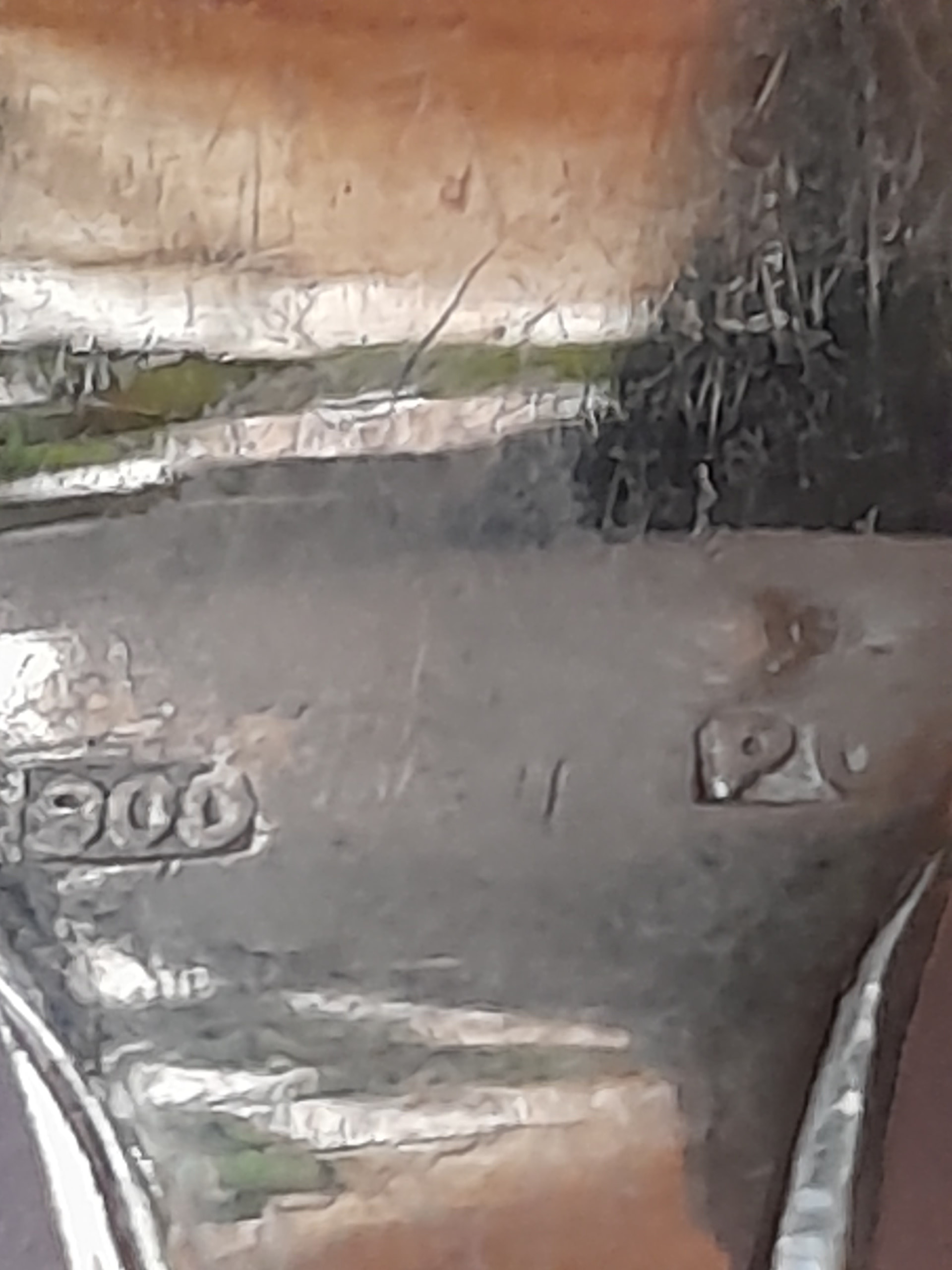
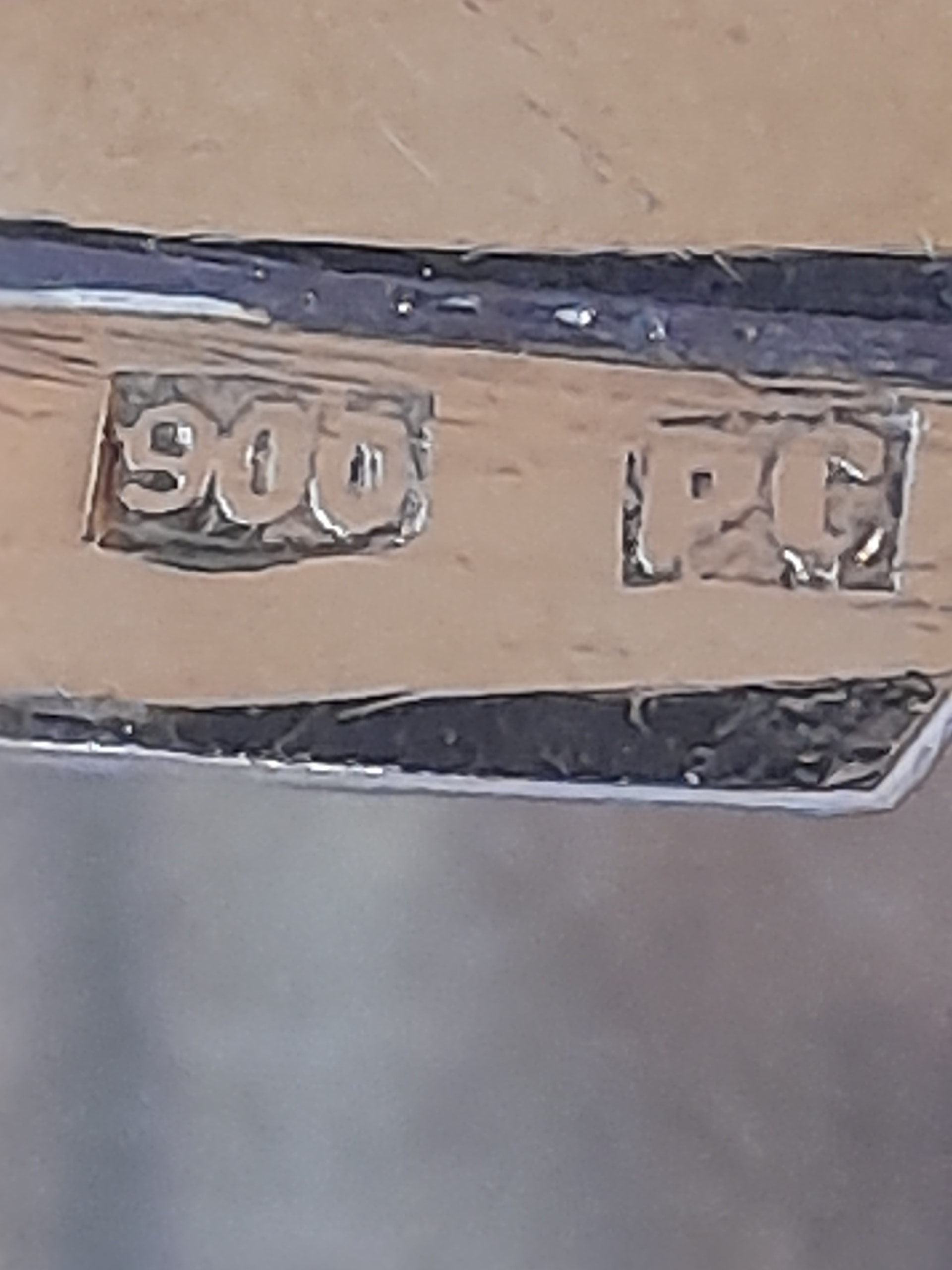
One stamp says 900 and the other has the initials PC.
Thank you so much in advance!
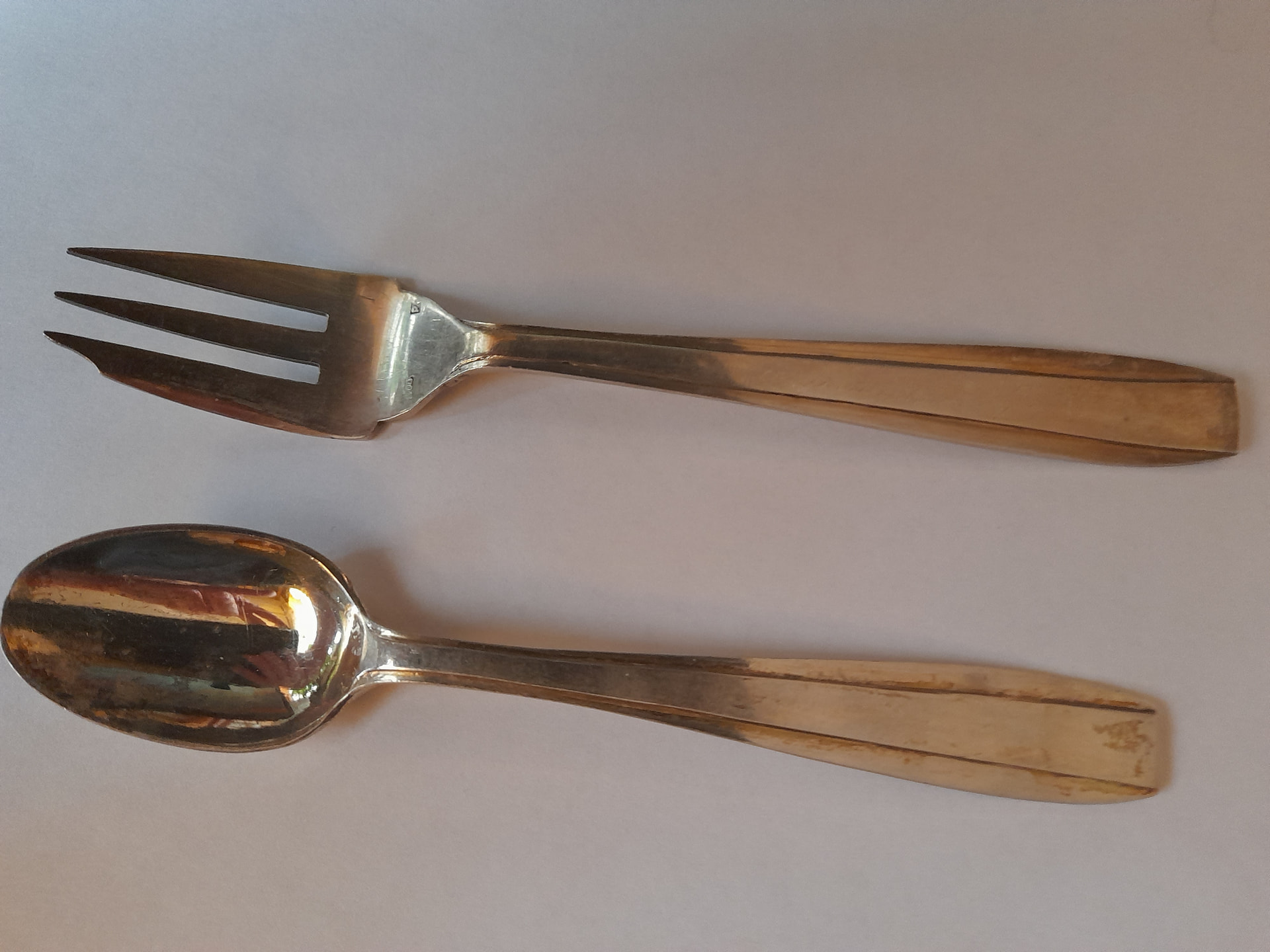
It’s probably not Swiss. After 1881, Switzerland adopted a consistent system of hallmarking, and your pieces aren’t showing those marks. Also, Swiss silver during the 20th Century appears to have been either .800 purity, .875, or .925 - there are no marks for .900 silver.
Beyond that, I’m afraid I don’t have a clue about its origins.
1 Like
“Switzerland used the Lothige system until 1880 when it set standards of fineness at .935, .925, .900, .875 and .800. All silver items made in Switzerland after 1882 also have a bear or a grouse as part of the mark.” Stephen L Smith.
https://www.beerstein.net/articles/bsj-2c.htm
Your item lacks the bear/grouse.
Pre 1934 Italian with the PC a territorial mark for Piacenza? But not in the shape demanded by Law 107 that year? And no maker’s mark.
https://www.925-1000.com/Fitalian_marks_01.html
Mussolini mandated the inclusion of the Fascist fasces (a bundle of rods and an axe) inside silver maker’s marks on all silver that year. This forced hallmark requirement was officially abolished October 14th 1944. (Other stuff that happened that day: Rommel’s forced suicide was announced and Athens was liberated)
Italian silversmiths wanting to avoid compliance and penalties but still make a living simply did not stamp their product.
It’s not a perfect fit but these are not French, German, Dutch, Belgian or Austrian implements either.
The notched broad prong fork which you show was widely adopted by US silversmiths and copied from the Italian design. And I cannot find a US smith “PC” that fits the time and rectangular punch.
CRWW
1 Like
What are the dimensions of the cutlery? I believe it’s from France. Are the markings only visible on the fork? Can you gently clean the ones visible on it?
1 Like
Thank you all for your replies and all the valuable and interesting suggestions!
The small fork and spoon I showed you are just a mere part of a larger dinner set that a friend inherited many years ago from a Swiss relative.
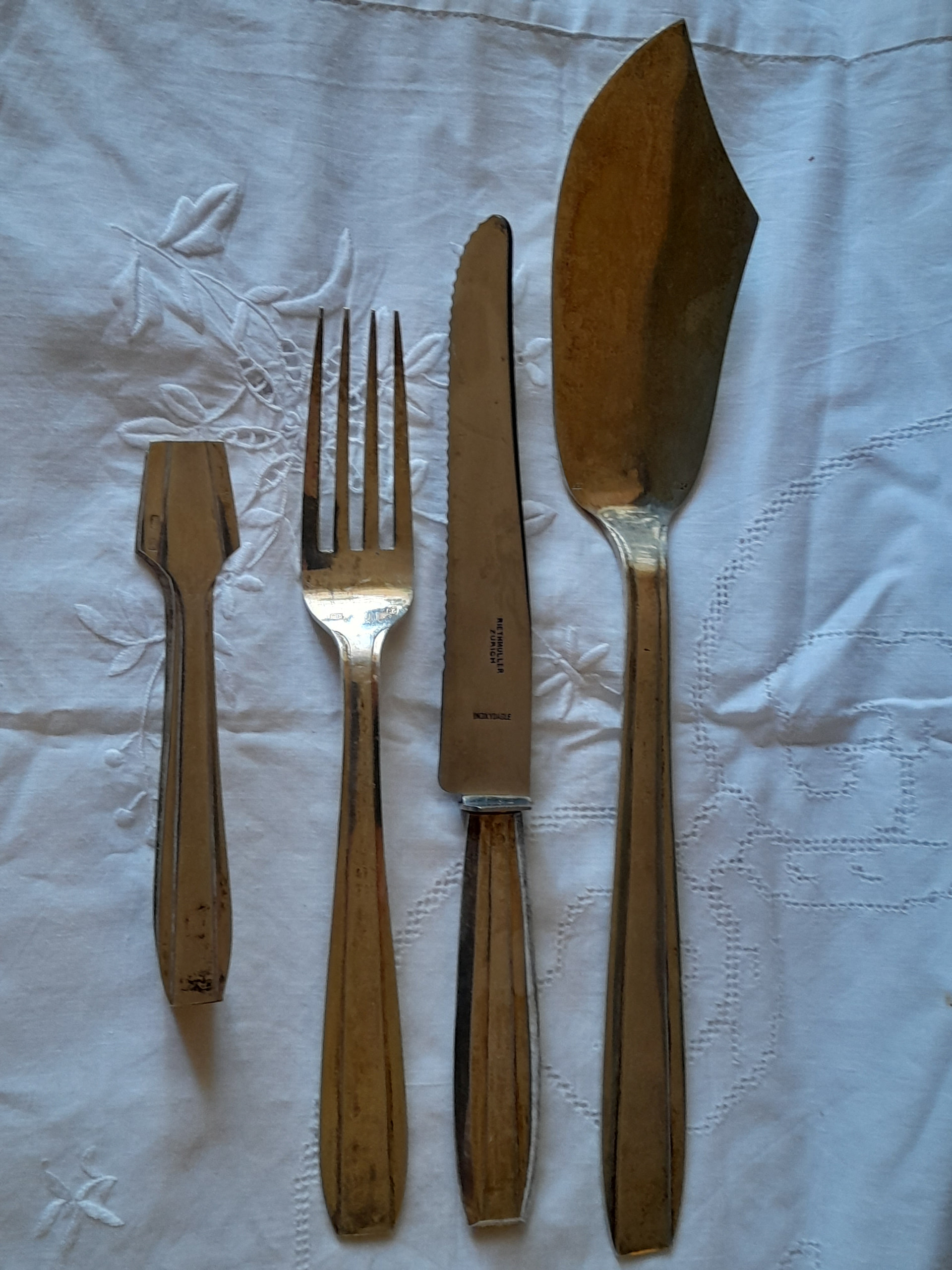
Today I was able to photograph some of the other pieces from the set and noticed that the steel of the knives is stamped with “Riethmüller Zürich”, whom I discovered was a known Swiss Messerschmied (cutler or knifesmith) from the last century.
I am not sure if Riethmüller only made the steel blades or the whole silver item themselves.
The silverware could maybe be from somewhere else?
This Swiss relative travelled quite a lot, most notably they were stationed in the French Indochina (Vietnam) for several years in the 1920’s and 30’s.
This might explain the .900 fineness of the silver?
Anyway, every item in the set is marked with the same stamps, the numbers 900 in a rectangle on the left and the letters PC in a rectangle on the right.
The cutleries are rather large, with the dinner fork measuring 21cm and the knife 23cm.
I hope this helps, and thank you again for all your input!
1 Like
A historical pocket knife or razor with the inscription “Riethmüller Zürich” is a rare collector’s item from the rich Swiss knife-making and trading history of the late 19th and early 20th centuries.
www.elsinox.com - RIETHMÜLLER, Zürich
Riethmüller Zürich refers to the historical cutlery and specialty shop Riethmüller AG (located on Bahnhofstrasse in Zürich), which produced and retailed fine pocket knives, razors, and silverware. The numbers and abbreviations like “900” and “PC” typically denote specific vintage catalog numbers, model codes, blade sizes, or silver/metal purity designations stamped on their collectible pocket knives (such as perlmutt-handled folding knives) or cutlery items. [1, 2, 3]
It would seem that the Riethmüller Zürich stamp pretty much nails these down as being Swiss. But that creates a conundrum - by the time these were made, Switzerland had a very regular method of labeling silver, and this flatware has no such marks.
AI, of course, sees “900” and concludes that it’s the fineness, or that it’s a catalog number. In fact, it has no idea which. I’m assuming that Bart’s answer is a copy and paste of an AI search response - perhaps we should adopt some means of distinguishing between information we’ve gleaned from experience or research, and information that we’re just regurgitating from a source whose reliability is unknown.
At this point, I would stop speculating, and get these tested for silver content. Let’s just say that I have a hunch…
Yes, it is.
Sometimes I simply don’t have time to delve into the whole thing. I’ve searched through all the available sources of information and I can’t seem to understand the 900 and the PC at all. So, you have some room to maneuver. I give up.
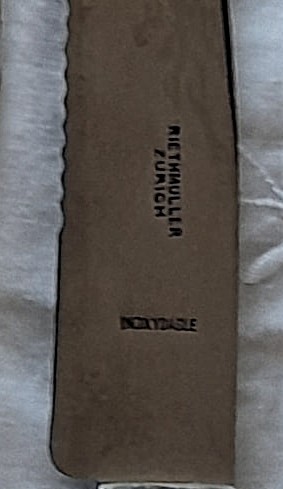
Inoxydable? Silver doesn’t rust…
Usually delayed information about an item impedes search results. In this case all it does, since the blade maker was a cutler not a silversmith, is provide us with belated confirmation of a time within which the handles were made and affixed.
This is Art Deco work which we now know containing a blade made by a Swiss cutler who, from his advertisement worked with numerous handle makers for numerous implements between 1885 and 1930.
Here’s AI’s attributed sources on the same company:
Riethmüller Zürich refers to a historically prominent Swiss manufacturer of high-quality folding knives and cutlery, primarily known for their production of traditional Swiss farmer’s knives (Bauernmesser) in the early-to-mid 20th century. [1, 2, 3]
Here is the history of the brand:
-
Early Production: Based in Zürich, the company became a well-known name in the Swiss cutlery market during the 1920s and 1930s. [1, 2, 3]
-
Design & Materials: Riethmüller knives were highly regarded for their craftsmanship, commonly featuring natural materials like buffalo or cow horn for the handles, brass liners, and carbon steel or stainless steel blades. [1, 2, 3]
-
Collectible Status: While Riethmüller did not achieve the same global mass-production scale as contemporary brands like Victorinox, vintage Riethmüller knives are now sought-after by collectors of European and Swiss pocket knives. [1, 2]
It seems despite its wide acceptance and adoption in its own country, the company ceased production in the 1930’s.
CRWW
Good spotting. This is where my “hunch” was leading. I think these are stainless steel. No silver involved, not even as plating. The “900” is a red herring - it probably is just a model number.
ETA: This is one instance in which the usually useless “magnet test” might come in handy. Some stainless steel is magnetic, some isn’t. So stick a magnet on one of the handles (not the blades). If it sticks, it’s definitely stainless steel. If it doesn’t stick, that tells us nothing.
ETA: Further, even within a matched set, things can vary. My everyday flatware is good quality Oneida stainless. The forks and spoons aren’t magnetic at all, but the knives are - blades and handles!
Interesting!
I am sorry about the poor quality of my pictures, I only take them with my phone and I am not that good.
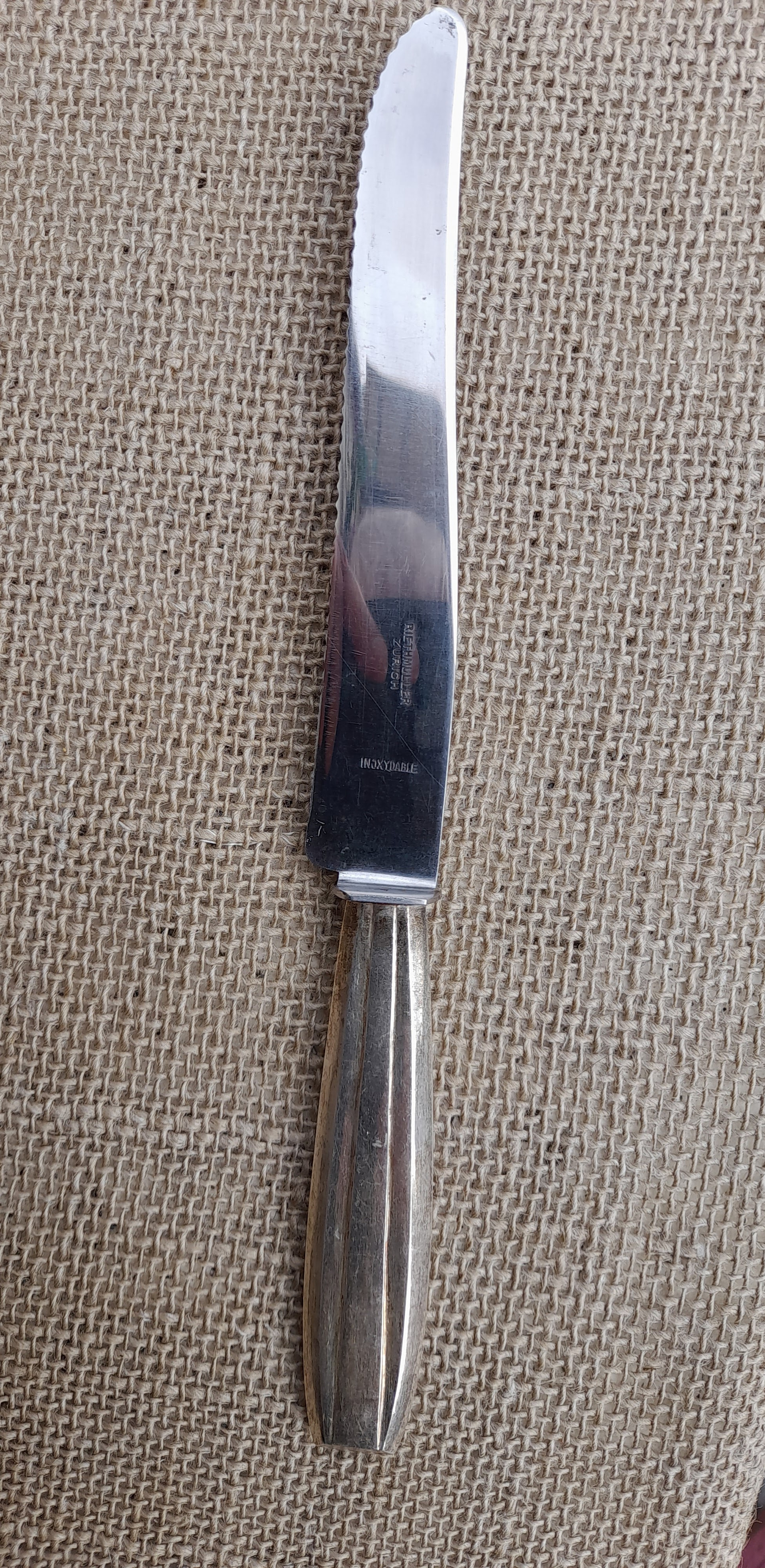
But I can assure you there is no rust whatsoever on the knifeblade, it was only poor lighting and an unpolished item. I went outside and took a new photo, it is still unpolished, but maybe it is easier to see.
I will however follow your suggestions and get these cutlery tested for the silver content, just in case.
Meanwhile, the magnet doesn’t stick on anything exept from the knife blade, so back to square one 
Any idea about the possible Indochine connection? Is it even worth pursuing it?
Thank you again, this has been most helpful!
1 Like
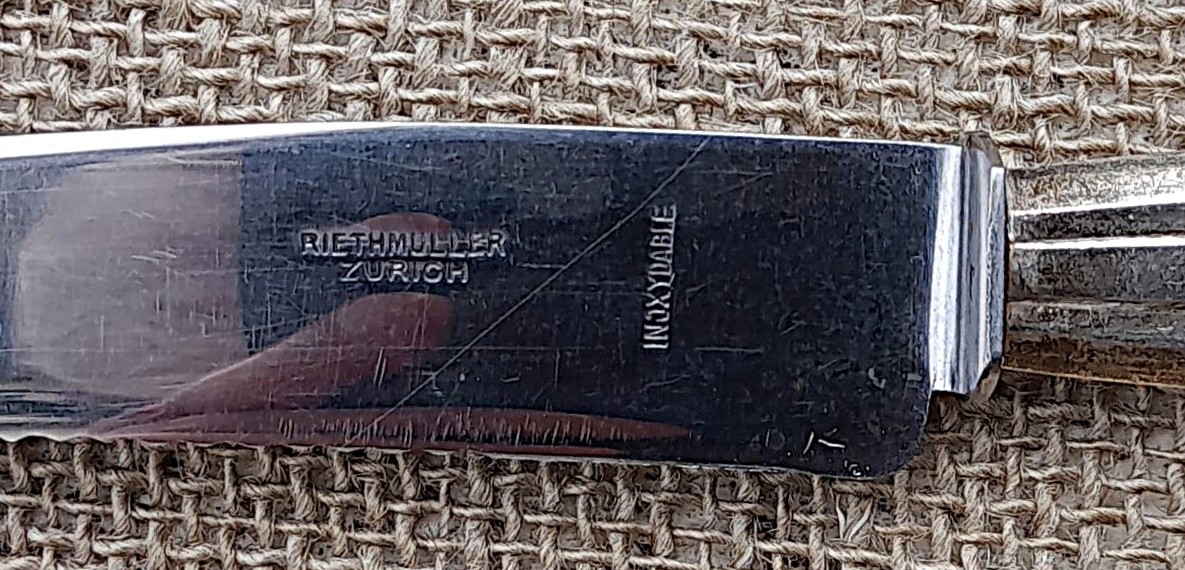
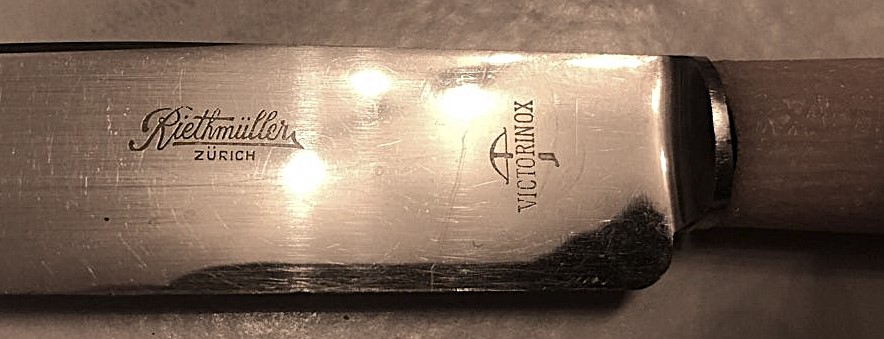
I think we know that the blades of the knives are stainless steel, and the INOXYDABLE mark confirms that. Still doesn’t tell us anything useful about the handles or the forks.
But the complete lack of anything even remotely resembling a European sterling hallmark makes me doubt that they’re silver.
That tells us only that these aren’t iron. Silver doesn’t rust, EPNS doesn’t rust, stainless steel doesn’t rust (unless it’s really cheap), etc. The knife blades are stainless steel - that’s really the only thing we can say with some certainty.
Thank you again for all your help and knowledge.
I will contact a silversmith and check the eventual silver content of the cutlery, and if it is .900 silver, I will come back and then we can maybe explore some more!
Take care, Atua
1 Like
Besides a real silversmith, a jeweler or scrap metal dealer should also be able to check the silver content. These days, they all have the necessary gear - tools of the trade.