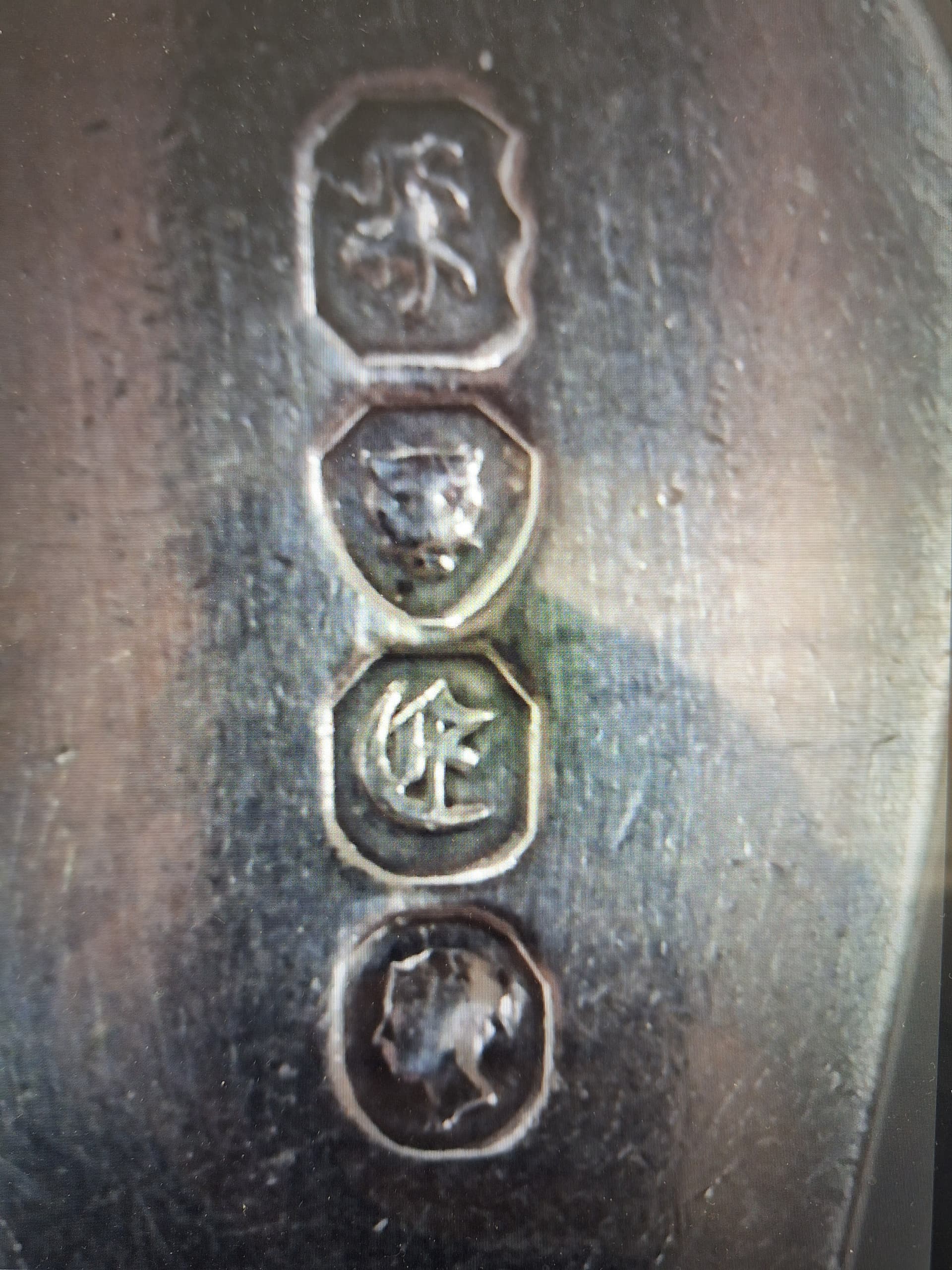
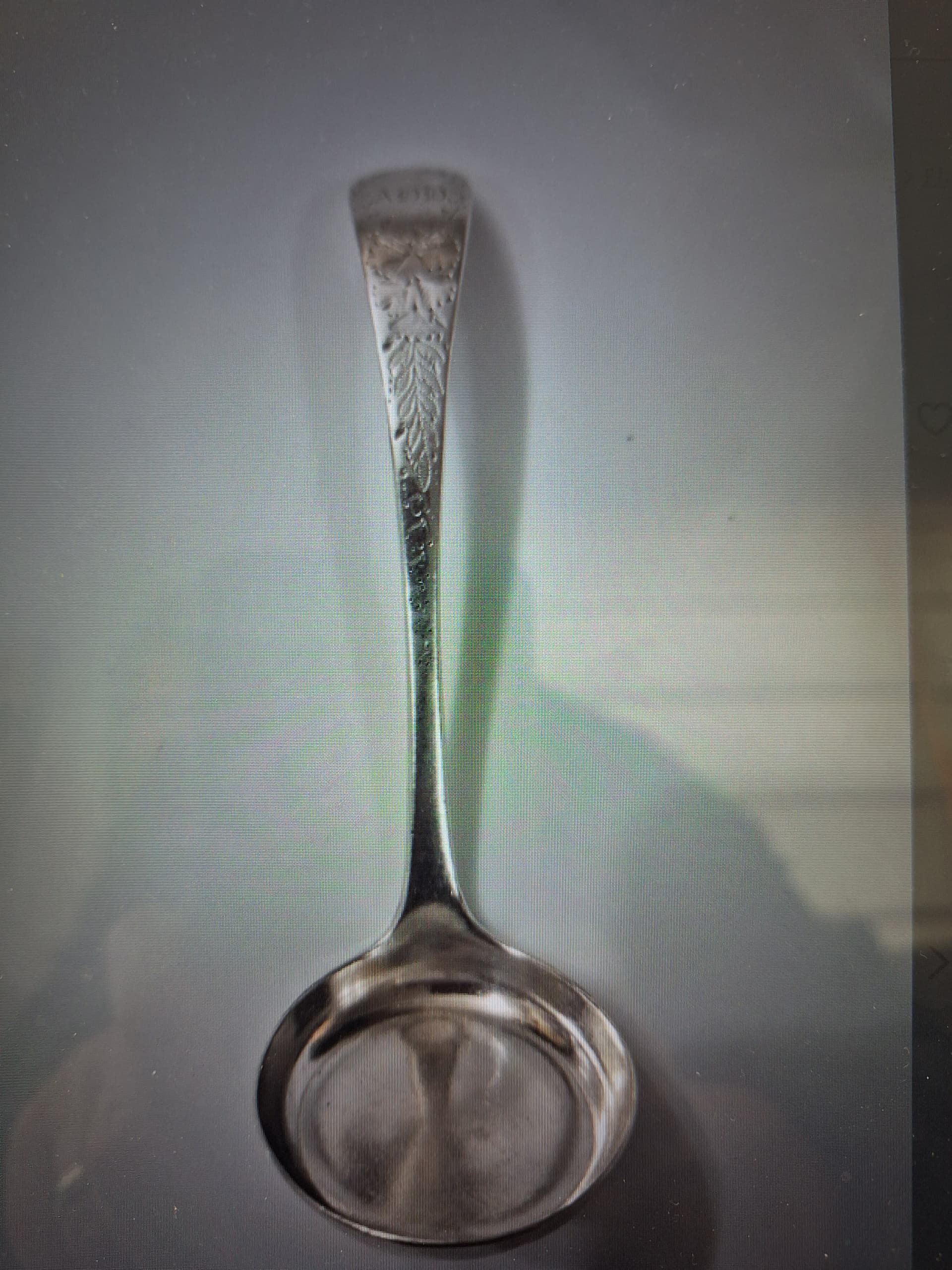
Please note, I don’t own this piece. Below are screen grabs from listing. Thinking of buying it, but wondering why there is no sponsor mark on it anywhere? London 1840 with assay mark. Is this unusual or cause for concern? Thanks
1 Like
I would say there is no cause for concern. Missing sponsors’ marks, although not normal, do crop up from time to time. Sometimes due to overpolishing, sometimes no doubt to carelessness. The hallmark looks fine so, unless you desperately need to know the maker/sponsor, you will be OK.
2 Likes
Ok great. Thanks so much
1 Like
Few things about this ladle. First it is flat bottomed very much in the Scottish style rather than the rounded bowl more usually found in the UK. There were then two prolific London flatware makers operating which sometimes favoured this style. Secondly this is an old English style so a copy of a Georgian style rather than the rather more elaborate style of this date and thirdly the engraving on it in more typical of something which might have been executed about 40 years later.
As you say the item is listed for sale. The seller is a Vancouver BC dealer working on Etsy.. His price is fair given the excellent weight which he doesn’t reference in the ads.
The only trouble with buying single ladles, is they were almost always sold in pairs, sometimes several pairs at once.
This is more likely than not a Chawner piece. Mary Chawner of 15 Hosier Lane, was overseeing the family firm until the younger William could take over; however, upon finishing his apprenticeship in 1838, he embarked instead on a religious career. The business was then left to George Adams, Mary Ann’s husband. He entered partnership with his mother-in-law on 3 August 1840; on 23 November that year he took full leadership of the firm. This unmarked item was produced sometime in that period and the good weight tells me to favor it over Joseph and Albert Savory who also periodically made flatware in the flat bottomed style. but generally lighter.
Now all this is highly speculative and I may be completely incorrect, but only about the conclusions not the observable data it is based upon.
With silver spot hovering about C80 to C84 you are buying at or below scrap so you should buy.
For some reason sauce or toddy ladles nearly always sell at little more than scrap and sometimes a lot less. Find a heavier one, like this, and the discrepancy become even more difficult to understand
There is one more thought about it and that is it may not have started out to be a ladle but a sugar sifter which were more usually flat bottomed, but somehow it left the factory without getting serated.
CRWW
1 Like
Many thanks. It was the flat bottom and charming engraving on it that drew me to it. Interesting that you think it may be Chawner, as I have a heavy fiddle pattern sauce ladle with the same flat bottom from 1810 made by Eley, Fearn, and Chawner in 1810. Maybe the flat bottom was a house style for the Chawners? Anyway, thanks again.
1 Like
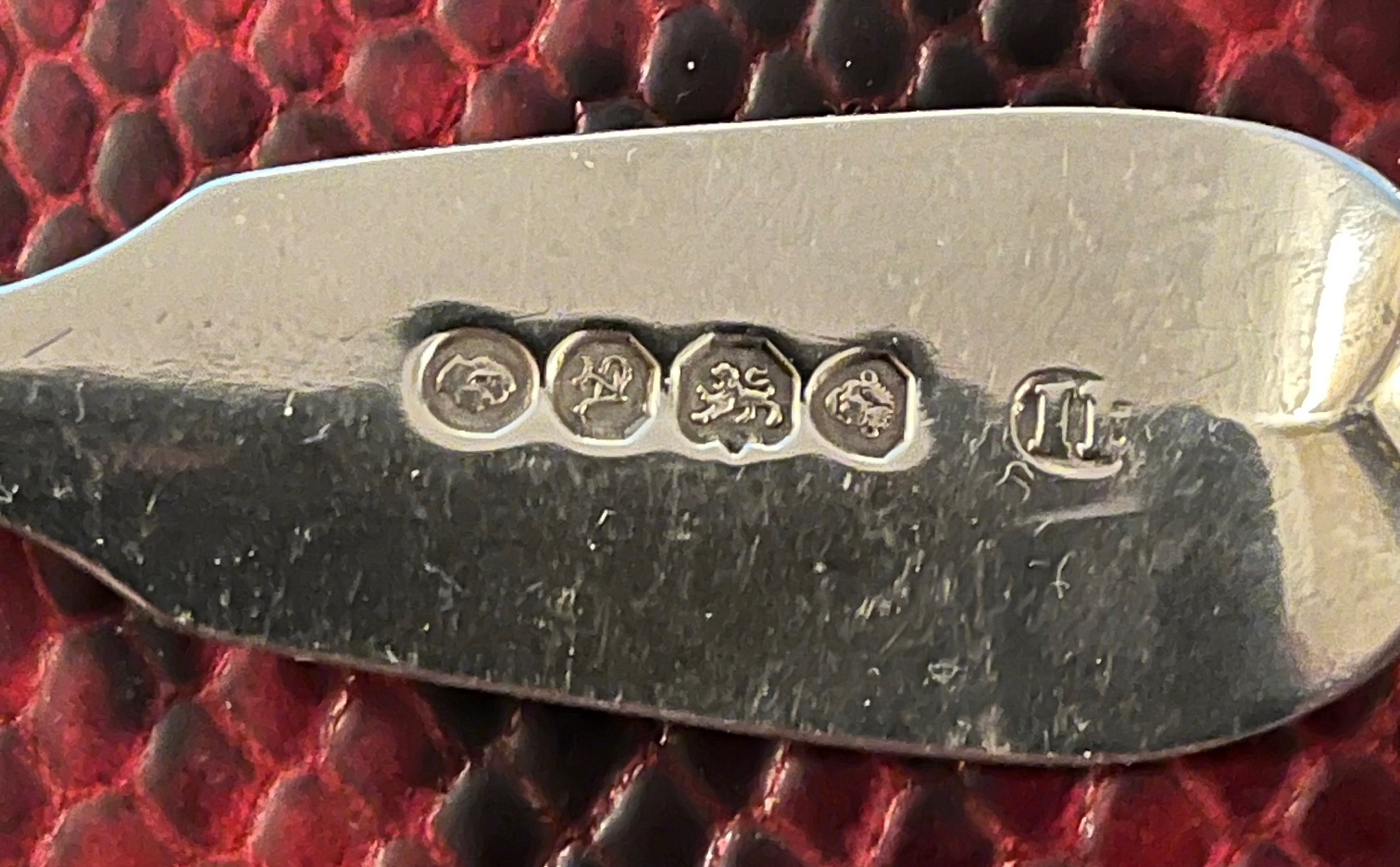
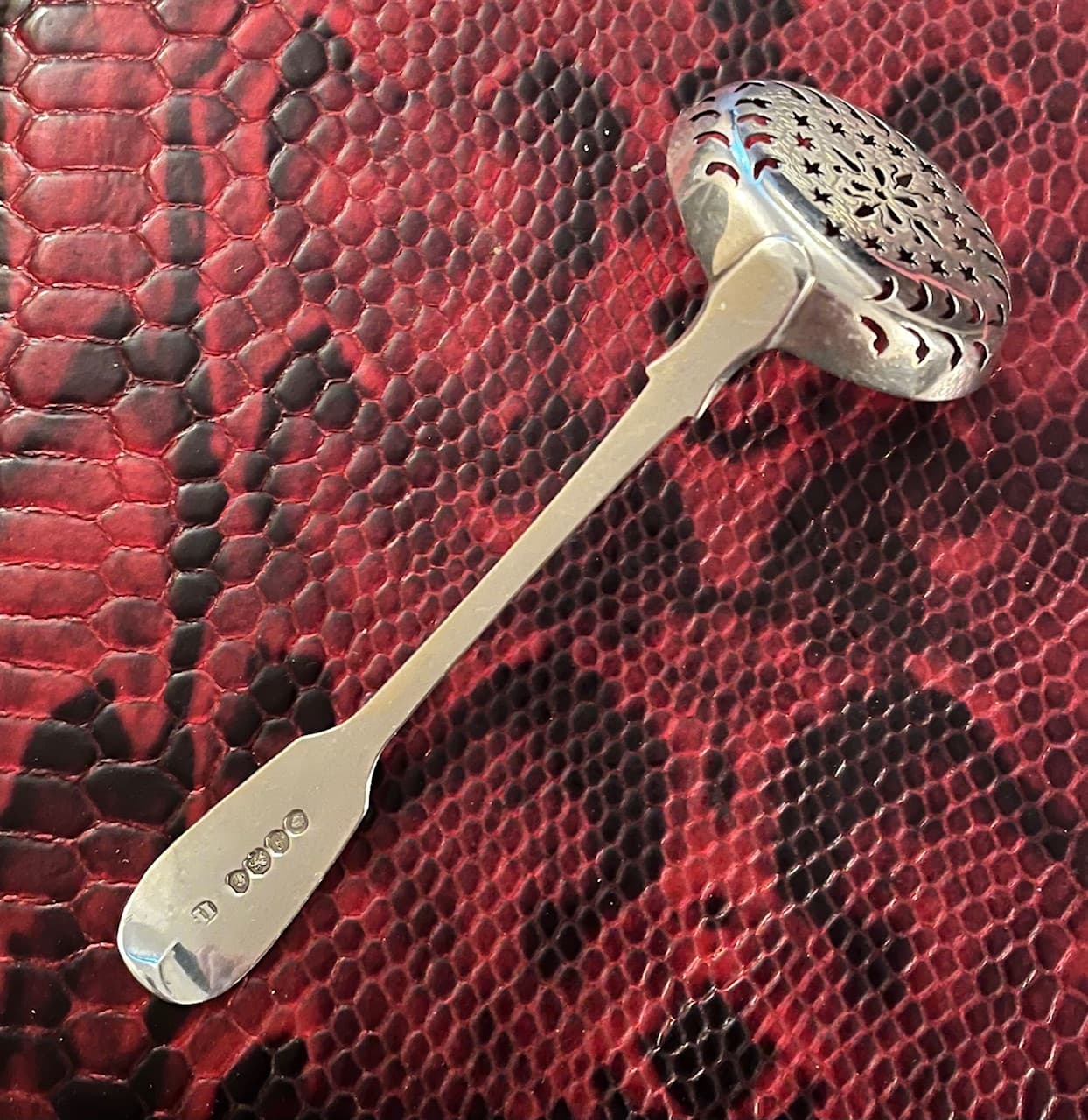
Nice! Particularly that racey red snakeskin seat cover!