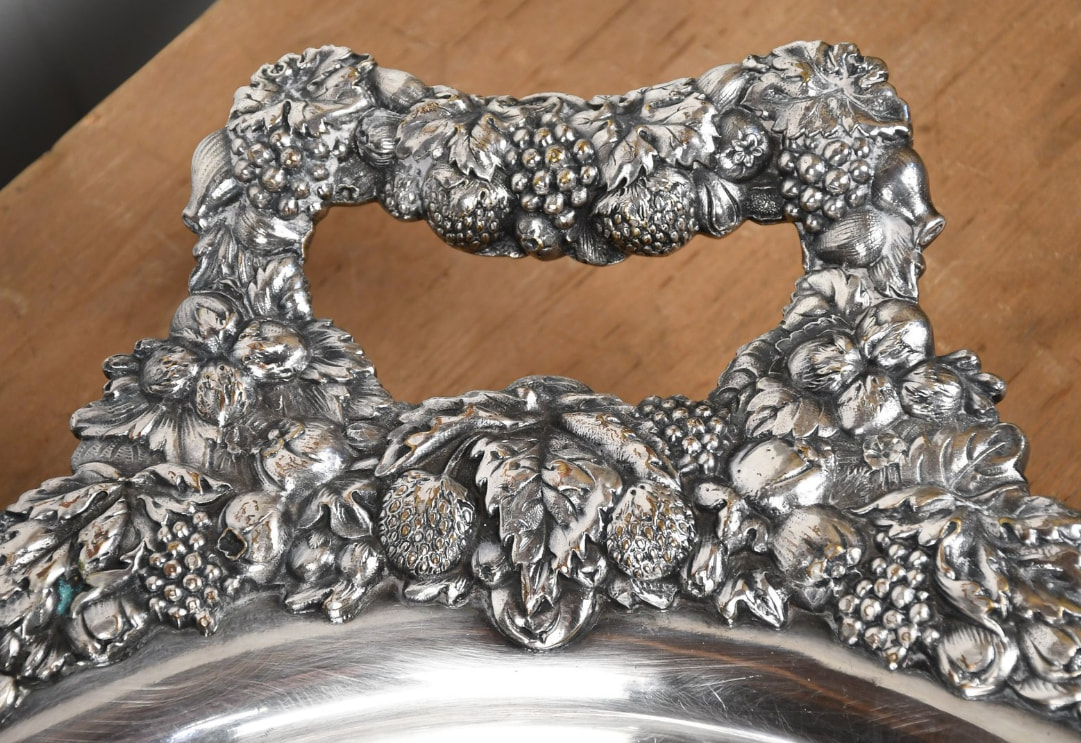
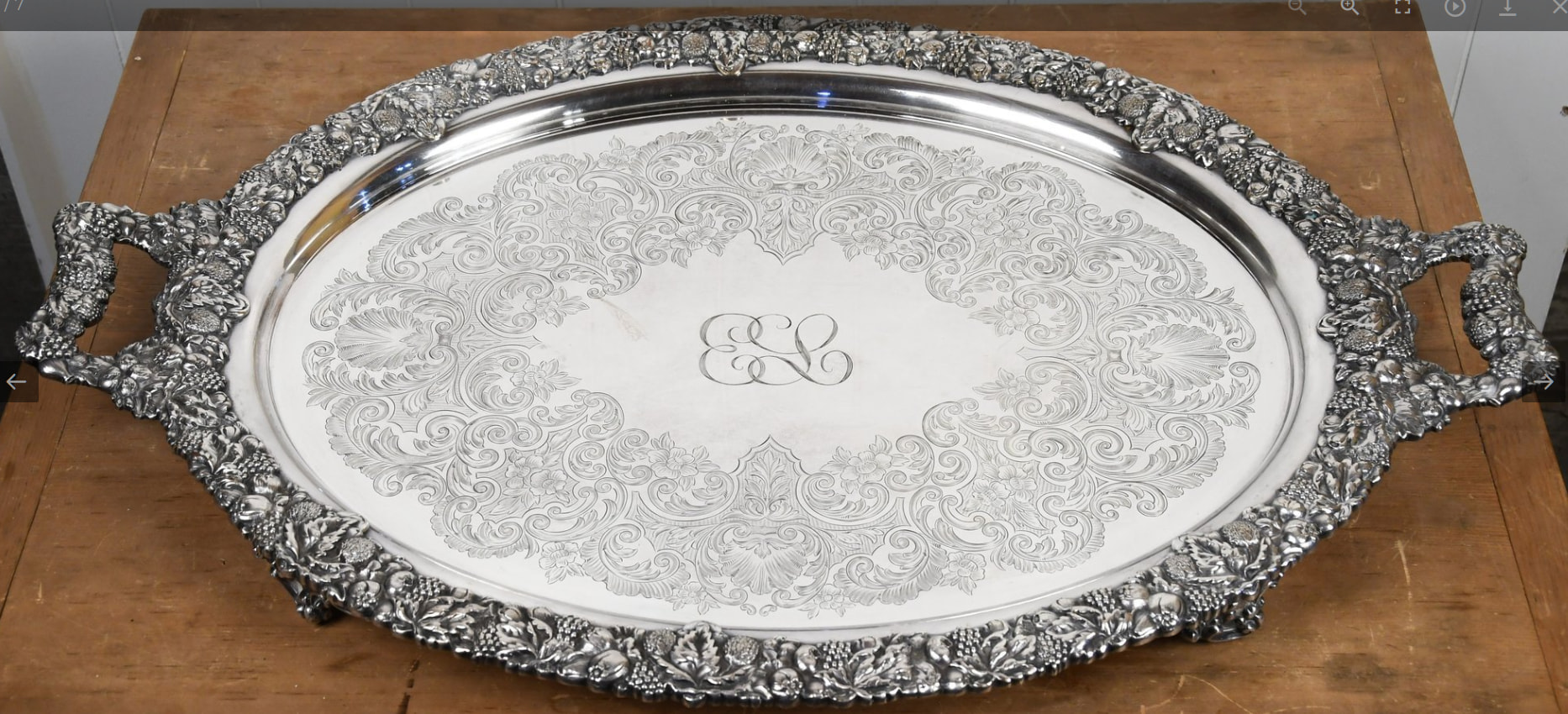
This item is currently on an Auctionninja auction (it’s not my auction). The auction calls it “Impressive Large Silver Plated Tray”
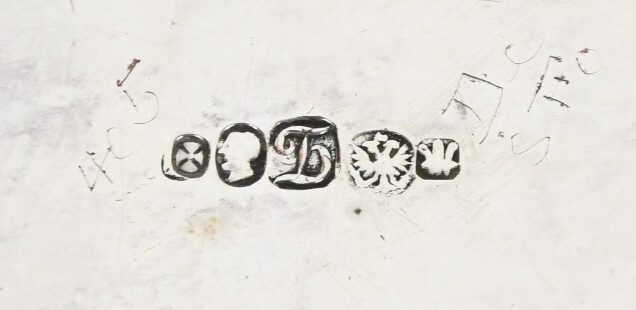
It caught my attention because it looks 19th century, it’s very high quality but is silverplate (copper showing on handles etc) with this weird Russian-looking mark on the back, with a two-headed eagle that looks like an 18th Moscow mark. The letter in the central hallmark looks like an italic Cyrillic “Beh”. Any idea as to the origin of this tray?
I think you’ve got it. Not exactly the same, but if Mr. Weintraub was just making the marks up, why would they need to be? Three of the ‘hallmarks’ match yours: The gentleman in left profile, the Moscow double eagle, and the Prince of Wales three feather mark on the right. Thanks much!
There was a previous discussion last year on this Forum about the very same Weintraub marks and Gorham’s New York court order restraining him from infringement:
In that discussion last August, I had cited the court case and provided a link.
This time I respected the request not to comment on the comments although I note someone else has.
However now the mystery has been “solved” twice and without in anyway commenting on the conclusions as requested, I feel free to use the “double solve” as a strong argument in favour of having a less opaque access to the Forum’s index to past topics on the site thus allowing people with the same conundrum to reference prior material dealing with the same issue more readily.
Last summer when this first came up I had found the decision by Judge Ward in the New York Circuit court an interesting read not only because it cited much of the history of the electro-plate trade in the UK and the US to that time, but because he was ruling in favour of an argument by Gorham it was okay for them to copy trademarks used in the UK which were themselves deliberately designed to gull buyers into thinking they had silver and not silver plate, but it was not okay that the same deceptive UK marks, copied by Gorham, presumably for the same purpose, be recopied by someone else in the jurisdiction of the court despite the absence of any intellectual property protection in the US.
In the current exhibited tray, Weintraub has marshalled a string of marks none of which might be expected to be found together on an item manufactured in Europe or the footprint of the former Holy Roman Empire.
The marks include a Maltese cross, a copy of the Knights’ Templar cross, A double-headed eagle, originally a Roman insignia with an extra head adopted by the Byzantine breakaway church and empire and the fleur-de-lis borrowed from King Louis VII of France who adopted the symbol in the 12th century from a similar three petal or leaf design used in Mesopotamia and before that India a thousand or more years earlier.