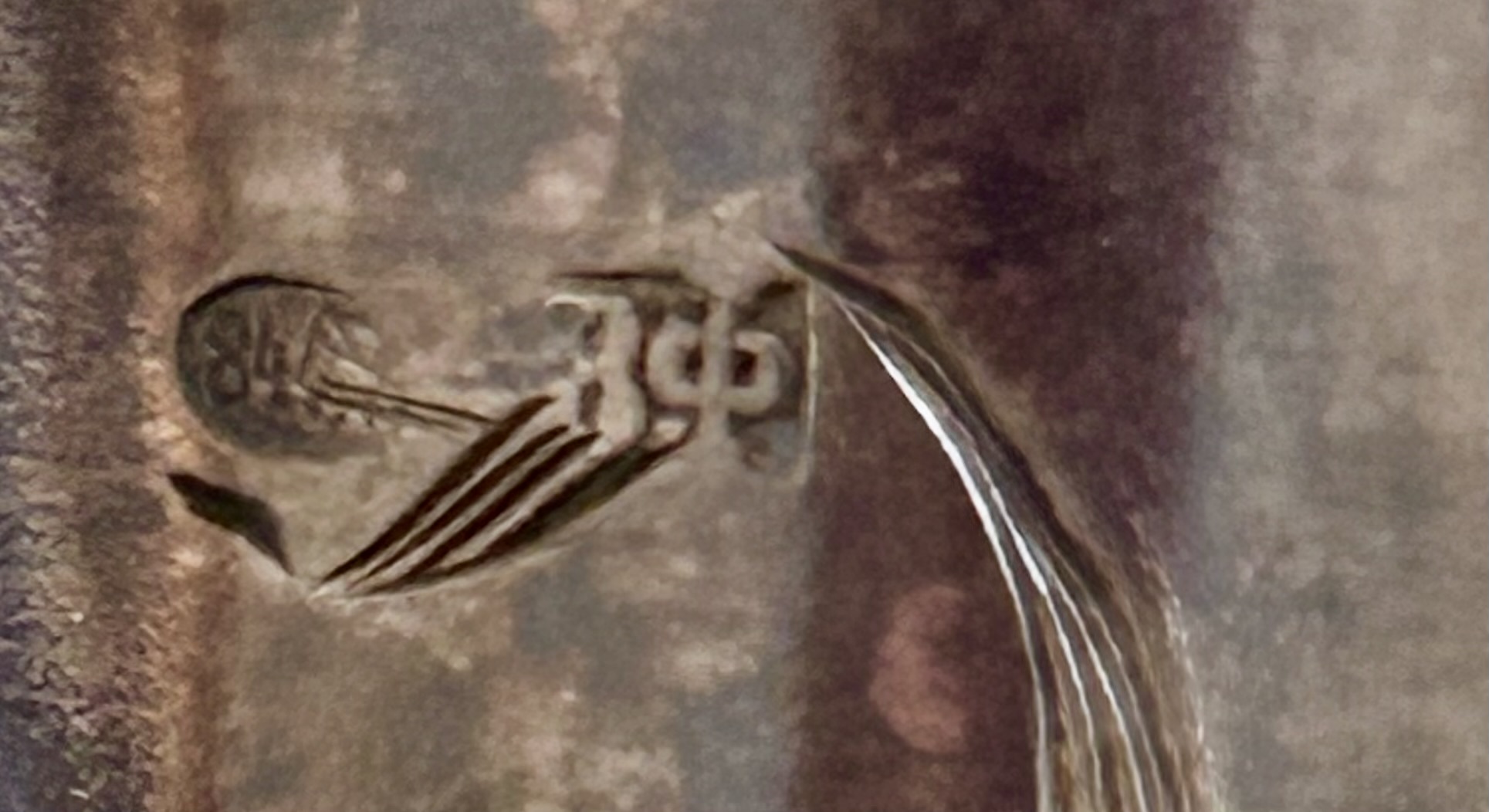
Two questions: 1. What does the 84 stand for? 2. Who or where do the Russian letters вф (VF) stand for? After serving 7 years in the Russian army under Tsar Nicholas II, my grandfather decided to leave the country rather than serve the new government for an indefinite amount of time. Good call, Papa!
1 Like
Russian silversmiths divided weight measure for silver into standard lots known as “zolotniks” See Belden and Snodin 1976:10. Pure silver consisted of 96 zolotniks. The “84” that is stamped on the beaker means that its silver content is 875/1000 i.e., 84/96.
On this beaker the mark is combined with a city mark, probably for Moscow.
The silversmith appears to be VS Grishin working in Moscow 1895-7.
https://www.925-1000.com/Frussia_makers_A_r.html
However this is a preliminary view as Russian letters вф (VF) shown elsewhere for Grishin/ Grichin do not match in format the cup marks.
"After serving seven years in the Russian army under Tsar Nicholas II, my grandfather decided to leave the country rather than serve the new government..." Did your grandfather
leave Russia before or after the disastrous June offensive which basically ended the provisional government’s tour of duty, as I understand it? How did he leave and where did he go?
Oh, and did this vodka beaker come with him?
2 Likes
Thanks for helping with the identification, Guildhall. Much appreciated.
Did your grandfather leave Russia before or after the disastrous June offensive
My grandfather left at the right time by leaving the country instead of waiting to be drafted into the provisional Russian army. He went to the Ukraine, crossed the Black Sea in a fisherman’s boat to Constantinople before ending up at Ellis Island and finally settling in Boston.
I was only guessing that the silver object was a vodka cup. I noticed you call it a vodka beaker. Is that because it has no handle?
What I see in the photo are three things, 1. 84, 2. left facing woman - Kokoshnik, and 3. вф (VF).
On this beaker the mark is combined with a city mark, probably for Moscow.
Would you show or describe to me where the likely symbol for Moscow is?
Oh, and did this vodka beaker come with him?
And yes, he did bring the vodka beaker with him. 
2 Likes
“ВФ” - the mark with initials of a silversmith of Flink Viktor Ivanovich, owner of a silverware workshop,(worked since 1897 to 1917).
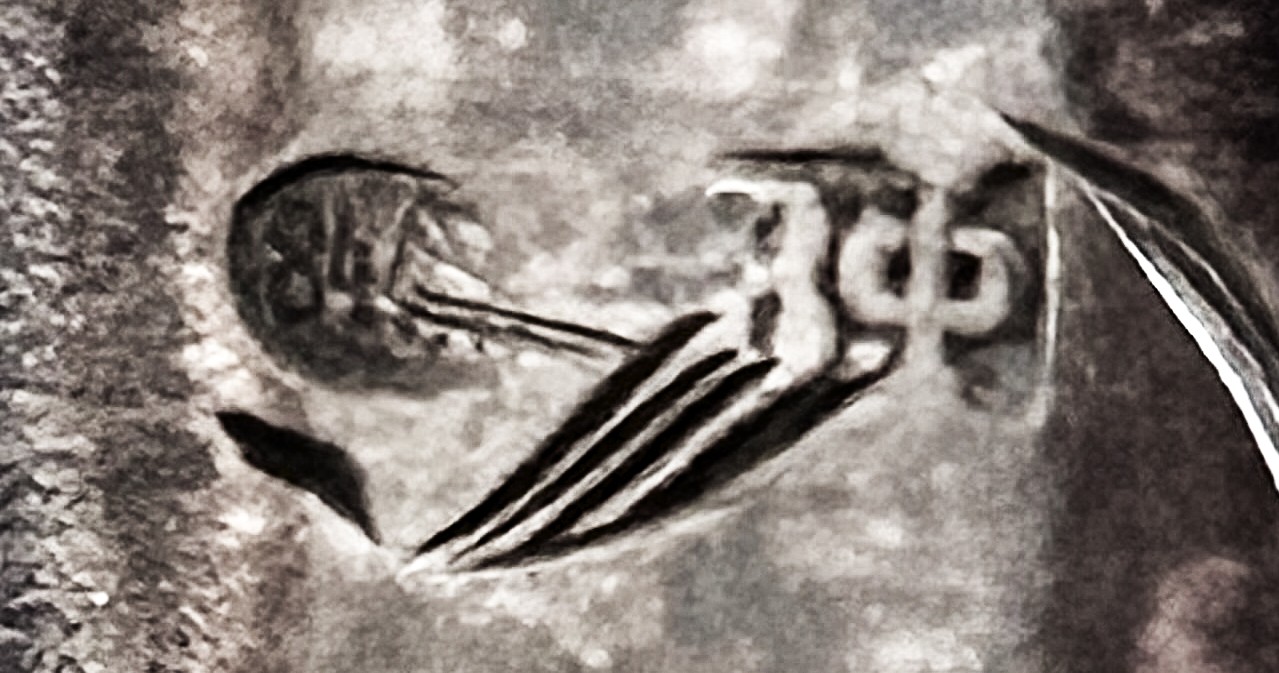
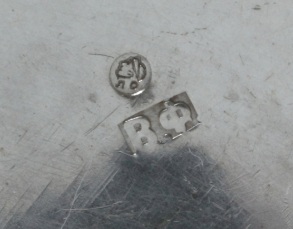
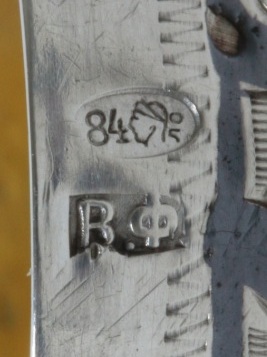
“ВФ” - клеймо с инициалами Флинка Виктора Ивановича, владельца фабрики серебряных и золотых изделий (годы работы: 1897 - 1917).
Трехзначное пробирное российское клеймо в овале 1899-1908 гг. -
“женская голова в кокошнике, обращенная влево” с цифрой “84” и буквами “ЛО”, где:
“женская голова в кокошнике, обращенная влево” - знак удостоверения;
“ЛО” - инициалы пробирного мастера Олекса Льва Фёдоровича (годы работы: 1899 - 1904);
цифра “84” удостоверяет, что изделие выполнено из серебра 84 пробы.
Клеймо мастера Флинк Виктор Иванович - Москва - инициалы “ВФ” - 1897-1917 гг.: цена на аукционах
1 Like
You now have an alternate theory as to maker which looks plausible. The city mark is to the right of the 84and in the oval. The date remains turn of thecentury or slightly earlier.
Living in Western Canada, especially Victoria BC, I met many White Russian emigres who settled there in the 1920’s Their stories always fascinated me. Thank you for sharing your family’s.
CRWW
1 Like