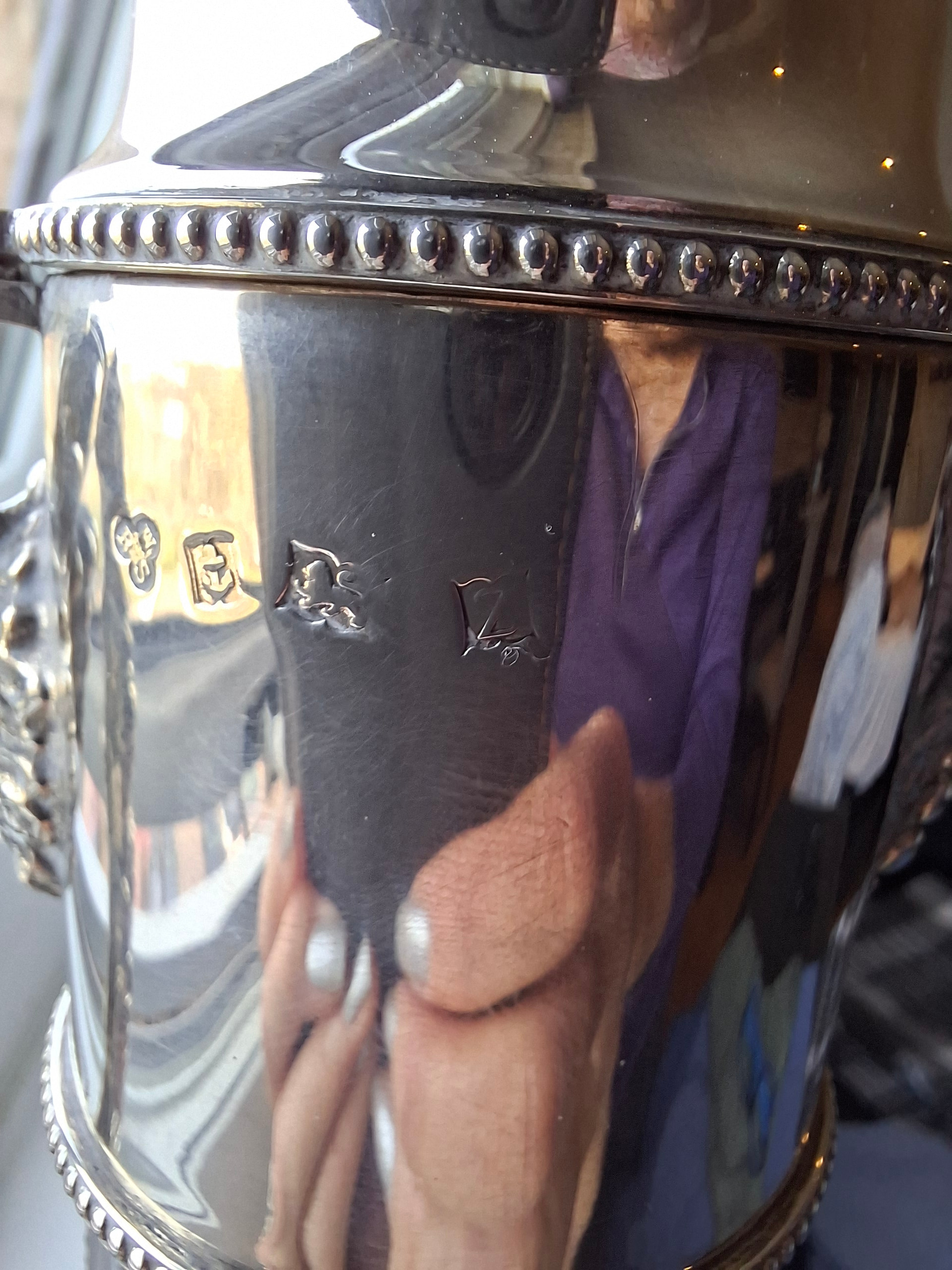
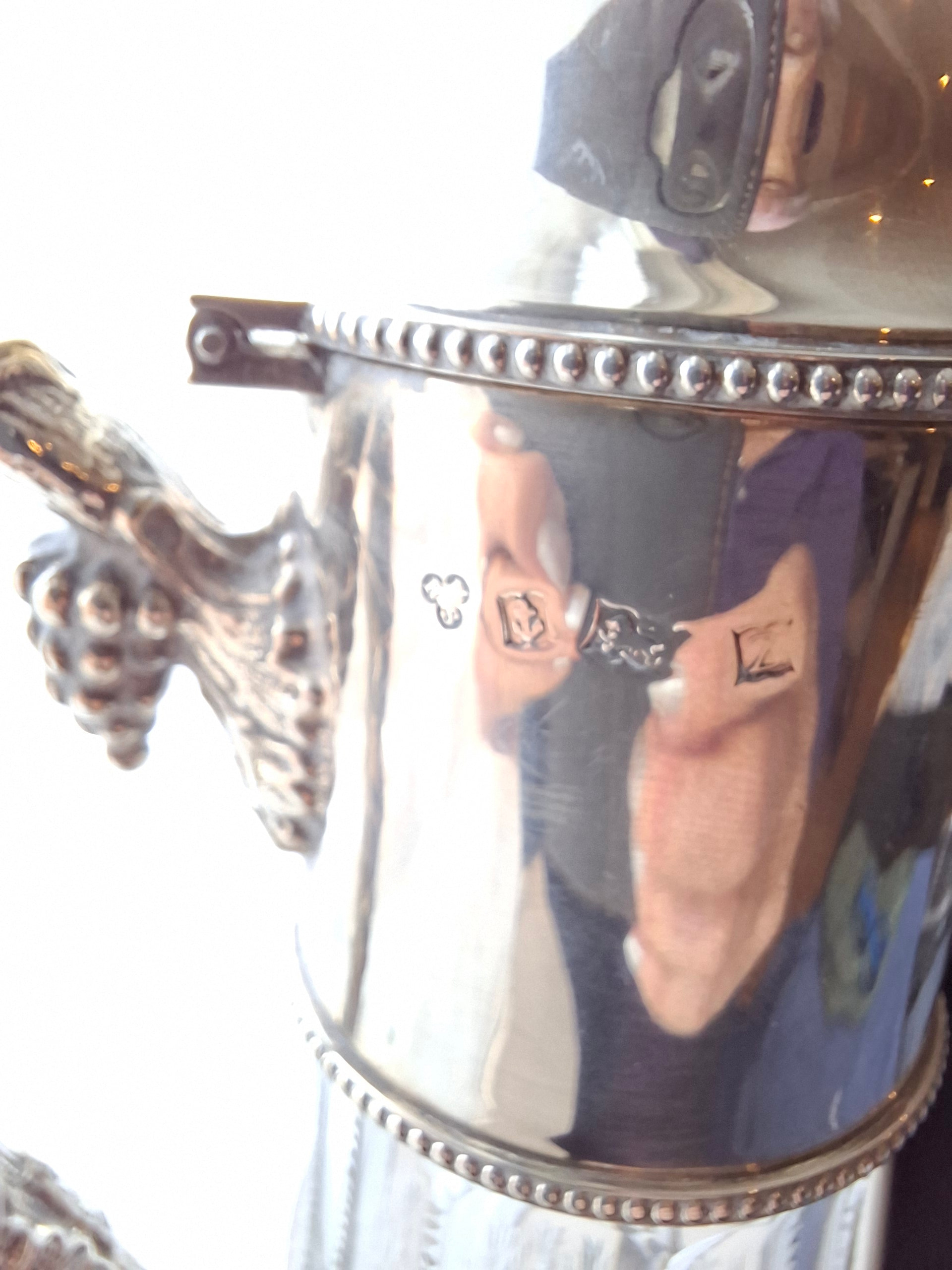
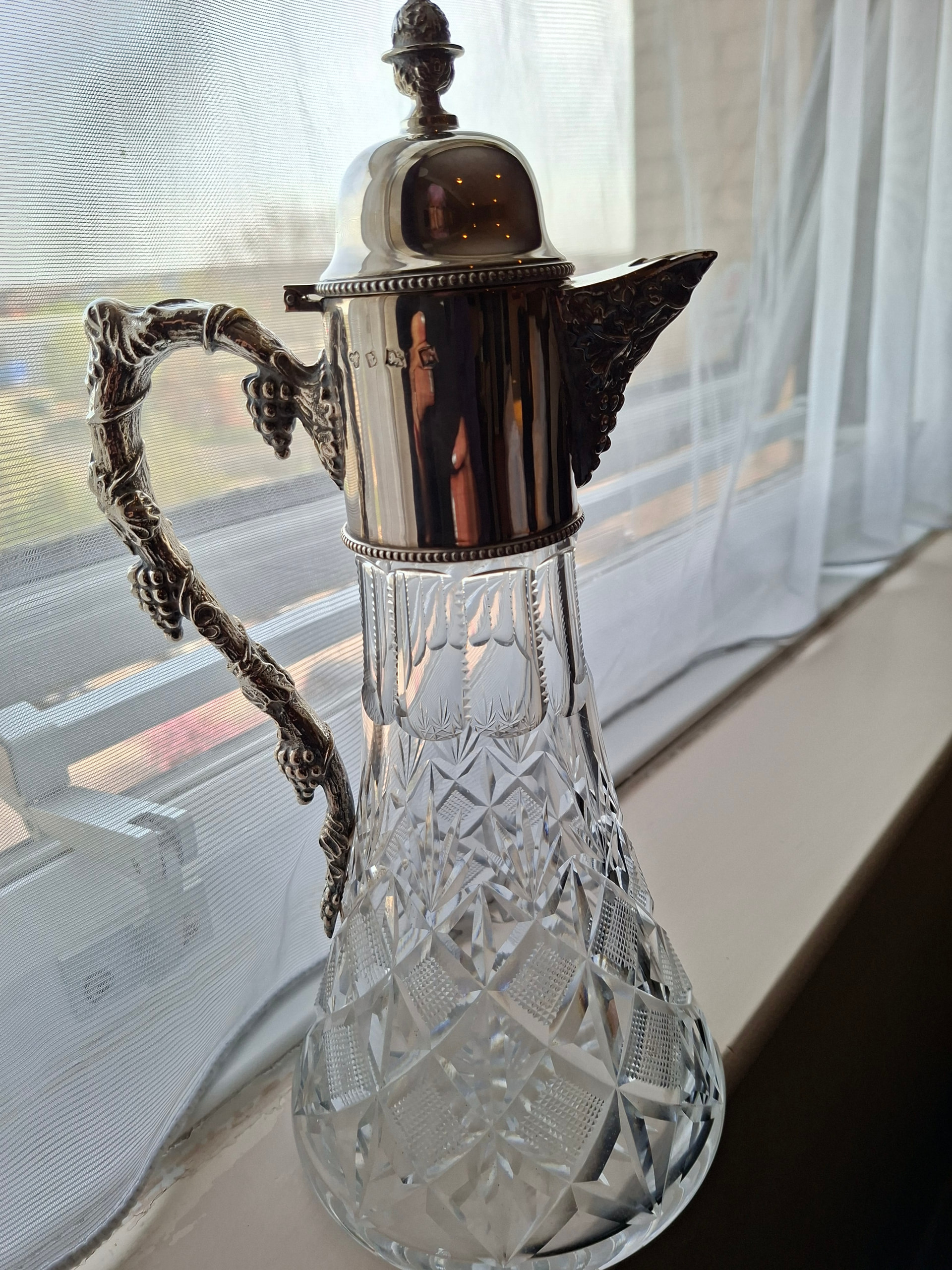
I am trying to find out more information.on the following. Makers mark RWS set in trefoil, Anchor, Lion Passant, Z year mark. Please can you help as I wish to present the jug to my great grandson
1 Like
Warwickshire Reproduction Silver, 1970 …1979, (registered Jun 1969). Z - 1974.
VERY FINE SILVER MOUNTED CLARET JUG Wrong date B - 1976.
Birmingham of course! 
Yes, so WRS rather than RWS. All the info you were seeking is readily available here Silver Makers Marks
1 Like
Thank you Paul very helpful
1 Like
Quite apart from the silver work, to which you have been well referenced, the cut glass should show a bottom mark for a Stourbridge glass maker once of huge national importance now sadly no more.
Thomas Webb & Sons founded in 1829 and finally closed in 1990 probably produced more and better cut or leaded glass than anybody else in the British Isles, competing with Waterford Crystal in the Irish Republic and being forced into closure by European, especially Swedish, glaziers working cheaper and with more mechanical aids.
Here’s the story and a timeline on the company into which you can fit your own glass/silverware or your grandson can.
https://legacyantiques.co.uk/shop/glass/british-glass/thomas-webb/
Why Stourbridge? Cheaper than London premises, ready access to coal for furnaces and a craft base for workers, Thomas Webb set up when Ravenscroft and Vauxhall the early Georgian glass makers succumbed to high London rents.
WRS is a bit of a mystery as to exactly what craftsmen worked for them and out of which premises.
Birmingham, as you will likely know, is the second largest city in the UK, has a still thriving silver and jewellery capability, its own assay office and, unlike its great rival and my forebears’ natal city, Manchester, was created by great craftsmen rather than great factories where operatives, we didn’t even call then workers, suffered worse than the slave field hands from US southern cotton field their masters depended upon.
Here’s a boxed claret jug by WRS sold at auction:
Hutchinson & ScottAuctioneers up in Skipton, Yorkshire sold a less elaborate but same maker jug in 2021:
I think I like yours better.
CRWW
1 Like
Reading back through my comment I note I have used the term “leaded” as in leaded glass rather than the older term “flint glass” or just the rather vague “cut glass”.
I’d best explain myself.
Lead was not entirely discontinued in all leaded or cut glass at a single point in time, but its use has been largely phased out of consumer drinking vessels since the 1980s due to health concerns, with many manufacturers switching to lead-free alternatives in the 2000s. While traditional, high-end “lead crystal” is still produced by some companies, the industry has largely shifted to using barium oxide, zinc, or potassium to mimic the optical properties of lead without the toxicity.
The concern is the decanters or claret (Bordeaux) wine containers leach lead into the drinkable contents. It would, and it did, but you’d need to leave it in there for a while for that to occur on a scale to hazard health.
In households of my childhood the way the butler cleaned the decanters was putting lead shot and water in them and swilling that around until the fermented grape residue inside disappeared.
Of course it left an invisible lead shot residue instead, but since, on a great Edwardian shooting estate, dinner guests were used to crunching on the odd lead shot used to bring the bird down, this worried no one back then.
So don’t worry you’re probably not going to do to your grandson what lead-lined viaducts, pipes and drinking vessels did to assist the Goths and Visigoths to end the Roman Empire, but timely drinking of claret is probably best. Even if you don’t decant it at all.
CRWW
1 Like
Not to veer too far outside the parameters of this excellent forum, but what is the best method for cleaning claret residue from 19th century crystal? Mine, which I’m slightly ashamed to say, has a bit of a haze due to rather a surfeit of decanted claret, could use a brightening up.
1 Like
The best way to clean a decanter or claret jug interior is to use stainless steel cleaning beads or a mix of crushed ice and coarse salt combined with warm water to act as gentle abrasives that remove residue while swirling. Rinse immediately after use with warm, distilled, or alkaline water to prevent stains, then allow to air dry upside down.
CRWW
I’ll try that. Thanks. And if it works, I’ll raise a toast to you the next time I decant a Laffite Rothschild.
Enjoy.
I asked a friend of mine, a restorer who works with the AGO in Toronto. She acknowledges my system works but you have to buy the steel balls and suggested, since most people don’t have them, first try white vinegar and uncooked rice. Pour some in let sit and swill. She also reminded me whatever people use to clean dentures will work too.
I am hoping I get confirmation this exhibited jug is a Thomas Webb flint glass.
The UK surrendered its ability to craft cut glass to the Europeans, the last to go was Waterford which of course is outside the UK
Cut glass is like Iranian or Persian rugs It depends on cheap labour to survive. As I said, the London glass factories got priced out by people like the Duke of Westminster whose rents went too high.
Stourbridge made sense for reasons I set out plus the Stourbridge Canal, a 5.8-mile industrial waterway connecting to the Staffordshire and Worcestershire Canal at Stourton Junction leading to to the Dudley Canal at the Delph Locks. Completed in 1779 to transport coal, it features 20 locks, including a dramatic 16-lock flight, and is far and away better for shipping glass than those rutted roads of the day for the Stourbridge glass industry.
The Canals of the 17th and 18th century were like the railroads of the19th and 20th century.
CRWW