Please can someone let me know what these marks are and what they mean as I found this in my mothers house after she passed away
2 Likes
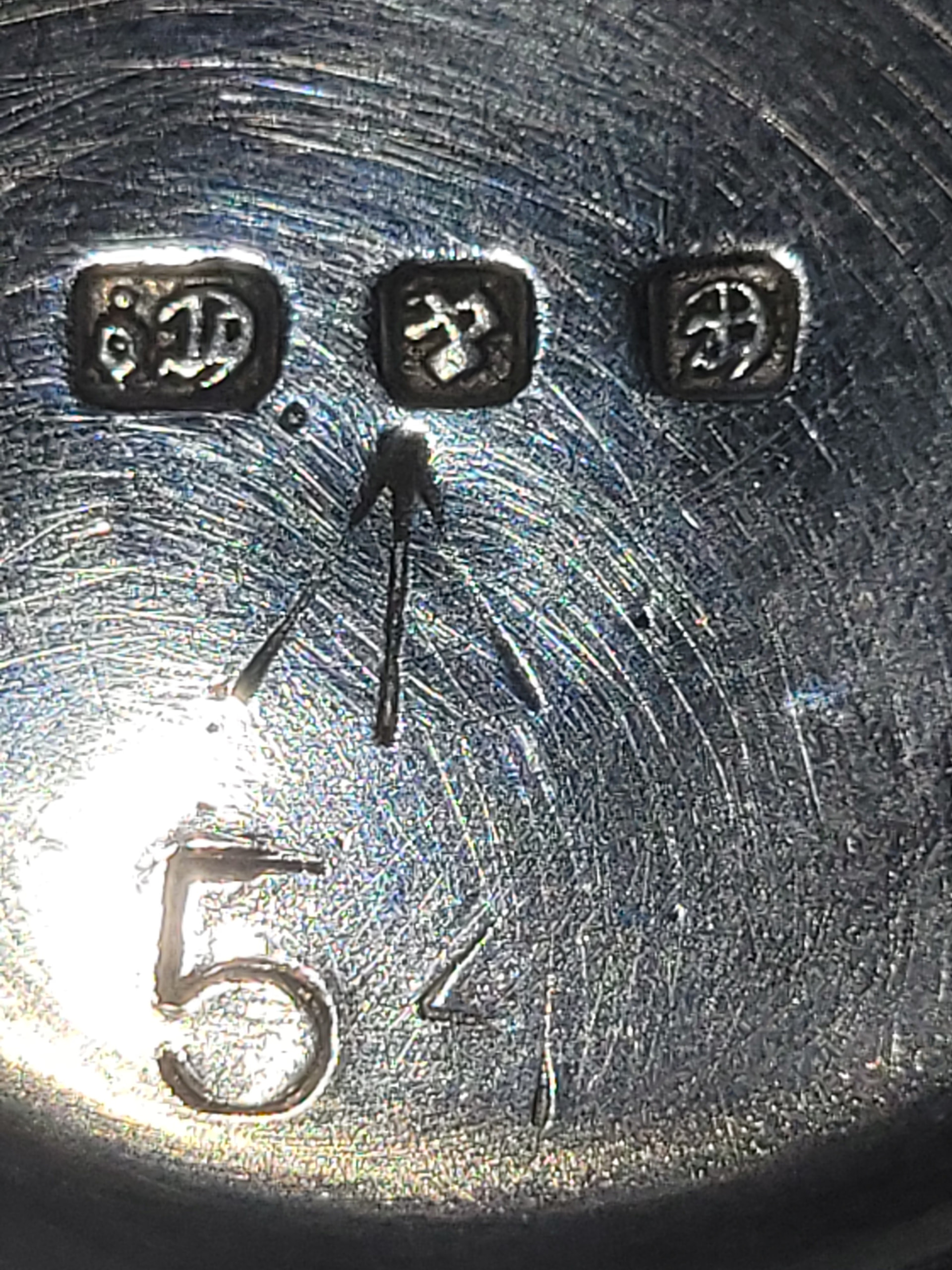
Those aren’t true hallmarks - this is not sterling silver. The lettering is for Elkington & Co. (upside-down in the photo, but it’s a gothic E & Co). So, it’s well made electroplate, but with no precious metal.
ETA: Raise a glass to your mother’s memory. 
2 Likes
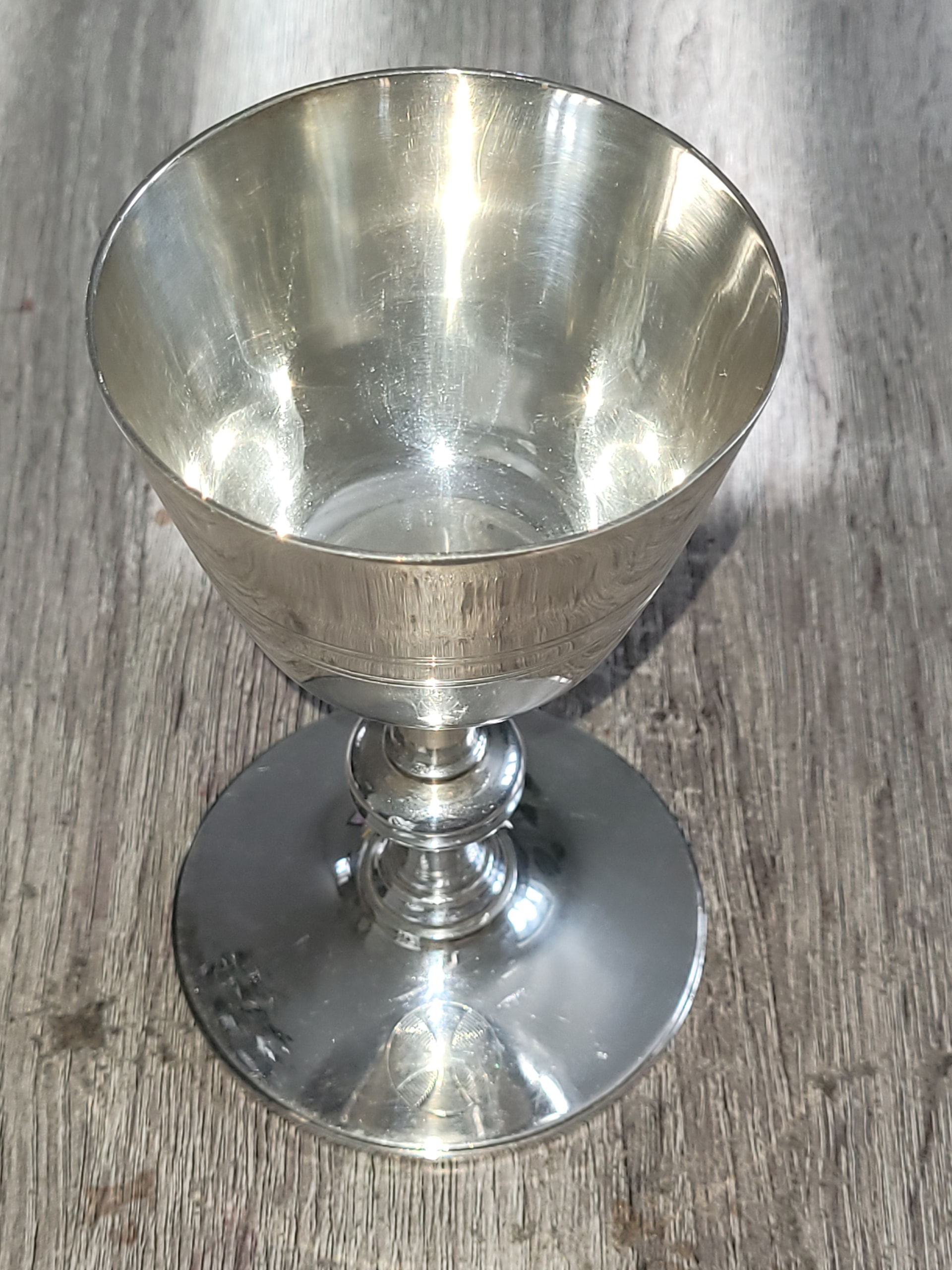
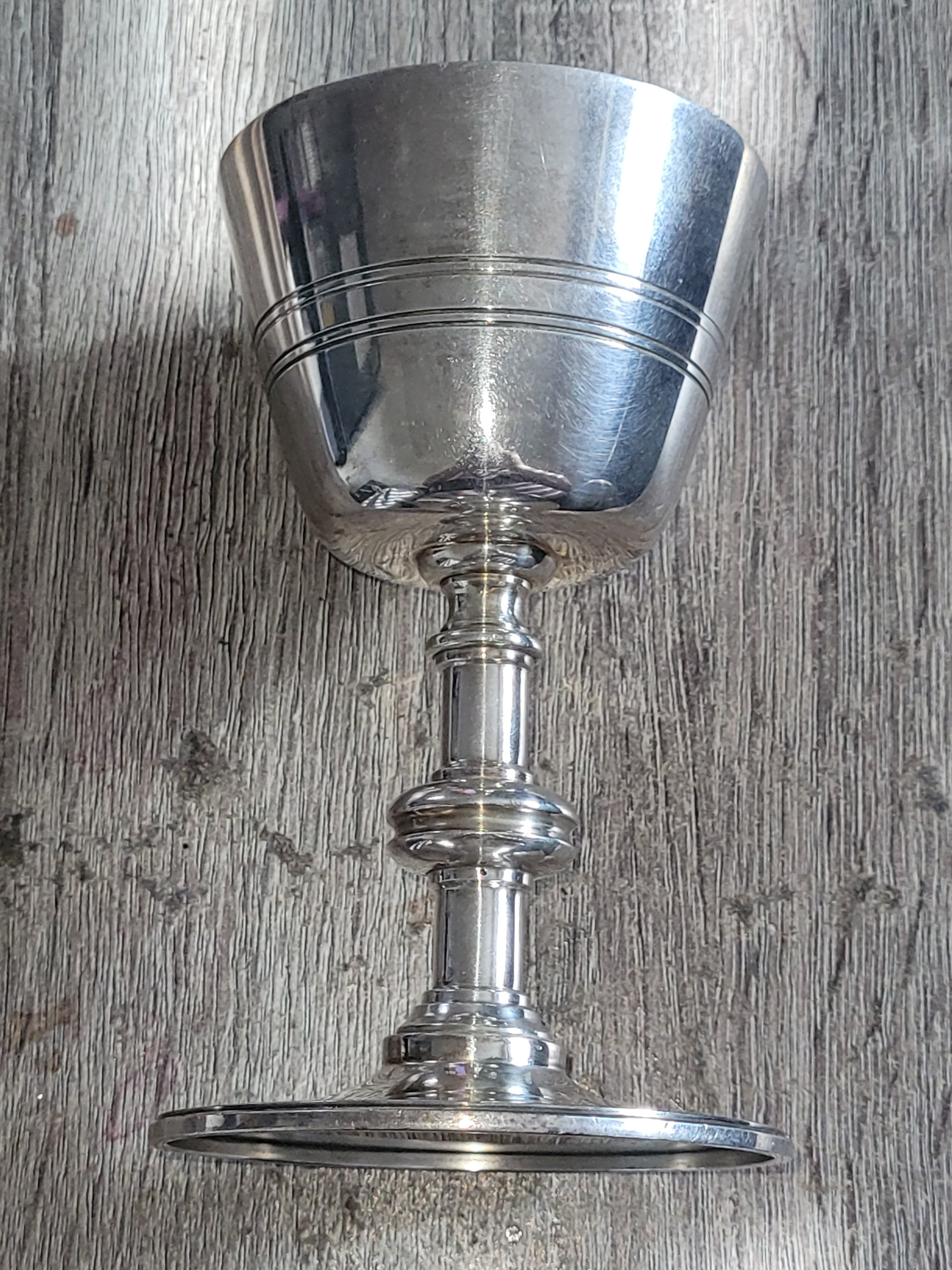
Could this be a Communion Cup !!!, maybe for a MOD ( ministry of defence ) pastor hence the Crows Foot mark or Arrow shape !!! 
2 Likes

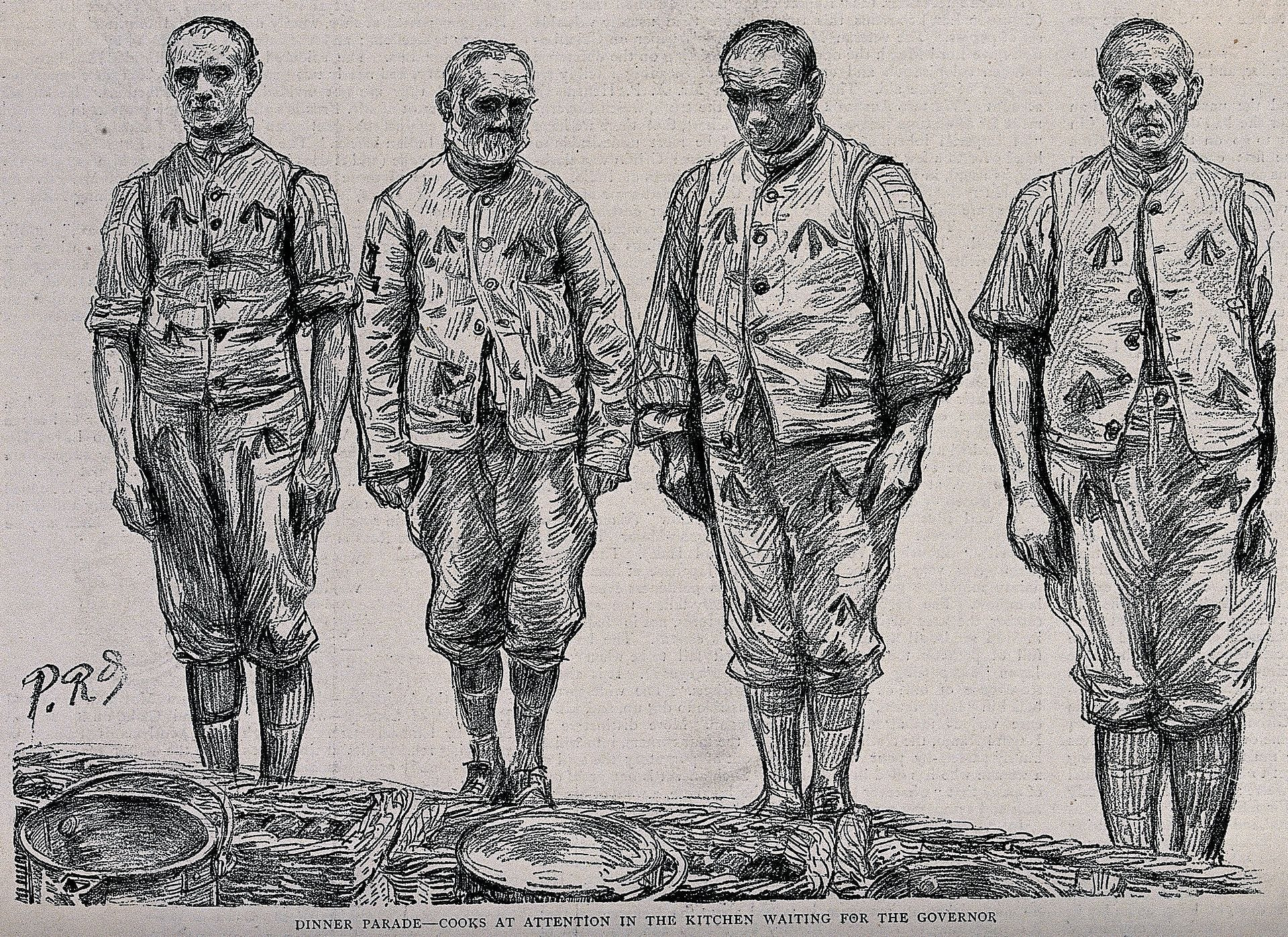
Prison issue , pastor nicking the communion wine 

2 Likes
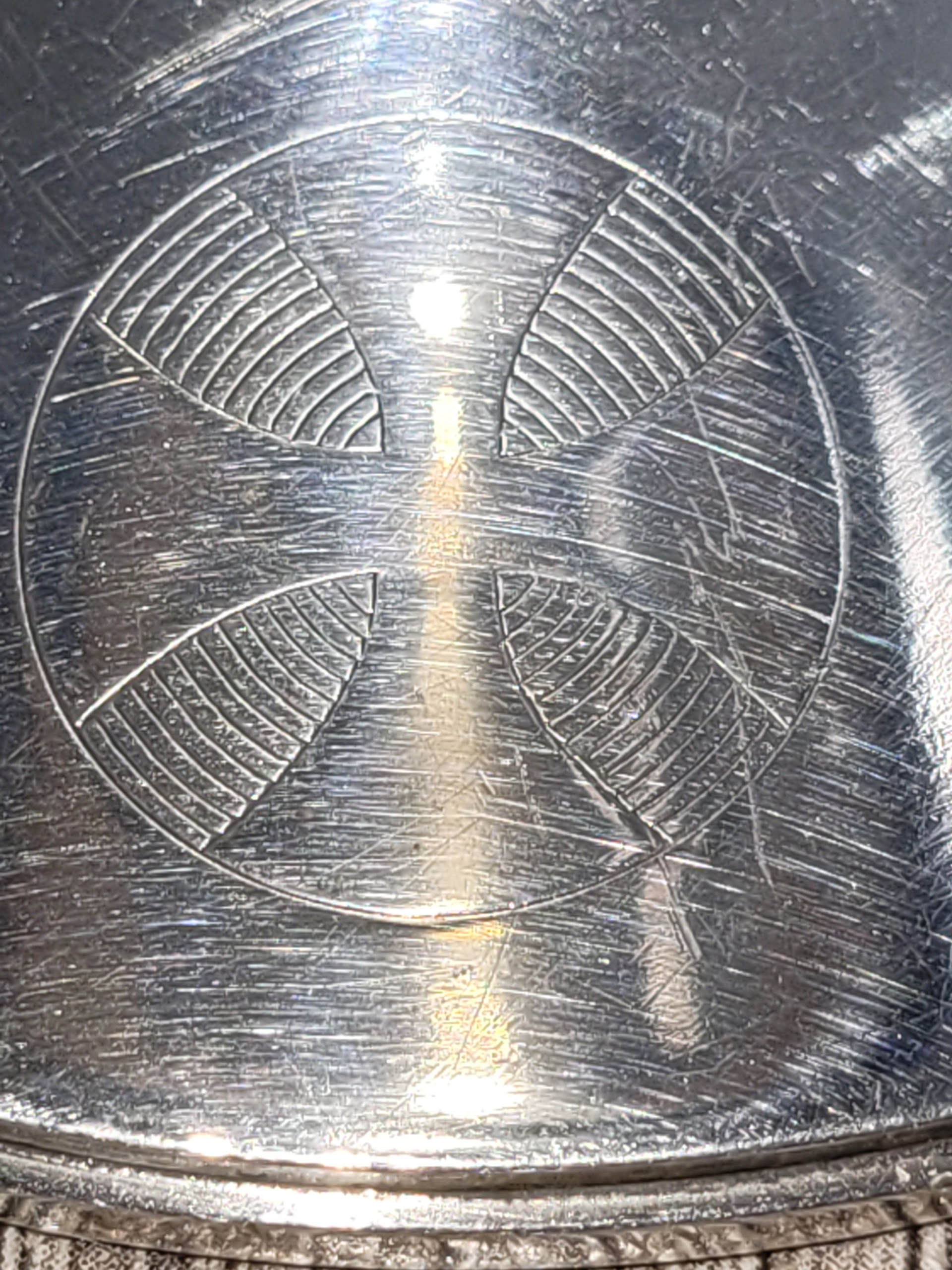
Very similar to an object in the Imperial War Museum. No photo of the bottom, but it does refer to a “broad arrow.” And even a similar Maltese cross! This example is ca. 1940.
1 Like
And it gets even better. From The Great War:
I’d say that’s spot on. 
1 Like
They’re all over the place.
1 Like
The Elkington mark is consistent with marks used on plate between 1937 and 1960.
Here is a WWII case with the communion contents missing also marked with the broad arrow:
https://www.worthpoint.com/worthopedia/ww2-british-army-chaplains-field-268960948
While, absent a date letter (which the Elkington Bros who basically commercialized used of silver plate in England having bought the patent and icenced it) dating with precision is impossible, this is not a WWI set. In that war Chaplains generally acquired their own sets.
I am lucky to have one by George Unite in the family collection which was the property of a great uncle, a young Scottish chaplain ministering in Hockney, Wawickshire who managed to survive the carnage only to die in 1919 of the so-called Spanish flu, a disease which accounted for more victims than the bullets and guns of the four-year trench war.
If you are interested the principal memorial to the Royal Army Chaplains’ Department in England is located at the National Memorial Arboretum in Alrewas,Staffs. Unveiled in 2015, this memorial features a shepherd’s crook, crossed swords, and bronze plaques, honouring the 179 chaplains who lost their lives in WWI and all those who have served in conflict.
Accompanying the set I have from that earlier war is a “mentioned in dispatches” for James, signed by his C O who happened to be Winston Churchill who had resigned his cabinet position and gone back to the front after Gallipoli.
Now this about your grand-mother’s chalice in the next war (or the continuation of the first war depending on you view of Mr Hitler’s motives), and it is a sufficiently macabre relic, that one might be forgiven for concluding she had a relative who was an army chaplain or close associated to one and I, for one, would be very interested in hearing more about that link.
The cup I have is relatively pristine, apart from being slightly bent out of shape. The paten which was used to deliver the waiver or body of Christ, perhaps because it is solid silver and soft, bear thousands of teeth marks of hundreds of men who died on the battlefield after administration of the sacrament.
CRWW
1 Like
But it’s also consistent with Elkington marks going back to the mid-19th Century - usually accompanied by the shield and a date letter, but not necessarily. Here, from 1849:
https://www.925-1000.com/forum/viewtopic.php?t=15955
Ah, the joys of trying to date electroplate! 
1 Like
An eight-pointed cross sometimes referred to as a Maltese cross on this chalice used during WWII likely represents the Order of St. John Knights Hospitaller.
This symbol represents the eight Beatitudes and eight virtues (loyalty, piety, honesty, etc.), frequently used by medical or charitable branches during that war.
The Order, with its long history of caring for the sick, was active in providing humanitarian aid and medical services during WWII.
The eight-pointed cross, or “cross of St. John,” has been associated with the Knights Hospitaller since the 11th century, representing their obligations of faith and service.
This cross, appears on silver or brass vessels used in both Roman Catholic and Anglican military chaplaincy.
The cup exhibited by another commentator was used by a Chaplain serving in a Japanese POW camp constructing railroads in what was then Burma. So whlle the cross is correctly called the Maltese Cross this particular decoration is unlikely to have had anything to do with the seige of Malta or its relentless aerial bombardment prior to the second Battle at El Alamein
1 Like