Hi can any one help me with my fob watch sponsor mark and date? For some reason lately a lot of marks seem poorly stamped making it hard to match mark
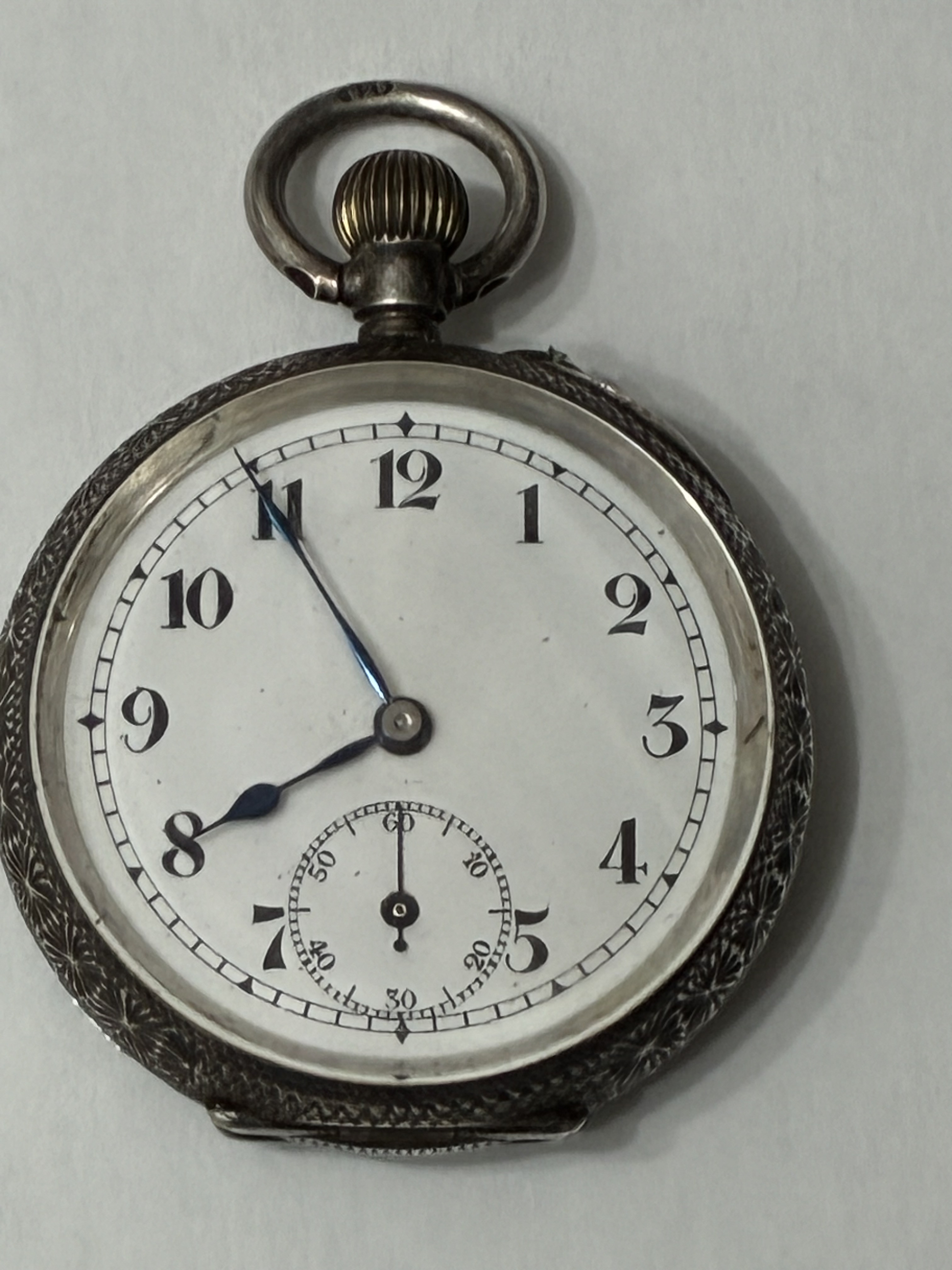
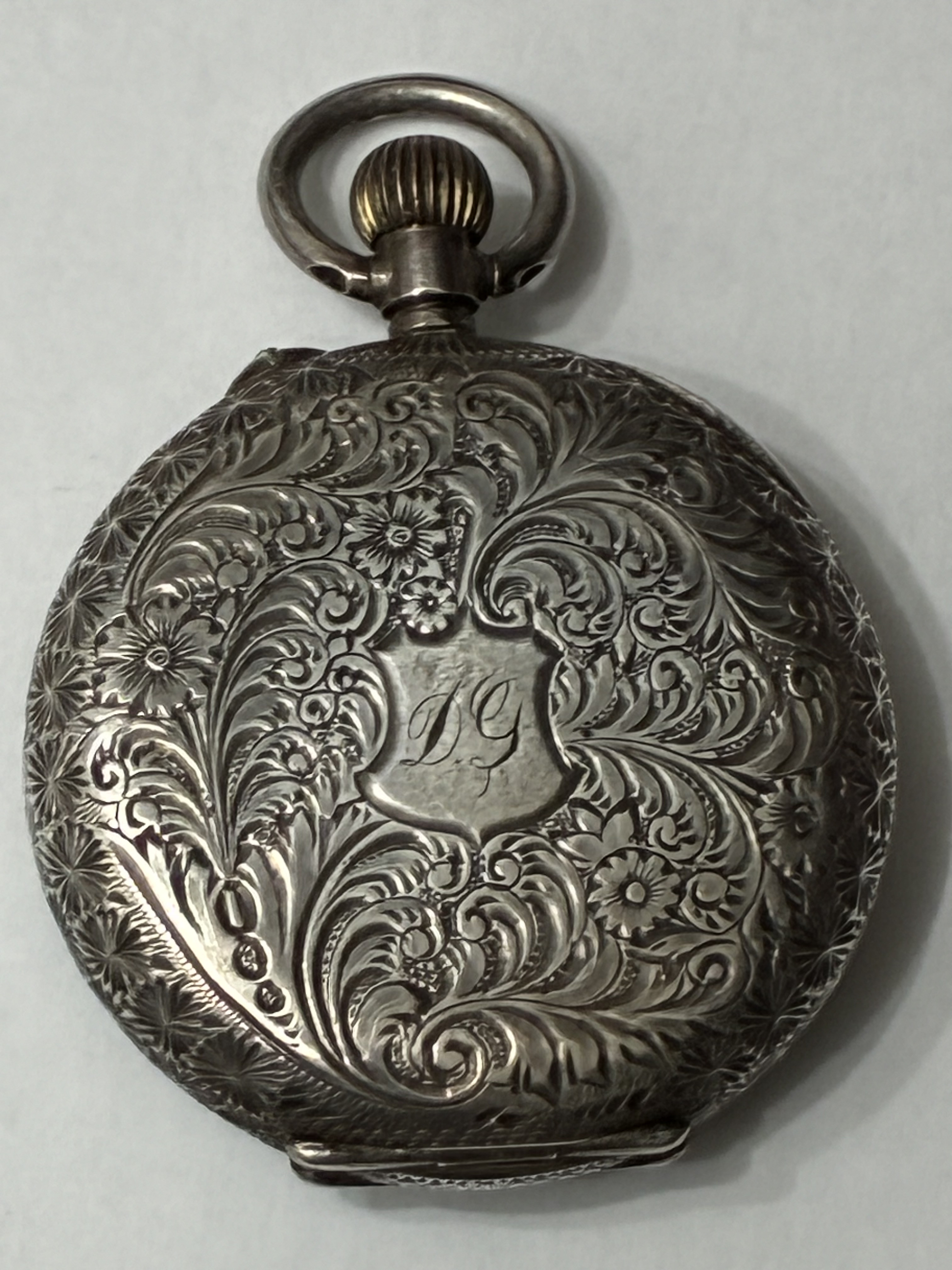
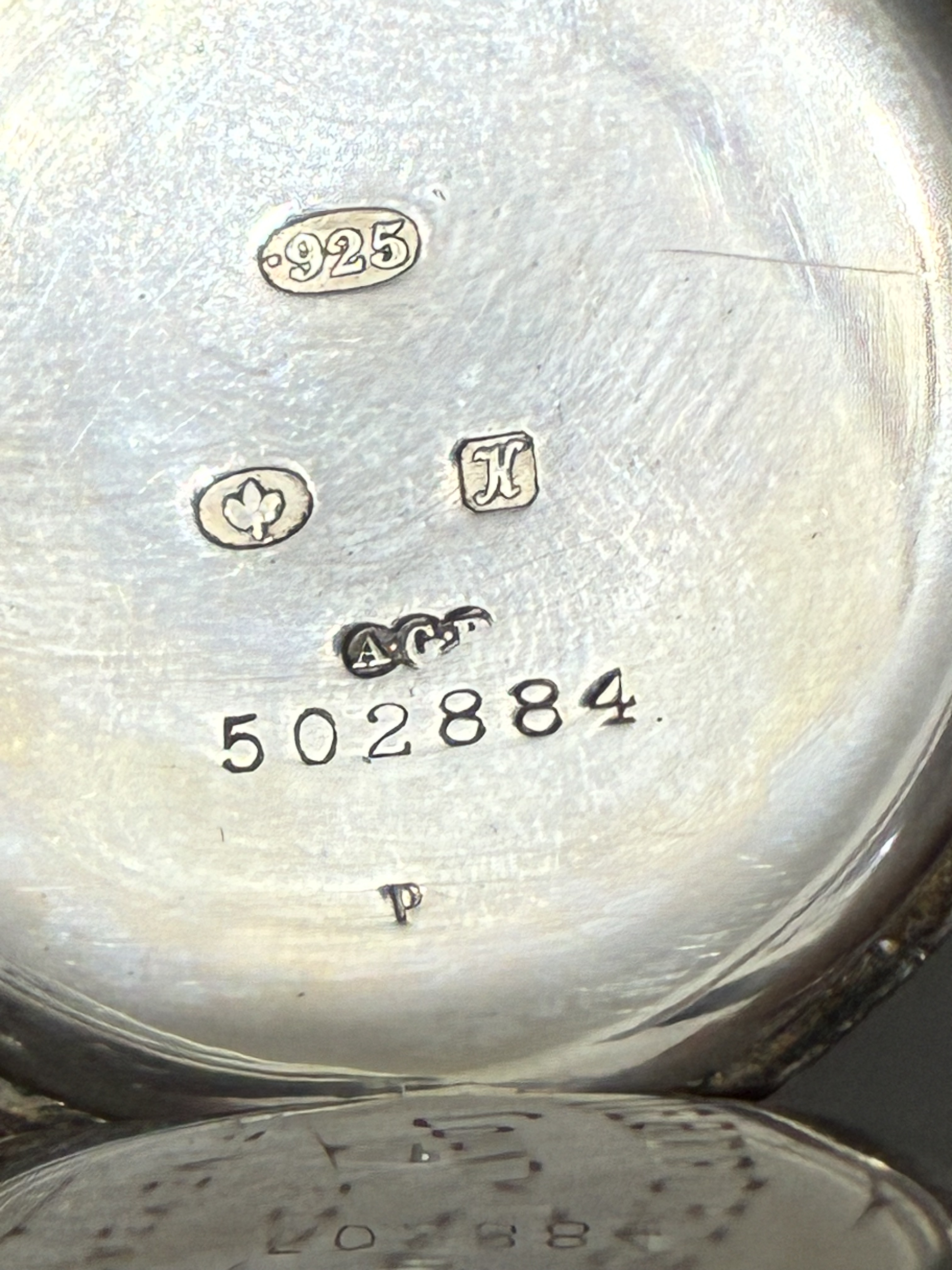
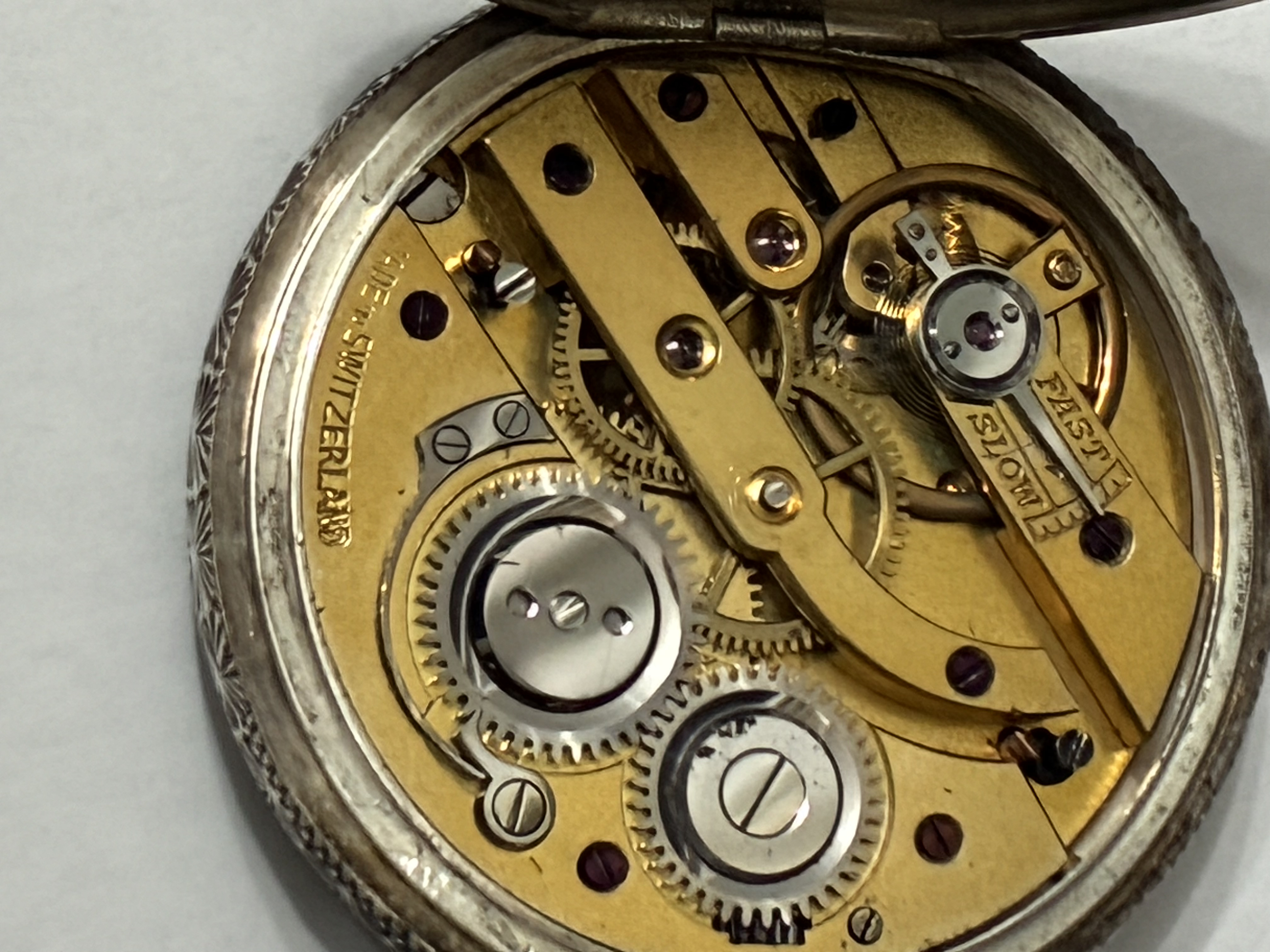
| Arthur George Rendell | 1917 | Imported watch case | Clerkenwell Road, London |
|---|---|---|---|
The AGR mark is the sponsors mark for Arthur George Rendell (Clerkenwell Road, London - import of swiss watches, in use since 1907.
Chester import mark.


 Chester, 1910.
1 Like
Firstly the 1917 date letter for Glasgow is U. secondly, the oval with the ‘leaf’ isn’t the hallmark for Glasgow. that is a tree with a bird. Jen
1 Like
Sorry, my fault. ________________________
https://www.worthpoint.com/worthopedia/ww1-ladies-1911-silver-pocket-watch-1410631745
1 Like
We had a chance to review the AGR mark in this silver Forum in June of this year and spoke a little about the excellent but inexpensive Swiss watches that flooded Victorian and Edwardian England and what was done about it to protect the home trade.
Arthur George Rendell had indeed registered his sponsor’s mark and imported watches through the Chester Assay Office using its services rather than London where he lived and worked to navigate the massive backlog created by this sudden change in British hallmarking laws.
Rendell was the manager of watch imports at Robert Pringle & Sons, a major jewellery and watch wholesaler based on Clerkenwell Road in London.
Before 1907, foreign-made gold and silver watch cases imported into Britain entered the country through agents without strict, mandatory UK hallmarking requirements. However, new strict legal regulations governing the hallmarking of imported gold and silver watches came in June 1, 1907 compelling Swiss watch manufacturers and British importers to comply, resulting in massive logistical issues.
The London Assay Office was overwhelmed with an unsustainable volume of imported watch cases that all required testing, assaying, and stamping.
To bypass these delays, Rendell registered this “A·G·R” sponsor mark in Chester. The Chester Assay Office was highly efficient, less backlogged than London, and specialized in processing high volumes of watch cases.
So it was the Assay of Imported Watch-Cases Act 1907, which went into effect on June 1 and was designed to resolve one problem created another.
Before this law, a legal loophole combined with a long-standing customs misinterpretation later challenged in the court case Goldsmiths v. Wyatt * allowed complete foreign watches with precious metal cases to be imported into Britain without undergoing standard British assay testing or receiving British hallmarks.
The 1907 statute closed this loophole, mandating that all imported gold and silver watch cases must be hallmarked at a British assay office before being put on sale.
Overnight, millions of Swiss and American watch imports that previously bypassed the system had to be physically sent to British assay offices (such as London, Birmingham, Chester and Glasgow). The sheer, unprecedented volume completely overwhelmed the staff and standard operations of these assay offices.
Importers like Rendell had to register custom “sponsor’s marks” before they could even submit cases for testing.
The 1887 Merchandise Marks Act had originally required a large, single “composite cameo mark” for foreign watch cases, which combined the town symbol, standard fineness, and date letter into one punch. Importers had fiercely protested this because striking a massive composite punch severely distorted and damaged the delicate watch cases.
To prevent further delays and damage, the government hastily amended the rule by an Order in Council in May 1907, replacing the bulky cameo punch with three separate, traditional punch marks which you can see on your watch case
By routing the imports through Chester, Rendell ensured that imported Swiss timepieces could be legally hallmarked, reassembled, and brought to the retail market without suffering months of standard operational delays in London.
I have probably trespassed too far already on your patience and good offices regarding the early 20th century attempt at creation of a tariff barrier which, like those raining down on US importers 130 years later from the White House, do more damage to the pocket books of the customer than they ever do to assist the beleaguered home trade, but the Wyatt and Rimmer prosecution and the decision o the UK high court makes an excellent read for those who might speculate on what happens to courts where judges not only attempt to enforce the law but to create and expand its reach. I first read the judgment about 60 years ago and managed to cite the case in support of a position a client took on a not dis similar matter almost exactly 20 years ago.