1 Like
Bart has provided us with two useful examples of the T100 mark. The first by Shri and Hari Rama, Jewellers at 1658 &1659, Dariba Kalan Rd, Chandni Chowk, New Delhi,110006, India and the second stamped only “T100” which the UK Auctioneer, Burstow and Hewett assures us is “silver” without troubling us about what grade.
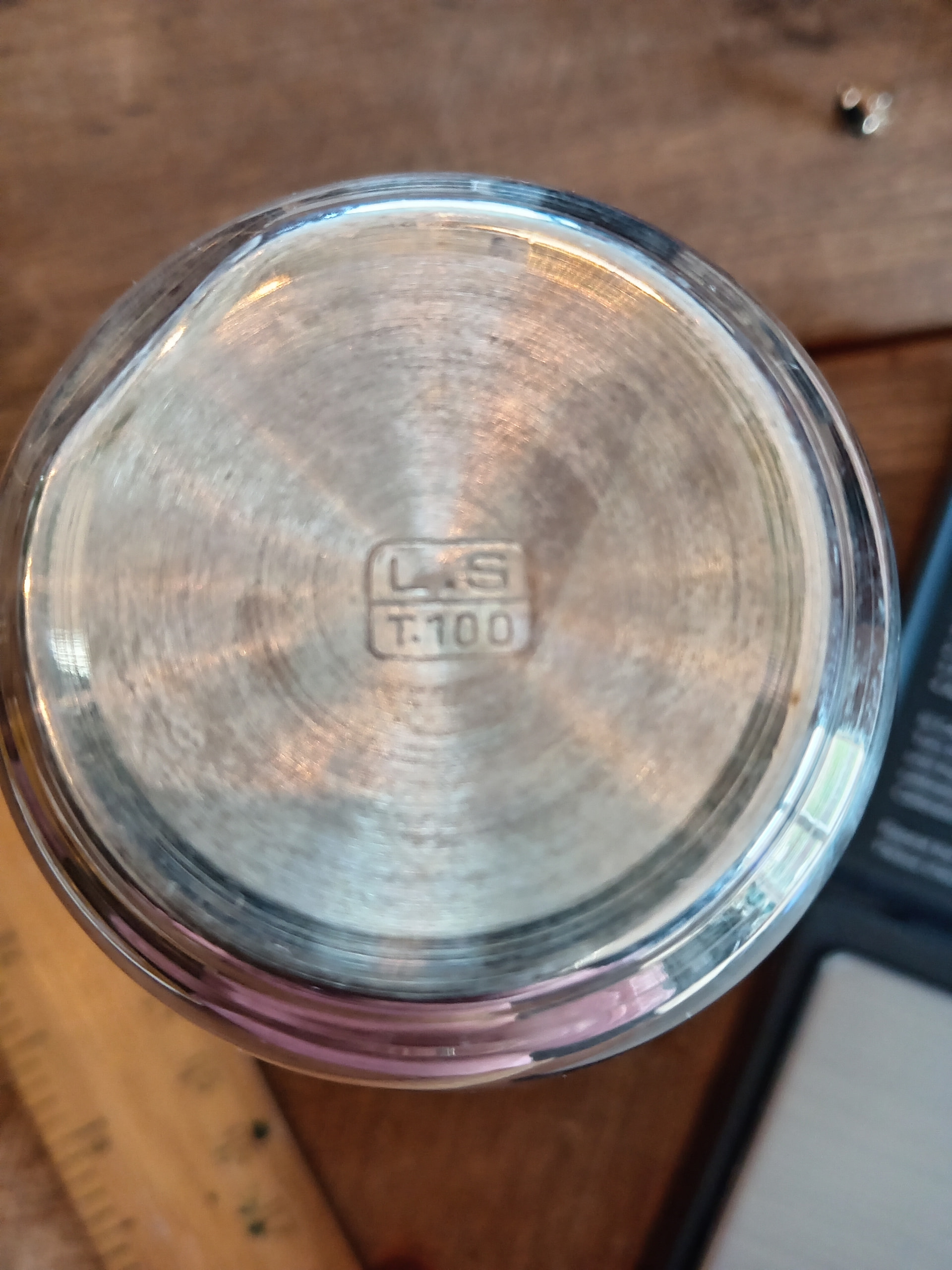
The exhibited cup is also marked T100 and LS which is presumably the maker’s initials which fitted the probable time frame or retail seller. I had a quick look through my list of contemporary Indian Jewellers and silversmiths and didn’t spot anyone with LS.
The problem is threefold. First neither of Bart’s two exhibits or yours uses the BIS mark mandated. by the Indian government nor does LS appear on. their list of over 400 silversmith who have registered.
Second surrounding countries seeking to emulate the no doubt high standards of the Indian silver market place are quite cavalier about using faux Indian marks to pass off their production as something else produced somewhere else. Cambodia is a notorious culprit and
Third, none of the three items have the look, even in photos, of anything approaching pure silver. Spun work such as this would need to be a lot sturdier to accommodate the almost lead-like malability of pure or 999 silver.
There is an additional problem and that is the very loose use of the word “silver” or “pure silver” when the seller s actually mean 92.50% silver and the rest is copper – which is sterling.
My conclusion, based on your pictures, the unidentified maker and the look of the cup is it is probably somewhere between .800 and 925% silver. But test it and you will be able to put us all out of our misery and assure your buyer of good product.
The absence of the BIS marking doesn’t really worry me too much. Just as Prince Hamlet tells Horatio about the Danish custom of excessive drinking, it is “more honour’d in the breach than the observance” .
CRWW
2 Likes