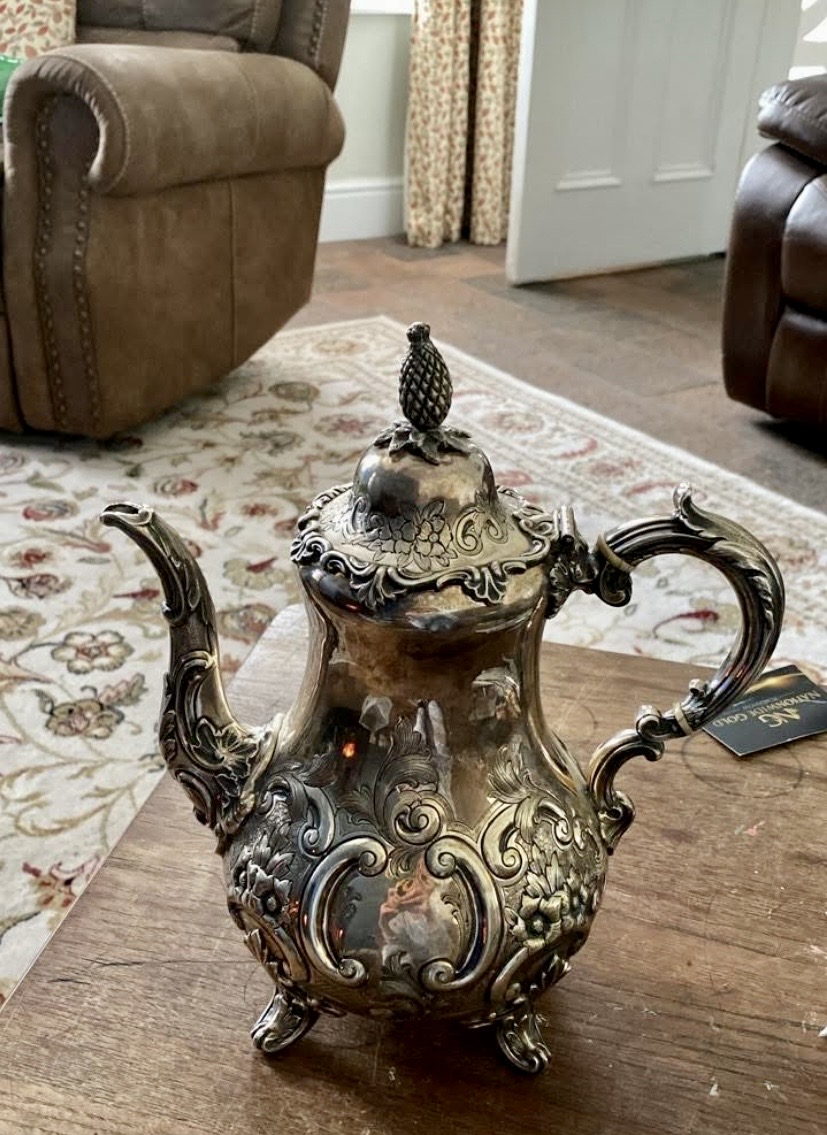
Can anyone help me with this Silver plated tea/coffee pot
Who made it ?
What year ?
And is it worth selling?
Many thanks
Can anyone help me with this Silver plated tea/coffee pot
Who made it ?
What year ?
And is it worth selling?
Many thanks
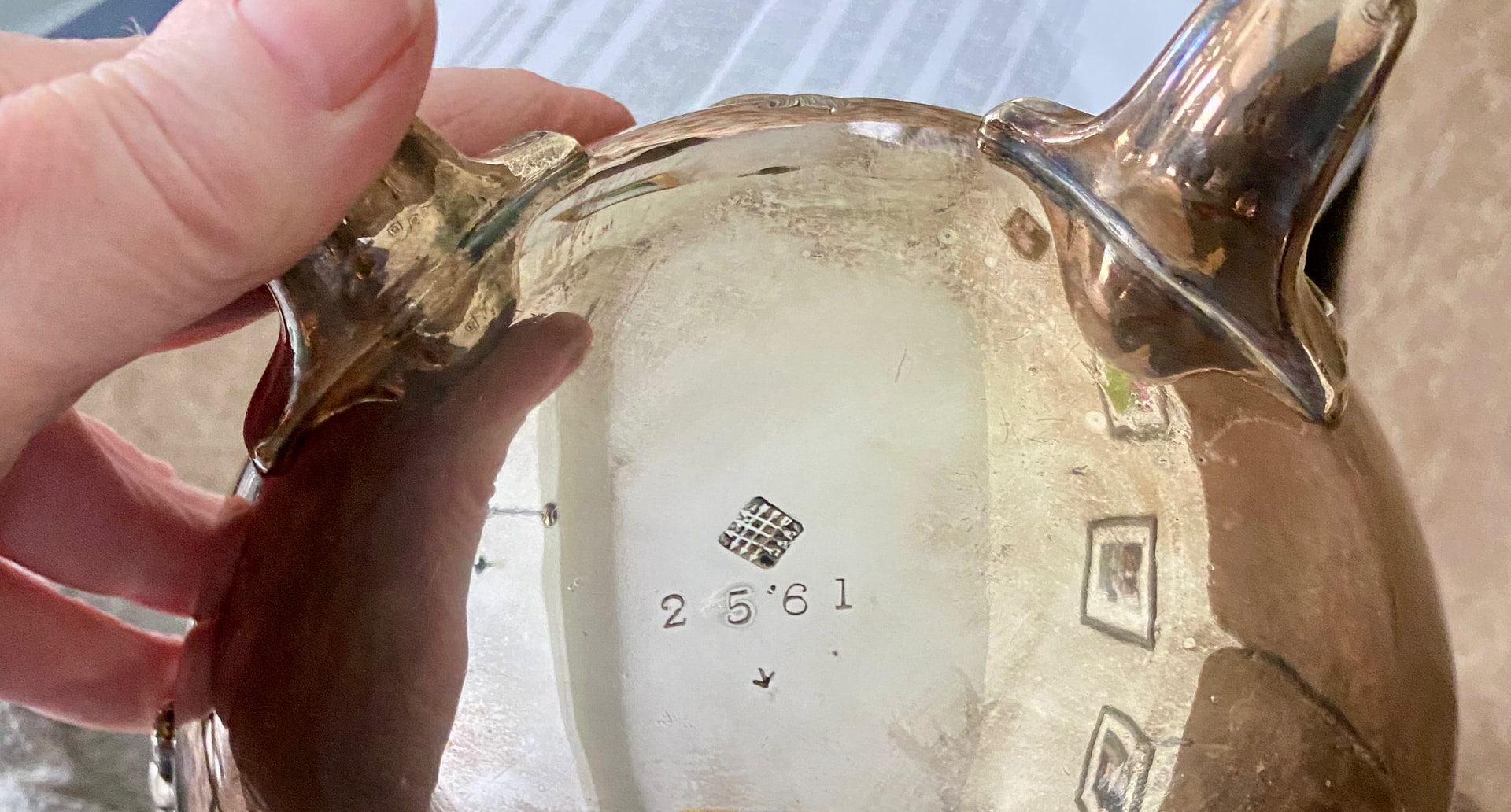
2561 - pattern number.
Louis IV style coffee pot (for the sake of accuracy  ).
).
This elaborate hot water jug will have been part of a four-part silver tea service. The Americans, who had had earlier an altercation with the British about tea tax, culminating in the Boston Harbour fracas, had rather gone off it and used the UK-made tea-set hot water jugs as coffee pots.
So import this fine item to the US and voila, it’s a coffee pot identified as to maker only by the numbers “2 5 '61” and the cross arrow symbol of the City of Sheffield where it was undoubtably made with a single arrow below the numbers.

The next questions you had asked is by whom and when.
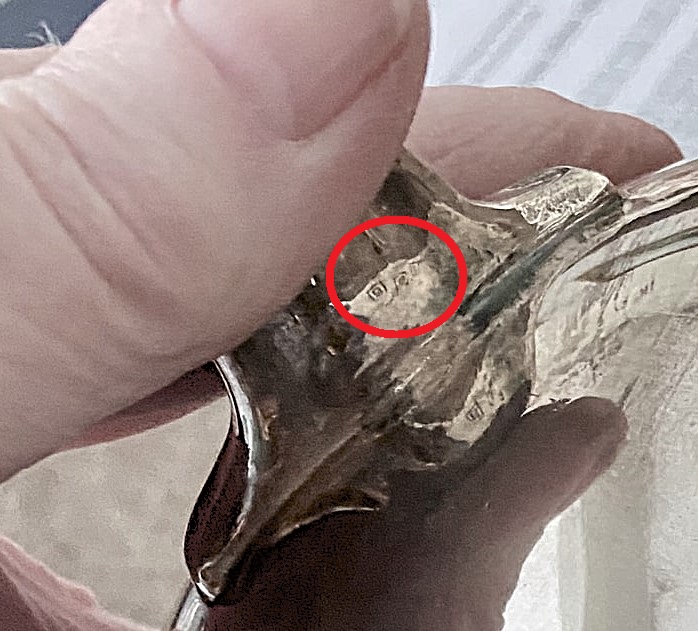
A colleague of mine has quite correctly pointed out the cross arrow symbol – which originally referred to the city’s involvement with the fletching business and other munitions manufacture-- was used by William Hutton & Sons.
Huttons took on and used the cross arrows trademark when it took over Creswick & Co’s business in 1902.
TJ Creswick had used the mark since the early part of the 19th century to mark Sheffield plate.
The full history is set out here:
and the trademark acquisition by Huttons here:
So this is the mark used by Creswick on plate even after 1840 as it had turned down an offer to take licence for electroplate production from the Elkington Bros and continued with the older method later than its competitors which is likely why it ran into difficulty.
Her’s an example of Sheffield Plate by Creswick marked with the cross arrow trademark
However, the patent filed by Elkington expired after 14 years and, to my non-expert eye, this does look more like electroplate than Sheffield Plate.
So final answer, this does not look like an Edwardian hot water jug. This is probably high Victorian design electro-plate by Creswicks after 1857 (1843 + 14 years) and before 1879 when Favells took over.

As to value: if it was Sheffield plate – that’s the physical fusion of a sandwich of copper between two plates of sterling silver, just about the same value as if it were sterling silver throughout such is the scarcity of good Sheffield. But as electro-plate… well scroll through Ebay and see what you can find but its depressingly low compared to the silver prices.
CRWW