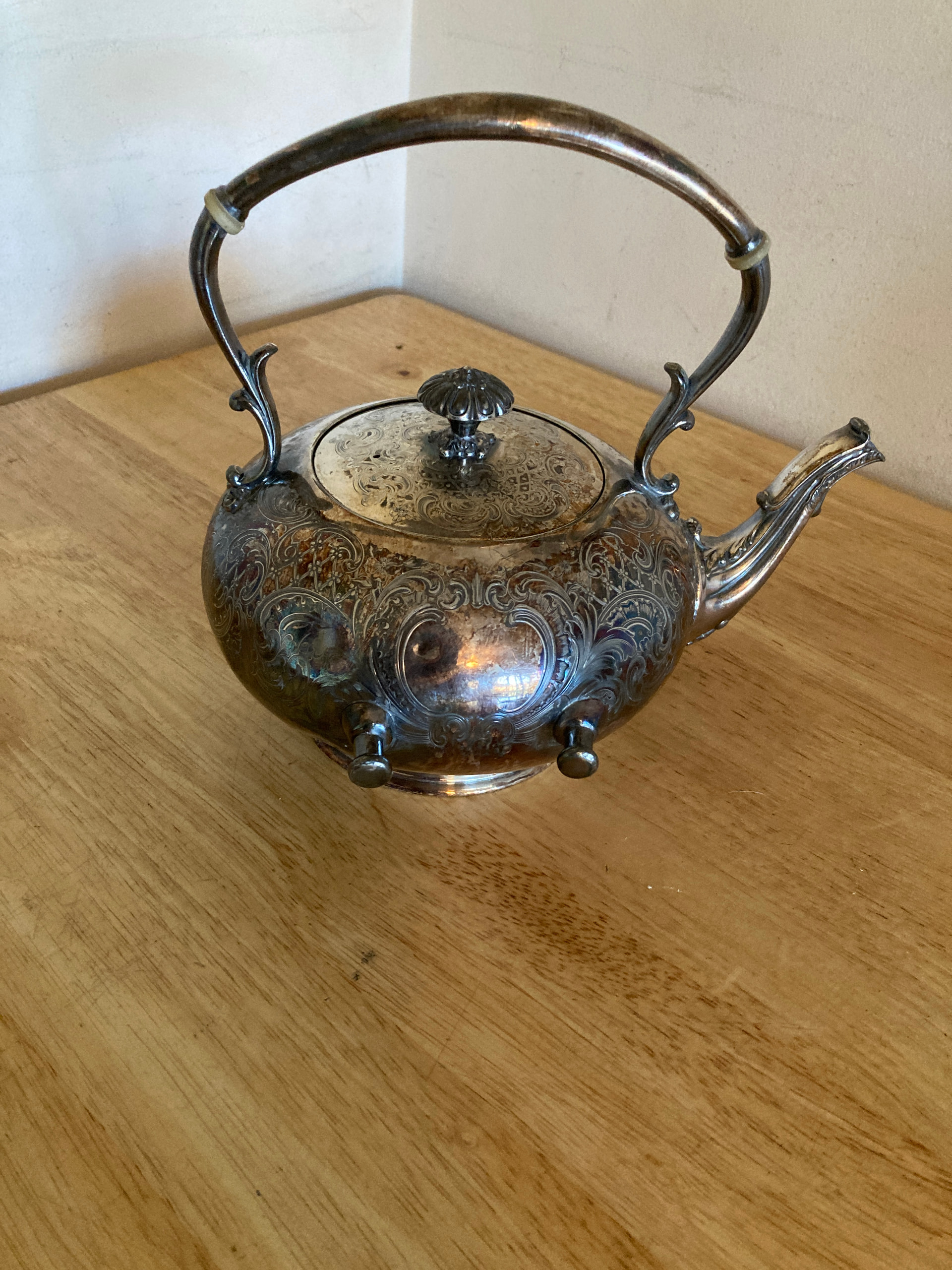
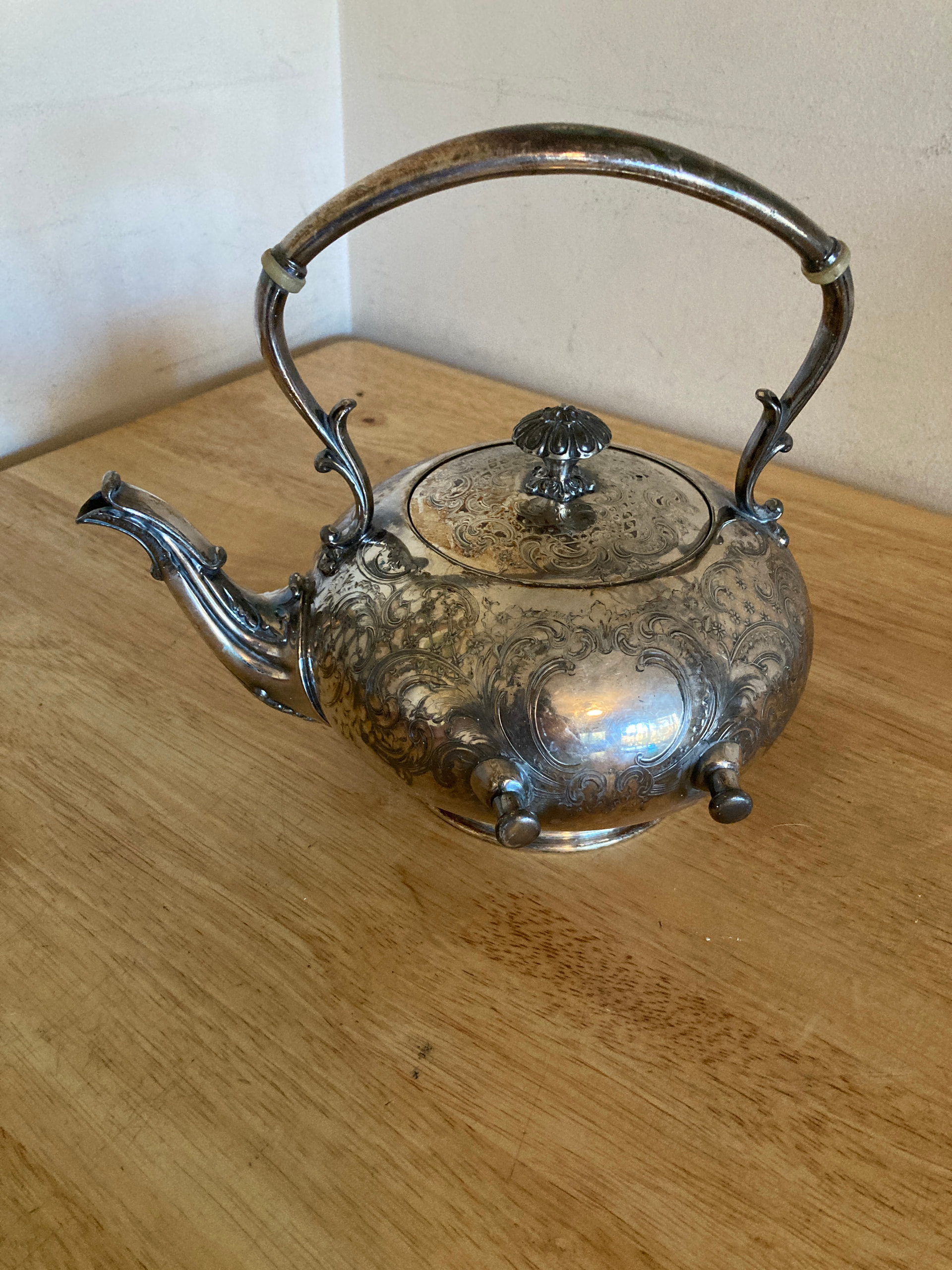
I have this teapot that was in my family and there is a standing lion as one of the marks and also a 125 on the bottom of the teapot. No other marks. I know that in many cases the standing lion means its sterling silver and British, but in my research I’ve learned there’s usually more symbols indicating maker, etc. I did read that the 125 could mean that it’s silver plate. But I’m hoping someone can help me identify if this is silver plate, silver and where is was made. Thanks in advance. Jessica
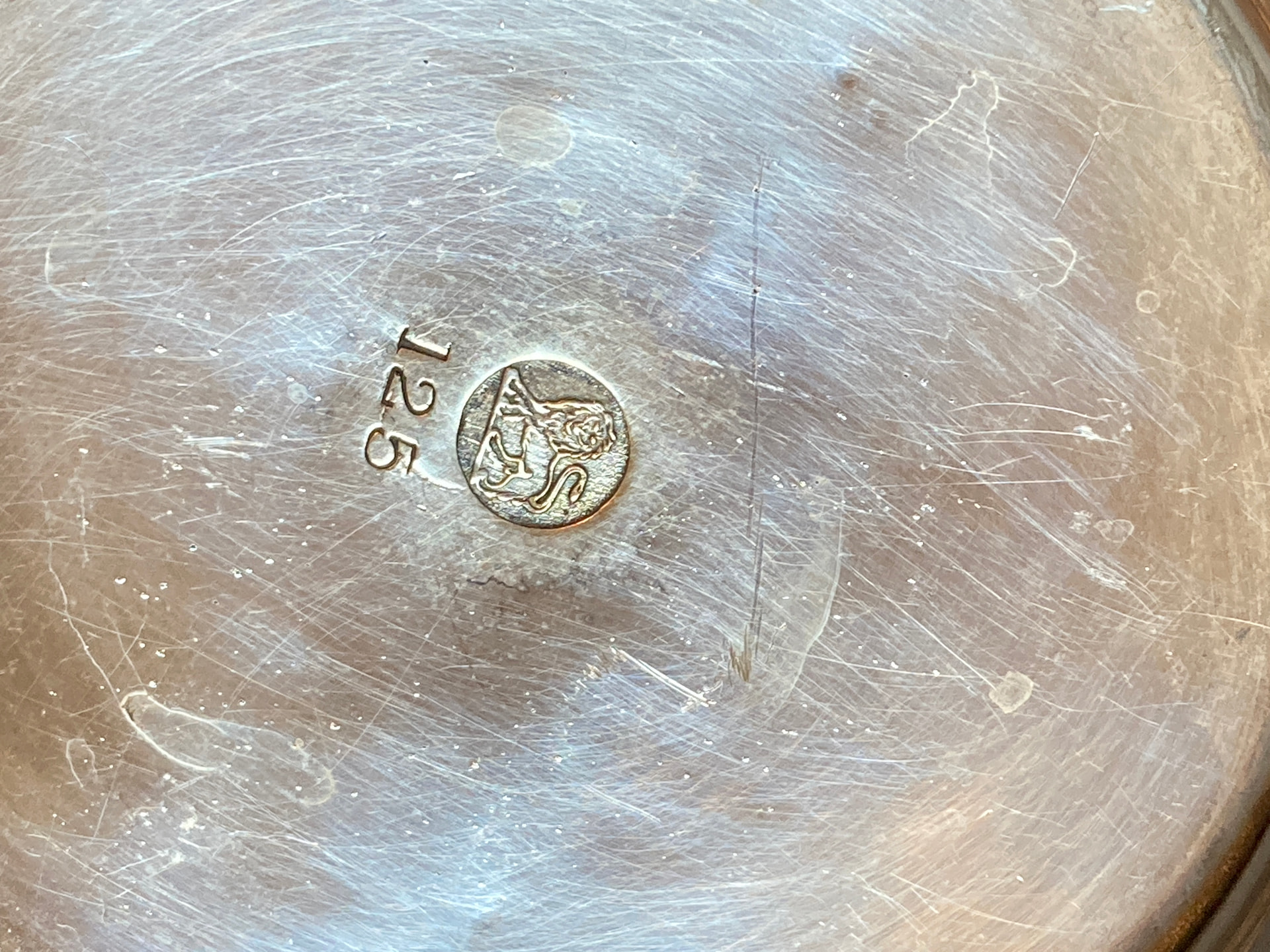
It’s a last quarter 19th century silver plate on copper spirit kettle. Somehow separated from its stand and burner. Hundreds of them were made this one by a large-ish US manufacturer. The number 125 is a pattern number for the works. You can see the copper showing through around the circle round the standing lion. That is probably a thin application of copper over a brass base metal. It seems to have a dent in it but otherwise in good shape. It’s very similar to a Reed and Barton spirit kettle I had once but a different maker who used a standing lion in a circle as a trade mark which doesn’t show up on a quick search. The stand and burner will likely have the name of the maker and full trade mark on it.
CRWW
Thank you for the info! very much appreciated. Jessica
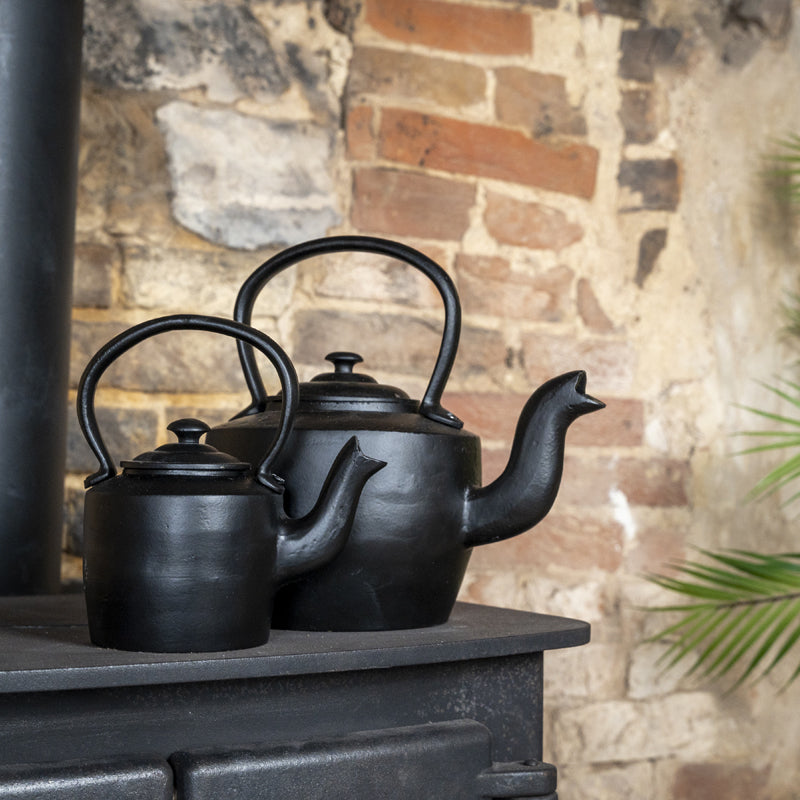
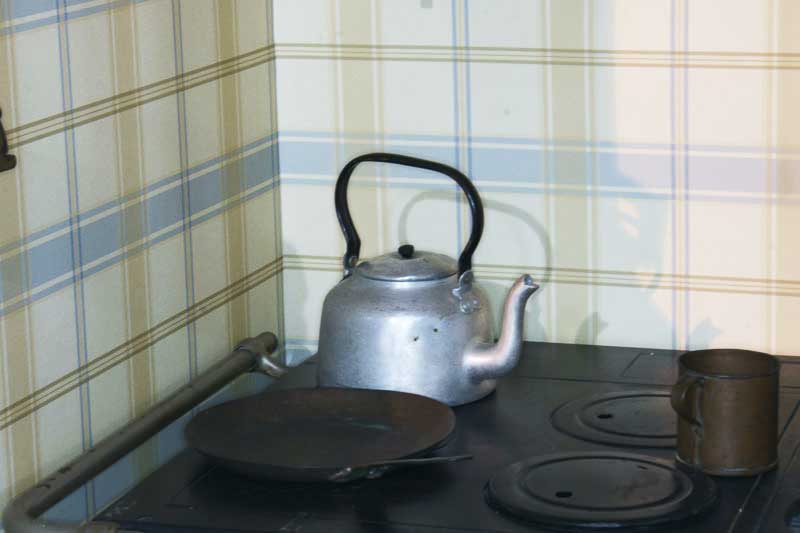
I understand that such a kettle will probably be frowned upon today, but as a child I can still remember our blackened kitchen range and the kettle being black with Soot.
Mum was tiny and had to use a damp cloth and pick the kettle up with two hands to manoeuvre it towards a huge brown glazed pottery teapot, wonder what she would have thought about that beautiful silver plated spirit one !!!
. Love you Mum
xx
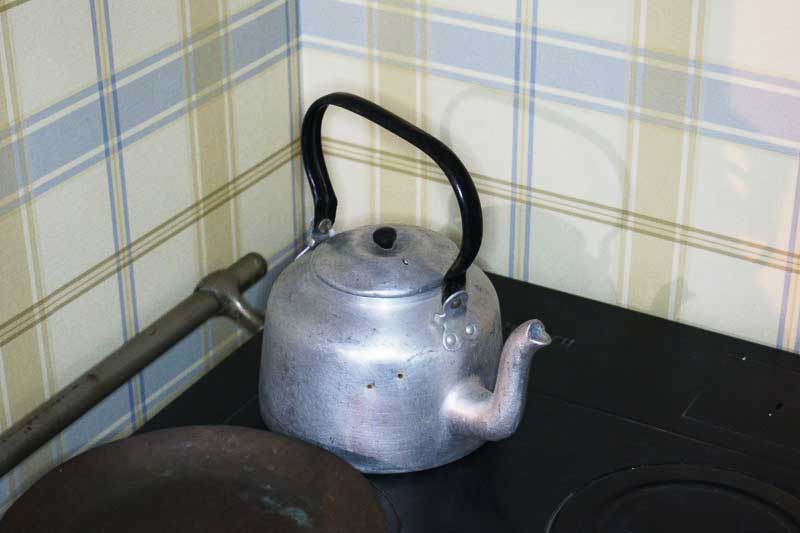
Beautiful memories, Alan! I grew up in a single-family home with a huge kitchen, where my late grandmother reigned supreme—an exceptional woman, an angel sent to earth by God. The heart of the kitchen was a Westfalia stove (coal stove), on which there was always a huge aluminum kettle with delicious boiling water. No one was ever hungry or thirsty.
Our house was the Hub of our community, 9 of us born at home, no doctors or nurses present, just neighbours and a constant kettle of Hot water , whether it be for sterilisation or tea . What stories a kettle could tell ![]()
Great Story! Thank you for sharing!
I presume the idea of the cloth is cotton fabric insulates against heat. Saturate it with water and the entire of that heat barrier is destroyed as water is nearly as good a conductor of heat as silver.
So, and with the utmost respect to your sainted Mum, how the heck did she go through her entire life without figuring out why her right palm was permanently blistered?
I don’t have any kitchen stories as I was never allowed in there. Indeed the entire of the wing occupied by the kitchen was terra incognita.
It was only decades lter when my English family had run out of annoying relatives to pass the family pile onto and had to hand it over to the colonial cousin or face being taxed into oblivion, I explored the area at all.
My grandfather had modernized the place about the time electricity was coming into domestic use and well before the telephone was an acceptable way of communicating. (It was kept in the flower room and largely ignored).
The kitchen itself had a huge table in the centre of the red stone floor, two AGA cookers at one end and a fridge which owed more to Heath Robinson than anything Westinghouse or GE would have understood, at the other.
There were game larders where pheasants hung for weeks, milk parlours for development of bucolic TB, hatches the gardeners were allowed to stuff veggies through once a day, sluice systems and washing racks for dishes and separate exit hatches and chutes for pig food. Which meant everything we didn’t eat was consumed by the pigs who were, in due course, consumed by us, I suppose.
In addition there were rooms for pressing and brewing cider and near beers and a ‘still for the production of alcohol. I don’t recall anybody ever drinking it despite our being a family of brewers, but who knows.
The strangest part of the wing was the bedroom systems. Male and female servants separated. by locked doors of course, but poles rather than downward stairs to traverse from sleep to work with maximum efficiency. I have this mental image of parlour maid flying down shiny poles legs akimbo. But perhaps that is all coloured by too much time in Vegas later on.
When I got the place I thought about restoring it to 19th century standards, gave up and borrowing a JCB to drive around inside and dismantle it. Today the entire wing is an indoor swimming pool which leaks and is never used and a squash court which I used exactly once and decided I didn’t like being beaten at the game by my then ten-year-old son.
No blackened kitchen kettles or damp insulating rags but there was a silver pantry which got converted into a butlers quarters.
Looking back now those times just after the war in a house run on 19th century domestic ideas was only possible because everybody drinks so damn much when someone else is trying to kill them in wars.
I wonder if the whole purpose of the current ‘phony war in Iran is to bolster flagging liquor sales in the US?
CRWW