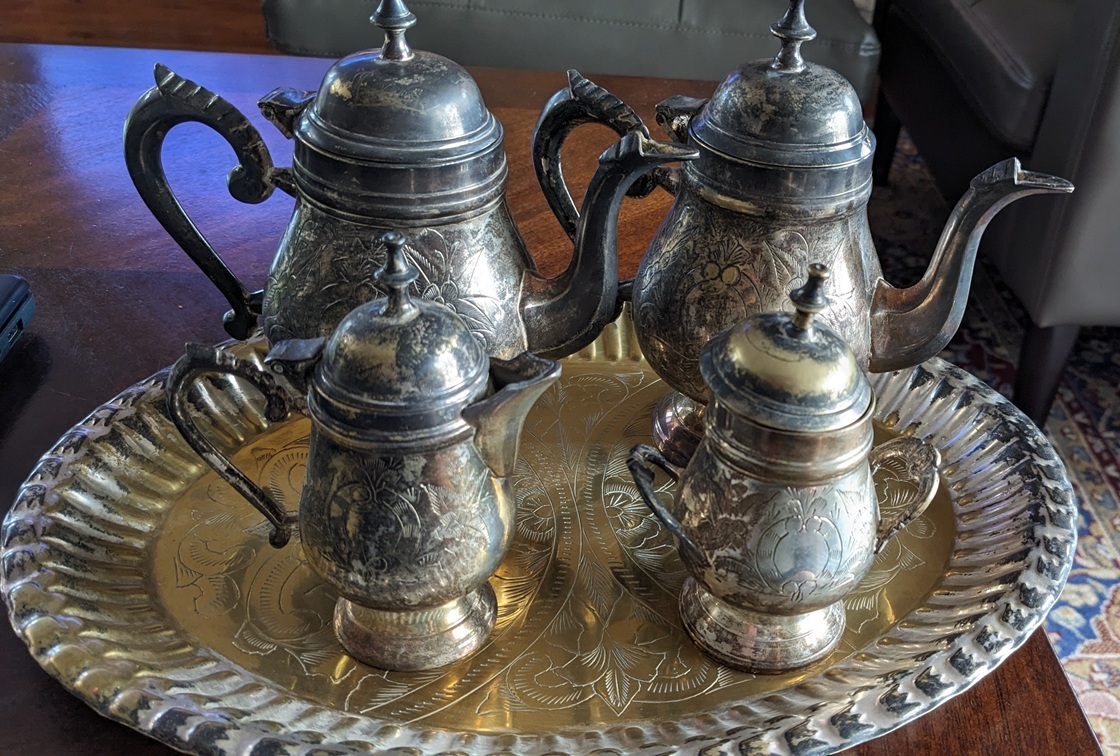
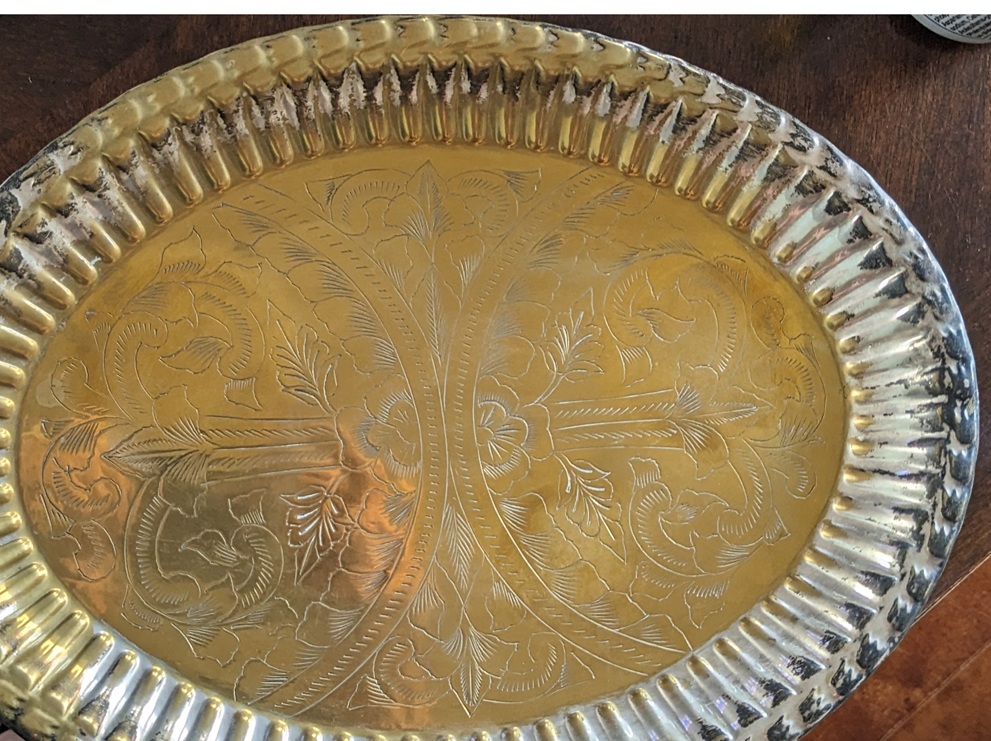
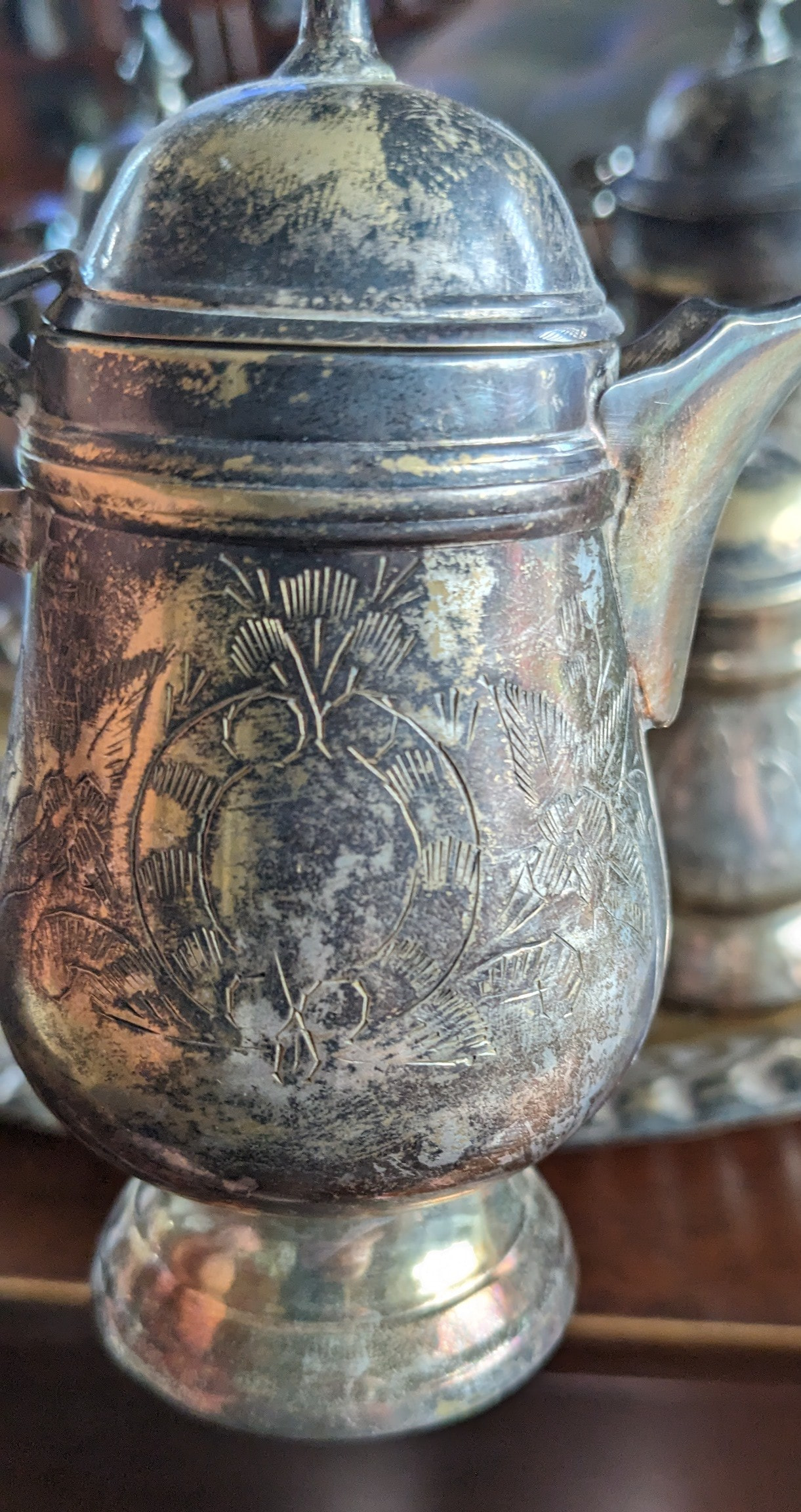
First post here, and appreciate the knowledge I have seen in the posts. We have a Tea set that is very tarnished and appears to have a gold patina on it. From what I have read it could have been a finish applied to it but information is tough to determine.
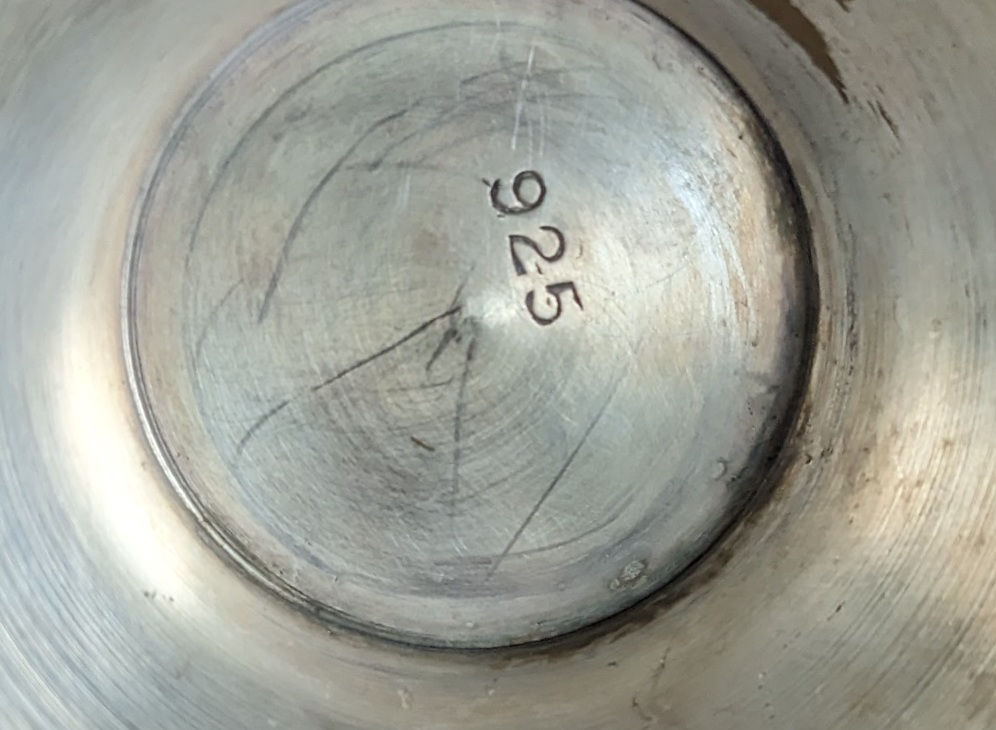
The set has 925 stamped on each piece but no other hallmarks. From what we could find googling around it appears that after the war Germany made sets for export with just the 925 stamp as internal sales required a hallmark and were usually lower than 925 purity - but that is what export markets wanted. This does fit in with the estate where we got it as one spouse was from Germany and the other was posted there with the military. The house also had a LOT of West German and Bavarian items.
Appreciate any thoughts on the gold patina, which really shows in the tray and on the 925 stamp. These are small pots, about 9 inches from the base to the top of the finial.
These items may have been made for export, but since there are no import marks they never arrived in the UK under import licence or if they did they were not silver at all. They might of course have gone elsewhere including the US. But from your own comments it looks like they may have been bought in West Germany in the aftermath of the war.
So while an item lacking the traditional German crescent moon and crown may claim to be made for the international export market where local legal standards didn’t require domestic German hallmarks, treat such assertions with suspicion has always been my rule. Especially when, as in this case, the items are not really designed to fit the tastes or fashion of the alleged targeted import country
Domestic German silver typically used .800 or .835 fineness stamped with the Halbmond und Reichskrone crescent moon and crown.
Germany then lacked independent government assay offices; makers stamped their own pieces.
A sole 925 stamp without a maker’s mark or country attribution means you are relying entirely on the stamp’s assertion. An acid test can verify the silver content if any.
I cannot tell from just photos but the “gilt” may just be the effect of oxidization over a long period.
Bottom line: cleaning them up and getting them checked out will give you a much more accurate picture than anything anybody can tell you at distance from photos.
CRWW
1 Like
Thank you very much for the considered reply, it is appreciated. We will have them checked with an acid test by someone experienced. Were the bases of teapots get weighted with other materials for stability? Just wondering as they are pretty heavy,
Almost never. Remember, a teapot in use would have been full of liquid, and very stable.
Candlesticks, on the other hand, were often weighted, to make it less likely that you’d torch your dining room.
ETA: Their notable weight increases my suspicion that these are not sterling. More likely, there’s a thin layer of sterling (actually .925) wrapped around a core of resin, lead, or plaster.
1 Like