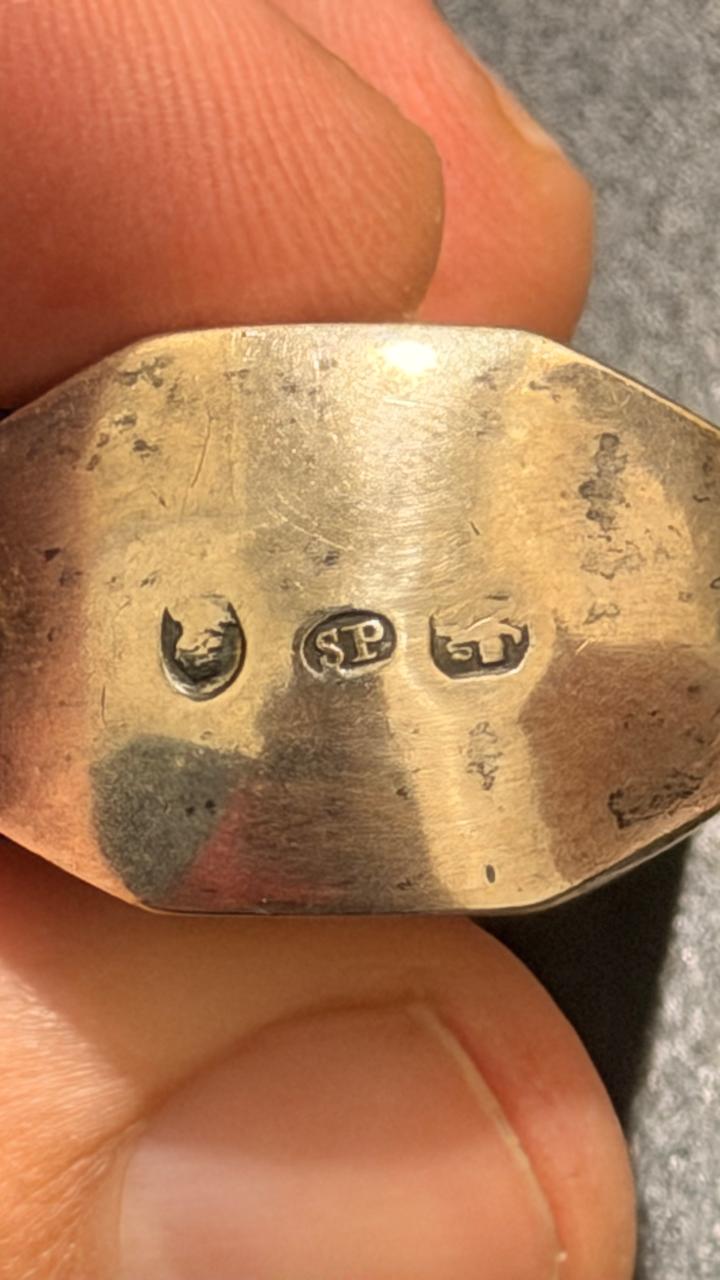
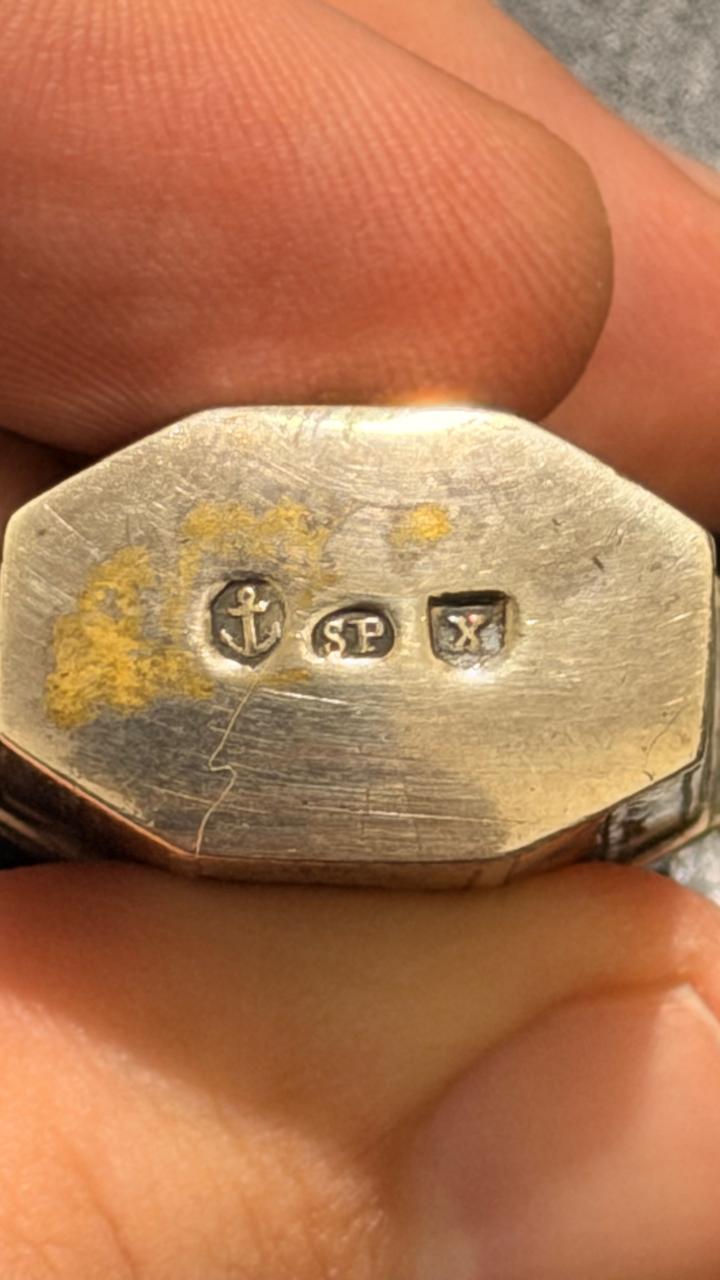
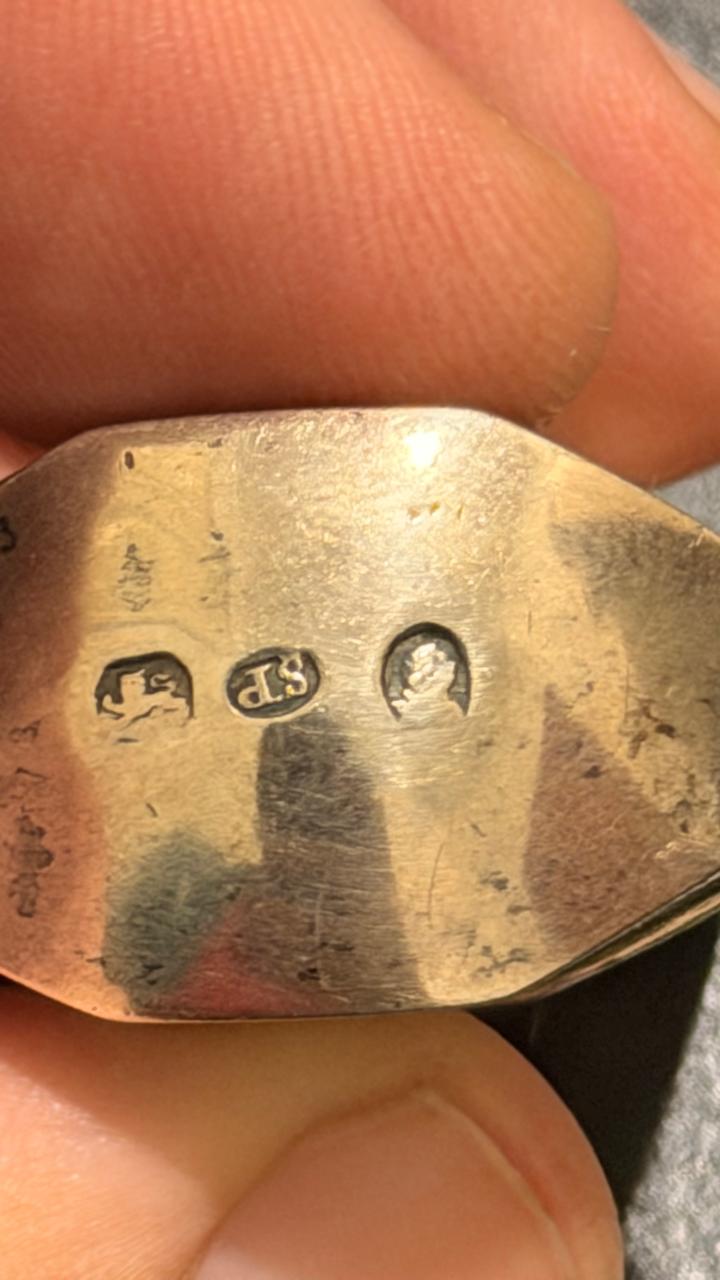
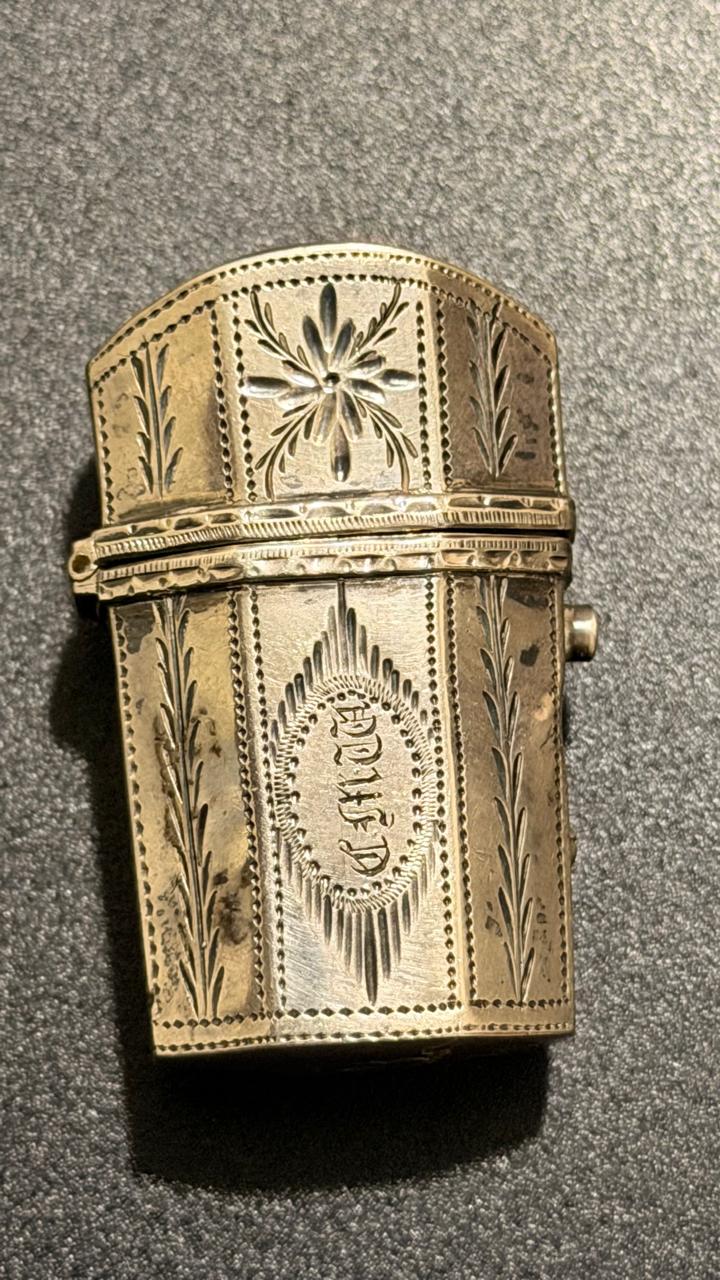

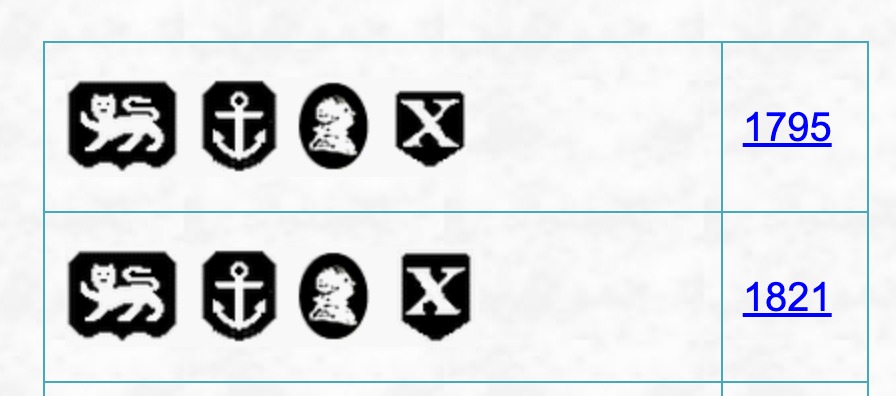
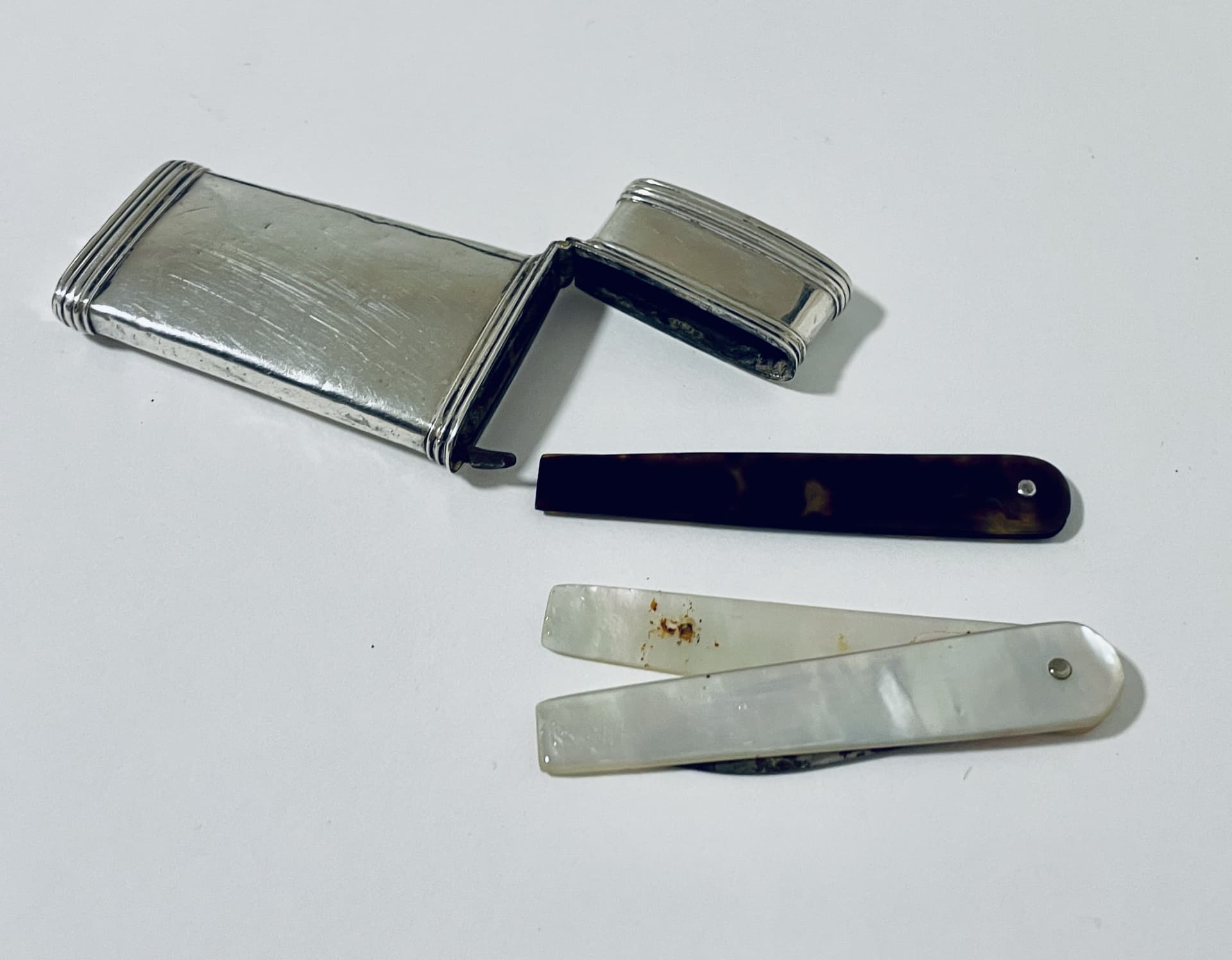
I bought this box of matches online without checking the markings; according to the seller, it was French. When it arrived, I had a big surprise: it’s English, and the year is either 1795 or 1821. If we look at the silvering, the year would be 1795, but if we look at the “x,” I think it’s closer to 1821, considering the distance above the “x,” which was the only relevant difference I found in the hallmarks between the two years.
2 Likes
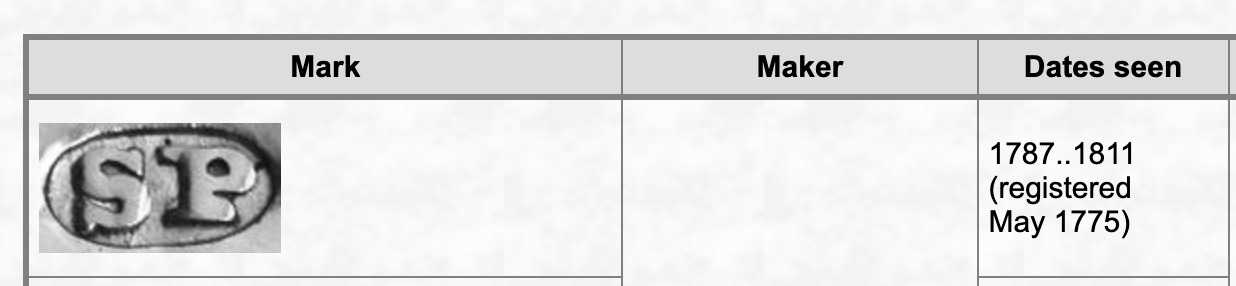
Samuel Pemberton c1787 - 1811 
2 Likes
Thank you Jools 
1 Like
You’re welcome, I’m just wondering if it is a Vesta case or something else !!! 
2 Likes
1795 - 100% sure.
https://www.etsy.com/listing/1368986617/samuel-pemberton-small-antique-george
I think it’s a match holder/ matchstick.
2 Likes
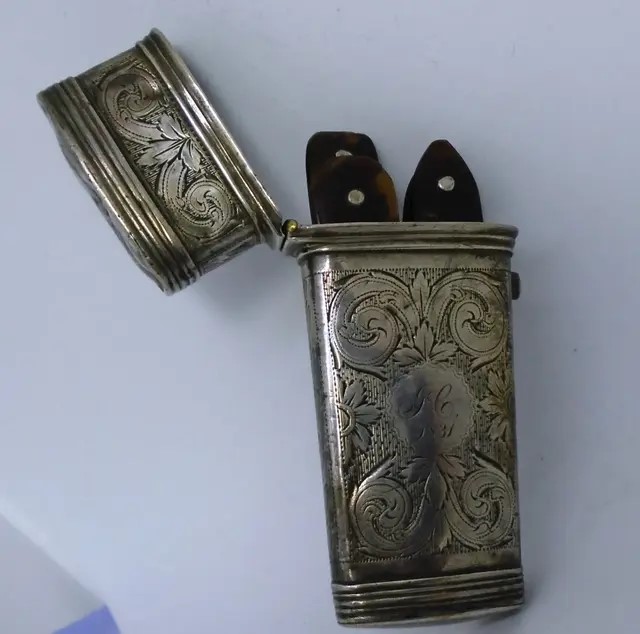
It’s an etui (for sewing tools, etc) or possibly a fleam case (for blood-letting blades), although I think that would have been a bit taller. Matches in the modern sense of a stick with an ignitable top weren’t invented until 1826.
3 Likes
APC, case dimensions, please.
Bloodletting kits:
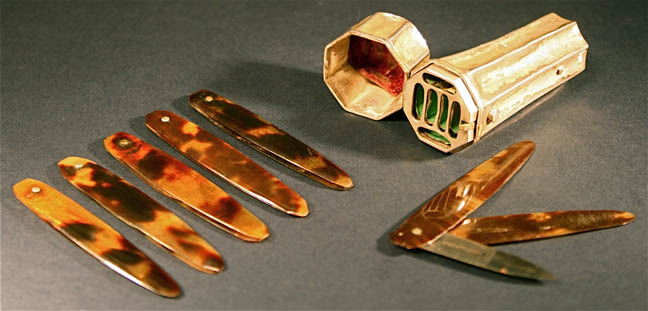
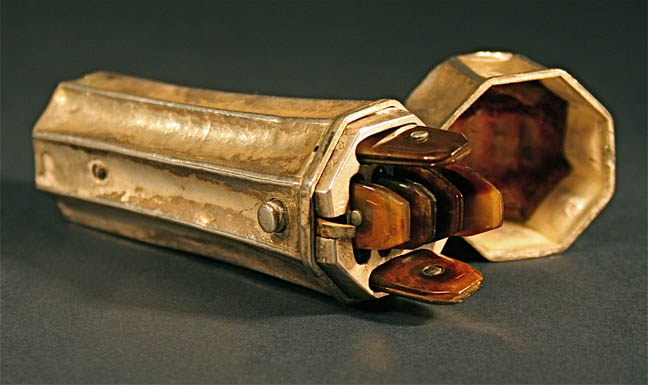
Maker Samuel Pemberton, Birmingham
Date 1793
Width 3.2cm (1.25")
Length 4.44cm (1.75")
Depth 1.3cm (0.5")
Weight 14g
Too little space to accommodate bloodletting instruments (blades)…
These are just my doubts. I trust Phil’s knowledge.
An 18th century exquisite silver cased scent bottle I knew it… A scent bottle.
2 Likes
Vestas or Match Boxes always appear to have a Serrated Striker on them , I’ll go with a Sewing Etui
1 Like

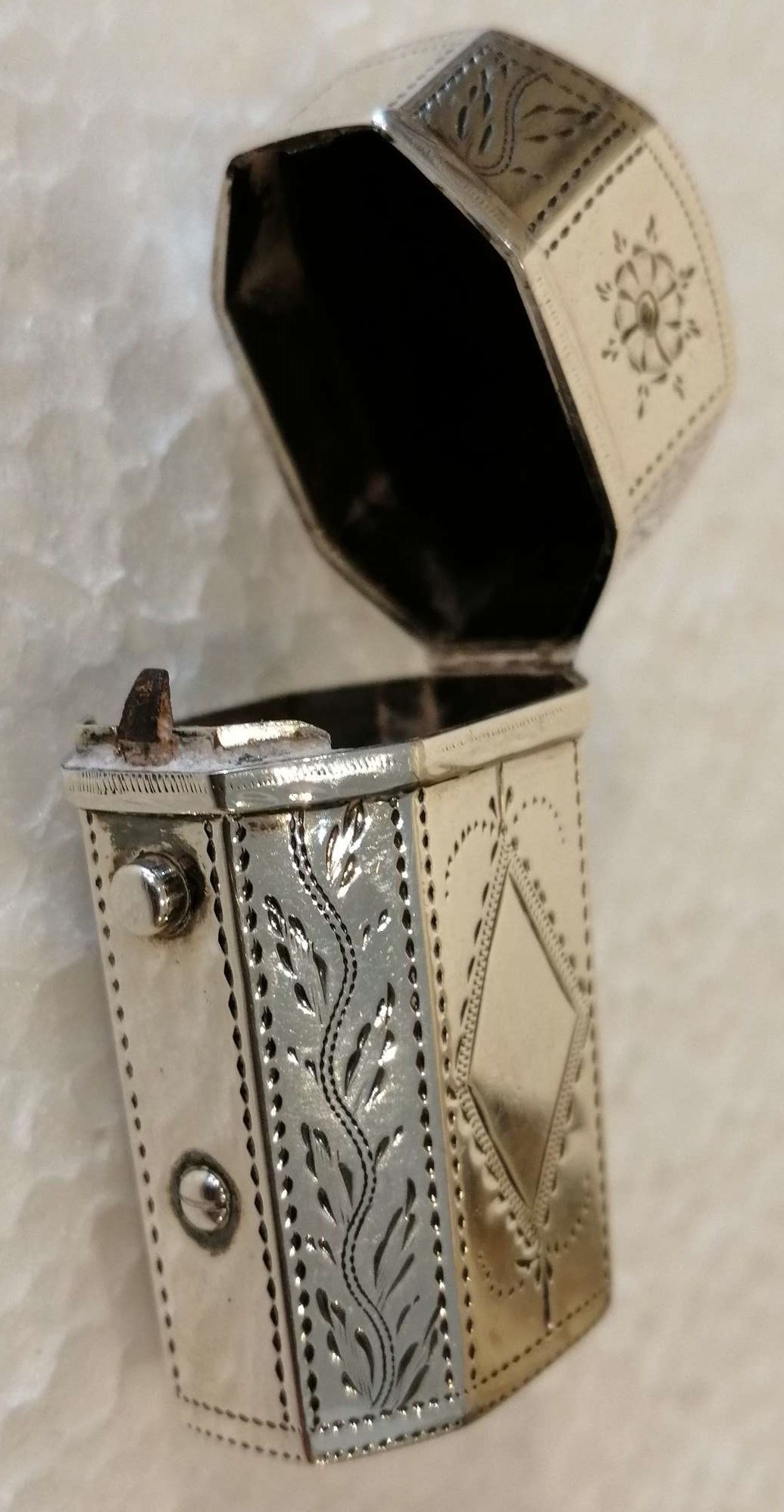
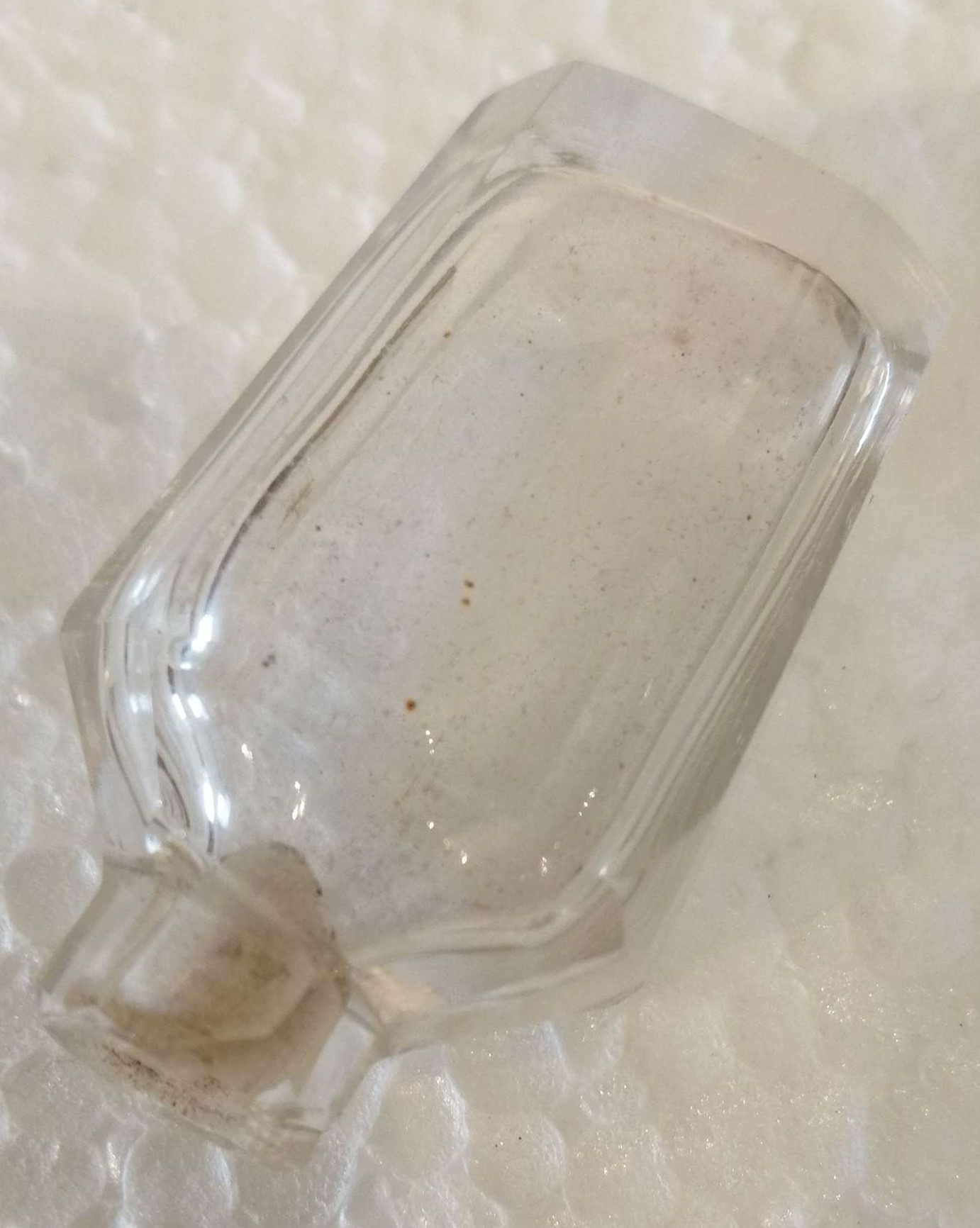
I like the scent bottle proposal. The case as shown looked a little too small for an etui and pretty certainly too small for fleams.
4 Likes
The box have 4,4 x 2,5 x 1,3 cm and 9 g.
1 Like
I may be stupid - I don’t care - but sometimes I’m right. 

2 Likes
You’re a clever joker!  Thank you!
2 Likes
Thank you for your understanding.
2 Likes
What sort of seller does not know the lion?
1 Like

Believe it or not, I’ve bought English pieces with Canadian hallmarks, such as those plated with silver, and most of us Brazilians don’t know how to read hallmarks.
1 Like